 Music · Travel · Lifestyle
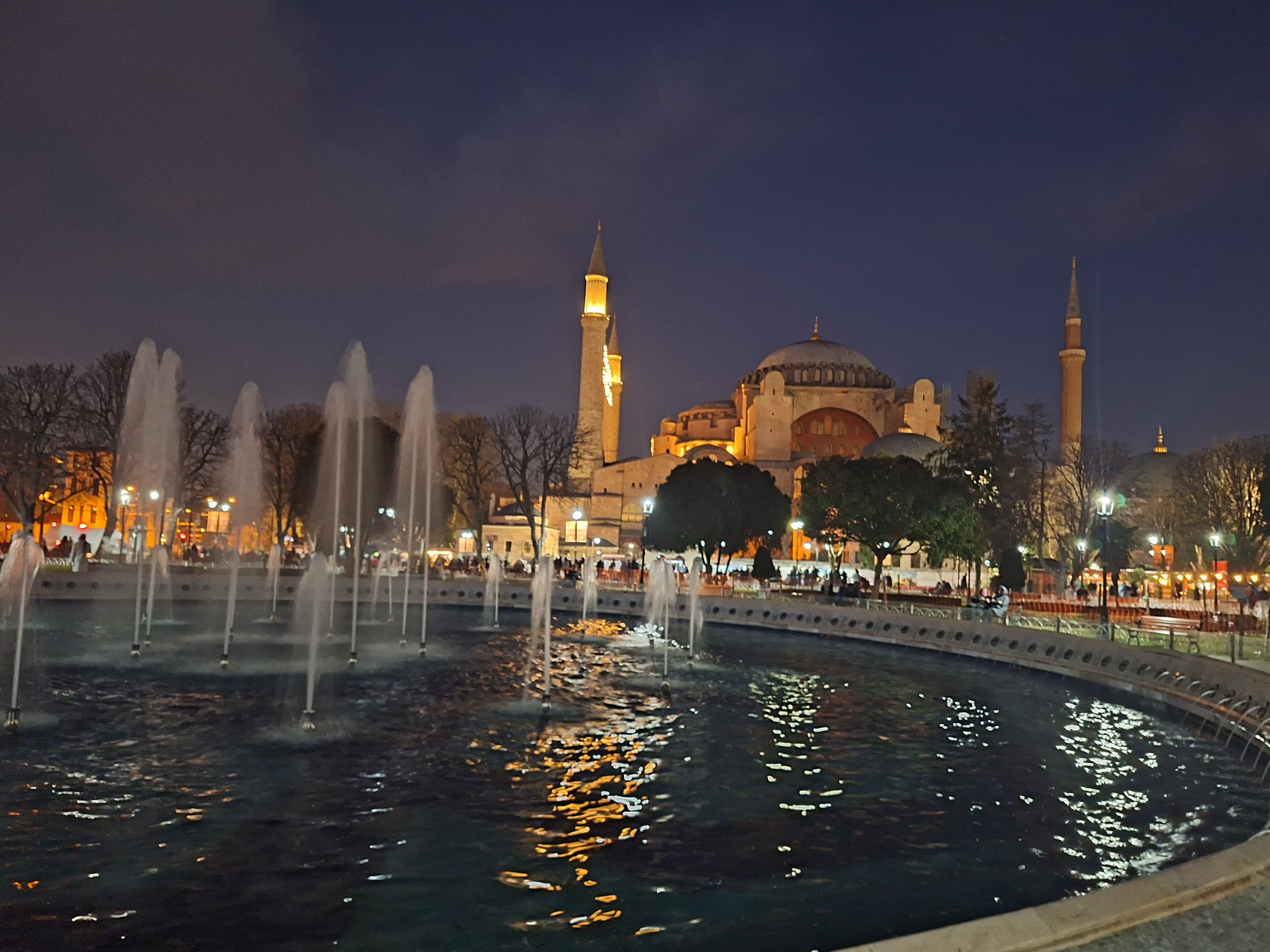
Almost eleven centuries separate the Hagia Sophia and the Sultan Ahmed Mosque. Yet today the two buildings feel like a deliberately staged pair, facing each other across the square. On one side stands Justinian's great 6th-century church; on the other, an Ottoman building from the early 17th century. That these two monuments stand so close together is one of the reasons Sultanahmet feels so special.
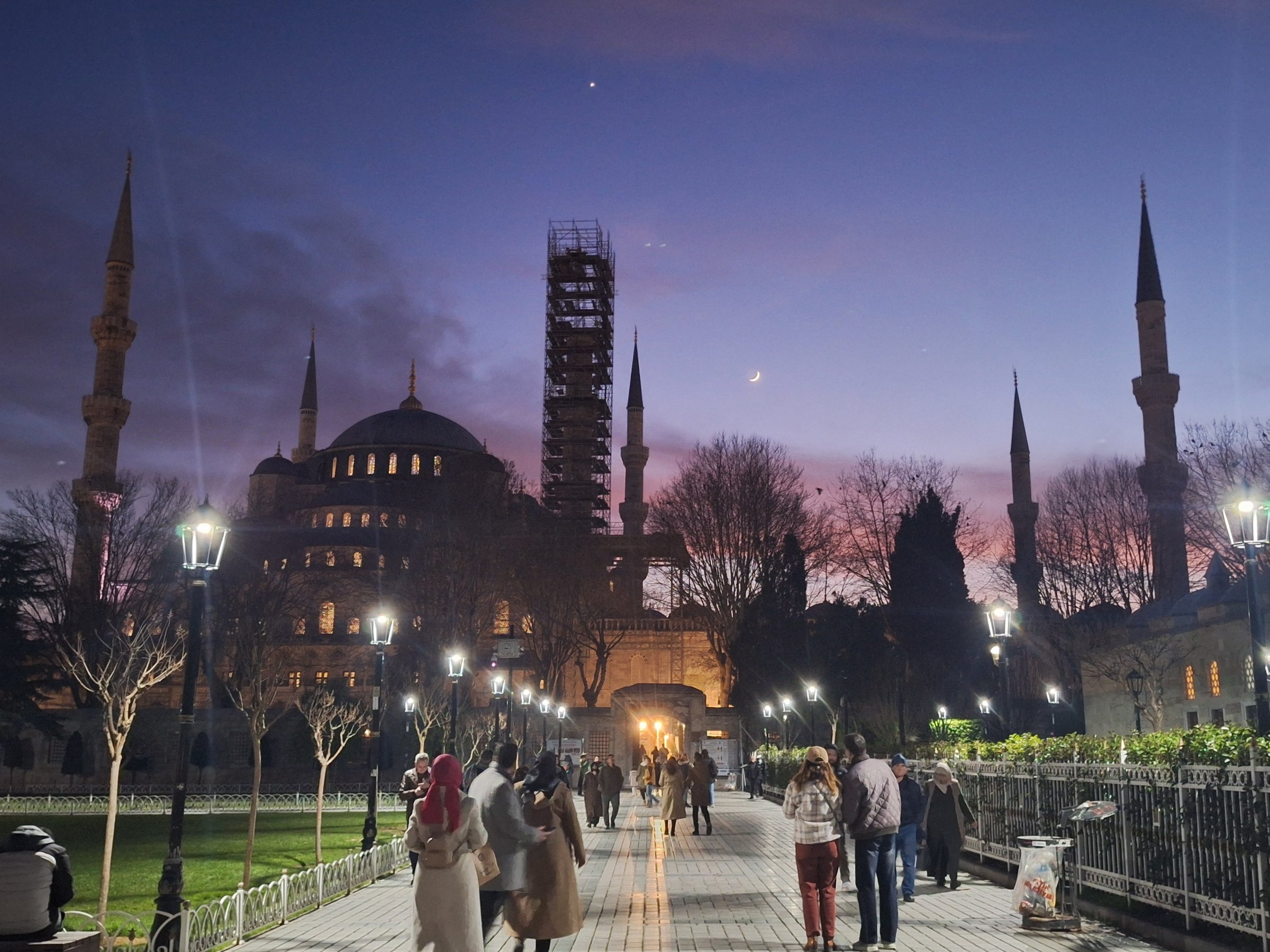
Almost eleven centuries separate the Hagia Sophia and the Sultan Ahmed Mosque. Yet today the two buildings feel like a deliberately staged pair, facing each other across the square.
Its actual Turkish name is Sultanahmet Camii. "Blue Mosque" is mainly an internationally used nickname, referring to the large number of ceramic tiles inside, where shades of blue and turquoise stand out. Construction began in 1609 under Sultan Ahmed I and was largely completed by 1616. Ahmed was only about nineteen years old when the project began.
- The Sultan Ahmed Mosque was built from 1609 under Sultan Ahmed I.
- Its architect was Sedefkâr Mehmed Ağa, trained in the tradition of Mimar Sinan.
- The mosque has six minarets, which was extraordinary at the time.
- Its international nickname "Blue Mosque" refers to the famous İznik tiles inside.
- The original complex included religious, social, and economic institutions, not just the prayer hall.
- Sultan Ahmed died in 1617 at just 27 and was buried next to his mosque.
- The famous story that the sultan had to fund a seventh minaret in Mecca because of his mosque's six is not clearly supported by historical evidence.
Who Was Sultan Ahmed I?
Ahmed I ascended the Ottoman throne in 1603 at just thirteen years old. The empire remained a great power, but his reign didn't begin in a phase of uninterrupted military triumphs. Wars against the Habsburgs, conflicts with the Safavids, Celali revolts in Anatolia, and economic strains weighed on his rule.
In precisely such a situation, a monumental building project carried special significance. Great mosque foundations were never merely places of prayer. A sultan presented himself through them as a pious ruler, patron of his capital, and founder of social institutions. At the same time, he inscribed his name permanently into the cityscape.
Ahmed's age makes the project remarkable. A very young sultan, who could barely point to major conquests of his own yet, chose one of the most prominent building sites in the entire capital.
Why This Exact Site?
The location was anything but random. Since Byzantine times, this had been the political and ceremonial centre of Constantinople. Nearby lay the Hippodrome, the Great Palace, and the Hagia Sophia. Even after 1453, this area remained symbolically extraordinarily important.
Older palace and residential structures had to give way for the new mosque. The building placed Ahmed's foundation directly within a long imperial tradition. Anyone looking from the Hippodrome at the new mosque saw not some minor neighbourhood project, but a deliberately positioned monument of rule.
That the Hagia Sophia stood directly opposite reinforced this effect. The new mosque doesn't copy the Hagia Sophia, but with its cascading arrangement of domes it visibly enters into an architectural dialogue with it.
Sedefkâr Mehmed Ağa and the Architecture
The architect Sedefkâr Mehmed Ağa had worked in the Ottoman building administration and was shaped by the architectural language Mimar Sinan had developed in the 16th century. His task was difficult: in a city full of famous domed buildings, he had to create a new great mosque that clearly belonged to the classical Ottoman tradition while still making its own impression.
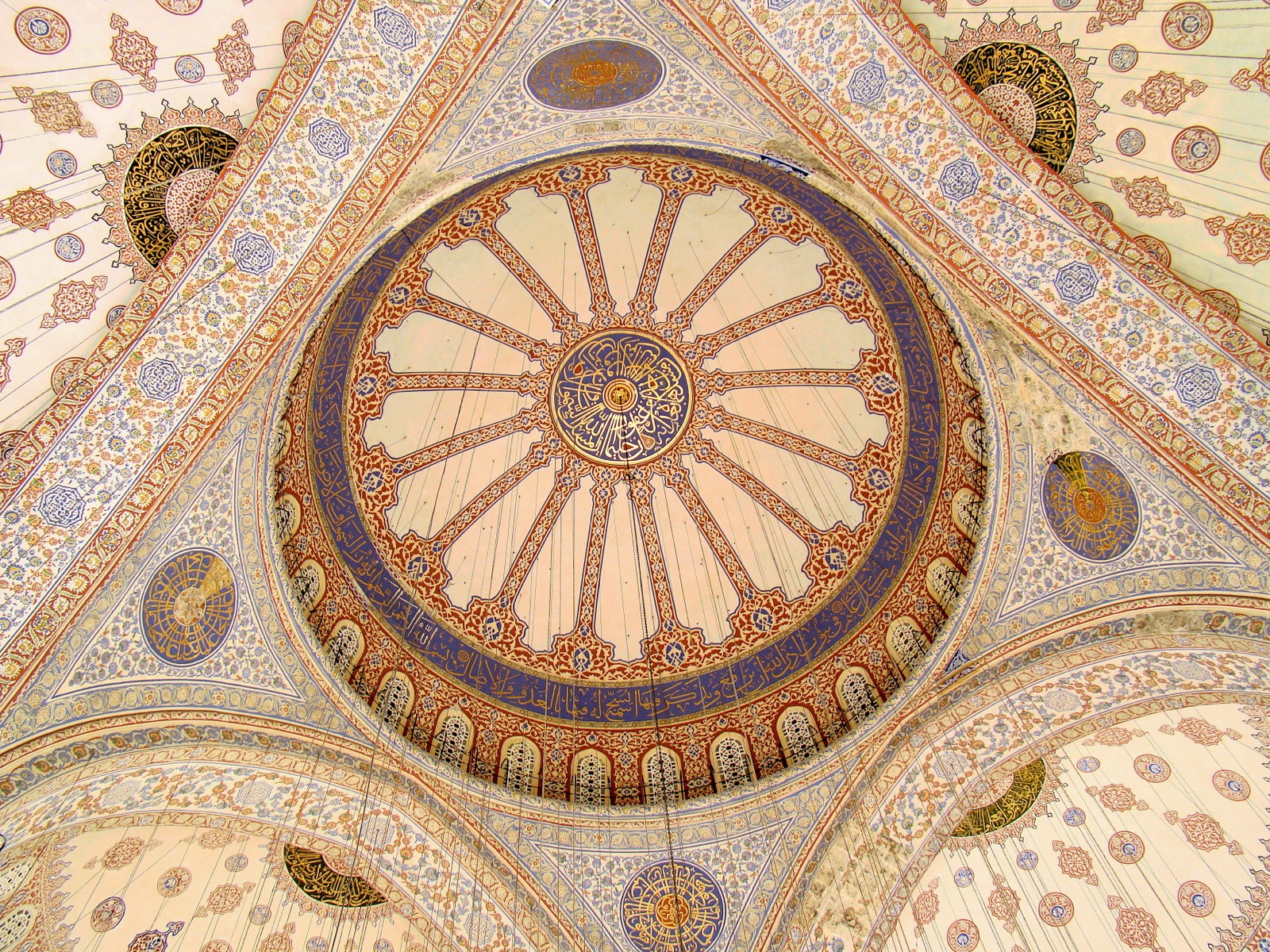
At its centre is one great main dome, surrounded by half-domes and smaller domes. From outside, this creates a terraced upward movement. Inside, massive piers carry the structure; because of their shape they're sometimes jokingly called "elephant feet." Numerous windows were meant to fill the prayer hall with light.
Despite its massive construction, the mosque therefore feels lighter inside than the heavy exterior architecture would suggest.
Why Is It Called the Blue Mosque?
The name is mainly used in international tourism. In Istanbul, people say Sultanahmet Camii. The "blue" refers to the ceramic tiles that decorate large parts of the lower wall areas.
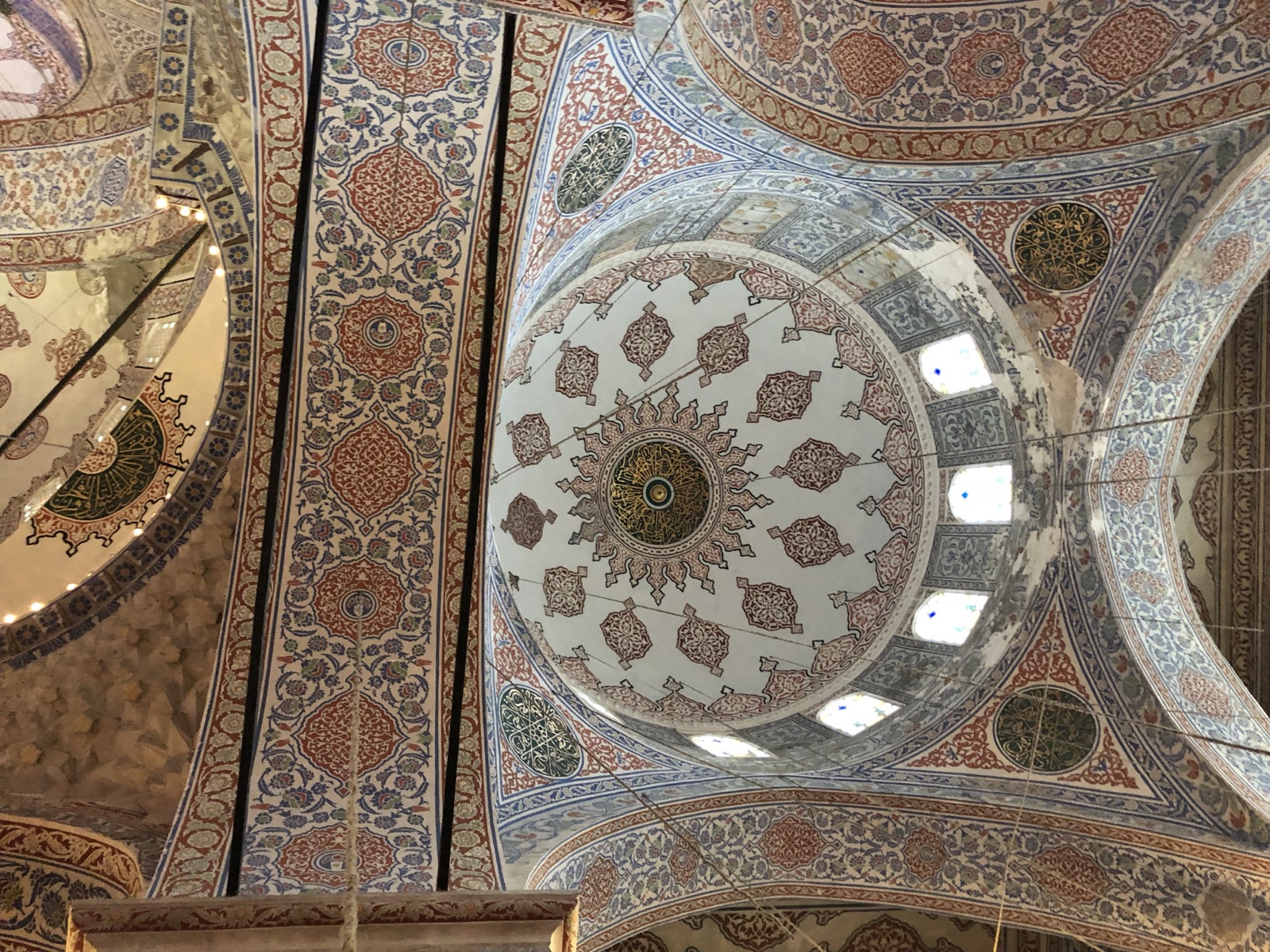
These tiles are by no means simply blue. You find turquoise, green, red, white, and numerous floral motifs with tulips, carnations, cypresses, and other plant forms. This very variety makes the interior more interesting than the simplified name suggests.
İznik ceramics had reached a high point in the 16th and early 17th centuries. The huge demand for such a large project, however, also put economic pressure on the workshops. Not every tile is therefore of exactly the same quality.
The Six Minarets
Six minarets were extraordinary at the time. Most great mosques had fewer. This is exactly where one of the building's best-known stories comes from: that Ahmed accidentally had six minarets built, even though the Sacred Mosque in Mecca also had six. To make up for this supposed affront, he is said to have funded a seventh minaret there.
An even more popular version claims Ahmed asked for "altın minare", golden minarets, and the architect understood "altı minare", six minarets. Linguistically, it's a perfect story. Historically, it's considerably less convincing.
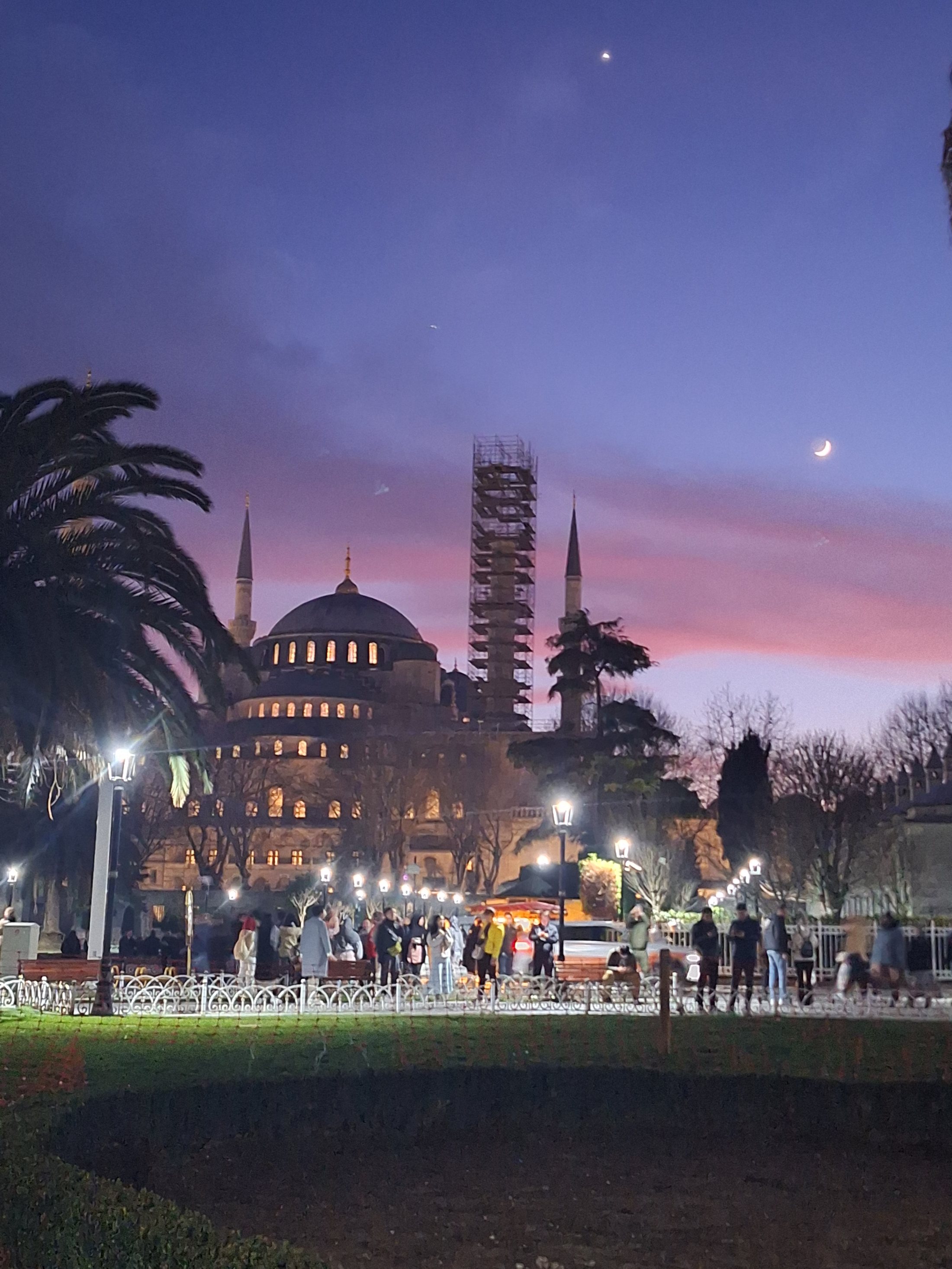
That the mosque received six minarets is a fact. That a simple misunderstanding was responsible for it belongs to the realm of legend.
The Külliye: Far More Than a Prayer Hall
The foundation originally included far more than the great mosque. A külliye combined religious, social, educational, and welfare institutions. Around the Sultan Ahmed Mosque arose madrasas, a school, social institutions, market areas, and the founder's mausoleum.
Such complexes show why building a great mosque was also economically significant. Foundations could draw income from shops, land, or other holdings, and use it to permanently fund social services. Architecture and welfare were linked.
Many of the original auxiliary buildings were later lost or altered. Road construction, fires, and the modern reshaping of Sultanahmet changed the surroundings considerably.
Ahmed's Short Life and His Mausoleum
Sultan Ahmed didn't live to enjoy his mosque for long. He died in 1617 at just 27. His mausoleum stands right next to the complex, and members of his family are buried there too.
The succession after Ahmed is historically significant. Until then, the Ottoman throne had repeatedly been marked by brutal dynastic struggles. Ahmed let his brother Mustafa live, instead of having him eliminated immediately as older practice dictated. After Ahmed's death, Mustafa I did in fact ascend the throne.
This marked the beginning of a shift in dynastic succession, away from open competition among several princes and toward a principle of seniority and the isolation of potential heirs within the palace. Violence didn't disappear immediately, but the system changed fundamentally.
What's Still Original Today
The mosque has been repaired again and again since the 17th century. Earthquakes, moisture, wear, and millions of visitors have left their mark. Extensive restorations have taken place in more recent times too.
That doesn't mean we're looking at a modern reconstruction. The basic structure, spatial concept, and significant parts of the historical furnishings naturally belong to the early modern building. At the same time, roofs, windows, surfaces, decorations, and structural elements have been renewed again and again.
For a place of worship more than four hundred years old and still actively used, that's entirely normal. "Original" doesn't mean nobody was allowed to touch anything since 1616.
What to Look at Deliberately Inside
Take a moment before you photograph. The space as a whole makes the strongest impression when you take in domes, half-domes, windows, and tiles together. After that, it's worth getting closer to the lower wall areas and looking at the ceramic patterns individually.
The calligraphy, too, absolutely belongs to the space. In Islamic sacred architecture, script carries a significance that Western visitors sometimes overlook in favour of the architecture. Qur'anic verses, names, and religious formulas are not simply decorative filler.
From outside, deliberately count the six minarets, then pay attention to the cascading dome landscape. Especially from the Hippodrome and the area between the Hagia Sophia and the mosque, you understand the building far better than standing directly beneath its facade.
Why the Mosque Was More Than a Religious Building Project, Politically
A sultan's great building commission was always also a statement about how that ruler wanted to be seen. Unlike some of his famous predecessors, Ahmed I couldn't point to a long series of spectacular conquests that a monumental building could easily be tied to for propaganda purposes. Precisely because of that, piety played a major role in his self-presentation. The mosque was meant to show that his rule was religiously legitimate, and that he was willing to commit enormous resources to a foundation for the benefit of the capital.
That also explains why the site at the Hippodrome was so sensitive. This had been one of the city's most important public spaces since antiquity. Whoever built on this site literally inscribed themselves into the imperial topography of Constantinople. The mosque therefore stood not only opposite the Hagia Sophia, but amid centuries-old sites of memory where Byzantine emperors had appeared, chariot races had taken place, and Ottoman rulers later held ceremonies.
Such a site was correspondingly expensive and complicated. Land had to be acquired, existing buildings demolished or integrated, and the entire complex fitted into a densely used quarter. The Sultan Ahmed Mosque is therefore also an urban-planning project that permanently changed the face of this part of Istanbul.
Why the Interior Feels So Different From the Exterior
From outside, domes, half-domes, and six slender minarets dominate. Inside, by contrast, light, ceramics, and calligraphy take the leading role. The many windows spread light across several levels, making the massive dome feel lighter than you'd expect from outside. Historically, of course, the windows weren't fitted with today's glazing, and later repairs have changed the lighting effect too. Still, brightness was part of the architectural concept from the start.
The İznik tiles sit mainly in the lower wall zones and gallery areas. There, you can make out the motifs far better than from the middle of the room. Tulips, carnations, vines, and geometric forms don't simply repeat mechanically, but vary across numerous compositions. The name "Blue Mosque" sometimes draws attention too strongly to a single colour, even though the decorative richness is much broader.
The prayer furnishings deserve attention too. The mihrab, minbar, and calligraphy structure the space religiously. For Muslim visitors, the mosque is to this day not a historical stage set, but an active place of prayer. Anyone visiting it is therefore always moving through both a monument and a place of worship still in use.
The Building Site Was Anything but Empty
The area where Ahmed I built belonged to one of the historically densest parts of the city. Nearby lay remains and successor buildings of the Byzantine Great Palace, Ottoman residential and administrative structures, and the Hippodrome. For the new complex, land had to be acquired, existing buildings torn down, and paths reorganised. Such a project was therefore always also an intervention in a long-grown city.
This is exactly where you can see how deliberately the site was chosen. Ahmed didn't place his foundation at the edge, but in the old centre of imperial power. Anyone standing on the Hippodrome could experience the Hagia Sophia on one side and the ruling sultan's new building on the other. This wasn't a coincidental neighbourhood, but a visible statement that the Ottoman dynasty saw itself as ruler of this ancient capital.
Funding, Piety, and Political Ambition
Great imperial mosques were often tied to military success, plunder, and dynastic prestige. Ahmed I, however, had no series of spectacular conquests comparable to Mehmed II or Süleyman I. Precisely because of that, contemporaries already discussed how such a large project was funded, and whether a sultan without a great conquest victory should erect such a monumental foundation.
That makes the mosque politically more interesting. Ahmed presented himself as a pious ruler and patron, while his government simultaneously faced wars, revolts, and economic difficulties. A külliye created real social services, but it was also a permanent monument to his name. In a pre-modern capital, architecture was one of the most effective means of making political presence visible across generations.
The Tiles Tell More Than Just "Blue"
Anyone who gets closer to the walls realises that the international nickname "Blue Mosque" simplifies the interior almost too much. The tiles show tulips, carnations, roses, cypresses, vines, and geometric patterns in different shades. Blue and turquoise dominate the overall impression, but red, green, and white also play an important role.
Not all the tiles are identical in quality either. The enormous demand of such a large project met workshops whose production conditions were already changing at the start of the 17th century. That's exactly why it's worth looking at individual wall panels. You're not looking at modern mass production, but a historical decorative programme with different batches, patterns, and craft nuances.
"The mosque is officially called the Blue Mosque." No. Its actual name is Sultanahmet Camii.
"The architect accidentally built six minarets instead of golden ones." There's no solid historical evidence for this. The wordplay story belongs to the realm of popular legend.
"The mosque has always been just as bright and colourful as it is today." Not quite. Restorations, pollution, changed windows, and lighting have affected the impression of the space over the centuries.
My Thought on This Place
Whenever I enter the Blue Mosque, I always feel like I can breathe especially deeply for a moment. It's hard to describe without sounding trite. Maybe it's the size, the light, the many people who nonetheless suddenly grow quieter, or the fact that you automatically start thinking about how many people have stood and prayed here before you.
You wonder: who was here? Who asked for health here? Who asked for peace? Who came in with a joy they wanted to share with God, and who with a worry no one else knew about? Thoughts like that come to me automatically, because a place of worship isn't just architecture.
And then I look around today. People from all over the world. The faithful, tourists, people with headscarves, without headscarves, people whose religion I don't know at all. Everyone sees the same building and, at best, treats it with the same respect.
Maybe I feel this place so intensely partly because my grandmothers never got to experience Istanbul. Both were very religious, and I sometimes think about what it would have meant to them to pray at a place like this, just once.
The Blue Mosque isn't just "the one with the six minarets" to me. It's one of those places where history feels enormous, and you yourself feel very small for a moment — but not unimportant.
– Amra