 Music · Travel · Lifestyle
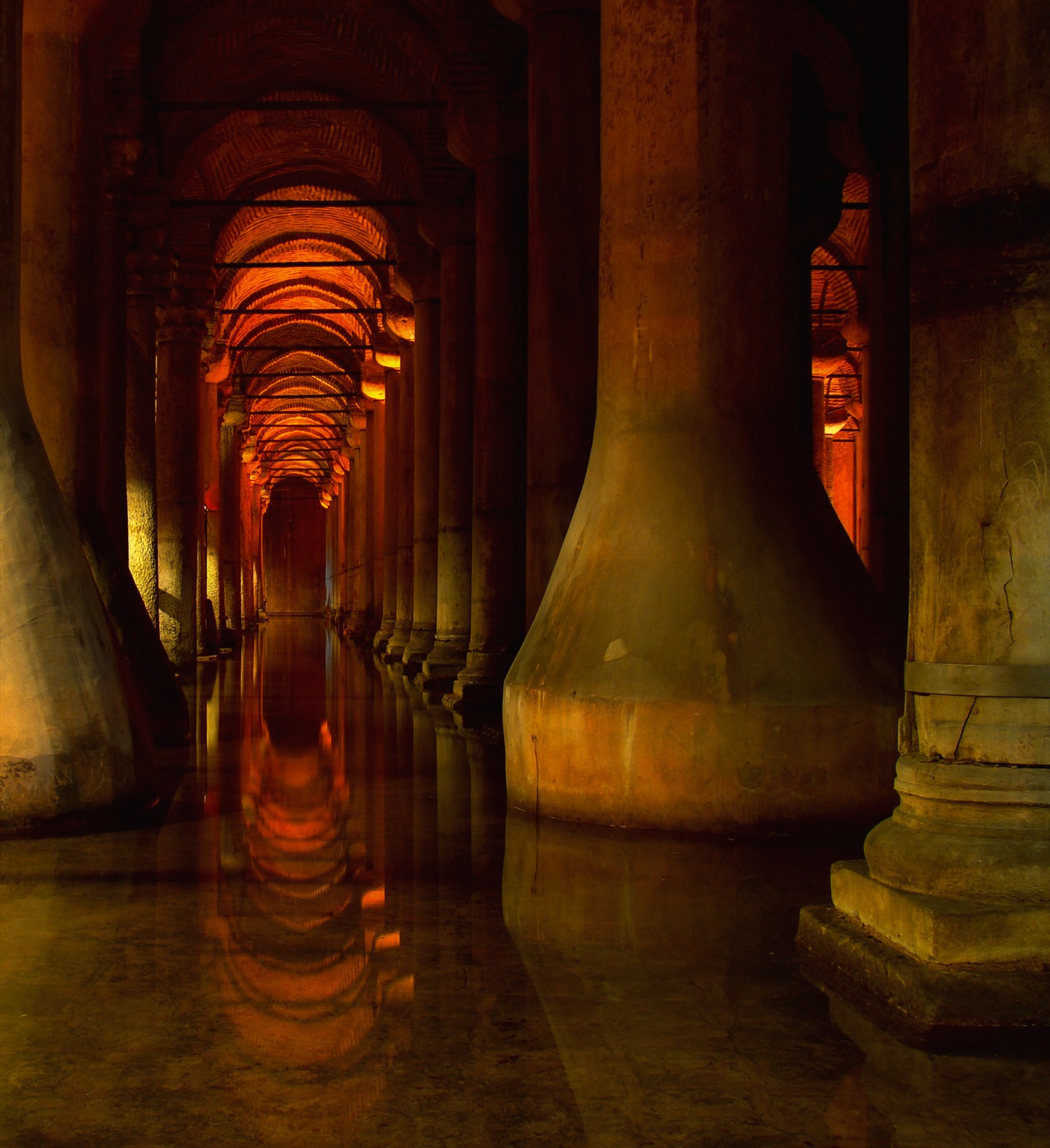
Step into the Basilica Cistern today and it feels almost like an underground palace. Columns vanish into half-darkness, water mirrors the light, and at the end of the walkway lie two huge Medusa heads beneath columns. The effect is so strong that it's easy to forget what the space was actually built for: storing water.
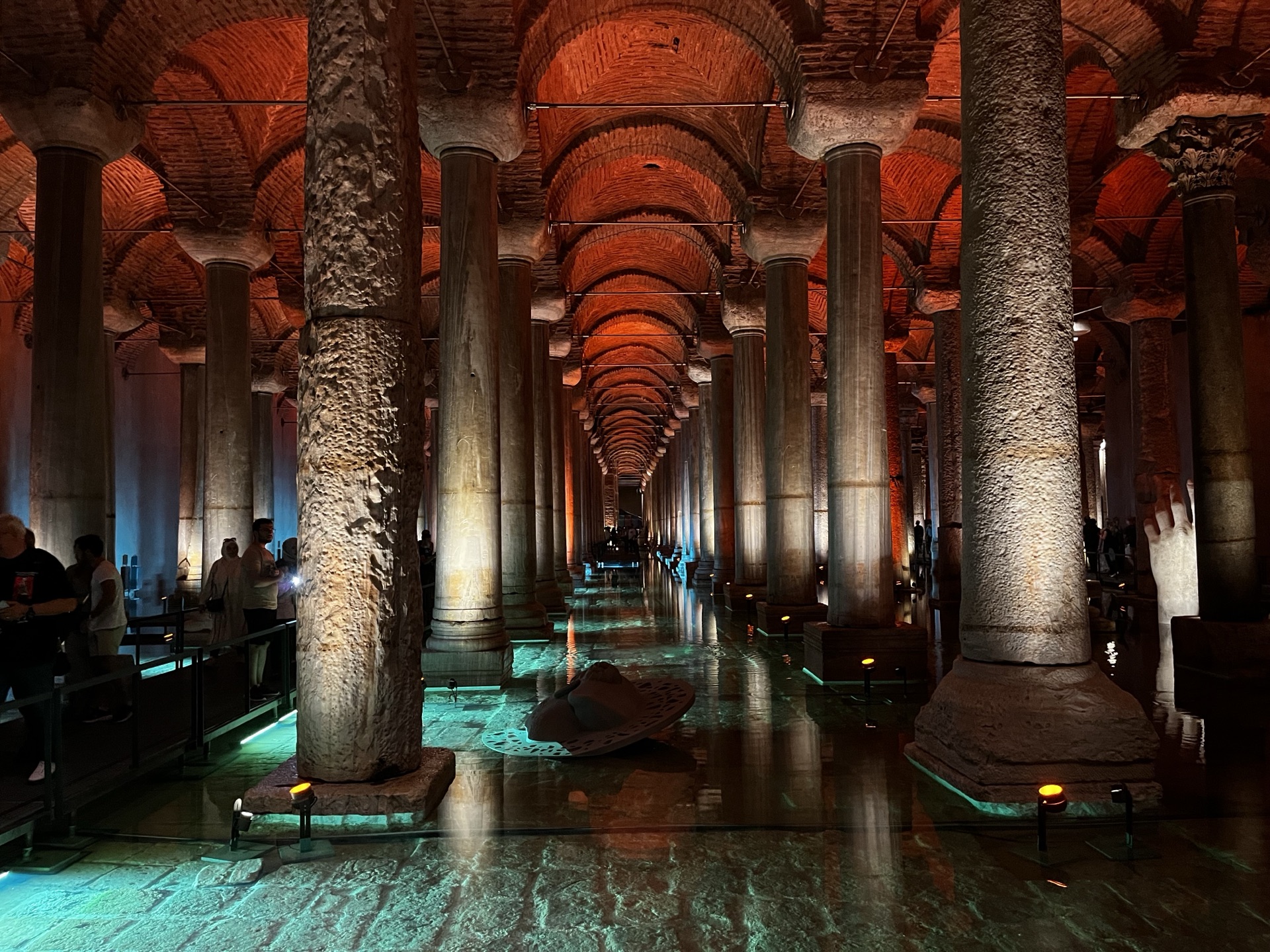
Step into the Basilica Cistern today and it feels almost like an underground palace. The effect is so strong that it's easy to forget what the space was actually built for: storing water.
Constantinople had a fundamental geographical problem. The city was surrounded by sea, yet within its walls it didn't have enough natural freshwater sources for a huge population. Aqueducts, pipelines, and cisterns were therefore essential to survival. Especially during sieges, water supply could decide a city's life or death.
- Today's cistern was built in the 6th century under Justinian I.
- It has 336 columns arranged in twelve rows of 28 each.
- It was part of Constantinople's complex water-supply system.
- Many columns and capitals were reused as spolia from older buildings.
- Two famous columns rest on ancient Medusa heads.
- We don't know for certain why the heads lie sideways or upside down.
- After 1453, the cistern was still used for a while but gradually lost its importance.
- Modern restorations turned it into the museum experience visitors know today.
Why Constantinople Needed So Many Cisterns
A city of a million people can't function without water. Constantinople lay spectacularly between the Bosphorus, the Sea of Marmara, and the Golden Horn, but salt water doesn't solve a drinking-water problem. The Romans and Byzantines therefore built a gigantic supply system of springs, aqueducts, pipelines, and reservoirs.
Among the best-known visible remains is the Valens Aqueduct. It was, however, only part of a network that carried water astonishing distances into the capital. Within the city, this water was stored in open and underground cisterns.
Such a reserve mattered not only in dry periods. Constantinople was besieged again and again. If an enemy damaged the outer pipelines, reservoirs within the walls had to take over the supply.
Justinian and Today's Structure
Earlier structures already existed on the site of today's Basilica Cistern. Under Emperor Justinian, the massive underground cistern was built, or expanded, in the 6th century, probably in connection with rebuilding the city centre after the Nika riots.
The Turkish name Yerebatan Sarnıcı roughly means "sunken cistern." In English it's known as the Basilica Cistern, because a large public basilica, a columned hall, stood in this area in antiquity.
So the space was never meant as an underground attraction. No one planned photo spots or mood lighting there. This was infrastructure.
How Big the Cistern Really Is
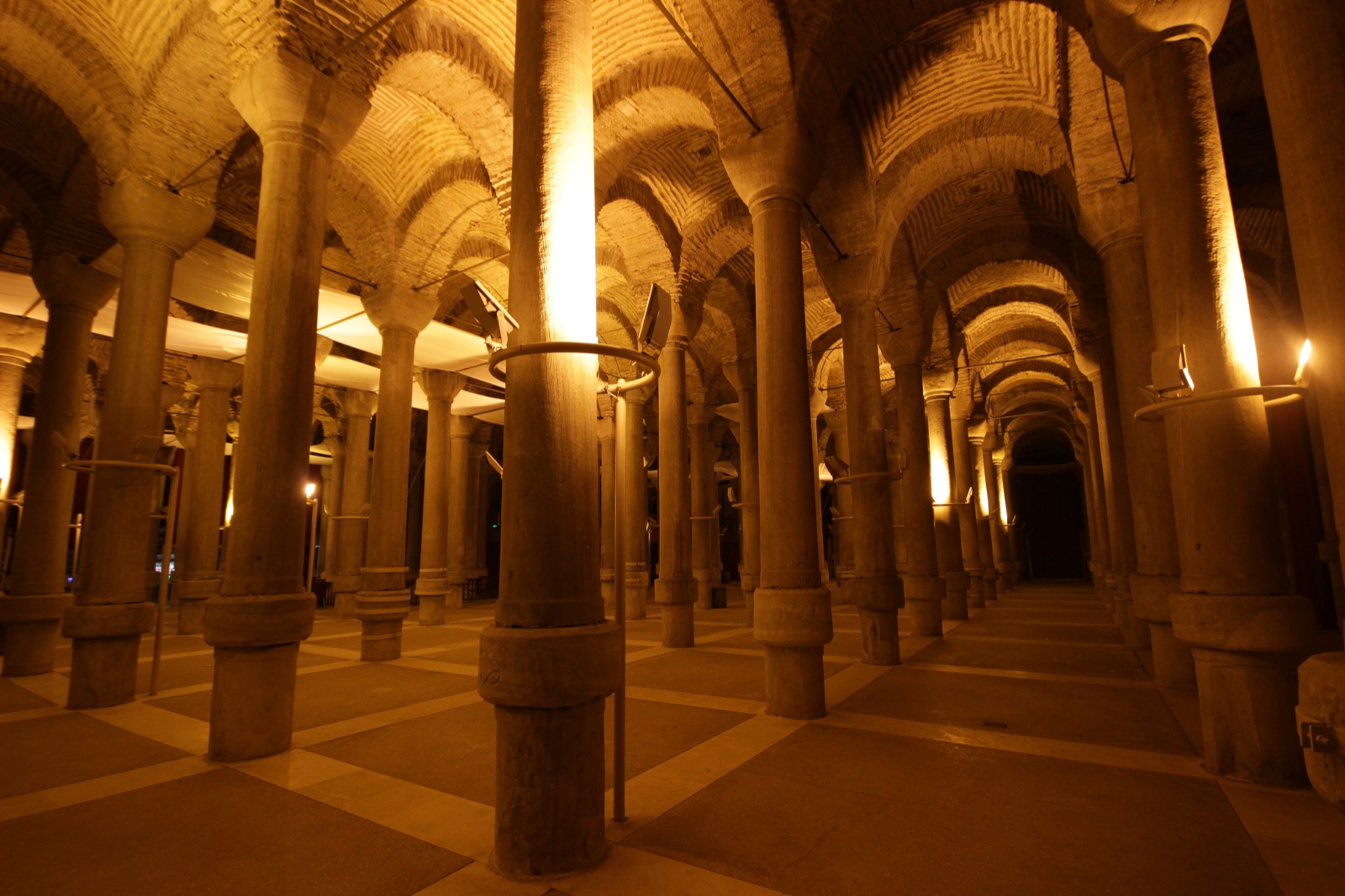
The cistern covers roughly 140 by 70 metres. Its ceiling rests on 336 columns, arranged in twelve rows of 28. Many columns are around nine metres tall.
Its capacity is often given as roughly 80,000 to 100,000 cubic metres. Even if that figure is hard to picture, one look at the space says enough: it could store a huge quantity of water.
Today's visitor walkway is a modern construction. Originally, at full capacity, far more water stood in the space. The cistern wasn't a walkable forest of columns — it was a technical water reservoir.
Why No Two Columns Look Exactly Alike
Look closely and the columns and capitals differ from one another. Some are plain, others carry decorative forms. That's because the construction reused numerous spolia — components from older buildings, repurposed for a new project.
That was nothing unusual in late antiquity. An older building could be abandoned, damaged, or politically insignificant, while its columns still represented valuable building material. For an underground reservoir, no column needed to match its neighbour decoratively. What mattered was that it worked structurally.
It's precisely this pragmatic reuse that makes the cistern so visually appealing today. What was probably simply practical then looks to us almost like deliberately composed variety.
The Two Medusa Heads
At the end of the cistern stand two large ancient Medusa heads. One lies on its side, the other upside down. They serve as bases for columns.
Medusa belongs to Greek mythology. Her gaze was said to turn people to stone. In ancient architecture, the Gorgon's head was often used as an apotropaic symbol, meant to ward off harm.
Why these two heads were placed so oddly in the cistern, we don't know for certain. One pragmatic explanation is that they were reused blocks of stone whose existing dimensions simply fit best under the columns in this position. Lying deep inside a water reservoir, nobody needed to respect their original symbolic meaning.
What Happened to the Cistern After 1453
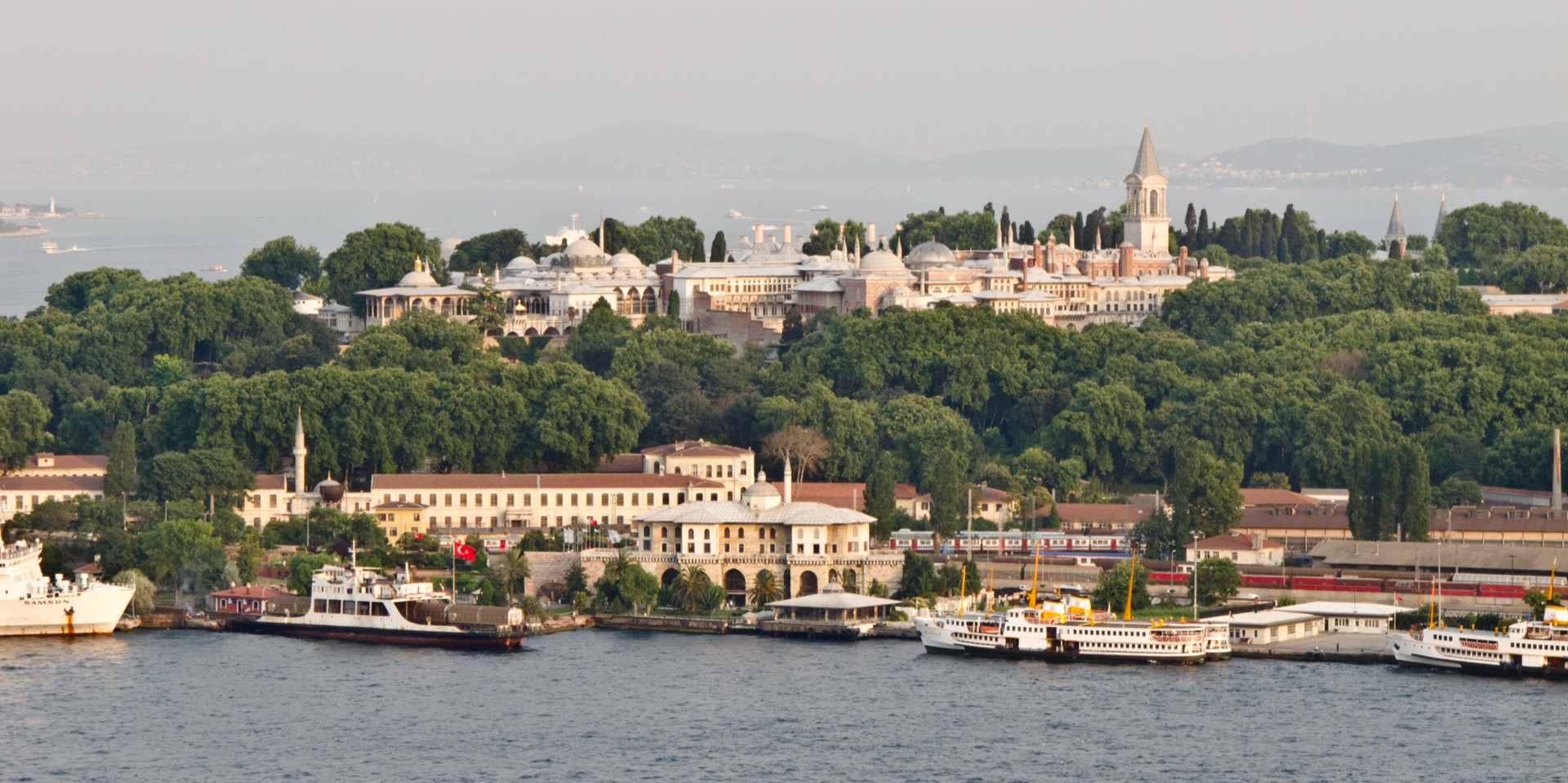
The cistern didn't disappear with the Ottoman conquest. It was still used for a time, among other things to supply water near the new Topkapı Palace. The Ottomans, however, increasingly preferred systems with flowing water and built their own pipelines, fountains, and distribution facilities.
As a result, the old cistern slowly lost its central function. Houses were built above the site, and, from the perspective of state infrastructure, the huge space was increasingly forgotten.
Petrus Gyllius and the Fish Beneath the Houses
The French scholar Petrus Gyllius studied the remains of Constantinople in the 16th century. He reported residents drawing water through openings in their cellars, and even catching fish. Following these clues, he investigated the underground structure.
The story sounds almost too good: people living above a sunken forest of columns, pulling fish out through their cellar. In its broad outline, it really does come from his accounts. Still, you shouldn't claim the cistern was completely unknown to every inhabitant. Local residents knew about the water access points. What was new was above all the systematic antiquarian description of the structure.
Modern Restorations
Over the centuries, mud and sediment accumulated. Columns, vaults, and masonry had to be secured. A major cleaning in the 20th century removed huge quantities of mud and, among other things, made the Medusa heads visible again.
In more recent restorations, walkways, lighting, and earthquake protection were renewed. Today's experience, with light installations and artworks, is therefore a modern museum staging of an ancient piece of technical infrastructure.
It's worth keeping that in mind. The magic of the space is real, but the Byzantines didn't see it the way we see it today.
The Cistern as Part of a Much Larger Network
Yerebatan was just one single reservoir within an astonishingly complex system. Water was carried to Constantinople from distant spring areas via aqueducts and pipelines. The Valens Aqueduct is today the best-known visible part of this system, but the actual pipe networks reached much further. Large open cisterns and underground reservoirs then distributed the reserves across the city.
This infrastructure was decisive, especially during a siege. An attacking army could damage outer pipelines or control springs. A city like Constantinople therefore needed reserves within its walls. In this sense, Yerebatan wasn't some luxurious side project of Justinian's, but part of the capital's ability to survive.
The Great Palace and the representative buildings at the centre needed an especially reliable supply. That one of the largest cisterns lay directly within this political core was therefore logical.
What the 336 Columns Reveal About the Construction Economy
The reused columns are often romantically described today as "treasures gathered from temples." But behind that lies a very practical construction economy too. Marble was expensive. Finished column shafts were valuable. When older buildings were abandoned or components became available, reuse could save enormous time and cost.
That capitals and columns don't match perfectly was no problem in an underground reservoir. No one down there needed to see a harmonious, representative column programme. Today's visitor experiences precisely these differences as especially beautiful, even though they were probably, originally, mostly pragmatic.
The same applies to the Medusa heads. Their fame today says more about how we look at the cistern than about their original meaning within the water reservoir. For the builders, they may simply have been suitable blocks of stone.
Water Was Part of the Defence
A city can have the strongest walls in the world and still be forced to surrender if it runs out of drinking water. For Constantinople, water supply was therefore part of the strategic infrastructure. Springs far outside the city were tapped via aqueducts and pipelines, and open and underground reservoirs were built within the walls. Yerebatan was only one of many such structures, but a particularly significant one because of its size and location.
Sieges in particular made such reserves indispensable. Outer pipelines could be damaged or blocked; cisterns within the city then had to bridge the gap. The enormous investment in water technology is therefore explained not just by comfort, but by the survival instinct of a capital repeatedly threatened militarily.
How the Water Technically Fit Into the System
Water was carried into the city via gradient and pipelines and then distributed as needed. A cistern wasn't just an arbitrarily deep hole, but part of a hydraulic network. Its height, waterproofing, and wall thickness had to be chosen so water could be stored and drawn off again. The enormous pressure on the outer walls posed a real technical challenge.
The columns carried the ceiling above the reservoir and allowed for a large area without massive interior walls. That they look today like an underground forest of columns wasn't primarily an aesthetic goal. The monumentality arose from the sheer scale of the technical task.
The So-Called Weeping Column
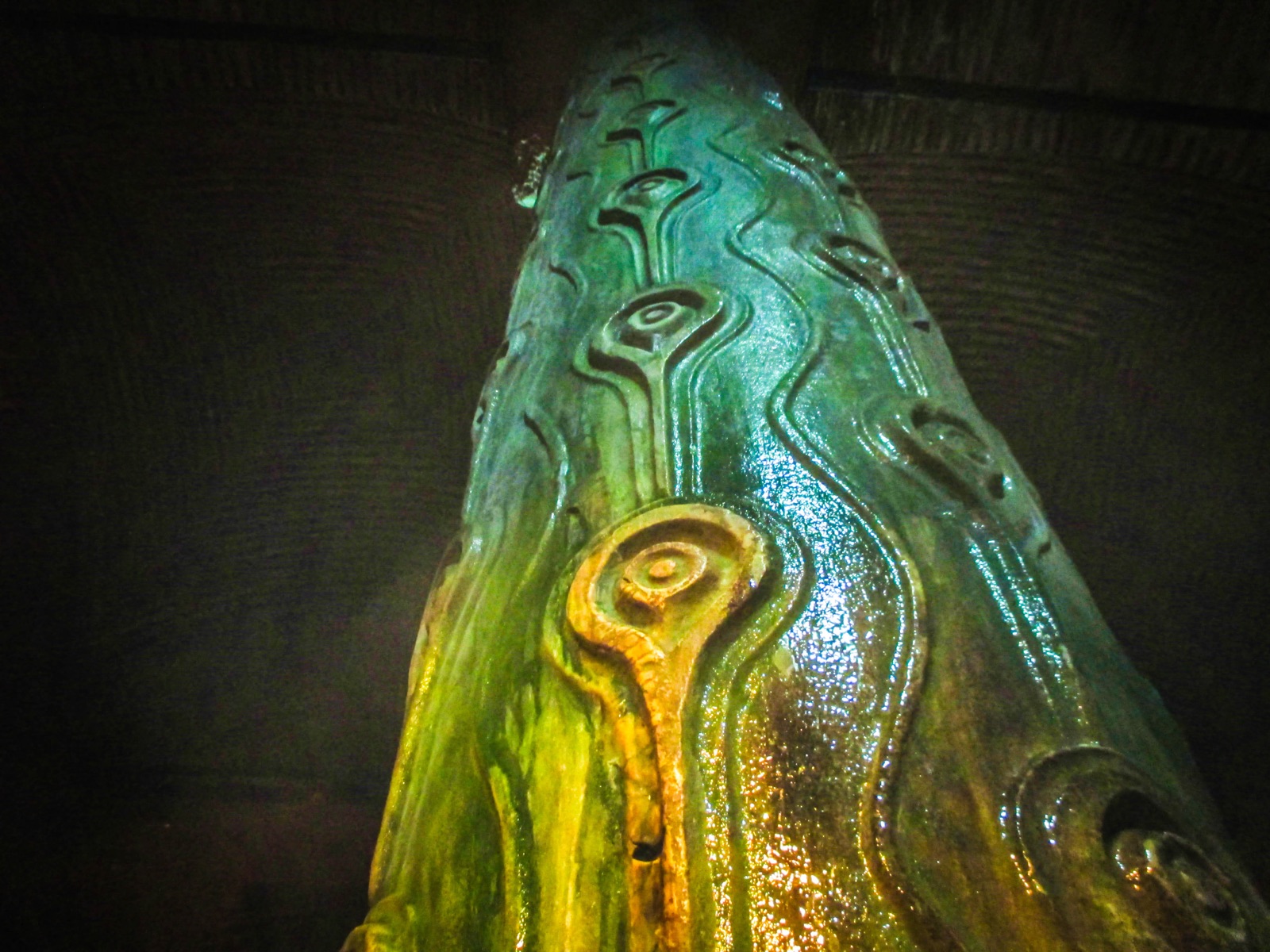
Besides the Medusa heads, Yerebatan has a column with a striking teardrop- or eye-shaped pattern, often called the "Weeping Column." A popular story claims it commemorates workers who died building the cistern, its damp surface symbolising their tears.
There's no solid historical evidence for this. Similarly ornamented columns are known from other late-antique contexts, and the dampness is already explained by the microclimate of an underground water structure. The legend can be told, but it shouldn't be sold as a documented building intention.
The Modern Staging Changes How We See It
Today, visitors move along walkways through dimmed light, while water surfaces and art installations mirror the columns. This atmosphere is impressive, but it has little to do with the original use. A Byzantine worker wouldn't have experienced the space as a mystical attraction, but as dark technical infrastructure.
This very difference is fascinating: a place that most of the historical population probably never entered is today one of Istanbul's most famous sights. Modern museum-making makes visible what was once meant to stay deliberately invisible.
What 1204 Had to Do With the Water Supply
The crusader looting of 1204 is less directly documented at Yerebatan than at churches, palaces, or the Hippodrome. Still, the conquest affected the city's infrastructure as a whole. A Constantinople controlled for four decades by Latin rulers had far fewer resources for maintaining and repairing its huge public systems. Yet aqueducts, cisterns, and pipelines had to keep functioning, because even a conquered city needed water.
Precisely for that reason, one shouldn't artificially claim that crusaders demonstrably damaged the Medusa heads or looted individual columns. There's no solid evidence for that. The more credible connection is structural: 1204 weakened the city economically and administratively, which in the long run also made maintaining large infrastructure systems harder.
Why the Ottomans Developed Different Water Systems
After 1453, the Ottomans took over a city with ancient water infrastructure, but also built out their own supply systems at the same time. New springs were tapped, pipelines repaired, and fountain foundations established. Especially under Süleyman I, Sinan's Kırkçeşme system created major new water projects.
Underground cisterns thereby partly lost their earlier central importance, though they were by no means all abandoned immediately everywhere. Some continued serving as reservoirs; others became cellars, workshops, or foundation areas. This gradual repurposing explains why so many cisterns in Istanbul don't survive as ruins in open fields, but lie beneath later houses.
Why the Medusa Heads Became So Popular
The two heads are today almost more famous than the cistern itself. That's not just because of their size, but the combination of ancient mythology and an unusual placement. A huge pagan face, lying upside down under a column in a Byzantine water reservoir, automatically generates stories.
What's historically interesting is precisely the uncertainty. We don't know for sure which building they came from, or why they were placed exactly this way. This gap has been filled with legends for decades. To me, that's a good example of how "we don't know exactly" isn't a poor conclusion. Sometimes uncertainty is more honest, and more fascinating, than a perfect invented explanation.
"The Medusa heads were deliberately turned to break their evil power." A popular legend, but not proven. Practical reuse is at least as plausible.
"The cistern was completely forgotten for centuries and rediscovered by chance." Too simple. Local residents knew about the water access points; Petrus Gyllius mainly made the structure known again in European scholarship.
"The cistern was an underground palace." No. Its magnificent effect is impressive, but its purpose was entirely practical: storing water.
My Thought on This Place
For me, Yerebatan is one of those places where it's easy to just think: wow, that looks beautiful. But the place actually becomes even more impressive once you understand why it exists.
Above, a city runs on with palaces, churches, markets, and later mosques. And below, someone in the 6th century builds a reservoir with 336 columns, because even the most splendid capital has a problem within days if it has no water.
Medusa is, of course, the perfect photo subject. But what impresses me almost more is how practically people dealt with history back then: there's a beautifully carved ancient head lying around? Fine, we need a base for a column there. So Medusa ends up under water.
– Amra