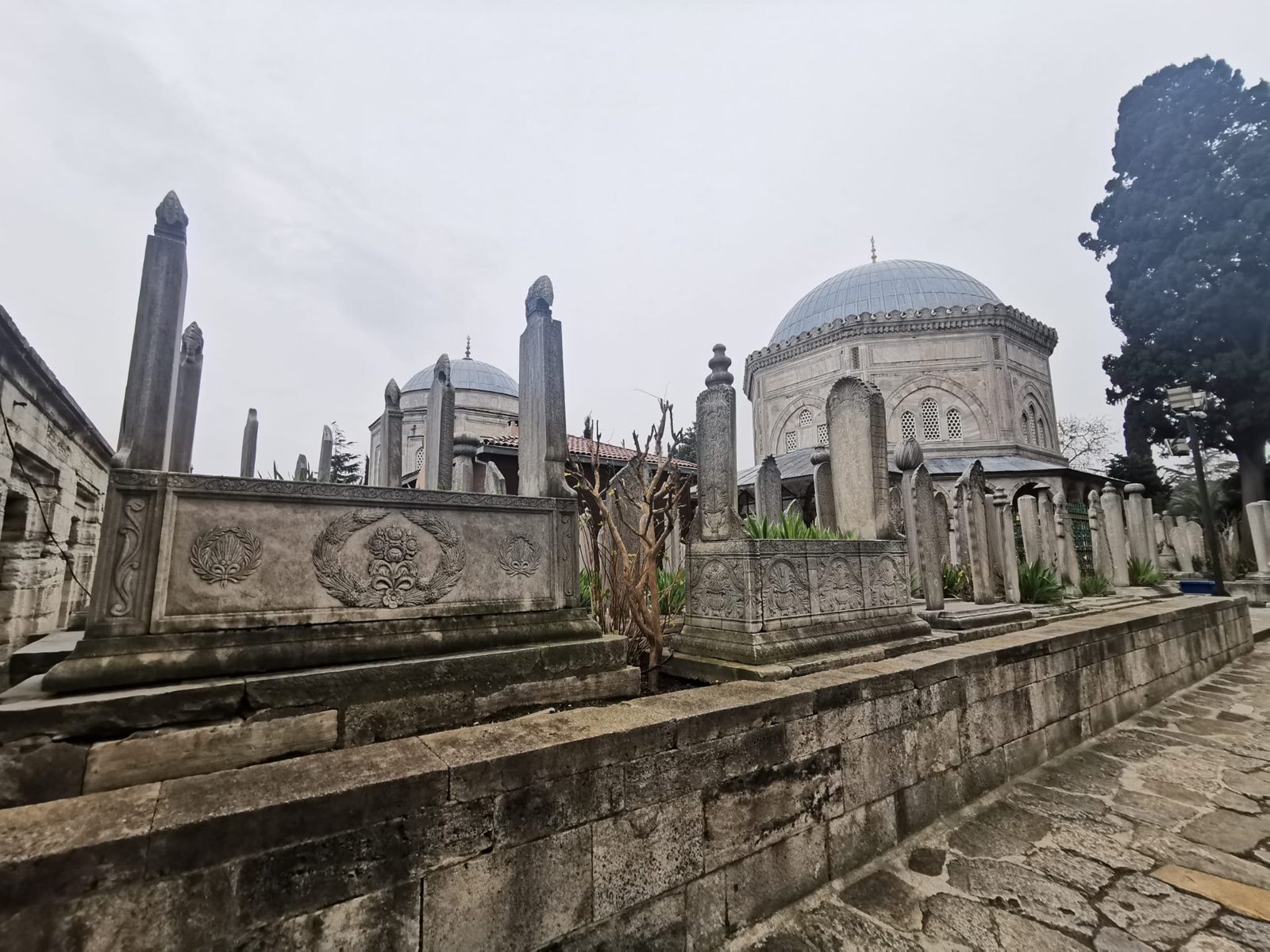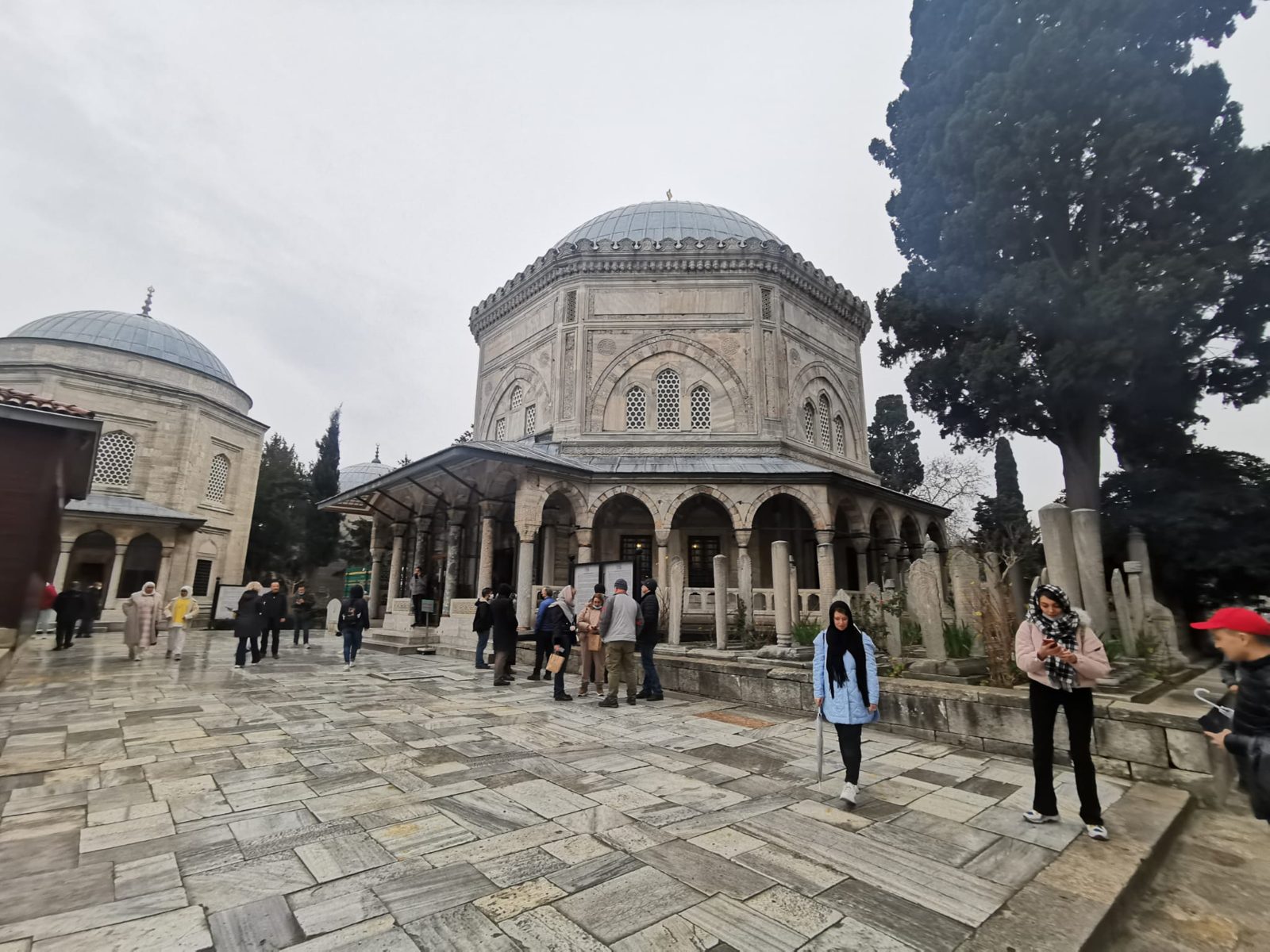

Just a few steps from the Blue Mosque stands the mausoleum of Sultan Ahmed I. Many visitors walk right past it, because the mosque itself naturally catches the eye far more strongly. Yet the türbe is historically extremely important. Here lies the sultan after whom not only the mosque, but practically the entire district, is named. Buried beside him are numerous members of his family, including his wife Kösem Sultan and several of his children and later sultans.
Just a few steps from the Blue Mosque stands the mausoleum of Sultan Ahmed I. Many visitors walk right past it — yet the türbe is historically extremely important.
To meet Ahmed I as a ruler and as a person, start with Sultan Ahmed I: Life and Reign. The lives of the other sultans are in Osman II, Murad IV and Kösem Sultan.
Ahmed I lived to be only 27. Yet his short reign changed a dynastic problem that had accompanied the Ottoman ruling family for generations. He let his brother Mustafa live, even though in earlier decades a new sultan had often had rival brothers killed. This decision wasn't a humane revolution overnight, but it was an important step toward a different system of succession.
- Sultan Ahmed I reigned from 1603 to 1617.
- He ascended the throne at just thirteen years old.
- He had the Blue Mosque built, but died shortly after its completion.
- Unlike several predecessors, Ahmed did not have his brother Mustafa killed.
- Mustafa I did in fact become sultan after Ahmed's death.
- This development contributed, over the long term, to the shift from fratricide to the seniority and Kafes systems.
- Ahmed's mausoleum stands directly beside the Sultan Ahmed Mosque.
- Numerous members of the dynasty lie in the türbe, including Kösem Sultan and several children.
Ahmed I: sultan at thirteen
Ahmed was born in 1590 and was still a child when his father Mehmed III died in 1603. At the age of thirteen he ascended the Ottoman throne. The responsibility that came with it was enormous: war with the Habsburgs, fighting against the Safavids, and severe uprisings in Anatolia strained the empire.
The court was, at the same time, shaped by the consequences of earlier successions. Ahmed's father, Mehmed III, had had nineteen brothers killed upon his own accession in 1595. This event is among the most extreme examples of dynastic fratricide, and shows the political world Ahmed grew up in.
Why his reign was more difficult than the mosque suggests
The Sultan Ahmed Mosque looks today like a sign of unchallenged power. Ahmed's actual reign, however, was marked by problems. The long wars against the Habsburgs ended in 1606 with the Peace of Zsitvatorok. This treaty is often seen as a sign that the diplomatic relationship between the Ottomans and the Habsburgs was changing, with the sultan's earlier symbolic superiority expressed less clearly than before.
At the same time, the Celali revolts shook Anatolia. Economic hardship, tax pressure, military changes and local power struggles combined into a long-running crisis. Grand Vizier Kuyucu Murad Pasha moved against the rebels with extraordinary severity.
So Ahmed was no sultan who simply had a beautiful mosque built during a peaceful golden age. His great project arose during a politically tense period.
Ahmed and the question of fratricide
Since the 15th century, the killing of brothers had been legally legitimized as a means of preventing dynastic civil wars. Mehmed II had stated in his law code that a new sultan could have brothers killed in the interest of state order. This rule built on earlier power struggles and was applied several times in the 16th century.
The background was brutal but politically understandable: for a long time there was no fixed rule that the eldest son automatically inherited. Several princes could lay claim to the throne. Each of them potentially had his own supporters, soldiers and provincial networks. A change of ruler could therefore easily end in civil war.
The solution, for a time, was to kill possible rivals. From the dynasty's point of view, the death of a few princes was meant to prevent a war with tens of thousands of dead. For the brothers and children affected, this state logic was of course deadly all the same.
Mustafa survives — and later becomes sultan
Ahmed let his younger brother Mustafa live. Exactly why can't be explained by a single reason. At the start of his reign, Ahmed had no sons of his own yet; had he killed Mustafa and then died childless himself, the dynasty's male line could have fallen into crisis. Personal factors and shifts in court thinking likely played a role too.
When Ahmed died in 1617, something historically significant happened: it wasn't automatically his eldest son who succeeded him, but Mustafa who became sultan. This gave weight to the principle of seniority — succession by the eldest living male member of the dynasty.
Mustafa's reign was chaotic and was interrupted twice. Even so, the dynastic logic was now different. Princes no longer had to compete against each other as provincial governors; they were increasingly kept at the palace instead. Out of this developed the infamous Kafes, the "cage."
Kösem Sultan and the next generation
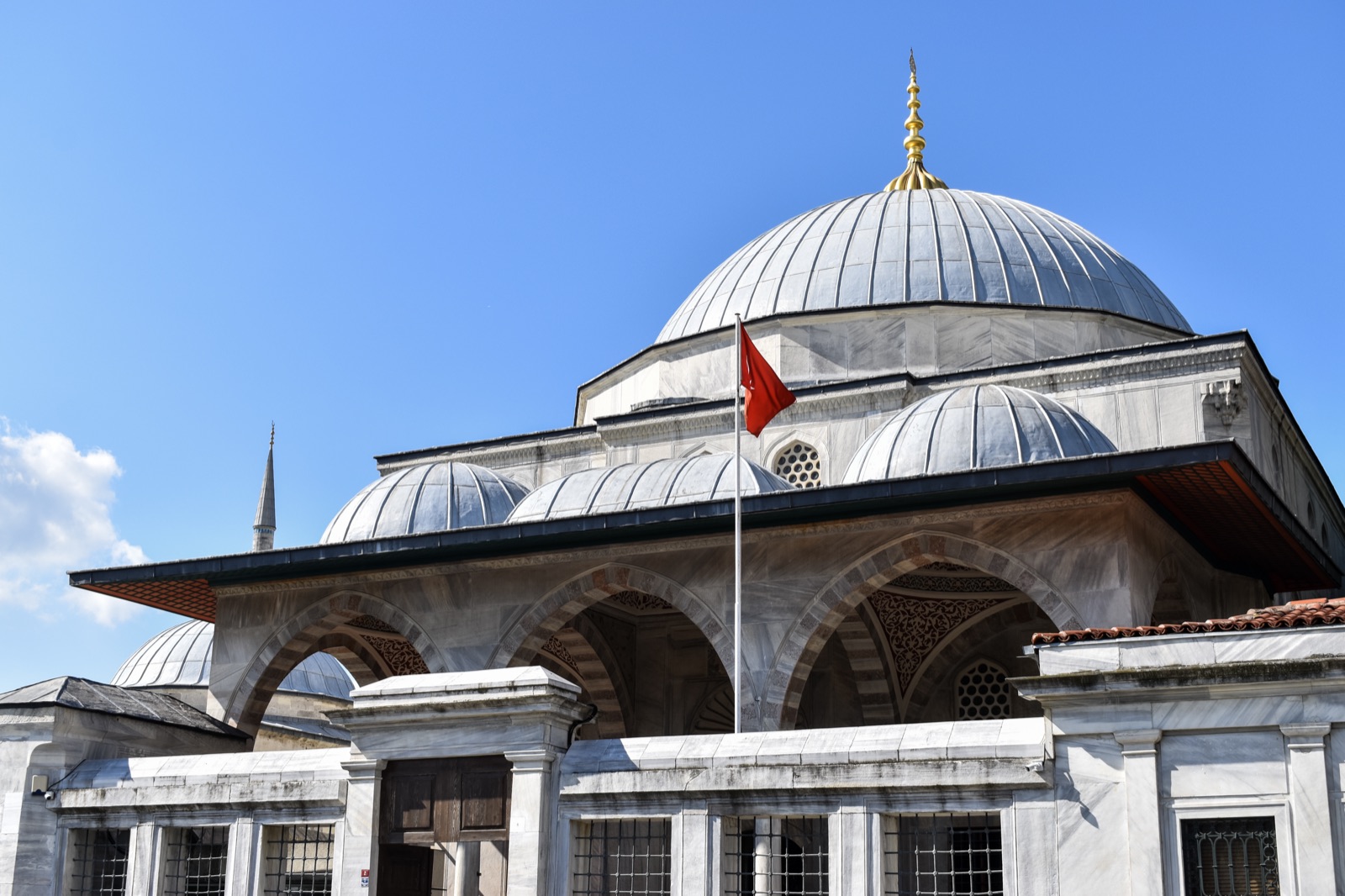
Ahmed's most important companion was Kösem Sultan, one of the most powerful women in Ottoman history. She became the mother of the later sultans Murad IV and İbrahim, and played a central political role as Valide Sultan and, at times, as regent.
After Ahmed's death, the succession became extremely turbulent. Mustafa I, Osman II, Mustafa again, Murad IV, and later İbrahim followed one another within a relatively short span of time. Osman II was killed by Janissaries in 1622 — a shock, since it meant a reigning sultan had been removed by his own soldiers.
Kösem navigated this world among underage sons, court factions and the military. Her power was real, but it too ended violently: in 1651 she was strangled in the palace after becoming entangled in a power struggle with Turhan Sultan.
The mausoleum and its architecture
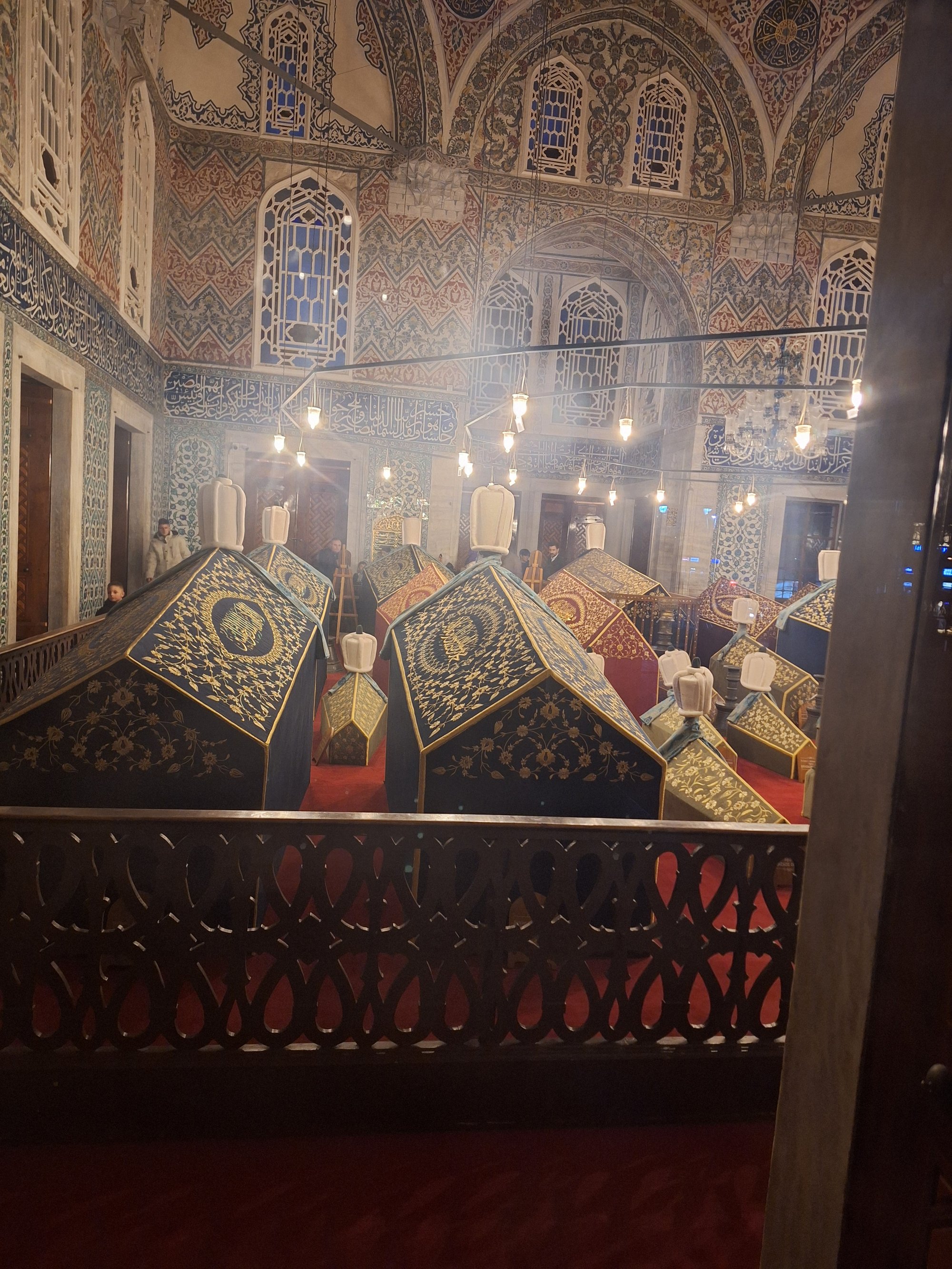
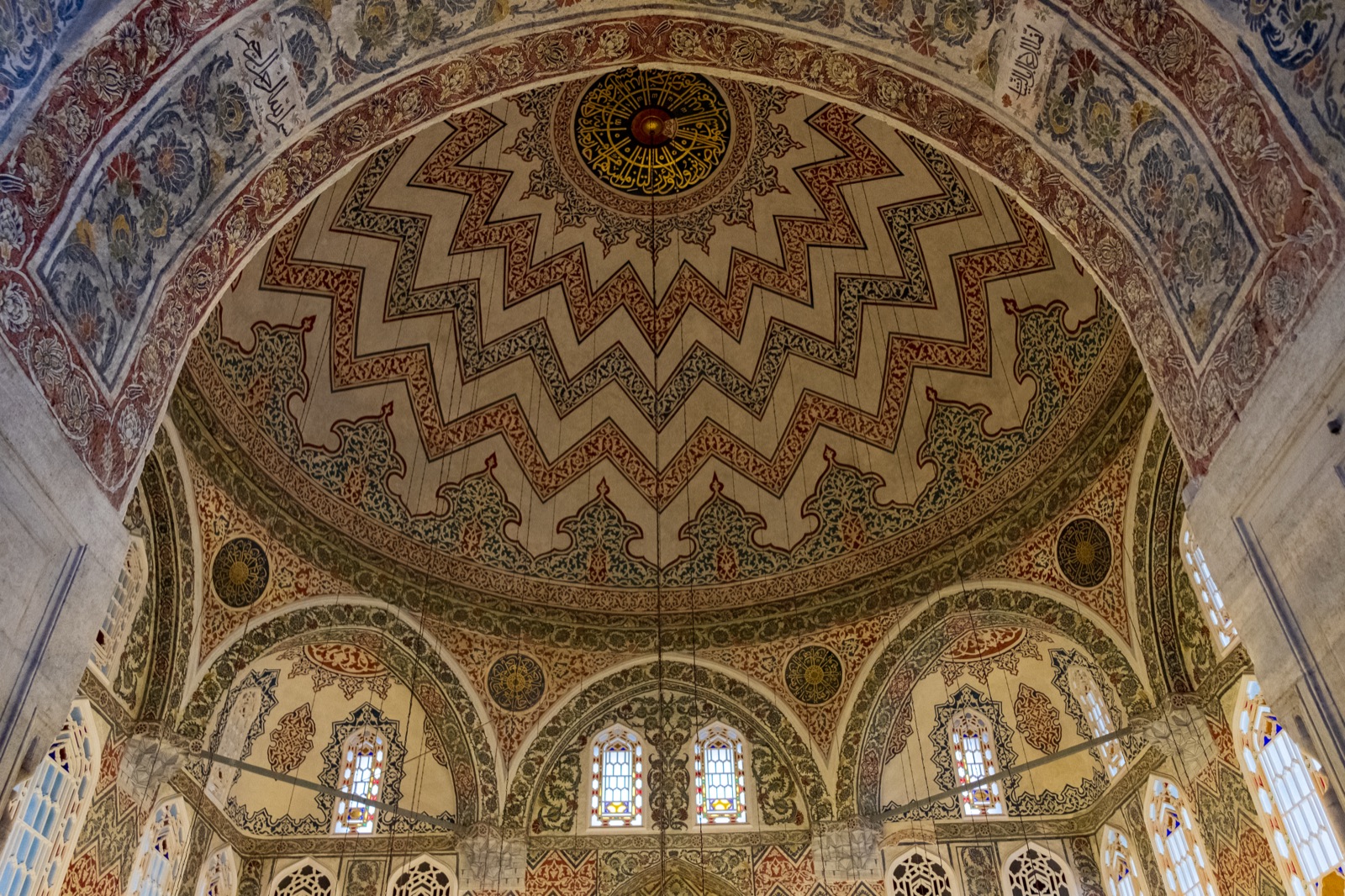
Ahmed I's mausoleum was completed after his death, within the grounds of his mosque. The building is relatively large, because it was never meant for a single sultan alone. A wide dome spans the interior, and the walls are decorated with İznik tiles, calligraphy and ornamental decoration.
As with Ottoman türbes, the actual bodies lie beneath the floor. The visible elongated sandukas mark the graves symbolically. Textiles and forms of headwear can indicate rank and gender.
The proximity to the Blue Mosque creates a clear dynastic link: Ahmed had the great house of worship built, and was buried directly beside it. His name thus remained permanently, spatially, tied to his endowment.
Why so many children's graves lie here
It's exactly here that a mausoleum becomes emotionally difficult. Among the large sandukas lie smaller grave markers. Some belong to children who died young of illness; other relatives fell victim to the violence of dynastic politics.
Child mortality was high in the early modern period, even in palaces. Medicine couldn't effectively treat infections, epidemics and numerous illnesses. Wealth protected against much, but not against everything.
On top of that came the dangerous politics of succession. Ahmed himself let his brother live, but later generations weren't entirely free of princely executions. Sultan Osman II was killed, Murad IV had brothers executed, and only over the long term did systematic fratricide lose its central role.
So when you see small graves, you shouldn't automatically explain every child's burial as political murder. Some children died of illness. For other princes, political executions are documented. That distinction matters.
Osman II: the young sultan whose end shook the dynasty
Among the most important figures in the mausoleum is Osman II, a son of Ahmed I. He ascended the throne in 1618 as a teenager. After a militarily disappointing campaign against Poland-Lithuania, he apparently tried to curb the power of the Janissaries and build up new military structures. That's exactly what made him a threat to parts of the corps.
In 1622 a revolt broke out. Osman was deposed, captured, and ultimately killed in the Yedikule prison. That a reigning Ottoman sultan was overthrown and murdered by his own soldiers was a massive breach of taboo. For centuries the dynasty had eliminated princes to protect the throne; now it turned out that the sultan himself was not untouchable either.
Osman II was only about eighteen years old. His death is therefore one of the moments that suddenly make the small and large sandukas in the mausoleum feel different. Behind them stand not just names in a line of ancestors, but very young people whose lives were determined by political structures.
Murad IV: order through extreme severity
Ahmed's son Murad IV ascended the throne in 1623 as a child. In the early years, Kösem Sultan exerted considerable influence as Valide Sultan. Later, Murad took personal control and ruled with great severity.
He at times banned alcohol, tobacco and coffeehouses, or moved harshly against their use, since such places could also be seen as meeting points for political opposition. Reports of personal nighttime patrols and immediate executions are part of his feared reputation. Some anecdotes were embellished, but his authoritarian, violent style of rule is well documented.
Militarily, he succeeded in 1638 in recapturing Baghdad from the Safavids. A few years later, in 1640, he died at only 27 — an almost eerie repetition of his father's short life.
İbrahim and the end of a dangerous generation
After Murad's death, his brother İbrahim remained as the dynasty's only surviving male. He had lived for a long time in the Kafes and knew that several brothers had been killed on Murad's orders. When he was told in 1640 that he was to become sultan, he is said to have at first believed it was a trap. That reaction is at least psychologically understandable, even if individual dramatic dialogues were later embellished.
İbrahim's reign grew increasingly unstable. In 1648 he too was deposed and shortly afterward executed. The generation of Ahmed I thus shows very clearly that the end of systematic fratricide didn't automatically mean peace. Violence simply shifted: the Kafes, palace coups, Janissary revolts and court intrigue became the new dangers.
Kösem Sultan: mother of two sultans, regent, and victim of a palace power struggle
Kösem Sultan outlived Ahmed by more than three decades. She was the mother of Murad IV and İbrahim, and grandmother of Mehmed IV. Across several phases she wielded considerable political influence as Valide Sultan and regent. That makes her one of the most powerful women in Ottoman dynastic history.
Her power rested on experience, networks, endowments, and her position as mother or grandmother of underage rulers. At the same time, she eventually came into conflict with Turhan Sultan, the mother of Mehmed IV. In 1651, Kösem was killed at Topkapı Palace.
That she now lies beside Ahmed I in his türbe gives the mausoleum an added dimension. Resting there are not just a married couple, but two people whose dynastic decisions shaped 17th-century politics for decades.
How the Kafes system really worked
"Kafes" is often portrayed as a single small barred cage. In reality, the term referred to a sealed-off area within the palace where potential heirs to the throne lived under control. Conditions could vary considerably by person and era. Some princes had servants, books and comparatively comfortable quarters, but were politically isolated and couldn't freely leave the palace.
The psychological consequences were potentially severe. A prince knew he could become sultan or be killed at any time, but often received no practical administrative experience. The earlier system had sent princes out as provincial governors; the new one kept them confined at court. It prevented some dynastic civil wars, but it also produced rulers who were, in some cases, completely unprepared when they reached the throne.
"Ahmed I abolished fratricide with a law." False. There was no single decree abolishing it. His decision to let Mustafa live was a turning point; the practice changed gradually afterward.
"Every small grave in Ottoman mausoleums belongs to a murdered child." False. Child mortality was high. Political killings did occur, but every grave has to be considered individually, historically.
"Kösem Sultan officially ruled as sultan." No. She was not a sultana in the sense of an independent female monarch, but as Valide Sultan and regent she held extraordinary influence at times.
My take on this place
At these mausoleums I always feel great respect, but at the same time an uneasy feeling down my spine. Especially when small sandukas lie among the large ones, I automatically think: who was this child? How old did they get? Were they sick? Or were they, at some point, declared a threat simply for being born into the wrong family?
Of course you shouldn't turn every small grave into a murder story. But you shouldn't pretend dynastic rules were just dry politics either. Behind the word "succession" stood brothers, mothers, children — people who knew that a relative's rise could mean their own death.
That Ahmed let his brother Mustafa live is exactly what makes him historically more interesting to me than just the fact that he had a beautiful mosque built. He didn't change everything at once. But with his generation, something began to shift.
– Amra