 Music · Travel · Lifestyle
Topkapı isn't a palace you should try to understand like Versailles. Anyone expecting a single monumental building with a symmetrical facade, a huge central staircase, and long axial halls is looking for the wrong principle. Topkapı is, rather, a palace-city whose architecture organised power by deciding who was allowed to go where.
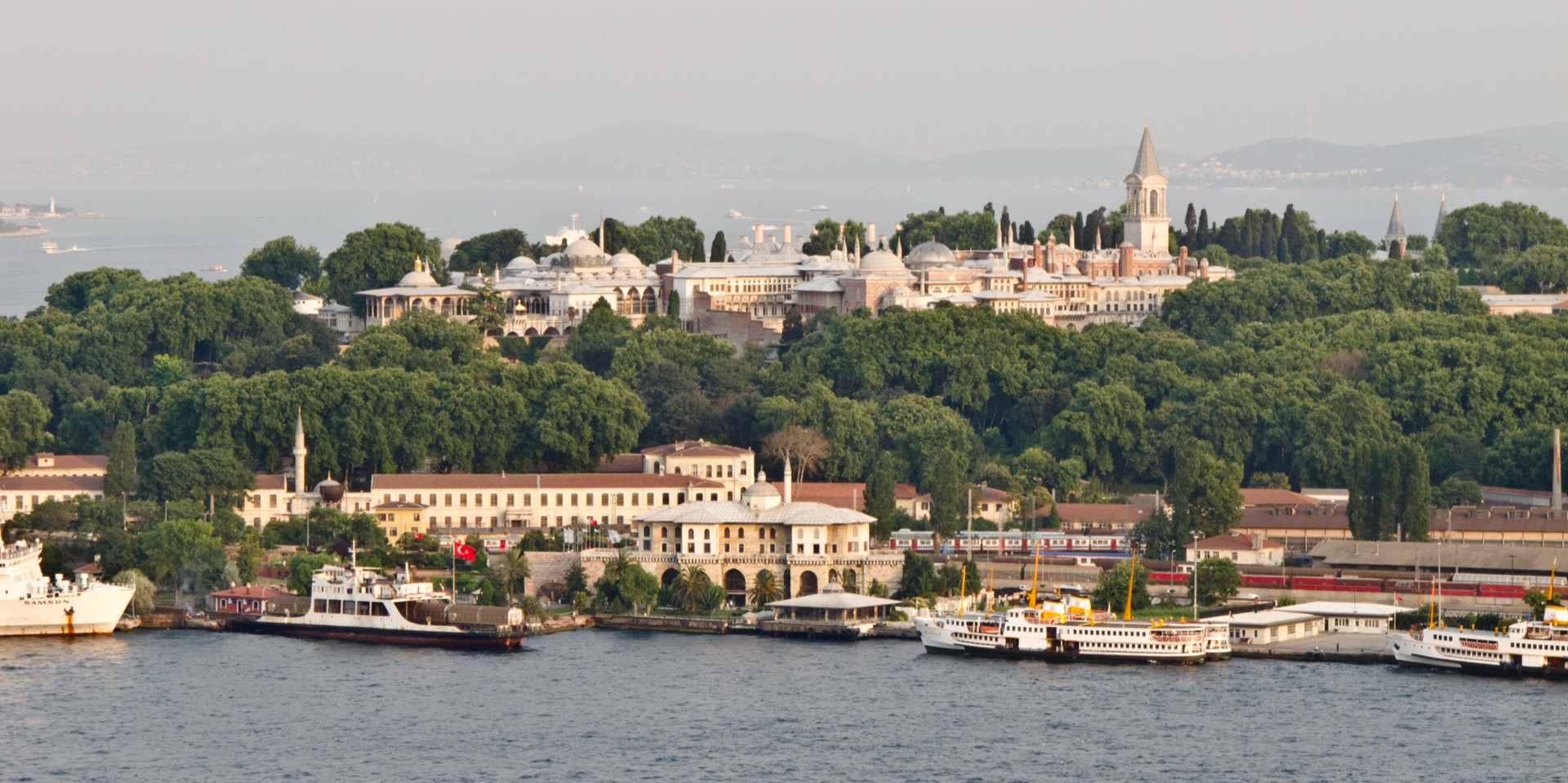
Topkapı isn't a palace you should try to understand like Versailles. Its architecture organised power by deciding who was allowed to go where.
Between roughly 1460 and 1478, Mehmed II had the new palace built on Sarayburnu after the conquest of Constantinople. Successive sultans expanded it over centuries. Until the 19th century, Topkapı remained a central residential, administrative, educational, and ceremonial hub of the Ottoman dynasty. The complex therefore tells not just of luxury, but of how a vast empire actually functioned, organisationally.
- Mehmed II had Topkapı built as the new palace after 1453.
- The complex works through four courtyards with increasingly restricted access.
- The harem was a dynastic residential, educational, and administrative space, not an erotic leisure area.
- State affairs were negotiated in the Divan; the sultan could sometimes follow deliberations unseen.
- The Valide Sultan could hold considerable political influence.
- Ottoman succession was long marked by violence; later, the so-called Kafes increasingly replaced open competition between princes.
- By the 19th century, Topkapı increasingly failed to meet the demands of modern diplomacy, which is why the court moved to Dolmabahçe.
Why Mehmed II Needed a New Palace
After conquering Constantinople in 1453, Mehmed II had to turn a heavily damaged Byzantine capital into a functioning centre of his empire. A palace first arose in what is now Beyazıt, later called the "Old Palace." Mehmed soon decided, however, on a new site at the tip of land between the Bosphorus, the Sea of Marmara, and the Golden Horn.
The site was strategically and symbolically outstanding. The Acropolis had already stood here in Byzantine times. From Sarayburnu you could watch shipping traffic, while the palace lay right next to the historic centre. Its proximity to the Hagia Sophia and the former imperial grounds was no coincidence.
The new palace wasn't completed in a single building phase. Mehmed created the basic structure, and later sultans added pavilions, rooms, harem sections, and administrative buildings. Anyone visiting Topkapı is therefore moving through several centuries of architecture.
Four Courtyards, and Ever Less Access
The genius of Topkapı lies in the architecture of distance. The further in you go, the closer you get to the sultan — and the fewer people are allowed to come along.
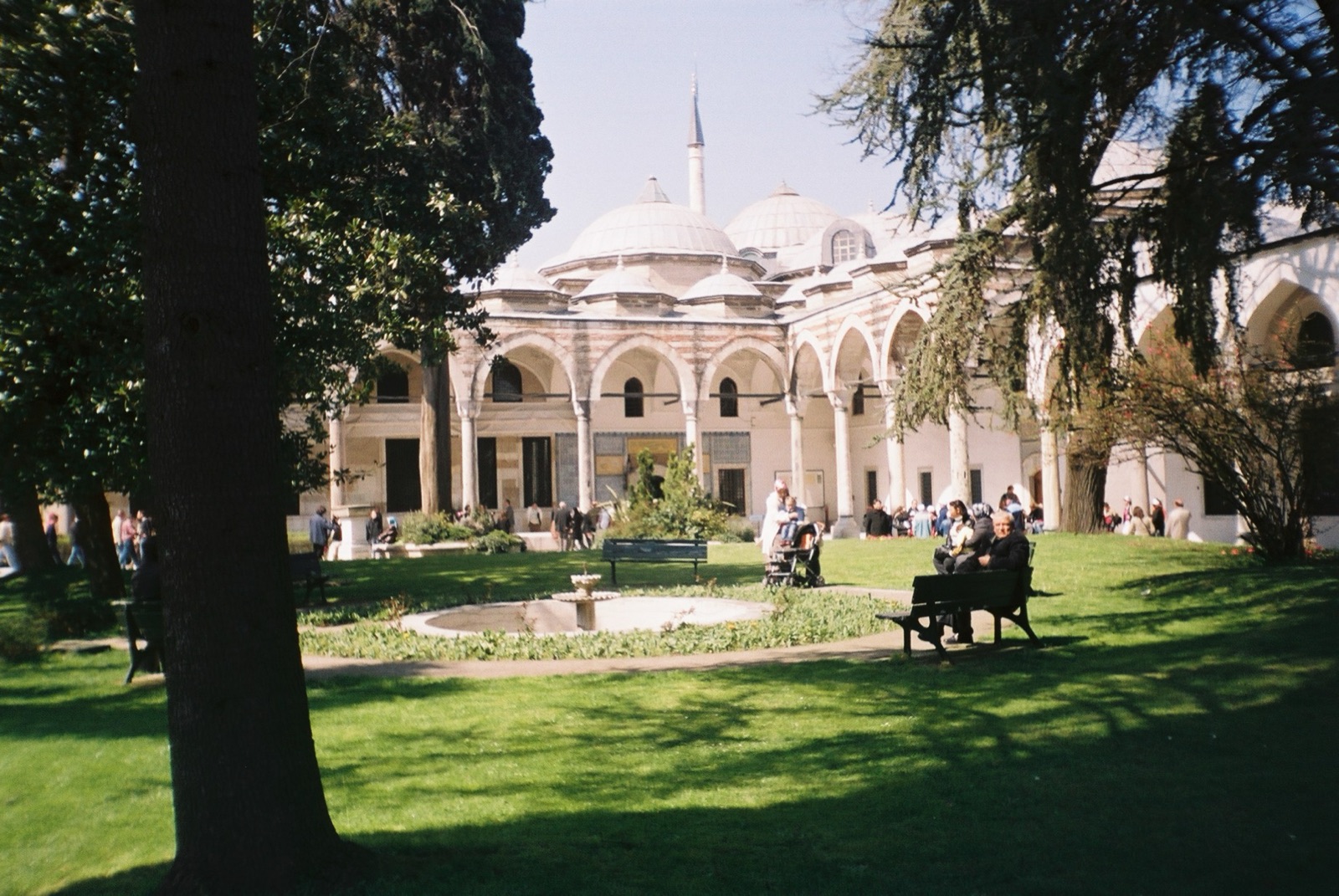
The first courtyard was relatively public. It held service buildings, workshops, and the Hagia Irene. The second courtyard was already more tightly controlled and served as the administrative centre; the Divan, the kitchens, and the entrances to the harem are located there. Through the Gate of Felicity you entered the third courtyard, the inner realm of the Enderûn and the ruler's immediate world. The fourth courtyard consisted more of gardens, terraces, and private pavilions.
This staging was practical and political at once. Access meant rank. Anyone allowed as far as the third courtyard belonged to a very small circle. The architecture said, without a single sign: power is proximity, and proximity is controlled.
The Divan and the Sultan's Window
In the Divan-ı Hümayun, the grand vizier and other high state officials deliberated on administration, finance, law, war, and diplomacy. Contrary to a common assumption, the sultan didn't permanently sit in the middle of the room at every session. Over the course of Ottoman history, the grand vizier increasingly took charge.
Particularly interesting is the latticed, screened window above the council chamber. From there, the sultan could follow sessions without visibly taking part himself. The mere possibility that he might be listening was politically effective. No one could be sure whether the ruler was sitting behind the wall at that moment or not.
The Divan therefore shows brilliantly how Topkapı worked: visibility, invisibility, and access were all part of the system of rule.
The Harem: What It Really Was
The word "harem" immediately triggers images in the European mind that have more to do with 19th-century Orientalist paintings than with real court life. The harem was the private dynastic residence of the sultan and his family, but at the same time a strictly organised household with its own hierarchy, education, staff, and political significance.
Among those who lived there were the sultan's mother, his consorts, children, female relatives, and numerous servants. Women who came to the palace as cariye could receive training in religion, language, music, needlework, and courtly conduct. A large court household needed many functions, and a considerable share of the women living there never had a sexual relationship with the ruler at all.
Life there was by no means free, though. Access and behaviour were subject to strict rules. Still, anyone who rose within the harem could gain wealth, influence, and an extraordinary social position.
Valide Sultan, Hürrem, Nurbanu, and Kösem
The most powerful woman at court could be the Valide Sultan, the mother of the reigning sultan. Her closeness to her son, her own household, foundations, wealth, and political networks gave her potentially considerable influence. How great that influence actually was depended on personality, the political situation, and her relationship with the sultan.
Especially in the 16th and 17th centuries, women such as Hürrem Sultan, Nurbanu Sultan, and Kösem Sultan stand out clearly in political history. The term "Sultanate of Women" is used for this era, but it can be misleading if it's taken to mean a secret government of women. These women operated within a dynastic court order in which access to the sultan and control over family networks meant enormous power.
Hürrem also changed the dynastic residential order by remaining permanently and closely tied to Süleyman's court, achieving an unusually strong position as the sultan's legally married wife.
Princes, Fratricide, and the Kafes
Ottoman succession long did not follow the European principle of "the eldest son automatically inherits." In principle, several princes could lay claim to the throne. They were sent out as governors to the provinces, gained administrative experience, and built up their own networks there. When the sultan died, a race for the capital often began.
The problem was obvious: whoever lost could become the centre of a civil war. Under Mehmed II, the killing of brothers was therefore explicitly legitimised in his law code, in the interest of state order. That didn't make fratricide automatic at every succession, but it created a legal basis for a practice that had already occurred before.
Especially shocking is the case of Mehmed III, who had nineteen brothers killed after his accession in 1595. After that, the open killing of princes became increasingly problematic. Ahmed I let his brother Mustafa live. In the 17th century, the principle of seniority became more established, whereby the eldest suitable male member of the dynasty often succeeded.
This, however, created a different problem: potential heirs sometimes lived for years in the so-called Kafes, a sealed-off section of the palace. They were no longer necessarily killed, but they were isolated from political life. Some ascended the throne after long confinement without ever having governed a province.
The Enderûn School
The third courtyard was also a place of education. In the Enderûn, selected young men were trained for high offices in state service. Instruction and court service were combined there. Talent, loyalty, and proximity to the ruler could open the way to extraordinary careers.
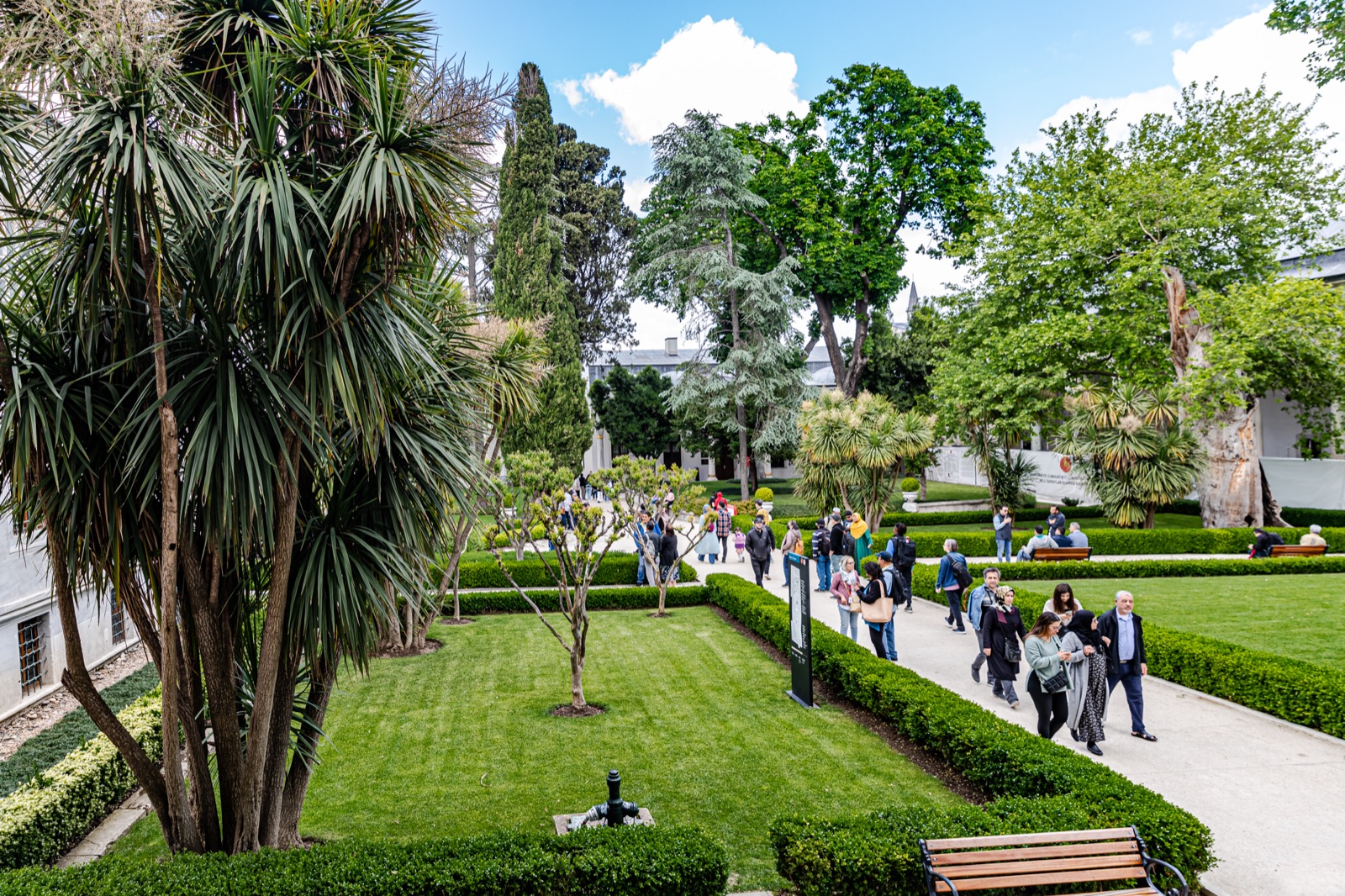
The Ottoman system thus didn't recruit its leadership exclusively from a hereditary aristocracy. Many of the most powerful statesmen didn't originally come from old Muslim noble families, but reached the highest positions through palace and administrative training.
The Treasury, the Dagger, and the Kaşıkçı Diamond
The Treasury is today one of the museum's best-known sections. Especially famous is the Topkapı Dagger, whose handle is set with large emeralds. It was originally intended as a diplomatic gift for Nader Shah of Persia. Before the gift reached its destination, Nader Shah was assassinated, so the dagger remained in Ottoman possession.
Even more legends surround the Kaşıkçı Elması, the Spoonmaker's Diamond. Various stories explain its name: a poor man is said to have found it on a rubbish heap and sold it for a few spoons; a spoonmaker is said to have acquired it; or the name may relate to its shape.
The stone's origin isn't fully established. Precisely for that reason, none of these stories should be sold as a confirmed biography of the diamond.
The Holy Relics
After the Ottoman victory over Mamluk Egypt under Selim I, numerous significant Islamic relics reached Istanbul in the 16th century. These include objects traditionally linked to the Prophet Muhammad and other important figures of Islamic history. The Hırka-i Saadet, the Holy Mantle, holds particular significance among them.
For visitors, it should be clear: this is where museum and religious veneration meet. For many people, these objects aren't merely historical exhibits, but items of deep religious meaning.
Why the Court Moved to Dolmabahçe
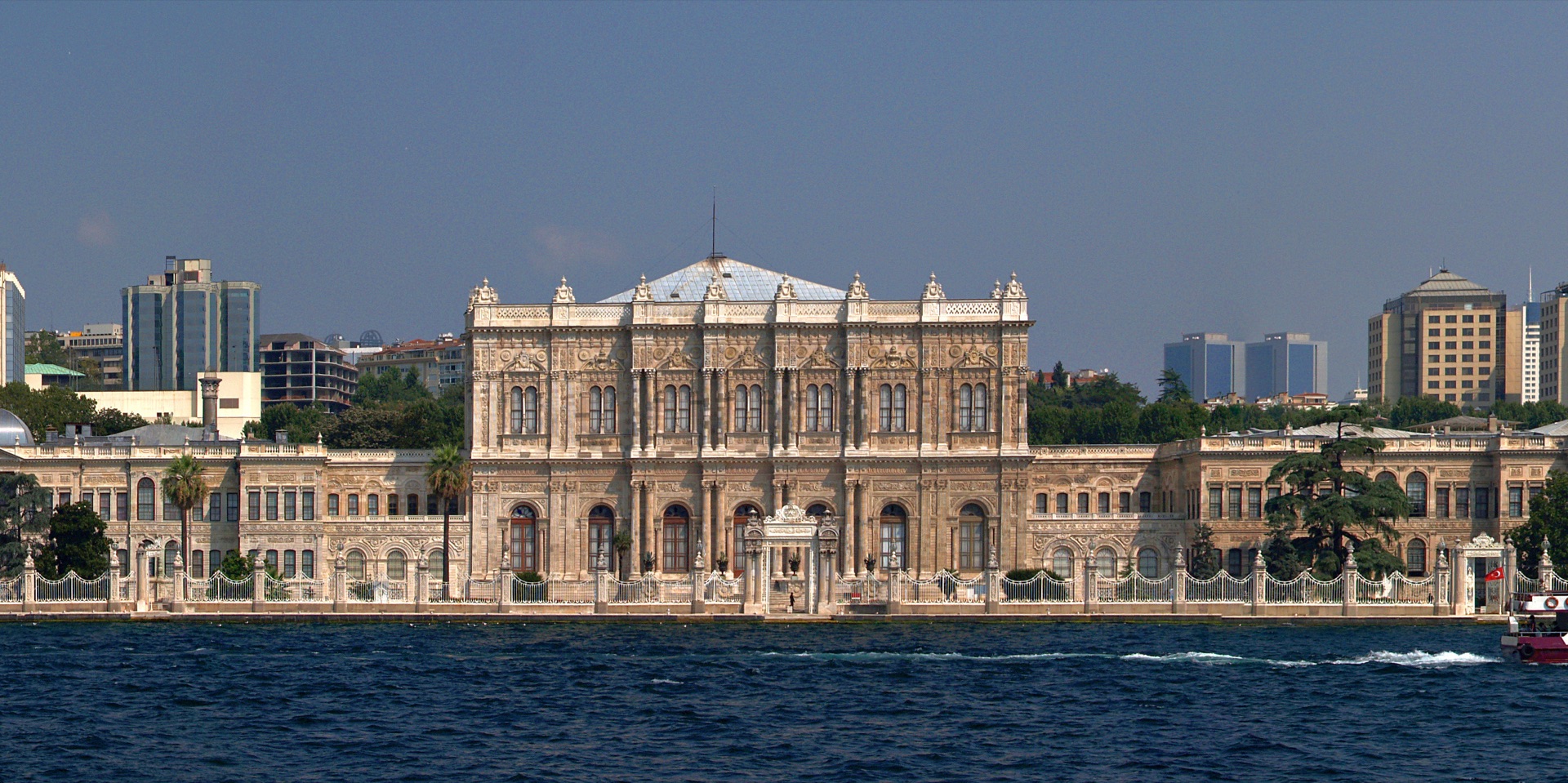
In the 19th century, Topkapı was still symbolically significant, but it met the demands of modern European diplomacy and court representation less and less. Foreign monarchies received state guests in huge, symmetrical palaces with ballrooms, grand staircases, and modern amenities. Topkapı, by contrast, was a palace-city that had grown over centuries.
Under Abdülmecid, Dolmabahçe was therefore built between 1843 and 1856. After that, the centre of dynastic residence and administration shifted there. Topkapı, however, remained the treasury, a site of memory, and the repository of the Holy Relics. After the founding of the Republic, it became a museum.
What's Actually Still Old Today
Topkapı contains sections from very different centuries. Mehmed's basic structure is recognisable, but many pavilions, harem sections, and decorations date from later phases. Fires and earthquakes repeatedly led to renewals.
So calling it "Mehmed's palace" correctly describes the historical origin, but not every room visible today. It's precisely this mix that makes the visit interesting, because you can trace the changes in Ottoman court culture across several centuries.
Kitchens, Supply, and Everyday Life Behind the Grand Politics
Topkapı wasn't only the place where grand viziers deliberated on war and diplomacy. Thousands of people had to be fed every day. The huge palace kitchens in the second courtyard are a reminder of how much logistics stood behind the courtly world. Food was purchased, stored, prepared, and distributed to different groups. Rank determined not only where someone was allowed to live, but in part also which food and which tableware they were entitled to.
The palace's famous porcelain collections also reveal the Ottomans' global trade connections. Chinese porcelain reached Istanbul via long trade routes and was highly prized at court. Such objects therefore tell not just of luxury, but of the economic networks the empire was embedded in.
The palace's fountains, baths, sleeping quarters, and service corridors also make clear that Topkapı was a functioning small city. If you visit only the Treasury and the Harem, it's easy to overlook the enormous number of people who kept this court running at all.
The Tower of Justice and the Staging of Rule
The so-called Tower of Justice rises clearly above the second courtyard. Its height was no accident. It symbolised the sultan's presence and the idea that law and order should emanate from his rule. Of course, such a tower didn't automatically mean every decision was just. Architecture always also shows how a government wanted to present itself.
Topkapı is therefore particularly well suited to distinguishing between the ideal of rule and political reality. The sultan was meant to appear as a just, pious, and controlling ruler. At the same time, court intrigue, power struggles, executions, and dynastic violence existed. Both belong to the palace's history.
Harem and Politics: Why Proximity Could Matter More Than an Official Post
Women of the court formally held none of the same governing offices as grand viziers or military commanders. Still, direct access to the sultan could be enormously politically valuable. Anyone who could speak with the ruler, pass on recommendations, arrange marriages, or fund foundations had influence over networks and decisions.
Hürrem Sultan is a particularly clear example of this. Her position changed not just Süleyman's private life, but the dynastic order itself. Nurbanu, and later Kösem, were active in an era in which sultans' mothers, wives, and other women of the court helped shape diplomatic contacts, foundations, and personnel decisions.
That doesn't mean "the women secretly ruled the empire." But it just as surely doesn't mean they were politically insignificant. The truth lies in the concrete scope for action that arose from their position within the palace.
The First Courtyard: Still City, Already Palace
The first courtyard formed a transition zone between public Istanbul and the sealed-off world of the ruler. More people moved through here than through the inner areas, and numerous service and supply functions were located here. The Byzantine Hagia Irene also survived within this area. This alone shows that Mehmed didn't build his palace on a blank slate; older structures were partly retained while a new order arose around them.
With the Gate of Salutation, the atmosphere changed fundamentally. The second courtyard was already strongly ceremonial. Rank determined who was allowed to ride, who had to walk, and how far anyone was admitted at all. The palace needed no modern access cards, because gates, guards, clothing, and ritual served the same function. Architecture made hierarchy visible.
The Kitchens and the Huge, Invisible World of Work
Topkapı didn't consist only of the sultan, viziers, and princesses. Thousands of people had to eat, sleep, work, and be provided for. Cooks, bakers, craftsmen, stable staff, guards, maidservants, scribes, and countless other workers made the palace a complex world of labour. The great kitchens with their striking chimneys are a reminder that an enormous logistical apparatus stood behind the political stage.
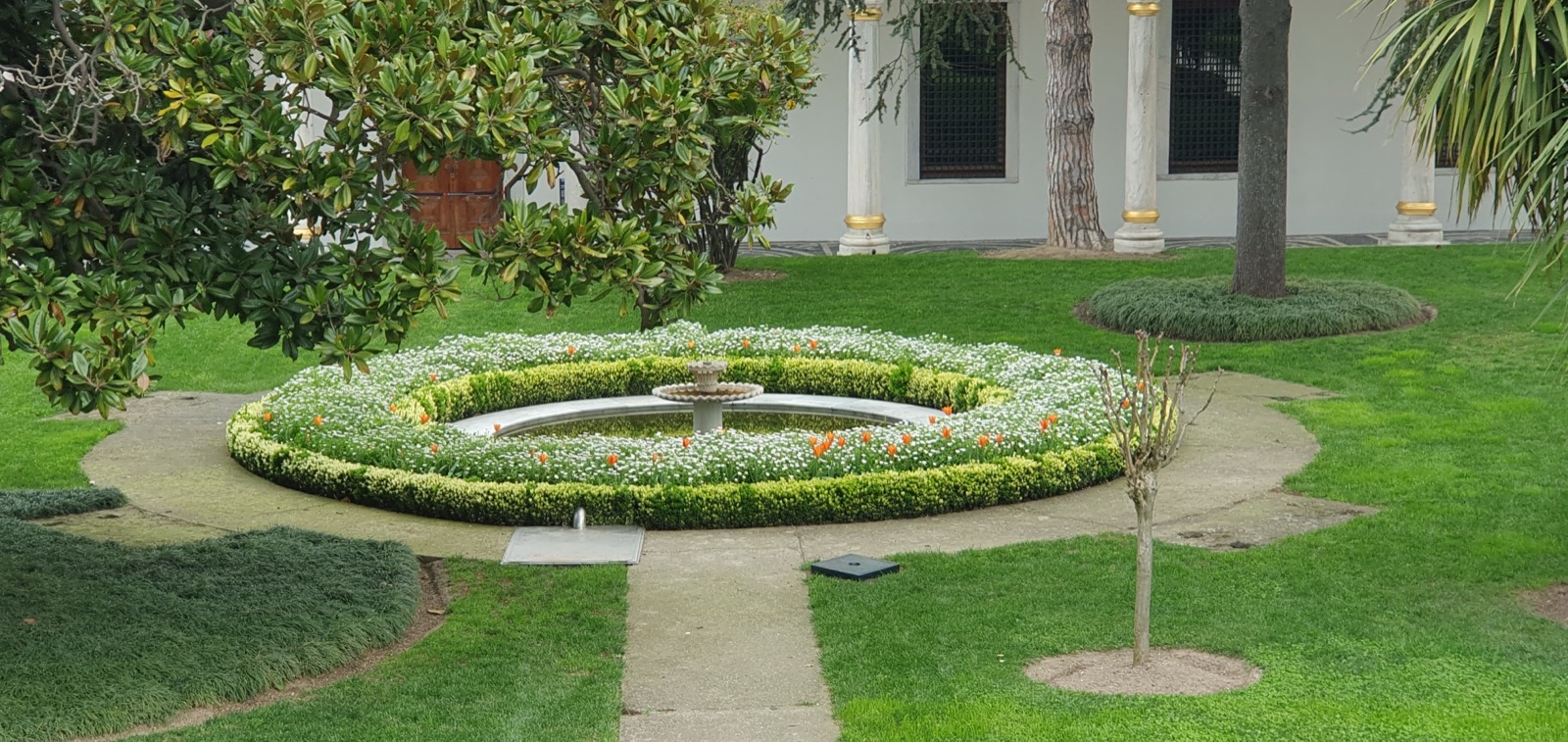
The porcelain collections preserved there also tell of global connections. Chinese porcelain reached the court through trade and gift networks. Spices, sugar, rice, meat, and other foodstuffs had to be sourced from different regions. Even a meal at the palace was therefore part of imperial economy and logistics.
What "Sultanate of Women" Really Means
The phrase sounds as if women had suddenly, officially, taken over the government. What's actually meant is a longer period in which women of the dynasty — above all mothers, wives, and grandmothers of sultans — wielded exceptionally great political influence. Their power rested not on a throne of their own, but on closeness to the dynasty, wealth, patronage, and control over access.
Hürrem Sultan changed the court order simply by remaining permanently at the centre of the dynasty and becoming Süleyman's legally recognised wife. Nurbanu Sultan, as the mother of Murad III, built a strong political network. Kösem Sultan became, at times, one of the most influential people in the empire during a particularly unstable era in which underage or weak sultans ruled. Her power was real, but never without danger. Kösem was killed in the palace in 1651 — a drastic example of how closely political influence and personal risk were bound together.
Eunuchs Controlled More Than Just Doors
The harem included eunuchs, particularly the Black Eunuchs organised under the Kızlar Ağası. Popular depictions often treat them as exotic side characters. In fact, leading eunuchs could hold administrative and political significance, because they controlled access, relayed messages, and stood in immediate proximity to the ruling family.
Whoever controls access always controls part of the information too. That's precisely why the harem wasn't a politically insignificant private space. The dynasty's next generation lived there, the sultan's mother resided there, and relationships were formed there that could later influence the state.
The Kafes Solved One Problem and Created a New One
The older system sent princes out as governors to the provinces. That gave them political and military experience, but also made them rivals with their own households and supporters. The later practice of keeping potential heirs inside the palace reduced the risk of open civil wars and fratricide. At the same time, men could live in isolation for decades without ever gaining administrative experience.
A prince could therefore suddenly become sultan despite never having governed a province or led an army. Some also lived in fear that, despite all the new rules, they might still be killed. The Kafes was thus less bloody than the systematic elimination of rivals, but it was by no means a humane solution in the modern sense.
Ambassadors Were Meant to Physically Feel the Power
Foreign envoys passed through the palace under strict protocol. They waited, were escorted, received meals, and reached the sultan only after several spatial and ceremonial stages. These delays weren't an organisational oversight. They produced an effect. The visitor was meant to feel that he was being admitted to the centre of a great power.
European travel accounts often described these rituals with fascination, and sometimes with Orientalist exaggeration. Still, they help us understand that Topkapı wasn't merely a residence. The palace produced political messages through space, time, and controlled proximity.
The Third Courtyard: Education, Audience, and Immediate Proximity to the Ruler
Beyond the Gate of Felicity began a world that wasn't open at all times even to high officials. The third courtyard held the rooms of the Enderûn school, the audience chamber, and facilities directly linked to the sultan. A foreign ambassador who made it this far had already passed through several layers of control and ceremony. The audience itself was brief, strictly regulated, and often accompanied by translators and senior officials.
Enderûn training combined knowledge, physical training, court service, and loyalty. Young men could prepare here for extraordinary careers. Some later rose to become governors, military commanders, or senior administrators. The system shows how strongly the palace functioned as an educational institution. Topkapı didn't just produce decisions; it also produced some of the people who would later carry those decisions out across the empire.
The Fourth Courtyard: Privacy Was Political Too
In the fourth courtyard, the complex opens onto terraces, gardens, and pavilions overlooking the Bosphorus and the Golden Horn. These areas feel almost relaxed today, yet privacy here was strictly organised too. Pavilions could be used for meals, religious festivals, retreat, or particular meetings. The sultan was especially powerful precisely when others didn't know exactly where he was or with whom he was speaking.
The famous pavilions from different eras also show that every ruler could alter the existing ensemble. A sultan didn't have to rebuild the entire palace to make his taste visible. A new kiosk, a terrace, or a decorative room was enough to leave behind an additional dynastic layer.
Gifts, Diplomacy, and the Treasury
Many objects in Topkapı didn't enter the palace through purchase. Diplomatic gifts played a major role. Rulers exchanged weapons, gemstones, textiles, clocks, porcelain, and other luxury objects. A gift was never merely a kind gesture. It could convey rank, alliance, request, or threat.
The famous Topkapı Dagger belongs precisely to this world. It was meant to reach Nader Shah of Persia, but never got there, because the ruler was assassinated. That the piece is now regarded as a museum treasure easily obscures its original function as a diplomatic instrument. At court, luxury was always politics too.
What Visitors Can No Longer Fully See Today
Topkapı was rebuilt over centuries, and not every historical room survives in its original state. Fires, earthquakes, restorations, and changing museum use have all left their mark. Some rooms were heavily restored in the 19th and 20th centuries, while others preserved their historical furnishings better.
Today's visitor routes also don't match the freedom of movement historical residents had. Doors that stand open today were once strictly controlled; other connections are now closed or reorganised for museum use. It's worth treating the tour not as an exact recreation of a day at court, but as access to a complex historical ensemble.
"Every sultan had to kill all his brothers." False. There was a legal justification and several brutal cases, but no automatic rule identical at every succession. From the 17th century on, a different system of succession increasingly took hold.
"Hundreds of women lived in the harem purely for the sultan." False. The harem was a large dynastic household with numerous functions, hierarchies, and paths of training.
"The Kaşıkçı Diamond was definitely found on a rubbish heap." Not confirmed. This is simply one of the most popular legends about its origin.
My Thought on This Place
Topkapı only really becomes interesting to me once you stop just looking for "beautiful rooms." Every courtyard tells you how close someone was allowed to get to the sultan. Every passage means more control. The harem doesn't tell of some fantasy world, but of a dynasty that had to organise its family just as carefully as it organised its state.
And especially with the tombs and the stories about princes, I always get a different feeling. Today we look at magnificent sarcophagi and read names, but behind some of these names are children and young men who had to die simply because their existence was, at some point, seen as political competition. From our perspective today, that's cruel — and it was cruel then too, for those affected and their families, even if the political logic of the time was a different one.
History becomes interesting to me exactly when you don't just say, "That's just how it was back then." You should understand why a system arose — but you still have to see the people within it.
– Amra