A Turkish carpet looks like a finished picture from the outside. How much handwork is in it, you only understand when you sit at the loom yourself.
Advertising: If you book through our links, we may receive a commission – at no extra cost to you.
Try at the loom how a Turkish carpet is made: patterns, knots, patience. What the offer includes.
Carpets in Anatolia: older than the Ottoman Empire
The oldest surviving Anatolian carpets date from the 13th century, the Seljuk period. They were found in mosques in Konya and Beyşehir. Carpets were everyday objects, furnishings and craft at once, and different regions developed their own patterns, materials and techniques. One of Turkey's most important carpet collections belongs to the Museum of Turkish and Islamic Arts in Istanbul.
What changed under the Ottomans?
Under the Ottomans, carpets also became prestigious works of art. Court art influenced certain floral and decorative designs, while regional Anatolian traditions continued. Palace and village loom ran side by side.
What the offer includes
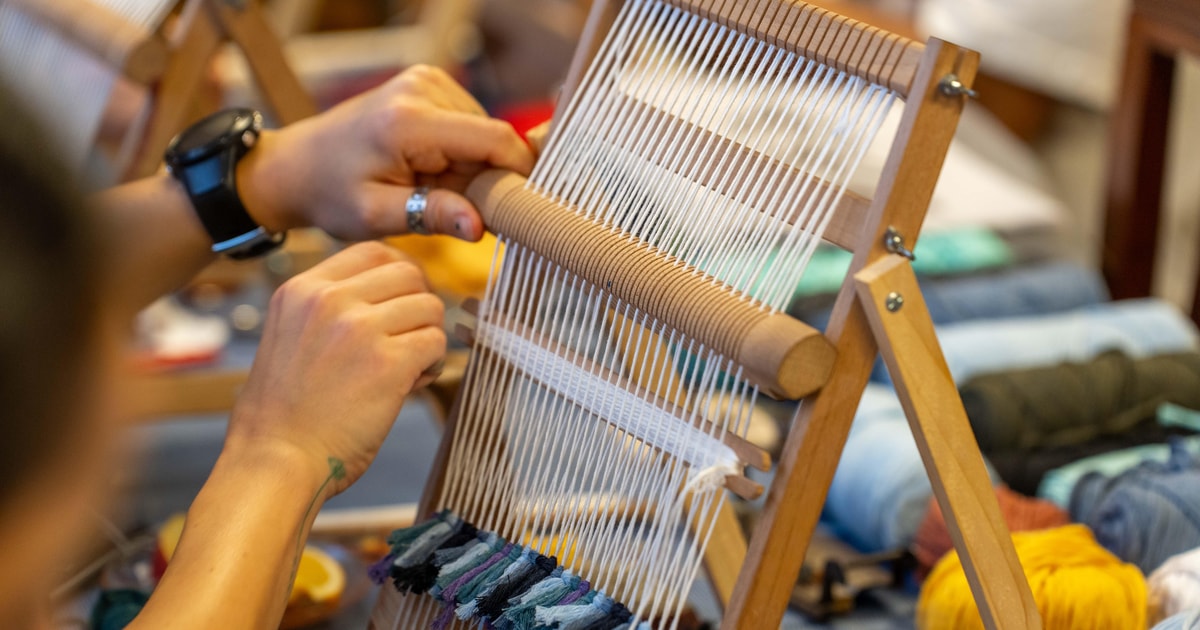
According to the offer description, you learn the basics of traditional weaving from a Turkish craftsman and try it yourself. At the end a small piece is made. The provider states about two and a half hours. A small group allows personal support according to the provider; tea, coffee and snacks are part of it according to the description. No prior knowledge is needed according to the provider; please check age limits beforehand.
If you would like to sit at the loom yourself, you can find current dates here.
What is a Turkish knot?
A carpet consists of warp (the tightly stretched lengthwise threads) and weft (the crosswise threads). In knotting, wool threads are additionally knotted around the warp threads so that the pile forms. The Turkish (symmetrical) knot loops around two warp threads each.
- Carpet: knotted, with pile, a fluffy surface
- Kilim: flat-woven, no pile, the pattern arises directly in the weave
- The workshop is, according to the offer, about traditional weaving at the loom
Patterns are not just decoration
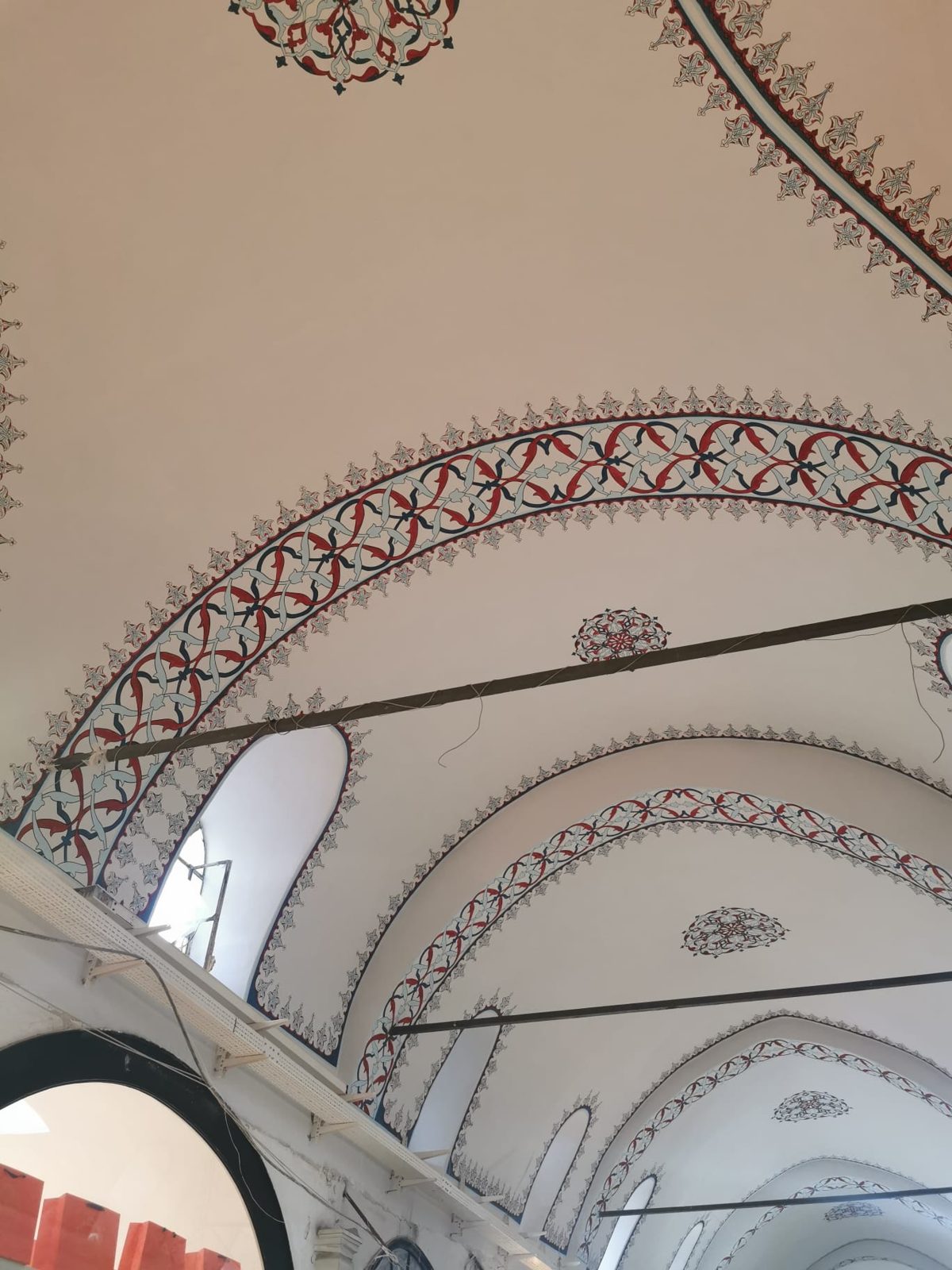
There are geometric and floral patterns, medallions in the centre and prayer rugs with a mihrab shape echoing the prayer niche in a mosque. Regions have their own styles. Be careful with online lists claiming every symbol has a fixed meaning such as "love" or "fertility": such assignments are mostly unproven.
Texture, pattern, craft
You learn how patterns are built, why weaving takes patience and why hand-knotted and hand-woven pieces cost what they do. Working time, material, knot density, size and craftsmanship determine the value, and a fine piece can mean months of work. That also helps later when buying a carpet in the Grand Bazaar.
Hereke and the Ottoman palaces
The name Hereke comes up again and again in the carpet world. According to the state palace administration Milli Saraylar, the factory in Hereke was founded in 1843, and production of textiles for the newly emerging palaces began in 1845. In Dolmabahçe Palace there was a weaving workshop known as the "Hereke Dokumahanesi", attached to the factory. Under Abdülhamid II carpet weaving workshops were added. Later Hereke became internationally known for carpets and textiles.
What guests highlight
Reviews often mention the insight into the craft and the calm concentration, in our own summary.
Who is it for?
For craft enthusiasts, couples and friends looking for something calm. Less suitable if you expect a large finished souvenir: it is about trying it out.
In short
- About 2.5 hours according to the provider, indoors
- Afterwards a look into the Grand Bazaar is worthwhile, with different eyes
More creative experiences in Istanbul
Also fitting: the leather workshop and the glass painting workshop.
All experiences, tickets and tours are collected on our activities page.
– Amra