 Music · Travel · Lifestyle
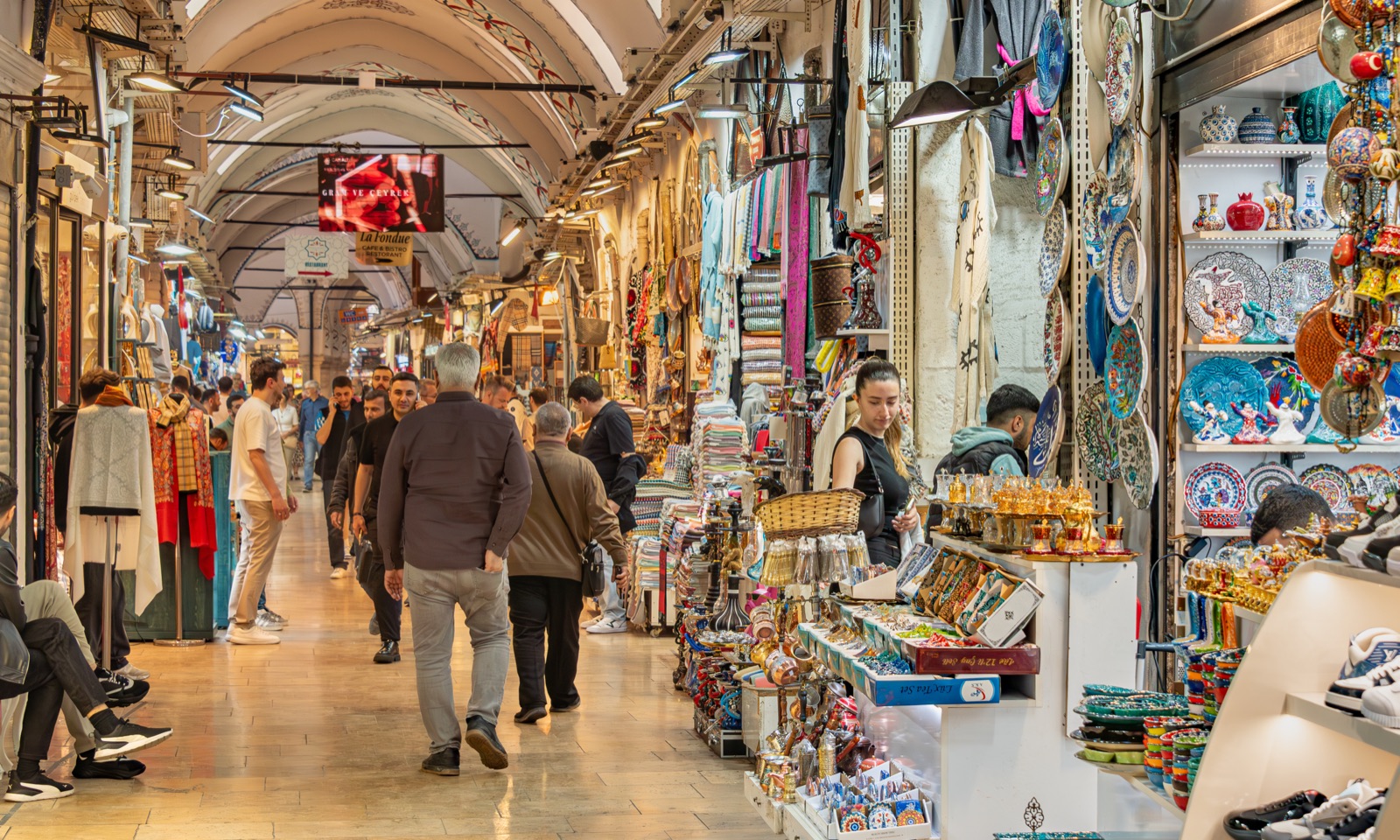
The Grand Bazaar is often described as "one of the largest shopping malls in the world." That sounds modern and catchy, but it barely explains what this place historically was. The Kapalıçarşı didn't arise as a single giant shopping centre — it grew together over centuries from several trading buildings, streets, workshops, hans, and market areas. Its core developed after the Ottoman conquest under Mehmed II, around massive, lockable bedestens where especially valuable goods were traded and stored.
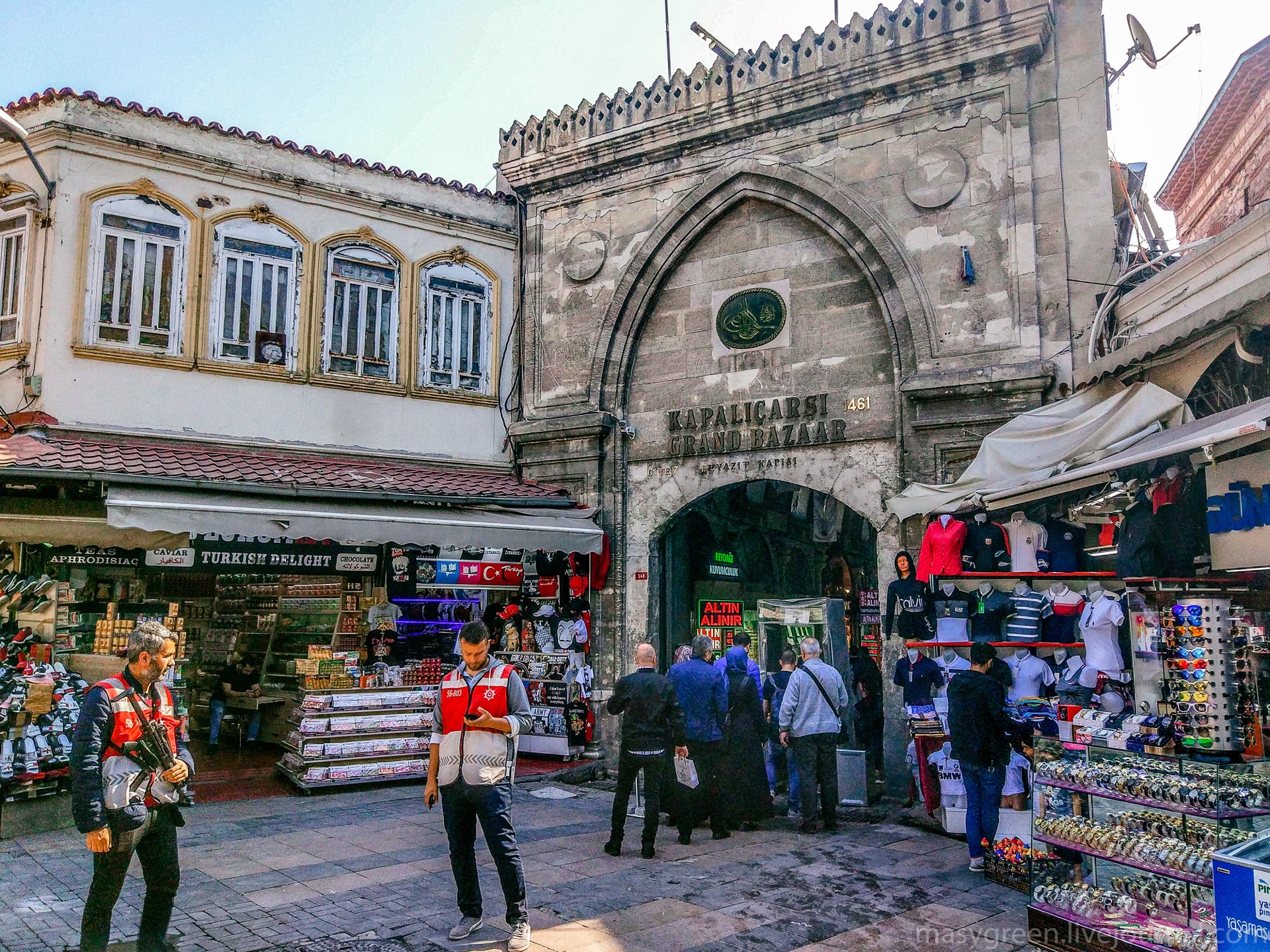
The Kapalıçarşı didn't arise as a single giant shopping centre — it grew together over centuries from several trading buildings, streets, workshops, hans, and market areas.
What looks today like an endless labyrinth of jewellery, leather, carpets, lamps, and souvenirs was, for centuries, a highly organised commercial district. Craftsmen worked by guild, certain streets specialised in certain goods, moneychangers performed bank-like functions, and its proximity to mosques, caravanserais, and trade routes made the bazaar one of the central hubs of the Ottoman Empire.
- The Grand Bazaar developed after 1453 under Mehmed II.
- Its starting points were massive trading buildings called bedestens.
- The bazaar grew over centuries; it wasn't built all at once as today's complex.
- Certain streets specialised in specific crafts and categories of goods.
- Merchants and moneychangers turned the area into an important financial centre.
- Major fires and earthquakes repeatedly led to rebuilding.
- Bargaining is still part of many shops, but it's not a rigid rule for every purchase.
Why Mehmed II Needed a Market After 1453
After conquering Constantinople, Mehmed II had to economically revive a city whose population had shrunk considerably through war, flight, and earlier crises. He resettled people from various parts of his empire and encouraged trade, craft, and the repopulation of the centre.
A functioning market was essential for that. The capital needed places where goods from Anatolia, the Balkans, the Mediterranean, and the Black Sea could come together. At the same time, markets could generate income for religious and social foundations.
The bazaar was therefore not just about consumption. It was an instrument of urban development and financing.
What a Bedesten Actually Is
A bedesten wasn't just any market aisle. It was an especially massively built, usually domed and lockable trading hall. High-value goods such as textiles, jewellery, gemstones, or other precious items were traded and stored there.
The Cevahir Bedesteni is one of the oldest cores of the Grand Bazaar. The Sandal Bedesteni was added later, among others. Both were safer than ordinary shops because of their massive construction.
In an age without bank vaults and modern insurance, that security was an enormous economic advantage.
How a Few Buildings Became a Huge Trading Quarter
The bazaar grew organically. Merchants settled, streets were roofed over, hans arose, workshops and warehouses were added. It's therefore misleading to imagine that Mehmed simply summoned an architect and had today's Grand Bazaar built as a single project.
What we experience today is the result of several centuries. Individual parts date from different periods, were destroyed, rebuilt, and altered. That also explains why the architecture and street layout sometimes feel irregular.
The bazaar-city arose step by step, because more and more trade had to be organised within a tight space.
Guilds, Trades, and Street Names
Craftsmen and merchants were often organised spatially by profession. Goldsmiths worked next to goldsmiths, leather traders next to leather traders, carpet dealers in specific areas. That made quality control, apprentice training, and price comparison easier.
Guilds regulated standards, training, and, in part, social support within a craft. A master craftsman wasn't just some independent tradesman, but part of a professional order.
Some old street names still recall such specialisations today. Even where different goods are sold there now, the economic past is still embedded in the topography.
The Bazaar as a Financial Centre
In a world without modern bank branches, merchants, moneychangers, and wealthy traders performed functions that banks partly take on today. Valuables could be stored, currency exchanged, and credit arranged.
The massive bedestens in particular were well suited to safe storage. Merchants had international contacts and moved money across great distances.
For a long time, the Grand Bazaar was therefore not just a shopping centre, but a central economic nerve centre of the city.
Hans, Warehouses, and Merchant Networks
Numerous hans — trading and lodging buildings with inner courtyards — arose around the bazaar. There, merchants could store goods, work, negotiate, and sometimes spend the night.
Many of these hans are less well known today than the bazaar's main lanes, even though they were essential to the historical system. Anyone who really wants to understand the bazaar should therefore also pay attention to courtyards, staircases, workshops, and older commercial rooms.
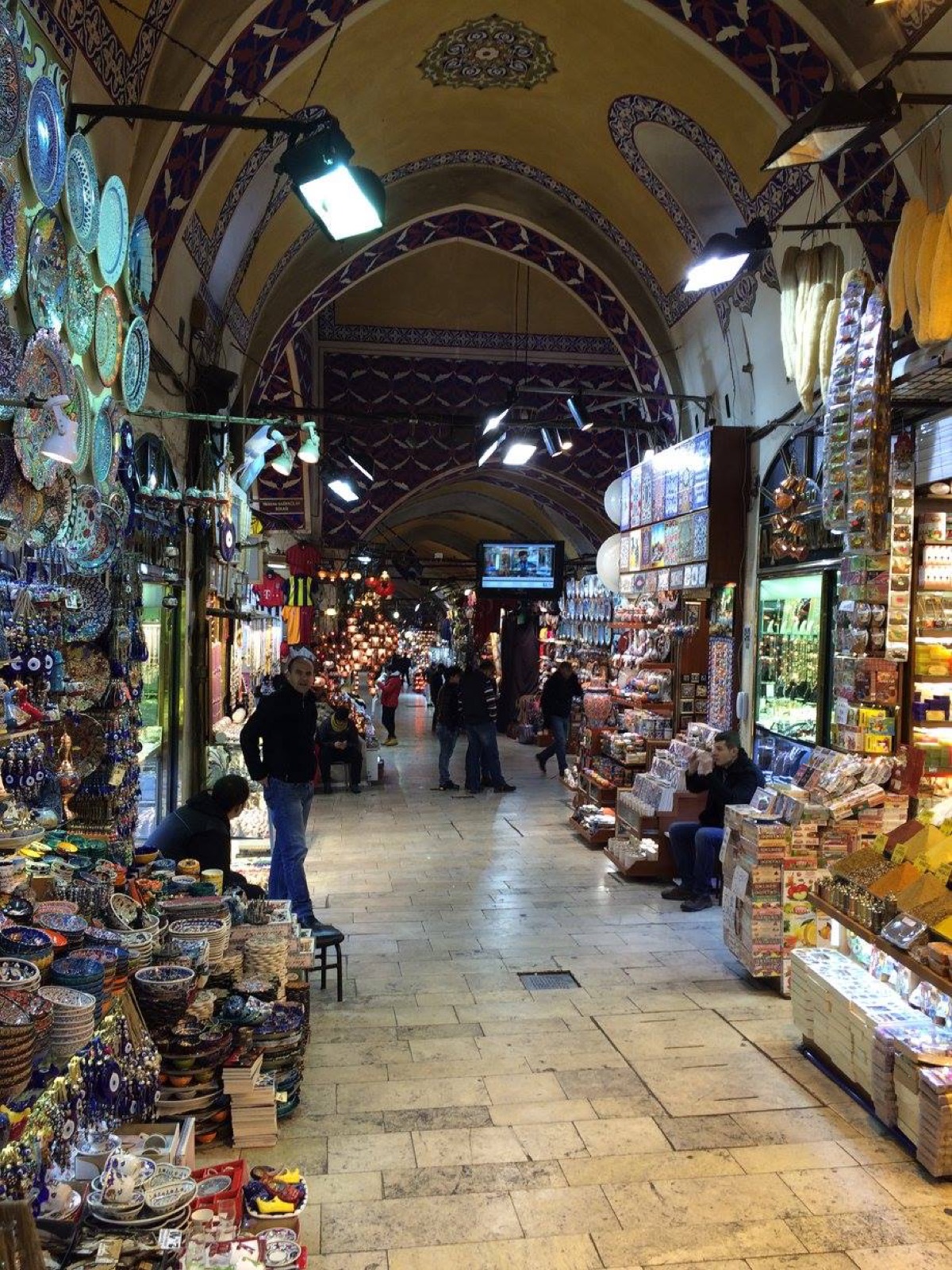
It's precisely in these areas that the atmosphere often feels less touristy than on the best-known main routes.
Fires and Earthquakes
A densely built market full of wood, fabrics, oils, and open flames was extremely fire-prone. The bazaar was damaged by fire several times throughout its history. Earthquakes caused collapses too.
After such disasters, it was rebuilt, sometimes altered, and secured more strongly with masonry. The idea of a market completely unchanged since the 15th century is therefore false.
Every rebuilding phase changed materials, roofs, and street spaces. The bazaar survived precisely because it was repaired again and again.
Bargaining: Obligation or Tourist Ritual?
Bargaining is historically part of many forms of trade in the bazaar. But there's no rule that every price in every shop must automatically be halved. For high-value goods, carpets, jewellery, or leather, negotiation can be customary. For clearly price-tagged small items or certain modern shops, there's less room for it.
Anyone who wants to negotiate should first have a rough idea of a product's actual value. A polite conversation usually works better than aggressive haggling.
Sellers, of course, also play along with tourists' expectation that "you have to bargain in the bazaar." That, too, is part of the business today.
What's Still Visible of the Old Bazaar Today
Anyone wanting to see history shouldn't only look at the displays. Pay attention to the vaults, gates, hans, small inner courtyards, and especially the bedestens. There, it becomes clear that the Grand Bazaar was originally an entire trading city.
Some of the most interesting areas lie off the main routes that tour groups get pushed through. There you're more likely to find workshops, old fittings, small staircases, and rooms that still recall earlier uses.
Prices, Trust, and Control
A historical market only functions if buyers and sellers have a minimum level of trust. In the Grand Bazaar, rules therefore developed around weights, measures, quality, and professional conduct. Guilds, market oversight, and religious-legal norms were meant to limit fraud and settle disputes.
Of course, that didn't mean nobody in the Ottoman Empire ever cheated anyone. But trade was embedded in social and legal structures. A merchant who permanently ruined his reputation harmed himself.
This story is interesting because it contradicts the modern cliché of the bazaar as a pure "haggler's paradise." The bazaar was a strictly functioning economic space in which reputation, creditworthiness, and networks mattered enormously.
Why the Grand Bazaar Survived Despite Competition
In the 19th and 20th centuries, the bazaar faced competition from modern shopping streets, banks, and department stores. Still, it didn't disappear. One reason lies in its specialisation, another in its adaptability.
Merchants changed their range of goods and their target customers. Some areas oriented themselves more strongly toward tourists, others remained craft-based or local. The bazaar survived, then, not because it stayed unchanged, but because it kept changing.
That's exactly what you should notice when centuries-old vaults stand today next to modern card terminals and international customers.
What to Look at Deliberately in the Bazaar
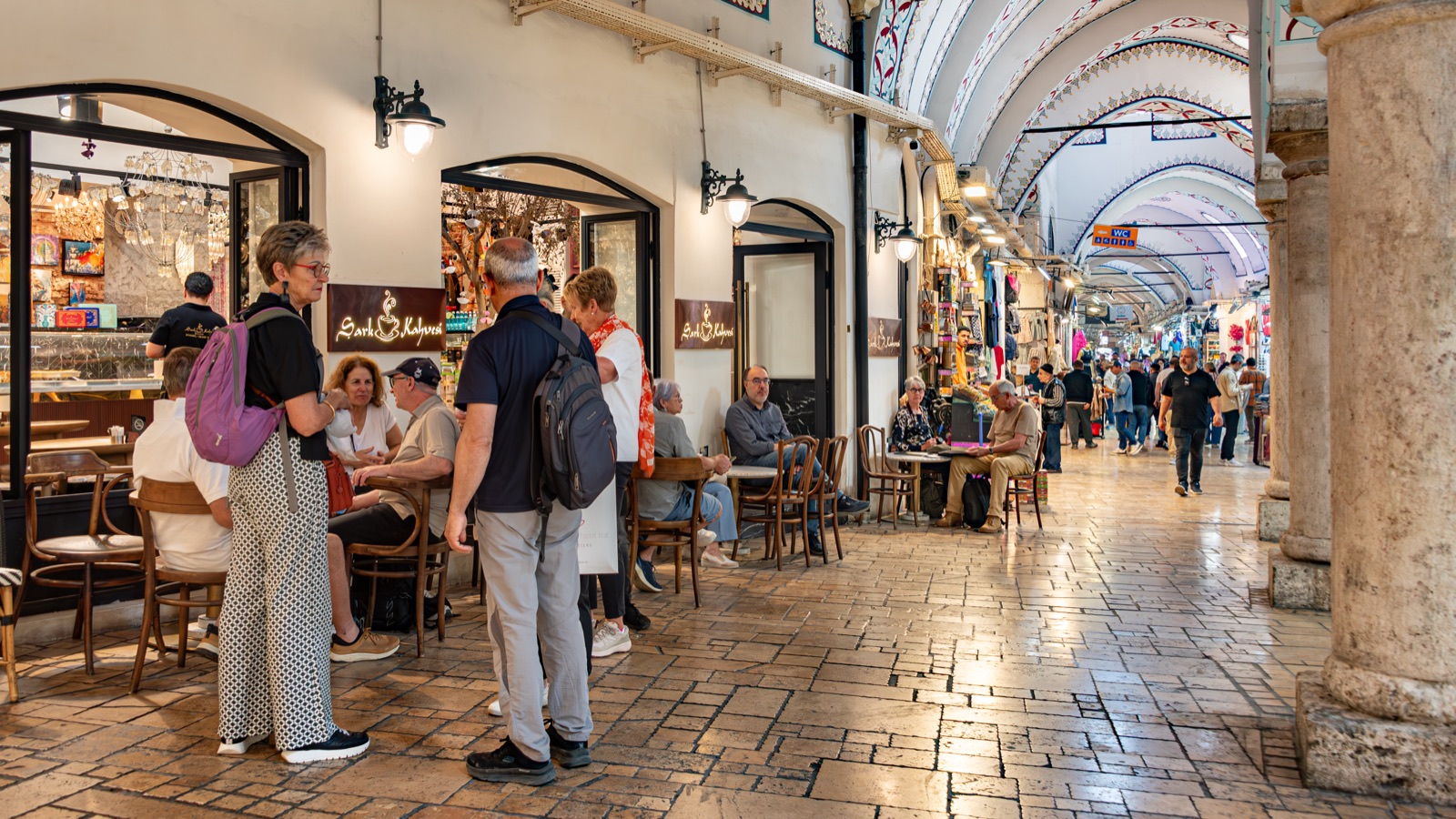
Anyone who just walks along the big main aisles mostly experiences today's retail operation. It's often more historically interesting to step into the smaller courtyards and hans, where you can better make out how trade, storage, and craft were interconnected. The bazaar's gates deserve attention too, because they show how the market could be locked up and controlled at night.
A second look at the ceilings and vaults is worthwhile too. Many visitors look almost exclusively at the goods at eye level and overlook that the architecture itself tells you how a covered market functioned. After all, the bazaar wasn't built as a stage set — it had to manage fire, weather, security, and daily flows of goods.
Market Oversight and Rules Against Total Chaos
The bazaar wasn't a lawless space. Guilds, market inspectors, and courts played an important role in quality, measures, weights, and disputes. The so-called muhtesib traditionally oversaw markets and could act against violations. Of course fraud and bribery existed too, but trade functioned within a social and legal order.
That's exactly why it's wrong to imagine bargaining as some wild game with no rules at all. Merchants had reputations, guilds controlled their members, and customers could turn to authorities in certain disputes. Trust was economic capital.
The Hans Behind the Great Aisles
Numerous hans — trading and storage courtyards — arose around the bazaar. Goods were stored, processed, and sold there. Craftsmen often worked in small rooms around a courtyard, while upper floors held warehouses or workshops.
Anyone who only sees the big main aisles therefore misses an important part of the old trading world. In the hans, you can better recognise how closely production, wholesale, and retail were linked.
Fires Also Changed Building Regulations
After major fires, parts of the bazaar were rebuilt again and again. Wood was cheap and flexible, but extremely risky in a densely packed market full of fabrics, oils, and open flames. Stone, brick, and vaults offered more safety, but were more expensive.
Earthquakes led to rebuilding too. The Grand Bazaar therefore has a very old core, but no situation where every wall has stood untouched since Mehmed II. Its historical authenticity lies precisely in this long continuity of use, repair, and adaptation.
Why Comparing Matters More Than Aggressive Haggling
Today, the highest tourist flows concentrate on a few main lanes. There, rents are high and merchants are geared toward international customers. In side areas you more often find specialised shops and workshops. That doesn't automatically mean better prices, but it's worth looking at several offers.
For carpets, jewellery, or high-quality leather goods, you should understand material, craftsmanship, and origin before negotiating. Simply offering a quarter of the price because some TikTok video claims that's "the Turkish way" isn't especially culturally competent. A good deal doesn't come from one side feeling cheated afterward.
How a Bazaar Business Actually Worked
Many merchants weren't anonymous sellers, but part of family and guild networks. Knowledge about quality, suppliers, and customers was passed down. A shop could be run in a similar trade across generations, even as its actual owners and goods changed.
Credit played a role too. Merchants often had to pay for goods before they'd sold them themselves. Trust between traders, moneychangers, and suppliers was therefore essential. The bazaar wasn't just a place for cash purchases, but part of a complex financial system.
The Bazaar as a Place of News
Where many merchants from different regions met, information circulated too. Prices, political developments, wars, ship arrivals, and rumours could spread quickly. A market was therefore a communications hub at the same time.
In an age without smartphones or news tickers, knowing about a bad harvest, a war, or a new tax was immediately relevant to business. The bazaar linked the flow of goods with the flow of information.
Tourism Changed the Bazaar, but Didn't Invent It
Today, many shops depend heavily on international visitors. That affects the range of goods, languages, and pricing. Still, you shouldn't conclude from this that the bazaar has completely lost its historical function. Gold trading, textiles, and specialised trades still exist.
The most interesting perspective, then, is neither romantic nor cynical. The bazaar isn't a frozen piece of the Ottoman Empire, but it's also not an artificial shopping centre built yesterday for tourists. It's an old trading organism that has adapted to new customers.
"The Grand Bazaar is the oldest shopping mall in the world." A nice headline, but tricky. It's undoubtedly one of the oldest and largest continuously used covered trading complexes. Whether it's "the oldest shopping mall in the world" depends on how you define the term.
"Everything in the bazaar is overpriced tourist junk." False. There are strongly touristy areas, but also traditional craft and trading businesses that still exist. What matters is where you look, and whether you can compare prices.
"Mehmed II had the entire bazaar as we know it today built all at once." False. Today's complex grew together over centuries from several cores.
My Thought on This Place
With the Grand Bazaar, I find it almost a shame that you usually only hear two extremes. Either it's: "You absolutely have to see this, an Oriental fairy tale!" Or: "It's all just a tourist rip-off."
Both feel too simple to me.
Of course, a lot of it is touristy today. But underneath all the bags, lamps, and souvenirs lies a trading place that has been constantly changed for centuries and still keeps functioning. If you stop looking only at prices for a moment and look at the buildings instead, you start to notice just how old this system really is.
And that's exactly the moment "shopping" suddenly turns into the history of a city.
– Amra