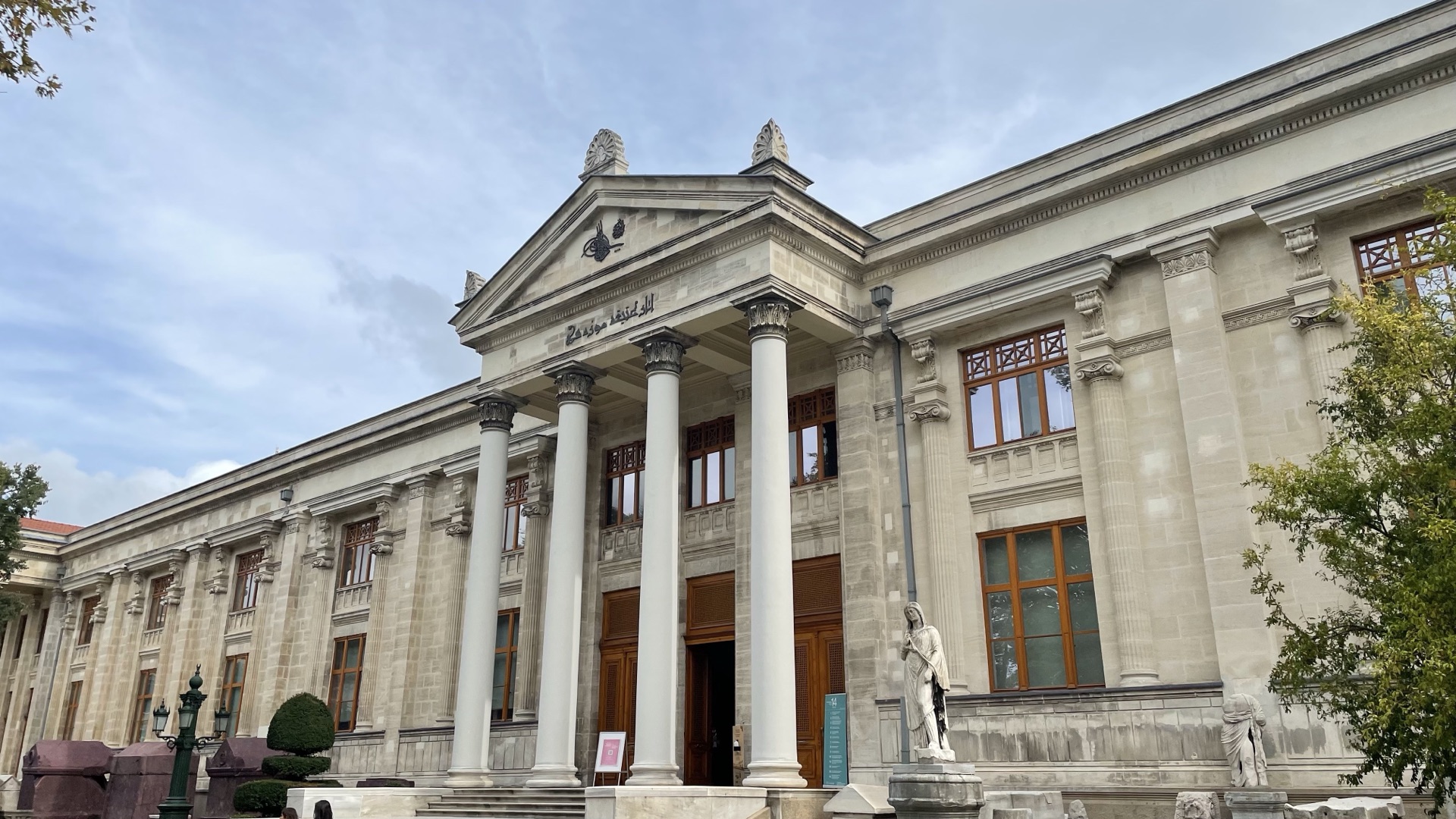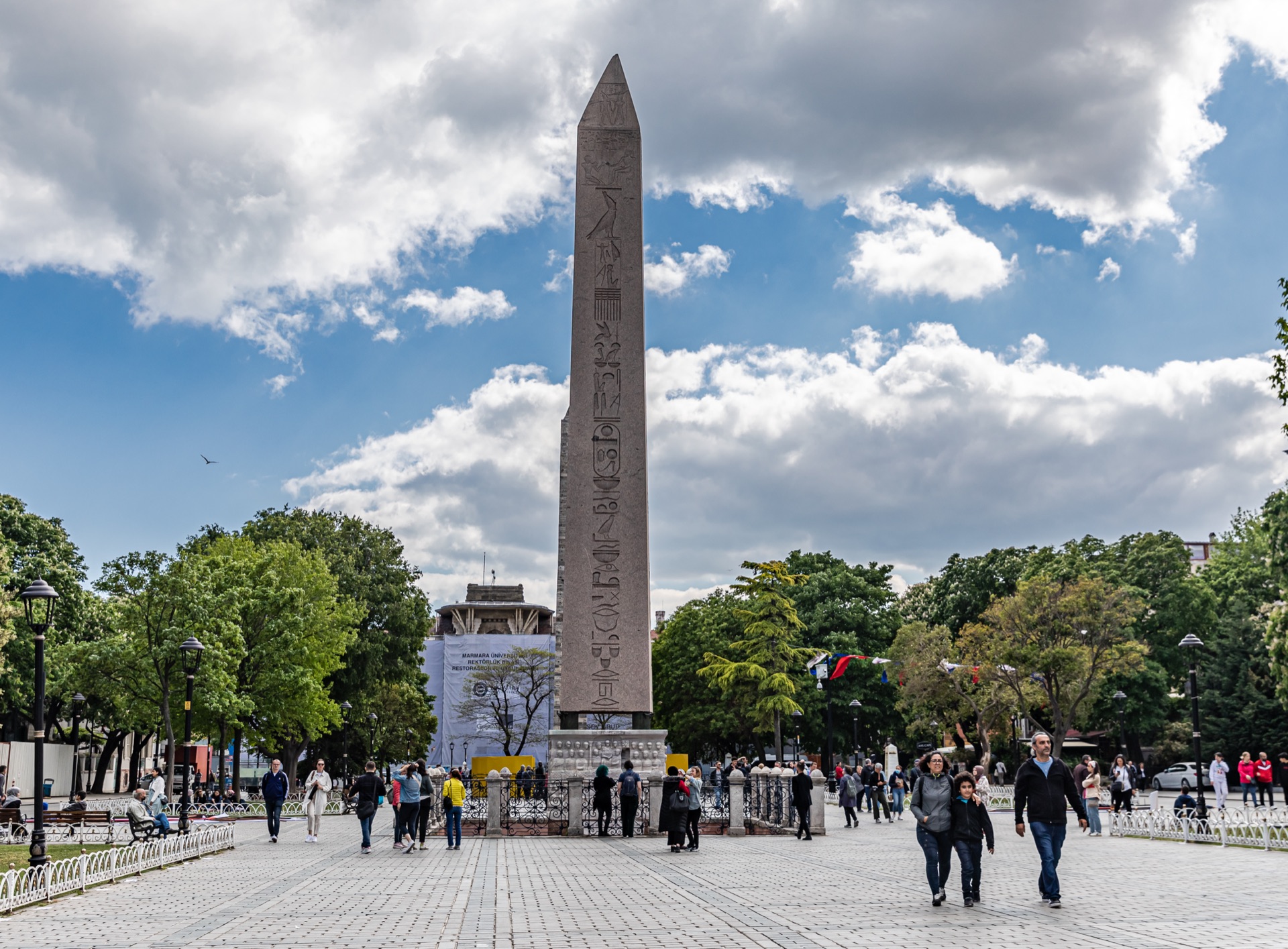
Right on Sultanahmet Square, opposite the Blue Mosque, stands a building that can look surprisingly unassuming compared to the Hagia Sophia or Topkapı. Yet the İbrahim Pasha Palace is one of the most significant surviving secular buildings of 16th-century Ottoman architecture. Today it houses the Museum of Turkish and Islamic Art — a collection whose own history is closely tied to the fall of the Ottoman Empire and an effort to systematically preserve art from mosques, endowments and religious institutions.
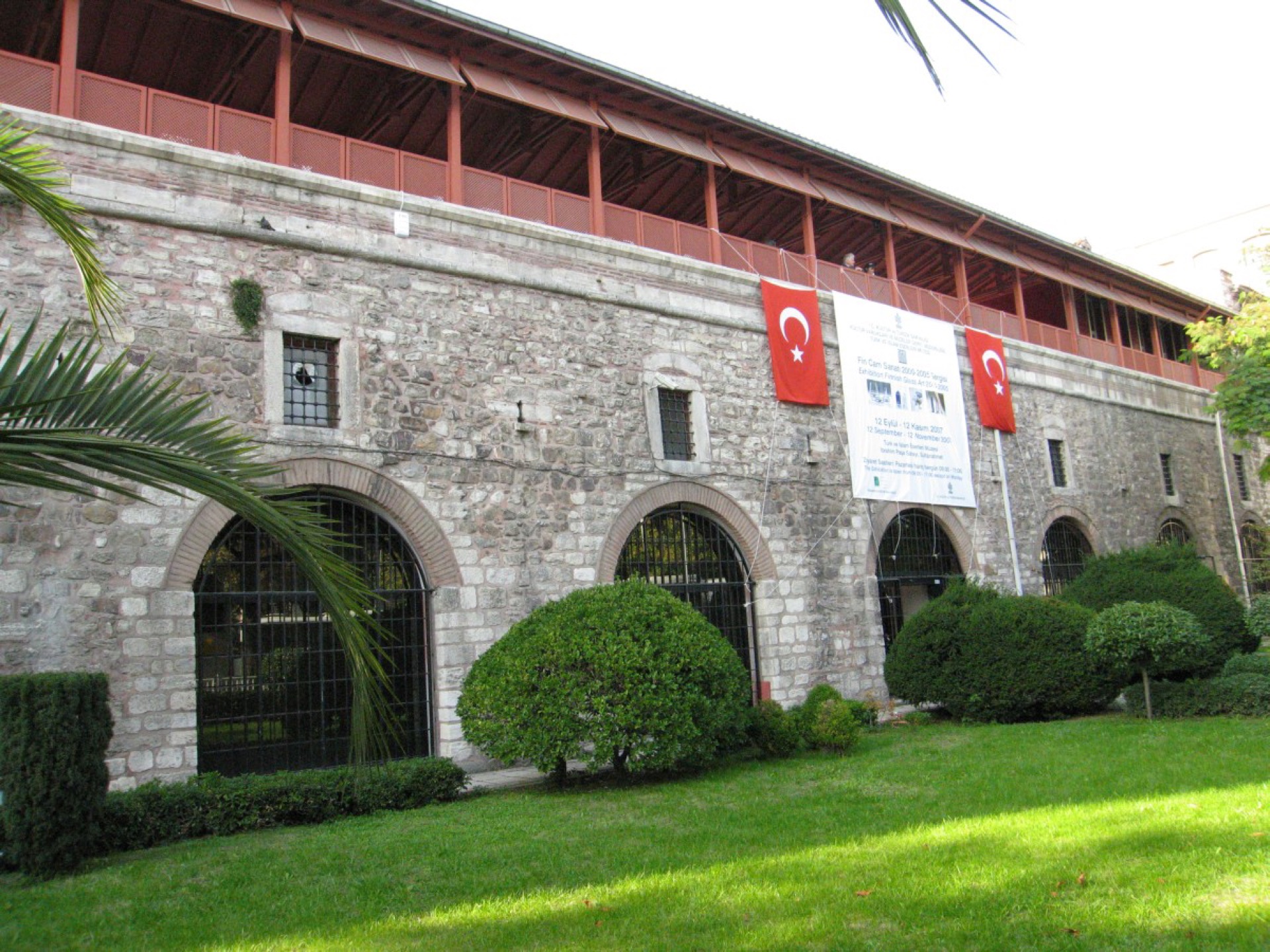
Right on Sultanahmet Square, opposite the Blue Mosque, stands a building that can look surprisingly unassuming. Yet the İbrahim Pasha Palace is one of the most significant surviving secular buildings of 16th-century Ottoman architecture.
The museum first opened in 1914 as the Evkaf-ı İslâmiye Müzesi, the Museum of Islamic Endowments, in the imaret of the Süleymaniye complex. It only moved to the İbrahim Pasha Palace in 1983. A visit today therefore links two stories: the development of a modern Islamic art collection, and the extraordinary career of a palace named after one of the most powerful men under Süleyman the Magnificent.
- The museum opened in 1914 as the Evkaf-ı İslâmiye Müzesi.
- It was originally located in the imaret of the Süleymaniye külliye.
- Since 1983 it has been housed in the İbrahim Pasha Palace on Sultanahmet Square.
- The palace is one of the most significant surviving 16th-century Ottoman secular buildings.
- İbrahim Pasha was grand vizier, a close confidant and brother-in-law of Süleyman I, but was executed in 1536.
- The museum holds an internationally outstanding carpet collection, including very early Seljuk examples.
- The collection spans art from numerous Islamic dynasties and regions, not only the Ottoman Empire.
Why a museum for Islamic endowment objects was created in 1914
In the late Ottoman Empire, the handling of historical artworks was changing. Many significant carpets, wooden elements, manuscripts or metalwork weren't kept in museums, but in mosques, mausoleums and endowment buildings. There they were part of religious life, but at the same time at risk from theft, sale, fires, moisture, or improper repairs.
The founding of the Evkaf-ı İslâmiye Müzesi in 1914 was therefore an attempt to centrally safeguard and academically catalogue especially significant objects from the sphere of religious endowments. The official museum portal describes it as Turkey's first museum to present Turkish-Islamic artworks as a coherent collection.
That this happened right before the First World War is remarkable. The Ottoman Empire was in an existential crisis, and at the same time an institution emerged meant to systematically define and preserve its own artistic heritage.
The İbrahim Pasha Palace
Today's museum building stands on the west side of the former Hippodrome, giving it one of the most prestigious locations on the historic peninsula. The complex was renovated and expanded in the early 16th century and handed over in 1520 by Sultan Süleyman to his grand vizier İbrahim Pasha.
Unlike many Ottoman residential buildings, which were mostly made of wood and fell victim to fires, the palace contains extensive solid masonry. That's why it's considered one of the rare large surviving private palace buildings of this era.
From its terraces and windows, one could look directly onto the Hippodrome, or At Meydanı. State celebrations, weddings and public spectacles took place practically at its doorstep.
Who Pargalı İbrahim Pasha was
İbrahim likely came from the region of present-day Greece and entered Ottoman service as a young man. He became a close companion of Süleyman even before Süleyman became sultan, and rose extraordinarily quickly after his enthronement.
In 1523 he became grand vizier. He later married a woman from the immediate dynastic circle; the traditional identification of her as Süleyman's sister is now discussed more carefully in scholarship. What matters is his standing: he was a diplomat, military commander, and one of the most influential men in the empire.
His titles and his public presence grew ever more magnificent. European diplomats negotiated with him almost as with a second center of Ottoman power. But it was precisely this closeness to the sultan that also made his position dangerous.
From the empire's most powerful man to an executed man
In 1536, İbrahim Pasha was strangled on Süleyman's orders after a dinner at Topkapı Palace. The reasons are still debated. Political rivalries, his enormous claim to power, missteps in policy toward Persia, and shifts within the inner court network likely all played a part together.
Popular accounts often turn this into nothing but a personal struggle between İbrahim and Hürrem Sultan. Hürrem undoubtedly had her own dynastic interests and competed with other power groups. Still, it's too simple to tell İbrahim's death only as the intrigue of a jealous woman. He was grand vizier of a world empire; his downfall had military, administrative and dynastic dimensions.
His palace remained standing and was later used for various state purposes. That very building now houses artworks from a world İbrahim himself once lived in.
Why the carpet collection is so famous
The museum holds one of the most significant collections of Islamic carpets in the world. Especially important are 13th-century Seljuk carpets, as well as Anatolian and Ottoman examples from later centuries. The official museum portal explicitly describes the carpet collection as one of the institution's outstanding holdings.
Carpets were far more than floor covering. In mosques they defined prayer areas; in palaces they created comfort and prestige; in trade they were valuable luxury goods. Patterns, knotting technique, wool, dyes and regional traditions therefore tell us a great deal about economy and culture.
Some old carpets survived precisely because they lay in mosques for centuries before later entering the collection. Wear on such objects isn't a flaw — it's part of their biography.
Manuscripts, wood, metal and ceramics
Alongside carpets, the museum displays Quranic manuscripts, calligraphy, woodwork, stone, metal objects, ceramics and glass. The pieces come from various Islamic eras: Umayyads, Abbasids, Seljuks, Mamluks, Timurids, Safavids, Ottomans and other traditions are represented.
This makes visible how little sense it would make to speak of "Islamic art" as a single, unchanging style. Between Spain, Central Asia, Egypt, Iran and Anatolia, completely different forms emerged. What they often share are religious frames of reference and certain decorative traditions, but material, color and architecture could vary enormously.
Ethnography and daily life instead of only courtly art
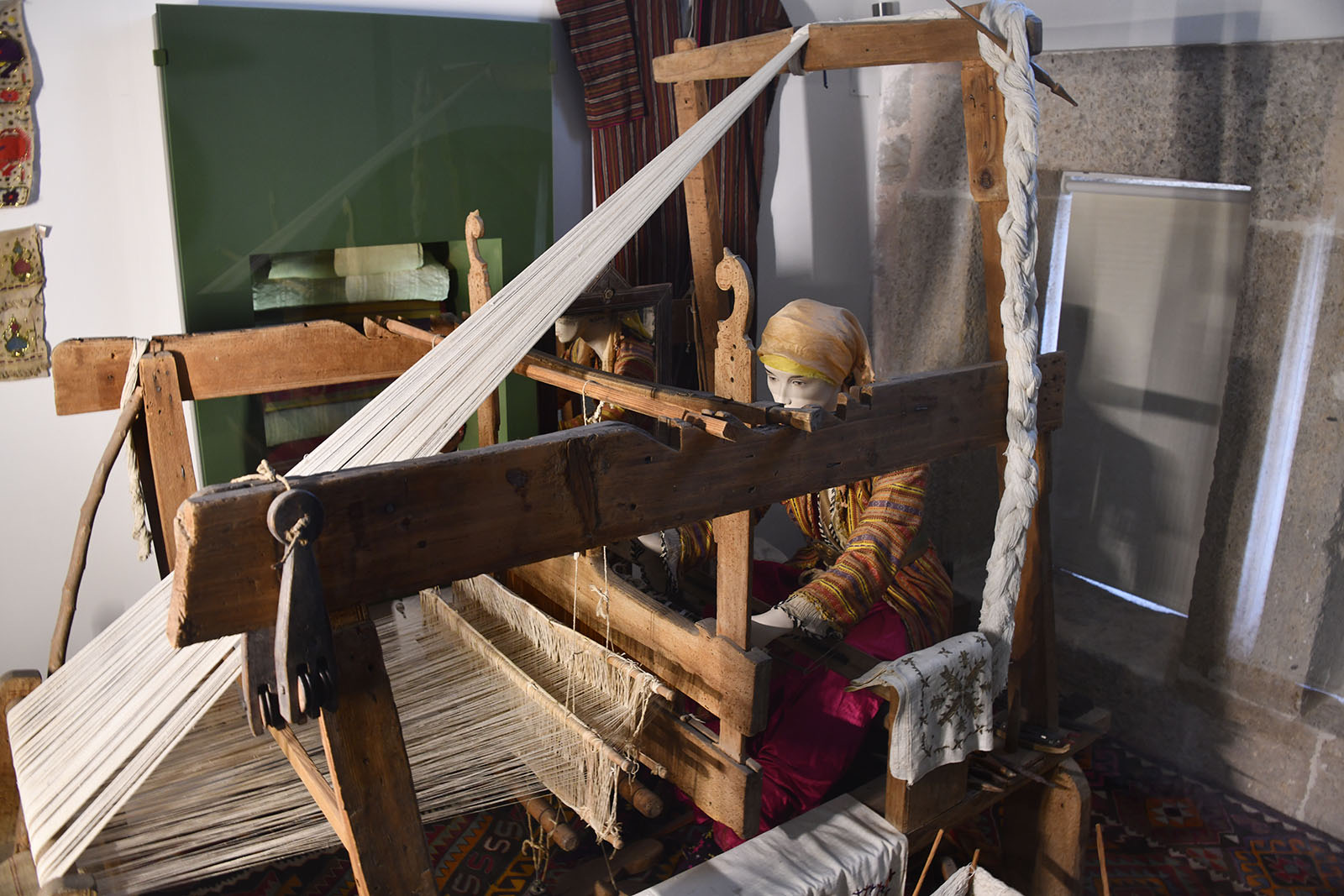
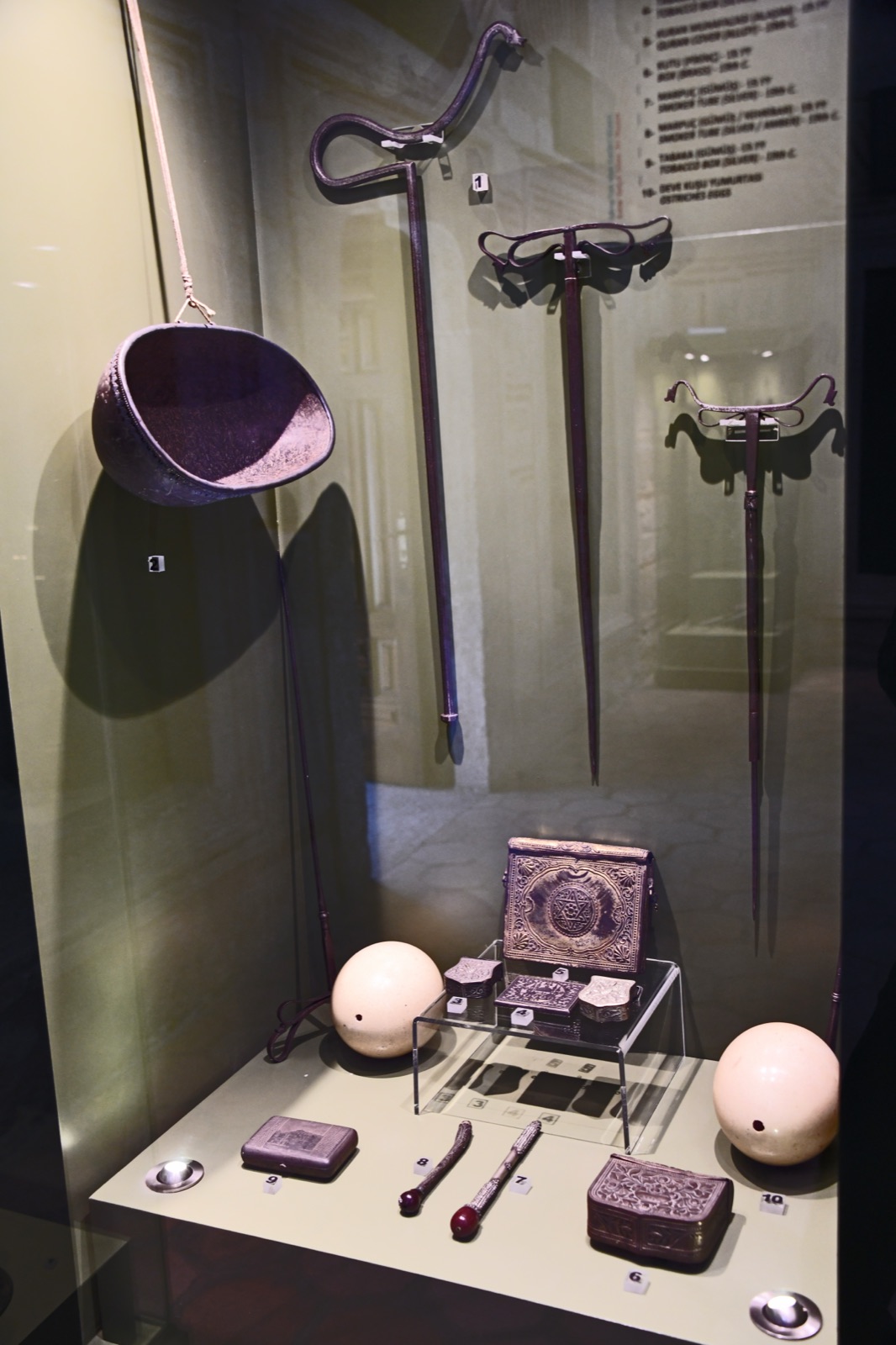
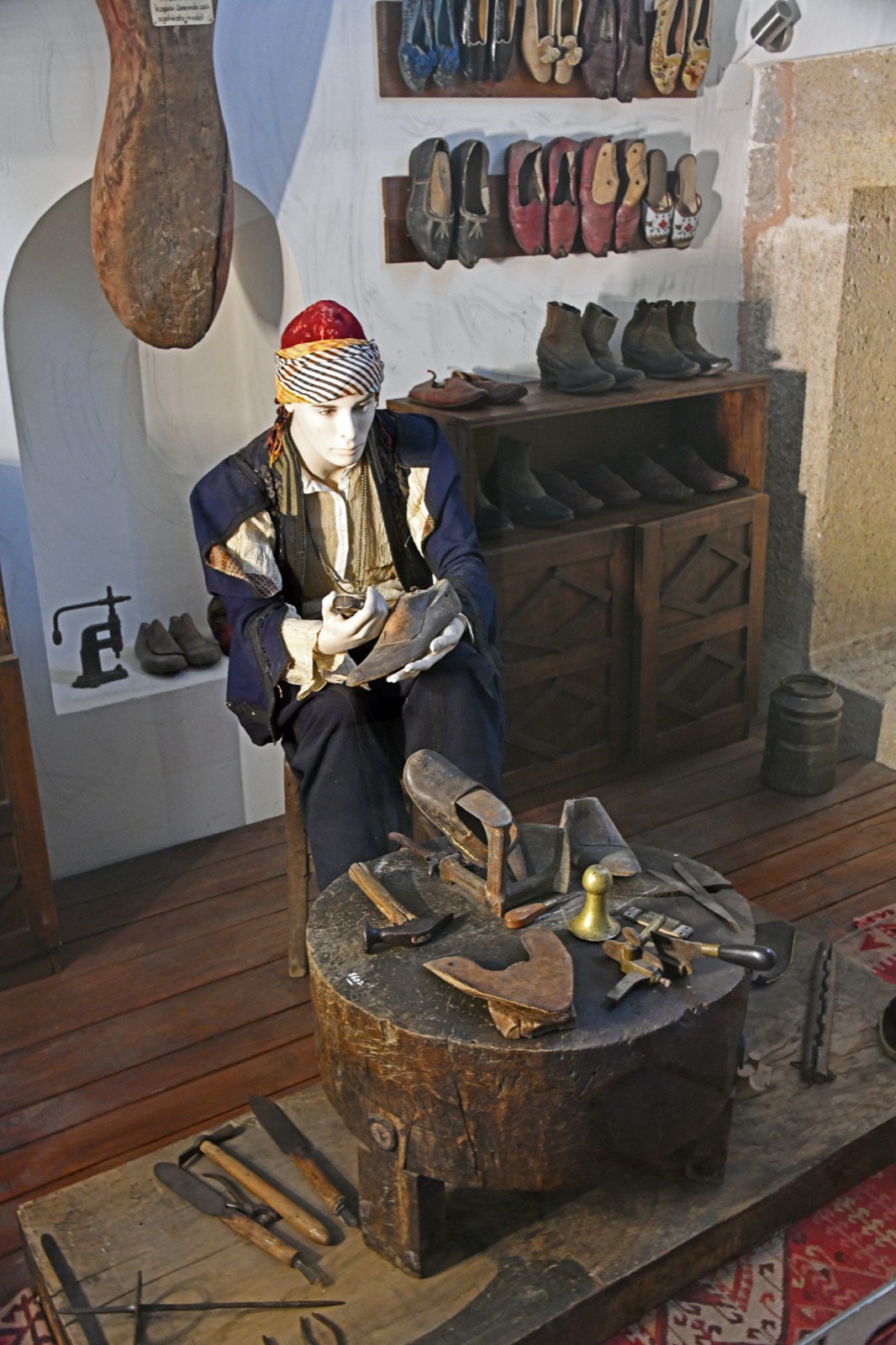
Another section deals with ethnographic objects and daily life, especially in the 19th century. Clothing, household items and craftwork show a different layer than splendid court art.
This matters, because museums about empires otherwise quickly show only sultans, battles and gold. But for most people, history consisted of work, housing, clothing, food, religious practice and family.
Why the İbrahim Pasha Palace is itself an exhibit
At a normal museum, you look through display cases at artworks and forget about the building. At the İbrahim Pasha Palace, you should do exactly the opposite. Its location by the Hippodrome shows how closely private power and public spectacle sat together in the 16th century. From here, İbrahim Pasha could watch festivals, processions and political ceremonies. At the same time, his house stood so prominently that everyone knew who lived there.
This visibility was both a privilege and a danger. İbrahim rose from a position with no dynastic origin to become a man who left his mark on the empire's foreign relations, military campaigns and administration. European envoys often described his power with astonishment. But Ottoman court careers depended on the sultan's goodwill. The same closeness that made İbrahim great meant his downfall carried no institutional protection.
After his execution, his palace didn't disappear. It was used for various state purposes; some parts were lost, others altered. That so much survived at all is unusual, since numerous large Ottoman secular buildings were made of wood and fell victim to fires. Anyone in the museum who pays attention to the massive courtyards and walls is thus looking not just at a neutral backdrop, but at rare residential and ceremonial architecture from the age of Süleyman.
Carpets as historical documents
The carpet collection isn't significant because old carpets are automatically more beautiful than new ones. It allows materials, patterns and regional production to be compared across centuries. Some Seljuk pieces show large geometric motifs and Kufic-looking border ornaments. Later Anatolian carpets developed different compositions, which in turn fascinated European painters.
This is especially interesting art-historically. Anatolian carpets appear so often in paintings by Holbein, Lotto and other European artists that certain pattern types are now named after these painters. The carpet itself came from the Islamic-Anatolian world, but its modern art-historical name comes from a European painting in which it was depicted. That shows how global art history already was, long before modern globalization.
Colors came from natural dyes such as madder, indigo or plant materials. Wool, silk and knotting technique influenced durability and effect. A centuries-old carpet is therefore as much a technical document as it is an artwork.
Calligraphy: when script becomes image at the same time
For visitors who can't read Arabic or Ottoman script, calligraphy may at first look like abstract decoration. In fact, every line of script carries meaning. Quranic verses, donor inscriptions, prayers and names were designed so that content and form worked together.
Calligraphers trained for years under masters and received a kind of license, or icazet, once they reached a certain standard. Different scripts such as Thuluth, Naskh or Kufic had their own rules and areas of use. A Quranic manuscript is therefore not simply "beautifully written," but the result of a highly regulated artistic practice.
Script gained a special standing precisely in Islamic architecture and book art. That doesn't mean figurative art didn't exist, though. Miniatures in courtly manuscripts show people, battles, festivals and everyday scenes. The rules depended strongly on context.
The ethnographic collection and the problem with the word "typical"
Ethnographic exhibitions try to show the clothing, houses and everyday objects of various regions. That can be helpful, but it carries a risk: it's easy to get the impression that a single costume or a furnished room represents "how the Turks lived."
The Ottoman Empire, though, was vast and socially diverse. A wealthy Istanbul household lived differently from a rural family in Anatolia. Clothing differed by region, religion, gender, profession and wealth. Precisely because of that, ethnographic objects should be read as examples, not as a uniform national template.
This nuance suits the whole museum well. It displays "Turkish and Islamic art," but its collection also makes clear that these terms span many centuries, dynasties and regions. Anyone looking for a single style won't do justice to the diversity.
What you should look at deliberately in the museum
If you have little time, I wouldn't plan the visit as a race through every display case. Start with the early carpets and really look at how different the patterns and colors are. After that, it's worth looking at calligraphy and manuscripts, since there you can see how strongly script itself was treated as art. With metalwork and woodwork, in turn, you can see how much technical precision went into objects that were actually used at the time.
Also take time for the palace itself. The view from the inner courtyard toward the Hippodrome makes clear why İbrahim Pasha lived here so prominently. His residence stood right in the middle of a political stage. When you step back onto Sultanahmet Square afterward, you'll see the neighborhood differently: this space wasn't shaped only by the Blue Mosque and the Hagia Sophia, but also by the houses of the men who wielded real power alongside the sultan.
I find it especially helpful to really read one or two objects rather than just photograph fifty. Anyone who understands a carpet's origin, age, material and pattern comes away with more, in the end, than someone who walks past a hundred display cases. This museum is especially suited to that approach, since its collection spans an enormous span of time and can otherwise quickly feel overwhelming.
"İbrahim Pasha was Süleyman's best friend and was killed only because of Hürrem." Too simple. Personal relationships played a role, but his downfall arose from a complex political power structure.
"Islamic art fundamentally avoids any depiction of people." False. Religious spaces follow different rules than, say, courtly manuscripts. Figurative depictions exist in many Islamic artistic traditions.
"The museum has been in the İbrahim Pasha Palace since 1914." False. It first opened in the Süleymaniye külliye and moved to its current location in 1983.
My take on this place
I especially love museums when the building itself already tells a story. Here you're not standing in some neutral new construction looking at Ottoman art. You're standing in the palace of a man who was once almost as powerful as anyone next to the sultan — and who was ultimately killed on that very sultan's orders.
And then, right in front of you, lie carpets even older than the palace. Suddenly the word "old" gets several layers at once.
– Amra