 Music · Travel · Lifestyle
The Galata Bridge feels so self-evident today that it's easy to forget how long there was no fixed link between the historic peninsula and Galata. People crossed the Golden Horn by boat and ferry. Only in the 19th century did permanently used bridges arise, fundamentally changing daily traffic.
The Galata Bridge feels so self-evident today that it's easy to forget how long there was no fixed link between the historic peninsula and Galata.
Several centuries earlier, though, a rather famous man already had an idea: around 1502, Leonardo da Vinci designed a spectacular bridge proposal for Sultan Bayezid II. It was never built. Still, the story shows how long people had been thinking about a fixed link.
- For centuries, there was no permanent fixed bridge at this spot.
- Around 1502, Leonardo da Vinci proposed a spectacular bridge to Sultan Bayezid II.
- Only in the 19th century did regularly used fixed bridges appear.
- A toll was charged for crossing at times.
- The bridge connected the traditional administrative and trading centre with Galata and Pera.
- Fishermen have been part of the bridge's image for generations.
- The previous bridge was severely damaged by fire in 1992.
- Today's Galata Bridge was completed in the 1990s.
Why There Was No Fixed Bridge for So Long
The Golden Horn wasn't simply an obstacle. It was a harbour, a transport zone, and a militarily protected body of water. A fixed bridge had to allow shipping through and couldn't compromise defence.
Boats were therefore, for a long time, the most flexible link between the two sides. People, goods, and animals could be ferried across using different kinds of craft.
Only with the strong growth of the 19th century did a fixed crossing become increasingly urgent.
Leonardo da Vinci's Design
Leonardo wrote to the Ottoman sultan and proposed a huge arched bridge over the Golden Horn. The design was extremely ambitious for its time. A single great arch was meant to allow shipping to pass beneath it.
The project was never built. Exactly why can't be reduced to one confirmed reason. Perhaps it was too technically or financially risky; perhaps the plan simply didn't convince the Ottoman administration.
Still, the design shows how attractive the idea of a fixed link already was around 1500.
The First Permanent Galata Bridges
In the 19th century, Istanbul grew rapidly, and Galata/Pera gained enormous importance as a district of trade, banking, and diplomacy. A fixed link became increasingly urgent.
Several bridge constructions followed one another. They were renewed, extended, or completely replaced. "The Galata Bridge" is therefore actually a whole series of different bridges at a similar spot.
Each generation adapted the crossing to new forms of traffic: pedestrians, carriages, trams, cars, and ships.
Tolls, Merchants, and City Life
A bridge toll was charged for crossing at times. The bridge quickly became a public space in its own right. Merchants, pedestrians, soldiers, officials, and travellers all mixed together on it.
Historical photographs show an almost unbelievable crush of people. Carriages, and later trams, shared the crossing with pedestrians.
The bridge was therefore not just infrastructure, but a place of everyday city life.
How the Bridge Changed Istanbul
With a fixed bridge, two very different parts of the city were tied more closely together. On the historic peninsula lay government, great mosques, and old markets. Galata and Pera were shaped strongly by banks, European companies, embassies, and modern entertainment venues.
The bridge therefore became almost a social seam between different Istanbul worlds.
Anyone crossing it changed more than just riverbanks. They moved between different economic and cultural spaces.
The Fishermen and Everyday Life on the Bridge
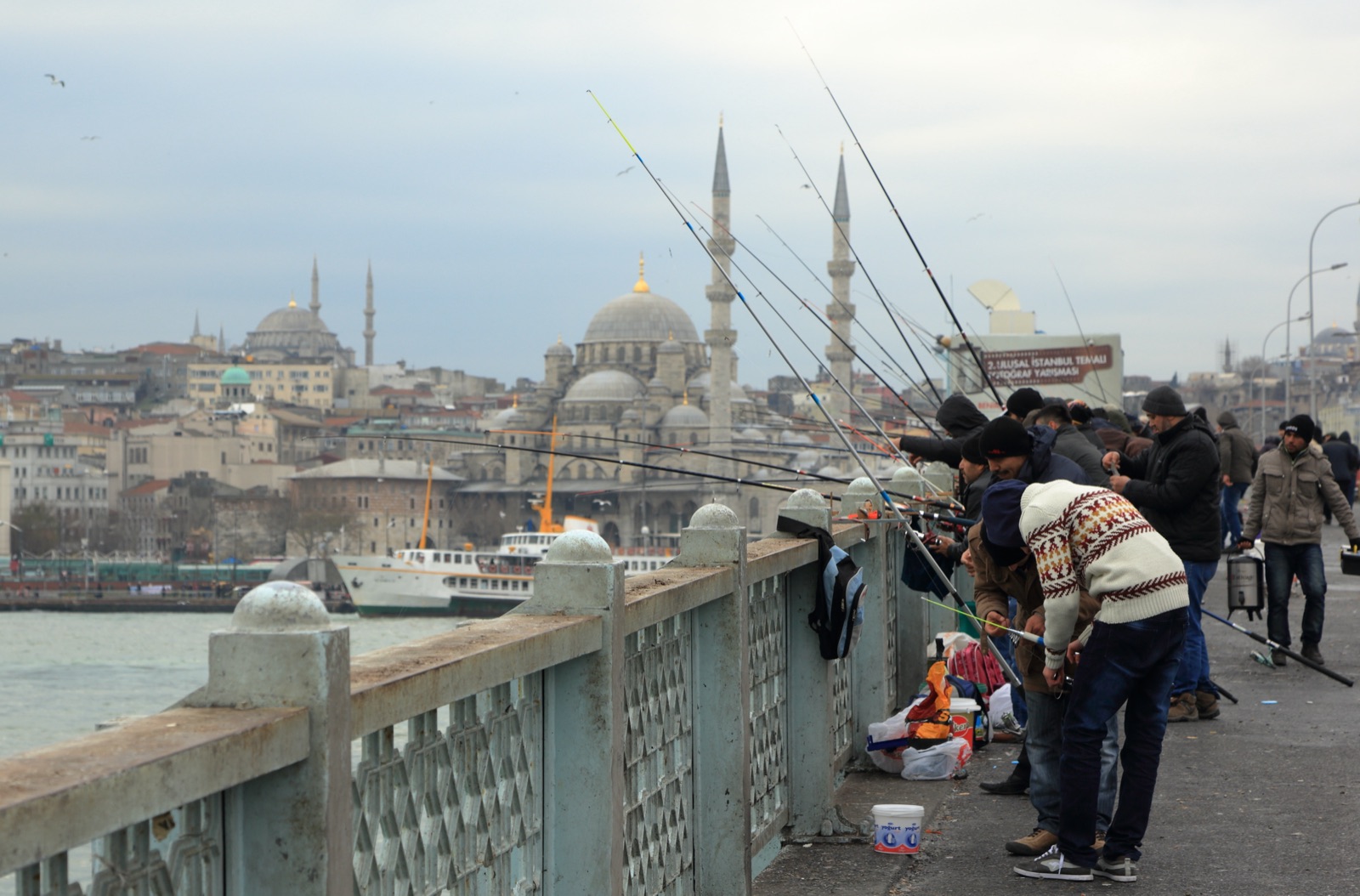
Today, the upper level is practically always full of anglers. They're such a strong part of the bridge's image that you might think this had been completely unchanged for centuries.
Fishing on the Golden Horn and the Bosphorus is, of course, old. But the specific, present-day formation of recreational anglers standing shoulder to shoulder is also a modern urban phenomenon.
Still, they shape the bridge so strongly that a Galata Bridge without fishing rods would almost look wrong.
The Fire of 1992
The older, floating, pontoon-like bridge was severely damaged by fire in 1992. The fire marked the end of a structure that had been familiar to many Istanbullus.
Parts of the old bridge were later relocated or removed. In parallel, today's bascule bridge was built.
The fire shows, once again, that even iconic city images can be far younger than people assume.
Today's Bridge
Today's Galata Bridge has an upper traffic level and a lower level with restaurants. The transport structure thereby also became a dining destination.
Trams, cars, pedestrians, and fishermen share the space up top. Below, people sit eating right above the water. Ships pass beneath the bridge.
This density is exactly what makes the place so typical of Istanbul.
Trams, Cars, and the Problem of Traffic
With every new mode of transport, the bridge had to change too. Horse carts, pedestrians, trams, and later cars all wanted to use the same narrow crossing. That made the bridge one of the busiest traffic points in the city.
The tram, in particular, connected the historic peninsula with Galata and Beyoğlu. That made the bridge part of a modern public transport network long before today's metro lines existed.
The Galata Bridge, then, was always a kind of test of how much city can fit into so little space.
The Bridge as a Viewpoint Over the City
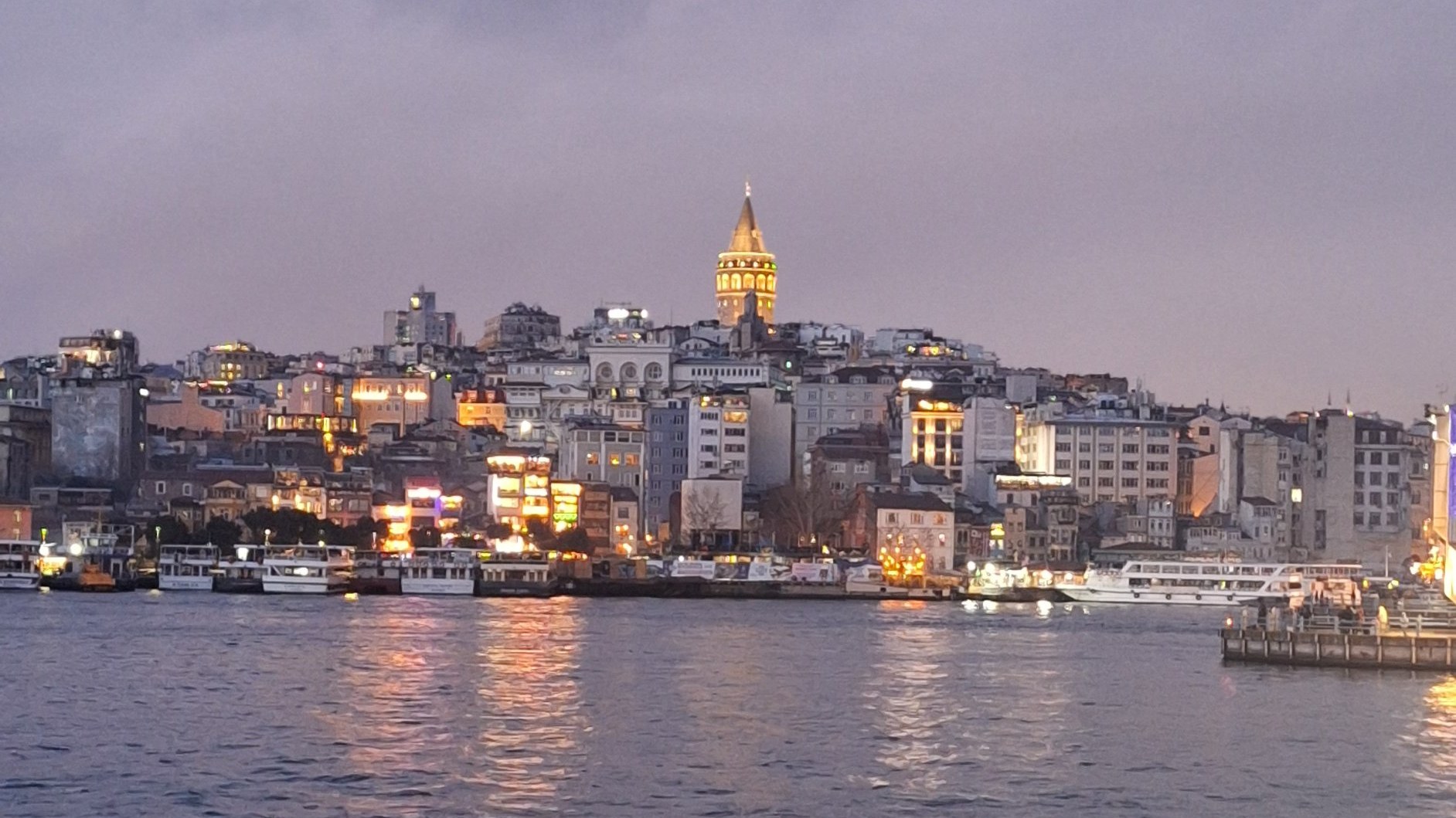
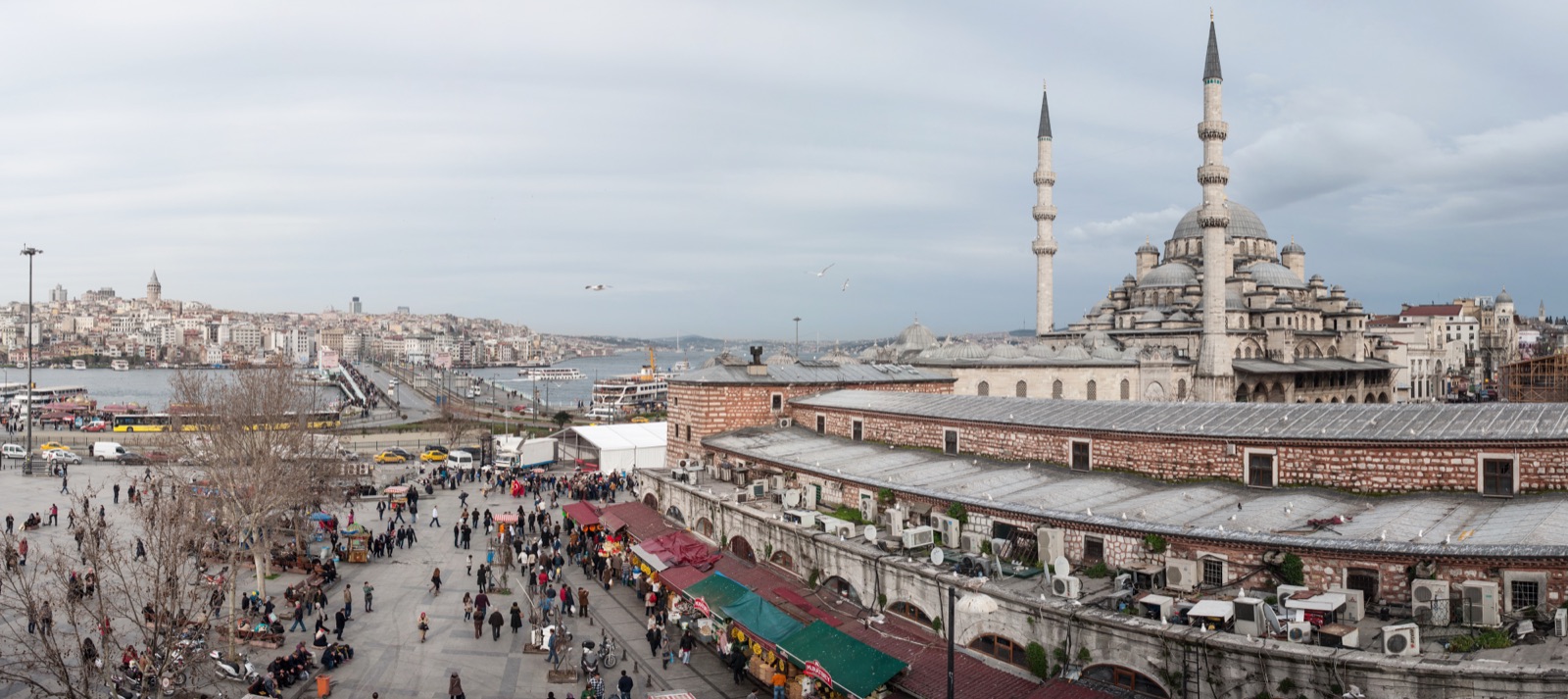
From the bridge, you don't just see water. The silhouettes of the Süleymaniye, the Yeni Camii, the Galata Tower, and the hills of Beyoğlu all come into view at once.
That makes the Galata Bridge one of the places where you can understand Istanbul's geography especially well. You see how closely the historic peninsula, the harbour, and European-influenced Galata sit together.
Maybe that also explains why the bridge, despite the traffic and the crowds, is more than a mere crossing, even for locals and visitors alike.
Why the Bridge Mattered So Much Socially Too
The Galata Bridge connected not just two shores, but different social worlds. Officials, merchants, dockworkers, tourists, soldiers, and businesspeople all used the same crossing. Especially in the late 19th and early 20th centuries, it became a place where very different segments of the population met directly.
Contemporary photographs capture this mix impressively. Elegant clothing stands next to work clothes, trams next to handcarts, merchants next to passers-by. The bridge was thus almost a cross-section of the city within a few hundred metres.
Eating Under the Bridge: Traditional or Modern?
Today's fish restaurants on the lower level now feel firmly tied to the Galata Bridge. This specific form, however, belongs to the modern bridge construction, not to an unchanged Ottoman tradition. Food and fish trading around Eminönü are of course older, but today's row of restaurants is part of more recent city history.
This very distinction is typical of Istanbul: a modern use can establish itself so strongly within a few decades that it suddenly seems ancient.
The Galata Bridge in Literature and Photography
Hardly any other piece of transport infrastructure in Istanbul has been described, photographed, and painted so often. Precisely because people from very different social groups met on the bridge, it was perfectly suited as an observation point for writers and photographers. Anyone standing there saw not just traffic, but a condensed slice of city life.

Historical photographs are especially revealing here, because they show how much clothing, vehicles, and the shoreline have changed, while the basic idea stayed the same: people crossing the Golden Horn, moving between Eminönü and Galata. The bridge matters, then, less because of one single famous construction date than because of its enduring role in everyday life.
Why the Bridge Is Best Experienced on Foot
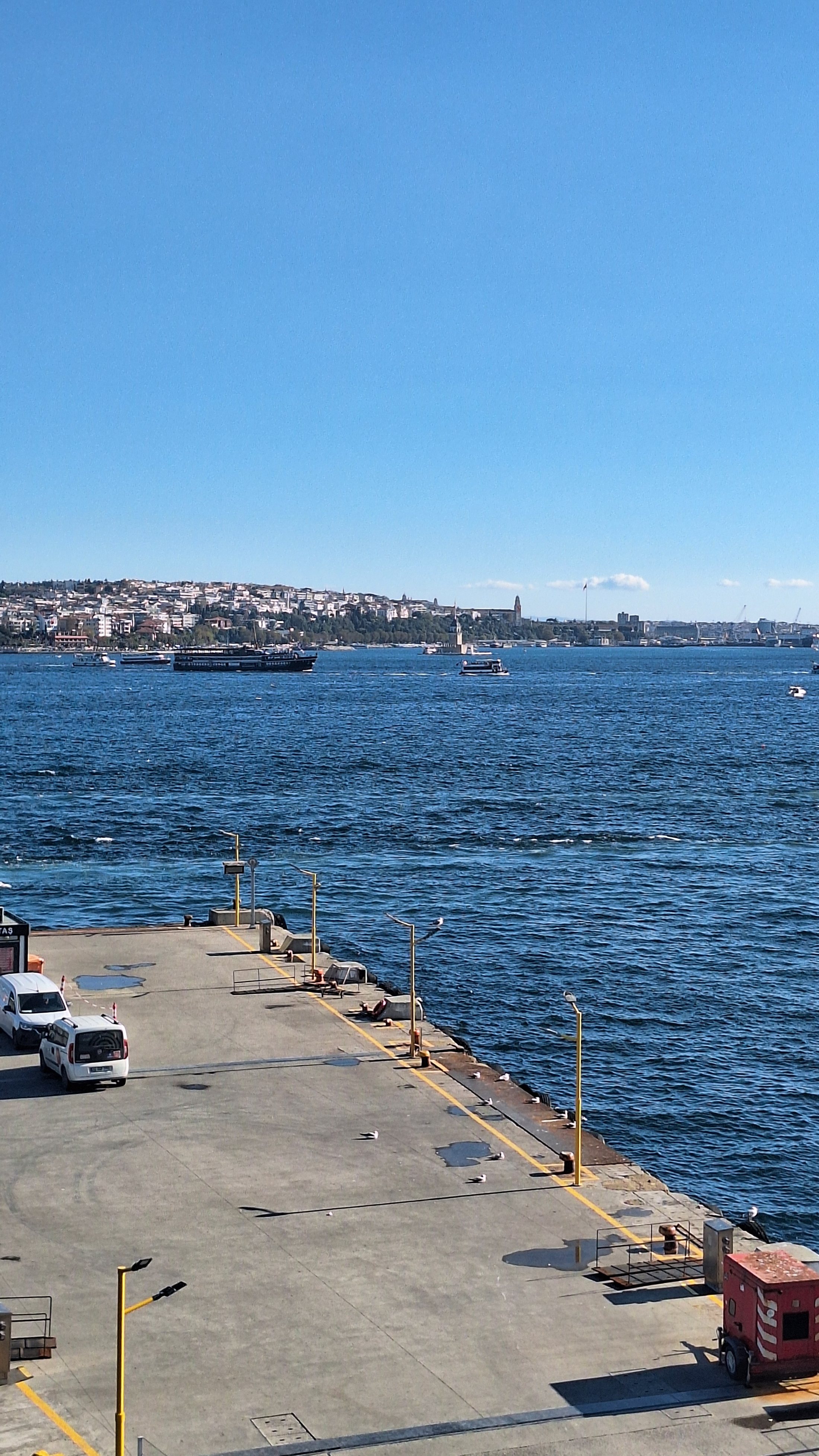
By tram or car, the crossing is over in a few minutes. On foot, by contrast, you notice just how many layers are working at once. Gulls wheel overhead, ferries and excursion boats pass below, anglers stand beside you, while the silhouette of the old town and the Galata Tower appear in the background.
A slow walk is especially worthwhile in the late afternoon, because the light keeps changing. The bridge itself may not be an architectural beauty in the classic sense, but as a viewing platform onto Istanbul, it's hard to beat.
A Social Boundary in the Middle of the City
In the 19th century, the Galata Bridge became a place where very different social strata met within a tight space. On the historic peninsula lay great markets, mosques, and state institutions. On the other side waited the banks, embassies, hotels, and entertainment venues of Galata and Pera. Anyone crossing the bridge didn't change country, but often changed social and cultural atmosphere.
Historical writers described this juxtaposition with fascination. Religious dignitaries, European businessmen, workers, soldiers, merchants, and travellers walked past one another. The bridge turned two differently shaped urban spaces into one shared, everyday traffic zone.
Ever More Traffic on the Same Narrow Link
As Istanbul grew, the bridge came under increasing strain. Horse carts, trams, later automobiles, and pedestrians competed for space. Historical photographs show a crush that looks astonishingly modern.
Today, the technology has changed, not the basic problem. Cars, trams, anglers, and pedestrians share the upper level, while restaurants sit below and ferries dock nearby. The Galata Bridge is still a place where Istanbul tries to fit a great deal into very little space at once.
Why Earlier Bridges Were Floating Structures
Several predecessors used pontoons, or floating elements. Such structures could be built and adapted relatively quickly, but had drawbacks when it came to fire, wear, and shipping traffic. The 1912 bridge shaped the cityscape for an especially long time.
When it burned in 1992, many Istanbullus therefore lost more than a technical link. A familiar piece of the cityscape disappeared. Today's bridge replaced it with a modern bascule construction.
Balık Ekmek Between Tradition and Tourism
Selling fish has long been part of the Eminönü harbour area. Today's touristy form, with decorated boats and standardised fish sandwiches, is, however, more modern than the idea of an unchanged, centuries-old tradition.
That doesn't make balık ekmek any less typical of the place. Food, water, and traffic have belonged together here for generations. Anyone standing on the bridge quickly notices that this harbour was never just a pretty view.
The Bridge as a Literary Symbol
Writers of the late Ottoman Empire and the early Republic often used the Galata Bridge as a vantage point. Nowhere else could the city's social diversity be condensed so easily. A few minutes on the bridge could reveal more different clothing, languages, and professions than an entire district.
That made it the ideal symbol for Istanbul itself: not harmoniously ordered, but contradictory and connected at the same time. This literary significance explains why losing an old bridge structure could feel more emotionally significant than replacing an ordinary road.
Fishing Today Is Also a Social Routine
The fishermen on the bridge aren't just a photo subject. Many come regularly, know each other, and spend hours there. Fishing doesn't always mean economic necessity; it can be leisure, habit, conversation, and a piece of personal space in a very dense city.
Anyone who watches for a while quickly notices that the upper level of the bridge holds a different social world from the restaurants below. It's exactly this layering that makes the place so typical of Istanbul.
"Leonardo da Vinci built a bridge in Istanbul." No. He designed, or rather proposed, a bridge. The plan wasn't carried out at the time.
"Today's Galata Bridge is centuries old." No. Several predecessor bridges stood at a similar spot. Today's structure dates from the late 20th century.
"The fishermen have stood there exactly like today since Ottoman times." Fishing is old, but today's dense culture of recreational anglers on the modern bridge is a more recent urban phenomenon.
My Thought on This Place
For me, the Galata Bridge is one of those places where Istanbul feels extremely dense. Above, cars, trams, people, and fishermen. Below, restaurants. On the water, ferries. In front of you, Eminönü; behind you, Galata.
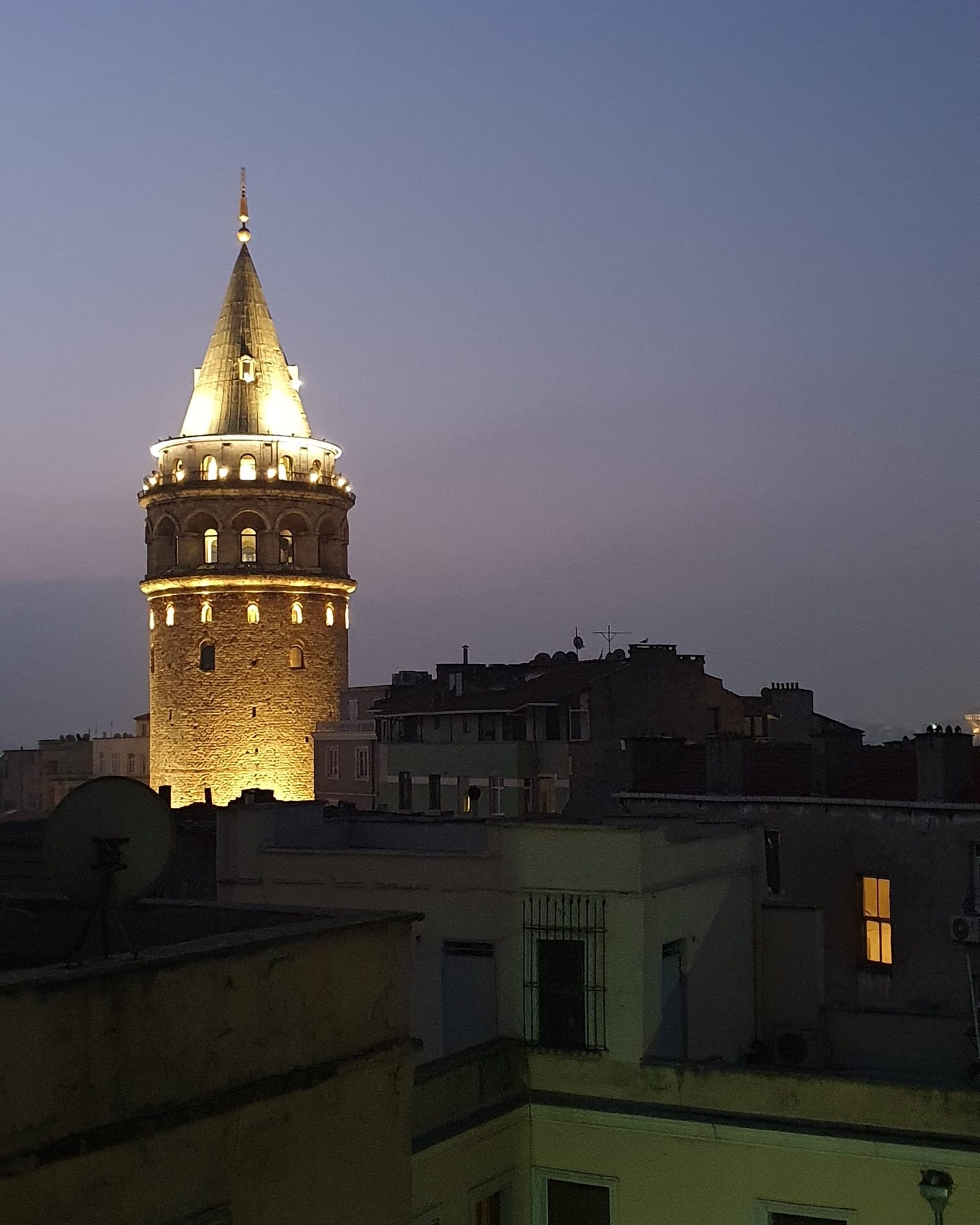
And above it all, you see the Galata Tower.
Maybe I love the bridge partly because it always draws me automatically toward my favourite building. You walk across it and you already have your next destination in view. And no matter how often I'm there, I of course photograph it again.
– Amra