 Music · Travel · Lifestyle
Right in the middle of bustling Karaköy, you walk down a few steps and suddenly find yourself in a dark, massive space that looks nothing like Istanbul's classic domed mosques. The Yeraltı Camii sits within an older substructure and is closely tied to legends about the defence of the Golden Horn.
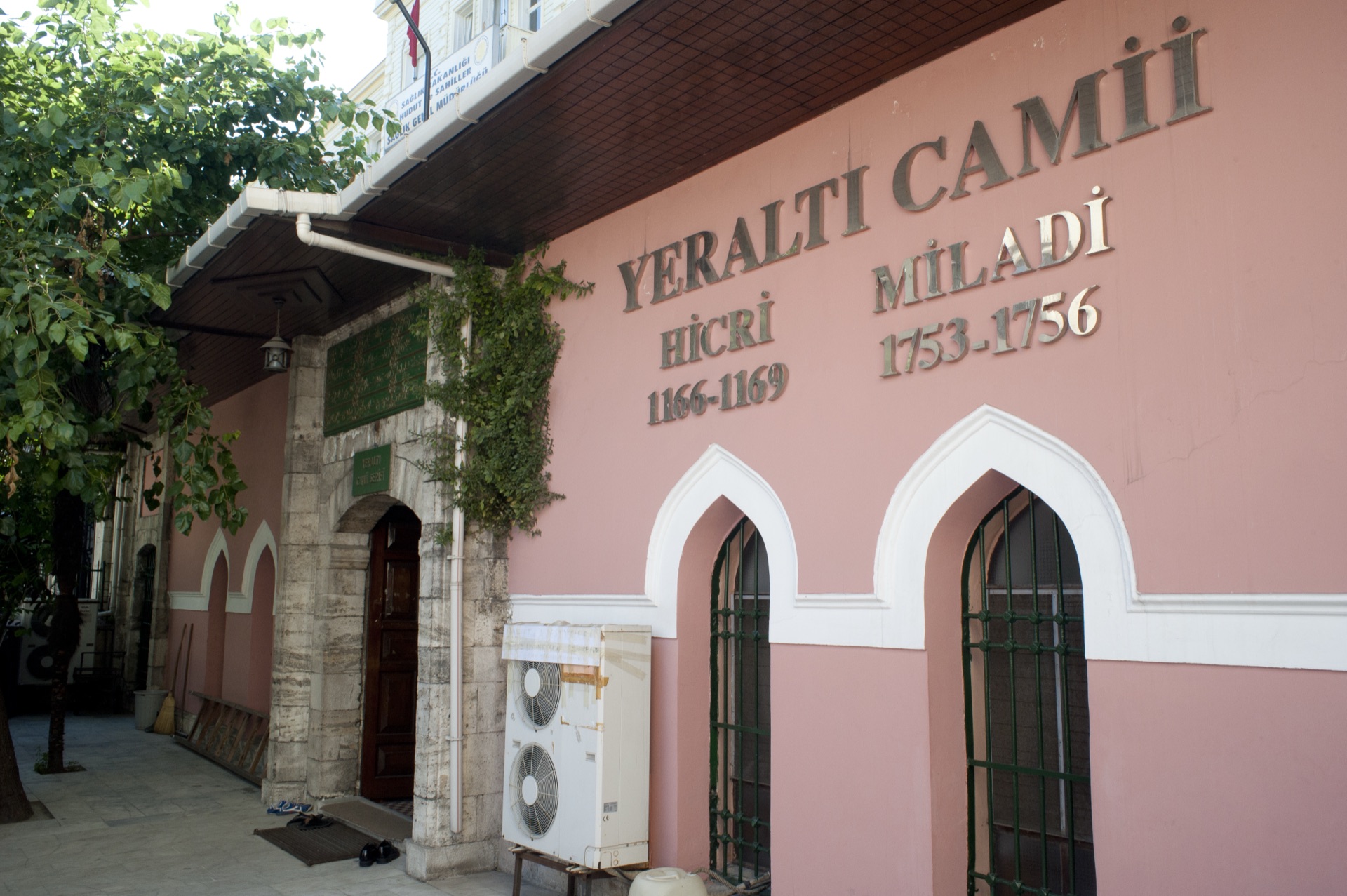
Right in the middle of bustling Karaköy, you walk down a few steps and suddenly find yourself in a dark, massive space that looks nothing like Istanbul's classic domed mosques.
It's especially often said that the great chain that once sealed off Constantinople's harbour was anchored here. The connection to the Byzantine fortifications of Galata is historically plausible, but the popular idea of a clearly identified "chain hook" surviving today should be treated more carefully.
- Yeraltı Camii means "Underground Mosque."
- Today's prayer hall uses a considerably older, massive substructure.
- The area belonged to Galata's defensive zone.
- In 1203, crusaders attacked precisely this area to break the barrier across the Golden Horn.
- The mosque itself only arose in Ottoman times.
- Inside are venerated graves whose historical attribution rests, in part, on religious tradition.
- The link to the harbour chain is plausible, but exact identification of individual surviving elements isn't always certain.
Why the Mosque Lies Underground
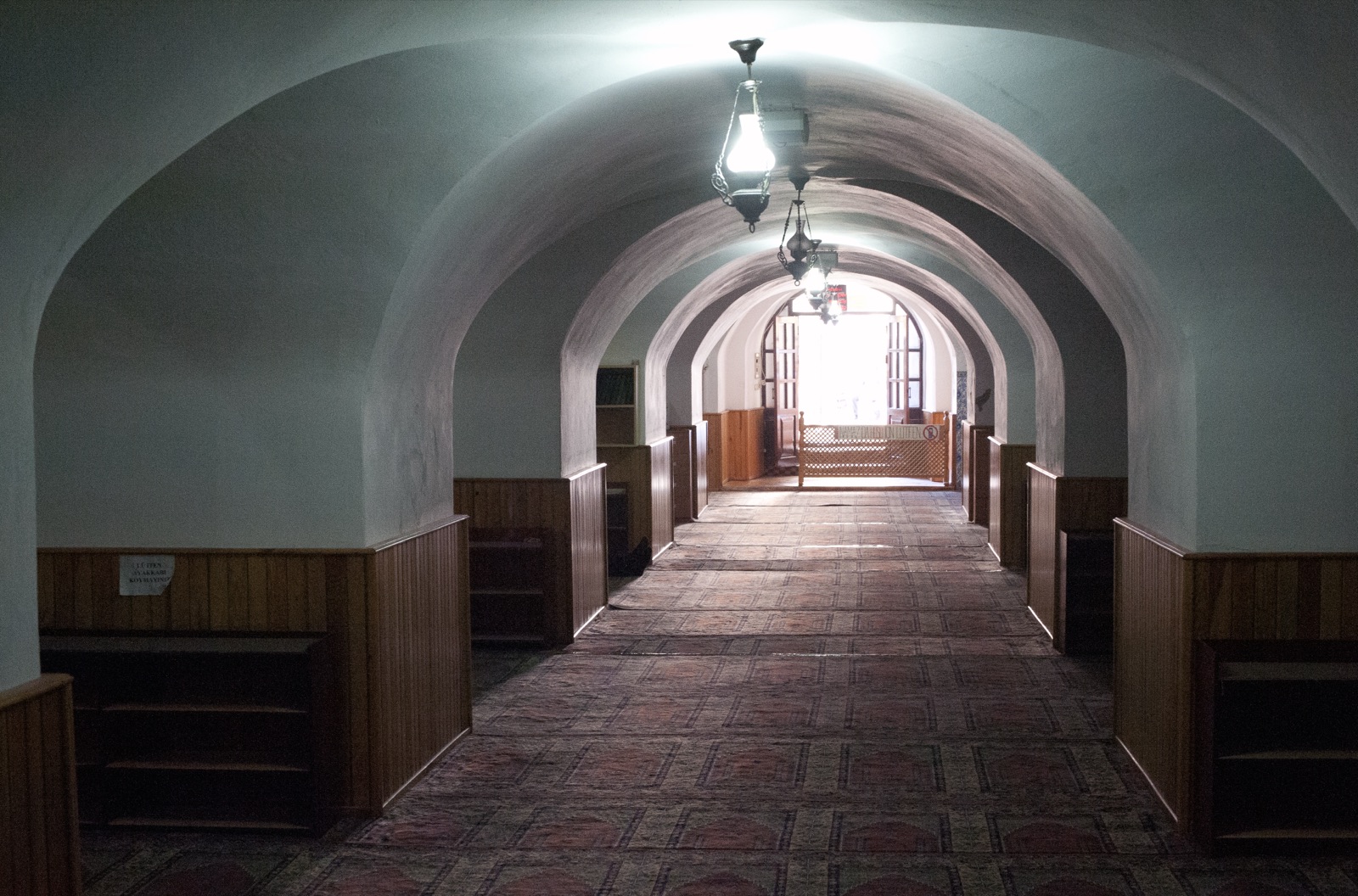
The mosque wasn't planned as a deliberately mysterious underground mosque. It uses an older vaulted substructure. Massive piers and low vaults create a spatial impression completely different from a classic Ottoman mosque.
It's precisely this architecture that makes the place so unusual. You sense immediately that the space must have been built for a different function.
The prayer hall, then, is a later religious use of a much older structure.
What Stood Here Before the Mosque
The area at the mouth of the Golden Horn was militarily important. In Byzantine times, Galata had fortifications that controlled access to the harbour.
Reconstructing individual towers and fortification sections precisely is difficult, because the area was massively rebuilt over the centuries. Genoese, Ottoman, and modern structures overlaid older ones.
Still, it's clear that the immediate surroundings belonged to the harbour's defensive zone.
1203 and the Crusader Attack
During the Fourth Crusade, Western forces attacked the Galata side in 1203. Their goal was to capture the defensive position there and gain access to the Golden Horn.
The crusaders took the structure, and their Venetian allies could then push into the sheltered harbour with ships. The immediate surroundings therefore belong to a decisive site of the first crusader attacks on Constantinople.
The timing matters: this attack took place in 1203, a year before the great sack of 1204.
What the Chain Has to Do With This Site
It's plausible that fortified structures in this area played a role in anchoring, or securing, the harbour chain. It gets trickier when modern tours point to a single stone or metal remnant and claim: "This exact spot is where the chain hung in 1203 and 1453."
Historic cities change. Walls get rebuilt, foundations reused, coastlines shifted. A single surviving hook today therefore can't automatically be traced back unquestionably across centuries.
The site's connection to the defence of the Golden Horn matters. You just have to phrase it precisely.
How It Became a Mosque
In Ottoman times, the older substructure was given a religious use. Today's mosque developed in the 18th century.
That older Byzantine or Genoese structures were reused for new Ottoman purposes is nothing unusual in Istanbul. Buildings here rarely vanish completely without a trace; foundations, walls, or rooms are often integrated into new uses.
Yeraltı Camii is an especially vivid example of this.
The Venerated Graves Inside
Inside, the graves, or makams, of several early Islamic figures are venerated, said by tradition to be linked to early Arab sieges of Constantinople.
Such traditions carry real religious meaning for believers. Historically, though, you have to distinguish between a site venerated for a long time and the scientifically confirmed burial of a specific person.
It's precisely at places like this that respect for religious tradition matters, without a history article presenting every tradition as archaeologically proven.
What's Historical Today, and What's Religious Tradition
The older structure is real. The military significance of the Galata shore is real. The crusader attack of 1203 is historically documented. The later conversion into a mosque is also part of the documented history.
With individual grave attributions and the concrete details of the chain's anchoring, the evidence grows less certain. It's exactly there that a good article shouldn't pretend to know more than is actually known.
That doesn't make the story less interesting. On the contrary — it shows how historical research and religious memory can exist side by side.
Why This Place Is Easily Misunderstood
Yeraltı Camii practically invites legends. Dark vaults, old walls, venerated graves, and proximity to the historic chain point of the Golden Horn make for a perfect mix of dramatic stories.
The problem starts when every tradition gets sold as archaeological fact. A good article shouldn't destroy the atmosphere of the place, but should clearly say where research is certain and where religious or local memory begins.
It's precisely this tension that makes Yeraltı Camii interesting. The place is, at once, a historic structure, an active prayer space, and the carrier of several traditions of memory.
Visiting as an Active Religious Site
Anyone visiting the mosque should remember it's not a pure museum. Prayer times, dress, and consideration for worshippers are therefore part of the visit.
In smaller mosques especially, disrespectful behaviour stands out far more than in huge tourist complexes. Photography shouldn't become more important than the space itself.
The special effect doesn't come from as many photos as possible anyway, but from the massive vaults and the unexpected stillness beneath Karaköy.
Why Karaköy Above Feels So Modern
The contrast could hardly be greater. Above the mosque sit traffic, cafés, galleries, offices, and one of Istanbul's most dynamic neighbourhoods. Just a few metres below lies a space whose massive masonry recalls an entirely different city.
This layering is typical of Karaköy. Modern use hasn't fully erased older structures, but sometimes sits directly on top of them. Yeraltı Camii makes this layering unusually clear, because you experience it physically: you step down from today's street level into an older world.
Why the Atmosphere Is Nothing Like a Museum
In a museum, you expect information panels, guided routes, and a clearly defined visitor role. At Yeraltı Camii, it's different, because the space is still used for religious worship. People don't come only to look at history, but to pray.
That also changes the behaviour expected of visitors. Anyone looking only for a spectacular historic cellar doesn't fully understand the place.
The Early Arab Sieges and Their Memory
The religious traditions inside link the site to early Arab attempts to conquer Constantinople. In the 7th and 8th centuries, the Byzantine capital was repeatedly threatened by Muslim armies. These sieges failed, but they left a strong imprint in Islamic memory, because taking Constantinople was already seen as a prestigious goal early on.
Many centuries later, individual companions of the Prophet, or early fighters, were linked to specific burial sites in and around Istanbul. Not every one of these attributions can be historically confirmed with certainty, but the veneration itself developed into a real tradition. Yeraltı Camii belongs precisely within this space of memory.
Beneath Karaköy, then, lies a place where Byzantine military history, Ottoman religious history, and local tradition all overlay one another. This mix can't be cleanly reduced to a single era.
Why the Mosque Is So Unusual for Karaköy
Today, Karaköy is strongly associated with cafés, galleries, Galataport, ferries, and nightlife. Within this setting, Yeraltı Camii feels almost like a counter-image. It's dark, low, and turned inward.
That's exactly why it's a reminder that Karaköy was a strategic and religious space long before its current touristy rediscovery. Anyone who stays on the surface barely sees this part of the story.
Why the Space Feels So Different From a Classic Mosque
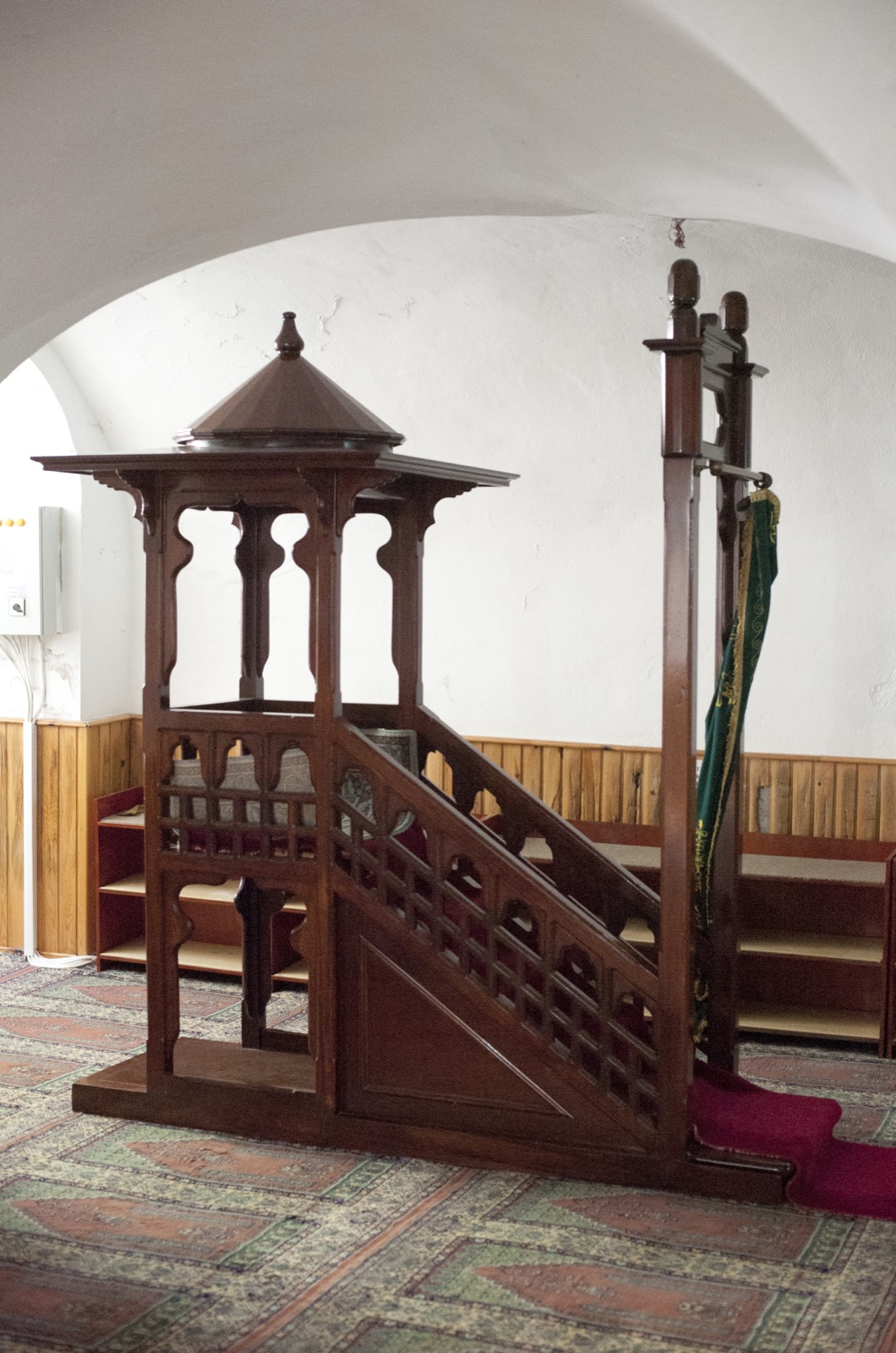
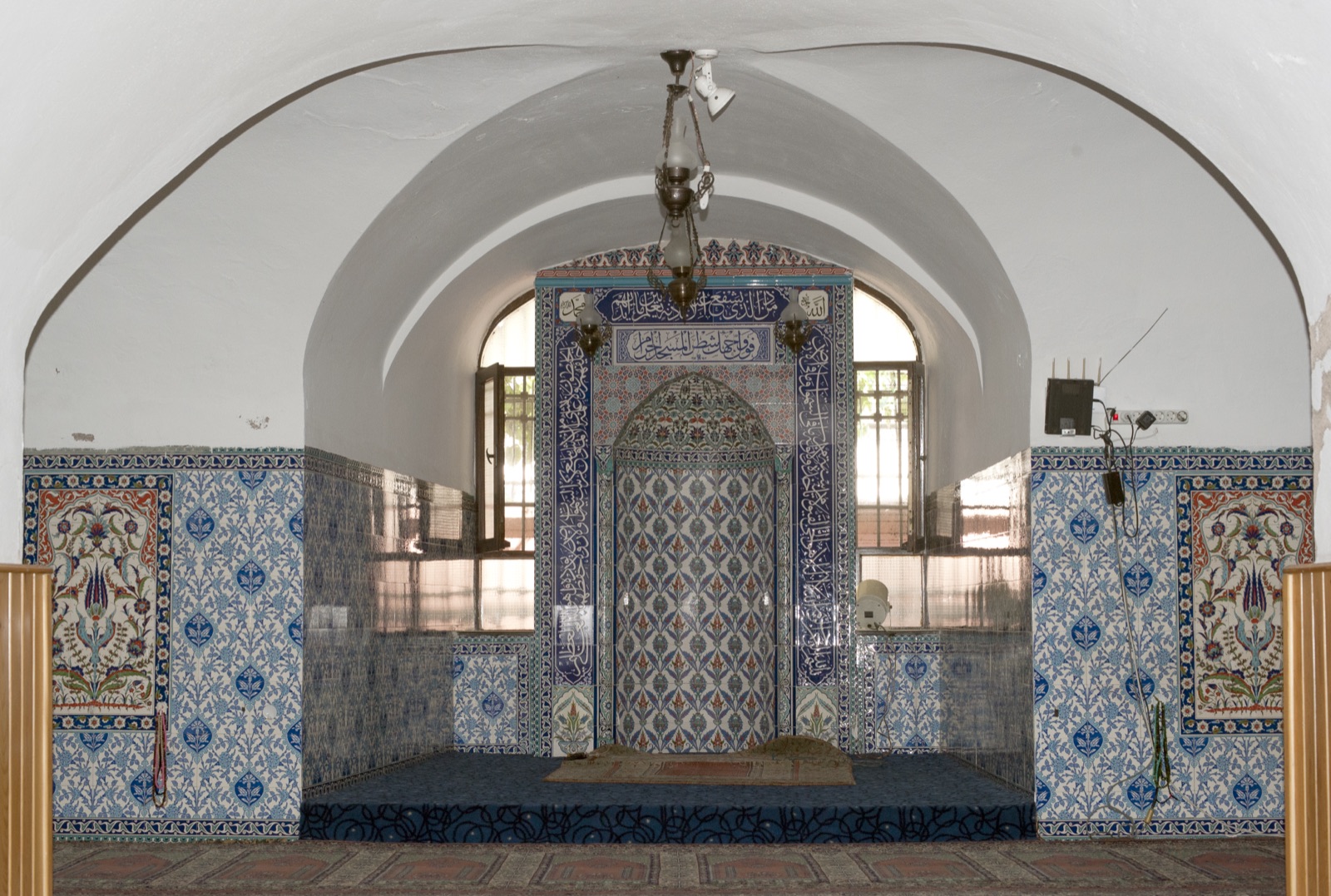
The low interior, carried on massive piers, wasn't originally designed as a mosque. That's precisely why this unusual atmosphere arises. Religious fittings, the mihrab, and prayer areas were integrated into an older architectural shell, whose proportions come from a different function entirely.
Such repurposings are among the most fascinating things about Istanbul. They show that a building doesn't necessarily disappear once its original task ends. A military or logistical substructure can, centuries later, become a place of religious veneration.
Tradition and Historical Certainty Aren't the Same Thing
The graves venerated inside are linked to early Muslim fighters said to have fallen during Arab attacks on Constantinople. For believers, this tradition carries great significance. Historically, though, not every specific burial can be confirmed beyond doubt through contemporary sources or archaeological findings.
That doesn't make the veneration meaningless. A site of memory can gain religious significance over centuries. For a history article, what matters is simply stating clearly what's religious tradition and what can be confirmed scientifically.
"The Golden Horn chain definitely hung exactly at this hook you can see today." The area's connection to the harbour barrier is plausible, but exact identification of individual surviving elements isn't always archaeologically confirmed.
"The venerated men inside are, without doubt, buried there." This belongs, in part, to religious tradition. The historical evidence isn't equally clear for every attribution.
"The mosque was originally built underground." No. The prayer hall uses an older substructure that originally served a different function.
My Thought on This Place
For me, Yeraltı Camii is fascinating precisely because the place doesn't immediately explain what it is. You go down, see these heavy vaults, and realise: something was clearly here already, before anyone turned it into a mosque.
And once you know that, right outside this stretch of the Golden Horn, crusaders fought over the harbour barrier in 1203, this unassuming basement suddenly takes on a completely different dimension.
Sometimes Istanbul doesn't need a huge dome. A few steps down are enough.
– Amra