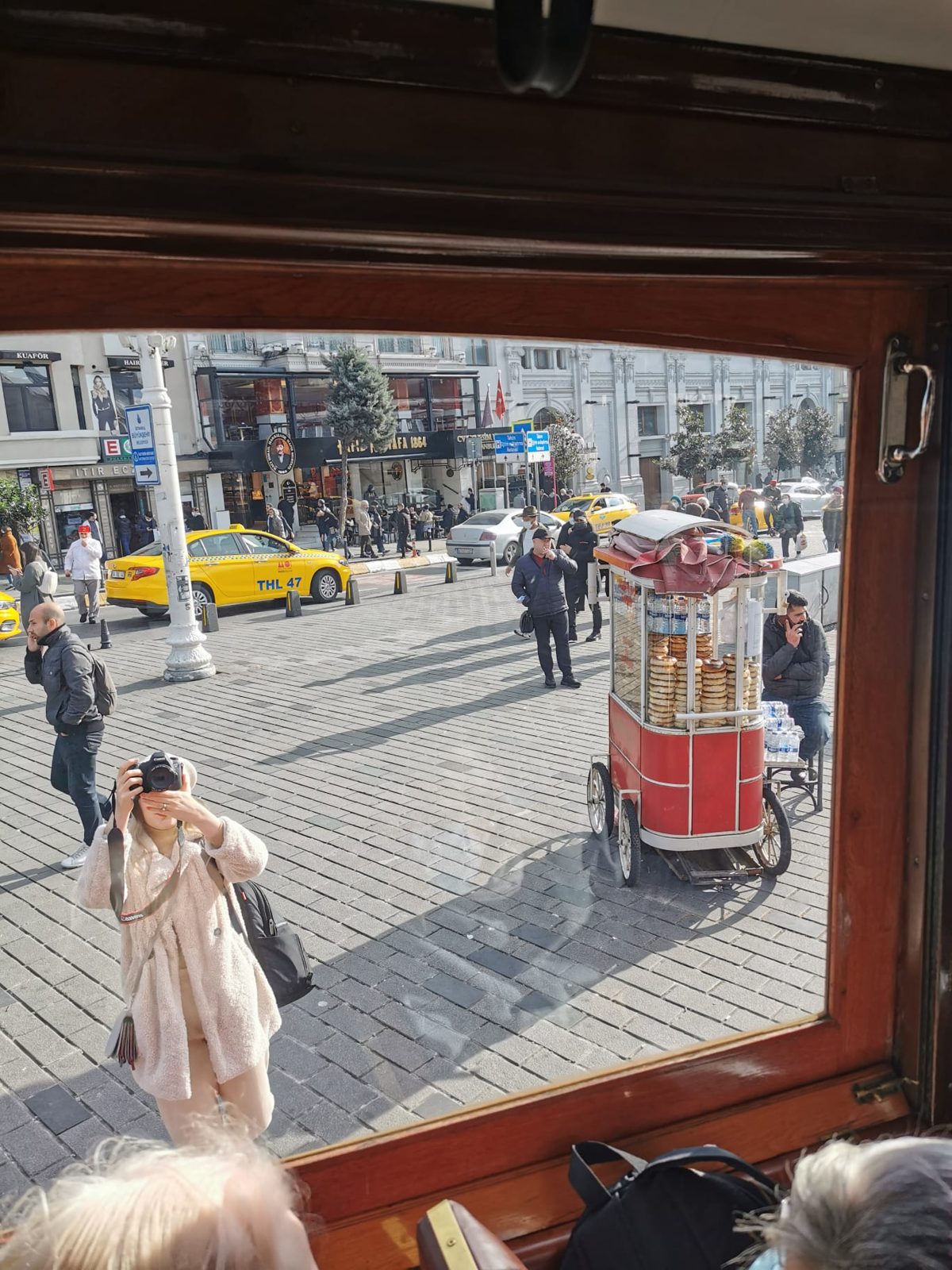

Anyone walking along İstiklal can almost miss St. Anthony's Church. Its red brick façade sits set back a little behind a forecourt, framed by the storefronts of the shopping street. Step inside, though, and the atmosphere changes completely. Outside, people push past each other, music spills out of shops, historic tram cars ring their bells through the crowd. Inside, it suddenly goes quieter.
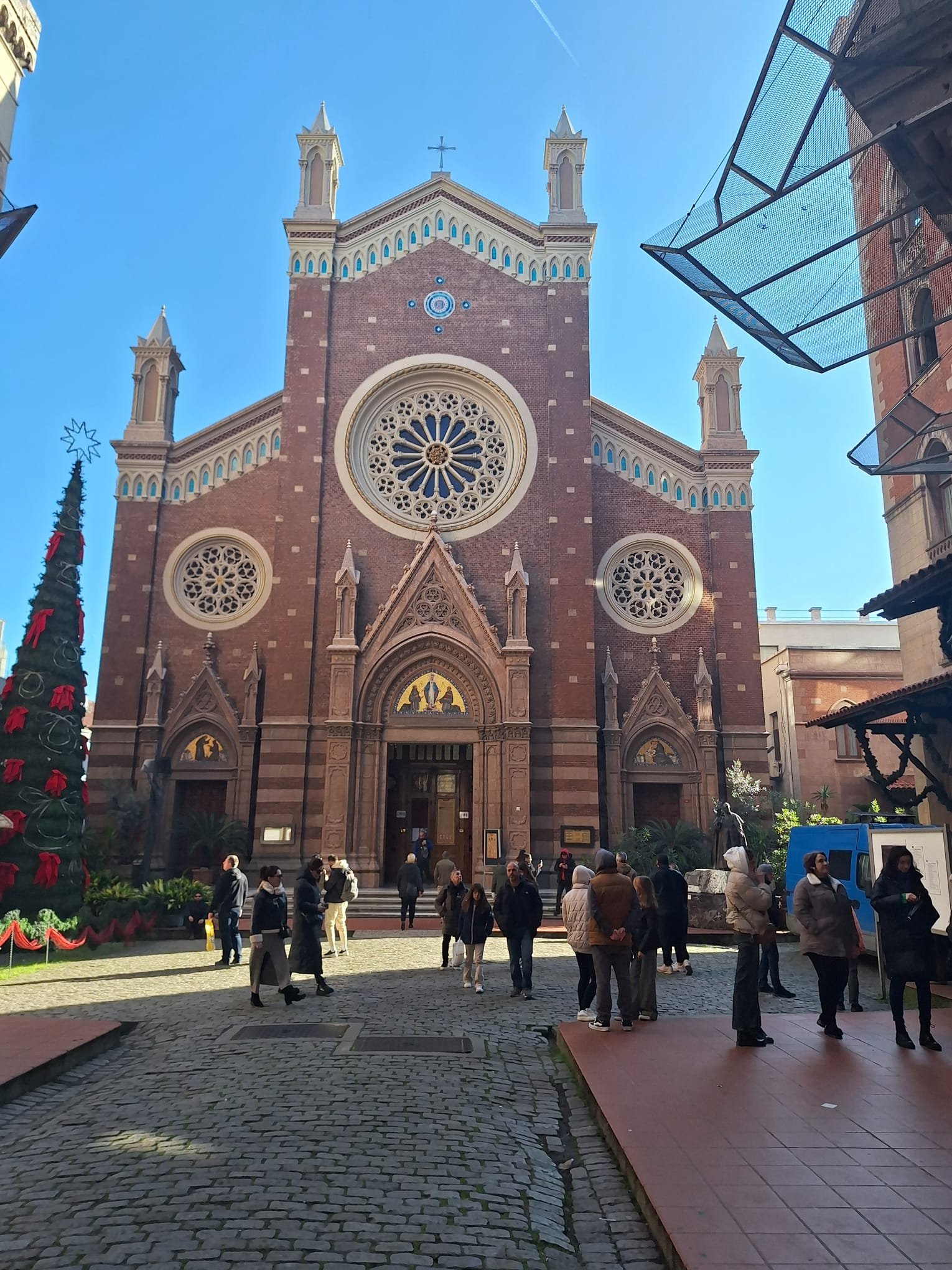
Anyone walking along İstiklal can almost miss St. Anthony's Church. Step inside, though, and the atmosphere changes completely: outside, people push past each other; inside, it suddenly goes quiet.
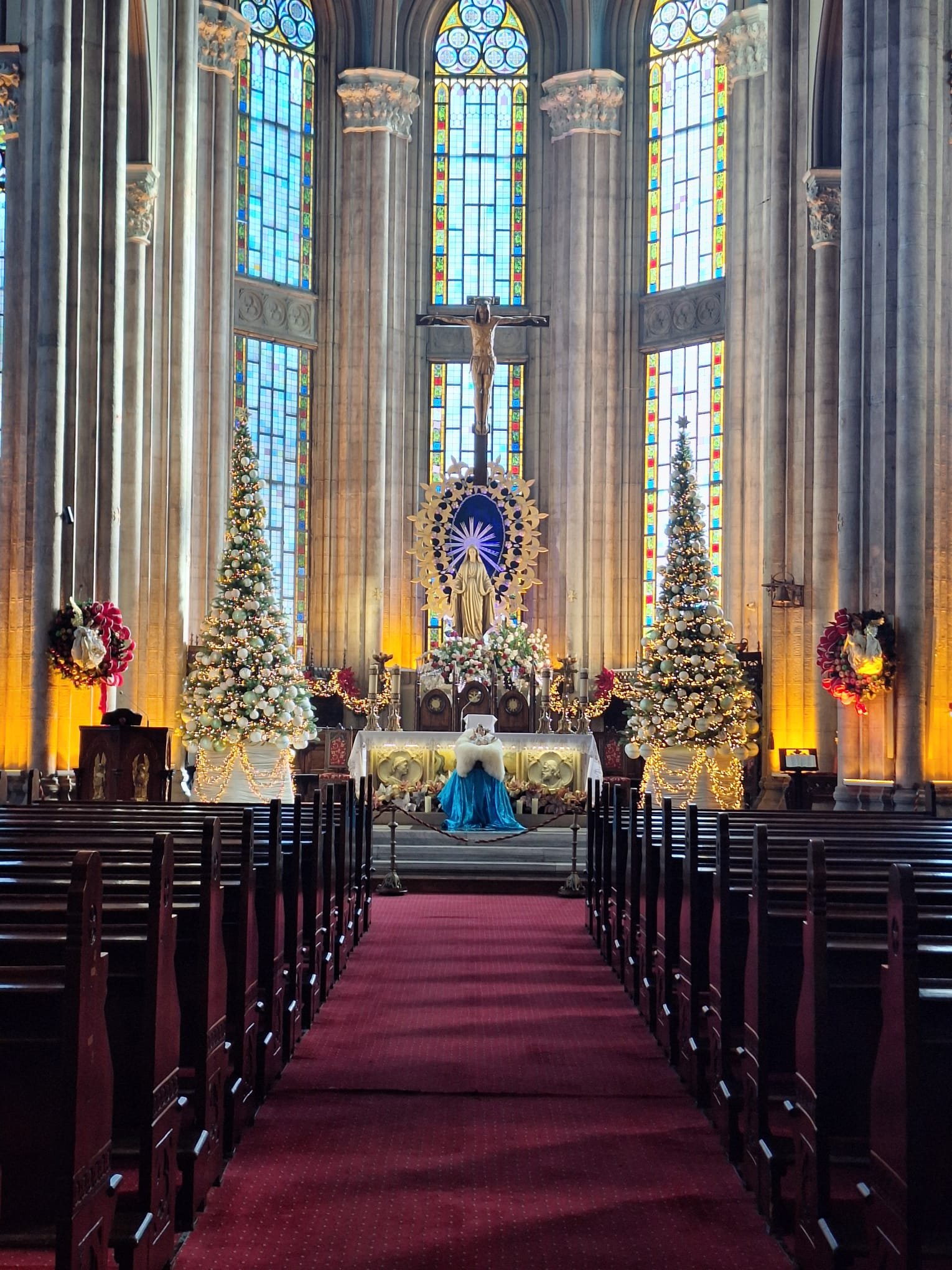
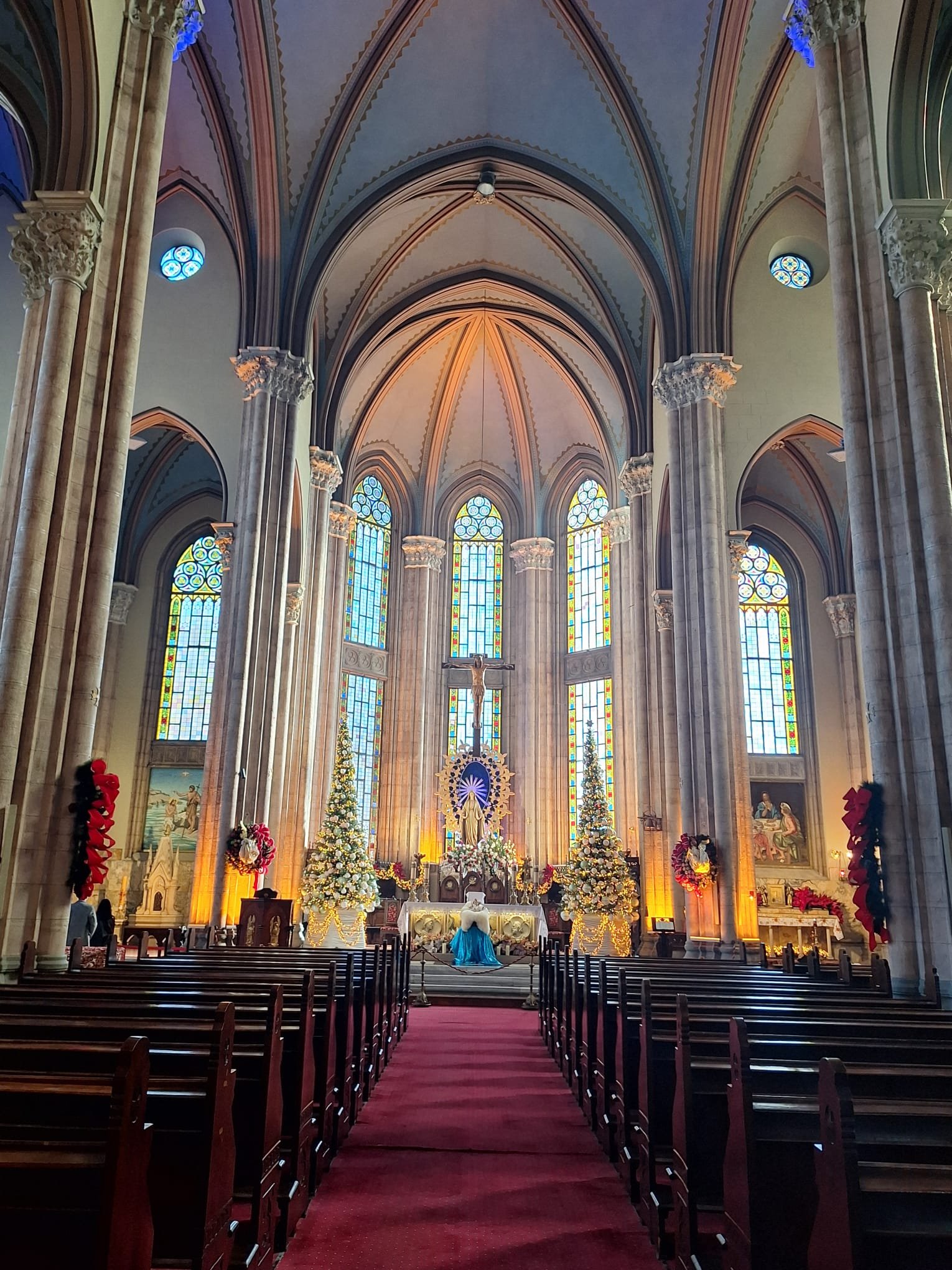
For me, visiting at Christmastime was especially beautiful. The church was decorated so lovingly that I genuinely thought some other churches could take inspiration from it. Outside it was cold; inside, a warmth arose anyway that had nothing to do with the heating. At the same time, people of the most varied backgrounds kept coming in, looking at the house of worship — some praying, others just watching respectfully. It's exactly this matter-of-factness that I love about Istanbul.
- St. Anthony of Padua is one of the most significant Catholic churches in Istanbul.
- Today's church was built in the early 20th century.
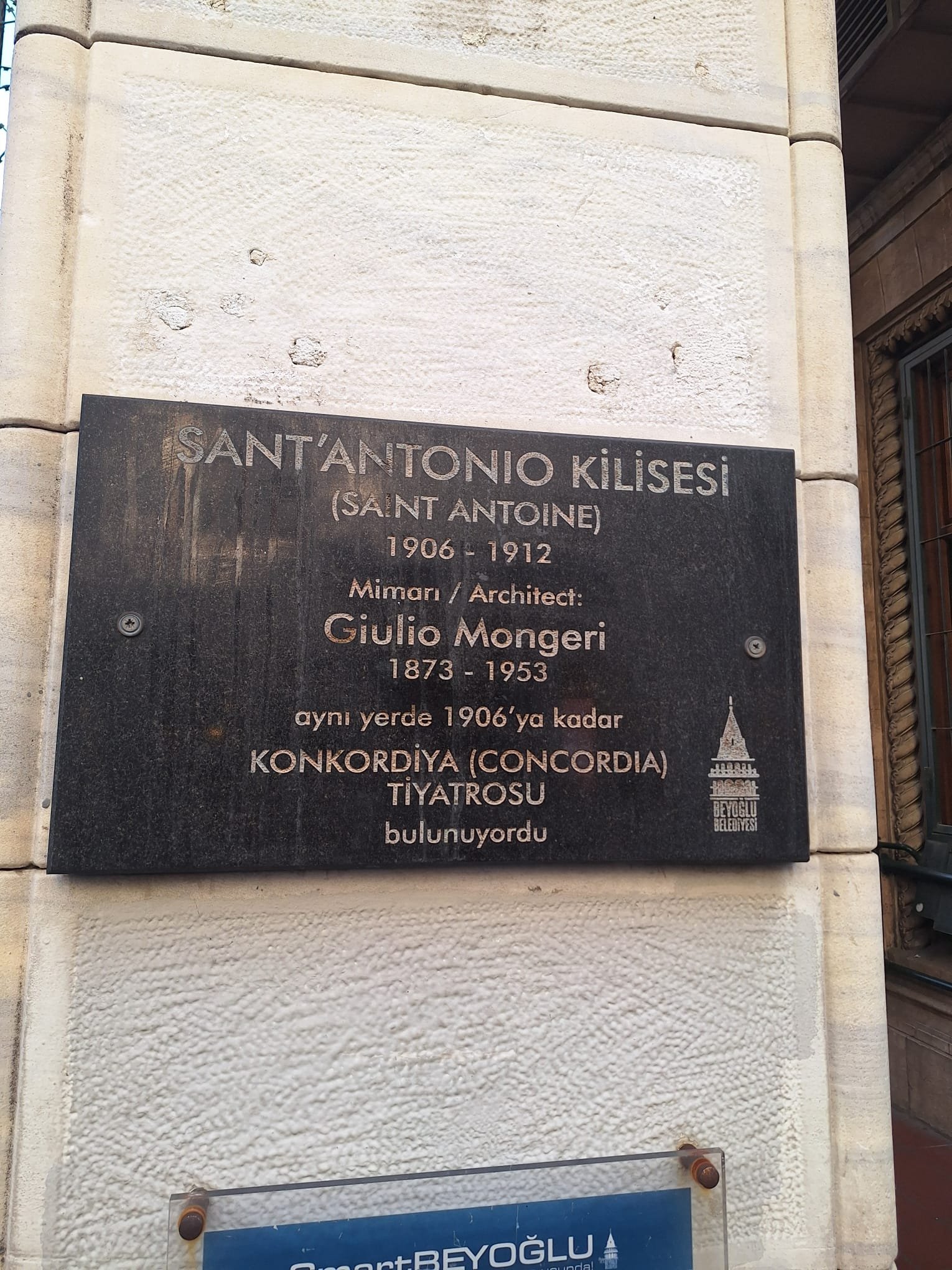
- Its architect was Giulio Mongeri.
- The building draws on neo-Gothic, or northern Italian-Venetian, forms.
- The parish is connected to the Franciscan order.
- Angelo Giuseppe Roncalli, the later Pope John XXIII, served as a papal diplomat in Istanbul and is associated with the church.
- The church remains an active house of worship, while also open to respectful visitors.
Catholics in Ottoman Constantinople
Catholic communities existed in Constantinople long before today's church building. Galata and Pera in particular were shaped by Genoese, Venetian, Levantine and later other European communities. Churches, monasteries and diplomatic institutions were part of the district's religious landscape.
The Catholic presence was never entirely independent of politics. Capitulations, diplomatic protection rights, and relations between European powers and the Ottoman Empire influenced the legal status of individual communities. Even so, a lasting local Catholic life developed that didn't consist merely of temporary foreigners.
Why a new church became necessary
An older Anthony's Church already existed, but had to give way in the course of urban redevelopment. Today's building on İstiklal was therefore built in the early 20th century.
The choice of a prominent location shows how significant the Catholic community was in Pera. At the time, the street was one of the city's most modern and international areas. A large new church fit into surroundings of embassies, schools, arcades, and European commercial buildings.
Giulio Mongeri and today's architecture
The Italian architect Giulio Mongeri shaped several significant buildings in Istanbul, and later in the young Republic. For St. Anthony's, he developed a red-brick architecture with neo-Gothic elements and clear references to northern Italian church forms.
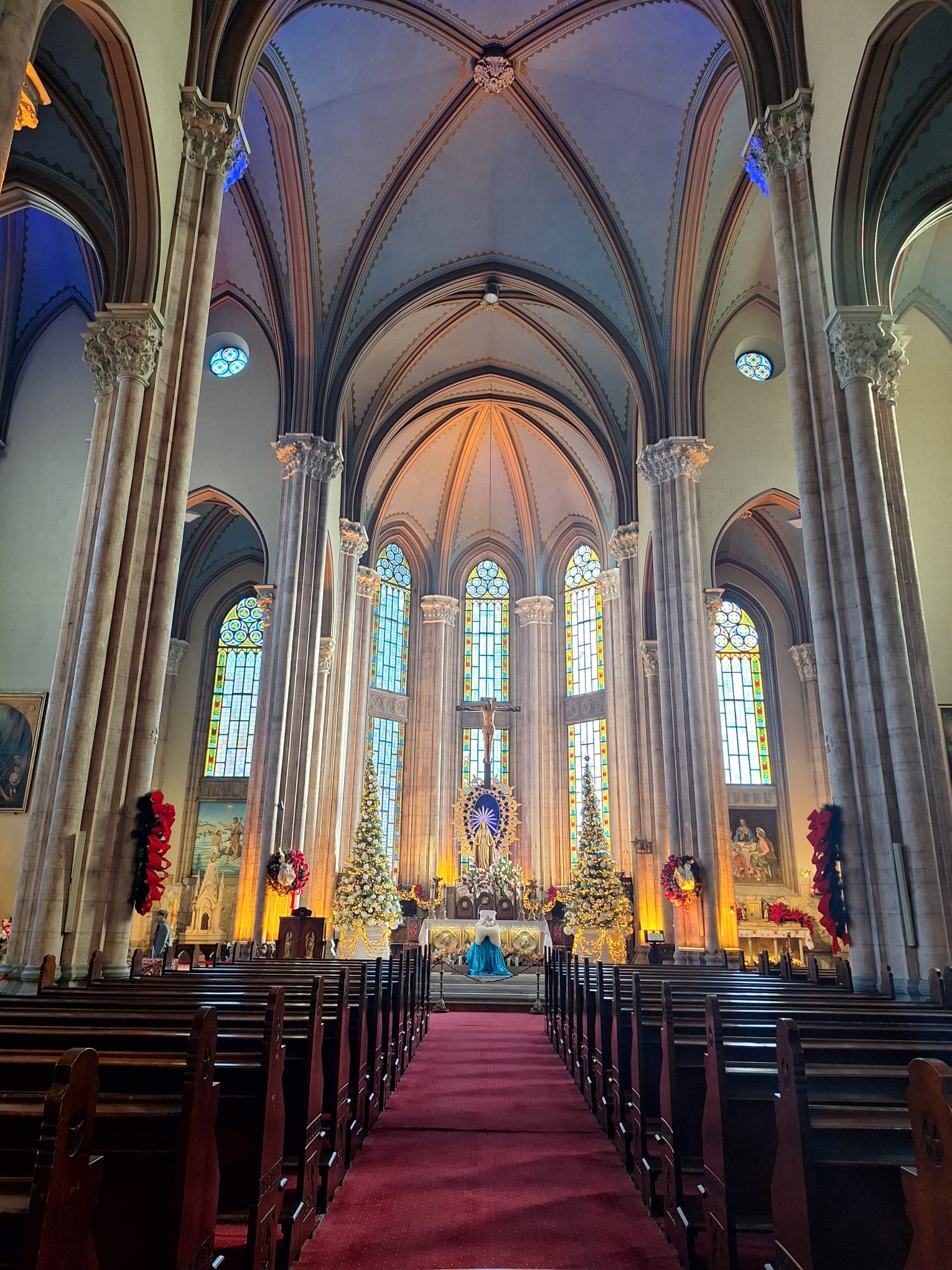
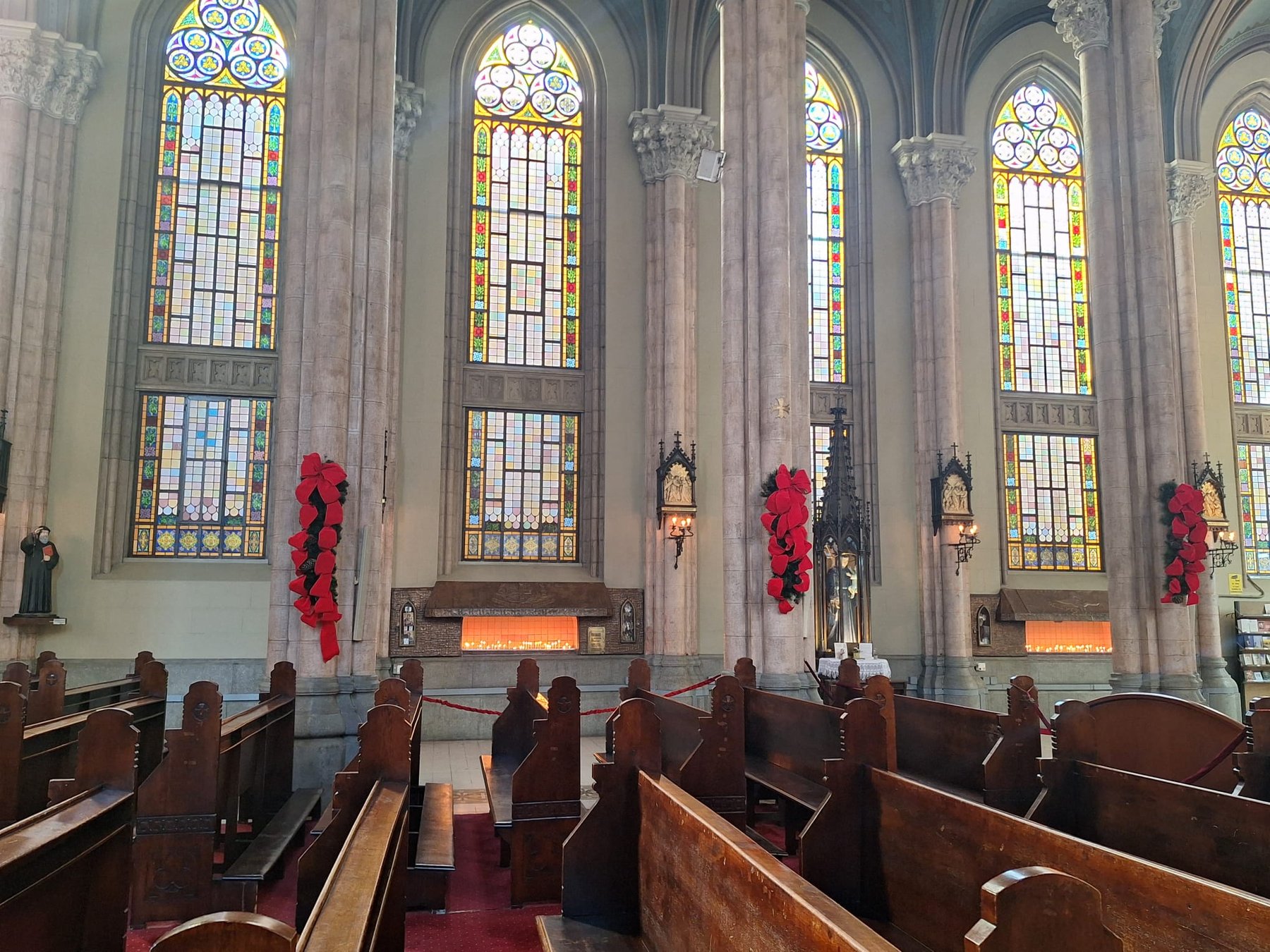
Pointed arches, rose windows, high vaults, and colored glass windows create a space very different from Ottoman mosques in the same city. It's exactly this contrast that makes Istanbul so interesting. Different sacred architectures don't stand in different countries — they stand a few streets apart.
Why the church sits behind a courtyard
St. Anthony's doesn't sit directly flush with the street edge. A forecourt creates distance from İstiklal. The flanking buildings also form a transition between shopping street and sacred space.
This small distance changes an astonishing amount. You walk through the gate and leave the noise, not entirely, but noticeably, behind you. So the church doesn't really hide — it just needs a few meters to create a different atmosphere.
Franciscans and parish life
The church is connected to the Franciscans and still serves Catholic worship today. Visitors should therefore never forget they're not entering a mere museum. People come there for Mass, for confession, for personal prayer, and for church celebrations.
This becomes especially visible at Christmas. Decoration and visitor interest increase, but at the center remains a religious feast. Respect therefore also means not walking around with your phone right in front of people praying during services.
Pope John XXIII and Istanbul
Angelo Giuseppe Roncalli lived in the 1930s and 1940s as apostolic delegate in Turkey and Greece. He later became Pope John XXIII. In Istanbul, he built contacts with various religious communities and spoke positively of the country.
His connection to St. Anthony's is still remembered today. A statue, or memorial, to him stands within the church grounds. Roncalli's Istanbul years are especially interesting because they show that interreligious dialogue is not a recent invention.
Christmas on İstiklal
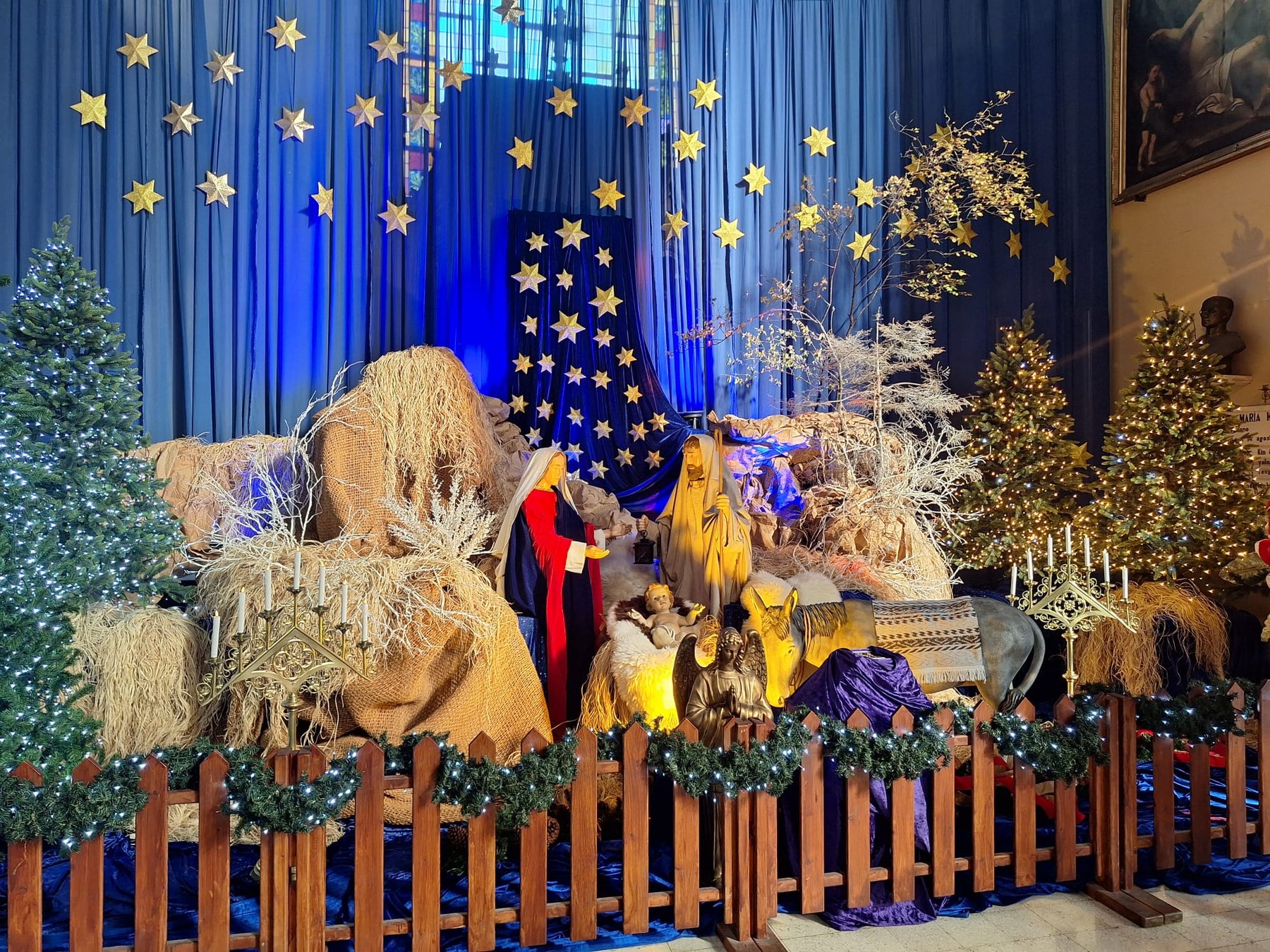
At Christmastime, the church is decorated intensively. For the small Catholic community, it's a central religious feast; at the same time, the decoration draws many Muslim and non-religious visitors.
Some see a contradiction in that; I see rather the opposite. A city doesn't need to be religiously homogeneous for a house of worship to be respected. That people visit a church because it's beautiful doesn't automatically mean they have to adopt its faith. Admiration is not yet conversion.
Religious diversity in Beyoğlu
In and around Beyoğlu you find Catholic, Greek Orthodox, Armenian and other churches, as well as mosques and synagogues. This diversity grew out of centuries of migration, trade, and diplomacy.
It was never free of conflict. The violence of 1955 in particular, and later emigration, sharply reduced Christian communities. That makes it all the more important to treat the surviving houses of worship not just as pretty photo subjects, but as traces of real communities.
"St. Anthony's dates from the Genoese era." No. Today's church is an early-20th-century building, even though the area's Catholic history is considerably older.
"It's only a museum now." False. St. Anthony's is an active Catholic house of worship.
"There are practically no Christian churches left in Istanbul." Also false. The congregations have grown smaller, but numerous active churches still exist.
Why a large Catholic church stands on İstiklal
That St. Anthony's stands in the middle of one of Istanbul's best-known streets makes historical sense. Beyoğlu/Pera was, in the 19th and early 20th centuries, a center of European diplomacy, Levantine families, foreign businesses, and Christian communities.
Catholic communities were therefore no exotic foreign body. Italians, French, Levantines, and other groups lived and worked here across generations.
The church is part of this cosmopolitan urban history.
Today's church and its predecessor
Franciscans had already been present in Istanbul long before today's building. An older church had to give way during urban redevelopment before today's complex was built in the early 20th century.
The architect Giulio Mongeri shaped its neo-Gothic, or Venetian-influenced, style. The red brick and high arches differ markedly from Ottoman mosque architecture elsewhere in the city.
The building thus also shows how European architectural languages coexisted naturally in Pera.
Pope John XXIII and his time in Istanbul
One especially interesting connection leads to Angelo Giuseppe Roncalli, the later Pope John XXIII. He lived in the 1930s and 1940s as papal representative in Turkey and had close ties to Istanbul's Catholic community.
His time in Turkey shaped him deeply. He later became known for his ecumenical style and for opening up the Catholic Church.
St. Anthony's therefore also keeps his memory alive.
Christmas in the middle of İstiklal
At Christmastime, the atmosphere shifts especially strongly. Decoration, lights, and religious symbols stand just a few steps from a street where hundreds of thousands of people of the most varied backgrounds are out and about.
It's exactly here that religious diversity becomes tangible. A church doesn't need to be hidden at the edge of a city to be respected.
It can stand in the middle of the loudest shopping district.
Respect as practical everyday life
Visitors may enter the church as long as services and rules are respected. To me, that's exactly what matters. You can visit a house of worship of a religion you may not belong to yourself, and still feel respect.
That only works if curiosity isn't confused with disrespect. Photos, conversations, and clothing should adapt to the place.
The same principle applies to mosques.
What Pera would lose without its churches
If you tell Beyoğlu's story only as Muslim-Ottoman or modern Turkish history, a large part is missing. Churches like St. Anthony's, and Greek Orthodox and Armenian houses of worship, show that the district was multireligious for a long time.
Many communities are smaller today than before, especially after the political crises of the 20th century. The buildings therefore also remain memorial sites for population groups that decisively helped shape modern Istanbul.
My take on this place
We were there at Christmastime, and I found it truly beautiful. The church was decorated so beautifully that a special warmth arose immediately, even though it was cold outside. And in the middle of İstiklal, where countless people pass by every day, people of different religions stood together in that space and simply behaved respectfully toward one another.
That's exactly how it should be. You can enter a house of worship of another religion or denomination, see its beauty, and let the people inside keep their faith. No one takes anything away from you by doing that.
Acceptance and respect have to apply in a mosque just as much as in a church. Anyone who, faced with a beautiful house of worship, first thinks about who they could hate there has, in my opinion, truly missed something fundamental.
– Amra