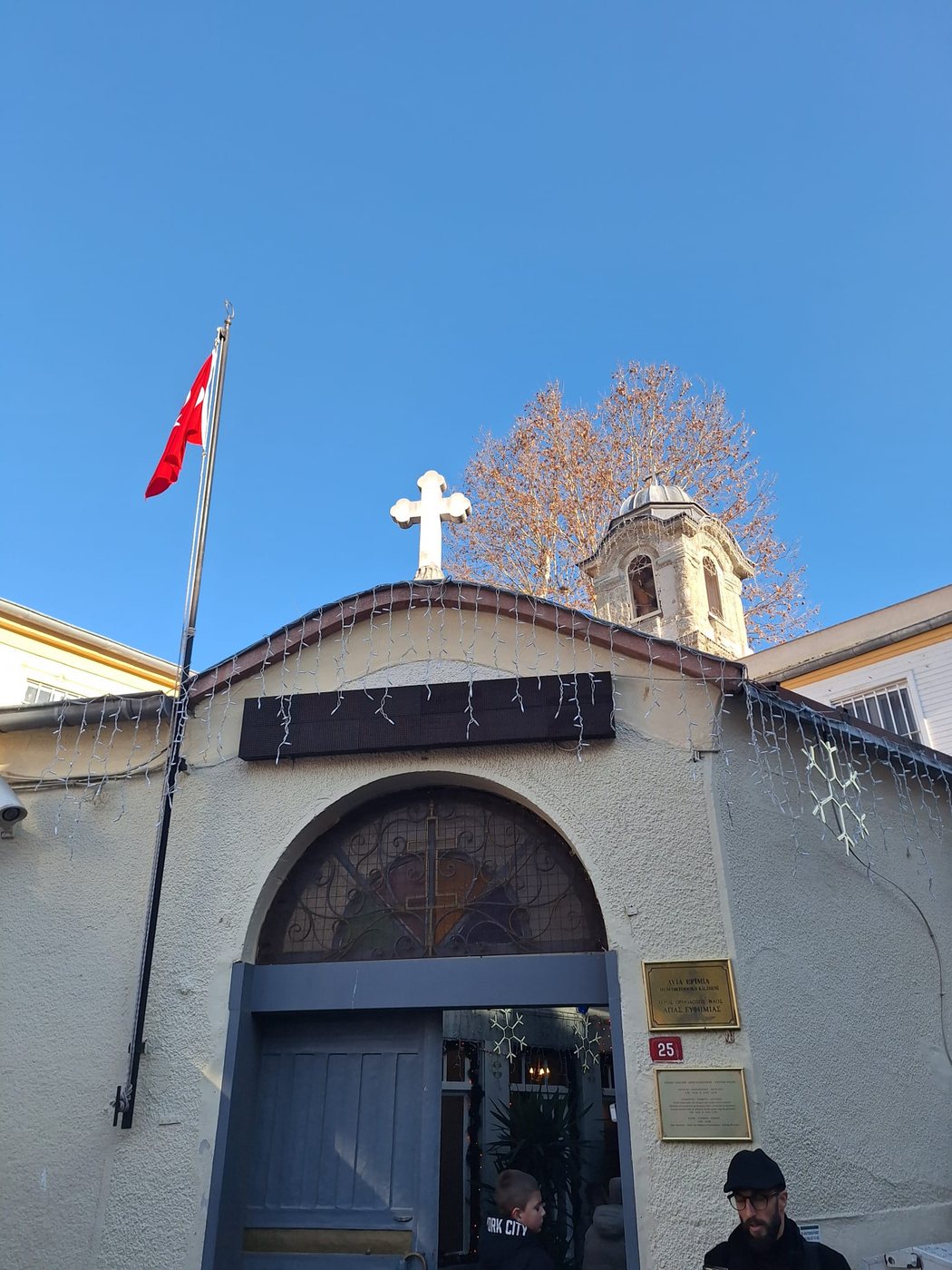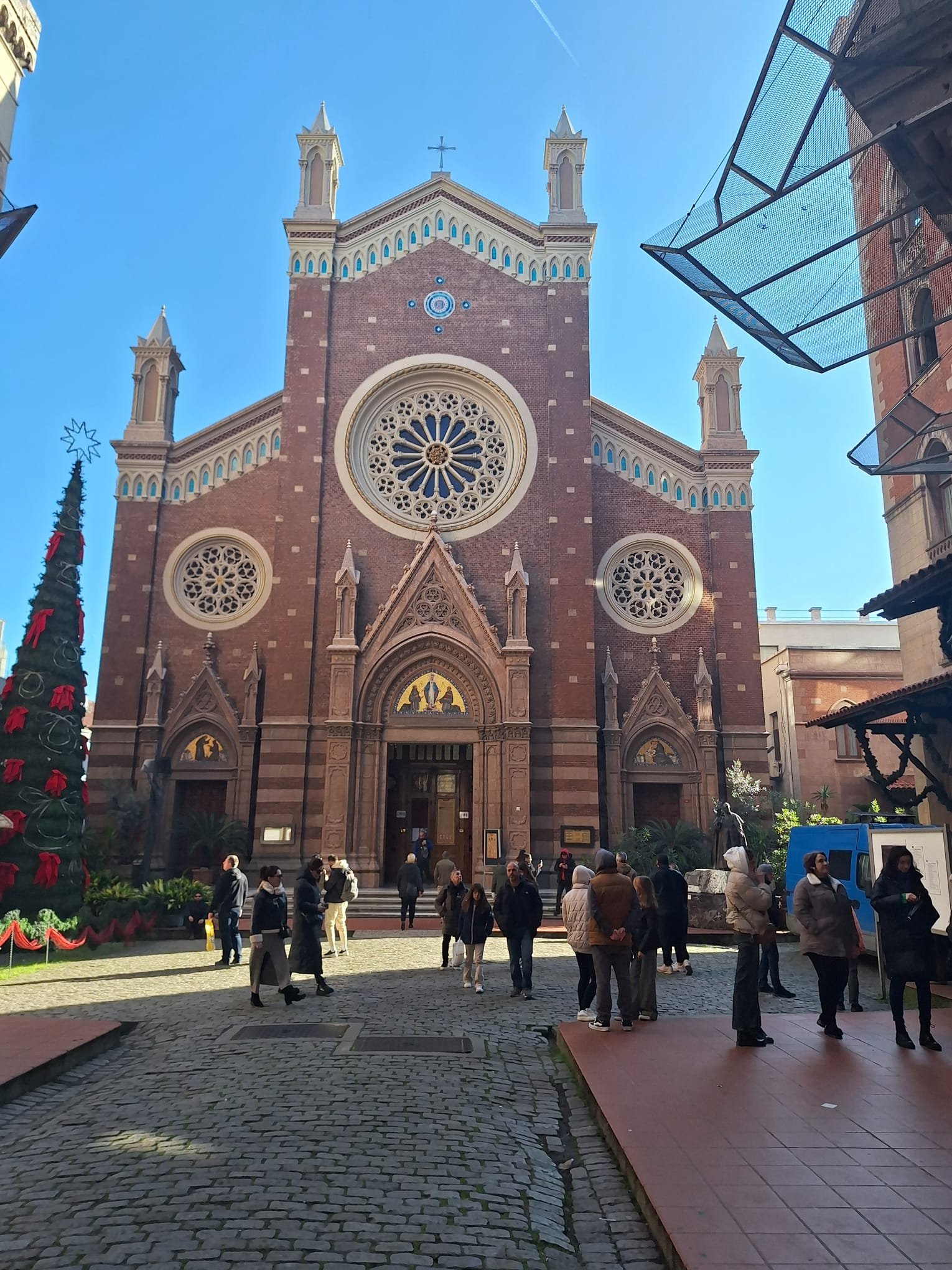
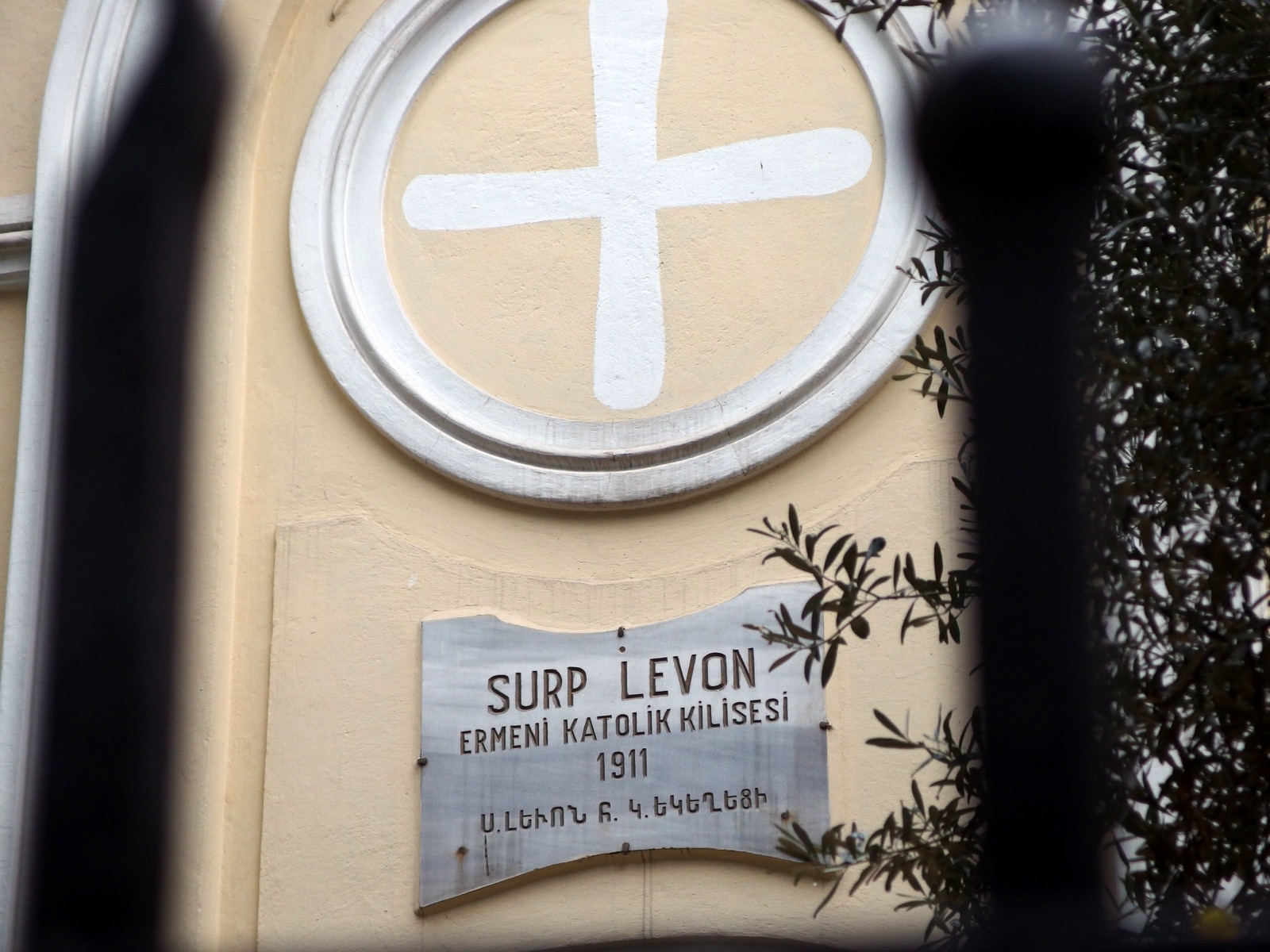
When people talk about Christian Istanbul, many first think of the Hagia Sophia, then of Greek Orthodox churches. Yet the city's Christian landscape was, and is, far more diverse. Armenian Apostolic, Armenian Catholic, Roman Catholic, Syriac, Protestant, and other communities are part of it too. Surp Levon in Kadıköy is a reminder of this diversity.
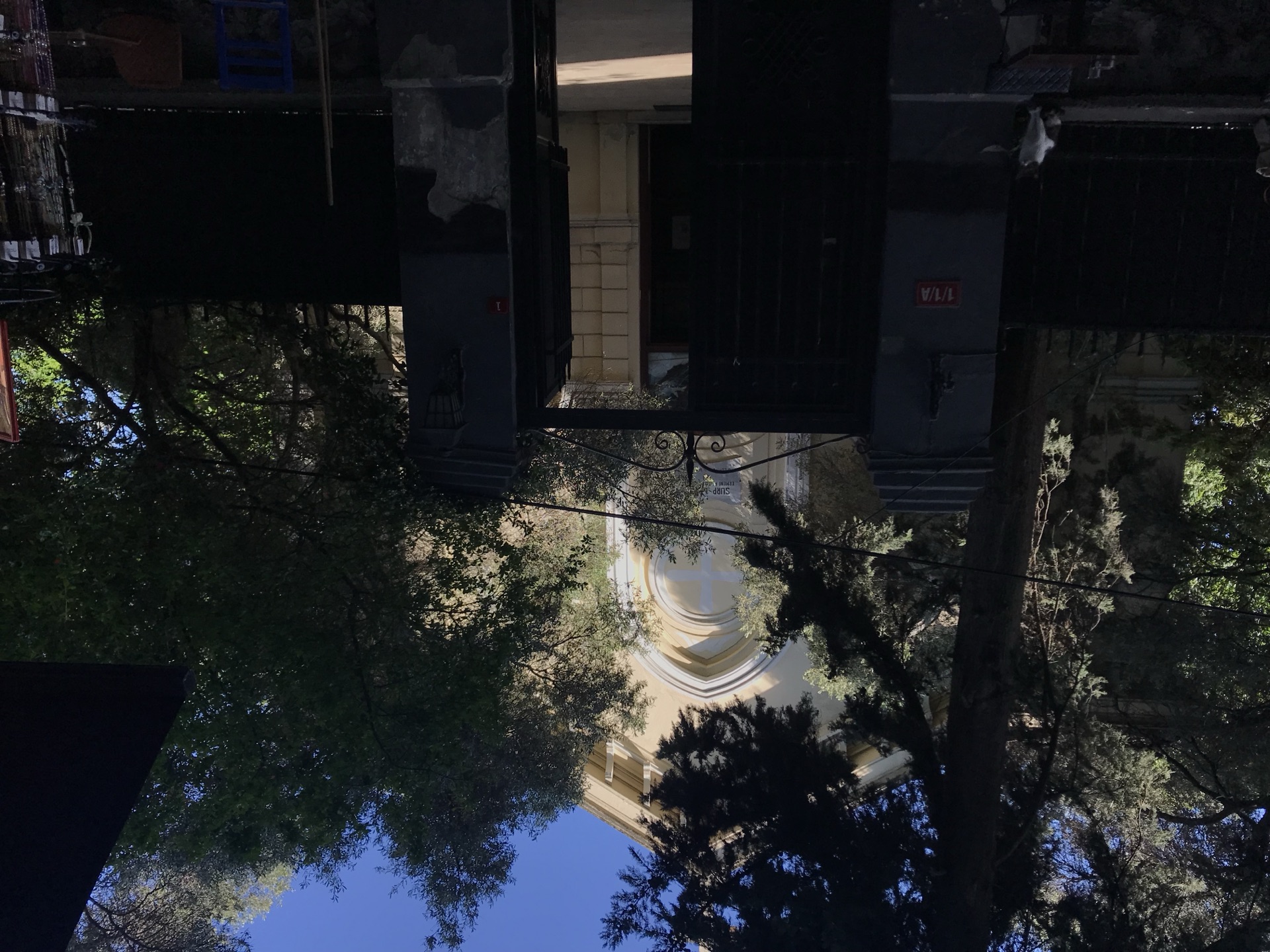
When people talk about Christian Istanbul, many first think of Greek Orthodox churches. Surp Levon in Kadıköy is a reminder that the city's Christian landscape was far more diverse — Armenian Apostolic, Armenian Catholic, Roman Catholic, and more.
The Armenian Catholic community arose historically out of complicated relationships between Armenian Christians, Rome, and the Ottoman Empire. In the 19th century, it was institutionally recognized as a distinct community. Churches like Surp Levon show that religious identity in Istanbul was never just "Muslims and Greeks."
- Istanbul has had a significant Armenian population for centuries.
- Armenian Catholic Christians follow Armenian liturgy but are in communion with the Roman Catholic Church.
- The Armenian Catholic community gained institutional recognition in the Ottoman Empire in the 19th century.
- Kadıköy developed into an important residential area for various Christian communities.
- Surp Levon is part of this today smaller, but active, religious landscape.
- Armenian Catholic is not the same as Armenian Apostolic.
Armenians in Constantinople
Armenians already lived in Constantinople in Byzantine times and played important roles in the military, administration, trade, and craft. After 1453, the Armenian population grew further, since Mehmed II resettled, or encouraged the settlement of, people from various regions in the new capital.
The Armenian Patriarchate of Constantinople developed into a central institution. At the same time, "the Armenian community" was never religiously entirely uniform. Different denominational affiliations arose within Armenian Christianity.
What Armenian Catholic means
Armenian Catholic Christians use an Armenian liturgical tradition, but recognize communion with the Pope in Rome. This sets them apart from the larger Armenian Apostolic Church, which belongs to the Oriental Orthodox churches.
For outsiders, this can be confusing, since language, culture, and some liturgical forms look similar. The denominational differences, though, arose from centuries of theological and political development.
Recognition in the Ottoman Empire
In the 19th century, the Armenian Catholic community was recognized by the Ottoman state as its own religious body. That made it easier to organize churches, schools, and congregational property.
This recognition was part of a broader system in which the state administered religious communities through institutional representatives. It was no modern model of equality, but it gave certain groups a legal structure.
Kadıköy's Armenian population
In the 19th and early 20th centuries, Kadıköy developed into a popular residential area for Armenians, Greeks, and other urban middle classes. Ferries and the railway made the Asian side attractive. Churches, schools, and shops sprang up within walking distance of one another.
That's why you still find various Christian houses of worship in Kadıköy today. They recall a time when the non-Muslim population was considerably more visible in daily life.
The church of Surp Levon
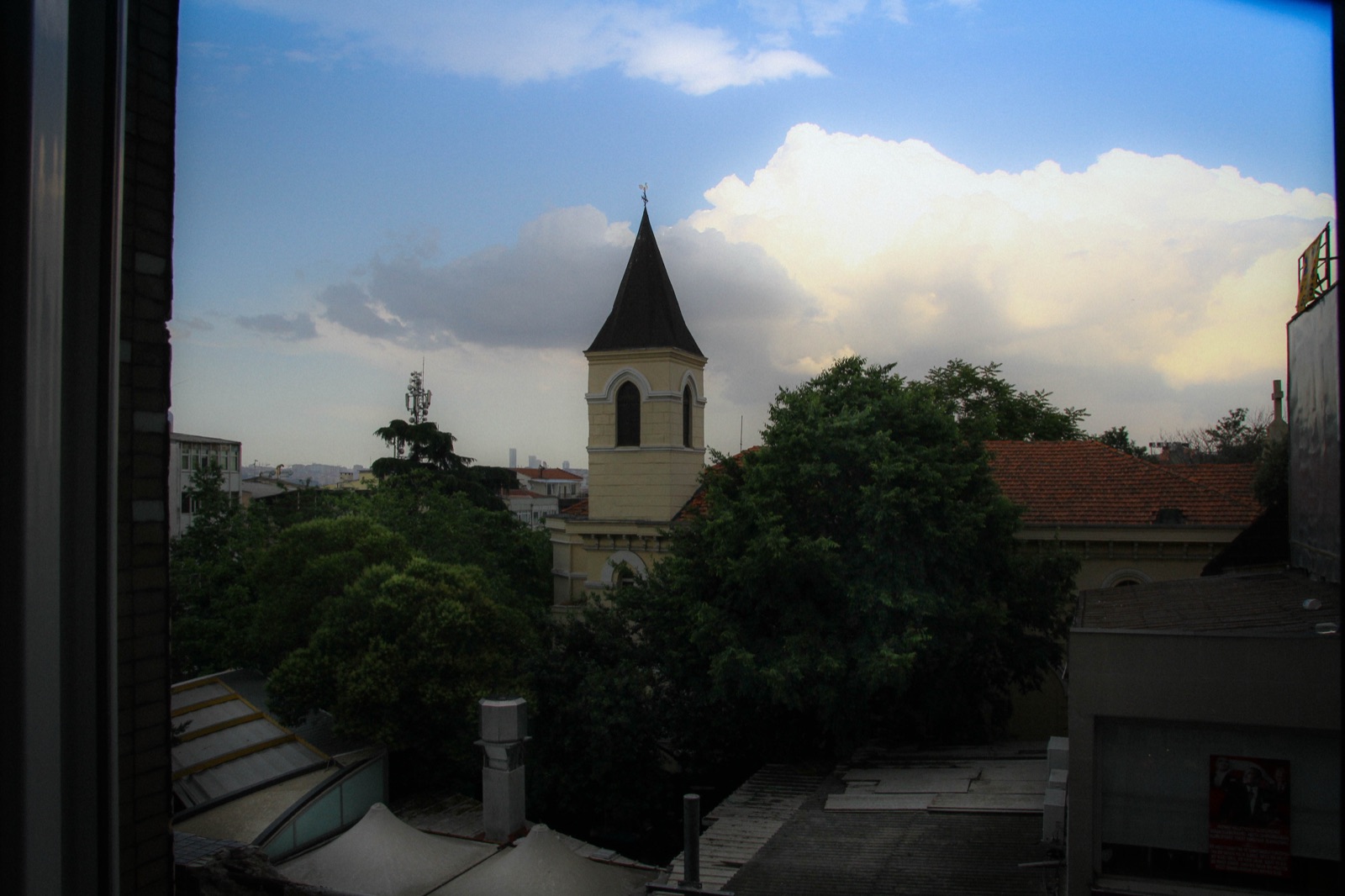
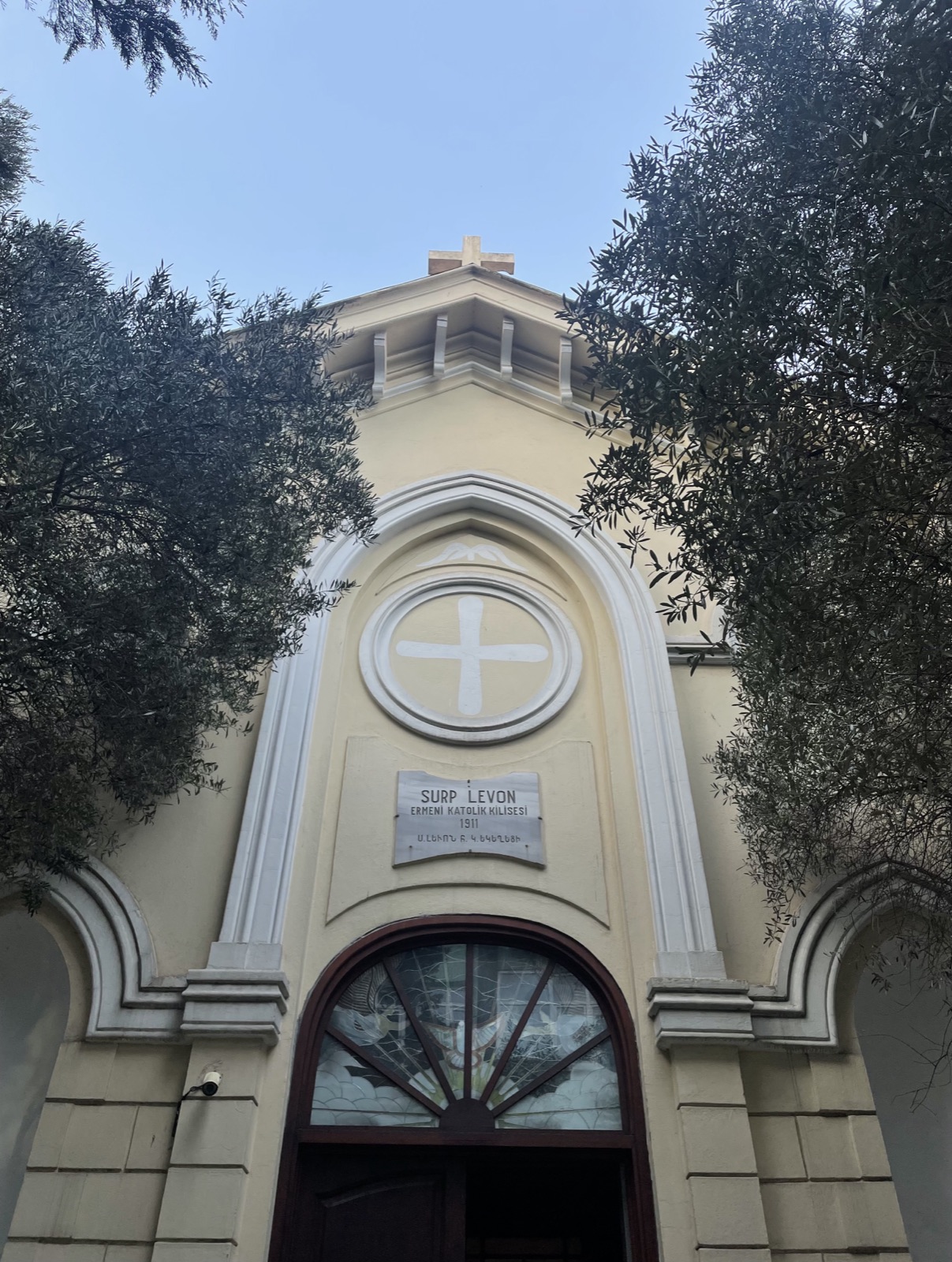
Surp Levon serves the Armenian Catholic community. Its architecture and furnishings combine Catholic and Armenian traditions. Icons, altar design, liturgical vessels, and Armenian script make visible that Christian denominations don't all use the same type of space.
Visitors shouldn't judge the church only by how "big" or "old" it is compared to famous monuments. For a small congregation, an unassuming house of worship can hold far more significance than a huge museum.
Liturgy and language
The Armenian liturgy has its own centuries-old tradition. Armenian script was developed in the early 5th century and played a central role in translating religious texts and shaping cultural identity.
Even in a Catholic community, this linguistic and ritual tradition remains important. Surp Levon thus shows that belonging to Rome doesn't automatically mean Latin liturgy or cultural uniformity.
The 20th century and population decline
Istanbul's Christian populations shrank in the 20th century for various reasons: political violence, discrimination, economic pressure, emigration, and demographic change. Armenians remained more strongly represented than the heavily reduced Greek community, but their numbers fell too.
This history has to be told with nuance. Not every single event hit all groups identically, but several crises created insecurity and accelerated emigration.
Why small communities remain important
A community doesn't become historically unimportant just because it's small in number. Churches, schools, cemeteries, and endowments preserve cultural knowledge and family history. They make visible that Istanbul was always more multilingual and multireligious than modern simplifications suggest.
Anyone who visits such churches respectfully therefore doesn't just see architecture, but gains access to a living minority history.
"All Armenian Christians belong to the same church." False. There are, among others, Armenian Apostolic and Armenian Catholic communities.
"Christian churches in Kadıköy are only historical museums." No. Several continue to serve active congregations.
"All Armenian communities disappeared from Istanbul after the Ottoman Empire." No. A considerably smaller, but active, community still exists today.
"Kadıköy was always religiously homogeneous." Also false.
Armenian Catholics in Istanbul
The Armenian population of the Ottoman Empire was not religiously uniform. Alongside the large Armenian Apostolic Church, Armenian Catholics existed too, and later Protestant communities.
The Catholic community gained a more institutionalized standing in the 19th century. Churches, schools, and social institutions arose in various parts of the city.
Surp Levon belongs to this history.
Why Kadıköy became important for Christian communities
In the 19th century, Kadıköy grew strongly. Improved ferry connections made the Asian side more attractive for families who worked in Galata, Pera, or other parts of Istanbul.
Greek, Armenian, and European communities built churches and schools.
This created a religiously diverse cityscape still visible in individual streets today.
Architecture and congregational life
A church isn't just its altar area. Around houses of worship, schools, associations, and social networks emerged.
For minority communities, such institutions were especially important, since they passed on language, liturgy, and cultural tradition.
Surp Levon was therefore always more than a single building.
Armenian history and a difficult 20th century
The history of Armenian communities in Istanbul can't be told without mentioning the massive political ruptures of the late Ottoman Empire and the 20th century. Violence, expropriation, population loss, and emigration reduced many communities.
Even so, Istanbul retained a significant Armenian population and remains, to this day, the center of Turkey's Armenian Patriarchate.
Churches like Surp Levon are therefore active religious sites and, at the same time, spaces of memory.
Liturgy and differences from other churches
Armenian Catholic liturgy combines Armenian tradition with communion with Rome. For visitors, that can be interesting, since you see elements that correspond exactly neither to a Latin Catholic church nor to an Armenian Apostolic one.
Religious diversity, after all, doesn't exist only between "Christianity and Islam." Different traditions exist within great religions too.
Language and identity
Armenian communities in Istanbul traditionally moved between several languages. Armenian, Turkish, at times French, and other languages could play a role depending on the era and social environment.
Church spaces helped preserve language and script.
That matters especially for minorities whose everyday surroundings mainly use a different language.
Respect when visiting
As with any active church, a visit shouldn't turn into a photo project the moment a service is underway.
You may be curious, but people don't come there to serve as a backdrop for our photos.
Smaller churches in particular often feel very personal, since the congregation and the space are closely bound together.
Why places like this stay on my list
I think it's important not to show only the huge, famous houses of worship. Smaller churches in particular tell you how many different people made this city their home.
You don't have to share the same religion to respect that.
Really, all it takes is having your head screwed on straight.
Minority churches as archives of an urban society
A small church can preserve historical information in names, gravestones, endowment inscriptions, and parish records. For genealogical and urban history research, such holdings are often enormously valuable.
They document people who barely appear in official political narratives: merchants, teachers, craftsmen, children, and clergy.
That's exactly why active minority communities are, at the same time, carriers of historical knowledge.
Why preservation can be difficult
Small communities don't always have large financial means. At the same time, old buildings constantly need repairs. Moisture, earthquake risk, and city traffic put heavy strain on historic churches in Istanbul.
Restoration is therefore not just an aesthetic question, but a precondition for congregations being able to keep using their houses of worship.
Religious diversity as a lived urban structure
When a church, mosque, and synagogue sit in the same neighborhood, that's not automatically proof of a conflict-free past. Istanbul knew periods of tolerance just as it knew discrimination and violence.
That's exactly why the surviving houses of worship shouldn't be romanticized, nor dismissed.
They show that different communities really were, and are, part of this city.
My take on this place
The more churches you notice in Istanbul, the less that simple image of a city with only one religious history holds up. Of course Istanbul today is predominantly shaped by Islam. But right in the same streets stand communities whose history likewise reaches back centuries.
For me, it's actually quite simple: when I enter a house of worship that doesn't belong to my own tradition, I behave with respect. I don't have to understand everything to see how much a place means to other people.
– Amra