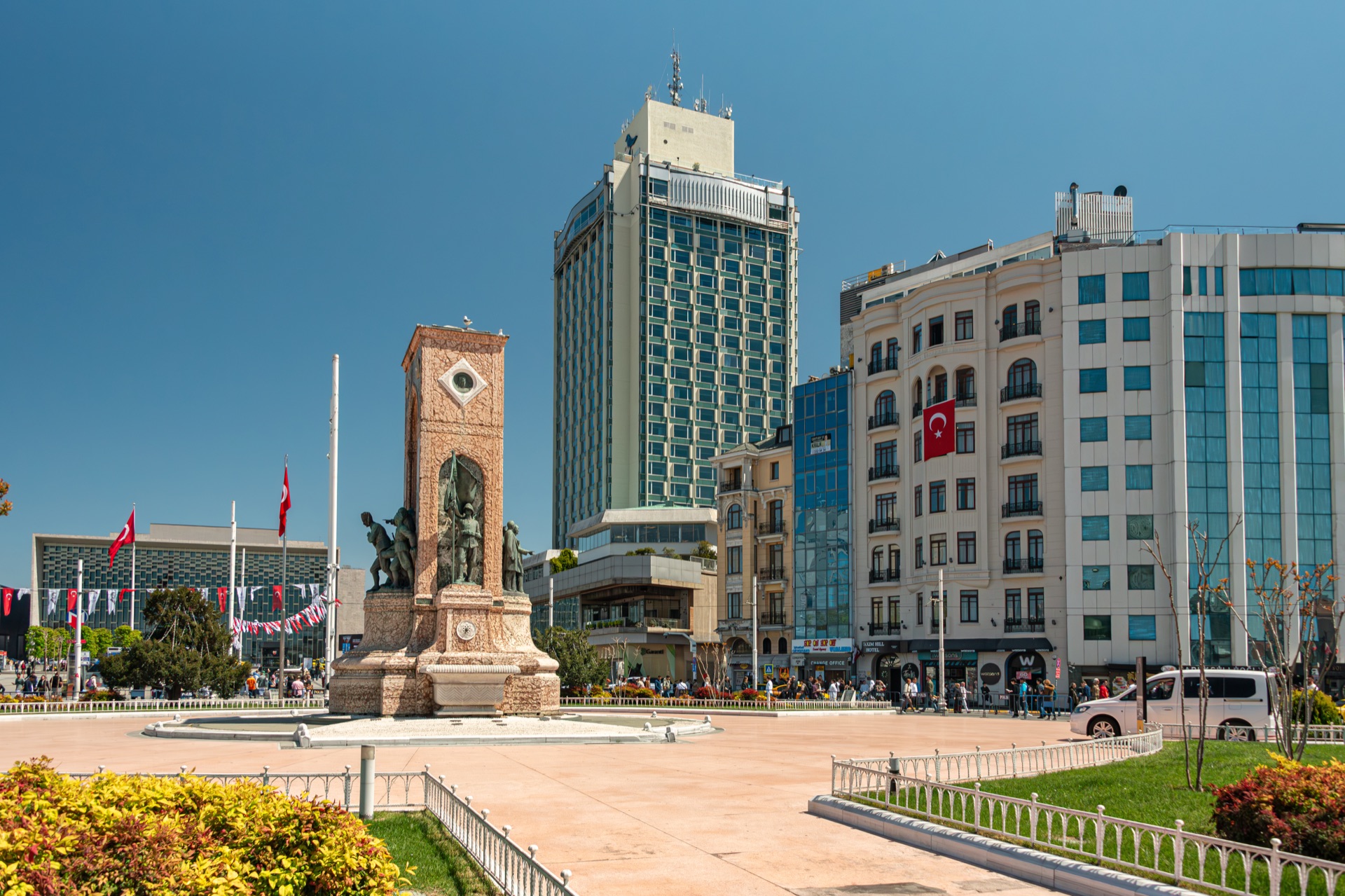
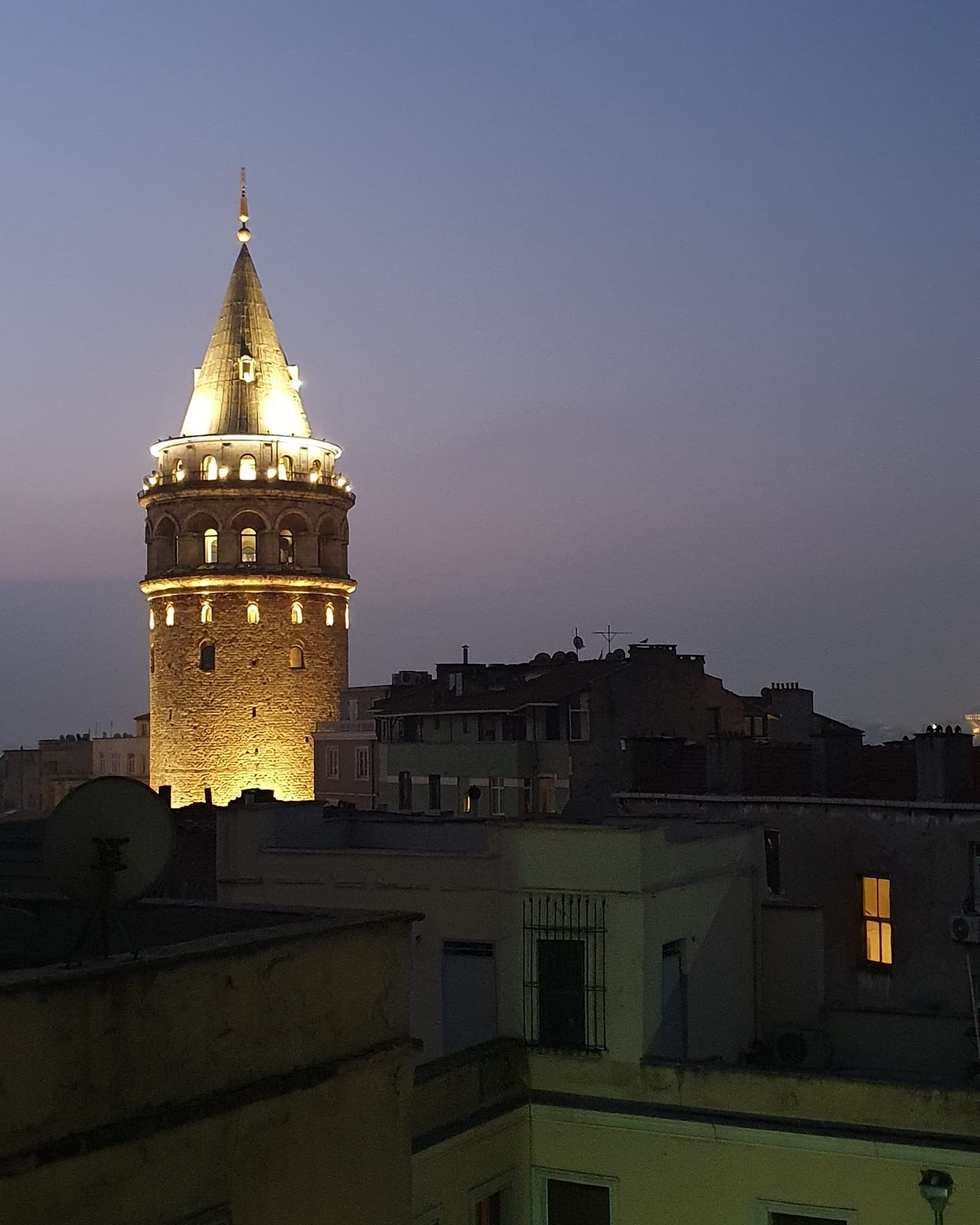
Today, İstiklal is a pedestrian zone, a shopping street, a meeting place, and one of the busiest flows of people in Istanbul. But anyone who only looks at the modern chain stores misses that its facades tell a completely different story. In the 19th century, the then Grande Rue de Péra was the centre of a district where European embassies, Levantine families, Greek and Armenian merchants, churches, theatres, hotels, and arcades created a cosmopolitan urban culture.
Today, İstiklal is a pedestrian zone, a shopping street, a meeting place, and one of the busiest flows of people in Istanbul. But anyone who only looks at the modern chain stores misses that its facades tell a completely different story.
It's exactly here, too, that you find St. Anthony's Church, which we visited at Christmas time. Right in the middle of thousands of people, shops, and street noise, a Christian house of worship suddenly stands — and precisely this matter-of-factness says more about Istanbul than many a guidebook.
- Today's İstiklal was known in the 19th century as the Grande Rue de Péra.
- Pera/Beyoğlu was strongly shaped by embassies, European businesses, and Christian communities.
- Historic churches, arcades, and consulate buildings still stand today.
- St. Anthony's Church is one of the best-known Catholic churches in Istanbul.
- The events of 6–7 September 1955 hit Greek businesses and institutions especially hard, and Armenian and Jewish ones too.
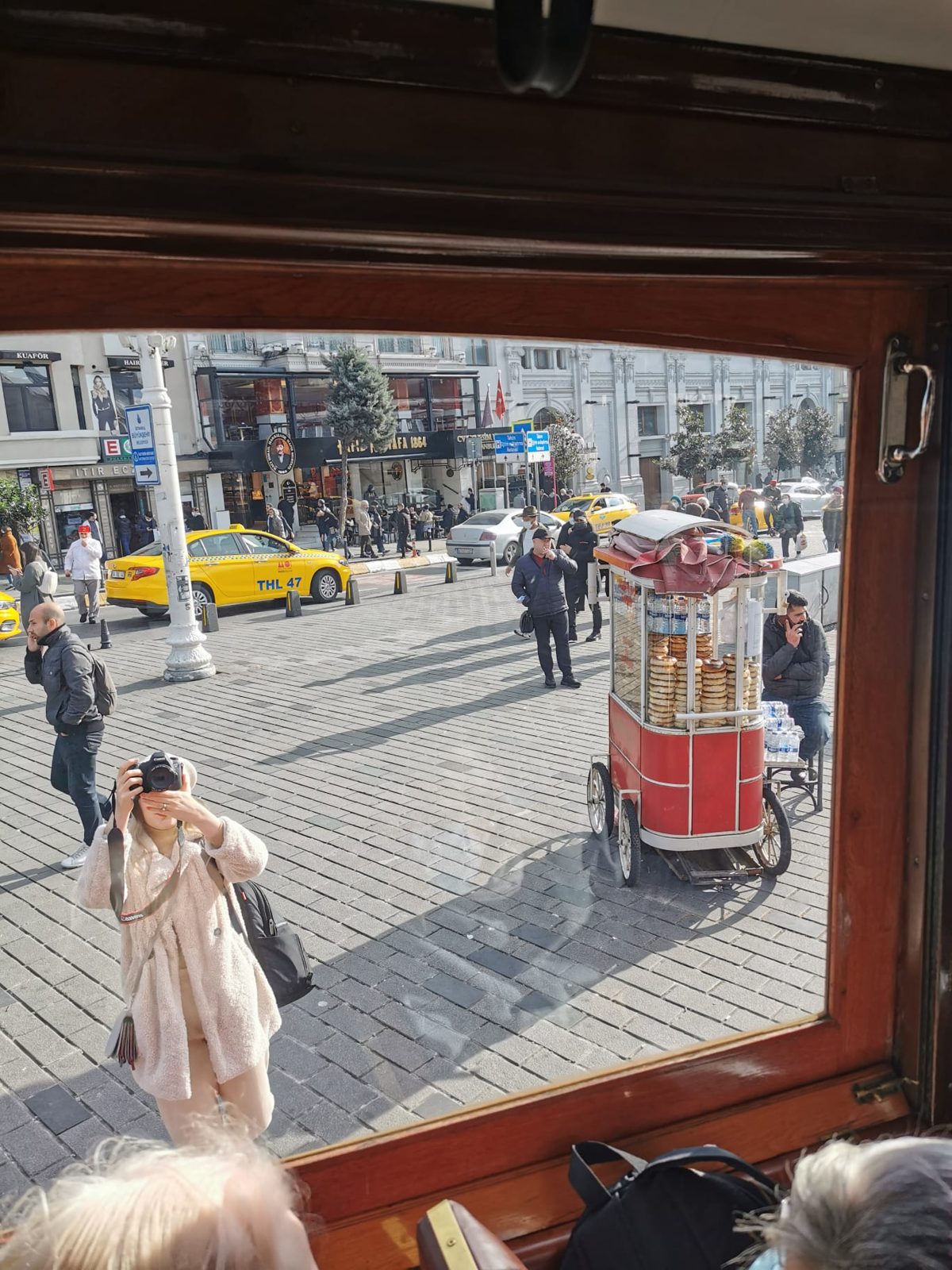
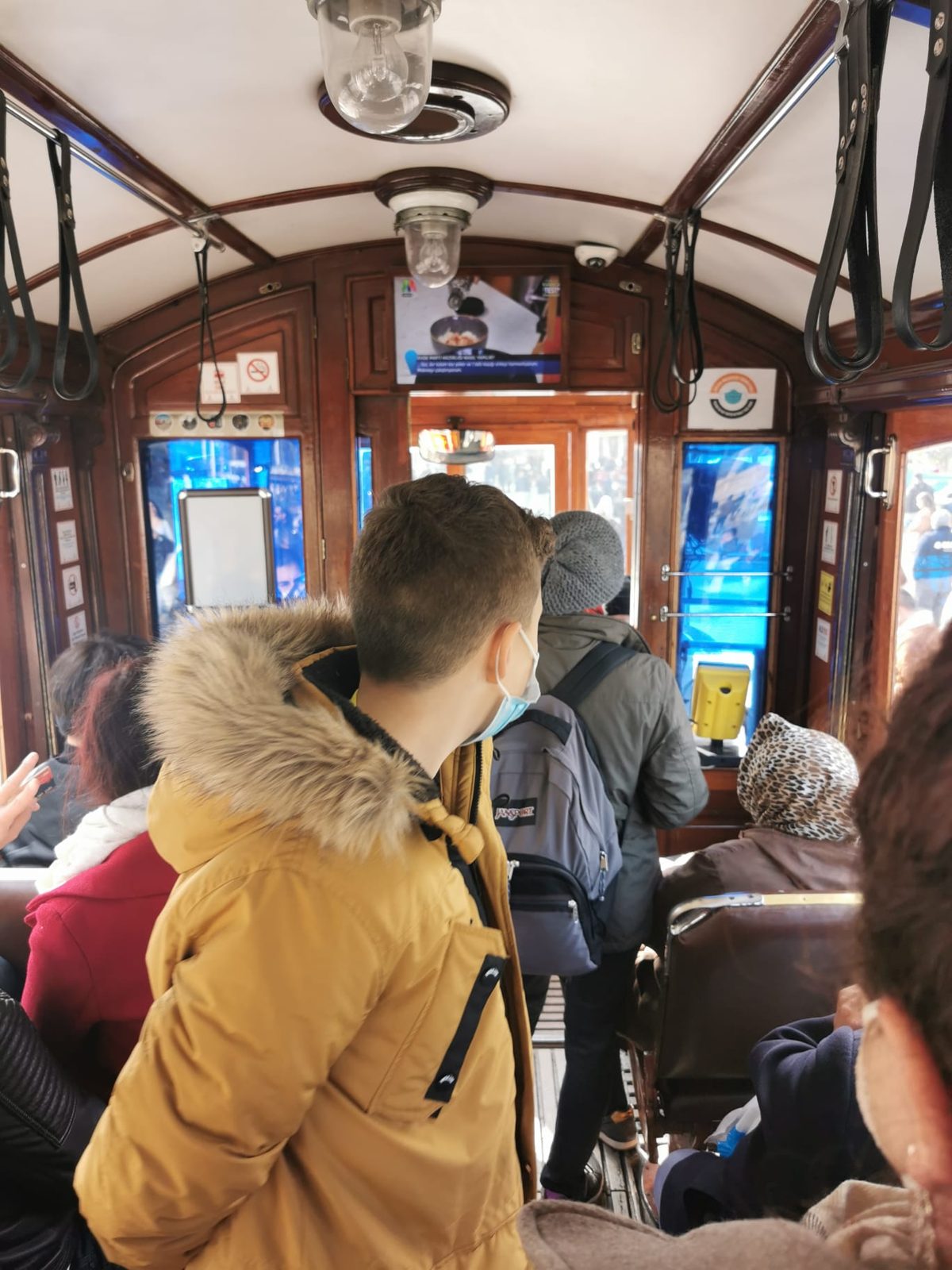
- The red nostalgic tram recalls the street's long tram history.
- İstiklal was renamed, redesigned, and socially transformed several times in the 20th century.
From Pera to the Grande Rue
In Ottoman Istanbul, the traditional centre of power lay on the historic peninsula. Galata had already been an international trading district for centuries. Above it, Pera developed — today's Beyoğlu.
In the 19th century, the area grew rapidly. Embassies of European states, banks, hotels, theatres, and modern shops concentrated here. The Grande Rue de Péra became a street where you could directly see the internationalisation of the Ottoman Empire.
It wasn't, therefore, "less Istanbul" than the old town. It was a different Istanbul.
Why So Many Europeans and Non-Muslims Lived Here
The Ottoman capital was multi-ethnic and multi-religious. In Pera, this diversity was especially visible. Greeks, Armenians, Jews, Levantines, and Europeans ran businesses and cultural institutions.
French developed into an important lingua franca in certain social circles. European fashion, theatre, cafés, and new forms of consumption shaped the district.
This internationalism, however, wasn't the same as complete social equality. Different communities lived under different legal and political conditions.
Arcades, Hotels, and Theatres
Arcades such as Çiçek Pasajı tell of the time when European shopping culture became popular in Pera. Theatres, restaurants, and cafés made the street a centre of social life.
Hotels and diplomatic institutions in the area also benefited from growing international travel. Anyone arriving in Constantinople from Europe often moved first through exactly this world.
Many facades therefore carry traces of Art Nouveau, Neoclassicism, Historicism, and other European styles.
St. Anthony's, Right in the Middle of İstiklal
Today's Church of St. Anthony of Padua was built at the start of the 20th century. Its neo-Gothic, Venetian-influenced architecture forms a strong contrast to the shopping street around it.
We visited at Christmas time, and I found it beautiful. It was decorated so lovingly that some churches could really take some inspiration from it. Outside it was cold, thousands of people walked past on İstiklal, but inside, this pleasant warmth appeared immediately.
And what I find especially lovely: anyone can go in, as long as they respect the place. You don't have to belong to the same religion to find a house of worship beautiful.
The Historic Red Tram
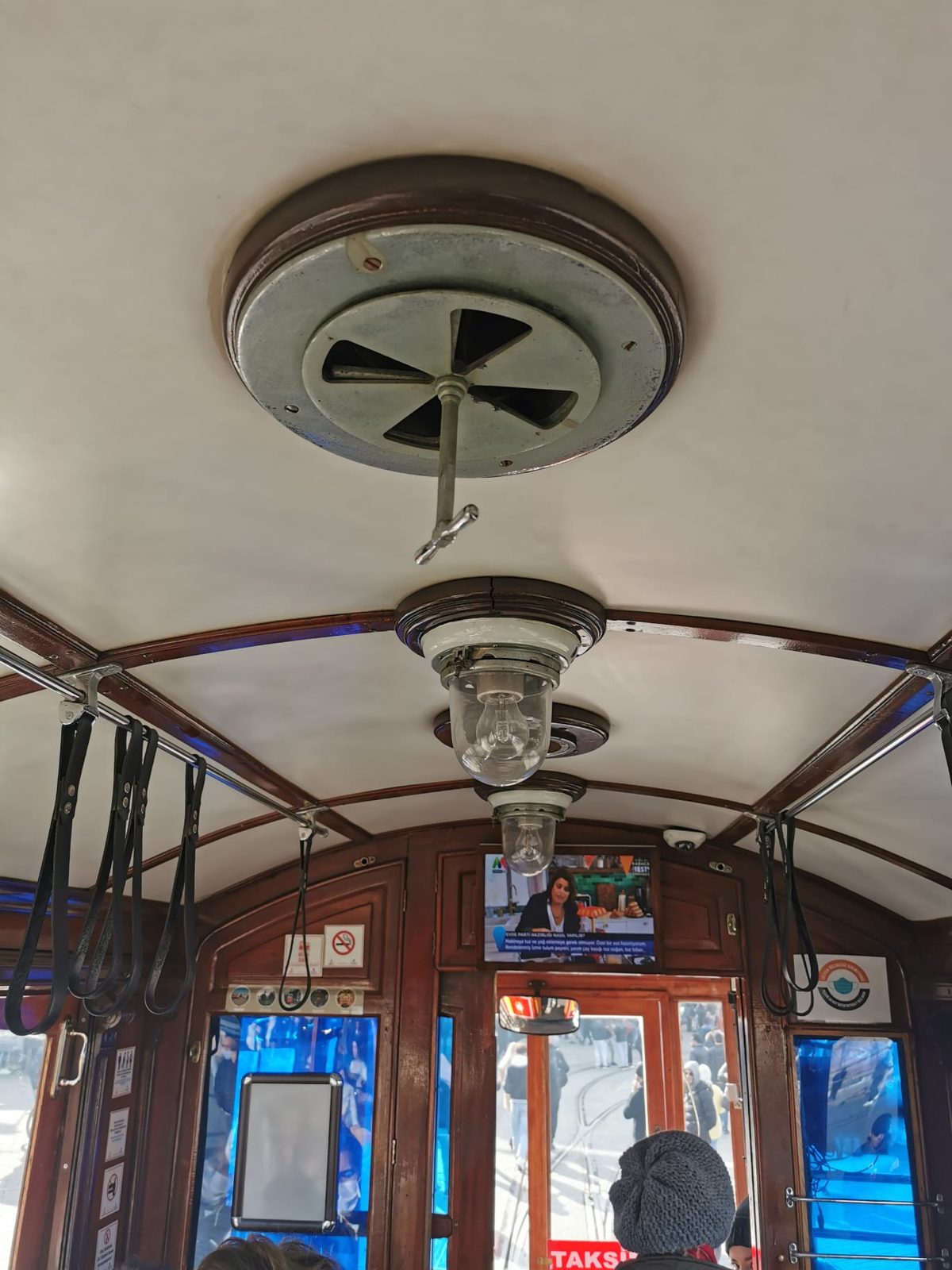
Trams had been part of modern Istanbul since the late 19th century. The historic line on İstiklal was later discontinued and revived as a nostalgia line in the late 1980s.
The red tram car is today one of the street's best-known images. But it's not a museum piece that has run continuously since Ottoman times.
Details like this show exactly how memory gets staged: something old is brought back because, by now, it has become part of the street's identity.
6–7 September 1955
This part must not be romanticised. On the night of 6 to 7 September 1955, violent riots broke out in Istanbul, directed especially at the Greek community. Shops, homes, churches, and cemeteries were attacked and destroyed. Armenian and Jewish institutions were affected too.
The trigger was a manipulatively spread report about a bombing at Atatürk's birth house in Thessaloniki. The violence wasn't simply a spontaneous neighbourhood dispute; the organisation, political incitement, and state responsibility behind it are intensively debated in research.
The events considerably accelerated the decline of Istanbul's Greek population. Especially on İstiklal and in Beyoğlu, it's worth knowing this history, because many buildings today speak of a cosmopolitan community that has since become far smaller.
From Grande Rue to İstiklal
After the founding of the Republic, the street was renamed İstiklal Caddesi, "Independence Avenue." The new name fit the country's political reordering.
The name change, though, didn't overnight change the entire population or architecture. The street remained an internationally shaped urban space.
Only the political and social changes of the 20th century gradually altered its composition.
How the Street Kept Changing Its Character
After periods of decline, İstiklal experienced a strong revival again from the late 20th century on. A pedestrian zone, cultural venues, shops, bars, and restorations made it a central spot for going out and shopping once more.
Later came international chains, rising rents, and heavy mass tourism. Some lament the loss of earlier cultural diversity; others still see the street as a lively centre.
Both are probably true, to some extent. İstiklal was never static.
Churches, Synagogues, and Religious Pera
St. Anthony's Church is only part of the religious diversity around İstiklal. Catholic, Orthodox, Armenian, and Protestant churches, as well as synagogues, still stand today in Beyoğlu, Galata, and the wider area.
This density arose from the district's international population. Diplomats, merchants, and local Christian communities needed their own houses of worship, schools, and social institutions.
Anyone who experiences the street only as a shopping mile therefore walks straight past a remarkable religious and cultural history.
Why Pera Felt More Modern Than Many Other Districts
Gas lighting, theatres, European department stores, hotels, and new means of transport arrived here early. For some residents of the historic peninsula, Pera therefore felt almost like a different city.
The district wasn't simply "Western instead of Ottoman," though. It was a product of the Ottoman Empire itself, just under strong international influence.
It's exactly this mix that makes İstiklal so historically interesting.
Galatasaray Lisesi: Education Right in the Middle of the Street
One of the most striking buildings on İstiklal is the Galatasaray Lisesi. Its educational tradition reaches deep into Ottoman history, and in the 19th century the school became an important centre of modern education with strong French influence. The square in front of its entrance later developed into a well-known meeting place and a site of public rallies.
So, right in the middle of a shopping street, stands an institution that is itself part of the political and cultural modernisation of the Ottoman Empire and the Republic. Anyone walking past it, then, isn't just seeing a beautiful gate, but an important place of education.
Why İstiklal Is a Different Street at Night
During the day, shops, tourists, and errands dominate. In the evening, the character shifts more toward restaurants, bars, music, and going out. This dual function has a long history, since Pera was already a significant entertainment district in the 19th century.
Of course, today's bars and clubs aren't the same as back then. But the idea that this street serves not just for shopping, but for seeing and being seen, has proven remarkably durable.
Embassies Made Pera an International Centre of Power
Several European states kept their diplomatic missions in Pera. These embassies weren't just offices, but social and political centres. Receptions, negotiations, and networks connected diplomats with Ottoman officials, bankers, and merchants.
Schools, churches, postal services, and shops for international residents arose around these missions. İstiklal was therefore part of a diplomatic landscape, not just a shopping street.
Çiçek Pasajı Changed Its Identity Several Times
The famous arcade arose after the fire of the earlier Naum Theatre. The new building was originally an elegant shopping arcade with apartments. The later name "Flower Passage" is linked to various stories, including Russian flower sellers after the 1917 revolution.
Today, restaurants and meyhanes dominate. The historic building thus shows, typically, how a place can keep its facade while taking on a completely new social function.
Churches Aren't Decorative Foreign Bodies
St. Anthony's is especially visible, but not the only Christian church in the area. Greek Orthodox, Armenian, Catholic, and other congregations have shaped Pera for centuries. Their houses of worship were built for real communities, not as a tourist backdrop.
Precisely for that reason, they should be entered respectfully. Services, baptisms, weddings, and funerals take place there. That visitors are welcome is an invitation to share a religious space, not an open invitation to treat it as a sight.
1955 Changed the Street Socially, Not Just Materially
The violence of 6 and 7 September destroyed more than shop windows. Families lost businesses, homes, and their trust in being safe in their own city. Many Greeks left Istanbul in the years that followed; later expulsions and political crises accelerated this process.
So when historic churches, schools, or homes still stand today, a large part of the population for whom these buildings were once part of everyday life is often missing. The facades remained more visible than the people.
Galatasaray Lisesi as an Educational Institution in the Middle of the Street
The striking gate of the Galatasaray high school is a reminder that İstiklal wasn't just a street of entertainment and shopping. Education played a central role too. The school traces back to Ottoman educational traditions and was reorganised as a modern lycée in the 19th century.
French-language instruction and international contacts made it an important institution of the late Ottoman elite. It was from precisely this environment that the football club Galatasaray later emerged.
Cinema, Theatre, and Modern Entertainment
Beyoğlu was, for a long time, the centre of new forms of urban entertainment. Theatres, operettas, cinemas, and music venues found an audience here that was more international and urban than in many other parts of the city.
With electric lighting, trams, and modern shops, a nightlife emerged that contemporaries perceived as thoroughly modern. Anyone who sees İstiklal today, in the evening, full of light and people, is therefore not experiencing a completely new function. Entertainment has been part of this street's identity for a very long time.
İstiklal After 1980
In the 20th century, the street lost prestige for a time. Buildings decayed, wealthier residents moved to other districts, and political violence changed public life. From the 1980s and 1990s, a renewed revival began. The pedestrian zone and the nostalgia tram became symbols of this revival.
Later came international brands, rising rents, and heavy touristic use. The street changed once again as a result. Anyone speaking of "the old İstiklal" therefore always has to say which era they mean.
"Today's red tram has run continuously and unchanged since the Ottoman Empire." No. Historic trams ran there in the past; today's nostalgia line is a later revival.
"İstiklal was always Muslim-Ottoman in character." Too simple. Especially in the 19th and early 20th centuries, Pera was strongly shaped by Christian, Jewish, Levantine, and European communities.
"In 1955, the riots were simply spontaneous anger." That falls far too short. The political organisation and responsibility behind the events are intensively studied historically.
My Thought on This Place
Churches in Istanbul mean something special to me, precisely because they stand in the middle of this overwhelmingly Muslim city of millions, and can be visited completely as a matter of course.
We visited St. Anthony's on İstiklal in particular, and also a church in Kadıköy. At Christmas time, St. Anthony's was beautifully decorated. Even though it was cold outside, there was that pleasant warmth inside — not just in terms of temperature.
You walk into the house of worship of a different Christian tradition, or maybe even a religion you don't belong to at all, and you can still see the beauty and hold respect for it.
That's exactly how it should be.
Right in the middle of İstiklal, thousands of people walk past every day. Some go in, others don't. Some pray. Some just look. Nobody loses anything because someone else lives out their faith there.
For me, acceptance and respect should matter there just as much as in a mosque. Anyone who stands in front of a beautiful house of worship, and the first thing that comes to mind is hatred toward the people inside, doesn't have too much religion in their head, in my opinion — just too much hot air.
– Amra