
Among the great monuments of Sultanahmet Square, the Serpent Column looks almost modest. And yet it is historically extraordinary. Its story doesn't begin in Constantinople, and not in Rome either, but in the early 5th century BC, after the Persian Wars of the Greek city-states.
Among the great monuments of Sultanahmet Square, the Serpent Column looks almost modest. Yet its story begins as early as the 5th century BC, after the Persian Wars of the Greek city-states.
According to ancient tradition, the column was cast from bronze taken from captured Persian weapons. It originally stood in the sanctuary of Apollo at Delphi and carried a golden tripod. Only Constantine the Great had it brought to his new capital in the 4th century AD. In the process, a Greek victory monument over Persia became part of Roman imperial self-staging in Constantinople.
- The Serpent Column was created after the Greek victory over the Persians at Plataea in 479 BC.
- It originally stood in the sanctuary at Delphi.
- According to ancient tradition, it was cast from bronze taken from captured Persian weapons.
- Three intertwined serpent bodies originally supported a golden tripod.
- Constantine the Great had the column brought to Constantinople in the 4th century AD.
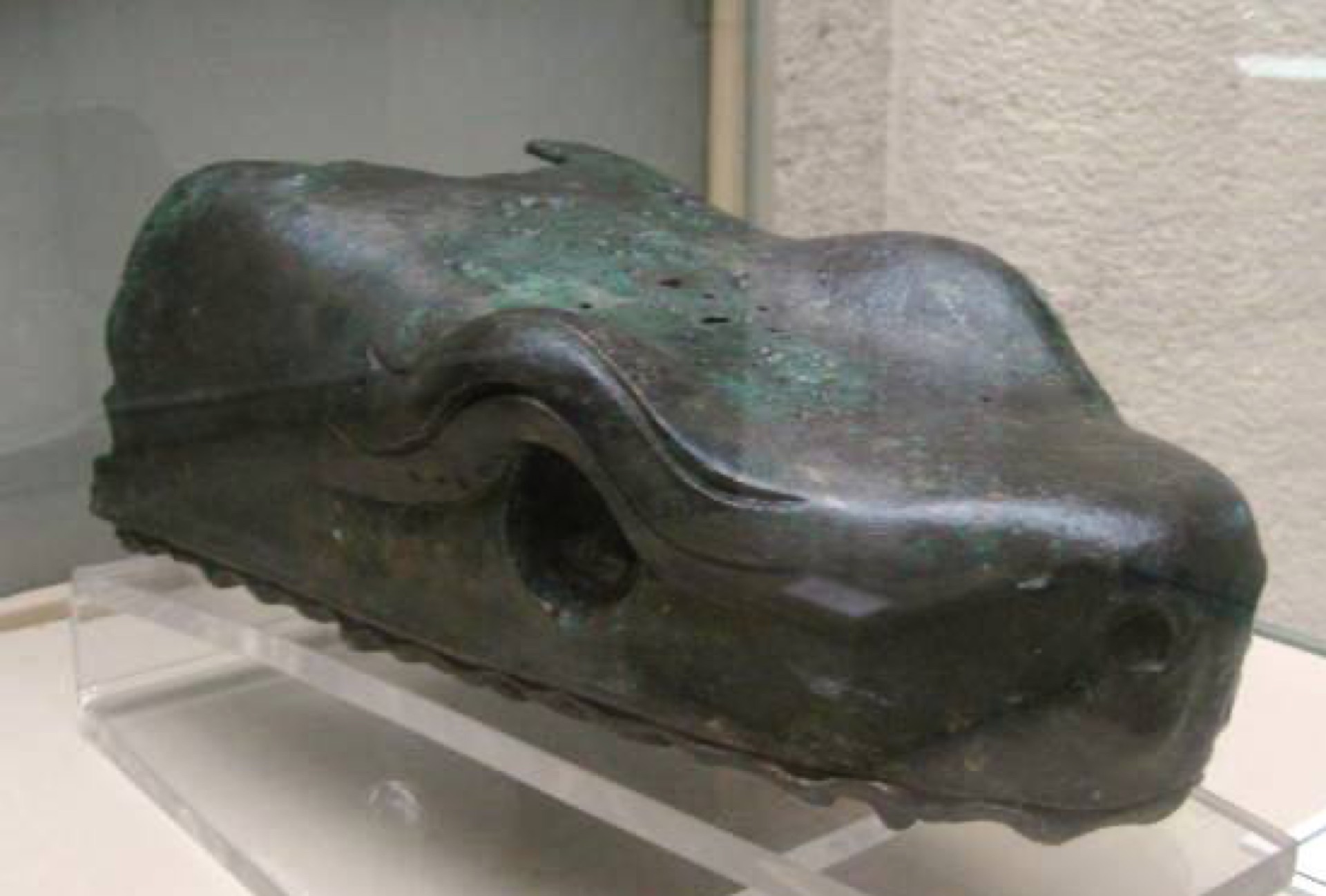
- A fragment of one serpent head is in the Istanbul Archaeological Museum.
The Persian Wars and Plataea
In the early 5th century BC, the Persian Empire tried to extend its influence into the Greek world. After famous events such as Marathon, Thermopylae and Salamis, a decisive land battle took place at Plataea in 479 BC. An alliance of Greek city-states defeated the Persian forces there.
The victory was interpreted religiously and politically. In the ancient Greek world, gratitude to the gods wasn't expressed only in words. Part of the spoils was dedicated to sanctuaries. At Delphi, a monumental votive offering was created to commemorate the shared struggle.
The emphasis on a shared victory matters especially, because the Greek city-states were normally anything but permanently united. Athens, Sparta and other cities competed fiercely with one another. The column therefore commemorated a rare moment in which an outside enemy had forced an alliance.
Why weapons became a column
Ancient sources report that bronze from captured Persian weapons was melted down and used for the column. This carried strong symbolic meaning. The enemy's own material was transformed into a monument to their defeat.
The three serpents were intertwined and formed a tall shaft. At the top, their heads originally supported a golden tripod. The gold portion disappeared already in antiquity; the bronze column itself remained.
The idea of a war memorial made from repurposed spoils was not unusual. The enemy became, materially, part of the memory of his own defeat.
Delphi and the golden tripod
Delphi was one of the most important sanctuaries in the Greek world. The Oracle of Apollo drew people from many regions, and numerous cities erected treasuries, statues and votive offerings there.
The Serpent Column therefore originally stood in an environment full of political rivalry. A monument at Delphi reached a pan-Hellenic audience. Anyone passing by was meant to see which cities had taken part in the victory, and to whom the success was attributed.
The golden tripod that once rested on the heads was later removed. Ancient sources connect this loss to the Third Sacred War in the 4th century BC, when valuable temple treasures were used to finance military expenses.
Constantine brings the column to Constantinople
When Constantine the Great built up Constantinople in the 4th century, he had numerous statues and monuments brought to the new capital from other parts of the empire. The city was not meant to look like a young provincial foundation, but like a center absorbing the entire tradition of the Greco-Roman world.
The Serpent Column was set up in the Hippodrome. There it stood together with other famous artworks and monuments on the spina, the racetrack's central barrier.
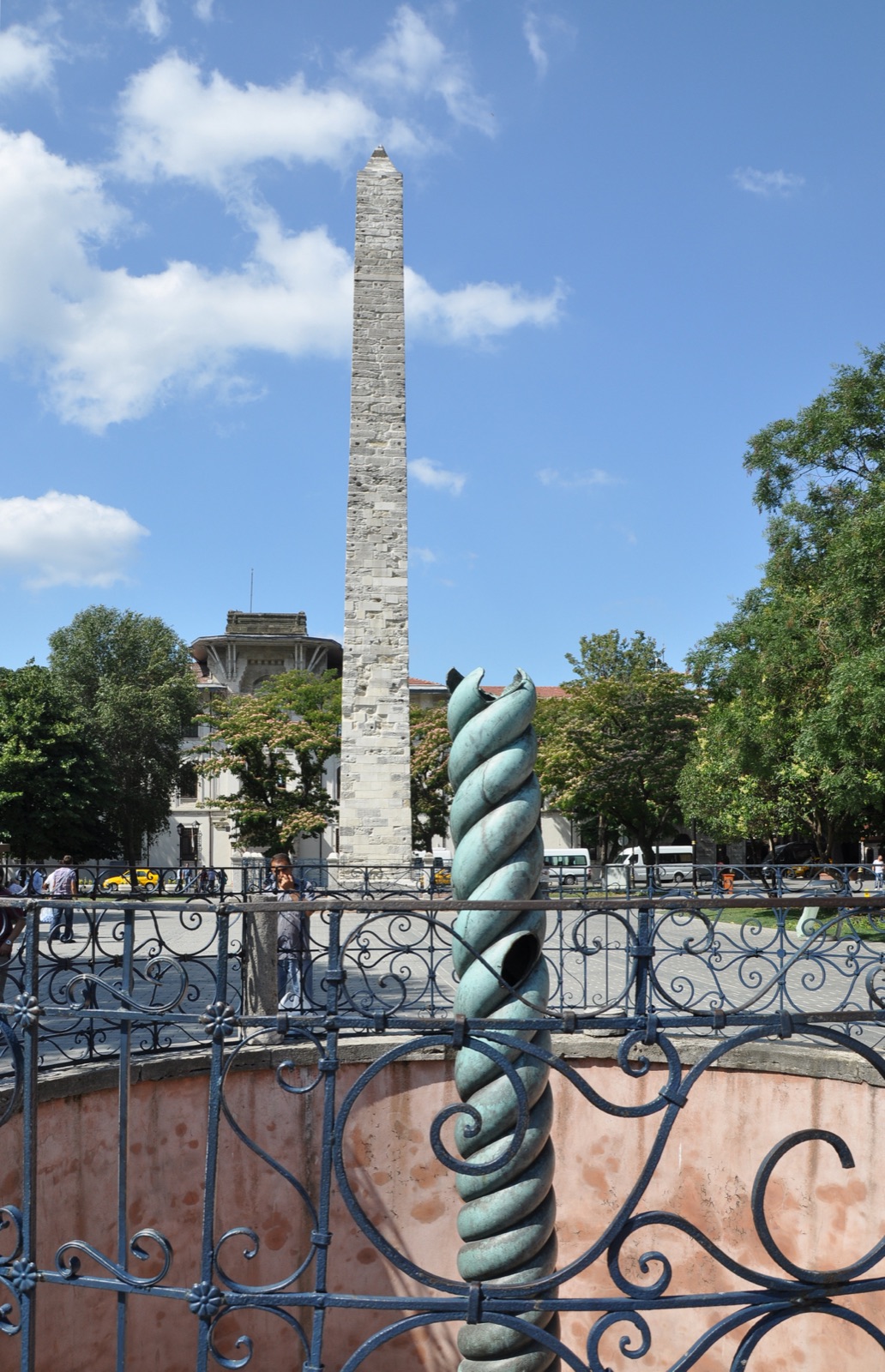
Its original message shifted in the process. At Delphi it commemorated the victory of the Greek city-states over Persia. In Constantinople it simultaneously became an ancient prestige object of a new Roman capital.
What the column originally looked like
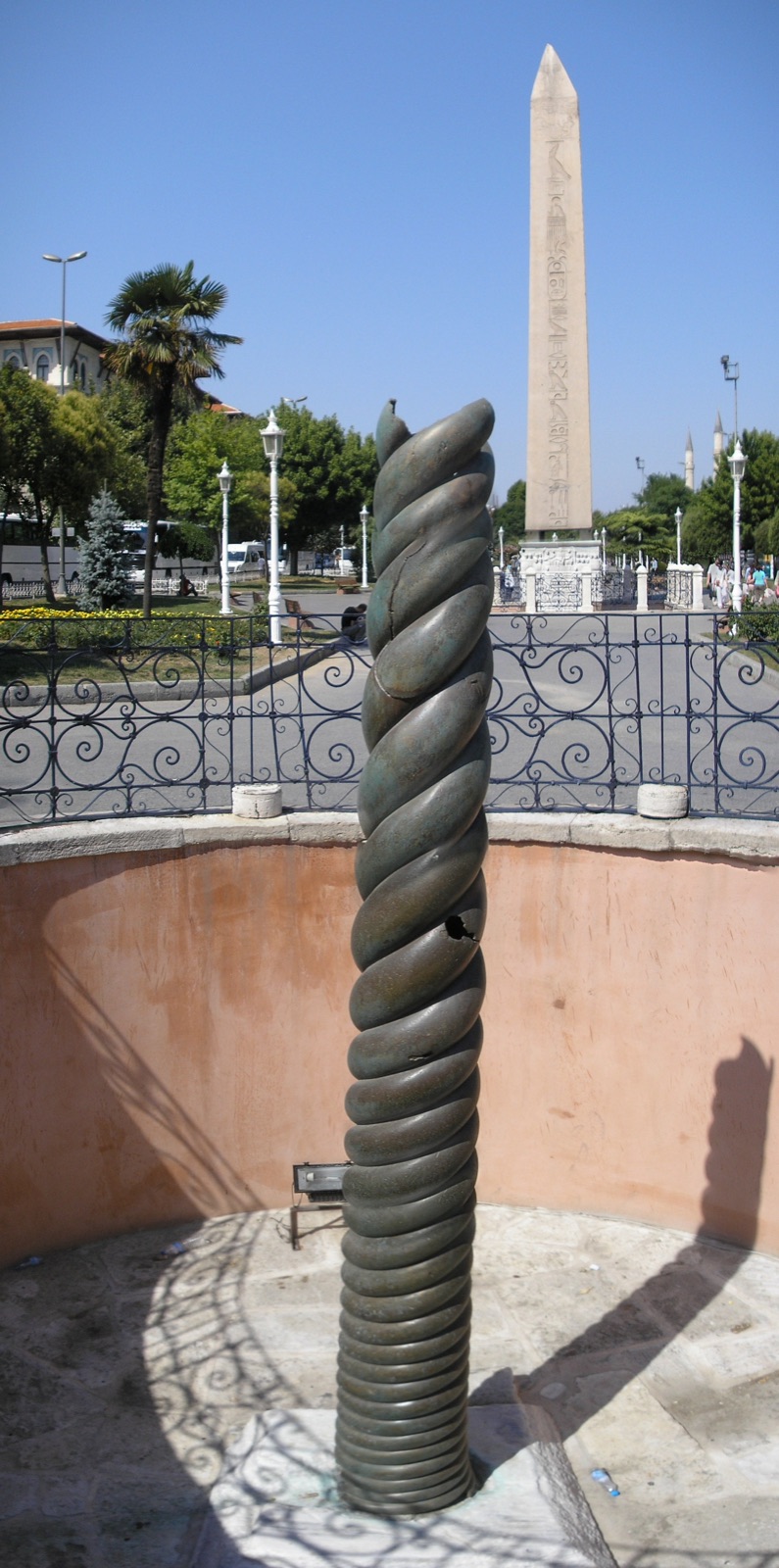
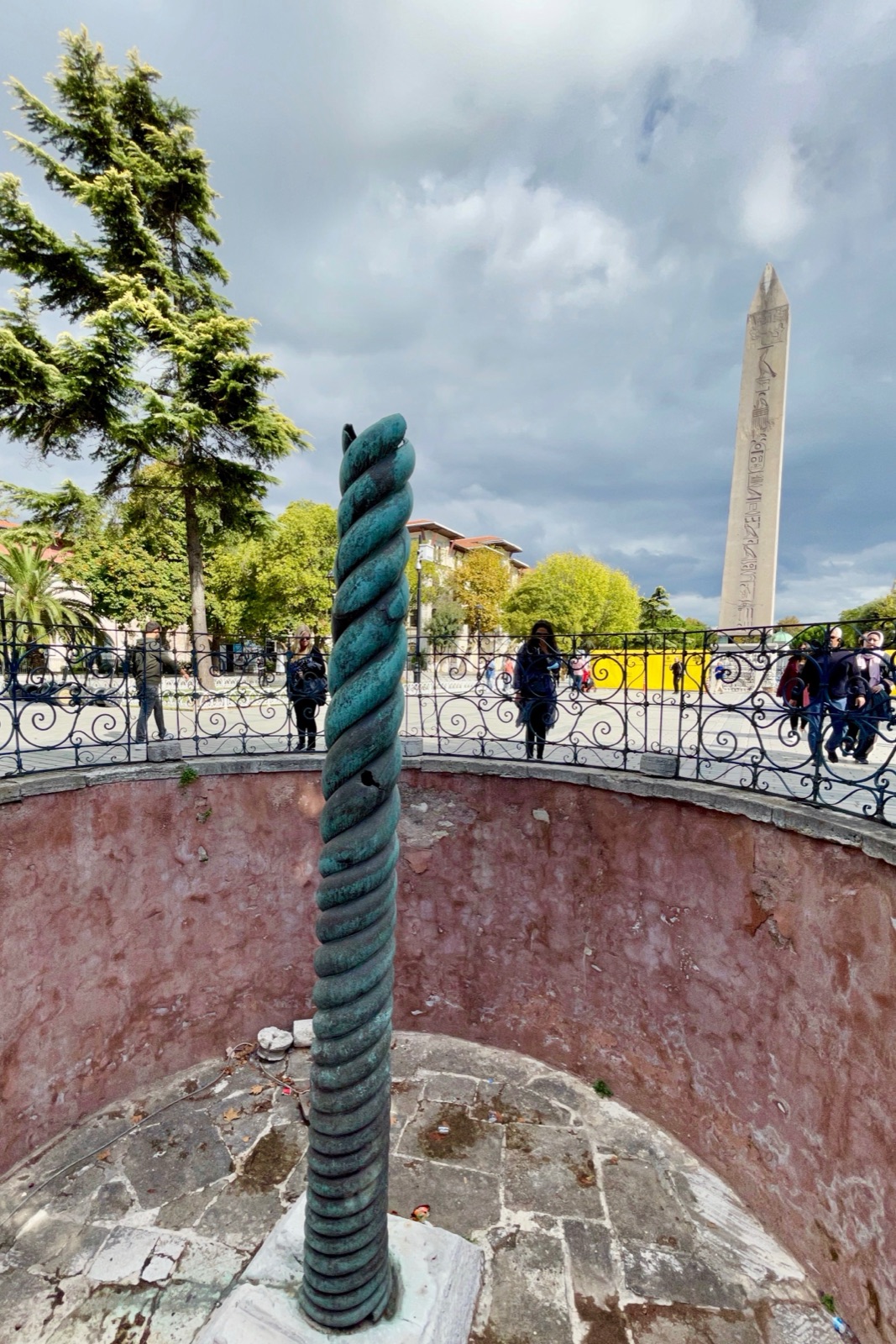
Today you mainly see the twisted bronze body. Originally, three serpent heads rose at the top, looking in different directions and jointly supporting the tripod.
This mental picture matters, because today's fragment looks considerably less monumental than the ancient ensemble. The surviving shaft also stood in the Hippodrome at a different ground level than today. Over the centuries, the street level around the square rose.
So anyone who thinks the column always stood in a small pit in today's square is looking at a modern situation.
Where the serpent heads disappeared
At least parts of the heads were apparently still present as late as the 17th century. Later they were damaged or broken off. Part of one serpent head is today in the Istanbul Archaeological Museum.
Exactly how the heads were lost isn't established beyond doubt. Especially famous is the story that Sultan Mehmed II, upon entering Constantinople, struck off a jaw with a mace to demonstrate his strength.
There is no solid basis confirming this as a verified event.
The names of the Greek city-states
On the lower part of the shaft, the names of the Greek states that took part in the war against Persia were engraved. This inscription is enormously important to historians, because it preserves political memory in bronze.
For centuries, part of it was hidden by the higher ground level. Archaeological investigations made the inscription more accessible and legible again.
The column is therefore not just an artwork, but a written source.
1204 and the Hippodrome
During the crusader sack of Constantinople in 1204, numerous famous bronze statues in the Hippodrome were destroyed or looted. The famous horses now associated with San Marco in Venice are among the best-known examples of artworks that made their way from Constantinople to the West.
The Serpent Column survived this catastrophe remarkably. Why it in particular was spared can't be said with certainty. Perhaps its material value relative to its shape was less attractive; perhaps other factors played a role.
That it still stands there today is, in any case, by no means a given.
"Mehmed II personally struck off a serpent head during the conquest." That's a famous story, but it isn't historically confirmed.
"The column was made in Constantinople." False. It had already stood in Delphi for roughly eight hundred years before Constantine had it brought to his capital.
Why the Serpent Column was politically sensitive for the Greeks themselves
Modern memory likes to tell the victory over the Persians as a simple moment of Greek unity. In reality, the alliance of city-states was fragile. Sparta, Athens and other city-states fought together against the outside enemy, but competed for prestige at the same time. That's exactly why the inscription on the Serpent Column matters so much: it lists the participating city-states and thereby preserves a politically sensitive memory of who could claim a share in the victory.
Ancient authors even report that the Spartan general Pausanias initially tried to have himself commemorated especially prominently on the monument. This self-presentation was rejected by the allies. Instead of a single general, the participating Greek states were to be named. The monument therefore tells not only of a victory over Persia, but equally of intra-Greek rivalry over who this victory belonged to.
Why Constantine chose this particular monument
When Constantine the Great had monuments brought to Constantinople, he wasn't just looking for beautiful art. He collected objects tied to famous places and great historical events. The Serpent Column was ideal for this: it commemorated the Greeks' victory over a world power and had originally stood at Delphi, one of the most prestigious sanctuaries of antiquity.
In the new capital it could carry a different message. Constantinople claimed to absorb the political and cultural heritage of the old Greco-Roman world. A famous monument from Delphi made this claim visible. That its original religious context was lost was no obstacle. The emperor turned the object into an element of his own capital.
The serpent heads and the mystery of their disappearance
The three serpent heads survived remarkably long. Early modern depictions show the top of the column considerably more complete than today. At some point in the 17th or early 18th century, the heads largely disappeared. One surviving fragment of a head, in particular an upper jaw, found its way into the collection of the Istanbul Archaeological Museum.
Several stories try to pin the loss on a particular person. Mehmed II is the most famous candidate, because a legend tells that he demonstratively struck at the serpents upon entering the city. Other accounts place the damage in a later period. As long as no solid source clearly prevails, it's more responsible to treat the loss as a gradual process and to label the spectacular versions as legend.
The unassuming remnant as an archaeological source
Today the column only rises fairly low out of a recessed area. That's partly because today's ground level lies above the ancient level of the Hippodrome. Originally the monument was far more integrated into the racetrack and stood on the spina.
The surviving inscription with the names of the city-states was long partly hidden beneath the ground. Only archaeological investigation made it legible again. In the process, what seemed like a merely decorative piece of bronze became a central historical source on the Greek alliance against Persia.
It's exactly such details that show why an object doesn't have to be big to be historically immense. A few meters of bronze can hold more than two and a half millennia of political memory.
My take on this place
I find the Serpent Column fascinating precisely because it looks so small today. At the Hagia Sophia you automatically expect history. With a bronze remnant like this, though, people tend to walk right past it.
And yet this thing first stood at Delphi, commemorated a war against the Persian Empire, was transported to Constantinople centuries later, survived the Fourth Crusade, the end of Byzantium, the Ottomans, and the modern city.
Sometimes the most unassuming object on a square is the one that has seen the most.
– Amra