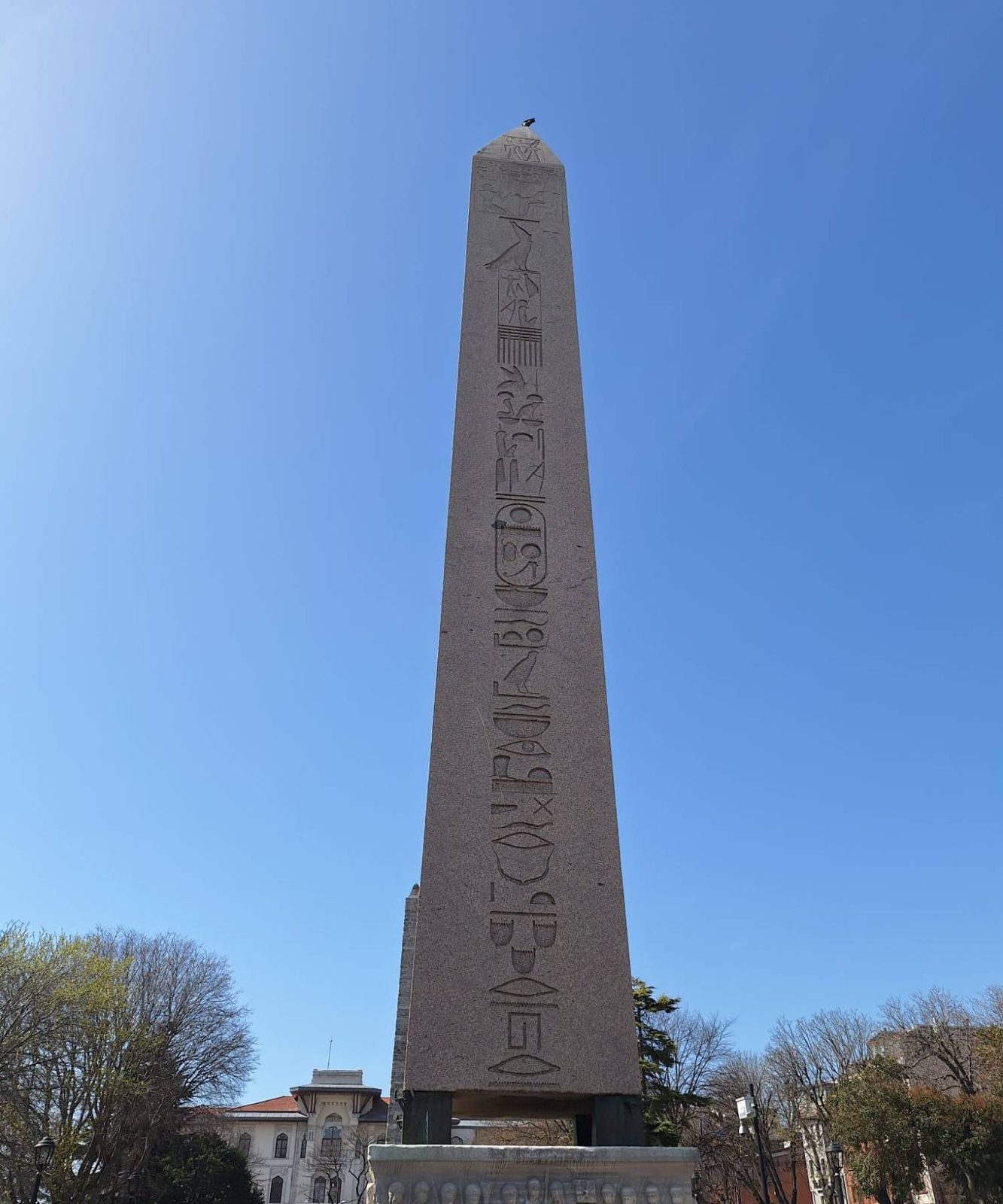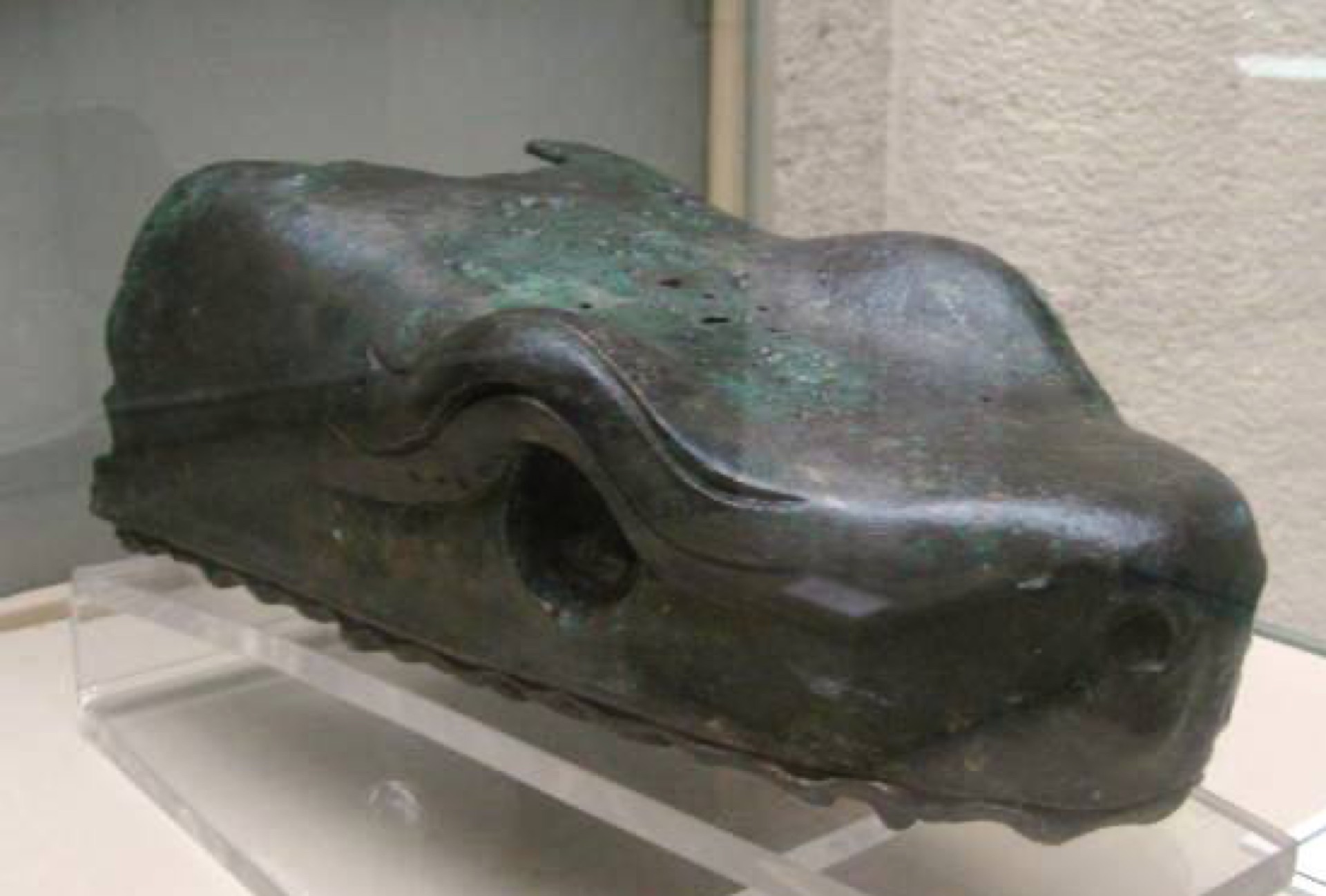

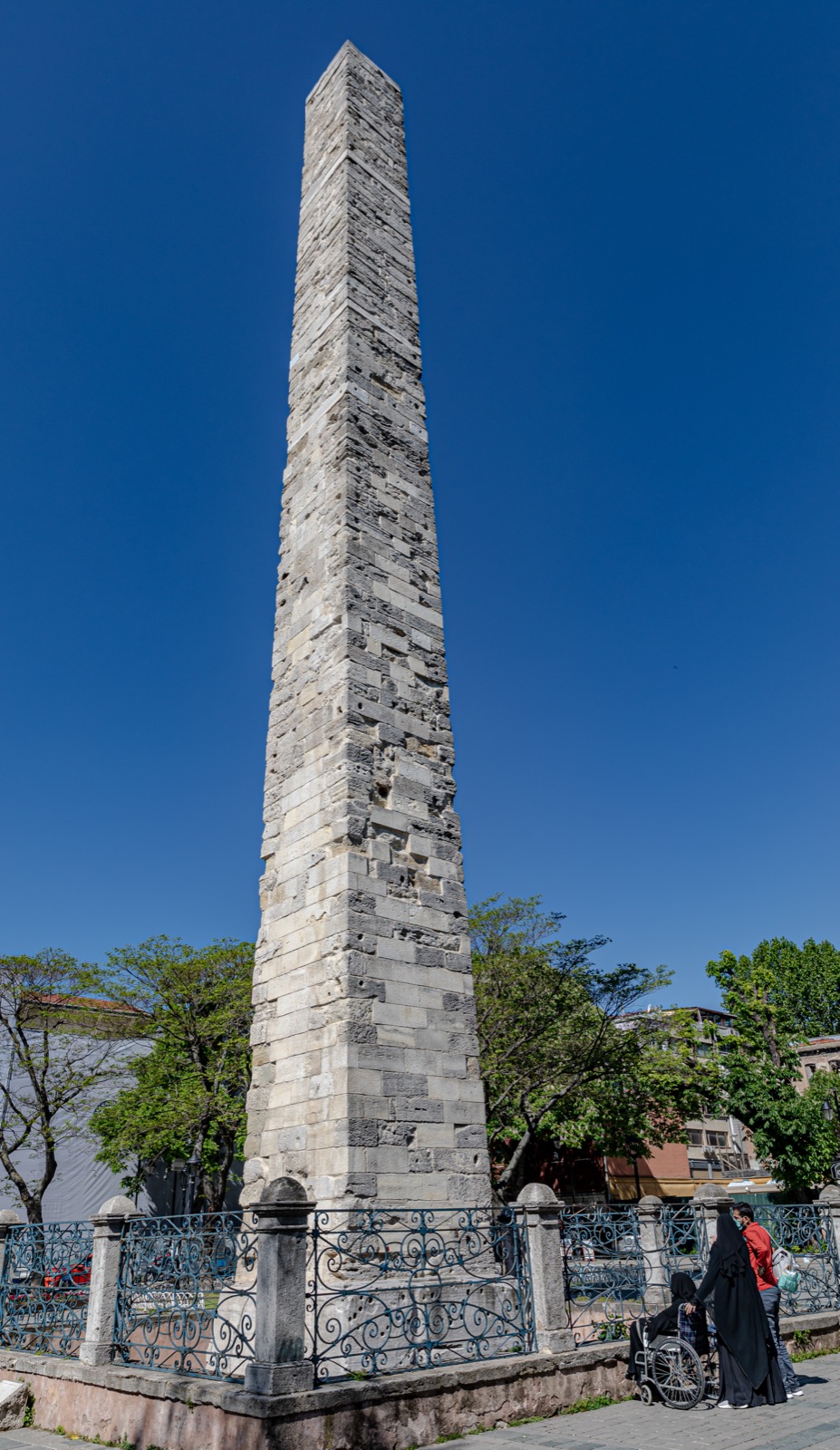
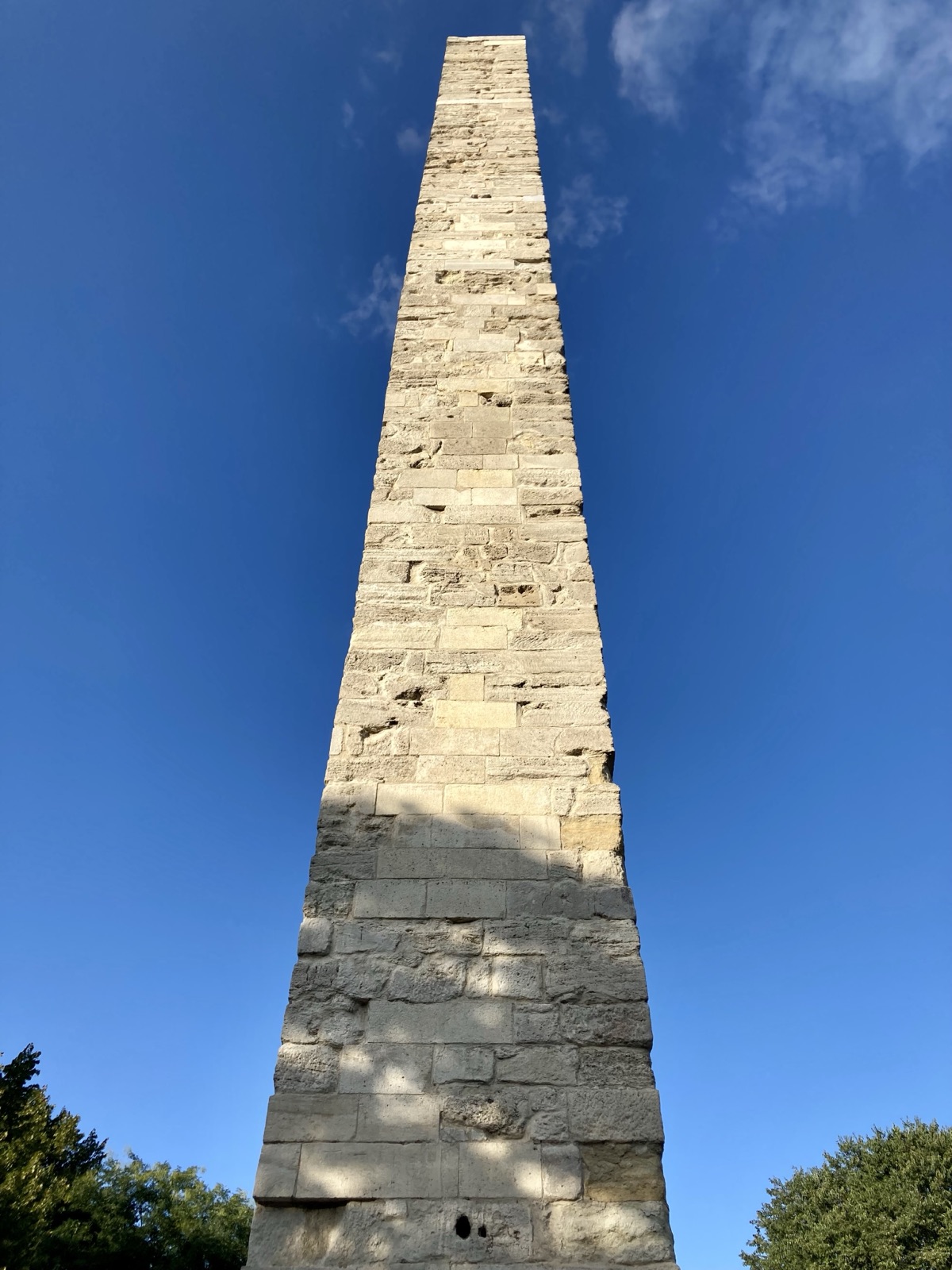
At the southern end of the former Hippodrome stands a tall stone pillar that, at first glance, looks considerably less spectacular than the Egyptian Obelisk of Theodosius. That's exactly what's deceptive. The so-called Walled Obelisk was likely far more striking in the Middle Ages than it is today, because its surface was clad in bronze plates. Only after this metal cladding was lost did the bare masonry core become visible.
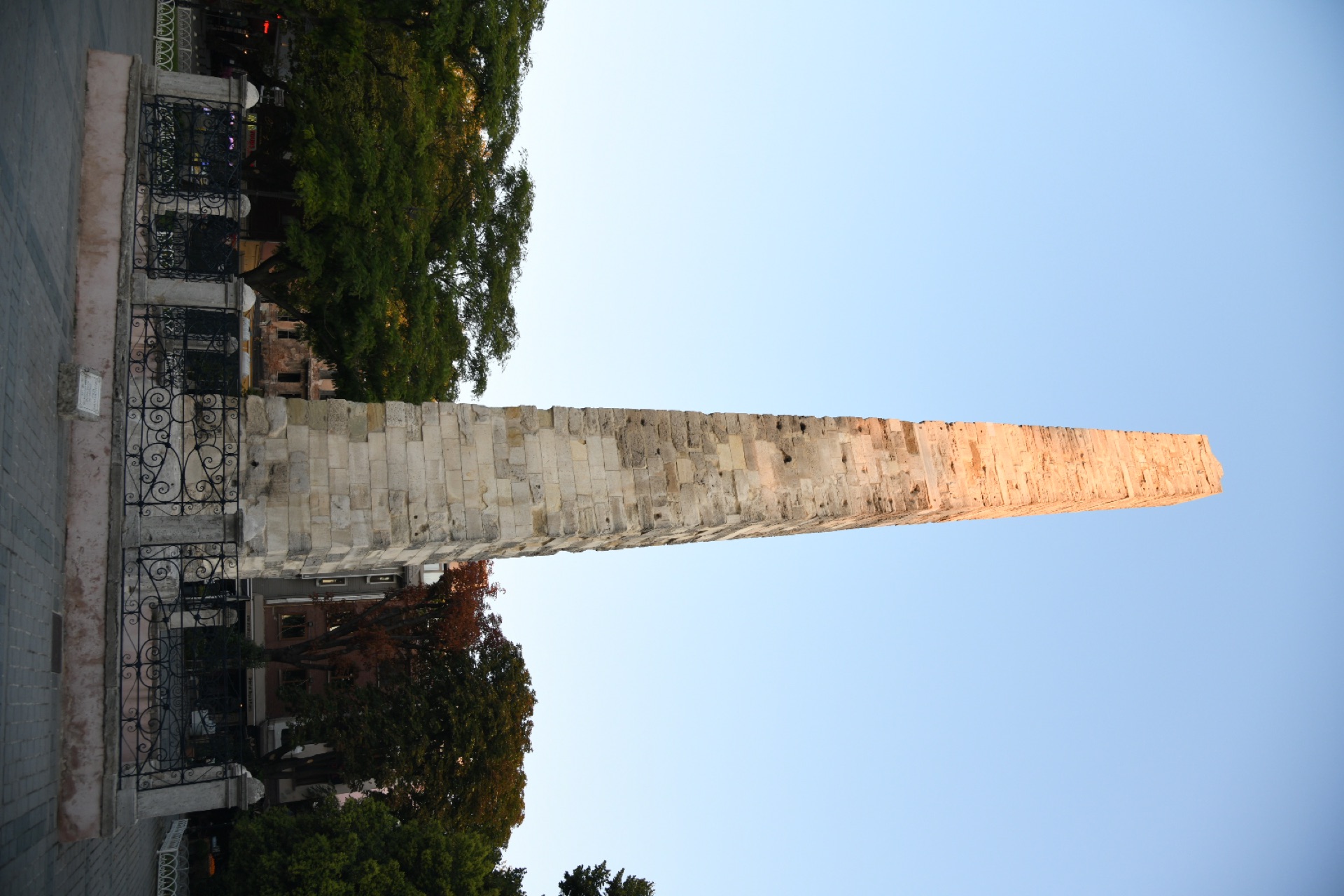
At the southern end of the former Hippodrome stands a tall stone pillar that, at first glance, looks less spectacular than the Egyptian Obelisk of Theodosius. In the Middle Ages it was clad in bronze plates, until crusaders looted them in 1204.
Its history is also closely tied to the Fourth Crusade. When crusaders sacked Constantinople in 1204, numerous bronze objects in the Hippodrome were stripped, destroyed or melted down. The obelisk's metal cladding disappeared in this context. So what looks bare and almost unfinished today is precisely the visible result of a looting.
- The Walled Obelisk stands on the former spina of the Hippodrome.
- Its exact original date of construction is not entirely certain.
- Emperor Constantine VII Porphyrogenitus had it restored in the 10th century.
- In the Middle Ages the structure was clad in bronze plates and looked completely different.
- During the looting of 1204, the metal cladding was removed by crusaders.
- The bare masonry core visible today is therefore not its original appearance.
When the obelisk was built
The exact date of construction is harder to determine than for the Obelisk of Theodosius. Its core may go back to an older, late antique phase of the Hippodrome, but the most important historical record we have today dates from the 10th century.
At that time, Emperor Constantine VII Porphyrogenitus had the obelisk restored. A Greek inscription on the base commemorates this and even compares the achievement to the Colossus of Rhodes.
This inscription shows that the monument was by no means just an old remnant in middle Byzantine Constantinople. It was deliberately renewed and understood as part of the imperial cityscape.
Constantine VII and the restoration
Constantine VII ruled in the 10th century and is known, among other things, for scholarly writings on court ceremony and imperial administration. His reign was strongly shaped by a desire to preserve and organize Roman-Byzantine traditions.
The restoration of the obelisk fits this pattern. An old monument in the Hippodrome wasn't simply left standing — it was re-staged. The bronze cladding turned the masonry core into a gleaming surface.
The plates likely carried decorative elements or images. Exactly what they looked like can't be fully reconstructed today, because they are lost.
What it looked like in the Middle Ages
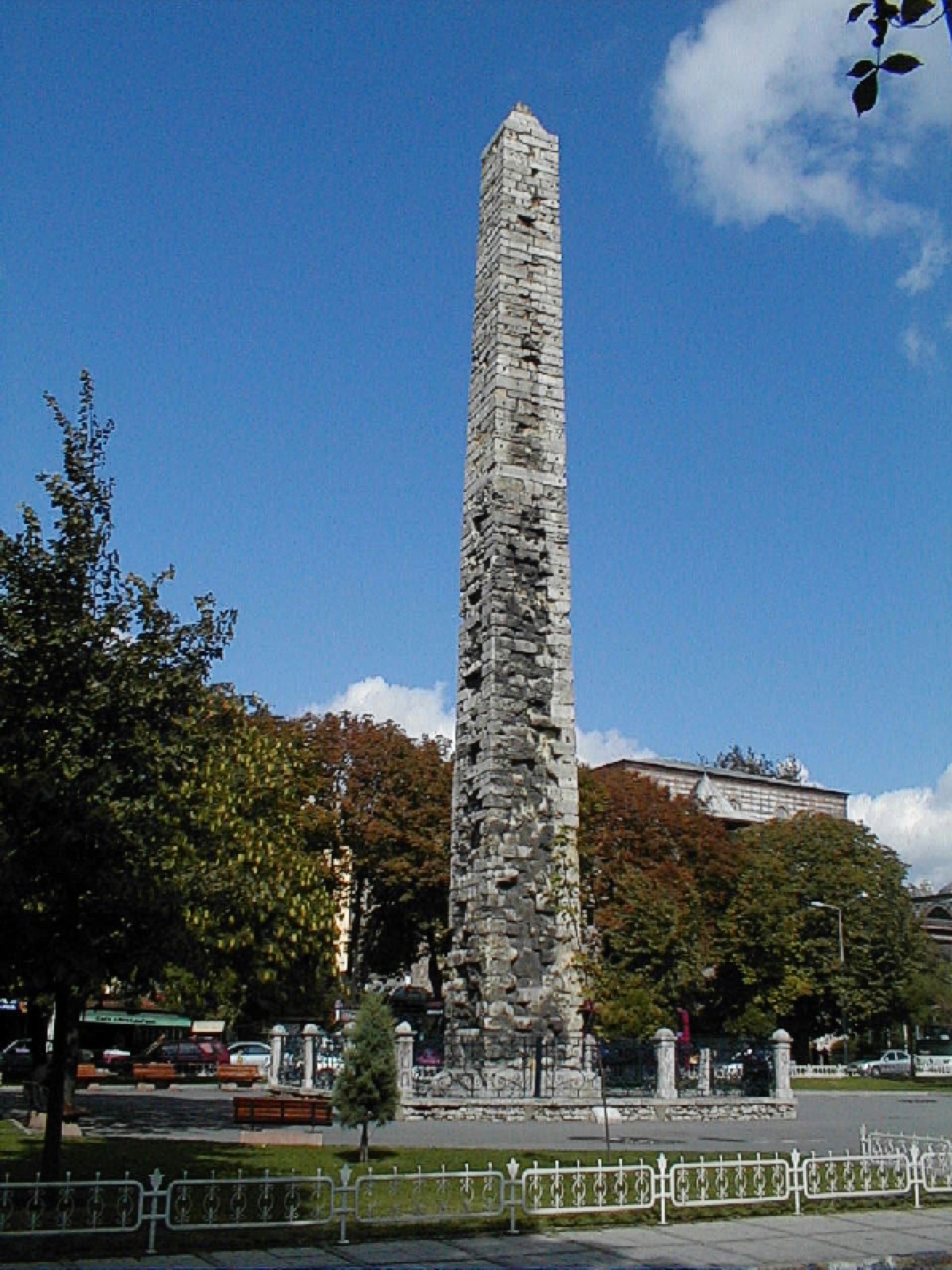
Anyone standing in front of the structure today sees rough stone and brick masonry. This appearance easily leads to the idea that the obelisk was deliberately designed to look this rustic.
The opposite is more likely. The bronze plates covered the core and reflected sunlight. On a Hippodrome full of statues, marble and metal, the obelisk had to look considerably more splendid.
The structure's later bareness is therefore not an aesthetic choice, but a loss.
1204: why the bronze disappeared
In April 1204, crusaders conquered Constantinople. Afterward the city was systematically looted for several days. Churches, palaces and public squares lost valuable fittings. Bronze in particular was in demand, because the metal could be melted down and reused.
The Hippodrome held a famous collection of ancient statues. Many of them disappeared during the looting. The bronze cladding of the Walled Obelisk was also stripped away. The monument thus lost exactly the surface that Constantine VII had had renewed in the 10th century.
This connection matters, because otherwise today's condition is easily mistaken for "original Byzantine." The core is, in parts, genuinely original; the visible appearance, however, is the result of massive material loss.
The Hippodrome after the crusaders
After 1204, the Hippodrome never again became the center of Byzantine mass spectacle in the same way. The Latin Empire had far fewer resources, and even after the Byzantine reconquest in 1261, the city remained economically weakened.
Many monuments had disappeared. Buildings decayed or were repurposed. The city's old political heart gradually lost its former function.
When the Ottomans conquered Constantinople in 1453, the Hippodrome was still recognizable as a large open space, but no longer the functioning racetrack of late antiquity.
The inscription on the base
The Greek inscription praises Constantine VII and his son Romanos II for the restoration. It stresses that the structure deserves admiration and refers to the monument's restoration.
Such texts were political communication. An emperor showed, through them, that he not only erected new buildings but also preserved the monuments of his capital.
The restoration thus became an act of rule in itself.
Why the bare stone matters today
It would in theory be possible to recreate the lost bronze cladding today. That this isn't simply done makes sense from a heritage-preservation standpoint. The bare condition tells a real story of loss.
Through it, we literally see what's missing. The surface is a historical document of the looting and of the centuries that followed.
Especially with historical monuments, restoration shouldn't necessarily mean closing every gap so visitors get a perfect-looking backdrop again.
"The obelisk was always a bare stone tower." False. In the Middle Ages it was clad in metal plates.
"The crusaders of 1204 had nothing to do with its current appearance." False. The 1204 looting is directly connected to the loss of the bronze cladding.
"It's an Egyptian obelisk like the Obelisk of Theodosius." No. It's a masonry structure, not a granite monolith imported from Egypt.
Why bronze was so valuable in the Middle Ages
Anyone who wants to understand why the Walled Obelisk's cladding disappeared in 1204 has to let go of the modern idea that historical artworks were always treated as untouchable museum pieces. Bronze was valuable raw material. It could be melted down and reused for coins, weapons, bells, fittings or other objects. A large public monument was therefore not just art, but literally a metal store.
During the crusader sack of Constantinople, numerous bronze objects in the Hippodrome were destroyed or carried off. Some ancient statues that had survived for centuries disappeared within a matter of days or weeks. The famous horses of San Marco in Venice show that some works lived on as plunder. The Walled Obelisk lost its metal skin; the masonry was left behind.
The obelisk as an example of how 1204 permanently changed the cityscape
The Fourth Crusade's looting wasn't just an event in which people lost property. It changed Constantinople's visual memory. Public squares, churches and palaces were left poorer in metal, sculpture and precious fittings afterward. Many works that later travelers never got to see, we know only from earlier descriptions.
With the Walled Obelisk, you can grasp this loss especially directly, because the supporting structure remained standing. The missing metal left its own kind of monument. Today's bare core is thus almost a negative image of the looting: it shows not what's there, but what's missing.
What the comparison with the Obelisk of Theodosius reveals
Just a few meters away stands the granite Obelisk of Theodosius, whose hard stone surface survived millennia astonishingly well. The Walled Obelisk, by contrast, depended on a valuable metal cladding. As a result, the two monuments react completely differently to war and looting.
Granite couldn't simply be melted down. Bronze could. That's why certain stone monuments survived while an enormous quantity of ancient metal art was lost. Today's state of Sultanahmet is therefore partly a consequence of the materials themselves.
What still tells of the middle Byzantine restoration today
The base and the inscription under Constantine VII show that the Hippodrome was still perceived as a significant historical space in the 10th century. Even though chariot races no longer carried quite the same political weight as in late antiquity, the imperial government still invested in renewing the monument.
Constantine VII was deeply interested in ceremony, history and the ordered presentation of imperial tradition. The obelisk fit into this program. Its restoration linked his own dynasty to the city's long Roman past.
So standing in front of it today, you're looking simultaneously at a presumably late antique core, a middle Byzantine restoration, and the loss of 1204. Three eras lie literally on top of one another.
A monument whose loss itself became information
What's especially fascinating about the Walled Obelisk is that we can only partly reconstruct its original appearance. The vanished bronze cladding forces us to work with gaps. Historians compare descriptions, inscriptions and today's masonry core to understand how the obelisk once looked. This process is exactly what archaeology is about: you don't start with a complete story, but with fragments.
For visitors, that's a good reminder that historical sites are rarely fully preserved. Sometimes the absence of a material shows even more clearly than a surviving object how massively an event struck. With this obelisk, 1204 isn't just a date in a text. The bare surface is a visible echo of the looting.
Why the obelisk is easily overlooked in today's Sultanahmet
The surroundings are dominated by spectacular buildings. The Hagia Sophia and the Blue Mosque draw the eye upward, and the Egyptian obelisk looks more exotic thanks to its red granite and hieroglyphs. The Walled Obelisk seems almost plain by comparison.
That's exactly why it's worth looking at deliberately. It's a reminder that history doesn't consist only of perfectly preserved masterpieces. Losses, repairs and reuse are just as much a part of it.
Anyone who only wants to read the square as photogenically "beautiful" might miss it. Anyone who wants to understand the history of the Hippodrome shouldn't skip it.
My take on this place
I find this obelisk interesting precisely because it doesn't look perfect today. You have to know that something is missing. Only then do you understand why this rough surface tells you more than a beautiful reconstruction would.
Right next to it stands the Egyptian obelisk with its clear hieroglyphs, and it naturally gets most of the photos. The Walled Obelisk, by comparison, feels almost like the poor relative. But it carries a story on its body that you can actually see: something was taken away here.
And suddenly that bare wall isn't boring anymore — it's evidence.
– Amra