Talk about great Ottoman mosques, and the names of male sultans almost automatically take centre stage: Süleyman, Selim, Ahmed, Mehmed. The Mihrimah Sultan Mosque in Üsküdar is a reminder that women of the dynasty were significant patrons too, permanently shaping the cityscape with their building projects. Mihrimah Sultan was the daughter of Süleyman I and Hürrem Sultan. She commanded considerable wealth, political closeness to the ruling house, and the ability to found her own endowments.
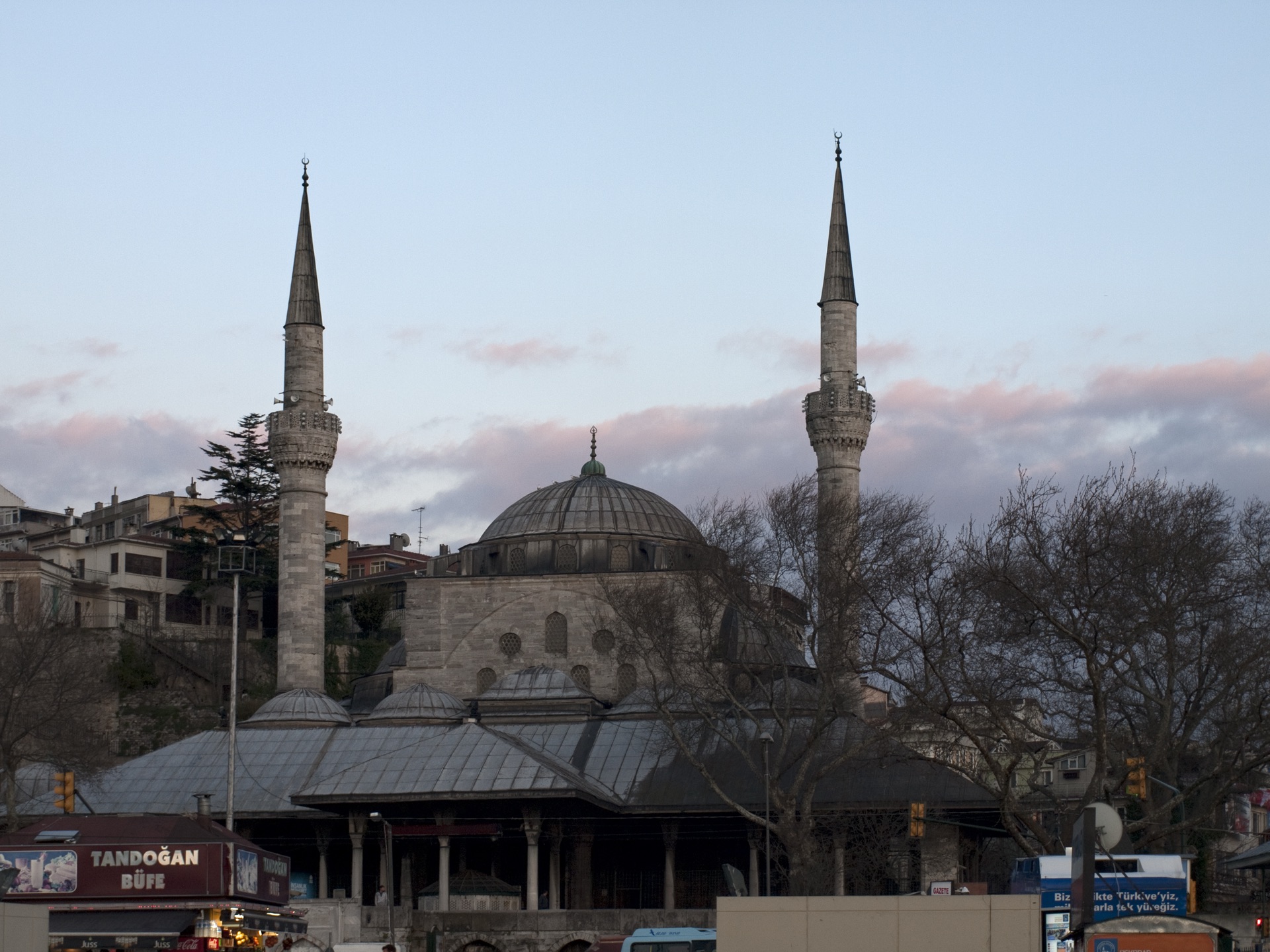
The Mihrimah Sultan Mosque in Üsküdar is a reminder that women of the dynasty were significant patrons too, permanently shaping the cityscape with their building projects.
Her mosque at the Üsküdar ferry landing is one of the best known of these projects. It arose in the mid-16th century and is attributed to Mimar Sinan. Its location right on the Bosphorus was anything but incidental. Anyone crossing from Europe to Üsküdar encountered the complex almost immediately upon arrival. The foundation was thus, at once, a house of worship, a social hub, and the architectural calling card of one of the most powerful women of her time.
- Mihrimah Sultan was the daughter of Süleyman I and Hürrem Sultan.
- She was among the wealthiest and most influential women of the Ottoman dynasty.
- The Üsküdar mosque arose in the 16th century and is attributed to Mimar Sinan.
- Its site right by the ferry landing made the complex especially visible.
- The foundation included not only prayer spaces, but also educational and welfare institutions.
- Mihrimah also had a second great mosque built in Edirnekapı.
- The popular story that Sinan aligned both mosques, out of unrequited love for Mihrimah, so that the sun and moon appear above them simultaneously on her birthday, is romantic but historically unconfirmed.
Who Was Mihrimah Sultan?
Mihrimah was born in 1522, the daughter of Süleyman the Magnificent and Hürrem Sultan. Her name is usually interpreted as "sun and moon," which later encouraged a whole series of romantic legends. As the sultan's only daughter to reach adulthood, she held an outstanding dynastic position.
She grew up at a time when women of the court appeared increasingly visibly as patrons, political intermediaries, and managers of great fortunes. Her mother Hürrem had already strongly shaped this development. Mihrimah herself later commanded considerable income, enabling her to fund her own building projects.
Why Women of the Dynasty Founded Great Endowments
Mihrimah Sultan wasn't simply "the daughter of Süleyman and Hürrem," even though this family connection naturally shaped her opportunities. As an Ottoman princess, she held considerable wealth, her own household, and the ability to fund great religious and social foundations. Her buildings show that women of the dynasty didn't shape the cityscape only indirectly through men. They could act as patrons themselves, secure income, pay staff, and keep social institutions running permanently.
The foundation in Üsküdar was especially visible, because it sat right at the Asian gateway to the city. Travellers, pilgrims, and merchants arriving in Istanbul from Anatolia encountered the complex practically at the crossing point between land and water routes. Alongside the mosque, the külliye included further institutions organising supply, education, and religious daily life. The project was therefore not merely a beautiful building by the water, but infrastructure.
Mihrimah's political role is often either exaggerated or reduced to romantic stories in popular accounts. She was close to her father, maintained correspondence, held economic resources, and was part of dynastic networks. At the same time, there's no reason to secretly attribute every one of Süleyman's foreign-policy decisions to her. What's more interesting is what can actually be confirmed: in the 16th century, a woman of the dynasty could, through her own foundation, create a permanent place in Istanbul's skyline and social fabric.
Anyone looking at the mosque today shouldn't therefore only ask whether Sinan built with particular elegance here. The more important question might be: who even had the power to commission such a building in the first place? For Mihrimah, the answer is clear: an Ottoman princess whose scope for action within the dynastic order was greater than many simplified depictions of women in the harem suggest.
An Ottoman vakıf was more than a pious gift. A foundation could fund mosques, schools, fountains, soup kitchens for the poor, caravanserais, hospitals, or other social institutions. At the same time, it secured the patron lasting memory and religious merit.
For women of the dynasty, such projects mattered especially, since they led no military campaigns and held no public offices in the classic sense. Architecture thus became a form of visible political and social presence.
Mihrimah had her foundations built at extremely prominent sites. That was no coincidence. Anyone with money, a name, and power could, quite literally, inscribe themselves into a capital's skyline.
Why Üsküdar, of All Places?
For travellers from Anatolia, Üsküdar was an important arrival point in Istanbul. Caravans, merchants, pilgrims, and officials came into the city from the Asian side. Anyone wanting to continue on to Europe had to cross the Bosphorus.
The area by the ferry landing was therefore constantly full of people. A mosque at this spot reached not just residents of the district, but travellers from large parts of the empire. The complex thus had an almost gate-like function.
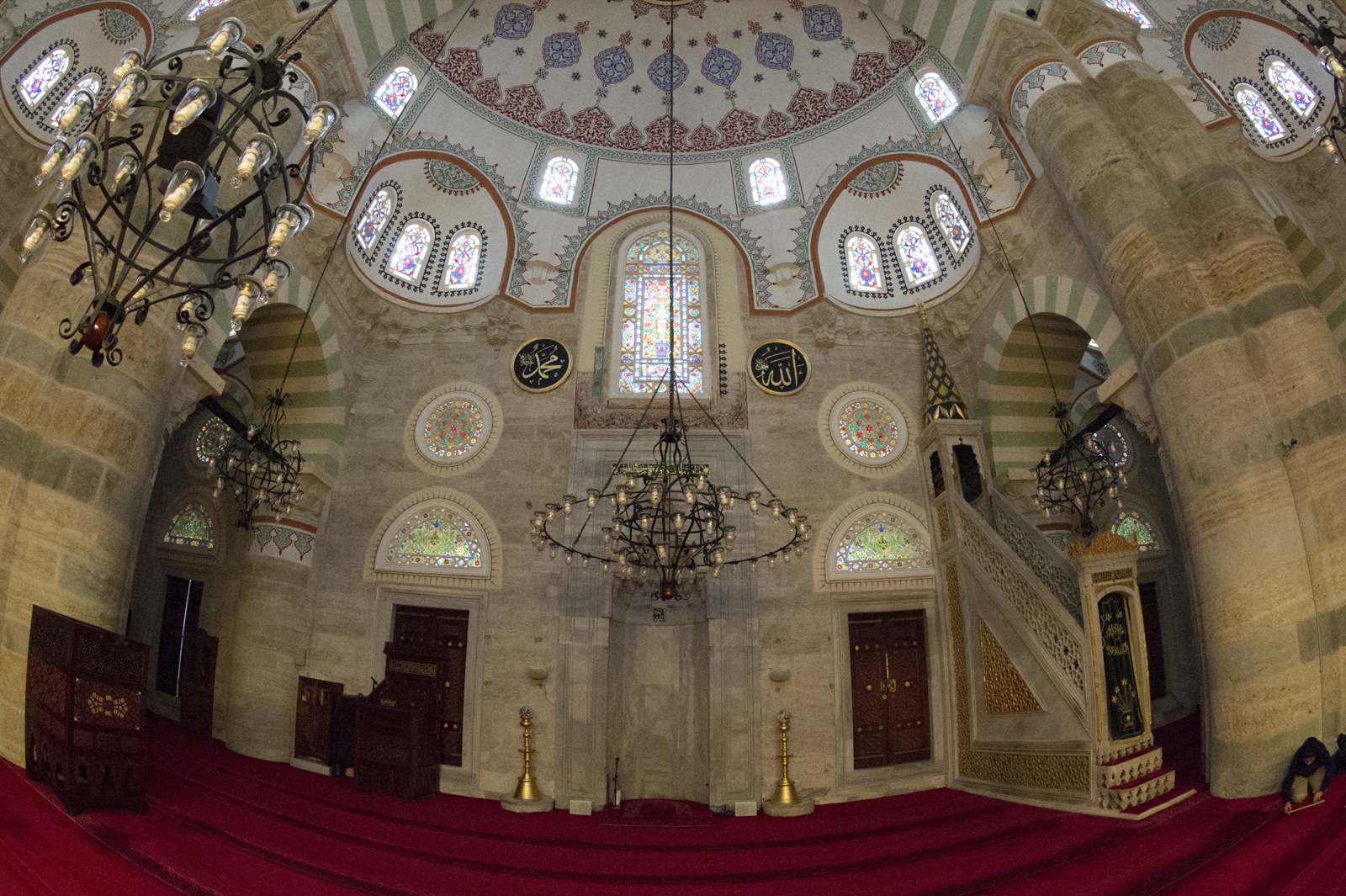
Its waterside location also explains how unusually the building is perceived. Depending on your vantage point, the mosque feels compact, almost squeezed between the Bosphorus, streets, and later buildings. Historically, though, it was deliberately part of a major public transport hub.
Mimar Sinan and the Construction
As chief court architect, Mimar Sinan stood at the head of the Ottoman building administration and designed foundations for numerous members of the dynasty. The Mihrimah Mosque in Üsküdar belongs to his early-to-middle creative period.
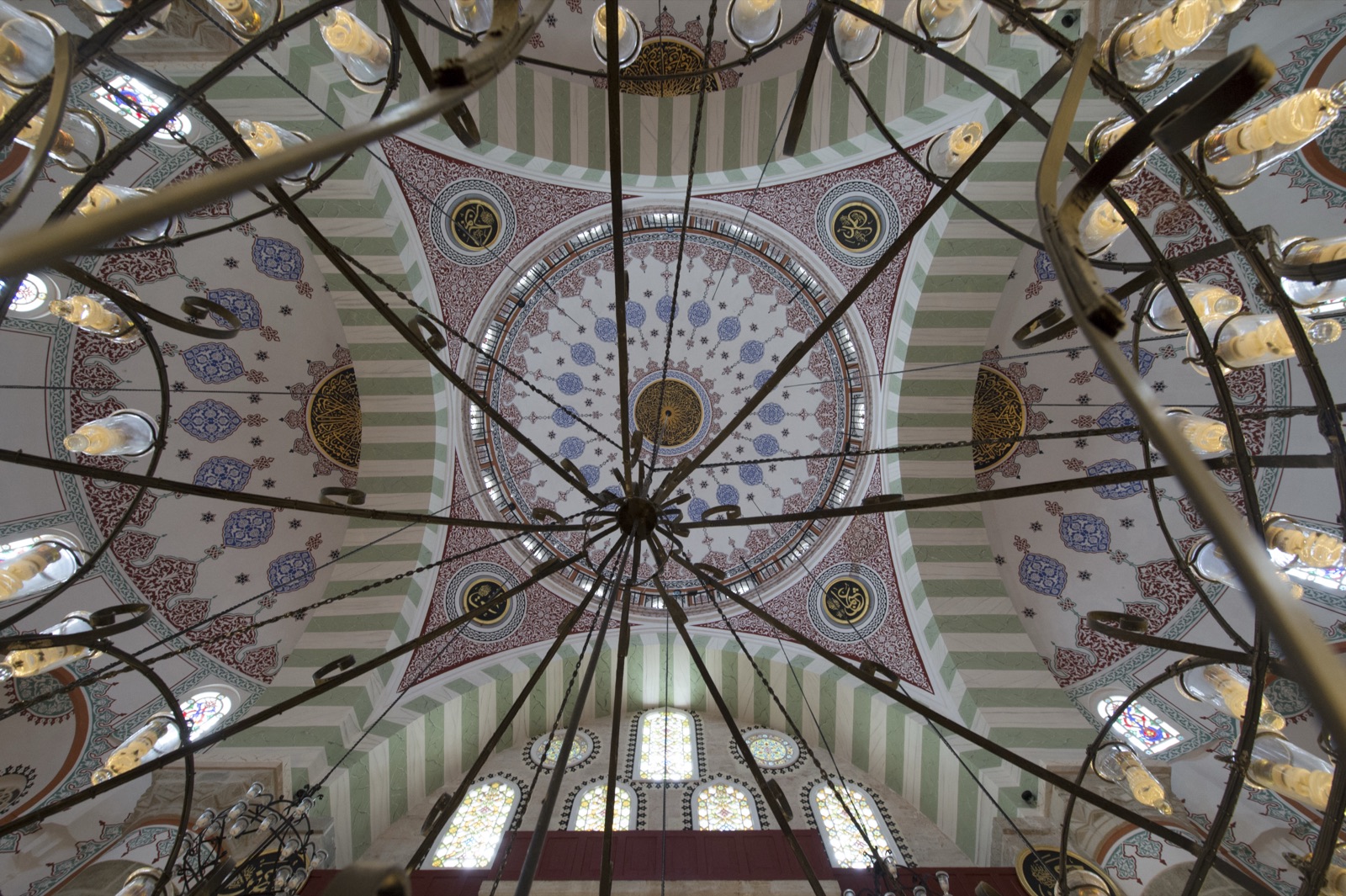
The building feels different from his later great experiments with central spaces. Its dome is organised through half-domes and supporting systems, while the exterior structure responds more strongly to its difficult waterside site. Two slender minarets mark the foundation from a great distance.
Especially interesting is that a woman's name is attached to the complex. In a city where many great monuments are named after sultans and grand viziers, Mihrimah Sultan stands quite naturally over this place.
Mosque, Madrasa, and Social Institutions
Alongside the mosque, the külliye included a madrasa, a primary school, a soup kitchen for the poor, and further functional buildings. This combination was typical of great foundations.
People, then, came not only to pray. They studied, ate, worked, and received support. The complex was thereby woven into Üsküdar's everyday life.
Part of the original buildings were later altered or lost. Roads, ferry traffic, and modern construction crowded ever closer to the complex. Anyone who only photographs the mosque today therefore no longer sees the full 16th-century urban effect.
Mihrimah and Rüstem Pasha
In 1539, Mihrimah married Rüstem Pasha, who later became grand vizier. The marriage was dynastically and politically highly significant. Rüstem and Mihrimah, together with Hürrem, belonged to a centre of power at Süleyman's court.
Rüstem Pasha is himself present through a famous mosque in Istanbul. The names of this married couple thereby appear at several important points in the city's architecture at once.
Mihrimah remained politically influential even after the deaths of her mother and her husband. She supported her father financially and maintained close ties with her brother Selim II, who became sultan in 1566.
The Second Mihrimah Mosque in Edirnekapı
Mihrimah's second great mosque stands at one of the highest points of the historic peninsula, in Edirnekapı. It feels quite different from the Üsküdar complex: taller, brighter, and more strongly concentrated on one great central space.
That a patron could fund two great mosques at strategically visible points of the city at once shows her extraordinary standing. The two buildings are therefore often considered together.
Mihrimah's Political Role After Hürrem's Death
When Hürrem Sultan died in 1558, Mihrimah remained one of the most important women in Süleyman's immediate circle. She was an adult, economically independent, and politically experienced. Letters and diplomatic contacts show she mattered beyond the family alone. She supported her father financially, acted as a patron, and remained a woman with her own network even after the death of her husband, Rüstem Pasha.
After Süleyman's death in 1566, and the accession of her brother Selim II, her standing remained strong. This matters, because women at the Ottoman court didn't automatically vanish politically upon a husband's death. Dynastic origin could matter even more than marriage. Mihrimah was the sister of the reigning sultan and the daughter of one of the empire's most famous rulers.
Her building projects can therefore also be read as long-term family politics. Mosques, schools, and other foundations preserved her name publicly, regardless of which sultan happened to be ruling.
What's Still Recognisable Today From the Original Külliye
Üsküdar's surroundings have changed enormously. Modern roads, ferry facilities, traffic, and dense housing make it hard to reconstruct the complex's original effect. Some buildings of the foundation survive; others were altered or lost.
That's exactly why it's worth not just looking at the mosque on site. The madrasa, burial areas, and other surviving parts explain that the foundation was originally a functioning whole. Anyone who just takes a photo from the Bosphorus sees only the most visible tip of a considerably larger system.
Its relationship to the harbour, too, is still traceable today. Thousands of people step off ferries daily and walk past the mosque. The site thus still fulfils exactly what made it attractive in the 16th century: it sits at one of the most important crossing points between city and water.
Mihrimah's Name Between Sun and Moon
The poetic meaning of her name has strongly occupied the imagination of later generations. "Mihr" can be linked to the sun, "mah" to the moon. That created a perfect basis for stories about sunsets, moonrises, and Sinan's supposed secret love.
Historically, though, you should first see the obvious: even just the name of an Ottoman princess could survive for centuries, because it was tied to architecture. Even today, everyone says "Mihrimah Sultan Camii." That's real memory — with no romantic add-on story needed at all.
One Woman, Two Mosques, and a Visible Legacy
Mihrimah's two great Istanbul mosques show beautifully how architecture can stabilise memory. Political alliances fade, court factions shift, and even powerful families eventually lose their standing. A well-funded foundation complex, though, remains part of a city's everyday life for centuries.
That's perhaps the most important point about Mihrimah: we don't need to make her interesting through some supposed love story with Sinan. Her real biography is more than enough. She was the daughter of Süleyman and Hürrem, the sister of a sultan, the wife of a grand vizier, a wealthy patron in her own right, and a woman whose name still stands on two prominent mosques today.
Anyone standing in front of the Üsküdar mosque therefore sees not just "a work by Sinan," but the public self-positioning of a woman within a dynastic world in which female power functioned differently than male power, but was by no means invisible.
"Mimar Sinan was secretly in love with Mihrimah." There's no solid historical source for this. The story is a modern romantic narrative.
"Sinan aligned her two mosques so that, on Mihrimah's birthday, the sun sets at one while the moon rises at the other." This story is often told, but can't be confirmed as a historical building intention. That the sun and moon can, from certain vantage points, spectacularly relate to the two buildings doesn't make it Sinan's love code.
"Women weren't allowed to found great mosques in the Ottoman Empire." False. Mihrimah, Hürrem, Nurbanu, Kösem, and many other women of the dynasty founded significant endowments.
My Thought on This Place
What I especially like about this mosque is how naturally its name places a woman within Istanbul's great architectural history. Mihrimah wasn't simply "the daughter of" or "the wife of." Of course, these relationships were decisive for her position, but she herself held money, networks, and influence, and left behind buildings of her own.
And Üsküdar fits this perfectly. Thousands of people arrive by ferry every single day, walk past the mosque, and thereby see — whether they know it or not — the foundation of a woman who placed her name on this stretch of the Bosphorus almost five hundred years ago.
– Amra