
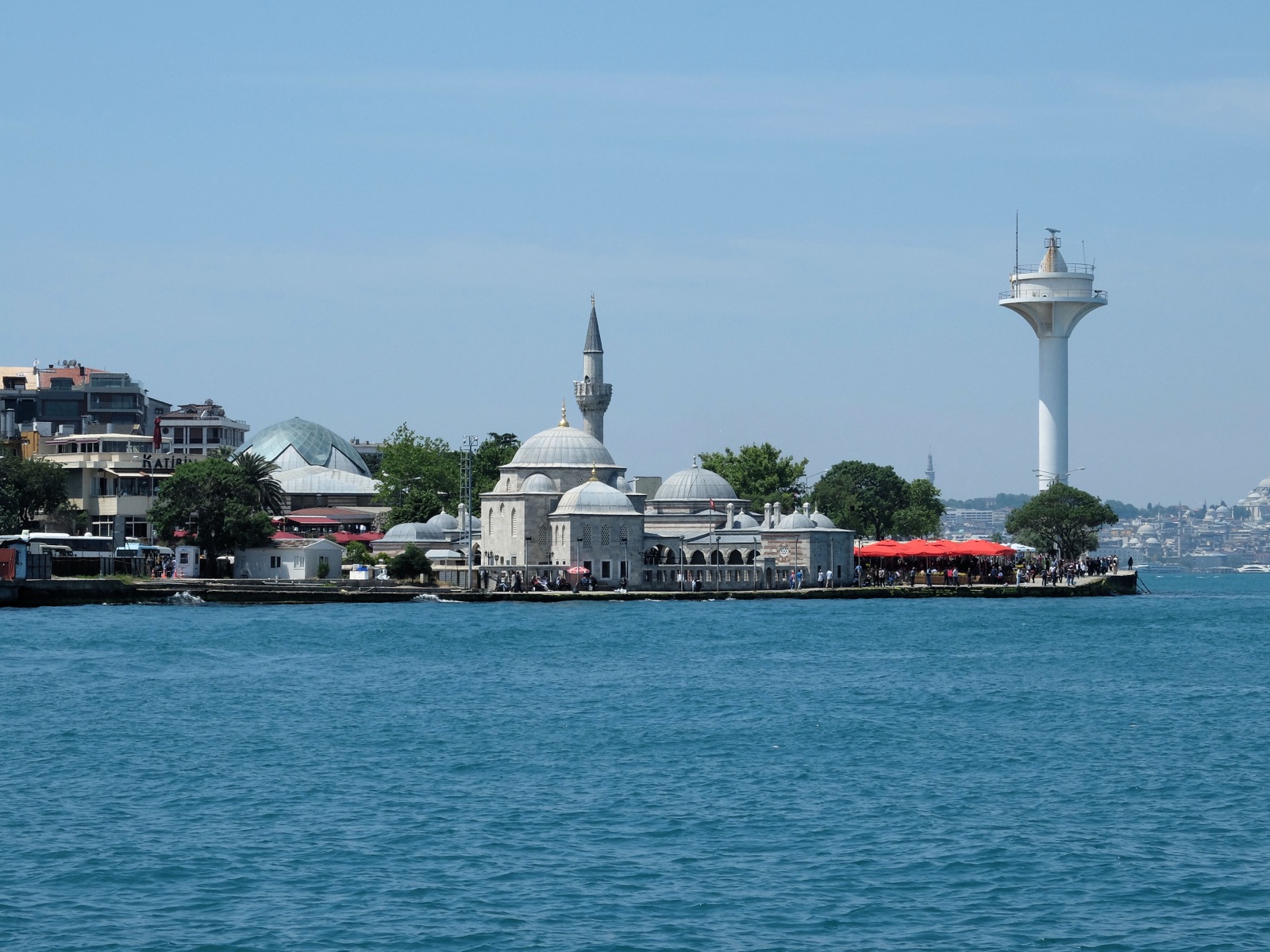
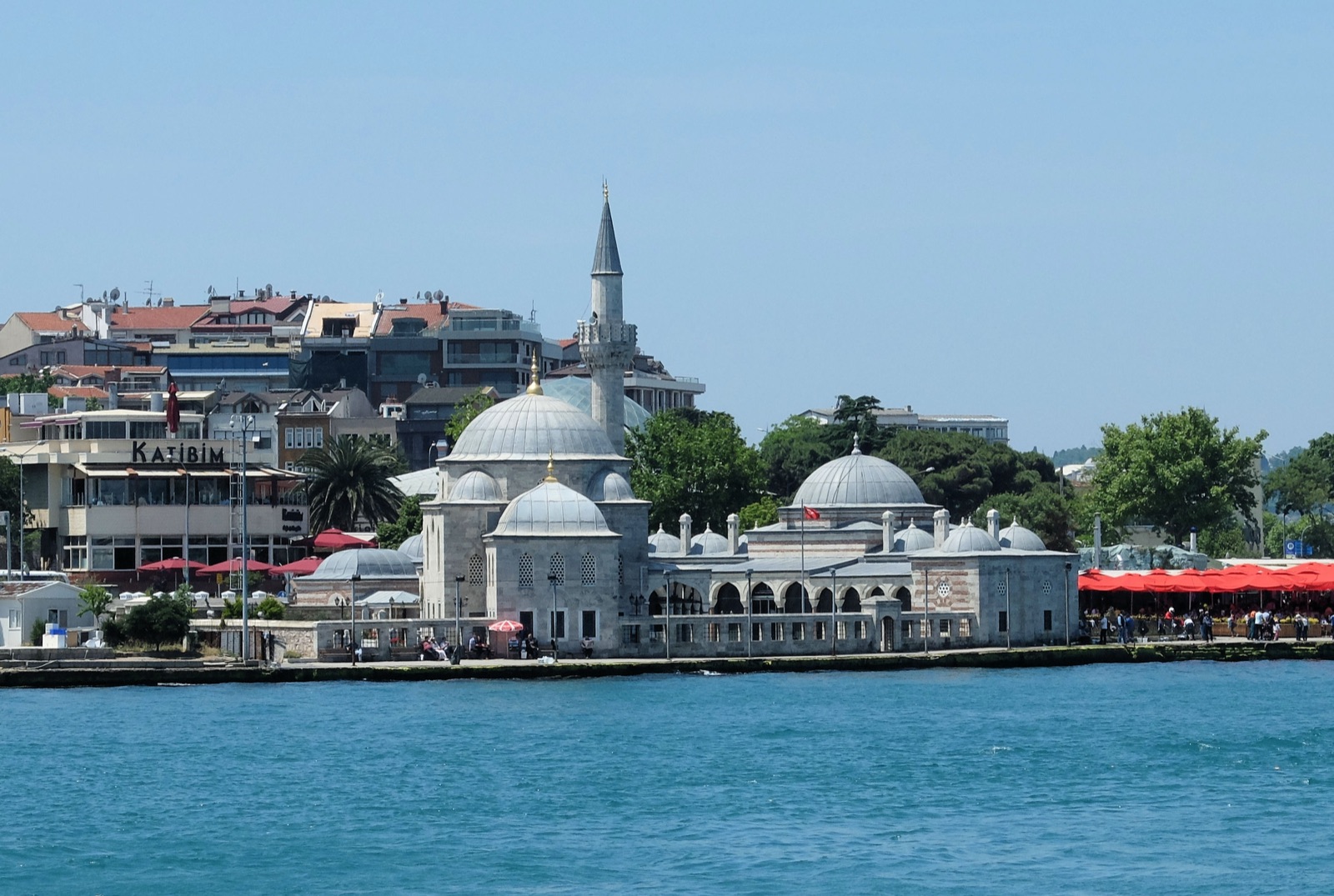
Right on the water in Üsküdar stands a building that proves Mimar Sinan didn't need a huge dome to completely command a place. The Şemsi Pasha Mosque is small, almost intimate, and stands so close to the Bosphorus that the water, the gulls, the ferries, and the prayer hall practically become a single scene. That's precisely why it's one of Istanbul's most elegant small mosques.
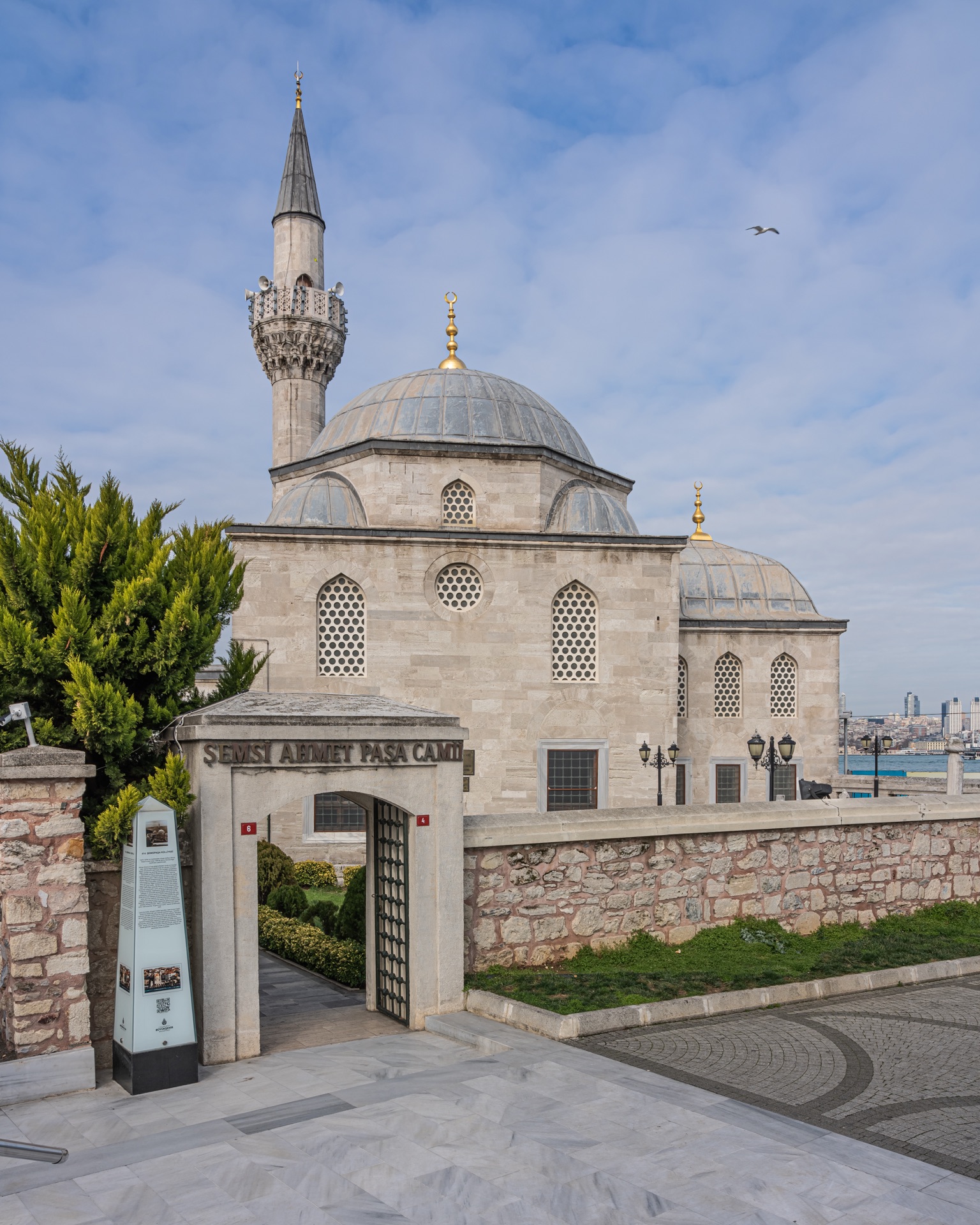
Right on the water in Üsküdar stands a building that proves Mimar Sinan didn't need a huge dome to completely command a place.
The complex arose in the late 16th century for Şemsi Ahmed Pasha, a high-ranking Ottoman statesman. Alongside the mosque, a madrasa and the founder's mausoleum belong to the complex. Famous above all, though, is a story everyone eventually hears: Şemsi Pasha is said to have asked Sinan to build a mosque on whose roof no bird would ever land. Sinan is said to have chosen an especially windy spot in response. A lovely story — but historically unproven.
- The Şemsi Pasha Mosque was designed by Mimar Sinan in the late 16th century.
- Its patron was Şemsi Ahmed Pasha, a high-ranking statesman at the Ottoman court.
- The small complex consists of a mosque, a madrasa, and a mausoleum.
- Its location right on the Bosphorus is central to its effect.
- The popular story that Sinan chose a spot where wind kept birds from landing on the roof isn't historically confirmed.
- The mosque has been restored several times and shaped by changes to the shoreline.
Who Was Şemsi Ahmed Pasha?
Şemsi Ahmed Pasha lived in the 16th century and served several sultans. He was a governor, a vizier, and belonged to the high-ranking court and administrative nobility. Like many Ottoman dignitaries, he wanted to earn religious merit through a foundation and permanently anchor his name in the cityscape.
Unlike a sultan or grand vizier with a huge endowment, though, he didn't have a monumental complex built. His plot in Üsküdar was limited and sat right on the water. Sinan therefore had to work on a small scale.
Why Sinan Built Small, Not Monumental, Here
Şemsi Pasha shows especially well that Mimar Sinan's quality didn't lie only in huge domes. The complex is compact, almost intimate, and sits right on the Bosphorus. This location, in particular, was a technical challenge. Moisture, wind, and limited building ground demanded architecture that worked not through sheer mass, but through proportion and precise placement. The mosque, the madrasa, and the mausoleum together form a small courtyard opening onto the water, without the overall complex losing its sense of enclosure.
Şemsi Ahmed Pasha was a high-ranking statesman, and his foundation wasn't meant to create a second Süleymaniye complex. Its scale suited the patron's rank and function. Sinan therefore developed a solution where almost every metre counts. The building feels present from the water, even though it's very small next to the city's great mosques. That's perhaps the real architectural point here: monumentality arises not through size, but through the precise relationship between the structure, the shoreline, and sightlines.
The founder's mausoleum, too, is closely integrated into the mosque. Death, prayer, and foundation sit directly next to one another spatially. For an Ottoman patron, that made sense: the mosque was meant to keep being used after his death, prayers were meant to be spoken, and the foundation was meant to preserve his name in public space. Anyone sitting there today, watching the ferries go by, therefore experiences a very peaceful place whose original function was, at the same time, strongly tied to memory and lasting social use.
This is precisely where Sinan's strength shows. Architectural quality doesn't automatically depend on square metres. The mosque has a compact domed prayer hall, a small courtyard, and closely connected functional areas.
Its proportions are set so that nothing feels accidental. The founder's mausoleum sits in immediate proximity to the prayer hall. The madrasa frames the courtyard, creating a calm interior space even though one of Istanbul's most vibrant waterways runs right outside.
Its Location Right on the Bosphorus
Hardly any mosque stands so naturally by the water. From the promenade in Üsküdar, it's only a few metres to the Bosphorus. Historically, the coastline lay somewhat differently than it does today, but the relationship to the water was central from the start.
This location, of course, brought problems. Moisture, storms, floods, and changes to the shore put strain on the building. At the same time, this is exactly what makes the mosque unmistakable.
Inside, you can partly hear the city and the Bosphorus. This is no fully sealed sacred space, but a house of worship right in the middle of a port city's traffic.
Mosque, Madrasa, and Mausoleum
The complex includes a small madrasa, where students, or scholars, could be housed and taught. The courtyard ties together education and prayer.
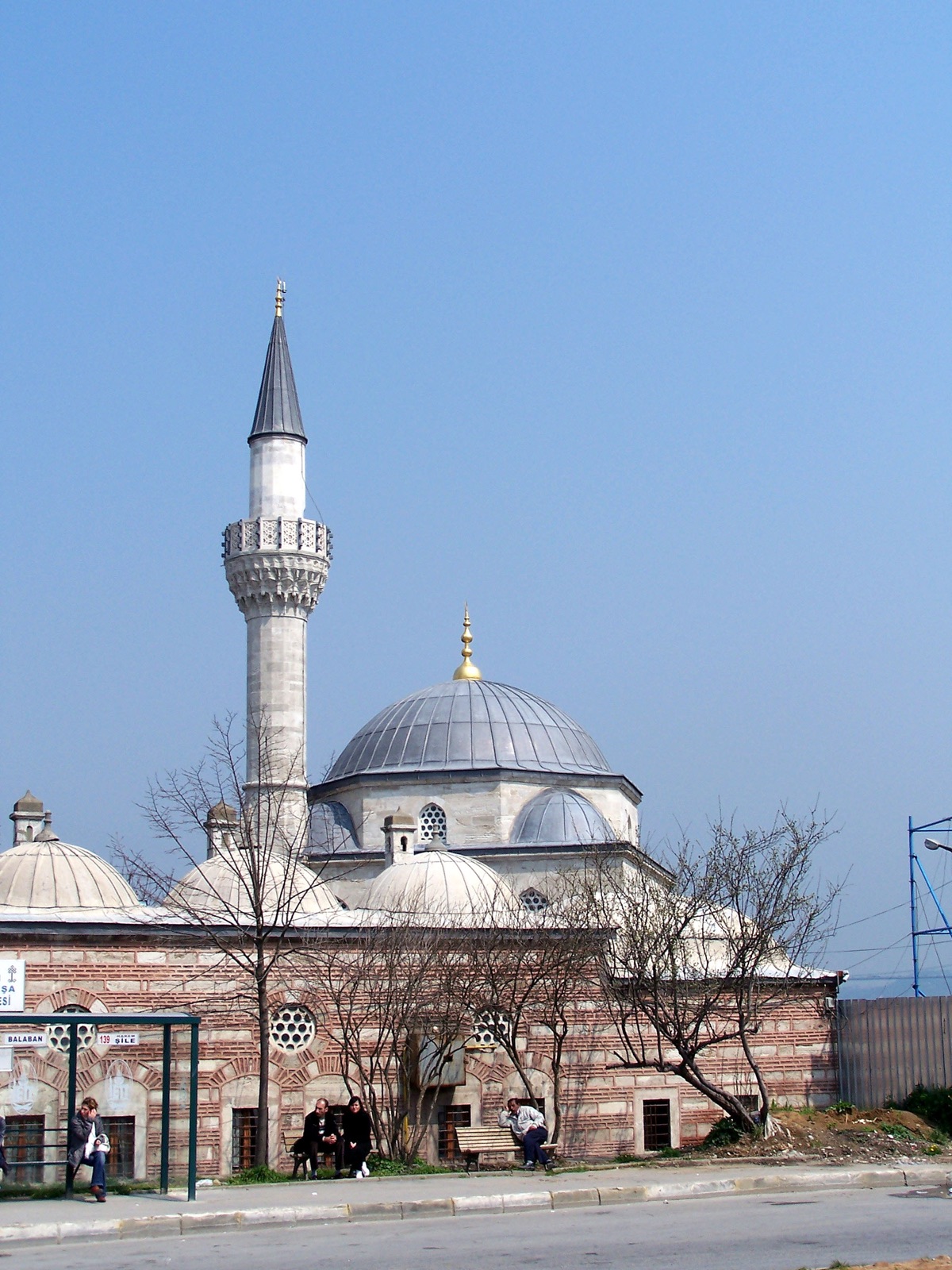
Şemsi Ahmed Pasha had himself buried in a mausoleum right next to the mosque. The patron thereby remained, quite literally, part of his own foundation. This closeness between grave and house of worship was common in Ottoman külliyes.
Its compact layout means you can walk around the entire complex in a few minutes. Still, it's worth taking your time, because its effect comes less from individual spectacular objects than from proportion, light, and setting.
The Famous Bird Story
The best-known anecdote claims Şemsi Pasha asked Sinan whether there was a spot where birds would never land. Sinan is said to have then chosen the extremely windy point on the Bosphorus. As a result, the mosque supposedly still isn't soiled by birds today.
Sometimes the story gets embellished further: Şemsi Pasha is said to have made a bet with another dignitary whose mosque was constantly soiled by birds, and therefore demanded a "bird-free" mosque.
The problem is: there's no solid contemporary source for this lovely story.
Sinan's Late Work and the Art of Restraint
The Şemsi Pasha Mosque arose at a time when Sinan had long since proven he could build monumentally. The Süleymaniye had stood for decades; the Selimiye in Edirne was complete. That's exactly what makes this small project interesting: Sinan no longer had anything to prove.
Instead of scale, he relied on relationship. The courtyard is proportioned so that the mosque, madrasa, and mausoleum speak to one another. Openings frame the Bosphorus, and the low buildings let in light and wind. The complex therefore doesn't feel like a scaled-down version of a great mosque, but like its own building type.
Works like this matter for architectural history, because they show that a master shouldn't be judged only by his largest projects. Small commissions force precision. An error in proportion or circulation would be immediately visible, since nothing is masked by monumentality.
Üsküdar as a Religious Port City
The mosque stands in a district that functioned for centuries as Istanbul's Asian gateway. Pilgrims, merchants, and officials arrived here, or set off from here toward Anatolia. Numerous mosques, fountains, and foundations therefore arose along the coast.
Şemsi Pasha was part of this religious and urban landscape. A traveller could pray before the crossing, a resident of the district could use the madrasa, and the founder himself could be buried in his mausoleum. The complex thus tied together very different phases of life and groups of users.
Today, the context is more modern, but the basic principle remains visible. Ferries dock, people hurry to the metro or the bus, gulls circle over the water — and right next to it all, a quiet prayer space remains.
Why the Bird-Free-Roof Legend Works So Well
The story works so well because it stages Sinan as a brilliant problem-solver. A pasha sets a seemingly impossible task, Sinan studies the wind and the sea, and finds the perfect spot. Such stories exist about great architects across many cultures. They condense complicated technical competence into one single, easily remembered punchline.
Historically, though, they're dangerous if they crowd out all real planning. Sinan's actual achievement was far less fairy-tale-like, and precisely for that reason impressive: difficult ground, a limited plot, a waterside site, wind, and a complex spatial programme all had to be solved without modern calculation software. That needs no invented bet to be extraordinary.
A Place Where You See Sinan Change Scale
Anyone who visits the Süleymaniye first and Şemsi Pasha later in the same day gets almost a small lesson in Sinan. At the Süleymaniye, he organises an entire hilltop crown, huge domes, and a monumental foundation complex. In Üsküdar, he works with a handful of buildings and a very small plot. Yet, in both cases, you recognise the same care for pathways, proportions, and sightlines.
That's exactly why this mosque is worth visiting even for people who, after several great domed buildings, are starting to feel like every mosque looks similar. Here, it becomes visible just how differently Ottoman sacred architecture could respond to patron, site, and function.
What to Look at Deliberately on Site
Stand in the small courtyard for a moment, and don't look straight at the Bosphorus right away. First, notice how the madrasa frames the space, and how close the mausoleum sits to the mosque. Then take a few steps toward the water. Only then do you notice how precisely the architecture opens up the view.
Inside, its calm overall effect is worth more than searching for one single spectacular artwork. Şemsi Pasha is no place where you tick off ten famous objects from a list. The real "star" here is the relationship between a small space and the huge water outside.
Restoration, and the Risk of "Improving" a Small Building
Small historic complexes, in particular, react sensitively to modern interventions. A new promenade, a taller railing, additional lighting, or technical installations can alter proportions more strongly than at a huge complex. At Şemsi Pasha, then, any redesign of the shoreline automatically changes the mosque's effect too.
Restoration here has to do more than replace broken stone. It has to reconcile water, moisture, earthquake risk, visitor traffic, and heritage protection all at once. At the same time, the complex shouldn't end up looking like a freshly built theme-park model.
When a historic site looks "too perfect" after a restoration, visitors quickly forget it's several centuries old. Good heritage preservation, then, is allowed to let age remain visible, as long as the substance stays protected.
"No bird ever lands on the Şemsi Pasha Mosque." Obviously false. Look long enough and you'll find birds. The Bosphorus is full of gulls.
"Sinan deliberately chose the site because of a bet with Şemsi Pasha." A popular legend, but not historically confirmed.
"The mosque is one of Sinan's smaller works." Fact. That's exactly why it's often cited as an example of how carefully Sinan worked even at small scales.
Earthquakes, Shoreline Changes, and Restorations
Like almost all of Istanbul's historic buildings, Şemsi Pasha too was altered by earthquakes and repairs. Its direct waterside location, in particular, repeatedly required protective measures.
In the 20th and 21st centuries, parts were restored, and the design of the promenade also affected the relationship between the mosque and the Bosphorus. Such measures regularly raise the question of how much modern infrastructure a historic site can bear without losing its original spatial effect.
My Thought on This Place
I find this mosque beautiful precisely because it doesn't need to prove anything. It's not huge, it has no six minarets, and nobody needs to walk a hundred metres back to fit it in a photo. It simply sits right on the Bosphorus, feeling as though this exact small corner was made for it.
And the bird story? I still like telling it — but with the note that it's a legend. Otherwise, someone eventually stands in front of the mosque for twenty minutes, sees a gull fly onto the roof, and thinks I lied to them.
– Amra