
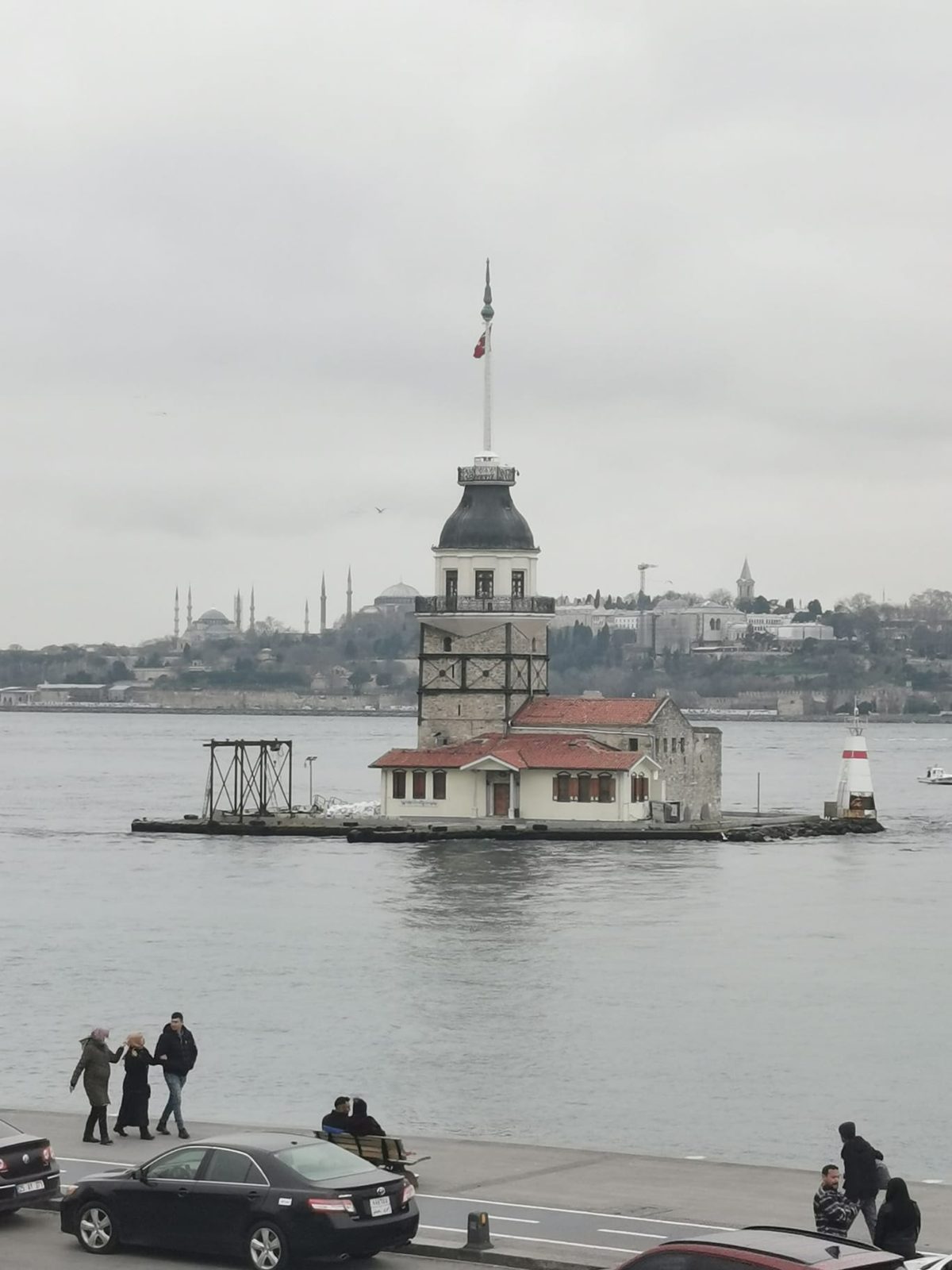
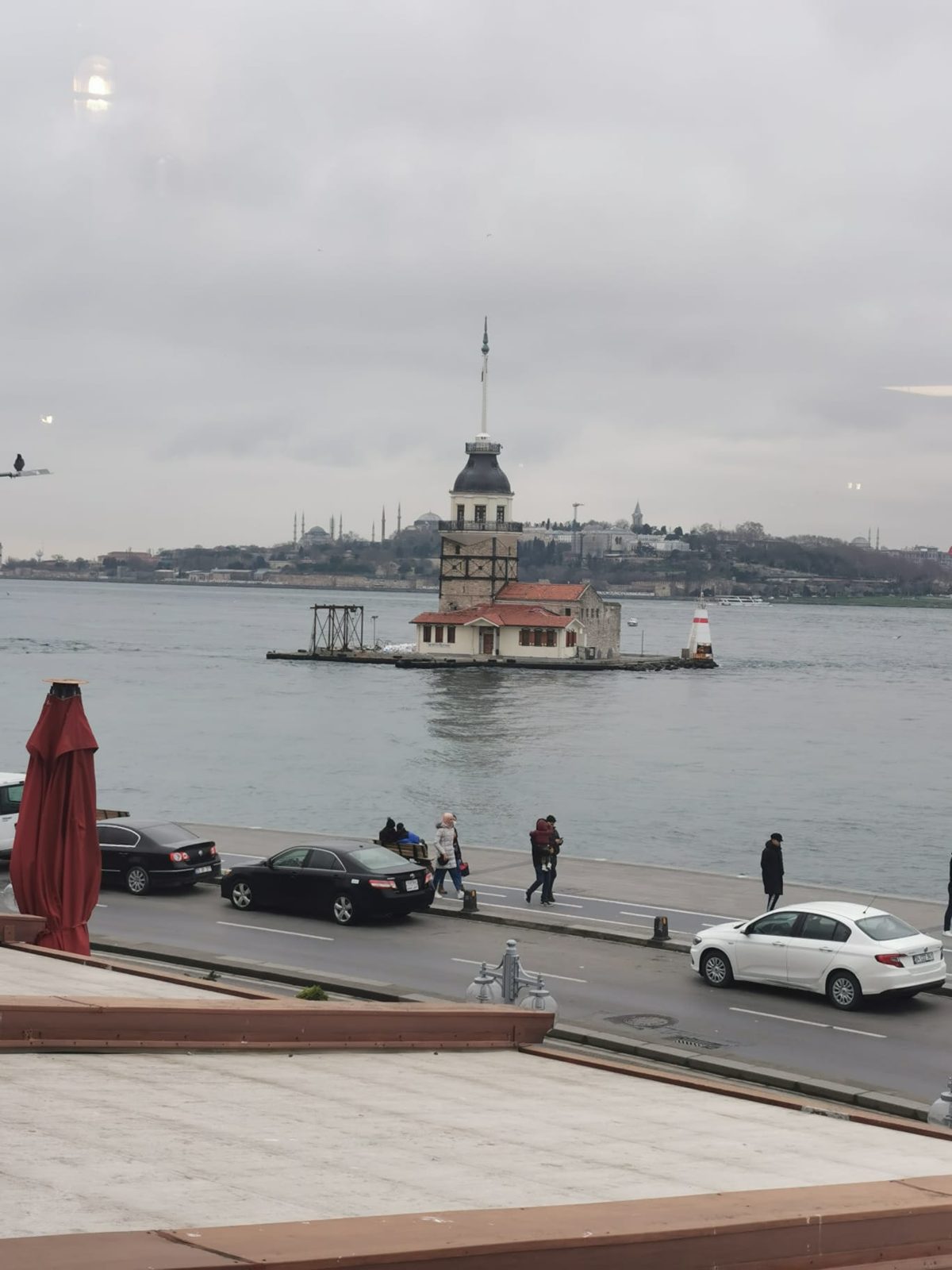
Right in the middle of the Bosphorus, just a few hundred metres off Üsküdar, stands a tower that actually looks small compared to Istanbul's huge mosques and palaces. Yet you spot it immediately. It's precisely this setting that makes Kız Kulesi — usually called the Maiden's Tower or Leander's Tower in English — one of the city's most powerful images. Anyone travelling by ferry between the European and Asian sides keeps encountering it. It doesn't just stand by the water — it stands in the water, giving it the feel of its own small point between two continents.
Advertising: If you book through our links, we may receive a commission – at no extra cost to you.
Right in the middle of the Bosphorus, just a few hundred metres off Üsküdar, stands a tower that looks small yet is one of Istanbul's most powerful images. Its history is considerably more complicated than the famous legend of the princess and the snake.
Its history is considerably more complicated than the famous legend of the princess and the snake. Various military and maritime facilities have existed on the rock, or islet, since antiquity. The Byzantines used the site to control shipping traffic. Ottoman rulers rebuilt the tower several times. It served as a lighthouse, a checkpoint, a quarantine station, and, at times, other public functions. Today's appearance is therefore the result of many rebuilds and restorations.
- Kız Kulesi stands on a small rock off Üsküdar, in the Bosphorus.
- The site was already used to control shipping traffic in antiquity and Byzantine times.
- The visible tower was destroyed, repaired, and rebuilt several times over the centuries.
- In Ottoman times, it served, among other things, as a lighthouse and checkpoint.
- In the 19th century, it was also used in connection with quarantine measures.
- The story of the sultan's daughter bitten by a snake despite every precaution is a legend.
- The Western name "Leander's Tower" rests on a different ancient love legend, actually set at the Dardanelles, later mistakenly attached to Istanbul.
Why This Small Rock Was Strategically Important
Its location off Üsküdar explains why the site kept being reused. Anyone wanting to control or mark Bosphorus traffic had an excellent position here. Across different eras, structures on the rock therefore served as an observation and checkpoint, a beacon, and later a lighthouse. Quarantine functions are part of its history too: at times when plagues could reach cities via ships, isolated checkpoints on the water were especially valuable.
This sober history actually makes Kız Kulesi even more interesting to me than the legend. The tower didn't need to be romantic to matter. It helped people spot ships, control disease, and manage access to the city. Only later did the layer of love stories, princesses, and postcard images settle over it.
The Bosphorus was never simply a beautiful waterway. It was one of the most important maritime links between the Black Sea and the Mediterranean. Anyone wanting to control shipping movements, collect tolls, or defend a capital had to watch the water.
The small rock off Üsküdar was ideal for that. From there, traffic near the Asian shore could be monitored. A customs or checkpoint is said to have existed in this area even in antiquity. The exact form of these early facilities, though, can't simply be equated with today's tower.
Byzantine Control on the Bosphorus
In Byzantine times, fortification and control structures existed on, or near, the rock. Some sources link the site to Emperor Manuel I Komnenos in the 12th century and a system meant to control the Bosphorus militarily. A chain is also mentioned, said to have been stretched between the tower and a point on the European side.
As with the Golden Horn chain, caution is needed here. Such barriers existed, but popular accounts like to turn them into a permanently unchanged system whose exact anchoring is known down to the last detail. The archaeological reality is more complicated.
What the Ottomans Made of the Tower
After 1453, the site remained strategically useful. The tower was renewed and rebuilt several times in Ottoman times. Fires, earthquakes, and its exposed position in the water repeatedly made repairs necessary.
Under different sultans, it took on different tasks. It could serve military signalling and checkpoint functions, but increasingly served as a lighthouse too. That fits Istanbul's development as a great port city, where more and more ships travelled the Bosphorus.
Lighthouse, Quarantine, and Shipping Traffic
In the 19th century, how disease was handled changed. States began more systematically checking arriving ships and passengers medically. Cholera and other epidemics made quarantine stations an important part of modern port administration.
Kız Kulesi, too, was used in this context for a time. The romantic tower thereby gained a very practical function: people and ships were meant to be checked before diseases could reach the densely populated city.
Later, its lighthouse function remained important. That shows how often the same site was put to new use, without its location ever changing.
The Legend of the Princess and the Snake
The best-known story about Kız Kulesi tells of a ruler who'd been prophesied that his beloved daughter would die from a snakebite on a certain birthday. To outwit fate, he's said to have taken her to the tower in the middle of the water, far from any snakes or danger. She was cared for and guarded there, until, of all things, a snake lay hidden in a basket of fruit or gifts. Its bite ultimately fulfilled exactly the prophecy her father had tried to protect her from.
I like this legend, because, like many old stories, it's not really just about a princess, but about the idea that you can't escape a predetermined fate. Historically, though, no such sultan's daughter can be confirmed. Even more importantly: the tower is considerably older than the Ottoman Empire, and variants of this story exist across different cultures. The version told today was gradually adapted to fit this Istanbul site.
The Western name "Leander's Tower" leads into a different legendary world too. It refers to the ancient story of Hero and Leander: Leander swims across a strait every night to his beloved Hero, who guides him with a lamp. When the light goes out one stormy night, he drowns. This tale, though, originally belongs to the Hellespont, today's Dardanelles — not the Bosphorus in Istanbul. European travellers later transferred the name onto Kız Kulesi. So the same small building today carries at least two great legends of love and death, neither of which necessarily happened here at all.
Historically, the site was far more sober, and, at the same time, almost more interesting. The small rock, or island, off Üsküdar was used over the centuries to control shipping, as a beacon, for military purposes, quarantine, and other functions. Buildings were destroyed, renewed, and rebuilt. The romantic little tower we photograph today is therefore the result of a long series of uses and reconstructions — not the unchanged backdrop of a single ancient princess story.
Now, to the story everyone's probably heard at some point. A sultan, or king, is told a prophecy that his beloved daughter will die from a snakebite on her 18th birthday. To outwit fate, the father has a safe home built for her on the tower in the middle of the water. No snake, supposedly, could reach her there.
The princess is cared for, but lives cut off from the world. When her 18th birthday arrives, the danger seems to have passed. Then a basket of fruit, or gifts, is brought to her. A snake has hidden inside it. It bites the young woman, and the prophecy is fulfilled precisely despite every precaution.
The story is perfectly constructed: a person tries to prevent fate, and their own measures indirectly lead exactly there. That's why similar narrative patterns exist across many cultures.
This specific princess can't be historically confirmed.
Why Is It Also Called Leander's Tower?
The English name Leander's Tower leads to a completely different legend. In the ancient story, Leander swims across a strait every night to his beloved Hero, who guides his way with a lamp. On a stormy night, the light goes out, Leander drowns, and Hero takes her own life out of grief.
This story is originally set at the Hellespont, today's Dardanelles — not the Bosphorus in Istanbul. European travellers later transferred it onto Kız Kulesi. That's how the tower got a Western name that, geographically, actually belongs to the wrong love story.
The 21st-Century Restoration
Kız Kulesi has been restored several times in recent decades and used for tourism. The major restoration that began in 2021 and concluded in 2023, in particular, sparked debate. Parts of later concrete additions were removed, historical building phases examined, and the tower staged more strongly as a monument than as a restaurant.
Such work is difficult on a structure with so many rebuilds. Which state should you actually "bring back"? The Byzantine one, of which only limited structural traces are known? An 18th-century Ottoman state? The 19th century with its lighthouse function? Every decision favours one era.
That's why, with historic buildings, you should be cautious of the phrase "faithfully restored to its original state." Restorers work with sources, structural surveys, and historical images, but still have to make decisions. At Kız Kulesi, that's especially visible, because practically every generation knew the tower differently.
A Building as the City's Navigation Point
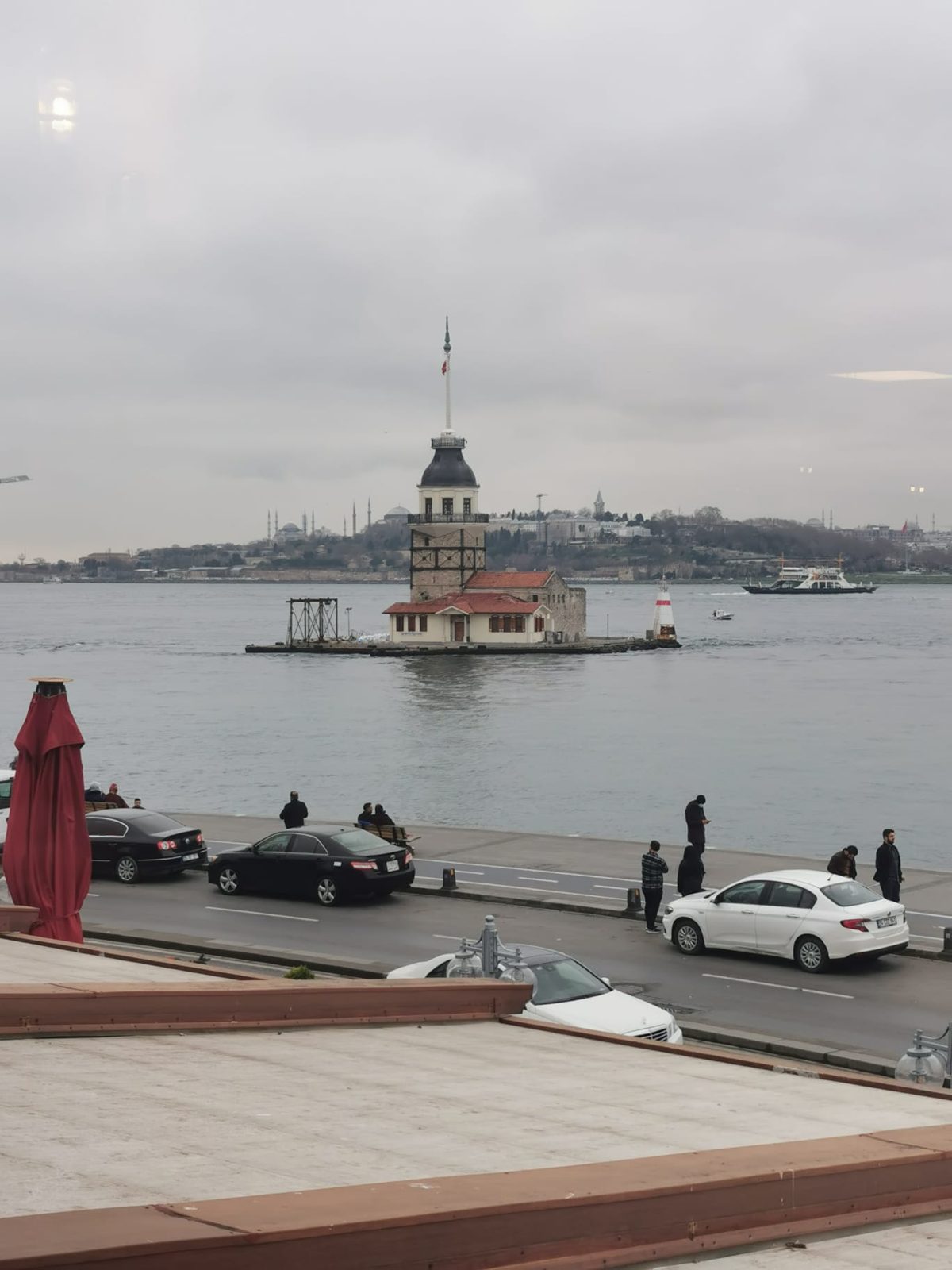
Kız Kulesi is also so powerful because it creates orientation. From the Üsküdar shore, it's instantly recognisable. From ferries, it marks proximity to the Asian coast. In photos with the historic peninsula or the Bosphorus Bridge, it sets a small but unmistakable foreground.
Buildings like this eventually become mental landmarks. You don't need to know their history to know: I'm here now. That's exactly why the tower appears so often in advertising, films, TV shows, and souvenirs. Its shape is simple enough to be recognised instantly, and its setting unusual enough that confusion is barely possible.
The Name "Maiden's Tower" and the Power of Legends
The Turkish name Kız Kulesi literally means Maiden's Tower, or Virgin's Tower. It's probably this very name that helped stories about a young woman take hold so firmly. People look for explanations for names, and a locked-away princess fits a small, isolated tower in the water perfectly.
Historically, legends often work exactly like this: the place exists first, and the story gets more and more embellished later. At some point, it feels so self-evident that visitors are disappointed when historians say: unfortunately, we can't confirm that. To me, that's no loss. A legend is allowed to stay beautiful, as long as it's clear that it's a legend.
"A sultan's daughter died here from a snakebite on her 18th birthday." A beautifully tragic legend, but not historically confirmed.
"Leander lived here." No. The ancient Hero-and-Leander story is set at the Dardanelles. The name was later transferred onto the Istanbul tower.
"Today's tower dates entirely from Byzantine times." False. The site is very old, but the structure itself has been destroyed, altered, and renewed many times.
What's Actually Historic About Today's Tower
Kız Kulesi was heavily altered especially in the 18th and 19th centuries. New building phases arose after fires and earthquakes. Modern restorations, too, intervened in its structure and surfaces.
Anyone looking at the tower today therefore isn't seeing an untouched medieval building. You're seeing a historic site with an architecture that brings several eras together. For a building standing in the middle of the Bosphorus, anything else would almost be more surprising.
How to Get to Kız Kulesi
The classic view is from the Üsküdar shore. From there, the tower is close enough to make out details while still seeing the European side in the background. Depending on current operations, boats run directly to the tower; routes and tickets can change and should be checked before visiting.
Great views also come from Kabataş, or from Bosphorus ferries. And even if you never cross over to it at all, Kız Kulesi is one of those buildings you keep running into "in passing" throughout an Istanbul stay.
- Here you'll find current Bosphorus cruises, dinner cruises and guided tours.
- View Bosphorus tours & tickets
My Thought on This Place
Whether I'm heading toward Üsküdar or Kadıköy, at some point, there it is. This small tower in the middle of the Bosphorus. Compared to the great mosques, palaces, and bridges, it's actually tiny — and yet its beauty somehow reaches every eye in the city.
I liked the story of the princess and the snake precisely because it's so mean. The father does everything to save his daughter. He even takes her out into the middle of the water, far from any snake — and in the end, the very snake hides inside a gift. Did it really happen? Of course, unconfirmed. But as a legend, it stays in your head.
And when I pass it, I still think less about the snake than about how incredibly Istanbul simply places images like this into everyday life. You're sitting on a ferry, drinking your çay, and right next to you, in the middle of the water, stands a tower people have been telling stories about for centuries. Just an ordinary Tuesday in Istanbul.
The Maiden's Tower is most beautiful seen from the water. Here are suitable Bosphorus tours.
– Amra