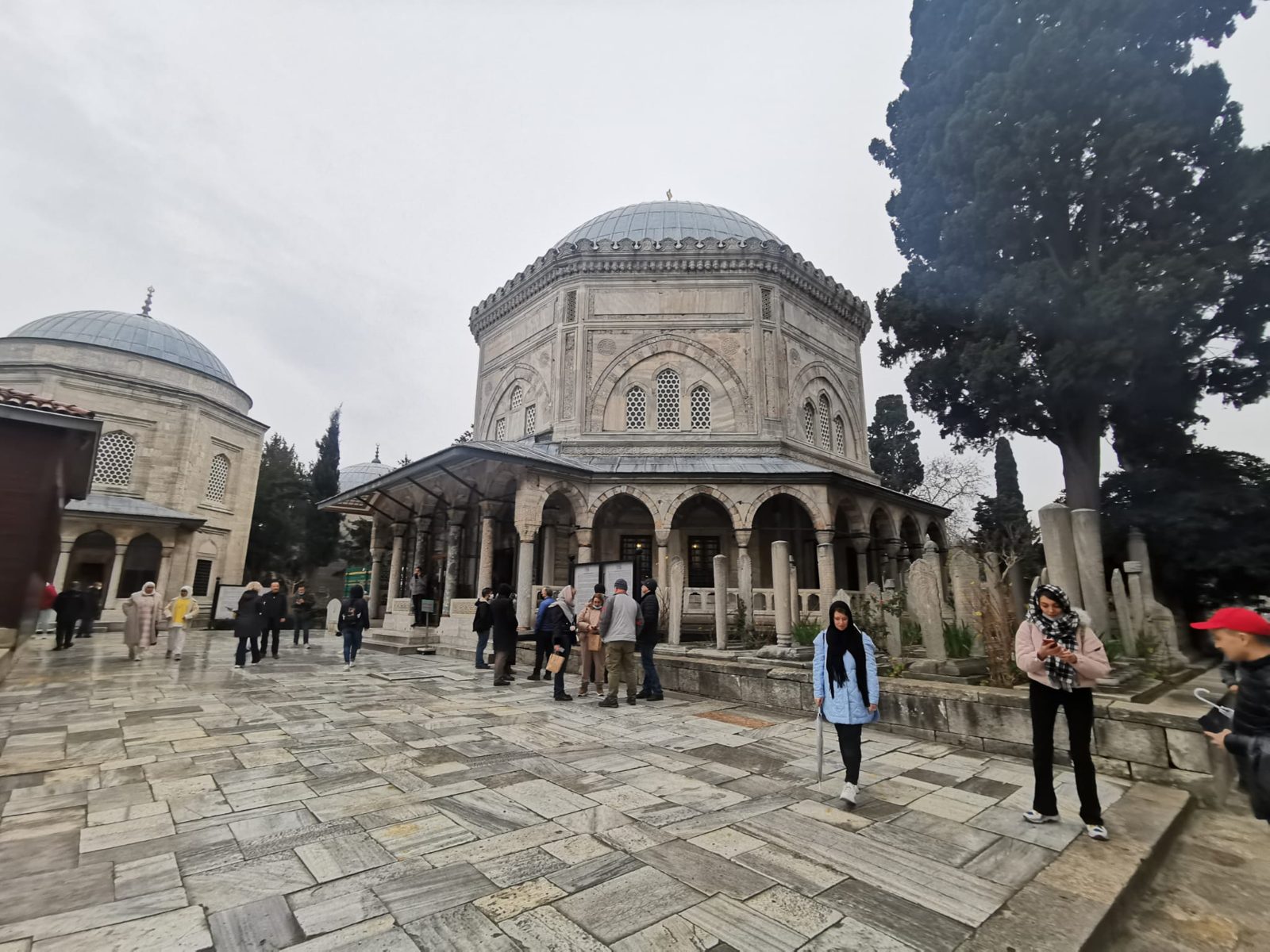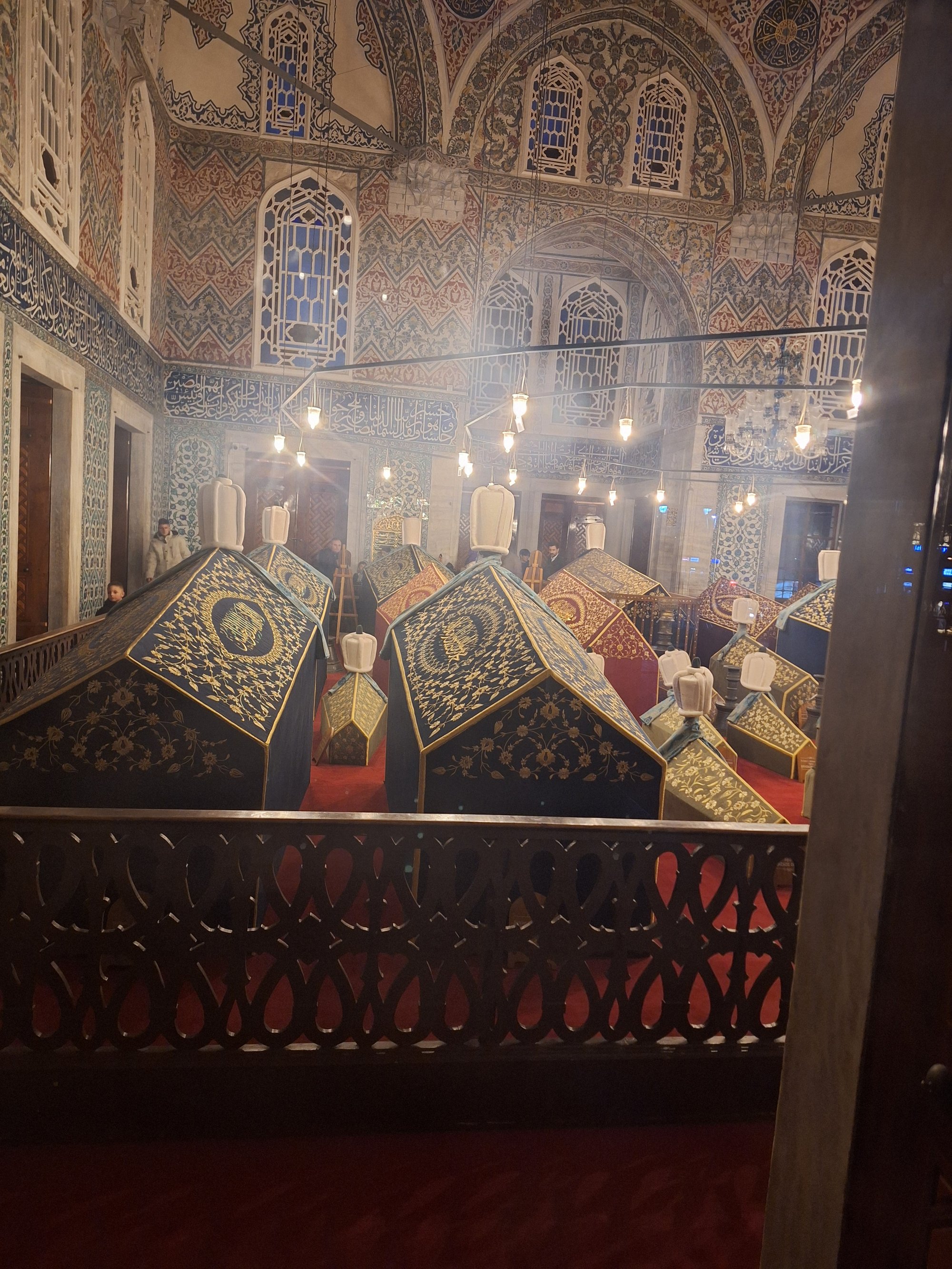

Just a few meters from Süleyman's mausoleum stands the türbe of Hürrem Sultan. Her closeness to the ruler's grave fits a woman whose rise permanently changed the Ottoman dynasty. Hürrem likely arrived at court as an enslaved young woman from Eastern Europe, became Süleyman's companion, the mother of several of his children, and eventually his lawfully recognized wife — an extremely unusual step for a reigning Ottoman sultan of this era.
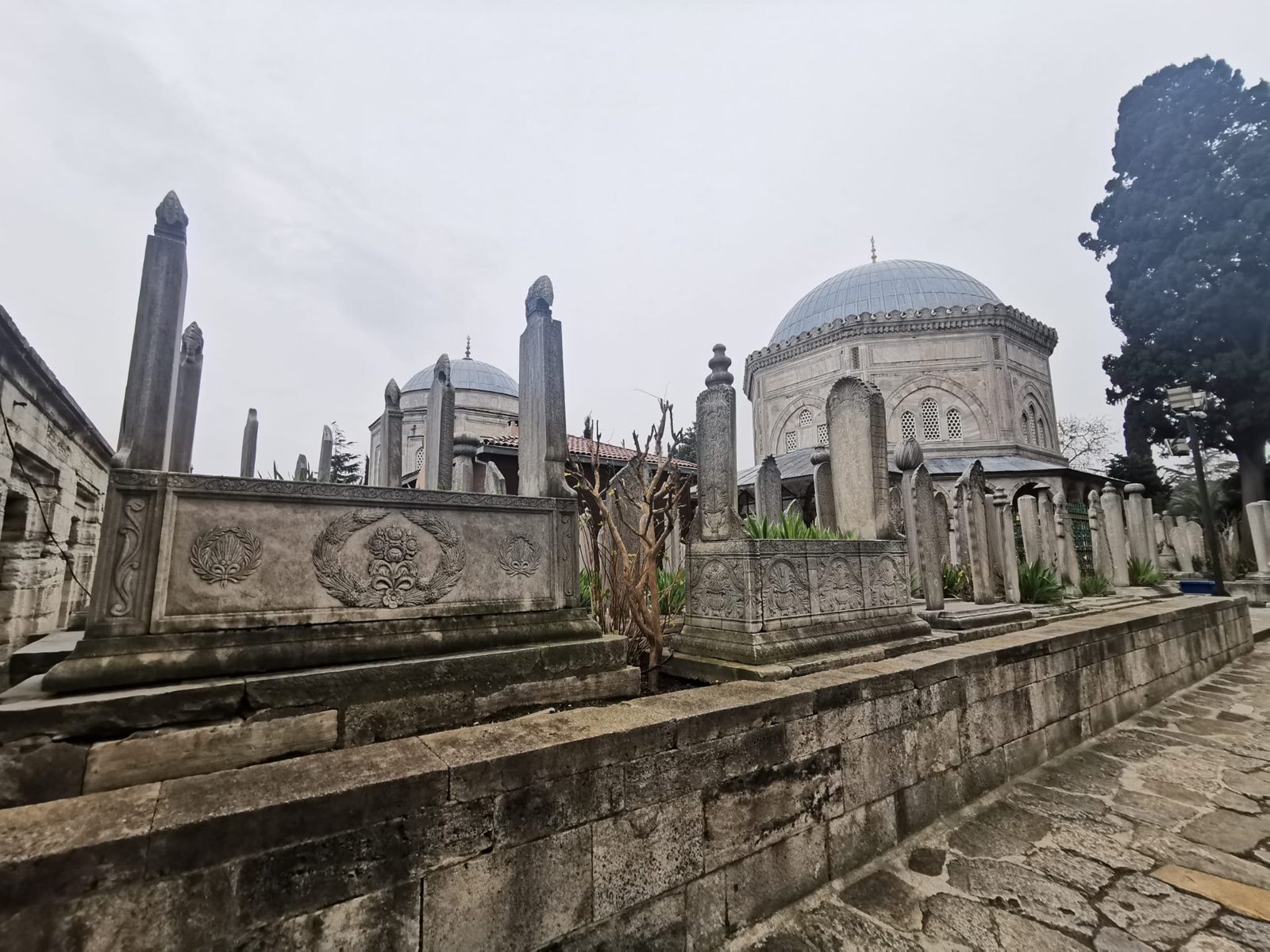
Just a few meters from Süleyman's mausoleum stands the türbe of Hürrem Sultan. Her closeness to the ruler's grave fits a woman whose rise permanently changed the Ottoman dynasty.
In popular stories she appears, depending on perspective, either as a brilliant political woman, a great lover, or a dangerous schemer who eliminated every rival. Both are too simple. Hürrem was undoubtedly power-conscious and politically active. At the same time, she lived within a dynastic system in which her children's future depended on succession struggles, and a lost power struggle could end in death.
- Hürrem was likely born around 1500 in Eastern Europe.
- She arrived at the Ottoman palace as an enslaved young woman.
- Under the name Hürrem, she rose to become Süleyman's most important companion.
- Süleyman officially married her — extraordinary for a reigning sultan of this era.
- Hürrem carried on political correspondence and endowed major social institutions.
- Her role in the death of Prince Mustafa is still debated today and shouldn't be told as a proven single-culprit story.
- She died in 1558, before Süleyman.
- Her own türbe stands right beside the Süleymaniye.
Where Hürrem likely came from
Western sources often call her Roxelana, a name pointing to origins in Ruthenia, or the area of today's Ukraine. Later traditions give names such as Aleksandra or Anastasia Lisowska. These details are popular, but not all of them are reliably documented from her own time.
She likely came from a Christian family in Eastern Europe and was enslaved during a Crimean Tatar raid. Through the slave trade she reached Istanbul and eventually the Ottoman palace.
This matters, because romantic TV versions easily let us forget that her path to court began with violence and unfreedom. That she later attained enormous power doesn't change this starting point.
How she reached the Ottoman court
In the harem, young women received training in language, religion, music, needlework, and courtly behavior. Only a small fraction ever came into closer proximity to the sultan at all.
Hürrem apparently stood out through intelligence, personality, and her relationship with Süleyman. Her Ottoman name, Hürrem, means roughly "the cheerful one" or "the smiling one."
She bore Süleyman several children. This already broke with an older dynastic custom, under which a sultan typically fathered only one son with a given woman, in order to keep competing mother-son households more clearly separated.
Why her relationship with Süleyman was unusual
Süleyman's bond with Hürrem lasted for decades. She eventually moved permanently into the political center of the court and held a position that went far beyond that of an ordinary concubine.
Letters between the two show a personal relationship that continued even during Süleyman's military campaigns. Hürrem wrote affectionately, reported on the family, and passed along political information.
This shouldn't be turned into a modern love story stripped of its power context. Both lived within a ruling house where marriage, children and succession carried political weight. Even so, the extraordinary personal closeness is clearly visible.
The marriage and the break with older custom
At some point in the 1530s, Süleyman officially married Hürrem. For a reigning Ottoman sultan, this was unusual, since the dynasty had long deliberately avoided regular marriages with powerful families, obtaining heirs instead through concubines.
The marriage further elevated Hürrem's status. At the same time, she remained close to the court, rather than moving to a province with a son as earlier princes' mothers had done.
These changes contributed, over the long term, to women of the dynastic household remaining more strongly present at the central palace. Out of this later developed the era historians call the "Sultanate of Women."
Hürrem as a political actor
Hürrem corresponded with foreign female rulers and politicians, including the Polish royal house. She conveyed diplomatic messages and was embedded in court networks.
Her power didn't rest on an official government post. She didn't sit as grand vizier in the Divan. Her influence arose from her closeness to Süleyman, her role as the mother of potential heirs, her own financial resources, and her endowments.
This very informal power is often described in older European reports as "intrigue." Comparable behavior by male court politicians tends to be called diplomacy or power politics instead. Still, it would be just as wrong to portray Hürrem as a completely innocent bystander because of this. She had interests, and she pursued them.
Prince Mustafa and the great question of guilt
Süleyman's eldest, widely popular son Mustafa was born to Mahidevran. He was long considered a strong candidate for succession. For Hürrem's sons, a victory by Mustafa potentially meant mortal danger, since a new sultan could have rival brothers killed.
In 1553, Süleyman had Mustafa summoned to his tent during a campaign and executed. The prince was accused of building a dangerous position of power, or of preparing treason.
Hürrem and her ally Rüstem Pasha are traditionally accused of eliminating Mustafa through manipulated information. It's plausible that both worked against him. The final decision, however, was Süleyman's own, and the sources don't allow for a simple detective-story reconstruction in which Hürrem alone steered the entire affair.
Hürrem's letters as a rare personal voice
One of the most fascinating sources on Hürrem is her letters to Süleyman. Of course such letters were composed within court conventions and partly assisted by scribes. Even so, they offer a rare glimpse of how she expressed her relationship. She wrote of longing, health, the children, and events at court.
These letters make her more tangible than the later European rumors. Diplomats often reported on the harem even though they themselves had barely any direct access. Information came through intermediaries and was shaped by political interests. A woman like Hürrem quickly became a screen for projection as a result.
That she became famous in European sources as "Roxelana" also shows how strongly Western observers emphasized her origin. For the Ottoman court, her name Hürrem mattered far more.
The Haseki endowment and public female power
Hürrem's Haseki complex in Istanbul was extraordinary, because it meant a woman of the court endowed a large social building complex. Mimar Sinan was involved in extensions. Mosque, madrasa, imaret and hospital combined religious representation with concrete provision for the needy.
In Jerusalem, Hürrem likewise financed a large endowment with a soup kitchen. Such endowments created lasting prestige and spiritual merit. At the same time, they made visible a woman who, according to the court's traditional spatial logic, actually lived within the private dynastic sphere.
Endowments were therefore a form of public politics. Hürrem didn't need an official post to influence cities through money and architecture.
Mahidevran, and the danger of pitting women against each other
Popular accounts often portray Hürrem and Mahidevran, Mustafa's mother, as personal arch-enemies. Competition between their sons was real, and rival networks existed at court. Even so, we know considerably less about their private encounters than TV series suggest.
The structural problem mattered more: had Mustafa become sultan, Hürrem's sons would have been potential rivals. If one of Hürrem's sons won instead, Mustafa's position was endangered. The system itself generated competition between mothers, because their children's survival was politically linked.
This perspective explains more than the image of two jealous women fighting out of personal dislike.
Why Selim II ultimately won
After Mustafa's death, Hürrem's sons Selim and Bayezid remained as the leading candidates. Hürrem died in 1558, before their conflict openly escalated. So she can't have personally steered the eventual outcome.
Selim and Bayezid received provinces, built up their own networks, and came into military confrontation. Süleyman ultimately supported Selim. Bayezid fled to the Safavids and was later handed over and killed. After Süleyman's death in 1566, Selim II ascended the throne.
This history shows that Hürrem's supposed "master plan" was by no means simply to safely make a particular son sultan. Even after Mustafa's elimination, the succession remained dangerous and open.
The türbe as an image of her standing
Hürrem's mausoleum doesn't stand off to one side somewhere. It sits directly within the Süleymaniye's burial ground, beside her husband's later grave. This spatial closeness is a permanent statement about her status.
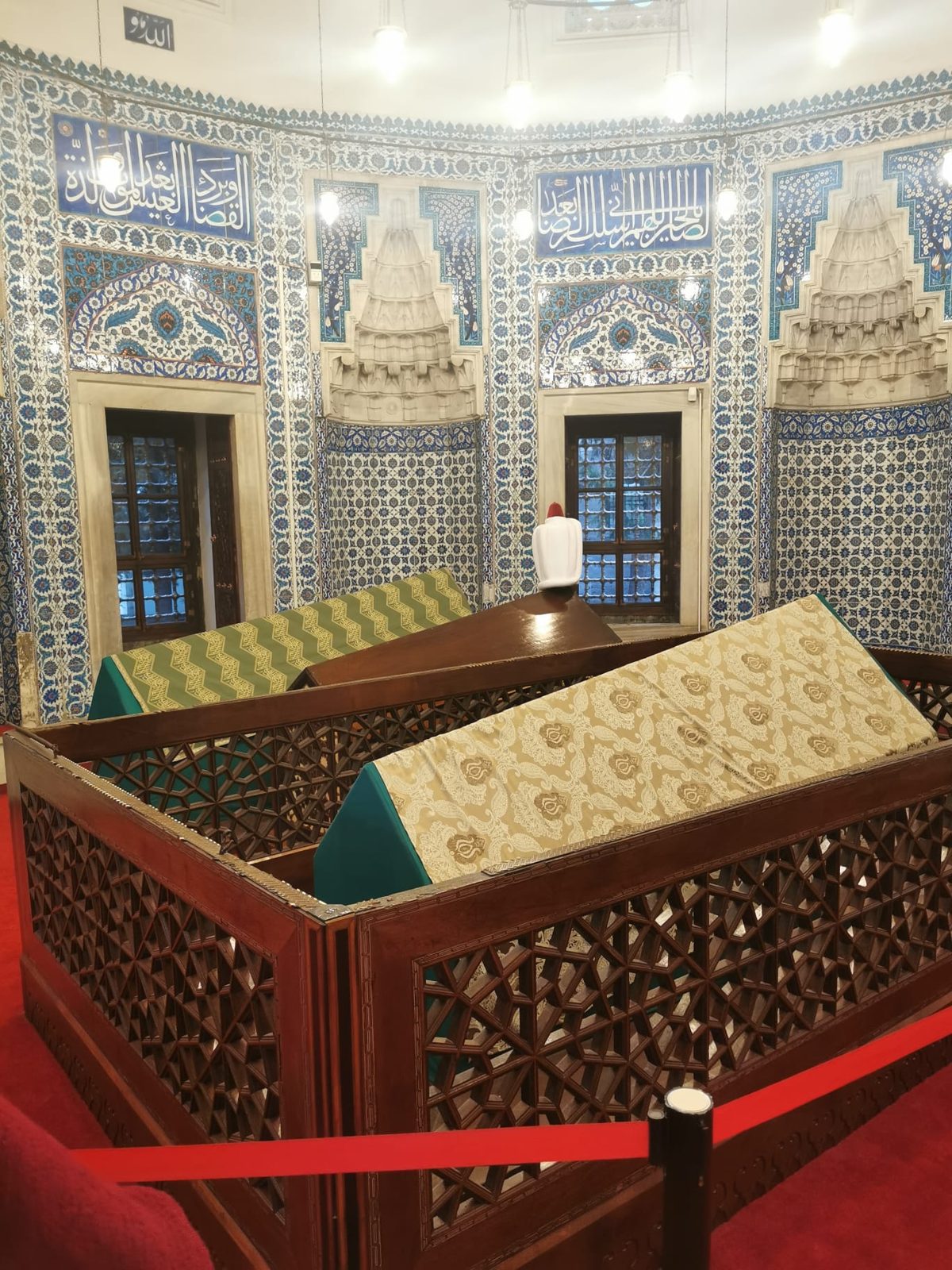
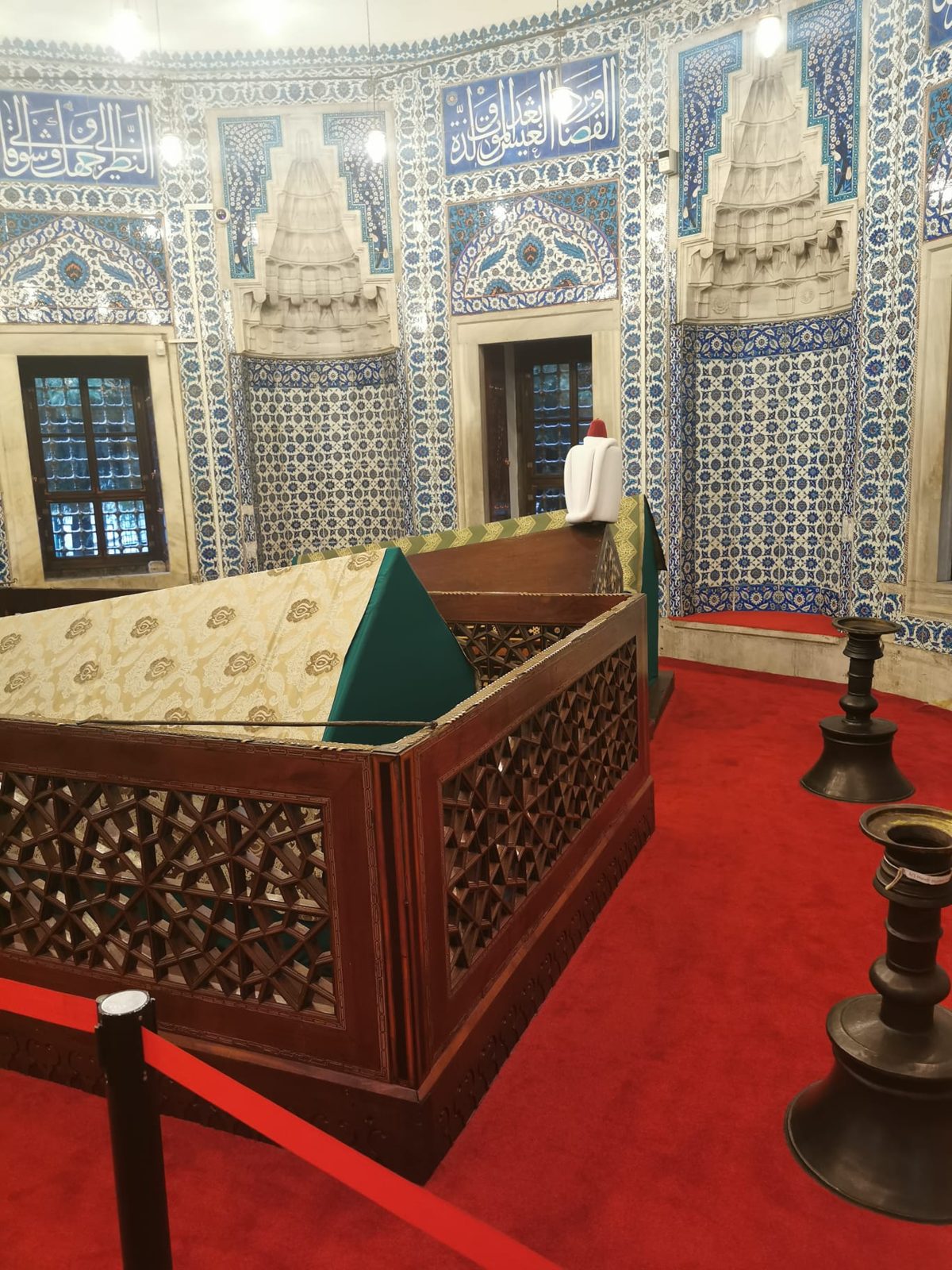
The tiles inside are among its most beautiful elements. Floral motifs and bright colors create a different impression than the stricter monumentality of some rulers' graves. Visitors, though, shouldn't make the mistake of automatically reading a "feminine style" into decorative flowers. The furnishings follow high-quality Ottoman art traditions and religious funerary architecture, not modern gender clichés.
Hürrem's image in Europe
European diplomats were fascinated that a former slave gained such great influence over Süleyman. Because they had almost no direct access to the harem, rumors circulated especially quickly. Hürrem was portrayed as a sorceress, a schemer, or a seductive foreigner. Such reports often reveal at least as much about European ideas of women and the Ottoman court as about Hürrem herself.
The name "Roxelana" became, in Western texts, practically a literary figure in her own right. Plays, operas, novels, and later TV series kept shaping ever-new versions of her story. Some emphasize great love, others murderous ambition. Historical sources are more sober, and at the same time more fascinating: they show a woman with political correspondence, her own endowments, dynastic interests, and extraordinary closeness to the sultan.
Anyone visiting her mausoleum should therefore try to briefly leave these later figures outside. What lies there is not the TV-series Hürrem, and not the European "Roxelana" either, but a real woman of the 16th century whose life is only partly documented.
"Hürrem personally had Mustafa murdered." Wrongly phrased. Süleyman ordered the execution. Hürrem's influence and scheming are debated, but exact responsibility can't be reduced to a simple single-culprit story.
"She was a Russian princess." There's no reliable basis for that. She likely came from the Ruthenian region, but not from a ruling family.
"Süleyman married her purely out of political calculation." The sources show a long-standing personal bond; political significance and personal relationship weren't mutually exclusive.
Hürrem as patron
Hürrem used her position for extensive endowments. In Istanbul, she had the Haseki complex built, among other things, with a mosque, madrasa, soup kitchen and hospital. The Haseki Hürrem Sultan Hamam near the Hagia Sophia is likewise one of her best-known endowments.
Outside Istanbul, she supported institutions in Jerusalem and other cities. Such endowments were religious charity, but also public visibility. A woman without an official state post could, through them, permanently anchor her name in cities.
Death and mausoleum
Hürrem died in 1558, likely in her fifties. Süleyman outlived her by eight years. She was buried at the Süleymaniye and received her own mausoleum.
The türbe is decorated with high-quality İznik tiles. Floral motifs in particular create a strikingly bright interior. That she received her own funerary architecture right beside Süleyman's later mausoleum shows her extraordinary dynastic rank.

My take on this place
What I find most fascinating about Hürrem is how quickly people want to either love or hate her. To some she's the great romantic heroine; to others, the evil woman who manipulated men and had princes killed.
I believe her real story is more interesting once you take away these simple roles. She didn't begin her life at court freely, but learned to use the system extraordinarily well. She likely loved, she fought for her children, she did politics, and in doing so she lived in a world where a lost succession struggle could mean the death of her own sons.
That doesn't excuse every action. But it explains why court politics can't be judged like a modern family drama.
– Amra