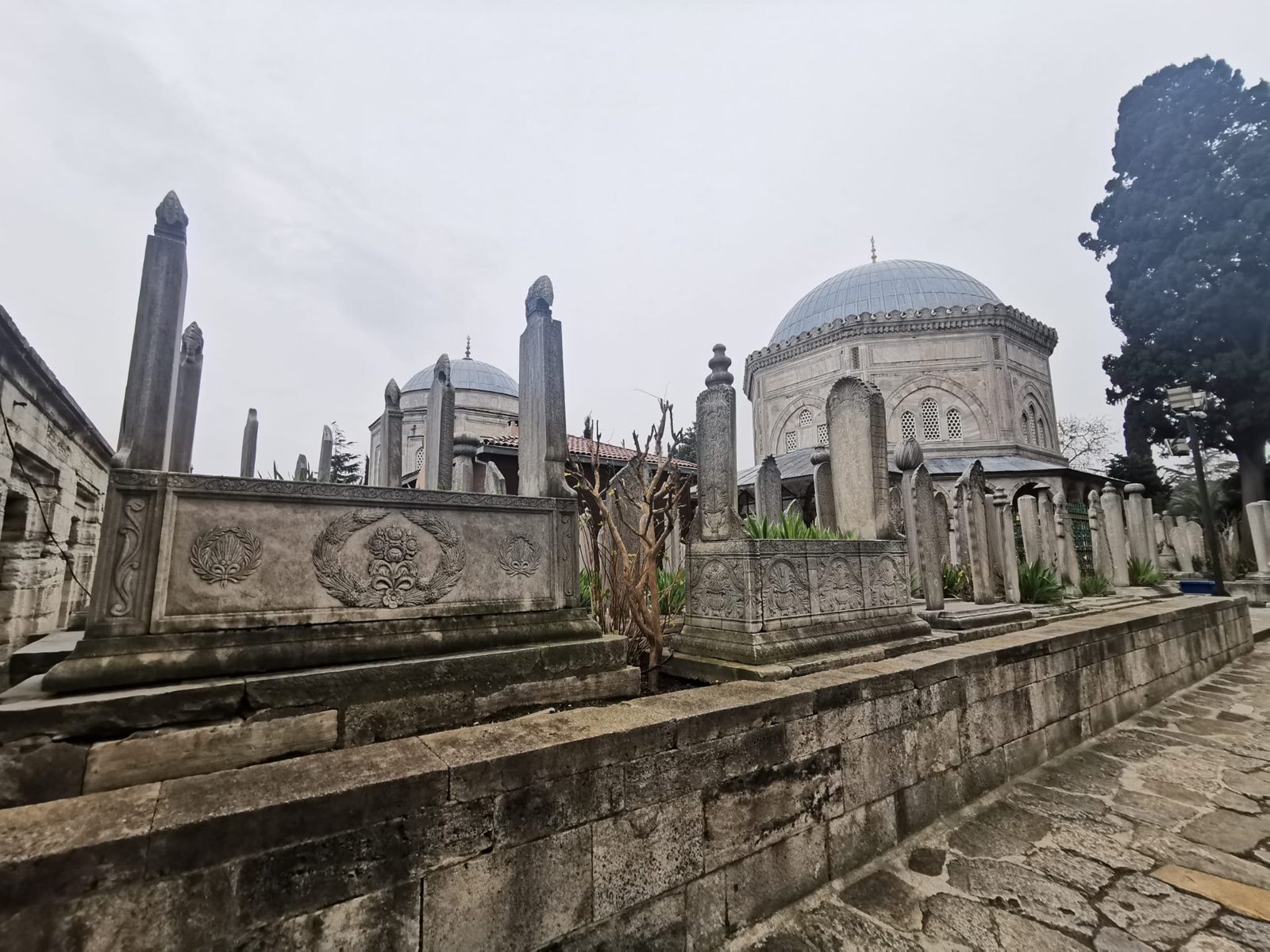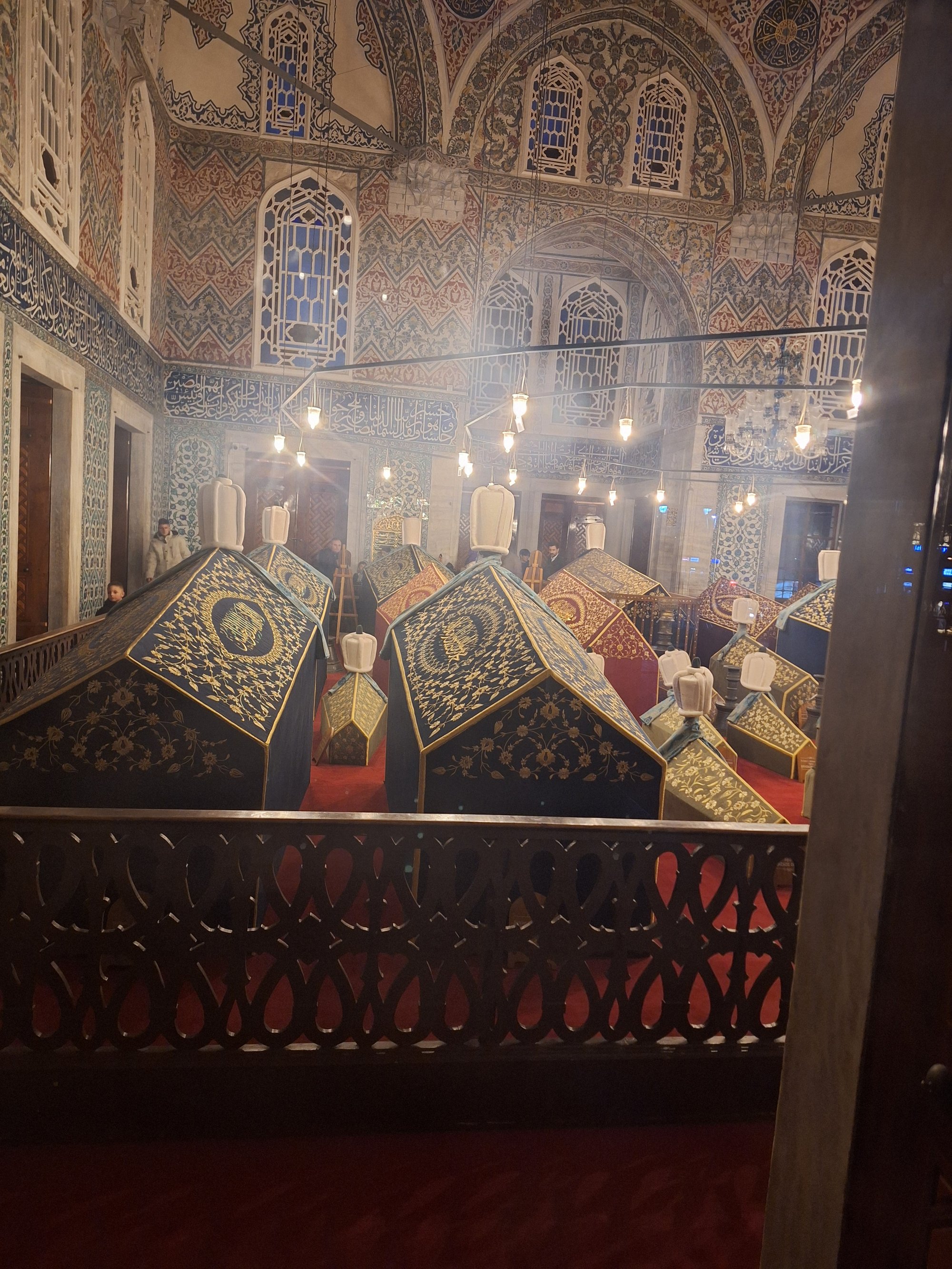

Behind the Süleymaniye Mosque lies a quiet garden with several graves. There stands the mausoleum of Sultan Süleyman I, the ruler under whom the Ottoman Empire experienced one of its greatest political, military and cultural eras in the 16th century. In Europe he was called "Süleyman the Magnificent"; in Ottoman tradition, mainly Kanuni, the Lawgiver.
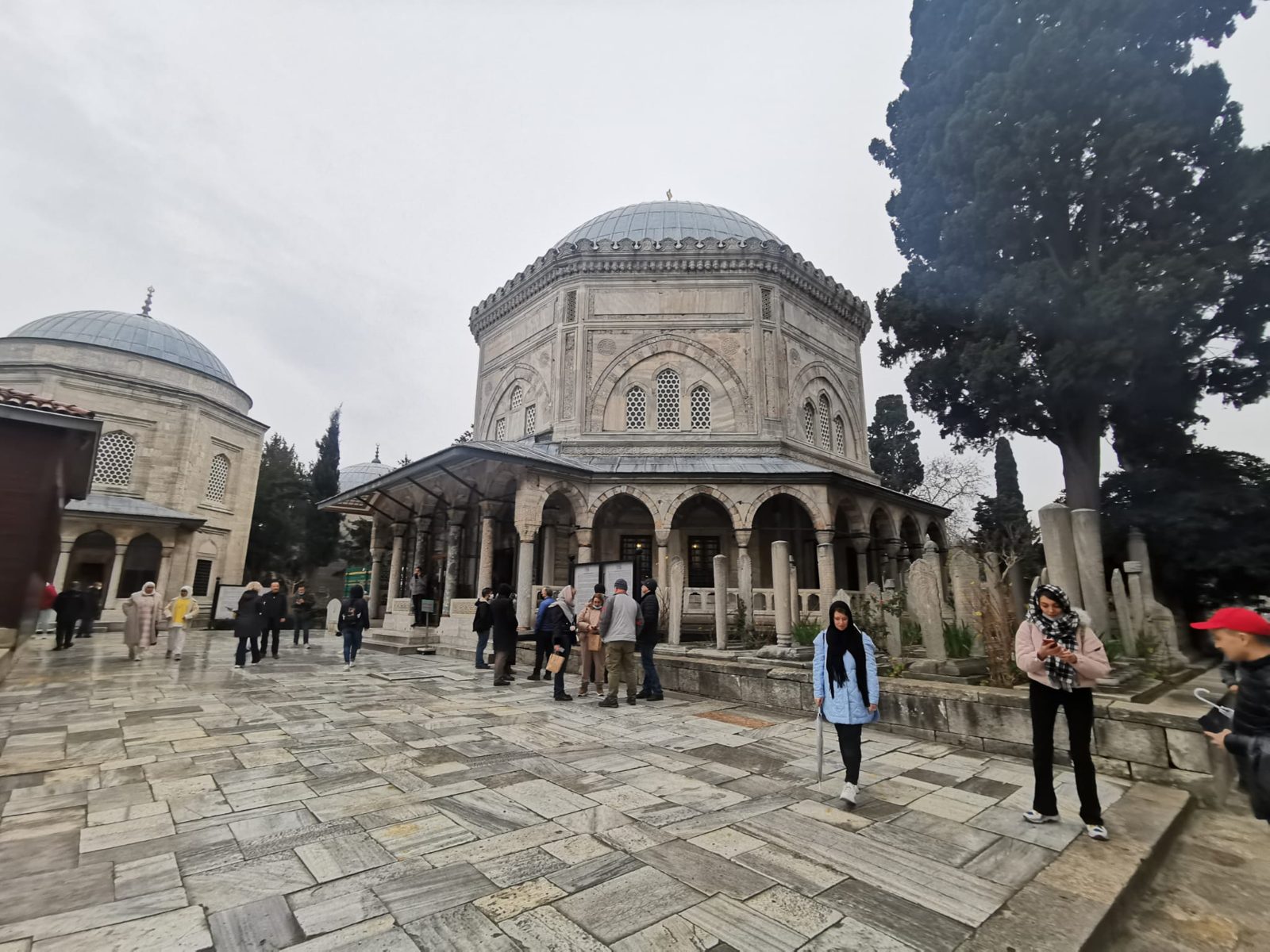
Behind the Süleymaniye Mosque lies a quiet garden with several graves. There stands the mausoleum of Sultan Süleyman I — the ruler under whom the Ottoman Empire experienced one of its greatest eras.
Anyone standing before his grave, though, encounters more than just a famous sultan. The mausoleum also tells of dynastic memory, religious architecture, and the question of how a ruler continued to be staged even after death. Especially interesting, too, is that Süleyman didn't die in Istanbul. He died in 1566 during the siege of Szigetvár in today's Hungary. His death was initially kept secret while the army finished the campaign.
- Süleyman I reigned from 1520 to 1566.
- Under him, the Ottoman Empire reached great territorial extent and cultural significance.
- He died in 1566 during the campaign against Szigetvár.
- His death was initially kept secret from large parts of the army.
- His body was brought to Istanbul and buried at the Süleymaniye.
- Parts of his internal organs were likely buried at the place of his death; numerous legends later grew up around this.
- His mausoleum was designed by, or under the direction of, Mimar Sinan's circle.
- Nearby stands Hürrem Sultan's own mausoleum.
Why Süleyman became so powerful
Süleyman ascended the throne in 1520, inheriting from his father Selim I an empire that had shortly before integrated Syria, Egypt, and the holy cities of Mecca and Medina into its domain. This gave him enormous resources and a strategically expanded starting position.
Under Süleyman, great campaigns followed into Central Europe, the Mediterranean, and against the Safavids in the east. Belgrade fell in 1521, Rhodes in 1522, and in 1526 the Ottomans defeated the Hungarian army at Mohács. In 1529, an Ottoman army reached Vienna, but couldn't take the city.
The empire also grew stronger at sea. Admirals such as Barbarossa Hayreddin Pasha made the Ottoman fleet a dominant power in the eastern, and at times central, Mediterranean.
Why he's called Kanuni
The Western epithet "the Magnificent" emphasizes splendor and power. In the Ottoman Empire, Kanuni, the Lawgiver, mattered more. Süleyman didn't simply create a completely new legal system, but had existing secular legal norms ordered, unified, and aligned with Islamic law.
The so-called Kanun regulated areas such as taxes, land, administration and criminal law, insofar as these weren't determined exclusively by Sharia. Süleyman's reign was later idealized as especially orderly and law-oriented as a result.
Of course, his empire was no modern constitutional state either. Punishments were harsh, social hierarchies taken for granted, and the sultan's power enormous. The epithet has to be understood in the context of the 16th century.
1566: death before Szigetvár
At over seventy years old, Süleyman went on campaign in person once more, to Hungary, in 1566. Among his targets was the fortress of Szigetvár, defended by Nikola Šubić Zrinski.
The siege lasted several weeks. Süleyman's health had declined, and he stayed mostly in the camp. On the night of September 6 to 7, 1566, he died, likely from natural causes tied to his advanced age and illness.
Shortly afterward, the fortress fell following a final sortie by its defenders.
Why his death was initially kept secret
The death of a sultan in the middle of a campaign could destabilize an army. Soldiers could grow restless, power struggles over succession could begin, and the enemy could have used the news for propaganda.
Grand Vizier Sokollu Mehmed Pasha therefore initially kept Süleyman's death secret. Accounts say the body was preserved and daily life in the ruler's tent continued as far as possible, until Selim II's succession was secured.
Individual dramatic details differ depending on the source. That the news was controlled for political reasons, though, is considered well documented.
What happened to the body
Süleyman's body had to be brought a long distance to Istanbul. To slow decomposition, internal organs were likely removed. These are said to have been buried near Szigetvár, while the body was brought to Istanbul.
An Ottoman memorial site, or türbe, was later built at the presumed spot. It disappeared after the Ottomans withdrew from Hungary. Modern archaeologists have been searching, or researching, for years for the exact location and have identified structures linked to the complex.
Süleyman as a father and political decision-maker
The magnificent public memory of Süleyman stands in stark contrast to the tragedies of his family. His son Mustafa was not the only child whose life was shaped by succession politics. Hürrem's sons Selim and Bayezid themselves fell into an open power struggle after Mustafa's death. Bayezid eventually fled to Safavid Persia and was handed over and killed in 1561, along with several of his sons.
So Süleyman lived through the succession question tearing his own family apart. From a state perspective, a clear heir was meant to prevent civil war. From a family perspective, that same logic meant a father approved or ordered the death of sons.
That makes his reign hard to judge with simple terms. A sultan could be, at once, a significant lawgiver, patron of the arts, religious founder, and responsible for political executions within his own family. History becomes poorer if we tell only one of these sides.
Why mausoleums were political
A ruler's grave is never merely private. Its location beside a great mosque ensured that worshippers and visitors regularly passed the grave. Prayers for the deceased sultan linked religious remembrance with dynastic memory.
The Süleymaniye itself dominated the city skyline. The mausoleum behind it made clear who had created this endowment. Even after death, the ruler remained spatially tied to his monument.
The türbe's architecture also conveys rank. High-quality tiles, calligraphy, and the carefully proportioned dome set it apart from ordinary graves. Even so, the space remains deliberately religious: the sultan isn't venerated as a god, but as a deceased Muslim who can be prayed for.
The question of Szigetvár and the vanished grave complex
The presumed burial of internal organs in Hungary later led to the construction of a dedicated Ottoman memorial site. After the end of Ottoman rule in the region, this complex disappeared from the landscape. Archaeological research in the 21st century has identified structures at Turbék likely connected to Süleyman's memorial.
That's fascinating, because it means a ruler has, in a sense, two memorial sites: the official dynastic burial place in Istanbul, and a second site of his death in Central Europe. Both tell different stories. Istanbul shows the sultan at the center of his empire; Szigetvár recalls an old ruler who died on his last campaign.
What the türbe reveals architecturally from the outside
The mausoleum building has a polygonal floor plan and a surrounding outer arcade structure. That makes it look almost like a small, standalone pavilion within the cemetery garden. Its decorative treatment is rich, but more concentrated compared to the mosque itself.
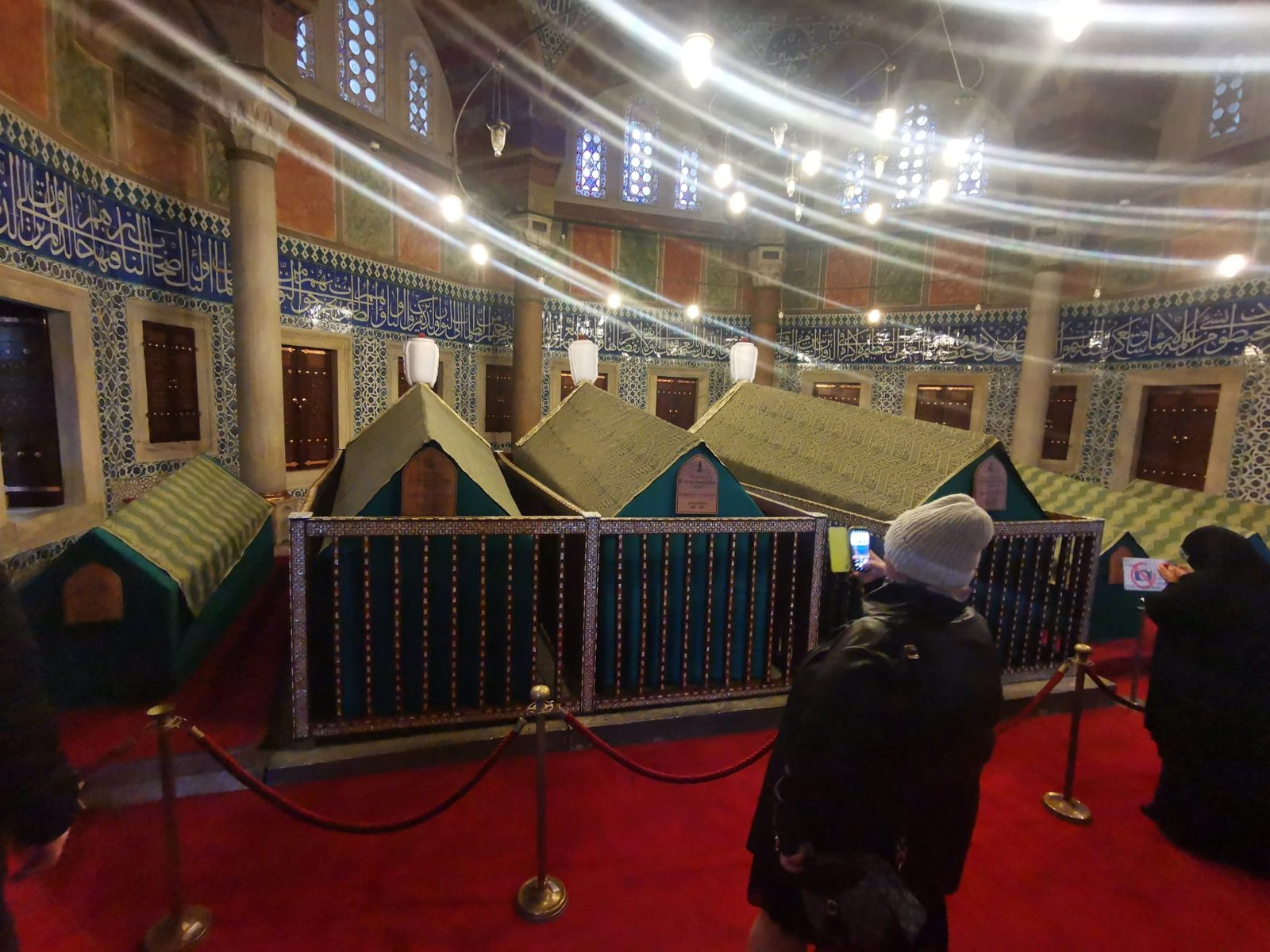
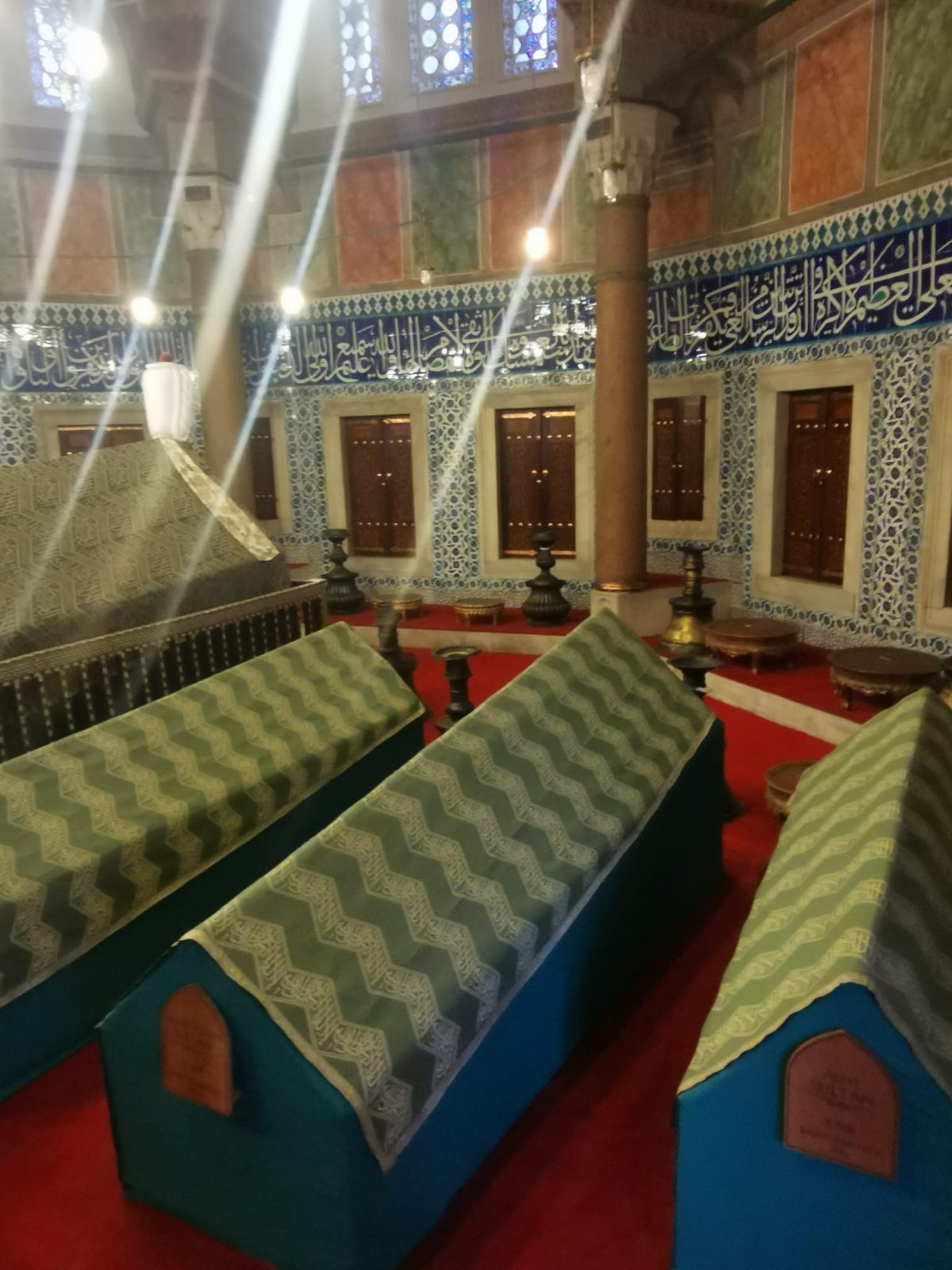
Inside, tiles and script draw the eye upward. Visitors should pay particular attention to the different grave markers. Not every visible sanduka belongs to the same period; the space was used as a dynastic burial site across generations.
How to visit such a place respectfully
Türbes are historic monuments, but for many people they're religious sites at the same time. Some visitors say prayers or recite Quranic verses. Photography shouldn't take priority over consideration for those who come there genuinely to remember and pray.
Especially with prominent rulers, the site attracts very different kinds of people: tourists, history enthusiasts, and worshippers. This multiple function isn't a problem, as long as you understand the mausoleum isn't just a museum set.
Süleyman's death and the succession of Selim II
That Süleyman's death was kept secret in the field camp had a very concrete dynastic reason. His surviving son Selim wasn't immediately present in the camp. The grand vizier had to prevent the army from growing restless, or other power groups from forming, before the new sultan could take control. In an empire without modern mass communication, a few days' head start on information could be decisive.
Selim II ultimately ascended the throne without a major war between brothers. That this succeeded, however, was the result of earlier violence: Mustafa and Bayezid were already dead. The seemingly "calm" succession of 1566 was only possible because the competition had already been eliminated beforehand.
This connection between personal family history and state stability is exactly what makes Süleyman's mausoleum historically so difficult for me. The man famed for order and law governed within a system that, precisely when it came to succession, often established order through family violence.
"Süleyman's heart definitely lies in a golden casket beneath a specific spot in Hungary." We don't know that with such certainty. That internal organs were buried on site is plausible; spectacular details were embellished later.
The mausoleum in Istanbul
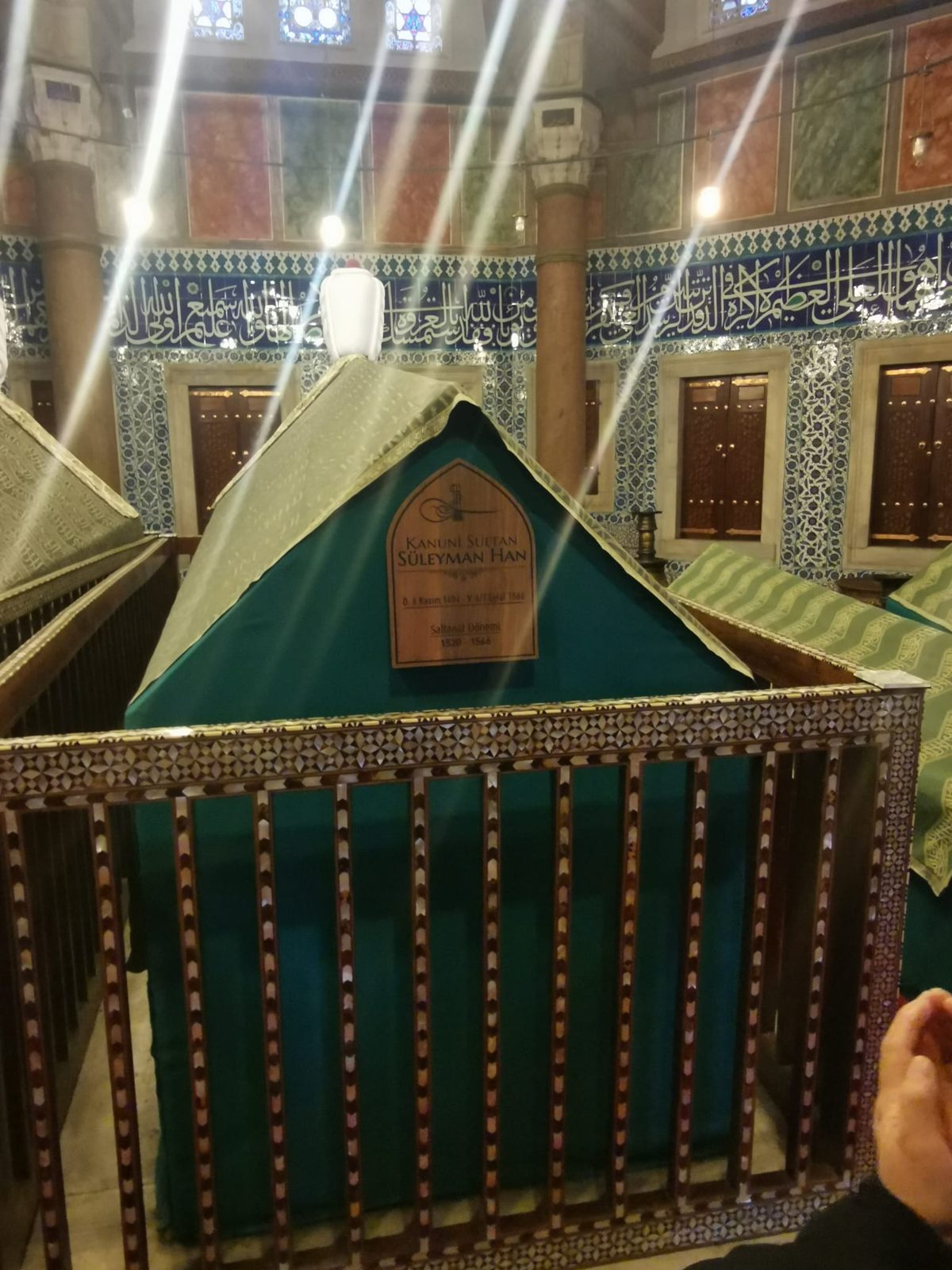
Süleyman was buried at his great endowment, the Süleymaniye. The mausoleum stands in a walled cemetery area behind the mosque. Its octagonal form, dome and decorative furnishings draw on Ottoman funerary architecture, but are especially elaborate for a sultan of his rank.
İznik tiles, calligraphy and colorful decoration create a space that is at once a burial site and a dynastic monument. Above the actual grave stands, as is customary in Ottoman türbes, a symbolic sarcophagus, or sanduka. The body lies beneath it, in the ground.
Who else is buried there
Alongside Süleyman, other members of the dynasty lie in the mausoleum, including later sultans and family members. Through this, the türbe became, beyond its original founder, a dynastic burial site.
Hürrem Sultan has her own mausoleum a few meters away. That her türbe stands separately underscores her extraordinary standing. She died in 1558, eight years before Süleyman.
Dynastic graves and my own unease
Mausoleums always trigger two feelings in me at once. On one hand, I have great respect for the place and for the people who pray there or remember its history. On the other hand, a cold shiver runs down my spine at some dynastic graves, especially when children or very young princes are buried there.
In the Ottoman ruling house, succession was, for centuries, an existential question. Under Mehmed II, killing rival brothers in the interest of state order was legally legitimized. In the 16th century, princes were executed repeatedly; not only a new sultan's brothers, but also sons whose political position became dangerous, could be affected. Süleyman himself had his son Mustafa executed in 1553, after suspecting him of treason, or of holding a dangerous position of power.
Such decisions can be explained politically, but that doesn't make them any less cruel. A dynastic system meant to prevent civil war kept producing family violence instead. Practice only changed more significantly from the early 17th century onward, when Ahmed I let his brother Mustafa live, and the seniority and Kafes systems spread afterward.
My take on this place
Süleyman controlled an empire spanning three continents. He waged wars, issued laws, had some of Istanbul's most beautiful buildings constructed, and was feared and watched by European rulers.
And in the end, he lies in a garden behind his mosque.
Maybe that's exactly why mausoleums move me. They reduce even the greatest power to the same final truth as any other person. Titles, armies and palaces stay outside. In the grave, only the human being remains, and what others remember about him.
– Amra