
If you ask in Kadıköy where to meet up, an animal comes up as the answer surprisingly often: at the bull. The large bronze statue at the Altıyol intersection is today so closely tied to Kadıköy that many people assume it's a local monument created specifically for this square. In fact, its history is international, and its journey through Istanbul longer than you'd expect.
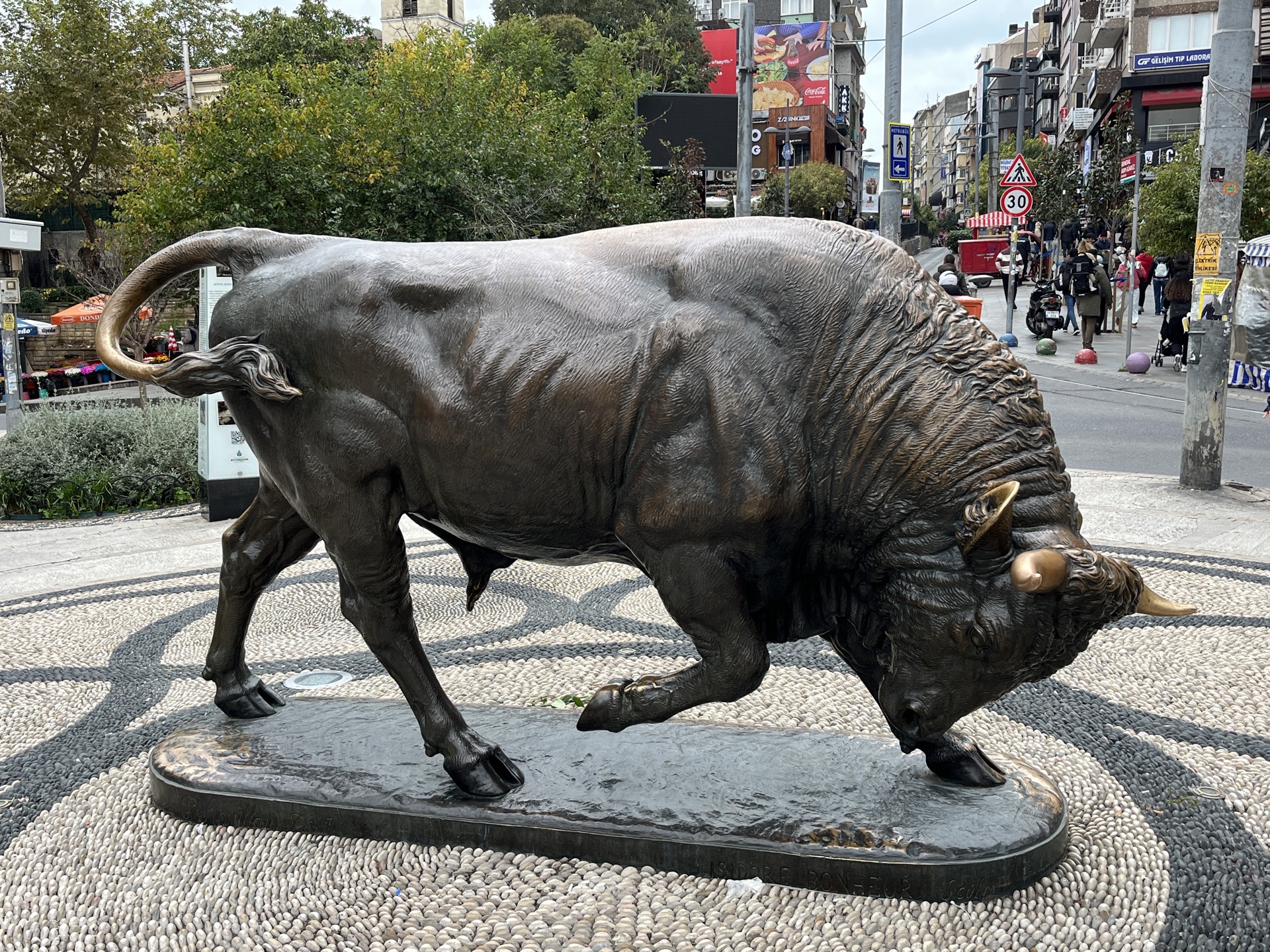
If you ask in Kadıköy where to meet up, an animal comes up as the answer surprisingly often: at the bull. The bronze statue at the Altıyol intersection was created in 19th-century France and traveled a long road through Istanbul before becoming the symbol of Kadıköy.
The sculpture was created in 19th-century France and later came into Ottoman possession. Before it reached its current location, it stood in several places. Only over time did a European artwork become an utterly natural symbol of Kadıköy. That's exactly what I find fascinating about urban culture: a landmark doesn't have to be a thousand years old. Sometimes it's enough that generations of people say, "let's meet there."
- The Kadıköy Bull is a 19th-century bronze sculpture.
- It wasn't originally created for Kadıköy.
- The statue is associated with the French sculptor Isidore Bonheur.
- Before its current location, it stood at several other squares in Istanbul.
- Since the 1990s it has stood at the Altıyol intersection.
- Today it's one of the most important meeting points and informal landmarks in Kadıköy.
Where the bull comes from
The sculpture is attributed to the French animal sculptor Isidore Bonheur, known in the 19th century for naturalistic bronze figures. Animal depictions were extremely popular in Europe at that time. Horses, bulls, deer, and hunting scenes were excellent subjects for showing strength and movement in bronze.
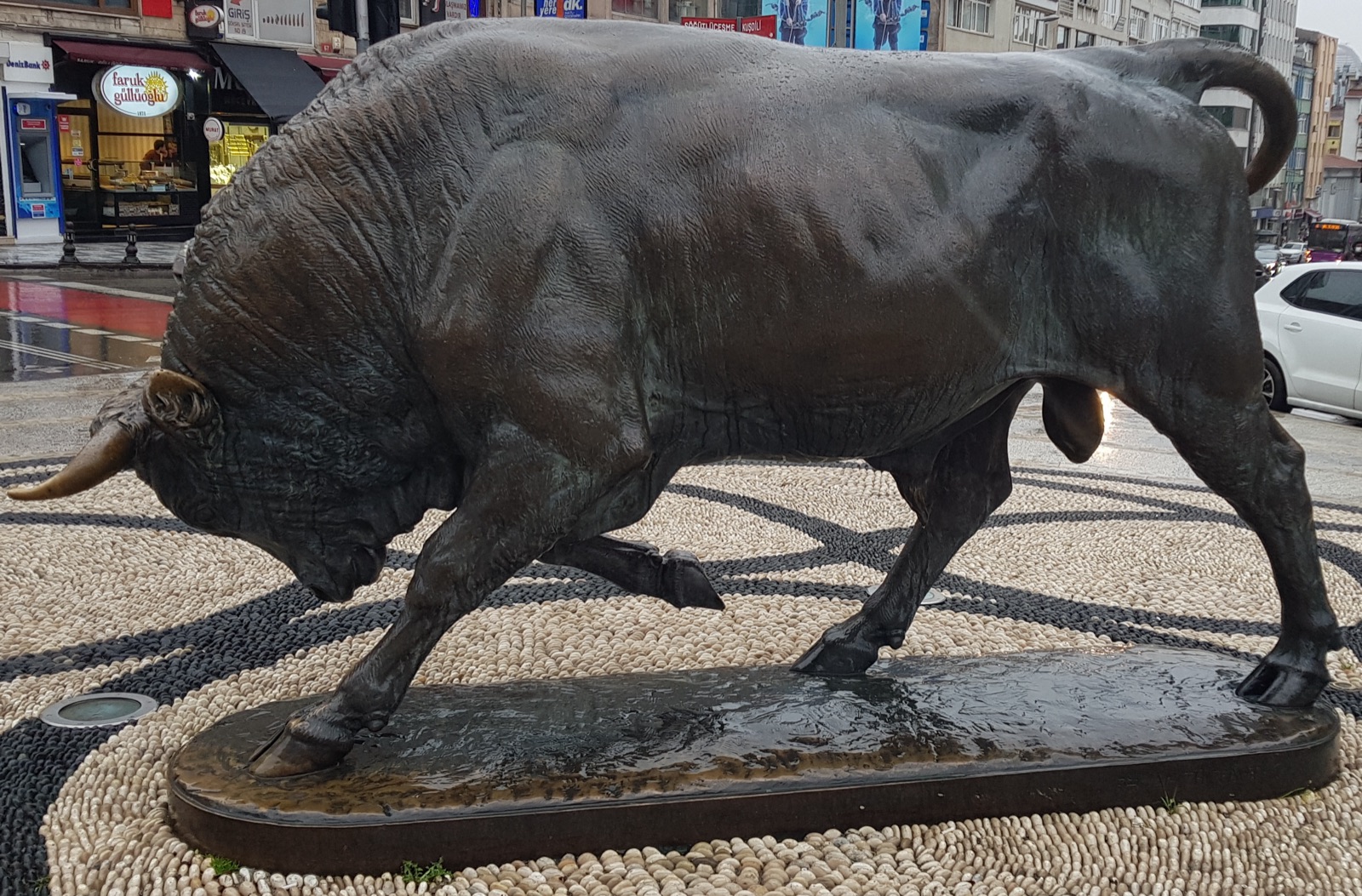
The Kadıköy Bull belongs to this tradition. Its tensed posture, lowered head, and powerful muscles create the feeling that the animal could charge forward at any moment. This very dynamism is likely one reason the statue works so well amid Kadıköy's hectic pace.
Why a bull was a popular sculptural subject
In European art, the bull often symbolized strength, fertility, and untamed energy. At the same time, it was a rewarding subject for sculptors, since body mass and movement could be depicted so impressively in three dimensions.
Later local stories tried to give the Kadıköy Bull additional political meanings. Some link it directly to Franco-German wars, or claim it was passed between states as a token of victory. Such stories are popular, but in their most dramatic versions aren't always cleanly documented.
How the statue came to Istanbul
The exact history of ownership is told differently in various accounts. What's certain is that the sculpture already belonged to Istanbul's holdings before its location in Kadıköy, and was initially set up on the European side, or in princely garden grounds.
That fits an era when European sculpture and garden art were popular at the Ottoman court. Palaces like Dolmabahçe and Yıldız integrated Western furniture, clocks, art objects, and landscape design. A French animal bronze was therefore by no means as foreign as it might seem today.
The various locations
Before the bull reached Altıyol, it changed places several times. It's been associated with Yıldız, Bilezikçi Çiftliği, and later areas in Kadıköy. Such relocations aren't unusual for public sculptures. Urban planning changes squares, streets get widened, new traffic axes emerge.
Only in Kadıköy did the statue develop the strong local identity it has today. An artwork, after all, isn't defined only by its creator, but also by the people who use it daily — even when "use" here mainly means meeting up in front of it.
Why Altıyol worked perfectly
Altıyol means "six roads" and describes an important traffic junction. From here, streets spread out in various directions through Kadıköy. It's exactly at such a point that a city needs clear orientation.
The bull is large enough to be recognized instantly, but not so monumental that it dominates the square. This made it, in practice, a human navigation app: "let's meet at the bull" works considerably better than complicated street directions.
The bull as a meeting point
Meeting points tell you a lot about a city. Official monuments can be enormously important politically and still barely be used in daily life. The bull, by contrast, lives through everyday use. Teenagers wait there for friends, fans meet before matches, visitors orient themselves, people sit nearby, and street musicians use the spot.
This turned an imported sculpture into a social center. No urban planner can fully plan such appropriation. It arises when people use a place the same way, again and again.
Kadıköy all around
And here I have to say it anyway: anyone who claims there's "nothing" in Kadıköy either wasn't there, or ran past everything without looking. To me, Kadıköy is alive in almost every street. Restaurants, bars, markets, antiques, small shops, hairdressers, street music, people — something is happening everywhere.
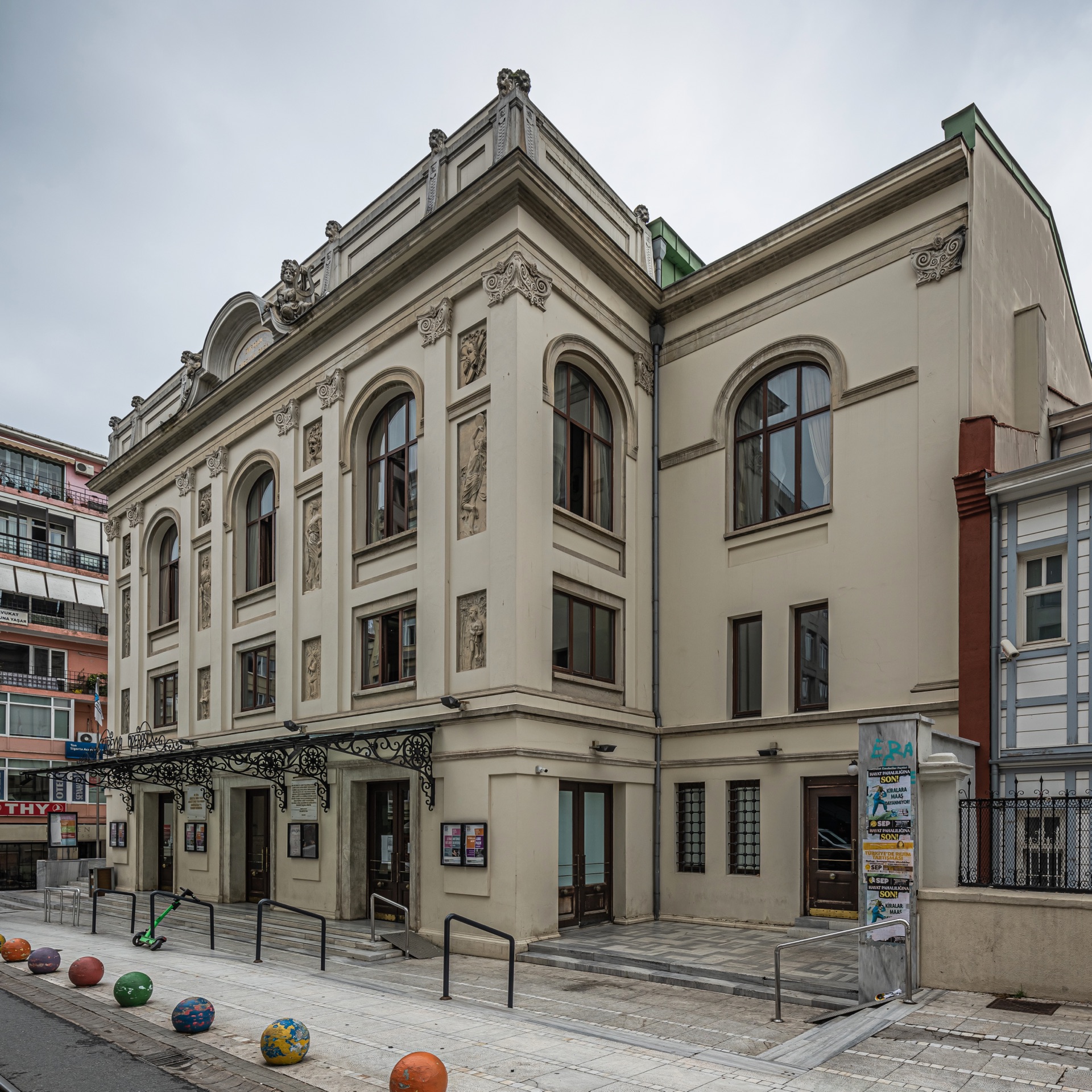
Around Altıyol and Bahariye, you especially notice this energy. From here you can keep walking toward the market, Moda, or the Süreyya Opera. The bull is therefore not the destination of a day in Kadıköy, but rather the perfect starting point.
"The bull was created for Fenerbahçe." No. Its history is older than its current association with Kadıköy and football culture.
"It always stood at Altıyol." False. The statue changed location several times.
"Every story about its role in European wars is confirmed." No. Some popular ownership and victory stories are more embellished than the reliable source material supports.
Why a bull, of all things, became the symbol of Kadıköy
The Bull of Kadıköy, usually called Boğa Heykeli in Turkish, feels today so naturally tied to the neighborhood that many assume it was created specifically for this square. In fact, the sculpture has a much longer journey behind it. It dates from the 19th century and was made in Europe before eventually landing in Kadıköy via various locations.
It's exactly this wandering that's typical of urban symbols. An object can lose its original meaning and be read completely anew in a new place. Today, almost no one thinks first of European sculptural history when they see the Kadıköy Bull. It's a meeting point, a landmark, and almost a mascot of the neighborhood.
The sculpture's European origin
The bull is often associated with French 19th-century sculpture. Naturalistic animal depictions were extremely popular in that era. Sculptors studied muscles, movement, and anatomy, creating animals not merely as decoration, but as artworks in their own right.
The Kadıköy Bull's powerful posture fits exactly into this tradition. It looks tensed, almost as if it might charge forward the next moment.
This energy perhaps helps explain why the sculpture suits Kadıköy so well.
How the bull came to Istanbul
Different accounts circulate about the sculpture's exact path. It's often claimed that, after the Franco-Prussian War, it first went to Germany and later came to the Ottoman Empire as a gift. Other accounts reconstruct its ownership path differently.
This is exactly where caution is warranted. That the sculpture is of European origin and came to Istanbul in the late Ottoman period is plausible and well documented. Individual dramatic gift stories, though, are often repeated without a primary source.
For Lunatolia, it's therefore better to tell the documented history and mark the most spectacular variant as a possible tradition.
Several locations before Kadıköy
The bull didn't always stand where people wait for each other today. It was relocated several times within Istanbul, including in areas on the European and Asian sides.
Only later did it find its permanent spot in Kadıköy.
These relocations show that city landmarks sometimes don't emerge by design. At some point, an object fits a place so well that no one can imagine it away anymore.
A meeting point rather than a museum sculpture
The bull is probably one of the most practical art objects in the city. "Let's meet at the bull" is understood by practically everyone in Kadıköy.
People sit next to it, lean on its barrier, photograph it, wait for friends, and use it to orient themselves in the street chaos.
The sculpture thus fulfills a social function no museum catalogue could plan for.
Kadıköy as a living context
The bull doesn't stand in a quiet park, but in the middle of a neighborhood full of people, restaurants, bars, shops, and street traffic.
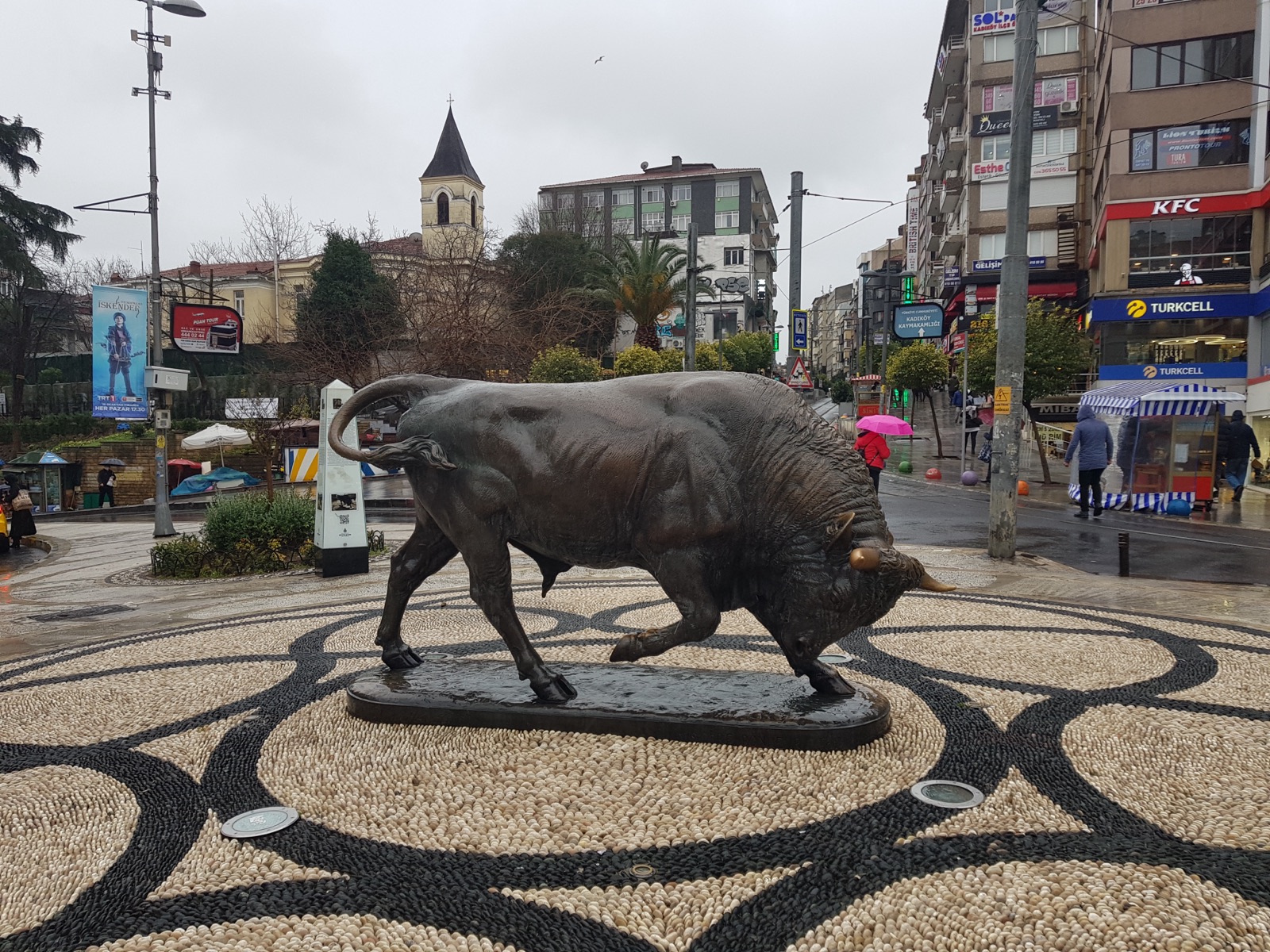
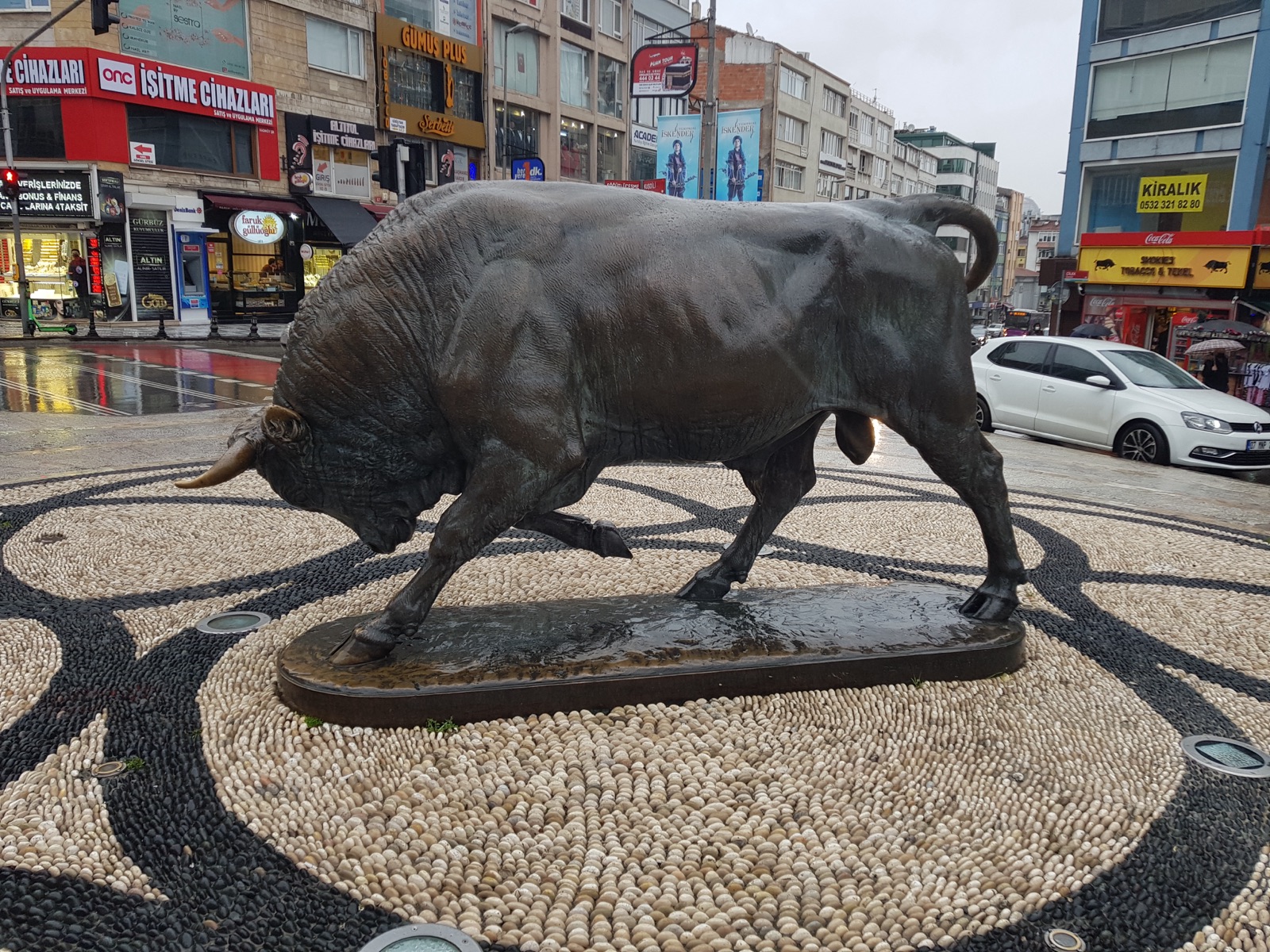
That's exactly why it fits so well. Kadıköy has energy. Streets are full, music comes out of venues, vendors call out, ferries constantly bring new people.
The tensed bull feels almost like an embodiment of this movement.
From here through Kadıköy
The bull works excellently as a starting point. From here you can head toward the market, Bahariye, the Süreyya Opera, churches, antique streets, and Moda.
Anyone who thinks Kadıköy has "nothing to see" probably turned back after three minutes.
Its real strength lies not in a single world monument, but in the density of the neighborhood.
Hairdressers, markets, and normal everyday life
What I love especially about Kadıköy is the mix of sightseeing and everyday life. There are streets full of restaurants and shops, antiques, small stores, and these incredibly fast hairdressing salons where it feels like ten people are working at once.
You don't need to speak the same language. Somehow you understand each other.
Maybe that's exactly Kadıköy: not perfectly curated, but alive.
Why symbols don't need to be old
Istanbul has monuments spanning 1,500 years. The bull is young by comparison. Even so, it holds enormous significance for modern urban identity.
This shows that a landmark doesn't necessarily have to be Byzantine or Ottoman. People decide, through daily use, which places become part of their collective image of the city.
Why I'll defend Kadıköy
Friends actually once told me: "We're not going to Kadıköy, there's nothing there."
To this day, I don't know what they ran past.
Kadıköy is alive in every street. People everywhere, food everywhere, small shops, antiques, churches, markets, hairdressers, street music, and this very particular energy. It's not Sultanahmet, and it isn't meant to be.
The bull is therefore a perfect meeting point for a neighborhood that can't be explained with a single sight.
My take on this place
Friends once told me: "We're not going to Kadıköy, there's nothing there." My reaction to this day is roughly: oh my god, what did you run past?
To me, Kadıköy fizzes with energy. You don't even need a perfect plan. You set off from the bull, walk through streets, find restaurants, antiques, hairdressers, small shops, and suddenly you've already been out for two hours. The bull fits perfectly here for exactly that reason. It just stands right in the middle of it all, and the city lives all around it.
– Amra