
Osman II is one of the most tragic young rulers in Ottoman history. He ascended the throne as a teenager, wanted to curb the power of the Janissaries after a military disappointment, and planned reforms meant to strengthen his own position. A few years later he was overthrown by those very soldiers, publicly humiliated, and killed in the Yedikule prison.
Osman II ascended the throne as a teenager, wanted to curb the power of the Janissaries after a military disappointment, and was overthrown, humiliated, and killed by those very soldiers in the Yedikule prison.
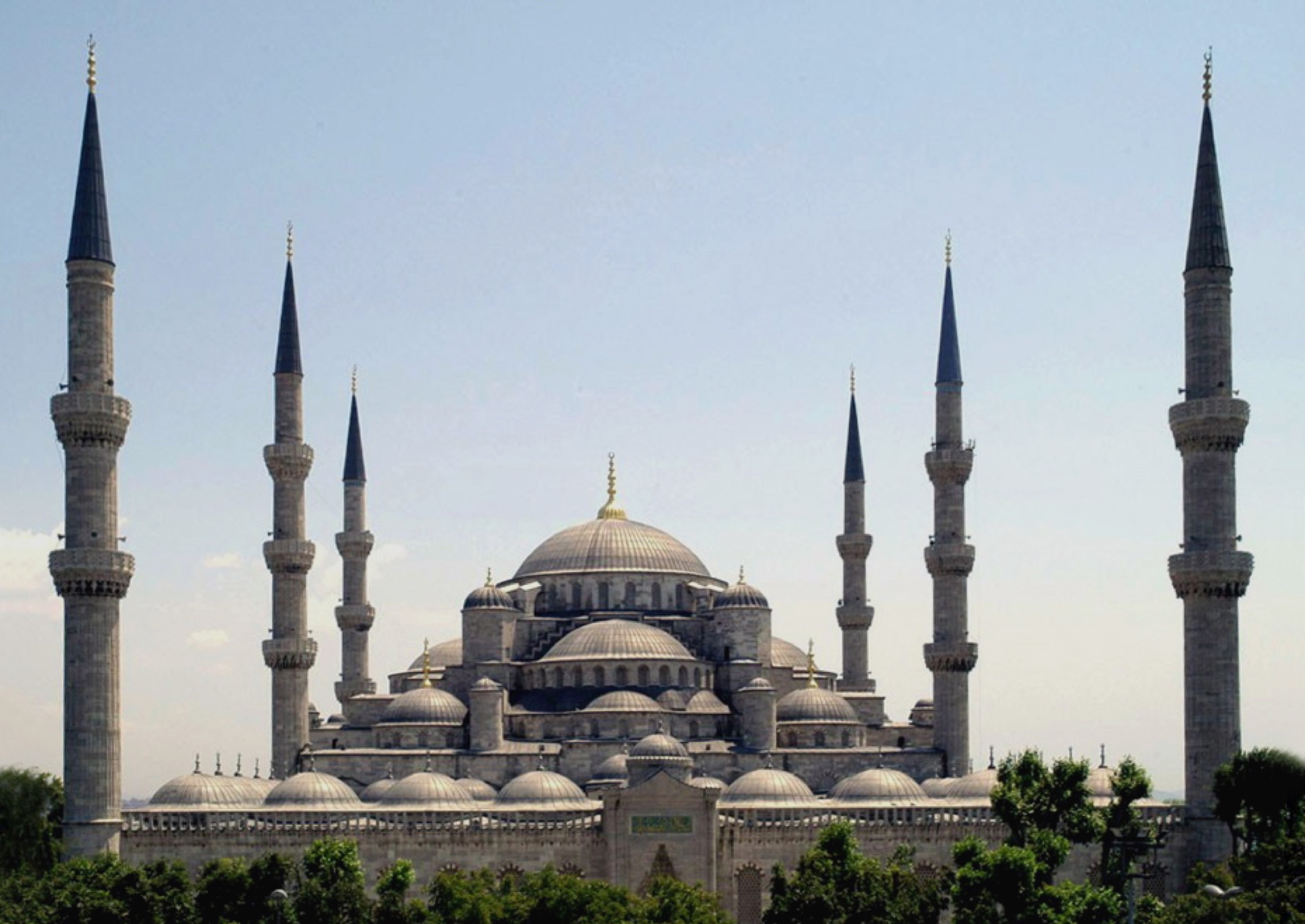
His death in 1622 was a shock. For the first time, a reigning Ottoman sultan had been deposed and murdered through a revolt of his own troops. Osman was buried in the mausoleum of his father, Ahmed I. The splendor of the grave chamber therefore stands in harsh contrast to his short and violent life.
- Osman II was a son of Ahmed I.
- He became sultan in 1618 as a very young man.
- In 1621 he led a campaign against Poland-Lithuania.
- Afterward he wanted to control, or reform, the Janissaries more strongly.
- His planned journey to Mecca was interpreted by opponents as a possible move against the Janissaries.
- A revolt broke out in 1622.
- Osman was deposed and killed in the Yedikule prison.
- He was only about 18 years old.
Who Osman II was
Osman was born in 1604 as a son of Sultan Ahmed I. His mother was not Kösem Sultan. He therefore belonged to a complex group of princes with different mothers, whose political futures were closely tied to the succession. He received the education typical for princes, in religion, languages, literature and statecraft.
When Ahmed died in 1617, Osman was still very young. In earlier centuries, a son's direct succession wouldn't have been unusual. But Ahmed's decision to let his brother Mustafa live had changed the dynastic logic.
Why he didn't become sultan immediately in 1617
After Ahmed's death, influential court officials decided to put Mustafa I on the throne. This established a new principle: not automatically the son, but the elder male dynast, could take precedence.
Mustafa's first reign, however, lasted only briefly. His mental stability was doubted, and in 1618 the court elite deposed him. Osman II now ascended the throne.
Accession as a teenager
Osman was about fourteen years old. A teenage sultan wasn't entirely unusual in the Ottoman Empire, but it inevitably meant that experienced statesmen, military leaders and court factions wielded great influence.
Osman apparently wanted to rule increasingly on his own. His short reign shows how dangerous it could be to challenge established power groups too quickly when the sultan had no stable power base of his own.
The Polish campaign and Khotyn
In 1621, Osman led a major campaign against Poland-Lithuania. At Khotyn, in today's Ukraine, the Ottoman army met strong opposition. The fighting didn't end in the triumphant victory Osman had hoped for. A peace agreement ended the campaign.
Osman was dissatisfied with the performance of his troops, especially parts of the Janissary corps. For him, the campaign became proof that the military order needed reform. For the Janissaries, that sounded like a direct threat to their standing.
Why he wanted to change the Janissaries
The Janissaries had originally been an elite infantry force belonging to the sultan. By the 17th century they held strong economic and political interests in Istanbul and defended their privileges. Many ran businesses, had families, and were deeply woven into city life.
Osman is said to have considered building a new military base out of Anatolian and other troops. Whether he wanted to "abolish" the Janissaries entirely is less clear-cut than popular accounts claim. For the Janissaries, though, the fear of losing power was already enough.
The planned pilgrimage
Osman announced a pilgrimage to Mecca. For a reigning sultan, this was unusual. Opponents suspected the trip was a pretext to leave Istanbul, gather loyal troops in Anatolia, and then move against the Janissaries.
Whether Osman actually had such a concrete plan is debated. What matters is that his opponents believed it. Political crises often arise not just from what someone actually intends, but from what others fear.
The revolt of 1622
In May 1622, Janissaries and other troops rose up. They demanded the handover of several of the sultan's advisors. Osman reacted clumsily at first and couldn't mobilize a loyal power base.
The revolt escalated, Mustafa I was reinstated as sultan, and Osman lost his position within a very short time. The young ruler was publicly humiliated and taken to the Yedikule prison.
Osman in the Yedikule prison
There, Osman II was killed. Chronicles describe a brutal struggle before he was strangled. Individual details are dramatically embellished depending on the source. What is established is that a deposed reigning sultan was murdered by his own state or military representatives.
This was an enormous break with dynastic ideology. The sultan was considered the center of the political order. Now a military corps had shown it could remove the ruler himself.
Consequences of his death
Osman was later seen as a symbol of how dangerous the Janissaries' political power had become. His death triggered instability. Mustafa I did not remain on the throne permanently. In 1623, Murad IV became sultan.
The conflict between the central state and the Janissaries continued for another two centuries, until Mahmud II violently destroyed the corps in 1826 in the so-called "Auspicious Incident."
"Osman definitely wanted to abolish the Janissaries entirely." He likely planned far-reaching changes and an alternative military base. How concrete his plans actually were isn't established in every detail.
"He was killed in a great battle." No. He was deposed after a revolt and murdered as a prisoner in Yedikule.
Osman II and the significance of his age
That Osman was a teenager at his accession is often mentioned and just as quickly forgotten. Yet his age explains a great deal. He held the title of sultan, but had to assert himself against men with decades of military and political experience. Grand viziers, Janissary officers, religious scholars and court officials knew the system better than he did.
Osman seems to have grown increasingly distrustful of these dependencies. His reform ideas can therefore also be read as an attempt to bring his actual power in line with the enormous title he already carried.
Khotyn: defeat or limited success?
The battle, or campaign, of Khotyn is often labeled in popular accounts as either a total defeat or an Ottoman victory. The actual outcome was more complicated. The Ottomans couldn't decisively break the Polish-Lithuanian positions, while the other side also failed to carry out a crushing offensive.
The subsequent treaty stabilized the situation without the great triumph Osman had expected. For a young sultan who wanted to draw personal prestige from the campaign, that was disappointing.
His criticism of the Janissaries sharpened.
Why a pilgrimage became politically dangerous
A trip to Mecca sounds religious at first. In the context of 1622, though, it looked politically threatening, because Osman wanted to leave Istanbul and travel through Anatolia.
The Janissaries feared he could recruit new troops there. Rumors of an alternative army spread quickly.
That's how a religious journey became the trigger for a power crisis — not necessarily because everyone knew the true plan, but because no one trusted anyone else.
The public humiliation of a sultan
What was especially shocking wasn't only Osman's death, but the manner of his fall. A sultan staged as the shadow of God and the pinnacle of the dynasty suddenly lost all protection. Rebellious soldiers marched him through the city and treated him like an ordinary prisoner.
Chroniclers experienced this humiliation as a rupture of the political order. Even people who had criticized Osman could be shaken, because the throne's symbolic inviolability had been damaged.
If soldiers could kill a sultan, the question automatically arose: who would actually rule from now on?
Aftermath for Murad IV
Murad IV was a child when his older brother Osman was murdered. It's hard to prove a direct psychological causation, but the case must have loomed enormously within the dynasty.
When Murad later ruled independently, he acted with extraordinary harshness against military disorder.
The memory of Osman II thus became part of the political world out of which Murad's authoritarian rule grew.
The grave as a contrast to his death
In the mausoleum of Ahmed I, Osman's grave looks calm and orderly. Nothing about a decorated sarcophagus automatically speaks of panic, captivity and violence.
Only the biography changes the space. Suddenly it's no longer just another name on a dynastic list, but an eighteen-year-old man whose attempts at reform ended in political catastrophe.
That's exactly why it's worth not just photographing the names at mausoleums, but knowing beforehand who lies there.
My take on this place
When I read "Sultan Osman II," it first sounds like a powerful adult ruler. Then you have to remind yourself, again and again: this boy was about eighteen when he was murdered.
Eighteen. Of course he was sultan and made political decisions. But he was, at the same time, a teenager in a system where a mistake didn't mean losing your job. It could mean ending up in a prison and never coming out alive. That's exactly why the young names in these mausoleums often affect me more than the most magnificent coffins.
– Amra