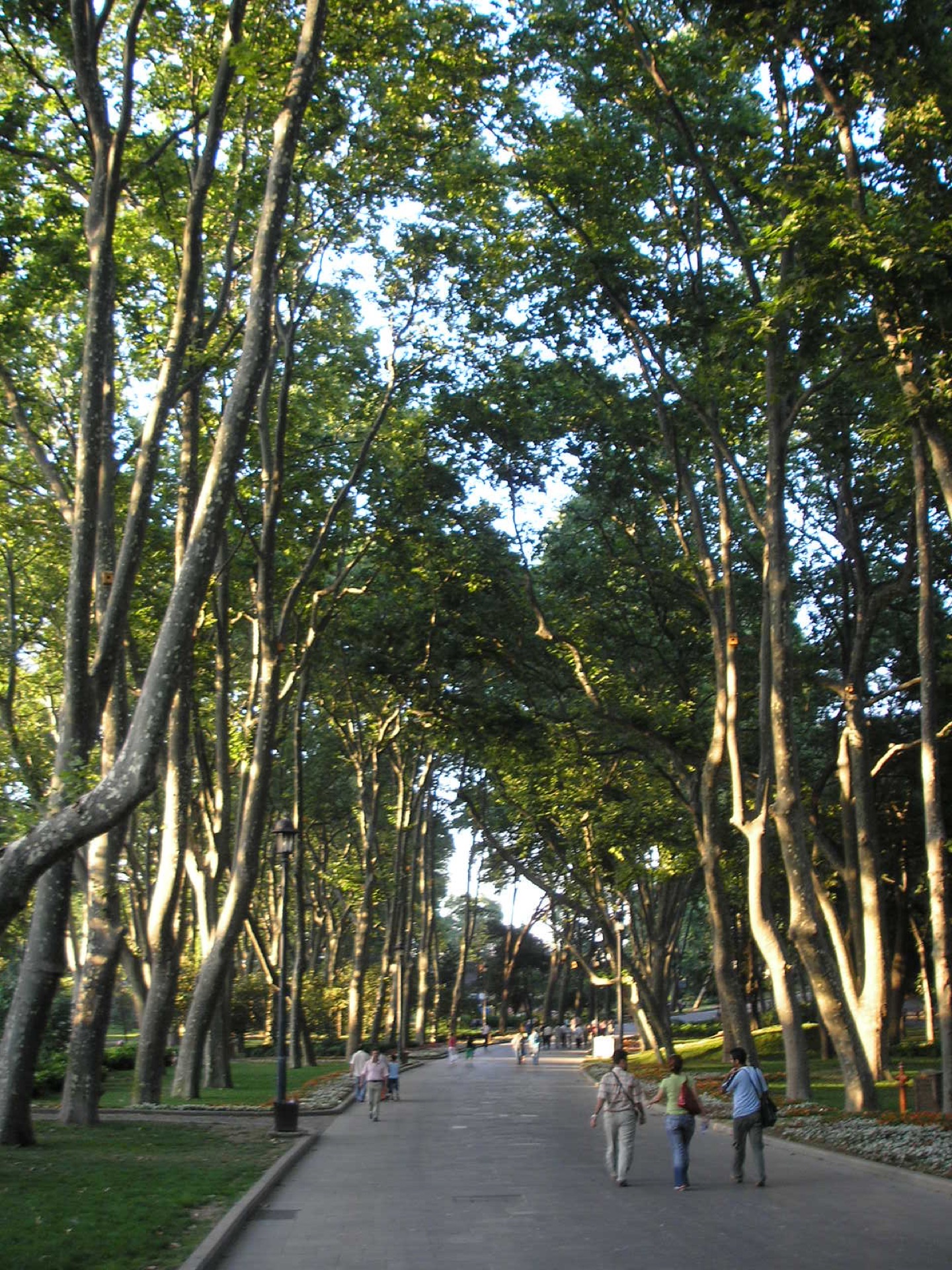
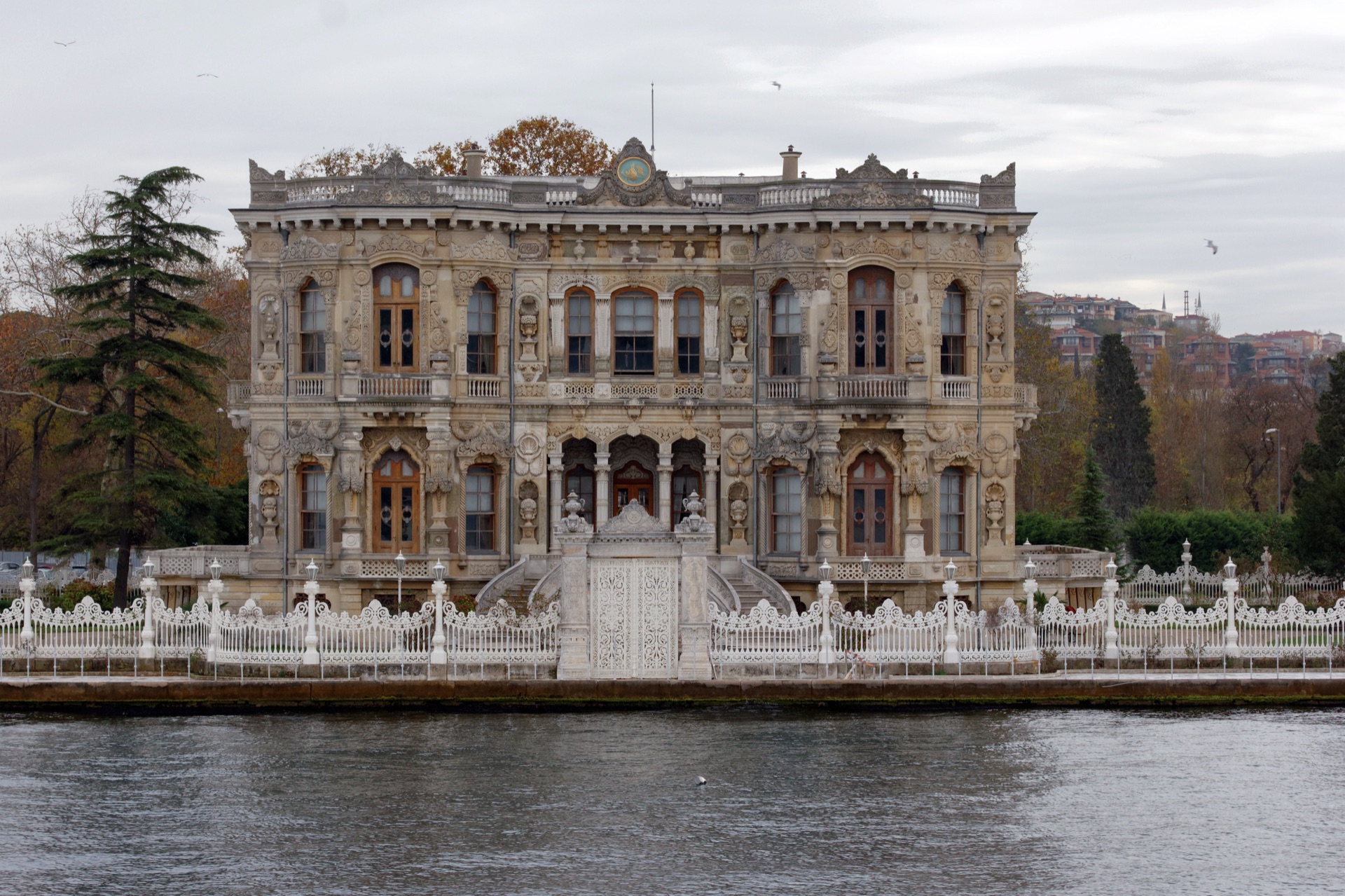
Today, Emirgan is above all a word that instantly conjures images of tulips. In spring, the slopes and paths of Emirgan Korusu turn into a huge landscape of color, and the park fills up accordingly. But its story begins long before modern tulip festivals. For centuries, the area belonged to the privileged green Bosphorus landscapes of the Ottoman elite, and it carries its name after Emir Güne Han, a Persian, or Safavid, nobleman who entered Ottoman service in the 17th century.
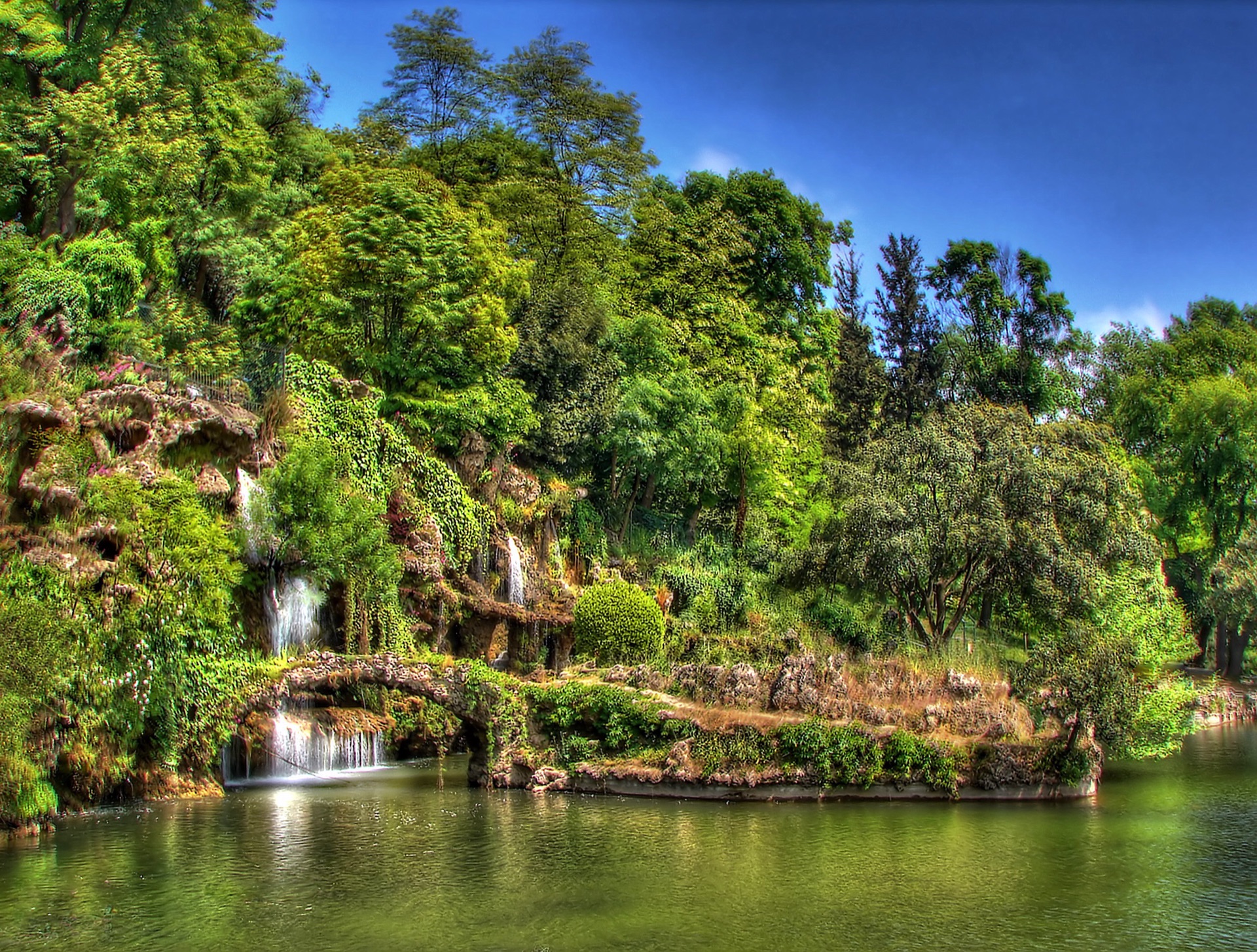
Today, Emirgan is above all a word that instantly conjures images of tulips. But its story begins long before modern tulip festivals — with a Persian nobleman who entered Ottoman service in the 17th century.
The grounds later changed hands several times. In the 19th century, the Egyptian khedive İsmail Pasha in particular shaped the estate, having the well-known Yellow, Pink and White Pavilions built. In the 20th century, the park finally passed into public ownership. What today looks like a natural forest park is, in reality, a landscape designed across generations.
- Emirgan lies on the European shore of the Bosphorus and is one of Istanbul's best-known historic groves.
- The name is associated with Emir Güne Han, a 17th-century Safavid-Persian governor.
- The grounds passed between high-ranking owners across the centuries.
- In the 19th century it belonged to Khedive İsmail Pasha of Egypt.
- The well-known Yellow, Pink and White Pavilions date from this period.
- Tulips have a long history in Ottoman culture, but today's mass festival is modern.
- In the 20th century, the park became publicly accessible.
Where the name Emirgan comes from
The name is historically older than today's park. In the 17th century, a Persian nobleman named Emir Güne Han acquired property in this area. He had previously served as Safavid governor of Revan, today's Yerevan, and switched, after Ottoman conquest or capitulation, into the sphere of power of Sultan Murad IV.
In Istanbul he became known by the name Yusuf Pasha and received property along the Bosphorus. Over the long term, "Emirgüne" developed into the place name Emirgan.
Emir Güne Han between Safavids and Ottomans
Murad IV waged harsh wars against the Safavids. In 1635 he took Revan; Baghdad followed in 1638. Emir Güne Han switched into Ottoman service and, for a time, won the sultan's favor.
After Murad's death in 1640, his political situation changed. Under the new sultan İbrahim, he was executed. The exact accusations and court conflicts are complex, but his name astonishingly survived in Istanbul — not as the memory of a victory or a mosque, but in an entire neighborhood.
From private Bosphorus estate to a princely garden landscape
Bosphorus properties were sought-after summer and excursion sites in the Ottoman Empire. High-ranking officials and members of the dynasty built yalıs, pavilions, and gardens there. Emirgan changed owners several times and was repeatedly redesigned.
The steep slopes offered an advantage: from above, the view opens across the Bosphorus. At the same time, woods and gardens allowed retreat from the densely built city.
Khedive İsmail and the three pavilions
In the 19th century, the grounds passed to Khedive İsmail Pasha, the ruler of Egypt, who was strongly influenced by European architecture and urban planning. Under him, the three famous pavilions were built, named after their colors as Sarı Köşk, Pembe Köşk, and Beyaz Köşk.
The buildings combine Ottoman and European design and served stays and receptions. They are not medieval, and they don't date from the so-called Tulip Era of the early 18th century either, even though visitors sometimes automatically connect the two.
Why tulips in Istanbul are more than spring decoration
Tulips don't originally come from the Netherlands. Various wild tulip species grow across a broad area of Central Asia and Anatolia. In the Ottoman Empire, tulips were cultivated and became especially popular ornamental plants in the 16th and 18th centuries.
The Turkish word lale appears in poetry, textiles, ceramics, and calligraphy. Tulip shapes became part of decorative art. Through Ottoman diplomacy and trade, tulip bulbs reached Central Europe in the 16th century, where the Netherlands in particular later developed its own famous tulip culture.
The Bosphorus groves as a green luxury landscape
A "koru" is more than an ordinary city park. Historically, it refers to a wooded grove, or a larger green area, that often belonged to grand estates. Along the Bosphorus, such groves survived because steep slopes were harder to build over densely, and wealthy owners preserved large garden grounds.
Emirgan is therefore a rare piece of green Bosphorus landscape. The trees shield against traffic noise, and just a few meters above the shore road, the city already feels remarkably far away. This spatial separation explains why the place remained attractive as a retreat for centuries.
Khedive İsmail and Egypt's complicated standing
İsmail Pasha wasn't just some wealthy private individual. He was Khedive of Egypt, which formally still belonged to the Ottoman Empire but was practically governed largely autonomously. İsmail pursued an aggressive modernization policy, had Cairo rebuilt along European models, invested in infrastructure, and was closely tied to the construction of the Suez Canal.
His projects were enormously expensive. Egypt's debts grew so large that European creditors increasingly gained control over its finances. In 1879, İsmail was deposed under international pressure.
That such a ruler owned a Bosphorus estate in Istanbul shows the complicated relationship between the Ottoman center and semi-autonomous provincial regimes. Emirgan was thus not just a garden, but part of an elite world networked between Cairo, Istanbul, and European capitals.
The three köşks in closer detail
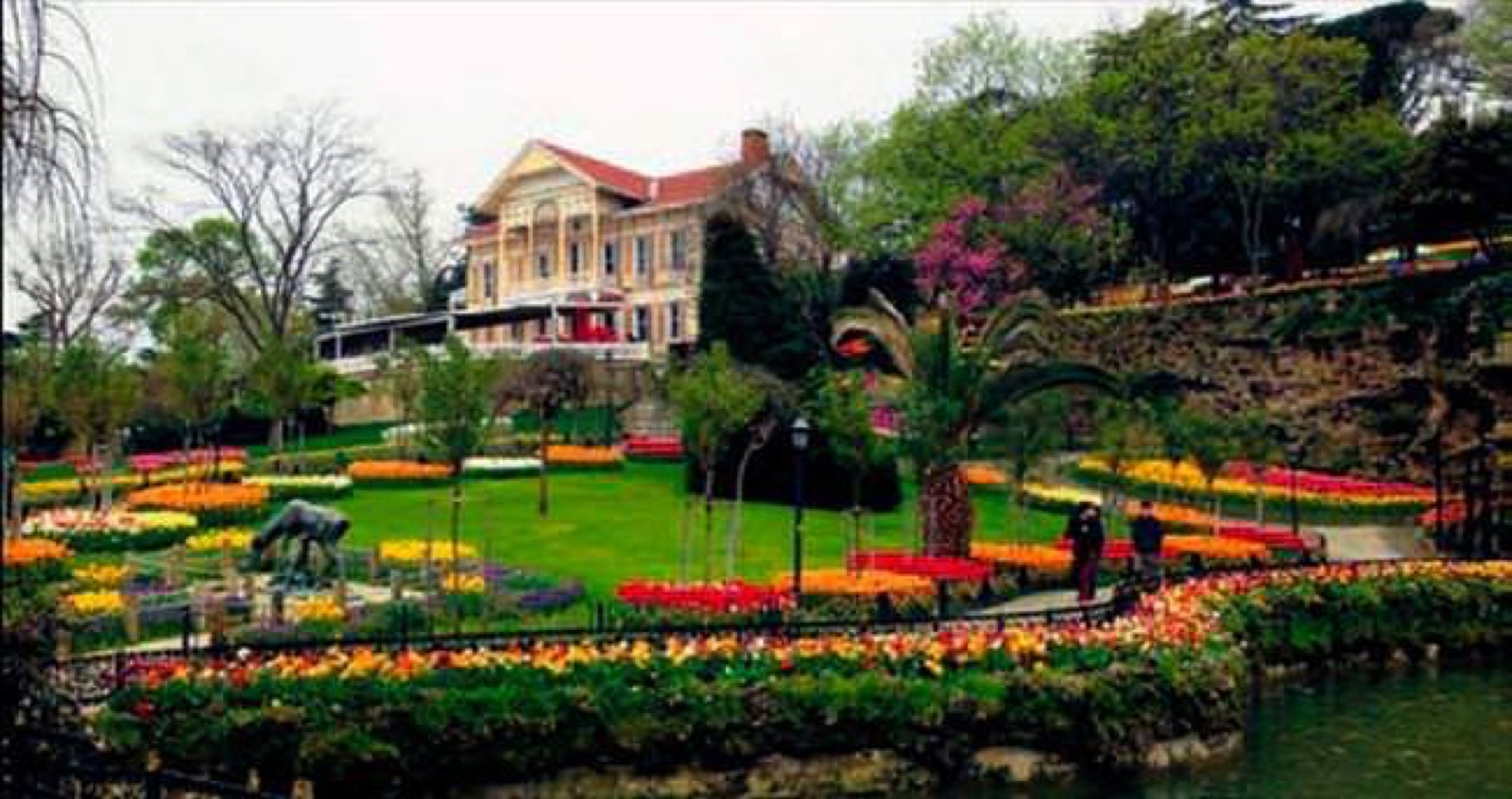
The Sarı Köşk, the Yellow Pavilion, stands out for its decorative wooden architecture and looks somewhat like a large chalet. The Pembe Köşk has a different, cozier feel, while the Beyaz Köşk, with its light façade, appears more European.
Their color names are modern, practical labels that give visitors orientation. The pavilions served various stay and reception functions and were later restored, or put to hospitality use.
Anyone who comes only for the tulips should at least look deliberately at one of these buildings. They explain the park's social history better than flower beds alone.
Tulips between the Ottoman Empire and Europe
The tulip's journey to Europe is a lovely example of how culture travels through diplomacy. In the 16th century, European envoys at the Ottoman court reported enthusiastically about the flowers. Bulbs reached Vienna and spread from there to other regions. Botanists like Carolus Clusius later played an important role in their spread through the Netherlands.
In the 17th century, the famous "tulip mania" arose there, during which prices for rare bulbs at times rose extremely high. This story, too, is often exaggerated in popular accounts — the entire Dutch economy didn't collapse because of tulips. Still, it shows what luxury status the plant could reach.
The modern tulip festival as city marketing
In the 21st century, Istanbul began to more strongly stage its historic tulip connection publicly. Millions of bulbs are planted in parks and traffic areas. Emirgan became one of the most important centers of this spring campaign.
The result is visually impressive, but it also changes how the park is used. On popular weekends, crowds and traffic build up. Anyone seeking quiet should come early or visit outside peak bloom.
The park thus shows an interesting conflict of modern attractions: the more successfully a place is marketed, the harder it becomes to experience exactly the calm atmosphere that drew people there in the first place.
When Emirgan is most beautiful — and why "beautiful" doesn't mean the same to everyone
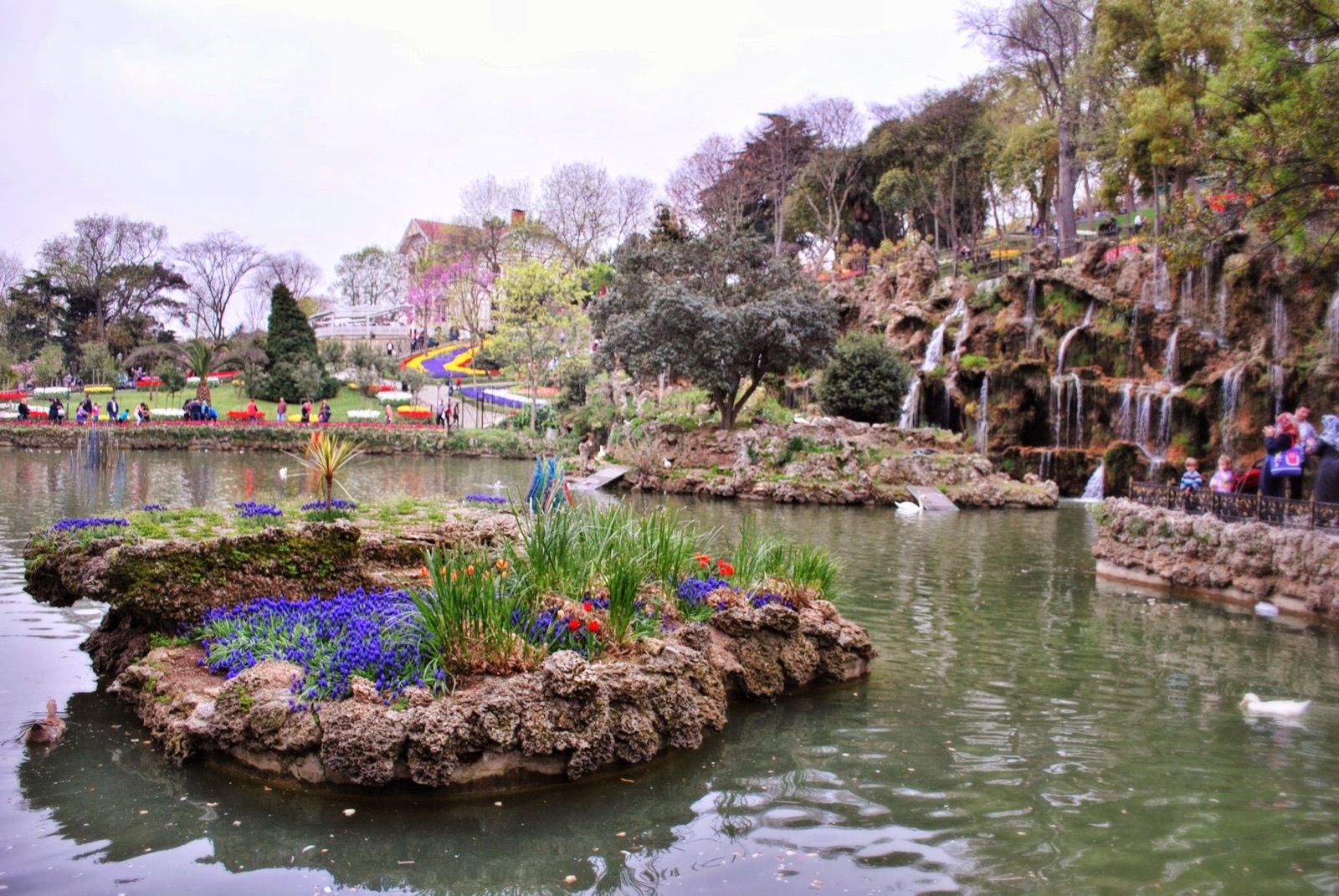
During tulip bloom, Emirgan is of course spectacular. Great carpets of color, deliberately composed beds, and the historic pavilions among them provide countless photo opportunities. At the same time, that's exactly when visitor crowds are largest. Anyone seeking quiet, old trees, and Bosphorus views can actually experience the park more intensely outside peak bloom.
In autumn, the color palette changes completely; in summer, the dense tree cover provides shade; and in winter, bare branches open up new sightlines in places. The park is therefore not purely an April attraction. The tulips are a seasonal highlight, but the historic garden landscape exists year-round.
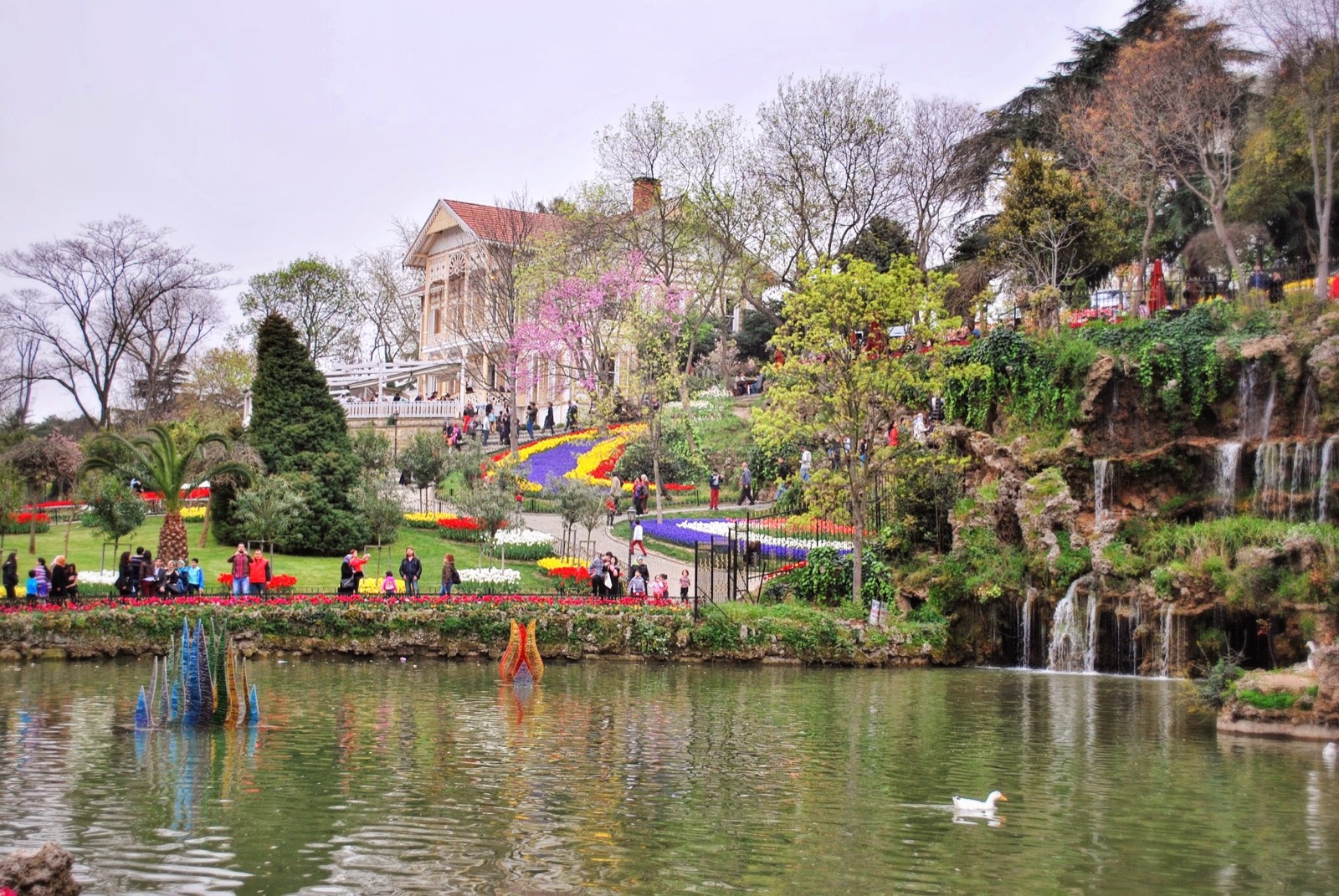
For a visit, you also shouldn't underestimate the slope. Emirgan climbs up the hillside. Anyone who stays only at the lower entrance sees a small part of it. But it's exactly this tiered elevation that's decisive for the views, and for why the pavilions stand at their respective positions.
Emirgan and the history of public green spaces
That Emirgan is freely accessible today is by no means a historical given. Large Bosphorus groves often belonged to individual families or high officials. Only in the 20th century did several such areas become municipal or state property, and thus more broadly usable by the public.
This development changes the place's social meaning. A garden once open only to an elite is now used on weekends by families, children, joggers, and tourists. The historic landscape remains, but the society within it is different.
Why old trees are themselves history
With historic parks, attention quickly focuses on pavilions and flower beds. Old groups of trees, though, can be just as important. They shape paths, shade, sightlines, and microclimate. Some were deliberately planted, others grew up over generations.
A park therefore loses a lot of historic atmosphere if old vegetation disappears, even if every building is perfectly restored. Emirgan's value lies precisely in the combination of architecture and grown landscape.
"Tulips are actually a Dutch flower that only later came to Turkey." That's not accurate. The plant has Eurasian origins and was cultivated in the Ottoman Empire before it became a great economic symbol in the Netherlands.
"Today's Emirgan tulip festival is a direct tradition going back to Sultan Ahmed III." No. The historic Ottoman enthusiasm for tulips is real; today's large-scale urban festival staging is modern.
The Tulip Era back then and the tulip festival today
The famous Lâle Devri, Tulip Era, refers especially to the years 1718 to 1730. Under Ahmed III and Damat İbrahim Pasha, elaborate gardens and festivals arose, and tulip varieties became a status symbol.
Emirgan is today heavily marketed around this era, but the modern park in its current form is not an unchanged garden from 1720. The connection runs mainly through the tulip's cultural significance and the later urban tradition of planting millions of bulbs each spring.
From private property to public park
In the 20th century, Emirgan passed into municipal ownership and became accessible as a public park. This repeats a development also seen at Gülhane: a once-privileged, elite green space becomes part of the public city.
Today, Istanbulites use the park for walking, picnicking, and breakfast. Especially outside tulip high season, the grove feels considerably calmer, and you understand better why such Bosphorus gardens were popular in the first place.
My take on this place
At Emirgan, you have to make a choice: if you want to see the tulips in full splendor, you have to accept that roughly half of Istanbul had the same idea.
But what I like is that the tulip here isn't just some Instagram flower. Behind it lies a long Ottoman cultural history, and behind the park, in turn, lies a Persian prince, Egyptian rulers, and an entire Bosphorus world of gardens and pavilions.
That's exactly why it's worth knowing, even for a quick flower photo, what you're actually looking at.
– Amra