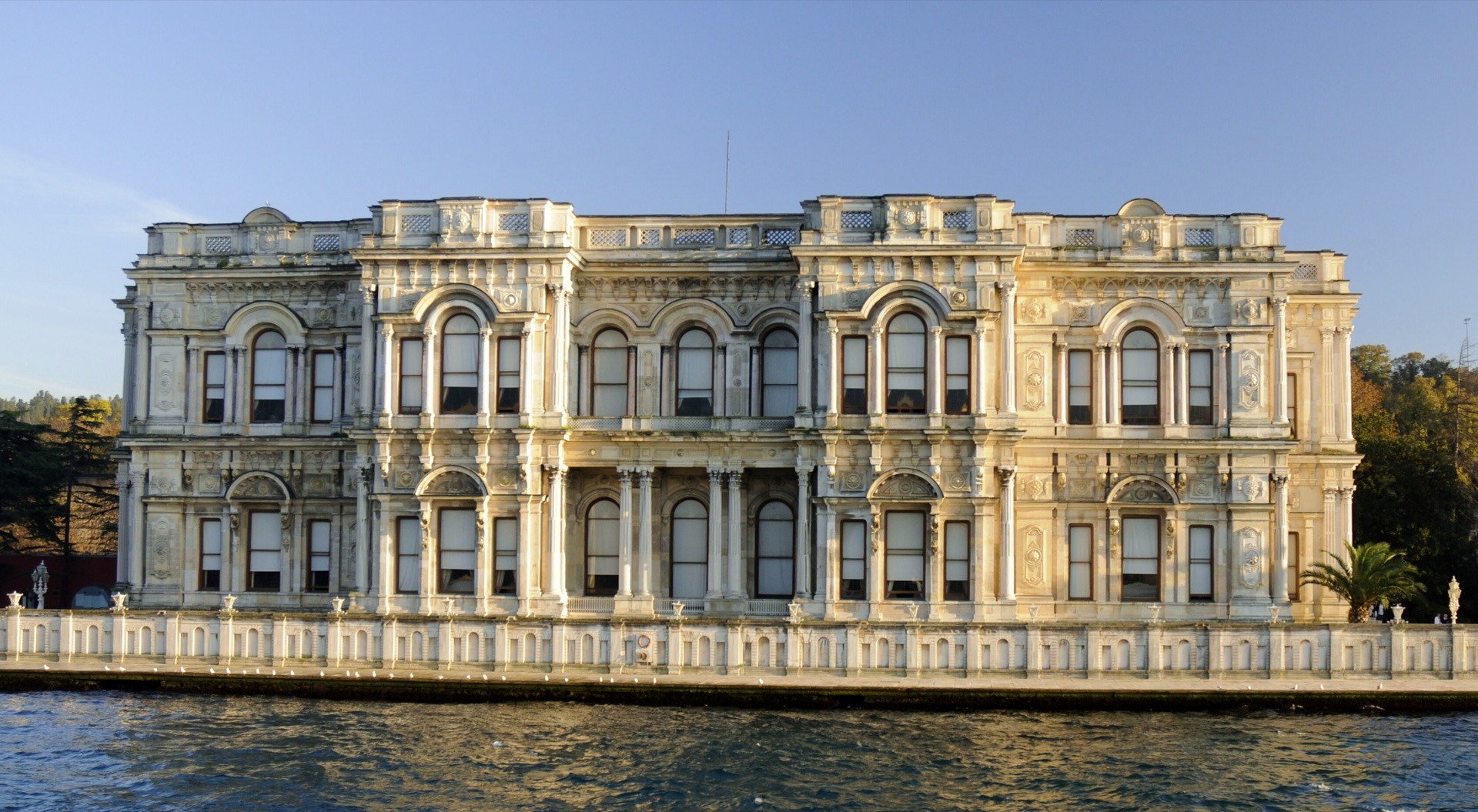

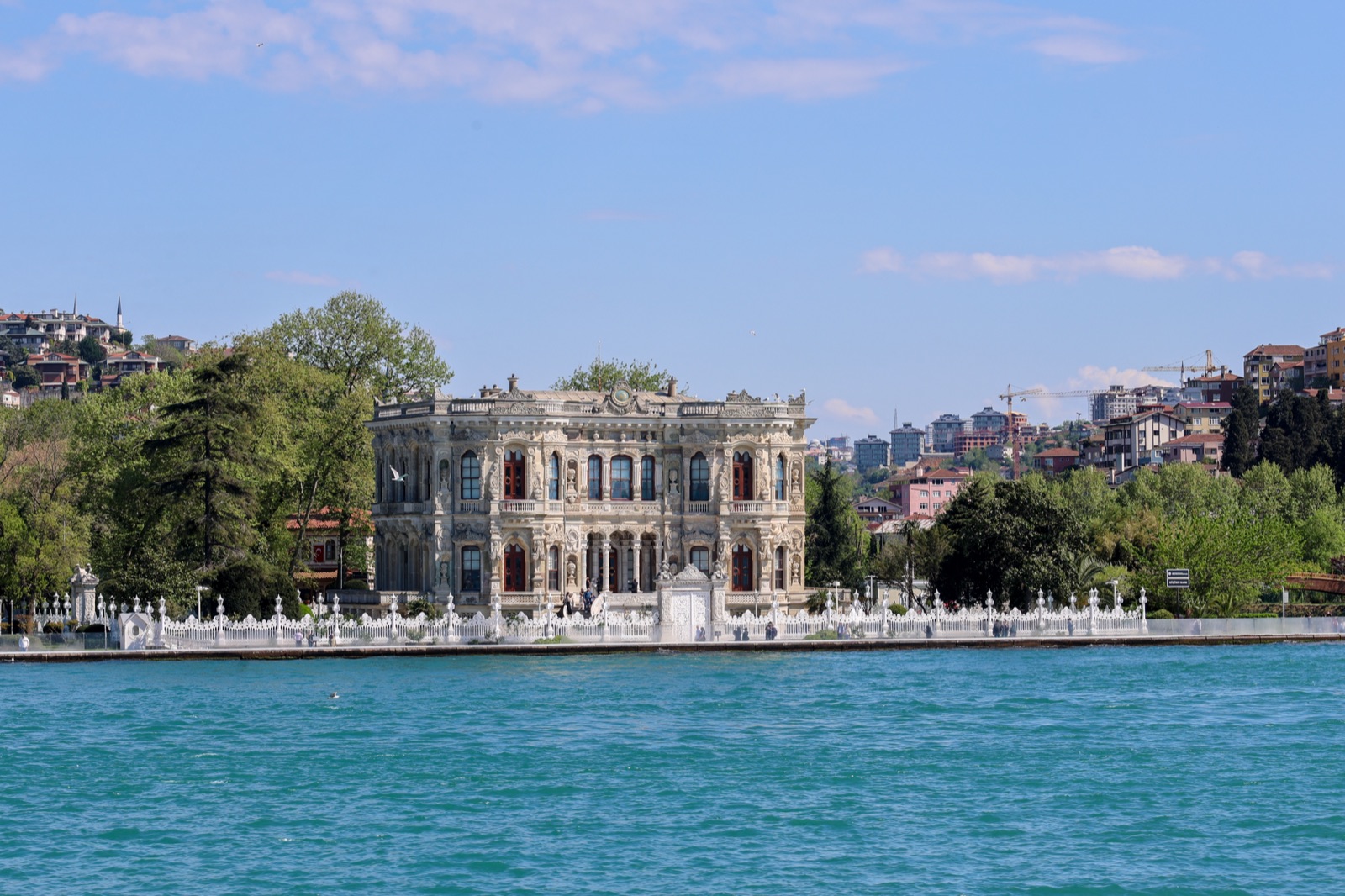
Between Göksu and Küçüksu, right on the Asian Bosphorus shore, stands a building that looks as if someone shrank a European ornamental palace and set it down by the water. Küçüksu Kasrı is no huge government palace like Dolmabahçe, and no permanent dynastic residential center like Topkapı. It was a Biniş Kasrı, a pavilion, or day palace, for short stays, excursions, hunts, and leisure.
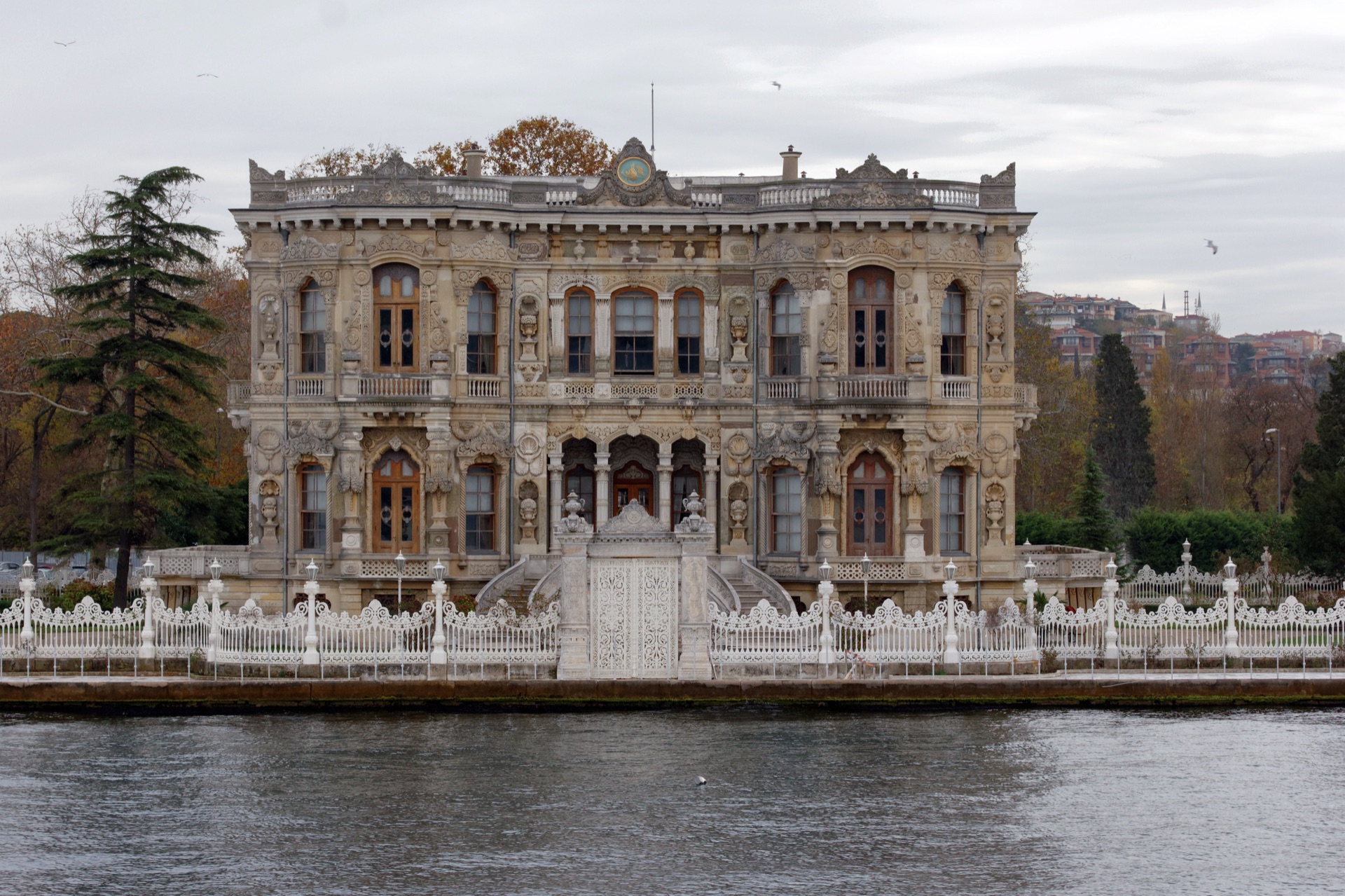
Küçüksu Kasrı is no huge government palace like Dolmabahçe. It was a Biniş Kasrı, a pavilion, or day palace, for short stays, excursions, hunts, and leisure.
Today's building dates from the reign of Sultan Abdülmecid and was built in 1856/57. The official palace administration describes an earlier wooden pavilion from the 18th century that stood on the same site. Küçüksu thus tells two stories at once: the older Ottoman culture of Bosphorus excursions, and the Western-influenced representational style of the 19th century.
- The area between Göksu and Küçüksu had been a popular princely excursion spot for centuries.
- An initial wooden pavilion was built in 1751/52 under Mahmud I.
- Abdülmecid had the old building torn down and today's Küçüksu Kasrı built in 1856/57.
- The pavilion is attributed to Nikoğos Balyan.
- It was intended for day visits and excursions, not as a permanent large residence.
- The building has only three levels including the basement, and a relatively compact floor plan.
- Under Abdülaziz, the façade decoration was further elaborated.
- Since 1983, Küçüksu has been used as a museum palace.
Why Göksu and Küçüksu were popular excursion spots
The Asian side of the Bosphorus was long shaped by gardens, meadows, streams, and summer residences. The area around Göksu was considered especially charming. Evliya Çelebi described the stream poetically in the 17th century as life-giving water, surrounded by gardens and pavilions.
For the court, such places meant distance from the densely built historic center. Sultans could hunt, go boating, hold shooting exercises, or host smaller gatherings without relocating an entire palace operation.
The first wooden pavilion
Under Sultan Mahmud I, Grand Vizier Divitdâr Mehmed Emin Pasha had a two-story wooden pavilion built for the sultan in 1751/52. This building was restored under Selim III and continued to be used by Mahmud II.
Selim III also had a fountain built in 1806 in honor of his mother, Mihrişah Valide Sultan. Such water endowments were part of the courtly design of excursion sites.
The old pavilion was typical of an era when many Ottoman palace buildings on the Bosphorus were made of wood. That's exactly why only a few survive intact: fire, moisture, and the desire for modernization often led to rebuilding.
Abdülmecid builds entirely anew
Sultan Abdülmecid had the wooden predecessor demolished. Today's stone pavilion was built in 1856/57. Küçüksu thus falls into the same modernization phase as Dolmabahçe.
The court now favored more strongly European-influenced façades, large windows, stucco, and richly furnished interiors. At the same time, the floor plan remained partly committed to traditional Ottoman residential forms.
The official palace administration describes a building of roughly 15 by 27 meters, with a basement and two main floors. On the upper levels, four rooms are each arranged around a central salon.
Nikoğos Balyan and the 19th-century style
The building is attributed to the architect Nikoğos Balyan, a member of the Armenian-Ottoman Balyan family, which shaped numerous court buildings. Their architecture combined European stylistic currents with the requirements of the Ottoman court.
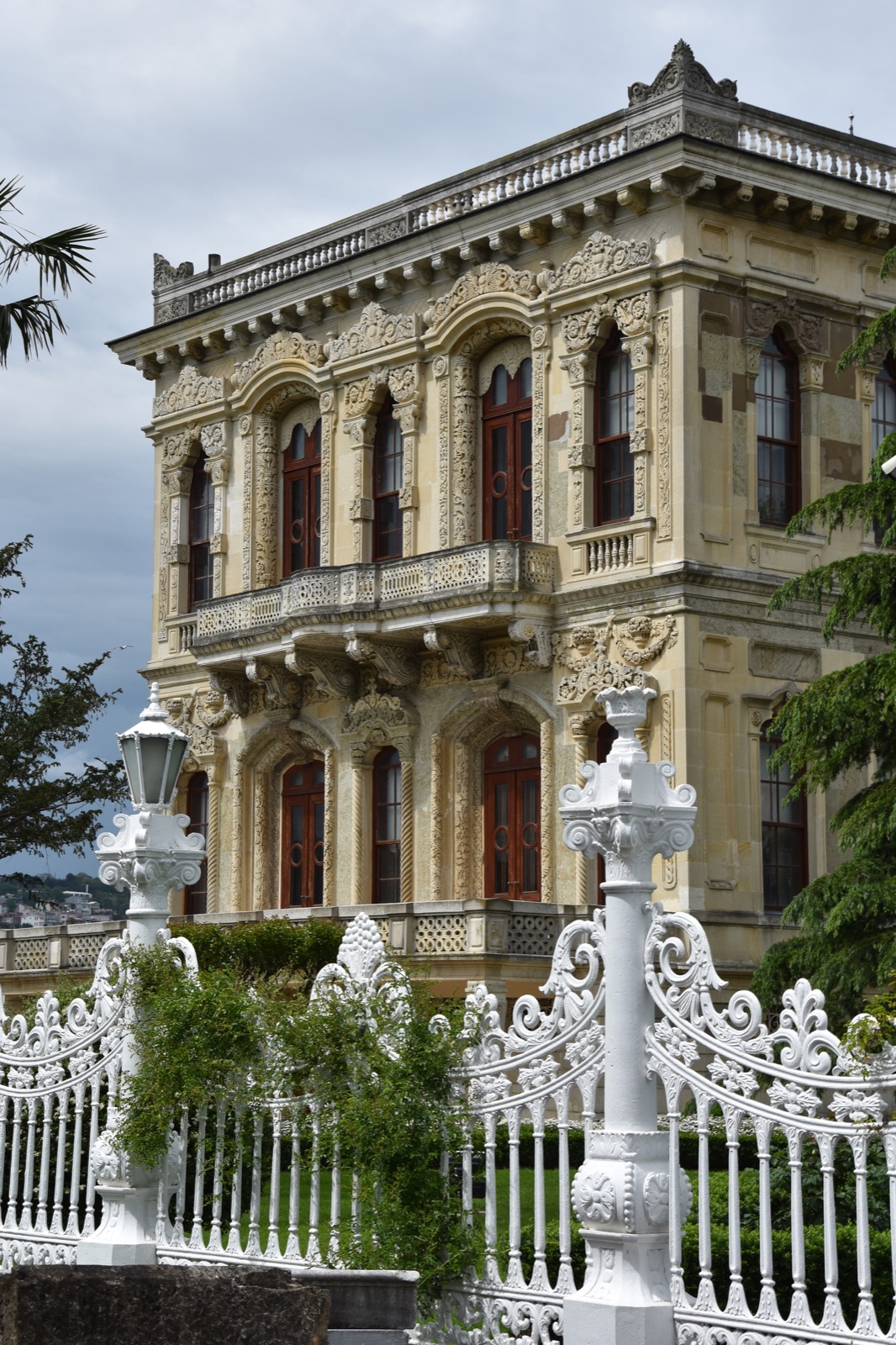
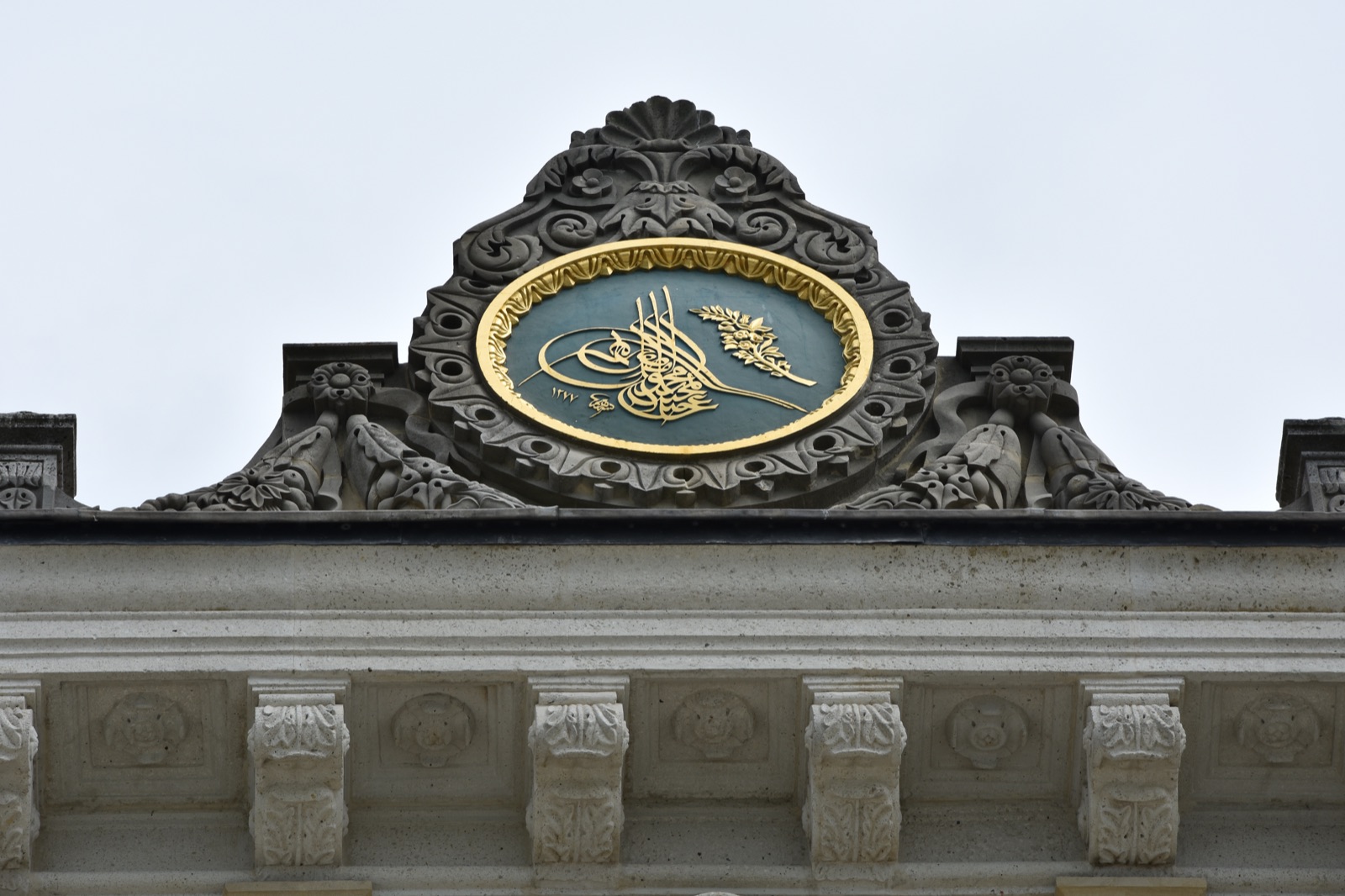
On Küçüksu's façade, Baroque and neo-Baroque forms appear, along with strong relief decoration, curved window frames, and sculptural ornaments. Its water-facing side looks almost like an elaborately designed stage.
Why this palace didn't need bedrooms
Küçüksu wasn't primarily meant for overnight stays. As a Biniş Kasrı, it served short-term visits. The sultan would come for a day, rest, perhaps receive guests, or take part in hunting and excursion activities, then return to his main residence.
That's why the extensive infrastructure of a great palace is missing. There are no huge harem wings, no monumental state apartments, and no complex court city.
It's exactly this function that explains why the building, despite its splendid façade, is comparatively small.
Interiors between stucco, fireplaces, and European furniture
The interiors are richly decorated. Stucco ceilings, parquet floors, crystal chandeliers, carpets, and European furniture show the taste of the 19th century. Especially striking are several decorative fireplaces made of imported, or finely worked, stone.
The floor plan combines a central salon with adjoining rooms — a scheme reminiscent of traditional Turkish-Ottoman house forms. The furnishings, by contrast, feel strongly European.
Küçüksu is thus a lovely example of how "Western-influenced" doesn't automatically mean "fully copied from Europe."
Abdülaziz and the even richer façade
Under Abdülmecid's successor Abdülaziz, the façades and decorations were further worked on and made more elaborate. Abdülaziz had a pronounced taste for monumental architecture and also left his mark on Çırağan and Beylerbeyi.
So today's impression of the pavilion isn't solely the result of 1857. As so often in Istanbul, even a relatively young palace was already altered in the next generation.
Republic and museum
After the end of the Ottoman Empire, the dynastic palaces passed into state ownership. Küçüksu was protected and finally opened to visitors as a museum palace in 1983.
Today you can read the pavilion in connection with the other Bosphorus residences: Dolmabahçe was government and grand representation, Beylerbeyi a summer palace and guesthouse, while Küçüksu, by contrast, was a smaller day pavilion.
Göksu as a social meeting point
In the 18th and 19th centuries, Göksu wasn't just a royal hunting ground. Its meadows and shores became popular excursion spots. People arrived by boat, musicians played, food was brought along, and social groups took advantage of the cooler Bosphorus air.
Travel accounts and Ottoman literature describe the area as a romantic leisure spot. Such excursion spaces mattered, because Istanbul could be dense, loud, and hot in summer. Anyone who could afford it moved to the water or went out for a day.
Küçüksu Kasrı therefore doesn't stand in isolation. It was the princely version of a broader Bosphorus culture, in which gardens, meadows, and water formed central leisure landscapes.
The Balyans and the question of "Ottoman" architecture
The Balyan family was Armenian and, at the same time, firmly anchored in the Ottoman court system. Family members designed palaces, mosques, and public buildings for several sultans. Their works show how problematic simple national categories can be.
Is Küçüksu "Armenian architecture" because its architect was of Armenian origin? "European architecture" because Baroque forms appear? Or "Ottoman architecture" because the sultan commissioned it and the building functioned within Ottoman court culture? The most sensible answer is: it's all of that, on different levels.
The Ottoman Empire was multiethnic. Architects, craftsmen, and artists from various communities worked for the court. The Balyans in particular make this diversity visible.
Furniture as a sign of a new way of living
In the 19th century, it wasn't just the façades of palaces that changed. Interiors were also furnished differently. European chairs, sofas, tables, crystal chandeliers, and fireplaces replaced or supplemented older forms of seating and living culture.
This meant a change in physical habits. Anyone sitting on a European chair organizes a room differently from someone taking a seat on low divans along the walls. Architecture and furniture therefore influence social behavior.
Küçüksu shows this transition especially well, since its floor plan still recalls traditional central-salon layouts, while its furnishings feel very European.
Why a day palace made political sense
A sultan couldn't relocate the entire court for every excursion. A small pavilion offered a prepared, safe, and representative place to stay. The kitchen and service areas lay in the basement, while reception and rest rooms waited upstairs.
Such buildings formed a network along the Bosphorus. The ruler could move around, hunt, or meet guests, while still remaining within a controlled courtly infrastructure.
Film backdrop and modern perception
Because of its decorative architecture, Küçüksu has repeatedly been used as a film and photo backdrop. International productions sometimes present the building as an exotic palace, independent of its actual historical function.
That's not unusual. Film creates new images that, at some point, lodge themselves more firmly in memory than history does. That's why it's worth reminding yourself on site: this was no huge fairy-tale palace, but a relatively compact day pavilion with a very concrete function.
The view over the Bosphorus as part of the design
The location between water and streams was no accident. Windows and façades are oriented so that landscape becomes part of the interior. In the 19th century, the view increasingly became an element of courtly architecture.
Today the surroundings have changed massively, but the relationship to the water remains. It's exactly from the shore that you understand why Abdülmecid found this place representative enough, despite its small footprint.
What to look at deliberately at Küçüksu
From outside, it's worth looking first at the water side. Reliefs, stairs, and the small fountain area are decorated so richly that you easily forget how compact the whole building is. Inside, you should then pay attention to the connection between the central salon and the four adjoining rooms. This floor plan explains, better than any stylistic label, how traditional Ottoman residential organization was combined with European furnishing.
The fireplaces are also striking. They're treated not just functionally, but as decorative individual pieces. Together with mirrors, stucco, and furniture, they create almost the impression of a jewel box. Precisely because Küçüksu has no huge sequences of rooms, you can appreciate such details better here than at Dolmabahçe, where the scale often overwhelms.
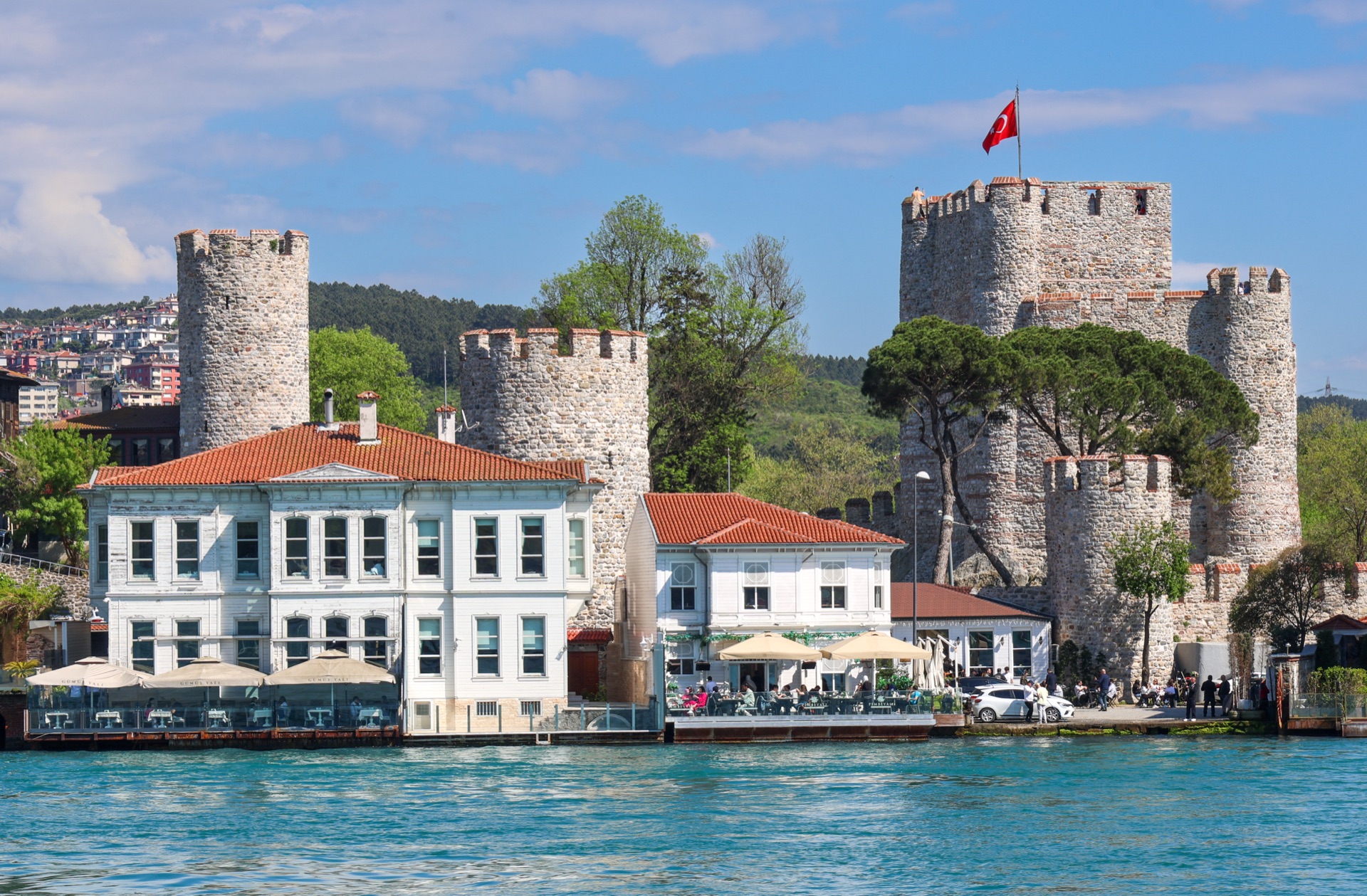
If you stay by the shore afterward, it's worth looking toward Anadolu Hisarı. Within a few minutes' distance, a medieval military building and a 19th-century courtly pavilion stand side by side. Several centuries of Ottoman history lie, practically, along the same bend of the Bosphorus.
Küçüksu compared with Beylerbeyi and Dolmabahçe
Anyone visiting several palaces can easily lump them all together: lots of gold, lots of furniture, a Bosphorus view. Küçüksu becomes more interesting once you compare its function. Dolmabahçe was a great residence and political showcase. Beylerbeyi served as a summer palace and guesthouse. Küçüksu was much smaller and meant for short stays.
That also explains the number of rooms. A day pavilion doesn't need huge kitchens, harem wings, and administration. Above all, it has to be comfortable, beautiful, and representative. This focus makes Küçüksu almost easier to read than the great palaces.
The surroundings as part of the experience
Göksu and Küçüksu were historically sights in their own right. Boats, meadows, and garden grounds shaped the place. Modern roads and development have strongly altered this landscape, but the water and the Bosphorus remain decisive.
Anyone who only walks into the building and back out therefore misses part of the story. A short walk by the water explains better why a sultan wanted a pavilion right here in the first place.
"Küçüksu was the secret summer residence where the sultan lived for months with his entire harem." No. The building was designed mainly for shorter day and excursion stays.
"The building dates entirely from the 18th century." False. Today's stone building was built in 1856/57; an older wooden pavilion stood there before it.
"Because it's small, it was unimportant." Also false. Size and political function aren't the same thing. Küçüksu belonged to the court's representative Bosphorus landscape.
My take on this place
Küçüksu feels almost endearing to me, because compared to Dolmabahçe it's so manageable. You see the same love of decoration, the same desire for representative beauty — but all at a scale a human being can still grasp.
And I like the idea: instead of building a second gigantic palace, you build a beautiful place by the water that you simply come to for an excursion. Of course, "a small excursion pavilion" for a sultan is still a different league than a garden shed for the rest of us.
– Amra