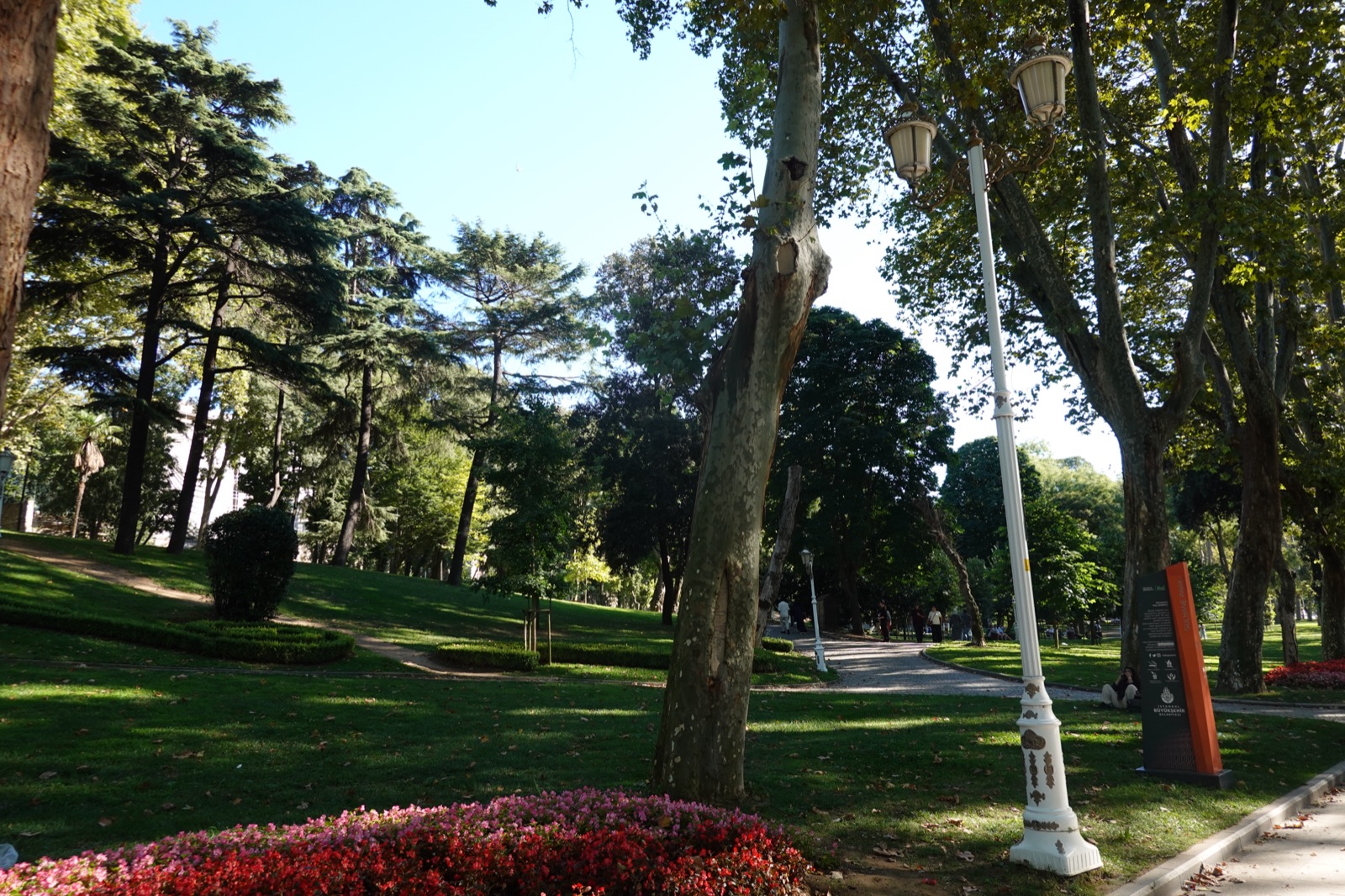
Gülhane Park today feels like a welcome green break between Topkapı Palace, Sirkeci and the historic peninsula. People sit under old trees, children run between flower beds, and anyone walking from Sultanahmet toward Eminönü often simply uses the park as a pleasant downhill route. Historically, though, this ground was by no means always open to everyone. For centuries it belonged to the outer garden area of Topkapı Palace, and thus to a courtly landscape directly tied to the Ottoman ruling house.
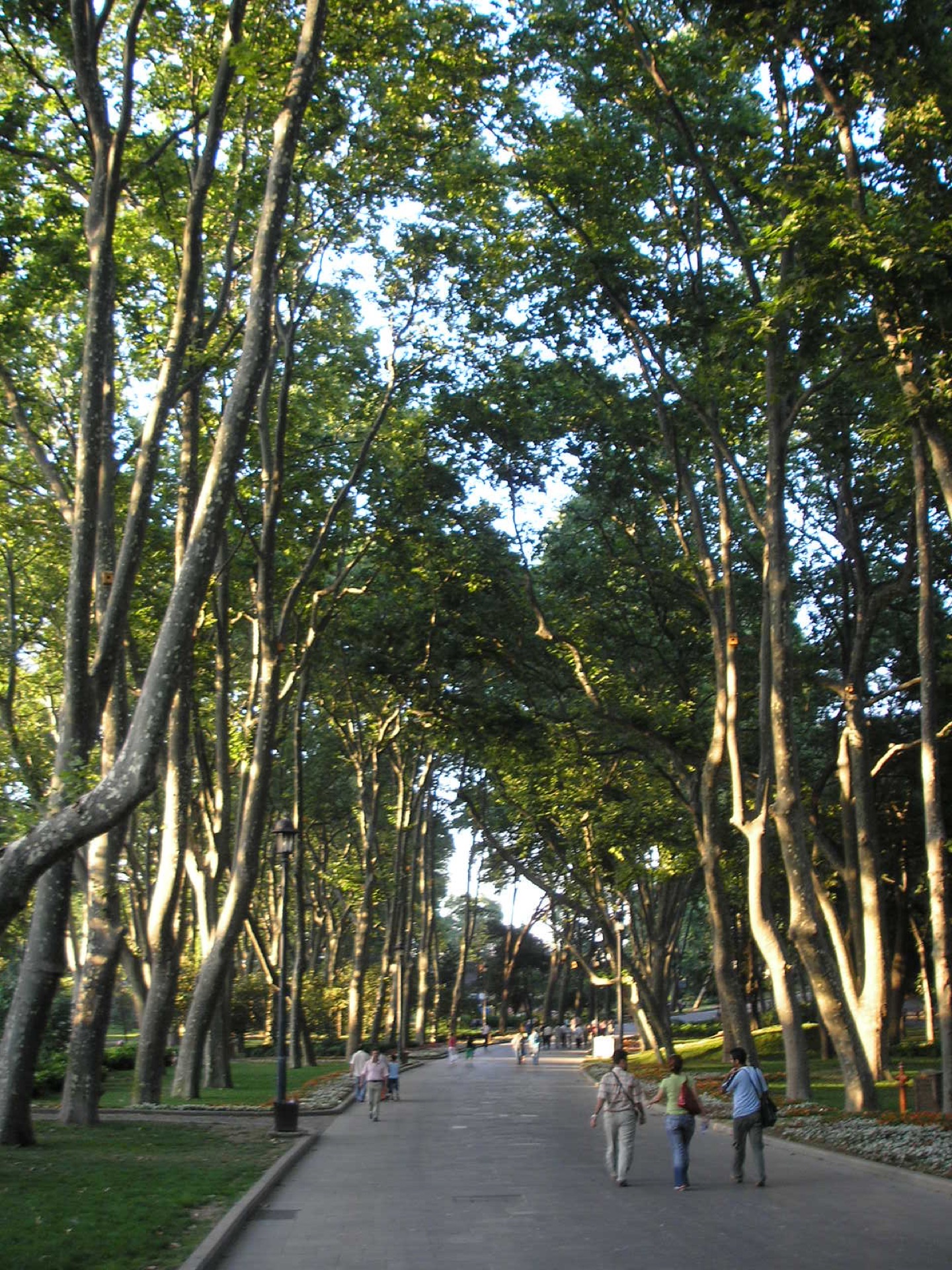
Gülhane Park today feels like a welcome green break between Topkapı Palace, Sirkeci and the historic peninsula. Historically, though, this ground was by no means always open to everyone.
The name "Gülhane" is usually understood as "House of Roses," fitting the idea of a stately garden. Even more significant than the roses, though, is the political history tied to this place. In 1839, the famous Hatt-ı Şerif of Gülhane was proclaimed here, symbolizing the start of the Tanzimat reforms. Almost ninety years later, on November 24, 1928, Mustafa Kemal Atatürk publicly presented the new Latin letters here. Hardly any other park in Istanbul ties Ottoman reform history and the early Republic together so directly.
- Gülhane was, for centuries, part of the outer garden landscape of Topkapı Palace.
- The name is associated with the roses of the palace garden.
- In 1839, the Hatt-ı Şerif of Gülhane was proclaimed here, a key document of the Tanzimat reforms.
- In 1912, the area was opened to the public as a park.
- On November 24, 1928, Atatürk publicly introduced the new Latin letters here.
- The park was redesigned and restored several times in the 20th and early 21st centuries.
- Today it links Topkapı, Sultanahmet, Sirkeci and the lower waterfront areas along one of the old town's most pleasant walking routes.
What Gülhane originally was
Walking through Gülhane today, it's easy to forget that parks as generally accessible urban open spaces are historically quite recent. In the Ottoman capital, large green spaces often belonged to palaces, endowments, private gardens, or elite recreational grounds. The area south and west of Topkapı Palace was part of this courtly landscape and was used as an outer garden. Gardens, pavilions and paths lay here that didn't simply belong to a public city park in today's sense.
Topkapı Palace itself was no isolated island of buildings. Its supply, ceremony and daily life extended into a larger area of gardens, kitchens, service areas, animal enclosures and pavilions. Part of this surrounding area lay exactly where Gülhane Park runs today. So anyone who sees the park only as pretty greenery between the tram and the palace wall is seeing only its most recent function.
Topkapı and the outer palace garden
The Ottoman sultans didn't use gardens just for walking. Garden complexes were part of court life, serving receptions, rest, hunting, botanical interest, and occasionally political staging. Pavilions made it possible to make use of particular viewpoints, or to receive guests outside the palace's stricter interior rooms. The location at Sarayburnu in particular was spectacular, since the Golden Horn, the Bosphorus and the Sea of Marmara all meet within a small space.
Several historic pavilions were lost, relocated, or built over. That means today's open parkland doesn't simply preserve the state of the 17th or 18th century. Paths, vegetation and sightlines were altered. Even so, the closeness to the palace can still be felt immediately today: on one side, the mighty walls of the Topkapı grounds run along, while on the other you gradually descend toward Sirkeci and the coast.
1839: the Hatt-ı Şerif of Gülhane
On November 3, 1839, a document was proclaimed in the Gülhane garden that appears in almost every overview of Ottoman reform history: the Hatt-ı Şerif of Gülhane, also called the Edict of Gülhane. It was read aloud by Mustafa Reşid Pasha in the name of the young Sultan Abdülmecid I. Among other things, the document promised protection of life, honor and property, more orderly taxation, and regulated procedures for military recruitment.
One shouldn't turn this into the modern idea that a liberal constitution appeared overnight. The Ottoman Empire remained a monarchy, and there were often considerable gaps between announced reform and actual implementation. Still, the proclamation marks a turning point, because the state was redefining its own administration, legal order, and relationship to its subjects. Out of this grew the so-called Tanzimat era, in which institutions, the military, education, law and bureaucracy were profoundly transformed.
That this reform document was proclaimed of all places in Gülhane fits the palace's spatial proximity. It was a princely setting, but at the same time large enough to bring together dignitaries, diplomats and other listeners. The park's name thereby became a term in political history.
How court grounds became a public park
With the court's move to the Bosphorus, Topkapı lost part of its earlier function as a daily seat of government in the 19th century. At the same time, ideas about the city and the public sphere were changing. Istanbul got new streets, squares, means of transport, and later, modern parks.
In 1912, Gülhane was opened to the public as a park. Part of the former palace landscape thus became a space that people could now enter regardless of any connection to the court. Istanbul's provincial administration explicitly names 1912 as the year Gülhane became a public park.
That sounds self-evident today, but was symbolically enormous: ground that had for centuries been tied to the spatial distance of the ruling house became part of the city's public life. Cafés, walking paths, events, and later further public facilities changed its character.
1928: Atatürk and the new letters
After the founding of the Republic, an even more radical break followed. In 1928, Turkey replaced the Arabic script previously used for Ottoman Turkish with a Latin-based alphabet. The goal, among other things, was to simplify reading and writing and to culturally and administratively realign the new Republic.
On November 24, 1928, Atatürk stood before the public in Gülhane Park with a board and explained the new letters. Istanbul's provincial administration explicitly names this appearance as one of the park's significant republican events. The place that had stood, in 1839, for the start of Ottoman reforms thus became, once again, the stage for a state-driven modernization — this time under completely different political conditions.
The alphabet reform radically changed everyday life. Adults had to learn a new script, schools had to switch their teaching materials, and newspapers and offices changed their writing practice. At the same time, a cultural distance grew over the long term toward many Ottoman documents, which new generations could no longer read without specialized training. The reform was therefore not merely swapping some letters, but a deep cut into education, administration, and the culture of memory.
What's still historically interesting in the park today
The park itself was redesigned several times. Especially at the start of the 21st century, various later additions were removed in an effort to make the green space calmer and more open. The provincial administration points to a restoration beginning in 2001 and its reopening in 2003.
In and immediately beside Gülhane also lie several important institutions. The Museum for the History of Science and Technology in Islam is housed in former stable buildings of the Topkapı complex. At the edge of the park you come across older walls, gate areas, and the famous Column of the Goths site toward Sarayburnu. From there you can clearly see how closely the park is tied to the historic acropolis and the palace grounds.
Anyone with time shouldn't use the park merely as a passage. It's exactly the combination of trees, palace wall and historical remains that makes visible how strongly the function of the same piece of city ground can change: first part of an imperial residence, then the site of state reform proclamations, later a public park, and today a daily recreation space for a city of millions.
Gülhane as a stage between empire and republic
Precisely because Gülhane feels so calm today, it's worth comparing the site's two great reform moments with each other. In 1839, a sultanate spoke about reform while trying to preserve itself and assert itself against European powers. The Hatt-ı Şerif promised more orderly administration, protection of life and property, and more reliable taxation. It emerged in a world where the Ottoman Empire had to cope simultaneously with territorial losses, military pressure, and internal reform problems. Reform back then didn't mean abolishing the empire, but stabilizing it through more modern administration.
In 1928, by contrast, here stood a Republic that deliberately broke with many institutions and symbols of the Ottoman Empire. The alphabet reform was part of a whole series of measures: new legal systems, education reforms, dress policy, the abolition of the caliphate, and the shift of the political center to Ankara. That Atatürk of all places demonstrated the new letters in Gülhane feels almost like a historical commentary. The very same space where a sultan had a reform of the empire proclaimed almost ninety years earlier now became the stage for a Republic that understood itself as a fundamentally new political project.
The two events also show how strongly top-down modernization kept playing a role in Ottoman-Turkish history again and again. Both in 1839 and in 1928, state decisions were meant to reach deep into people's daily lives. In one case it was about administration, taxes, security and legal guarantees; in the other, about reading, writing, and thereby the daily communication of millions of people. Both reforms were welcomed, criticized, implemented unevenly, and only became social reality over time.
The park as part of a much older urban landscape
History under today's green space obviously doesn't end in the 19th century. The area belongs to the ancient acropolis of Byzantium and later Constantinople. Byzantine palace and administrative buildings, churches and fortifications stood in the surrounding area. The famous Column of the Goths at Sarayburnu, a late-antique column with a Latin inscription, is a reminder that an important political ridge stood here many centuries before Topkapı Palace.
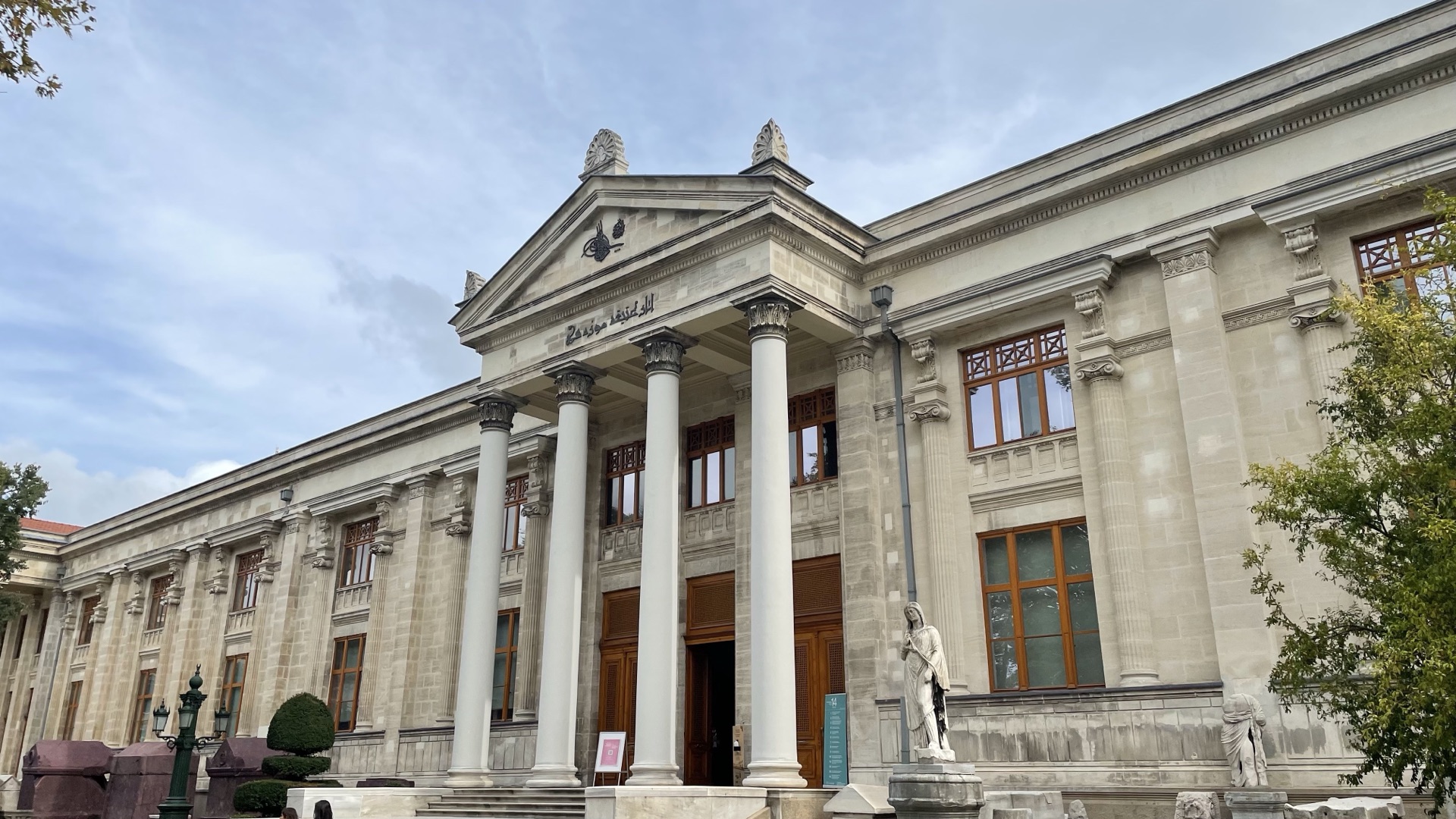
The proximity to the Hagia Irene is also significant. After 1453, this church lay within the outer Topkapı grounds and was not converted into a mosque by the Ottomans. Instead, it served, among other things, as a weapons depot, and later as part of early museum collections. Anyone walking from Gülhane toward the Archaeological Museum is thus moving through a space where Byzantine, Ottoman and republican use overlap, practically without a clear boundary.
The park itself changed several times over the 20th century. At times there was a zoo, amusement areas, cafés and other additions there that have since disappeared. The restoration at the start of the 21st century tried to recover a calmer, more historical landscape character. That's also an interesting topic: what do we actually consider "historic"? The zoo, too, was at some point part of the park's history, but was later removed as an unfitting layer. Heritage preservation therefore always also decides which past should remain visible.
Why Gülhane is more than a shortcut on an Istanbul route
Practically speaking, Gülhane is one of the most pleasant connections for visitors between Sultanahmet and Sirkeci. But anyone who takes their time can read the route as a small historical axis. At the top lie Topkapı and the Hagia Sophia; in the park, the memory of palace gardens and reforms; further down, the Archaeological Museums; and toward Sirkeci, the world of the railway and the modern city.
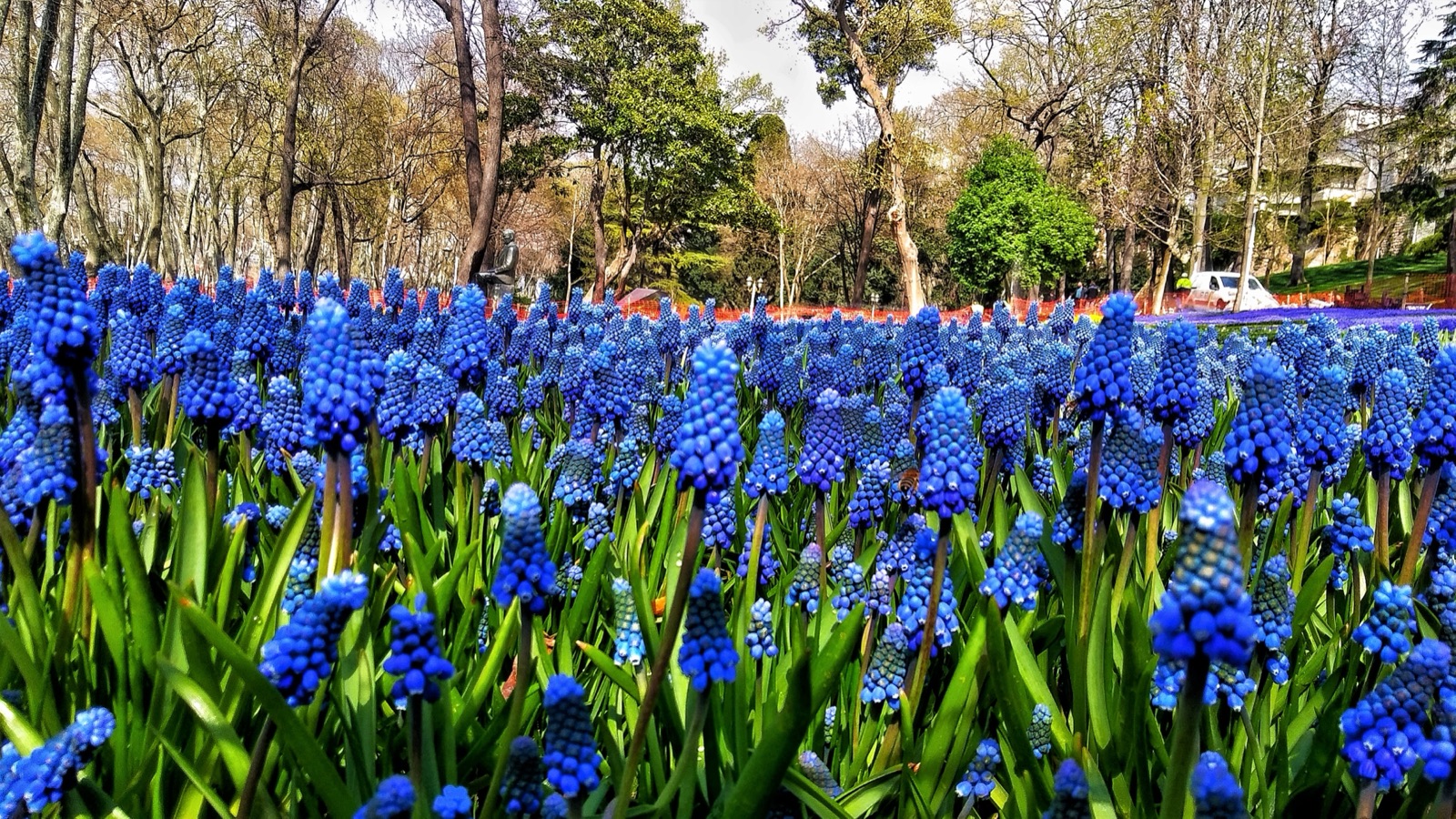
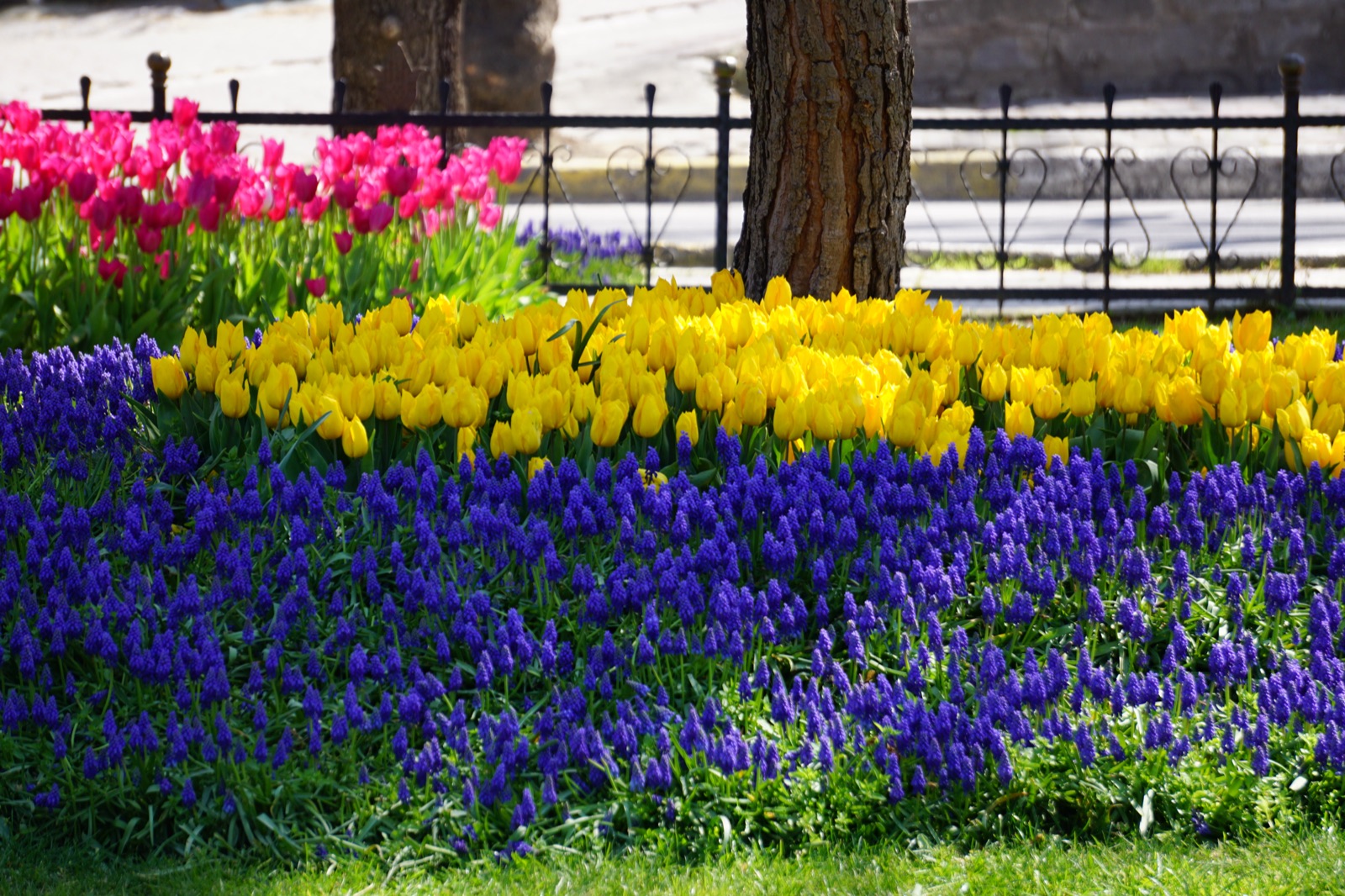
Especially in summer, the shade of the old trees is a gift. But the park also changes interestingly in winter, since the bare branches reveal more of the walls and the shape of the terrain. Anyone who comes only in April, during tulip season, sees an especially decorative version of the park; anyone who experiences it in other seasons understands its spatial function between hill and shore more clearly.
"Gülhane was always a public park." False. The space long belonged to the palace landscape and was only opened as a public park in 1912.
"The Turkish Republic was declared here." False. Gülhane is tied to important reform events, but the Republic was proclaimed in Ankara in 1923. What took place in the park in 1928 was the famous public presentation of the new letters.
"The Hatt-ı Şerif of Gülhane made all residents of the empire immediately, fully equal under the law." Too simple. The document launched important reforms and stated promises of protection, but implementation and later questions of equality developed over decades.
My take on this place
For me, Gülhane is a good example of how a place doesn't have to look spectacular to carry great history. You can simply stroll under the trees there while standing on ground that first belonged to the palace, then became the stage for Ottoman reform politics, and later republican modernization.
It's exactly this ordinariness that I like. Not every history needs a golden dome or a huge palace. Sometimes a park is enough, where people eat their ice cream today, while a few meters away, decisions were once explained that changed the lives of millions of people.
– Amra