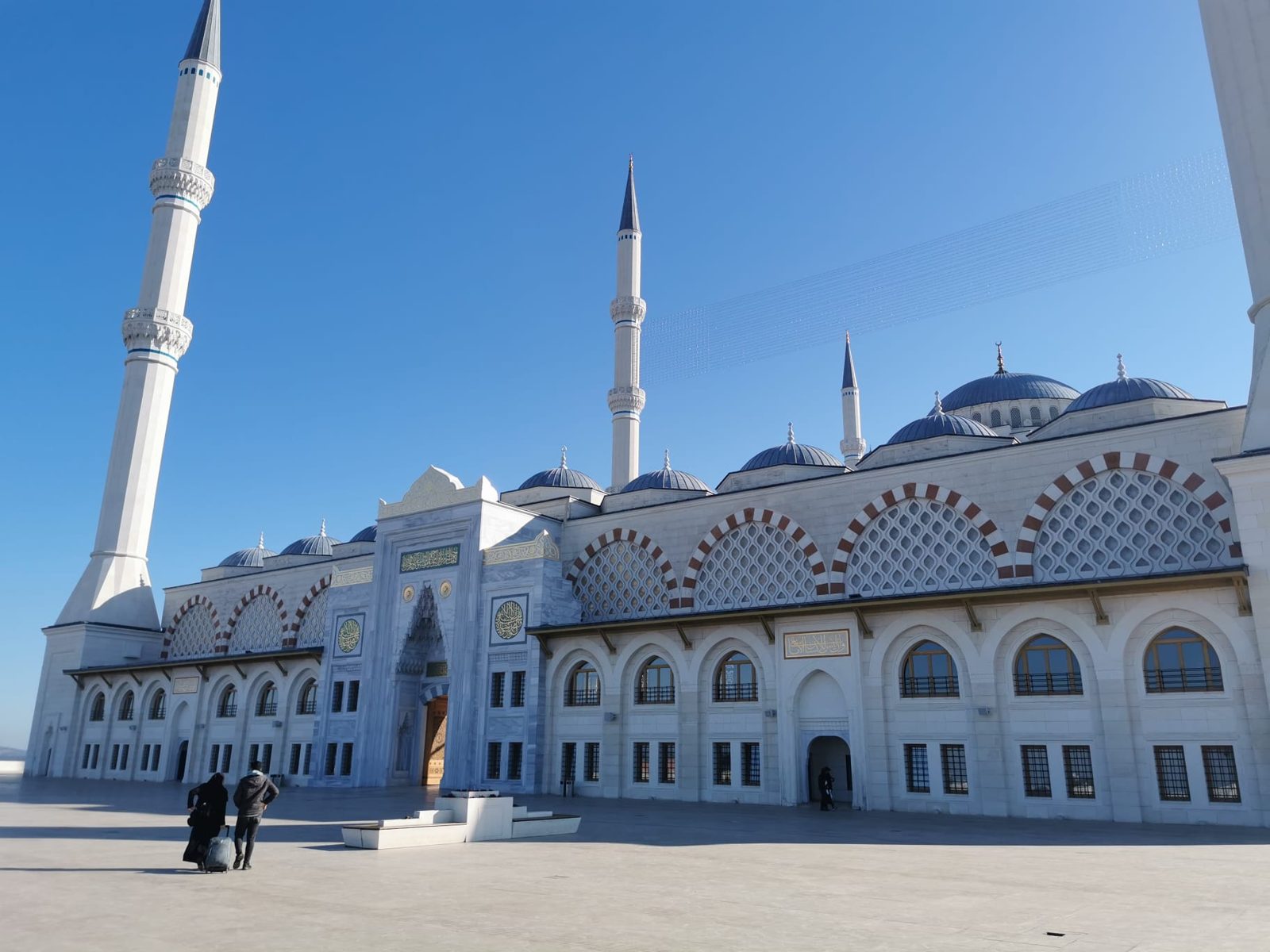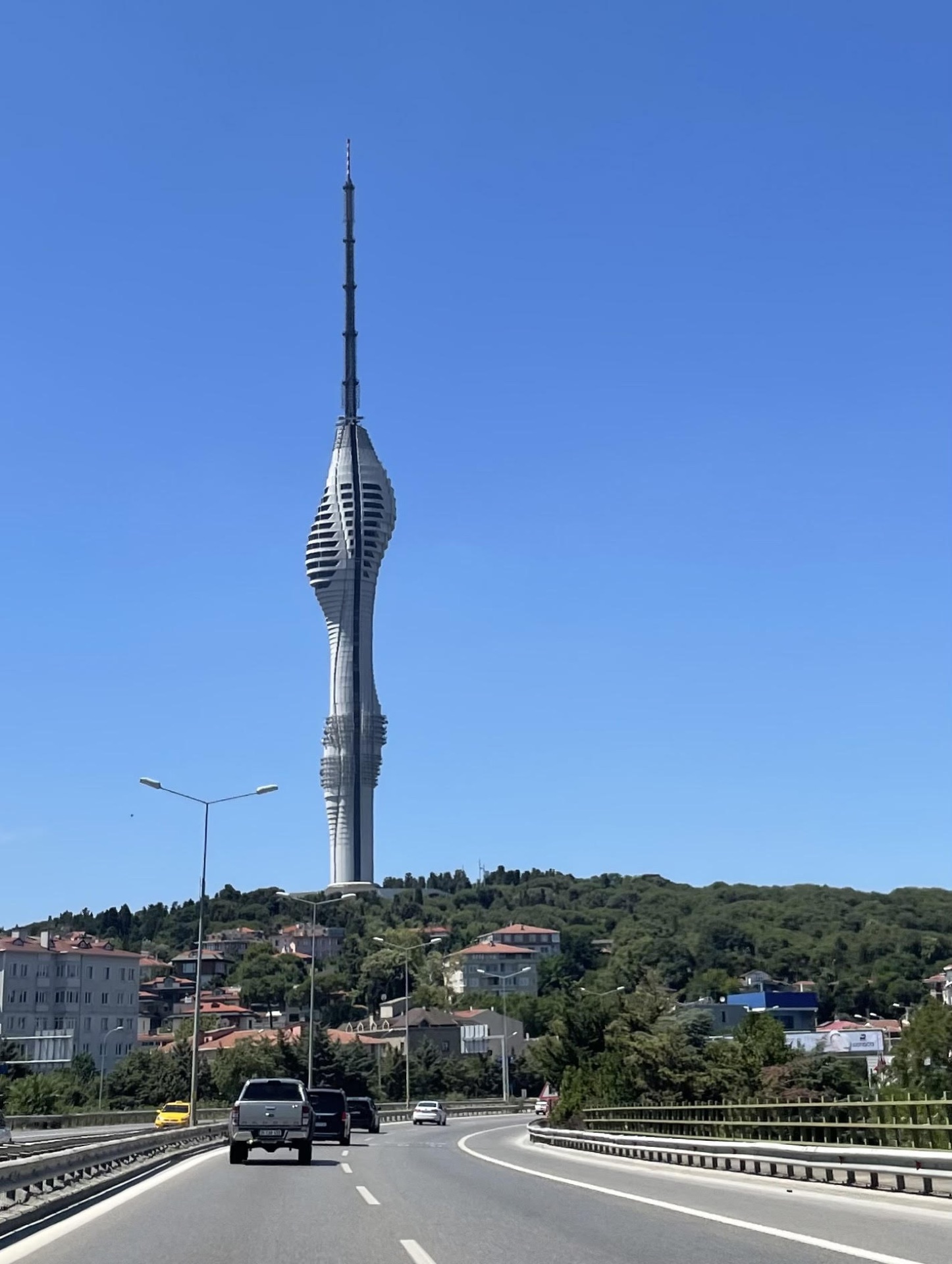

Anyone driving up to Çamlıca today sees two things immediately: the massive new Çamlıca Mosque and the modern TV tower. This makes it feel almost as if the hill only became important in the 21st century. In fact, Çamlıca was already a popular viewpoint and excursion destination long before that. Ottoman poets, courtiers, and wealthy families visited these heights to see the Bosphorus, the historic peninsula, and the Princes' Islands. Gardens, pavilions, and picnics were part of a leisure culture in which the view itself became the experience.
Advertising: If you book through our links, we may receive a commission – at no extra cost to you.
Anyone driving up to Çamlıca today sees the massive new mosque and the modern TV tower. Yet Çamlıca was already a popular viewpoint long before that: Ottoman poets, courtiers, and wealthy families visited these heights for the view over the Bosphorus and the peninsula.
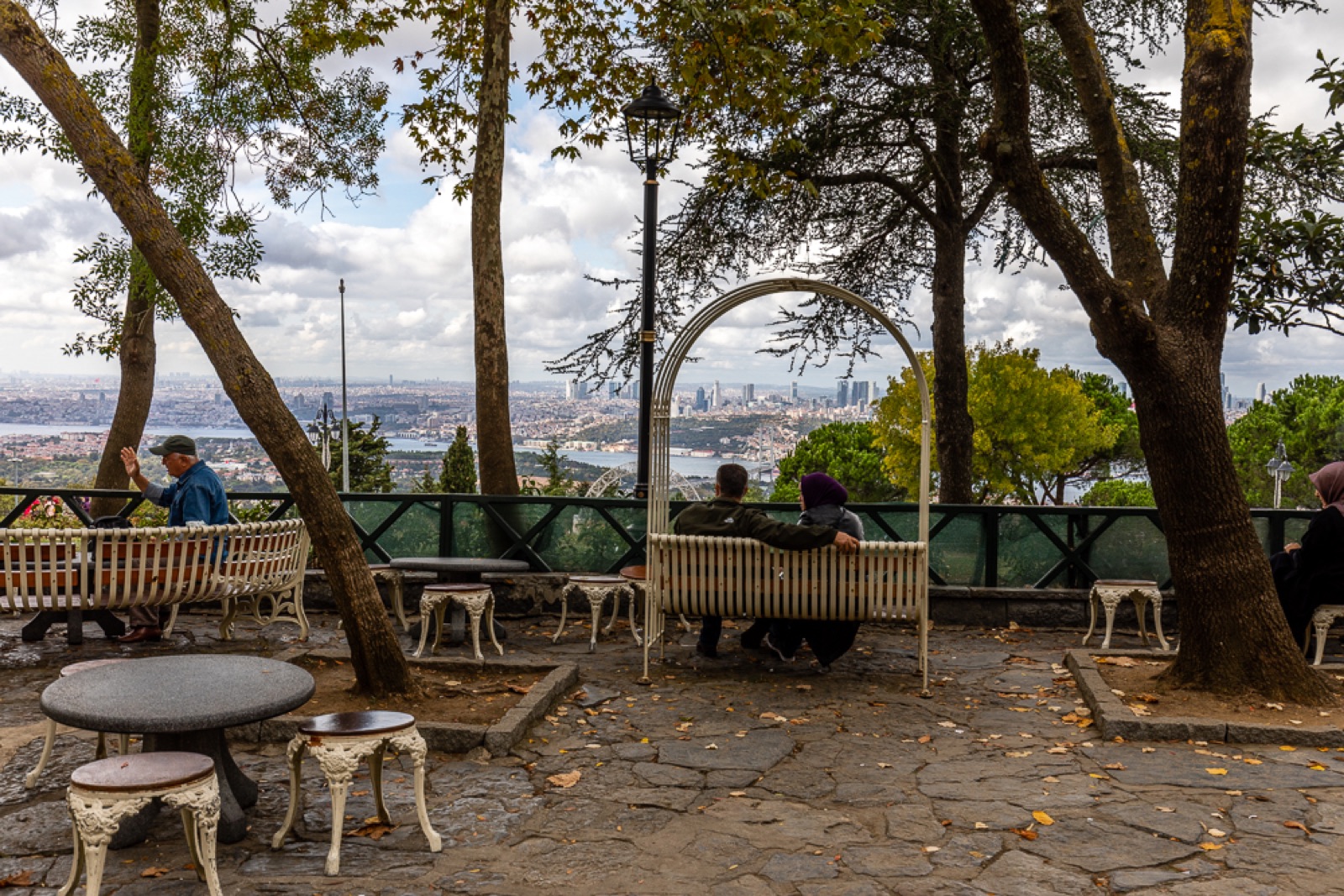
It's exactly the location that explains the appeal. Çamlıca sits high above the Asian side, opening up a view over large parts of Istanbul. From there, the city doesn't appear as a single old town, but as a vast landscape of water, bridges, high-rises, mosques, islands, and hills. Anyone who only knows Istanbul from Sultanahmet Square truly understands, for the first time, up on Çamlıca, just how big this city has become.
- Çamlıca was already a popular viewpoint and excursion destination in Ottoman times.
- The hill consists, in everyday usage, of several elevated areas, especially Büyük Çamlıca and Küçük Çamlıca.
- From the top you see the Bosphorus, the historic peninsula, bridges, and, depending on visibility, far beyond the city.
- In the 19th century, excursions, gardens, and pavilions on Çamlıca became especially popular.
- The modern Çamlıca Mosque opened in 2019.
- The new TV tower additionally changed the hill's silhouette.
- Çamlıca is thus both a historic excursion site and a modern symbol of the Asian skyline.
Why Çamlıca was popular early on
Istanbul is a city of hills. Long before viewing terraces with cafés and smartphones existed, people sought out elevated places to enjoy wind, nature, and panorama. Çamlıca offered ideal conditions for this. The Bosphorus lay below, the historic peninsula was visible, and at the same time you were outside the densely built city areas.
Especially in the 18th and 19th centuries, the area became associated with excursions and gardens. Anyone who could afford it left the more densely built neighborhoods for a few hours and sought out greener heights. Çamlıca became charged not just scenically but culturally. Poems and songs turned the place into a symbol of longing, beauty, and Istanbul's distinctive topography.
Ottoman excursion culture
Picnics weren't a modern leisure fad. Ottoman city dwellers used certain meadows, gardens, and waterside spots as public or semi-public excursion spaces. Families brought food, musicians performed, children played, and people spent hours outside the cramped residential quarters. Çamlıca was one of these preferred spots.
Such excursions had a social dimension. Different population groups encountered one another, while social hierarchies remained visible at the same time. Wealthy families had pavilions and private gardens at their disposal, while others used public areas. Even so, a leisure culture emerged on the hills that many contemporary observers associated with Istanbul.
Poets, music, and Çamlıca
In Ottoman and later Turkish literature, Çamlıca keeps appearing as a landscape image. Authors used the hill as a stage for walks, love stories, or reflections on the city. Especially in the 19th century, as Istanbul modernized rapidly, a view from above could become a symbol for the tension between "old" and "new" life.
Music and popular culture picked up the place too. Çamlıca thus became more than geography. A hill can be charged culturally just as much as a palace, once generations of people associate it with particular feelings.
Büyük and Küçük Çamlıca
In everyday speech, people often just say "Çamlıca," but there are actually several heights. Büyük Çamlıca is the taller and better-known viewpoint. Küçük Çamlıca sits somewhat lower and also has historic gardens and pavilions.
This distinction is practical, since visitors otherwise easily assume every viewpoint, every park, and every historic building sits on the same summit. Çamlıca is more a larger hill-and-green landscape than a single viewing balcony.
The view, and what you actually see
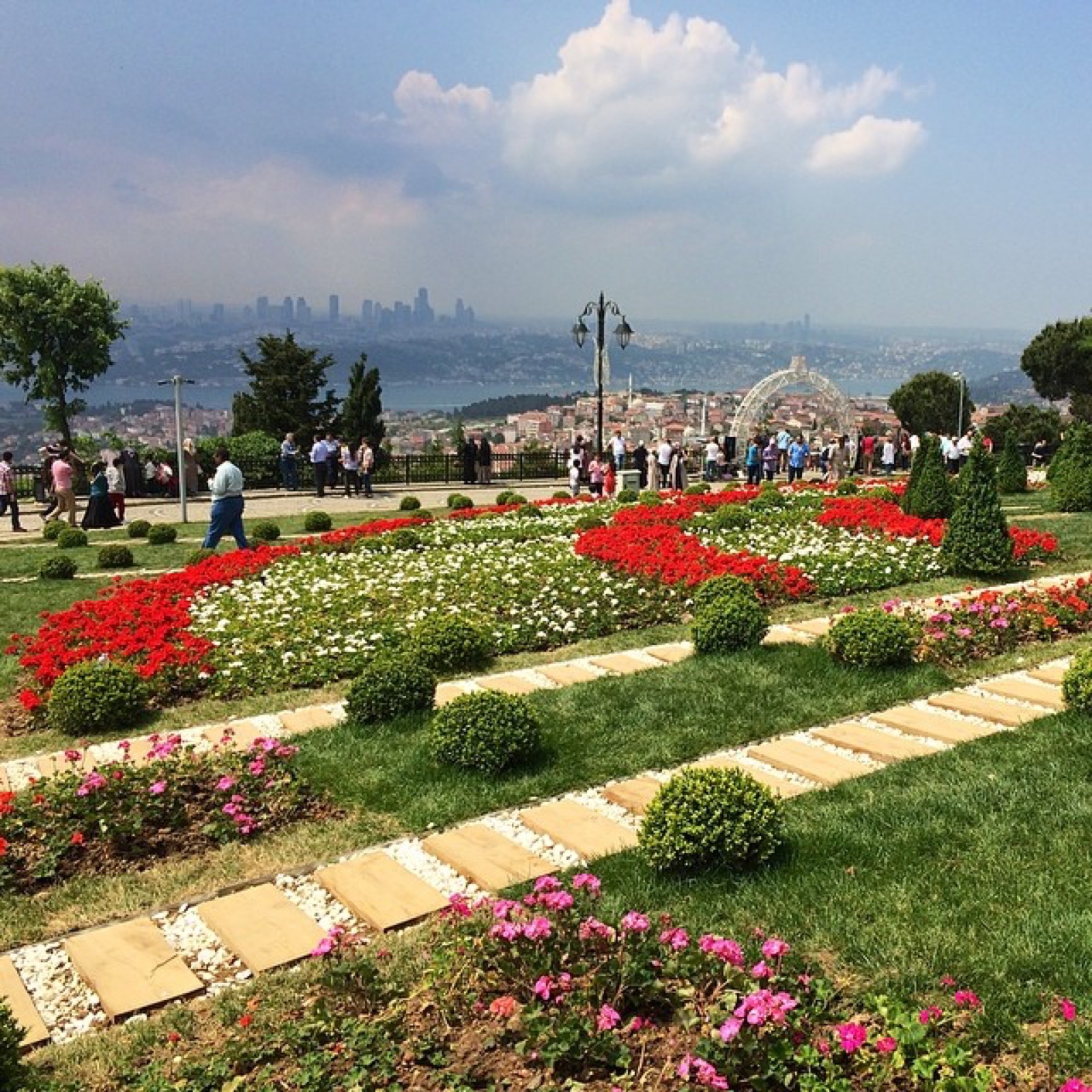
In clear weather, the panorama is enormous. You make out large parts of the Bosphorus, the European side, the historic peninsula, and modern city areas. Depending on location and weather, the Princes' Islands appear clearly too. Sunsets in particular draw many visitors.
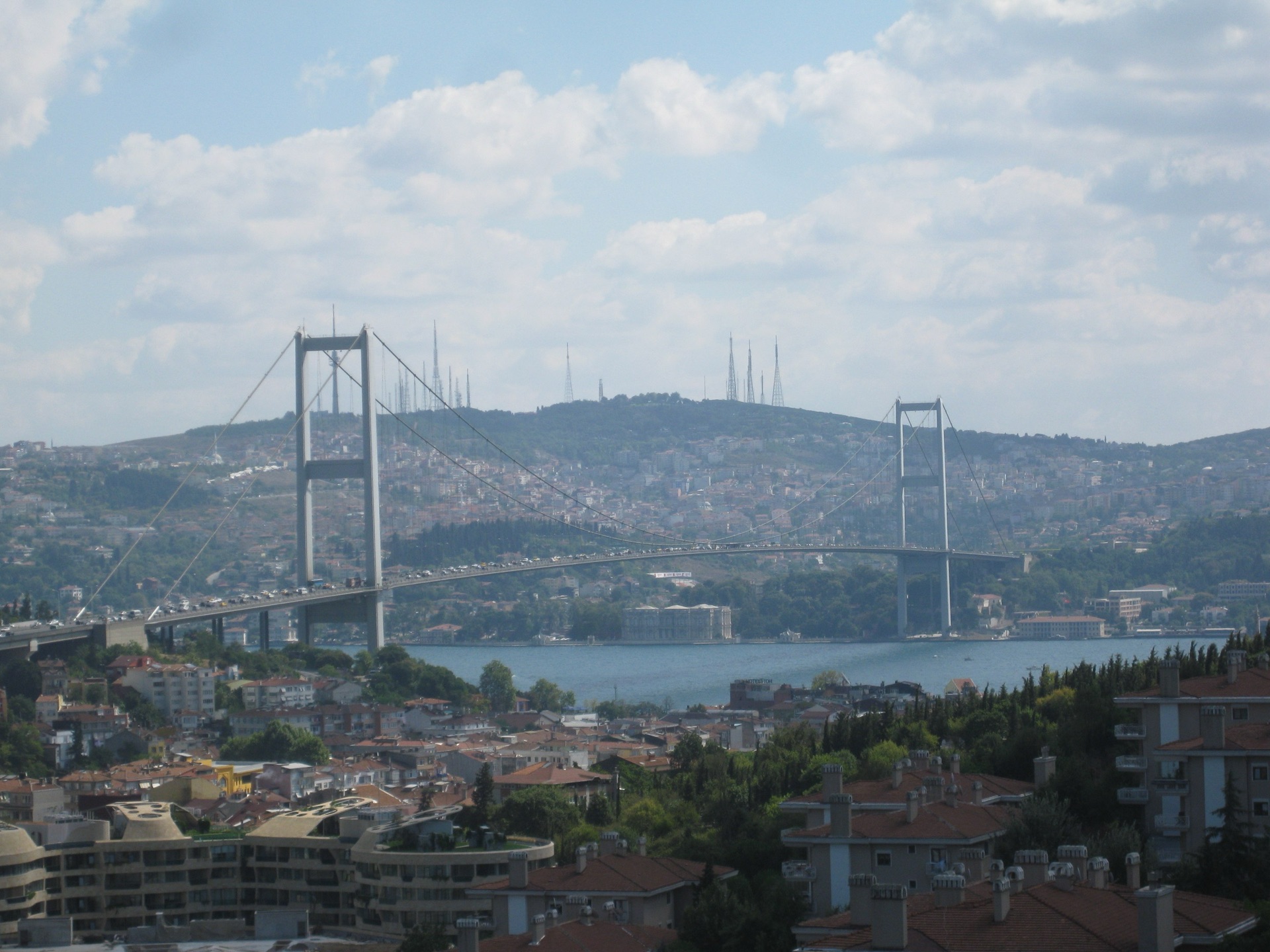
The view, though, has changed. Historic visitors saw no Bosphorus bridges, no high-rises in Levent, no great highway axes, and of course neither the modern TV tower nor the great new mosque. The view is therefore itself a historical document: the same hill shows a different city in every era.
How modern roads changed the hill
As Istanbul grew, Çamlıca became ever more strongly woven into the urban fabric. Roads, residential development, and technical infrastructure moved closer. What had been a rather outlying excursion spot became part of the megacity.
That also changes the experience. Today you drive up comfortably instead of undertaking a long rural journey. At the same time, quiet stretches of landscape disappear. Urban development makes places more accessible, and often, by that very act, takes away part of the seclusion that made them attractive in the first place.
Mosque and TV tower
The Great Çamlıca Mosque opened in 2019 and is now visible from large parts of Istanbul. The new Çamlıca TV tower followed shortly after as a technical landmark. Both structures radically changed the hill's silhouette.
Previously, Çamlıca was above all the place from which you looked at the city. Today it's additionally a place at which the city looks. That's an important difference. The hill itself became a widely visible part of modern Istanbul's self-representation.
Why the hill became politically visible
Great religious and technical structures in a metropolis are never entirely neutral. Supporters welcomed the Çamlıca Mosque as a significant new mosque of the Republic and a visible religious center. Critics saw its size and location as deliberate political symbolism placed in the skyline.
The TV tower, by contrast, was justified mainly by the goal of consolidating many individual antenna installations while also creating a modern landmark. Both projects show how cityscapes are shaped politically and technically.
"Çamlıca only became known because of the new mosque." False. The hill was already a famous excursion and viewing spot in Ottoman times.
"From Çamlıca you can see all of Istanbul." Not literally, of course. The city is far too big for that, but the panorama covers an exceptionally large part of the metropolis.
"From Çamlıca Hill you can see all of Istanbul in any weather." No. Haze, clouds, and air pollution can strongly reduce visibility.
"The Asian side has no historic viewpoints." Also false. Çamlıca is exactly one of the classic examples of one.
Çamlıca as a historic vantage point
Long before modern viewing facilities were built there, Çamlıca Hill was a popular excursion spot. In Ottoman times, people came from the city up to the Asian heights to escape the dense urban fabric, visit gardens, and enjoy the view over the Bosphorus and the historic peninsula. Especially in the 19th century, such viewpoints became part of an urban leisure culture in which picnics, music, coffee, and landscape all belonged together.
The elevation, though, made Çamlıca not just romantic, but topographically important too. From here, Istanbul's entire structure can be read especially well. You make out the historic peninsula, the Bosphorus, the bridges, the European side, and, in clear weather, large parts of the modern city. Anyone who experiences Istanbul only at street level often doesn't understand how strongly hills, water, and valleys organize the city. Çamlıca makes this geography visible.
The Great and Little Çamlıca hills
Travel accounts often simply speak of "Çamlıca," but there are actually several heights, or areas. Büyük Çamlıca is the better-known, larger viewing hill. Küçük Çamlıca sits somewhat lower and was likewise known for gardens, pavilions, and walks.
This distinction matters, because historic descriptions don't always mean the same spot. Anyone reading old images or texts should therefore check carefully which hill the account refers to.
Today both areas are strongly integrated into the modern city, but green spaces and views still recall their earlier significance as an excursion area.
Ottoman picnic and garden culture
Parks and slopes outside the dense old town were important social spaces. Families came to picnic, musicians performed, and wealthy residents had summer houses, or pavilions, built.
Çamlıca became, especially in literature and music, a romantic symbol. The view of the Bosphorus and the city offered an ideal backdrop for a culture in which landscape and sociability were closely tied together.
That doesn't mean the hill was always idyllic and empty. Even then there were popular excursion times, crowds, and commercial offerings. The idea of a completely untouched Ottoman natural paradise is just as romanticized as some modern Instagram portrayals.
The Great Çamlıca Mosque changes the skyline
With the opening of the Great Çamlıca Mosque in the 21st century, the hill gained a new dominant monument. The mosque is visible from far away and was deliberately built at a scale that monumentally marks the Asian part of Istanbul.
This changed perception of the hill. Previously, Çamlıca was mainly a viewpoint; today it's also a religious and architectural destination.
The mosque is judged differently by different people. Supporters see in it a significant modern house of worship and a new landmark. Critics discuss its size, political symbolism, and impact on the historic silhouette. Both perspectives belong to the place's current history.
The TV tower as a second modern dominant
Just a few kilometers away, the modern Çamlıca TV tower also shapes the hilltop area. It consolidated numerous earlier antenna installations while simultaneously creating a new touristic viewing destination.
As a result, two completely different types of monument now stand side by side on Çamlıca: a great mosque drawing on religious and traditional forms, and a futuristic telecommunications tower.
The contrast is almost a small model of modern Istanbul — historic, religious, technical, and spectacular all at once.
What you can actually make out from up here
In clear weather, you can identify various bridges, the historic peninsula, parts of Beşiktaş, Üsküdar and Kadıköy, as well as the Bosphorus axis. Distances look surprisingly small from above.
That's exactly what helps with trip planning. Places that look far apart on a map sometimes lie, visually, along a shared axis. Other destinations look close, but turn out to be more complicated to reach because of hills and traffic routes.
Istanbul is three-dimensional. Çamlıca proves it.
Weather, visibility, and time of day
A viewpoint lives off its conditions. Haze can noticeably limit visibility, especially on warm days. After rain, or in clear winter air, the panorama can, by contrast, reach extremely far.
Sunset is popular, but not automatically the best time. Mornings are often calmer, and visibility can be clearer. In the evening, though, that light mood emerges in which the city slowly begins to glow.
Anyone wanting to take photos shouldn't just think "sunset = perfect," but should factor in weather, direction, and haze.
Çamlıca as a place to stay, not just check off
Many people drive up, take three photos, and drive off again. Yet the hill is actually a good place to stay a while. A tea, a walk, and simply the view over the city can, after several intense days of sightseeing, feel almost more restful than the next attraction.
Precisely because Istanbul can be so loud and dense, elevation sometimes does you good. You see the same city, but suddenly you don't hear it quite so strongly anymore.
What I especially like about Çamlıca
For me, this place is especially interesting for the moment when you stand at the top and, for once, aren't looking at the city from a narrow street. Suddenly you have space in view. You realize just how huge Istanbul really is, and at the same time how much revolves around this one stretch of water.
And then you step into the great mosque and get the opposite again: outside, expanse; inside, calm. The calligraphy, the arches, the proportions — you automatically look up, not quite knowing what to look at first.
This is one of those places where you can genuinely, deliberately breathe in and out for a moment.
- If you'd like to see Istanbul from above once, you can check tickets and available visiting times for the Çamlıca Tower here.
- View tickets for the Çamlıca TV Tower
My take on this place
On Çamlıca, I especially notice how enormous Istanbul is. Down in a street, you quickly think only about the district you're currently standing in. From above, you suddenly see water, bridges, high-rises, mosques, and entire neighborhoods all at once.
And then you understand why people came up here exactly like this centuries ago. Of course their Istanbul looked completely different. But that feeling of standing up there for a moment and simply letting the city sink in — I can understand that very well.
At the top of the hill stands the TV tower with its viewing platform; the ticket can be arranged in advance.
– Amra