
You can't look at the Great Çamlıca Mosque the way you would a centuries-old Ottoman mosque. It was only built in the 21st century and officially opened in 2019. That's exactly what makes it historically interesting. It shows how today's Turkey interprets religious architecture, which symbols it uses, and how deliberately a modern building can be placed within the skyline of a city already full of famous domes and minarets.
You can't look at the Great Çamlıca Mosque the way you would a centuries-old Ottoman mosque. It was only built in the 21st century and officially opened in 2019 — and that's exactly what makes it historically interesting.
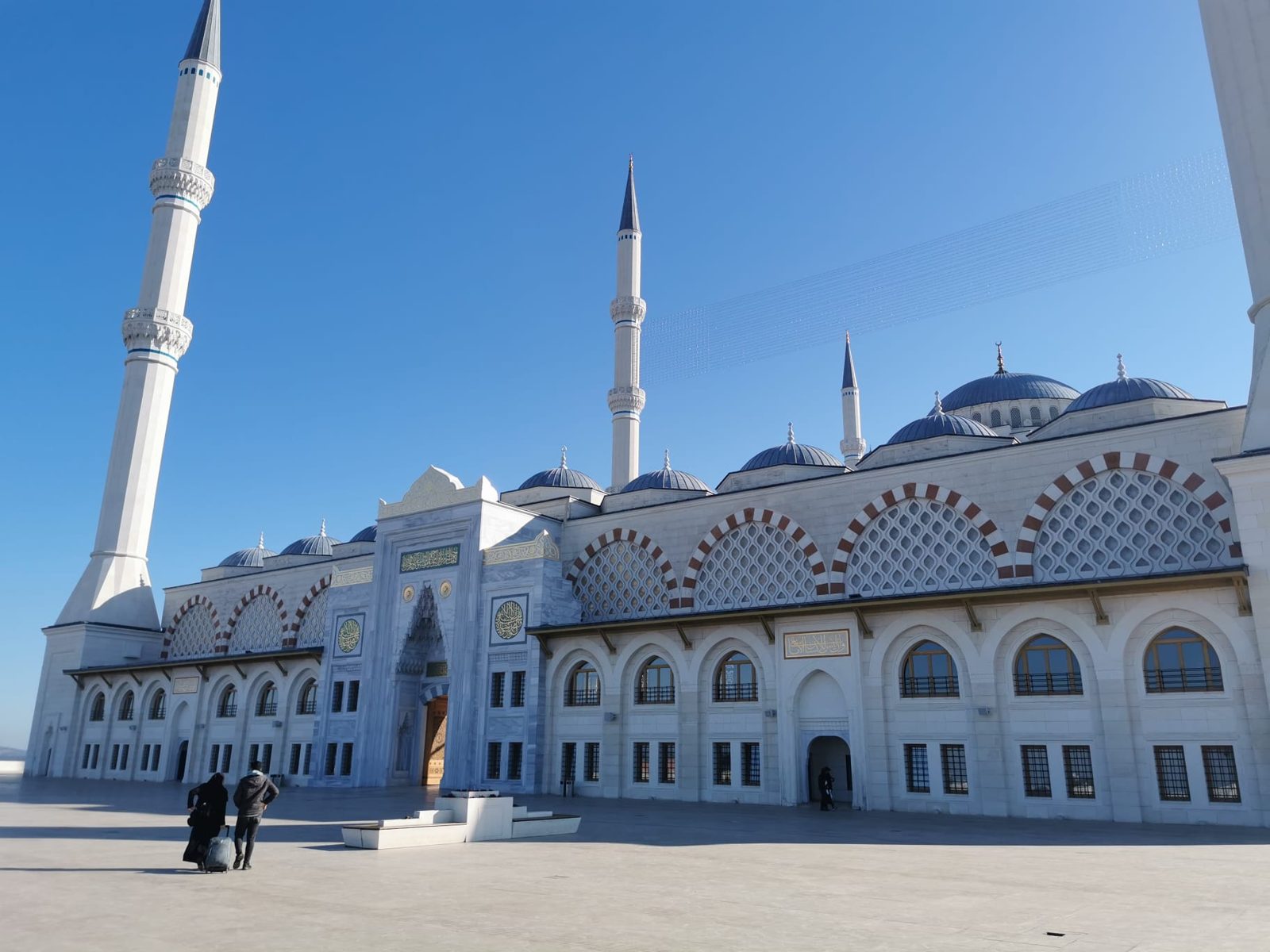
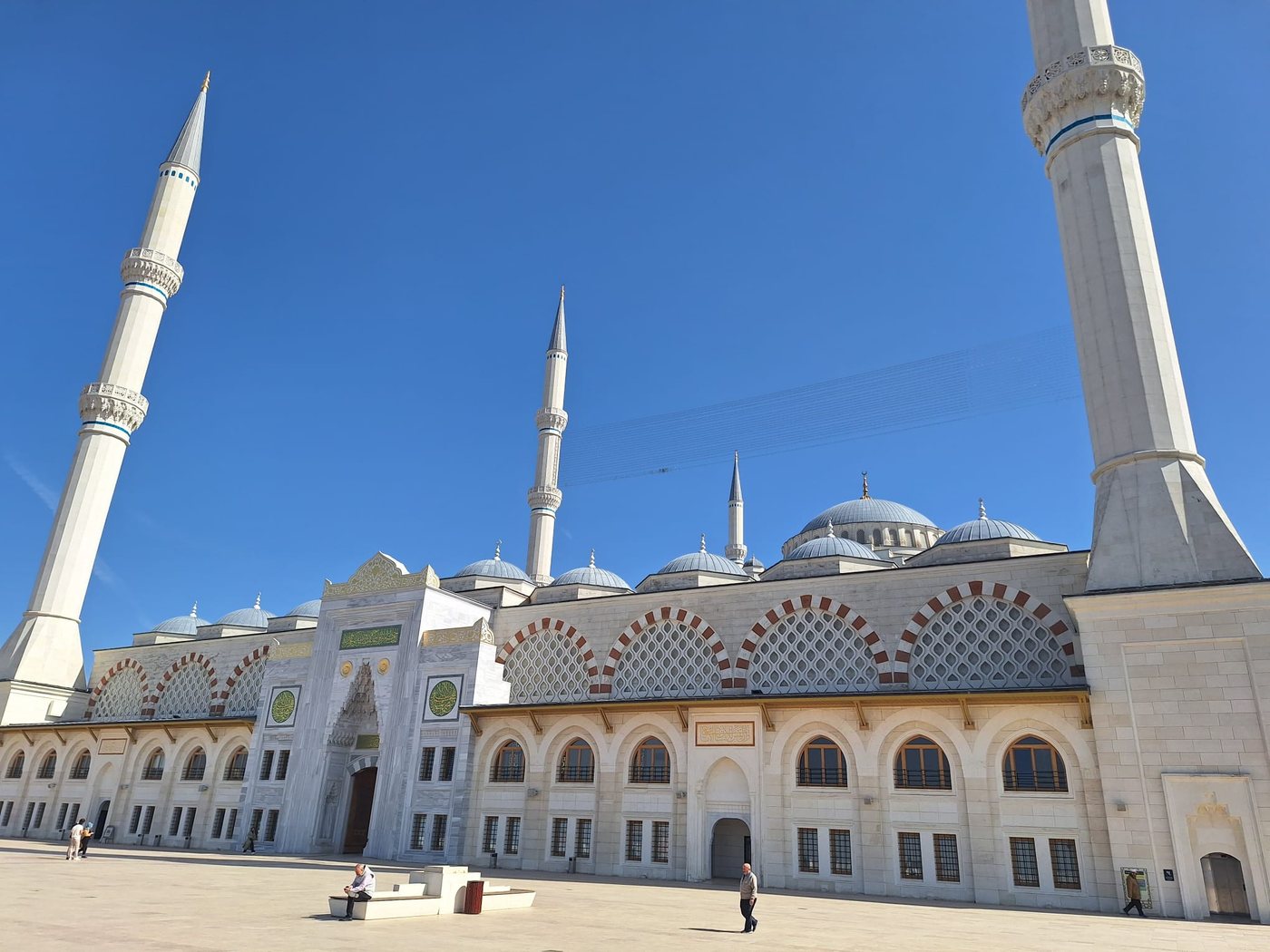
Its site on the Çamlıca hill is visible from far away. From many points on the European side, you can make out its six minarets. The mosque isn't just a prayer space, but a huge cultural complex with a library, museum, gallery, conference area, and parkland. Its architecture combines classical Ottoman forms with modern technology and deliberately chosen symbolic numbers.
- The Great Çamlıca Mosque was built in the 21st century and officially opened in 2019.
- It's considered the largest mosque of the Turkish Republic.
- The complex has six minarets.
- Its main dome has a diameter of 34 metres; this number is meant to symbolise Istanbul, whose vehicle registration code is 34.
- Its dome height of 72 metres is officially linked, symbolically, to the 72 nations, or communities, said to live in Istanbul.
- The complex includes a museum, library, art gallery, conference rooms, and further facilities.
- The building is technically modern, but architecturally quotes the classical Ottoman mosque tradition strongly.
Why a New Grand Mosque Arose on Çamlıca
The Great Çamlıca Mosque didn't arise out of the needs of a small residential district. Its scale was conceived as national and representative from the start. Its site on the Çamlıca hill ensures the mosque is visible from large parts of Istanbul. The project thus deliberately continues the Ottoman tradition of inscribing great religious foundations into the skyline, but transposes that idea into the 21st-century Republic.
That's exactly why the building was, and still is, judged so differently. Supporters see in it a new religious centre able to accommodate large numbers of visitors, combining a mosque, museum, library, exhibition, and event spaces. Critics ask whether Istanbul needed another monumental mosque of this scale, and whether such a dominant structure alters the historic silhouette of the Çamlıca hill too strongly. Both perspectives belong to the project's story, because the mosque was, from the start, not just architecture, but symbolic politics too.
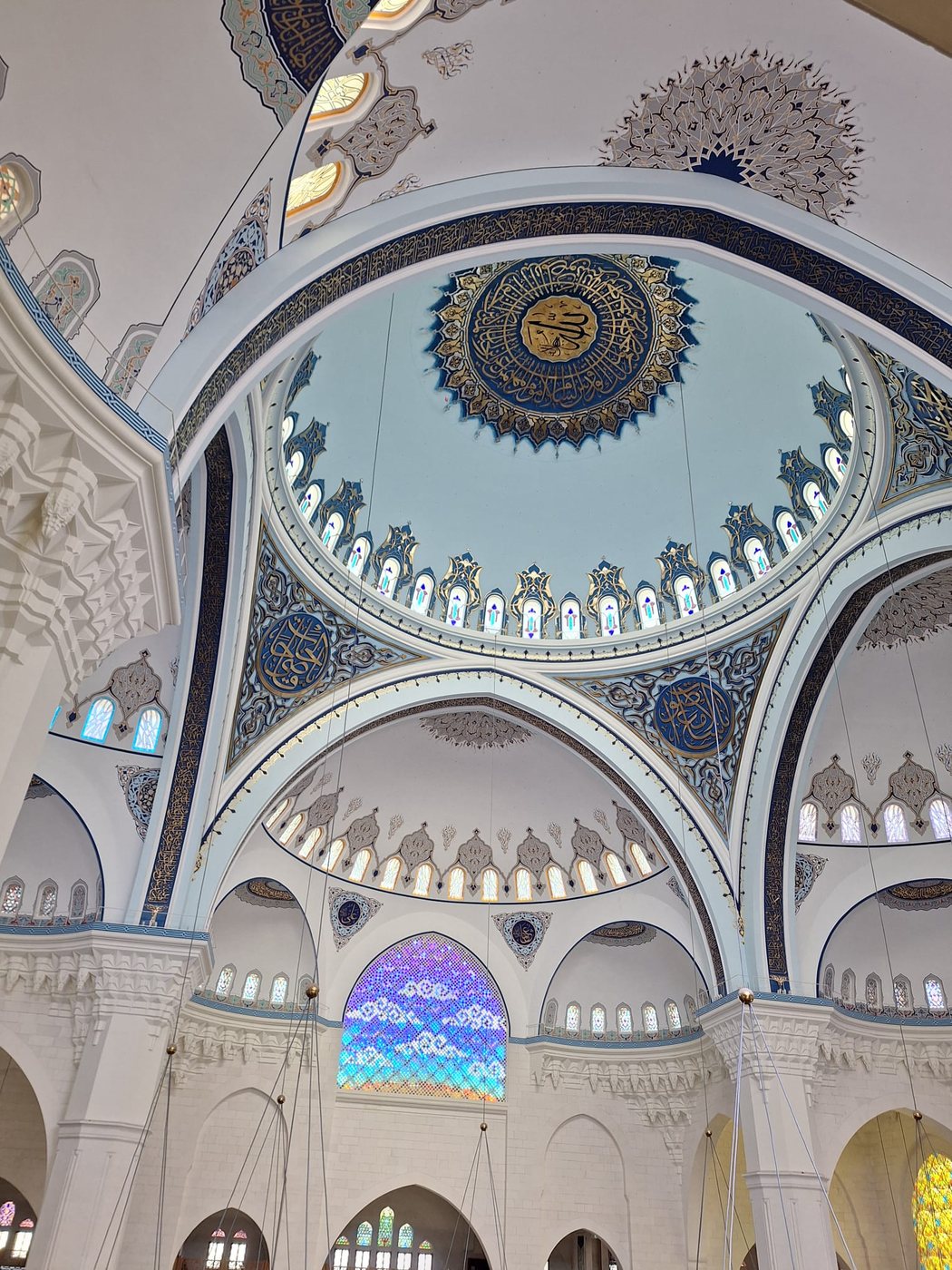
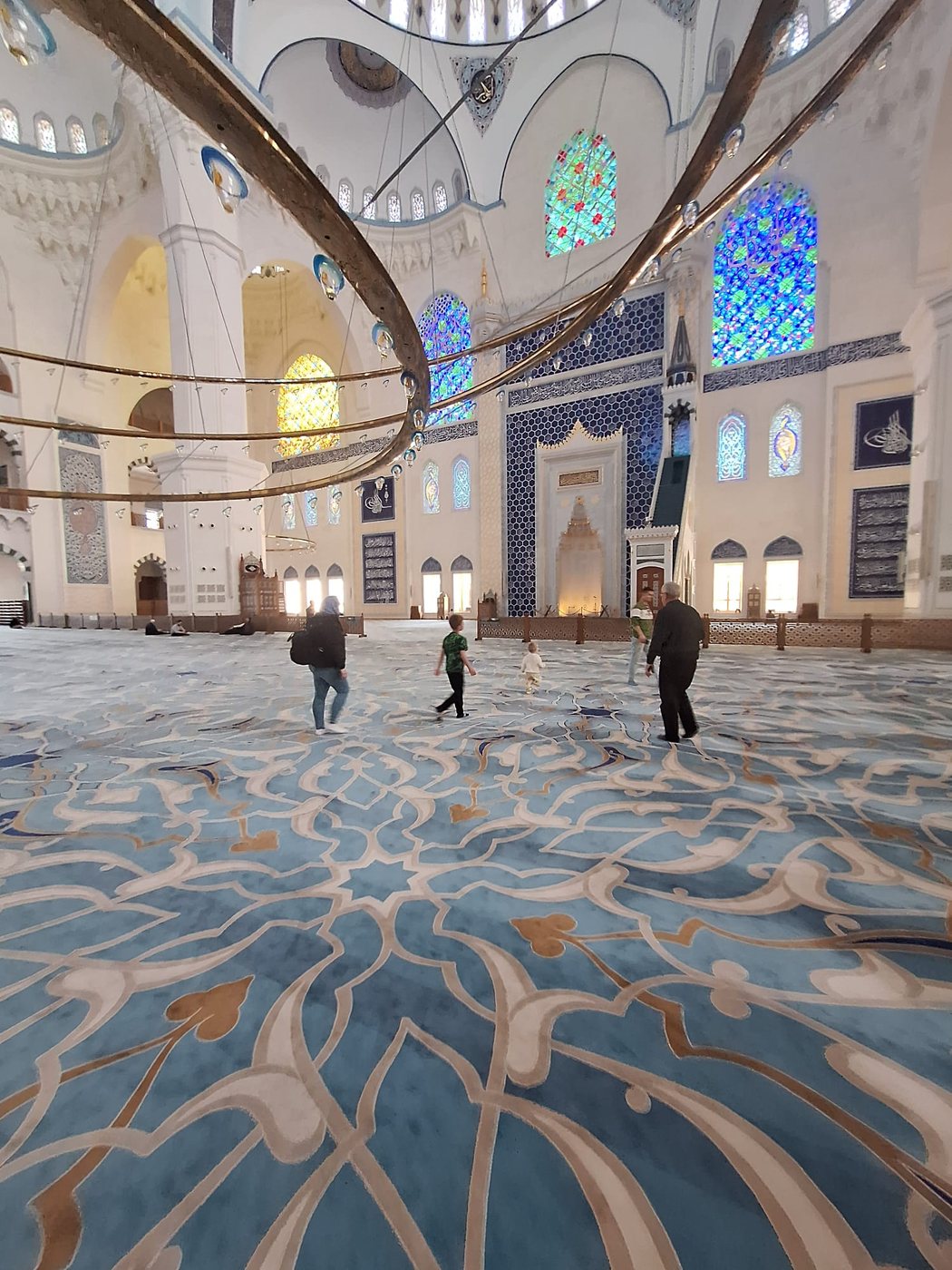
Inside, the complex relies on a modern interpretation of classical Ottoman forms. Great domes, calligraphy, geometric decoration, and a very expansive prayer hall recall historical models, without actually recreating a 16th-century building. Its technical infrastructure, lifts, event spaces, and security systems clearly belong to the present. Anyone who calls it merely a "new sultan's mosque" therefore misses that it's deliberately a modern, republican-era grand complex that uses historical visual language as a symbol of identity.
The numbers, too, are often told spectacularly online: Turkey's largest mosque, tens of thousands of worshippers, six minarets, a huge dome. Such figures are interesting, but the more important question is why you'd build at this scale again at all, in the 21st century. Çamlıca shows that Istanbul's skyline is still being negotiated politically and culturally today. It's no finished historical panorama, but keeps changing.
Istanbul already has hundreds of historic mosques. So why build yet another huge new complex in the 21st century?
Supporters argued the Asian side needed a monumental religious centre with enough space for great Friday and holiday prayers. At the same time, a modern symbol of the city was meant to arise, one visible from large parts of Istanbul.
Critics, by contrast, saw it as a deliberate political prestige project of the AKP era, accusing the building of altering the historic skyline through a new, dominant religious structure. Both perspectives belong to this building's story, because the mosque was debated socially, not just architecturally, from the very start.
Its Site Above the Bosphorus
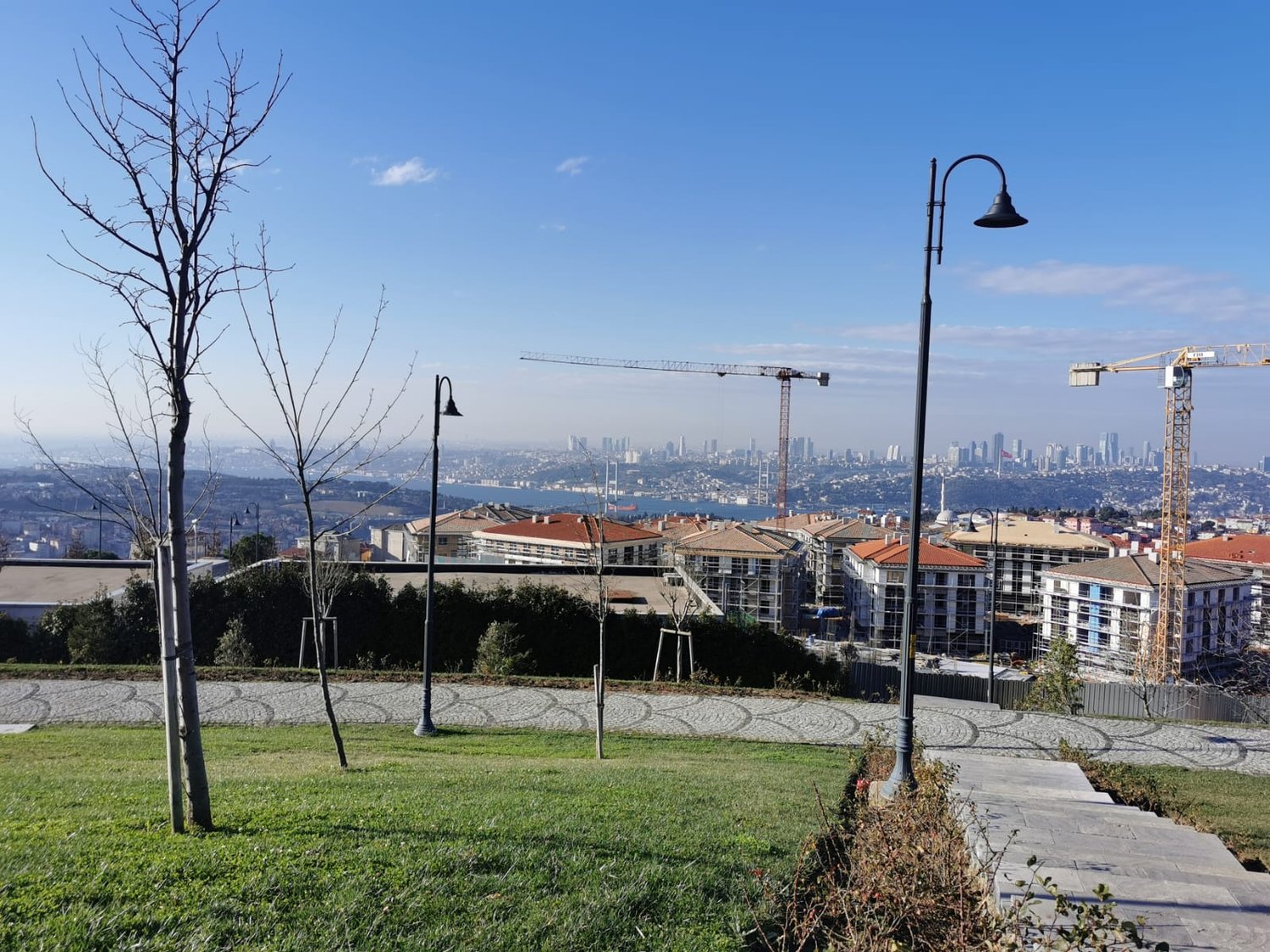
Çamlıca sits high above the Asian side. Long before the mosque was built, its hills were already popular viewpoints. From there, you look out over the Bosphorus, the historic peninsula, and large parts of the modern city.
A building at this point is inevitably visible. Its six minarets therefore don't just matter to visitors on site — they reach kilometres into the skyline.
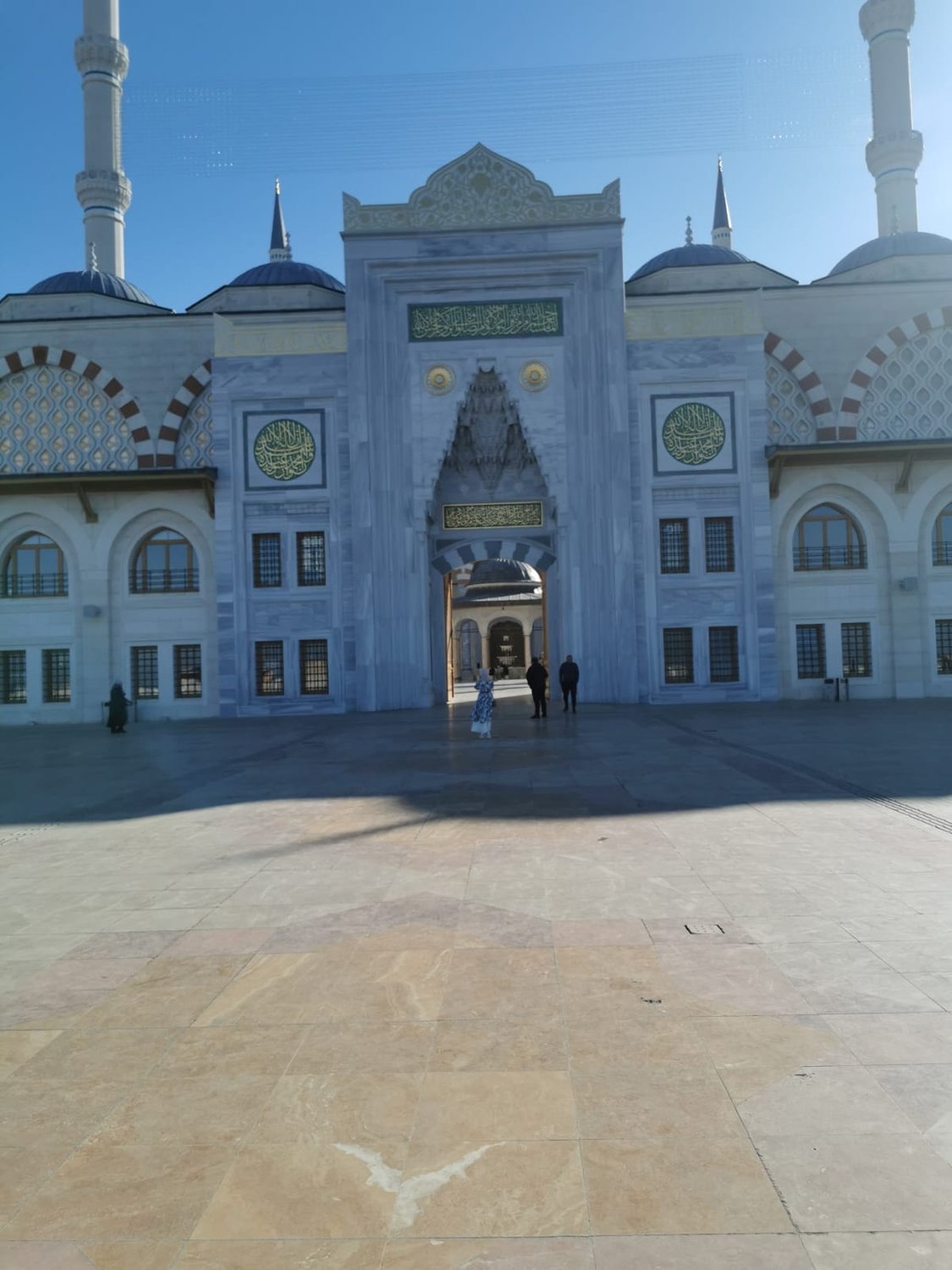
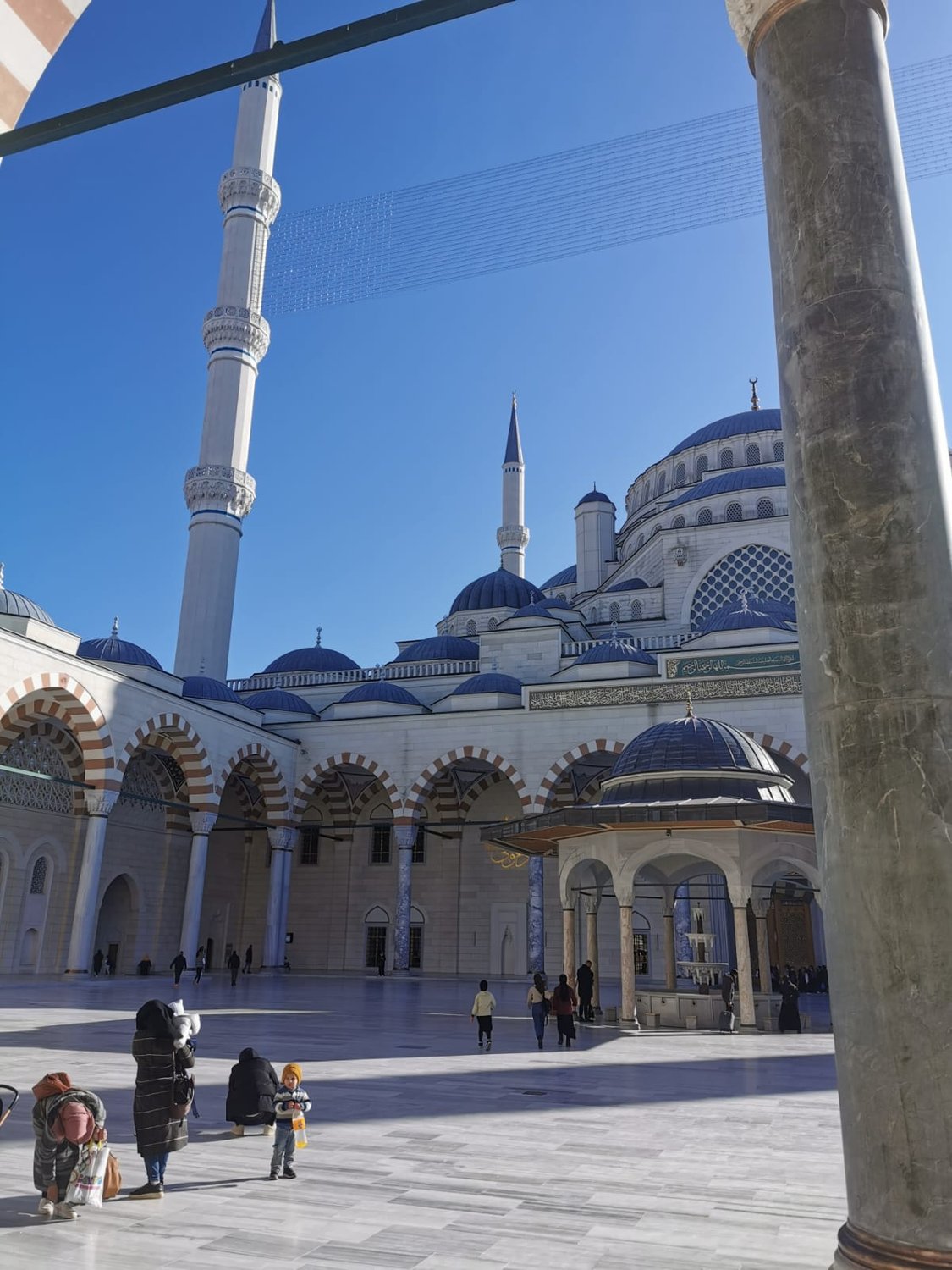
This site recalls the Ottoman tradition of placing great mosque foundations on hills. The Süleymaniye or the Fatih Mosque shape the historic peninsula just as dominantly. Çamlıca transfers this principle onto the modern Asian city.
Architecture Between Ottoman Precedent and the Present
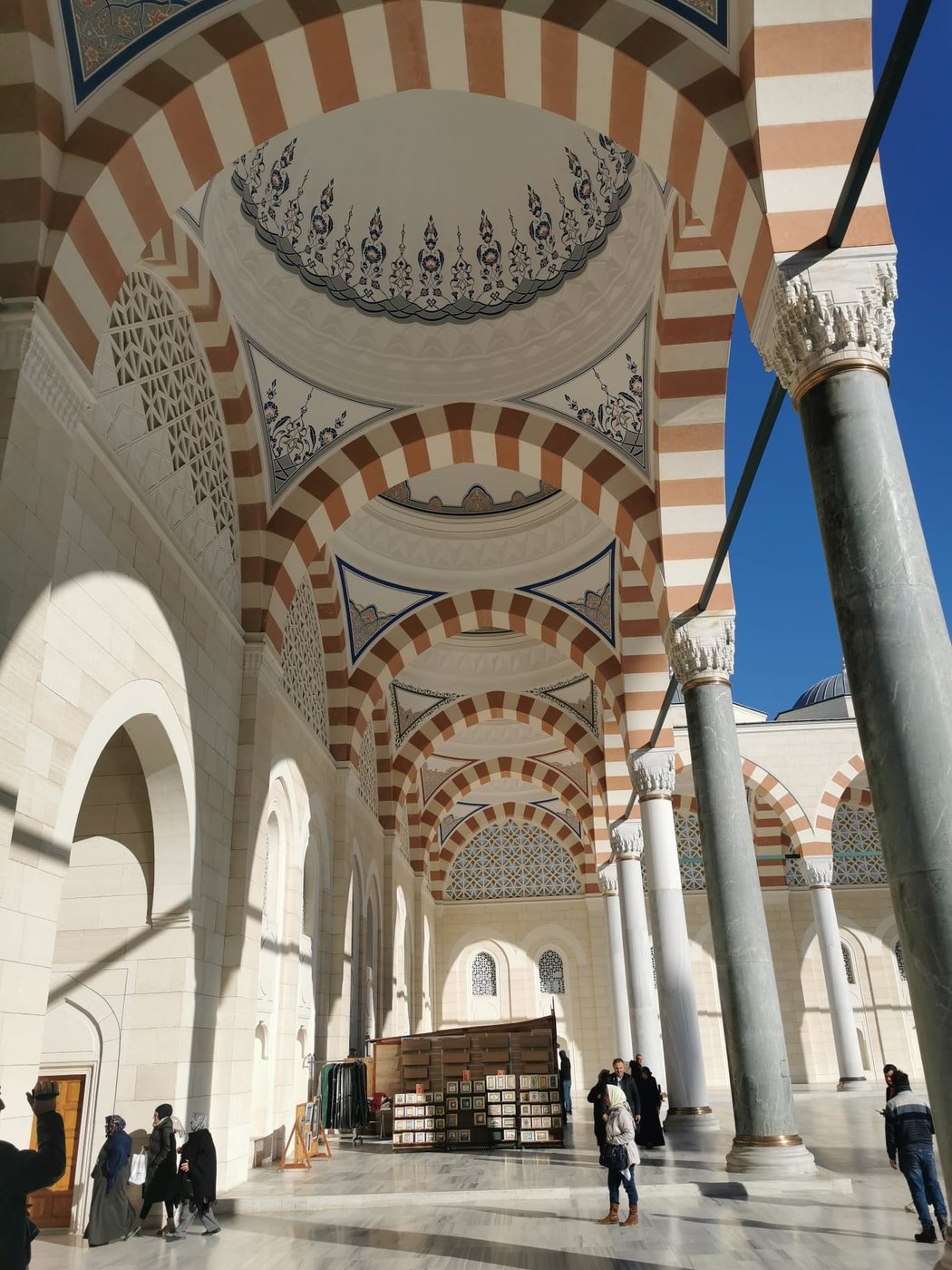
The architects Bahar Mızrak and Hayriye Gül Totu designed the complex with clear references to classical Ottoman architecture. A central domed space, half-domes, arcades, and six minarets recall the great mosques of the 16th and 17th centuries.
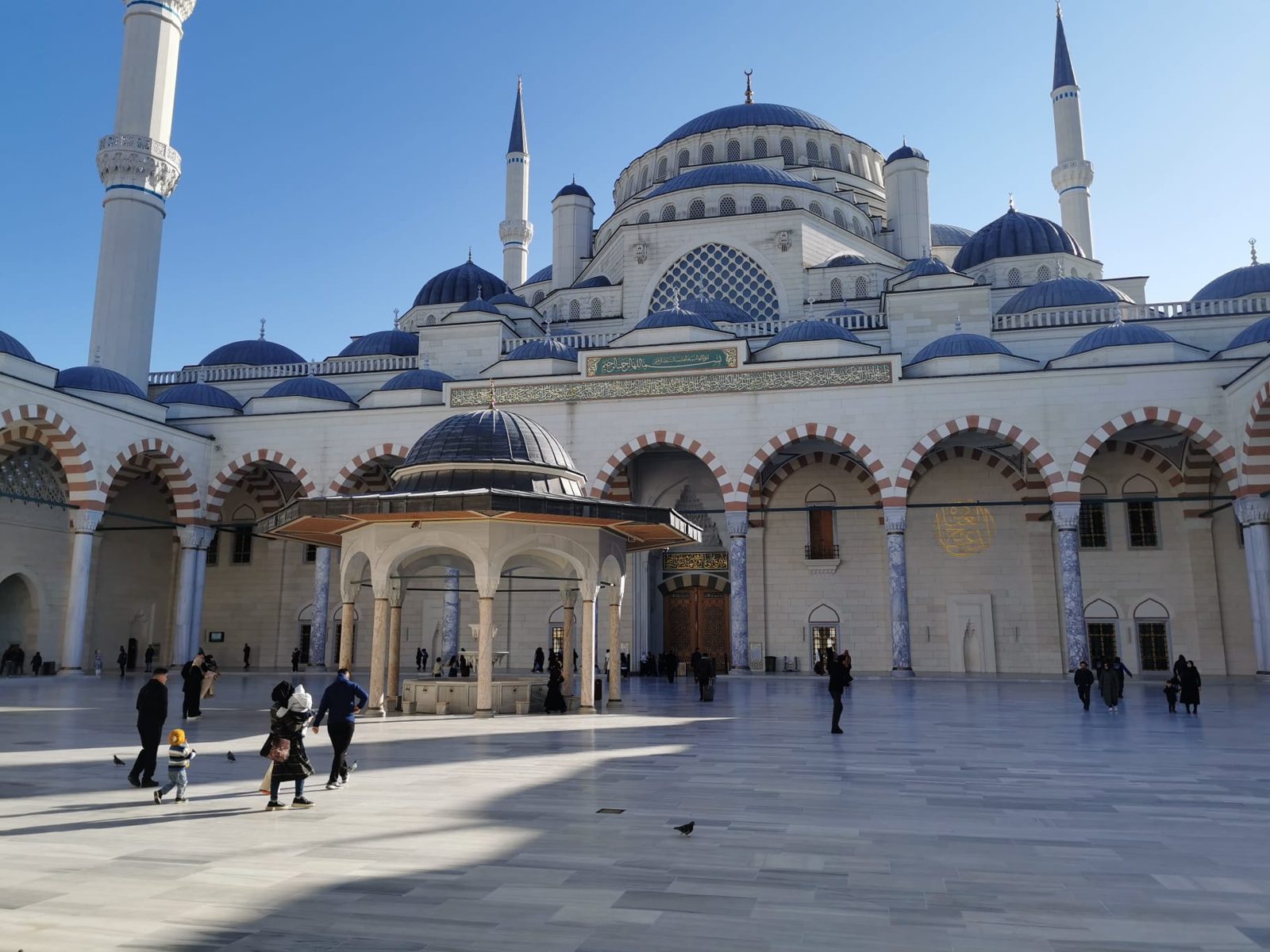
At the same time, the building is entirely modern technically. Reinforced concrete, modern building systems, lifts, huge underground car parks, and extensive security and supply systems accommodate visitor numbers a historical külliye never had to manage.
So the interesting question isn't "is it old or modern?" It's modern, and deliberately means to carry familiar old forms forward.
Six Minarets and Symbolic Numbers
Official descriptions explain several measurements symbolically. The main dome has a diameter of 34 metres — a reference to Istanbul's vehicle registration number. Its height of 72 metres is linked to the numerous nations, or communities, in the city.
Four of its six minarets are 107.1 metres tall. This number refers to the year 1071 and the Battle of Manzikert, regarded in Turkish memory as an important turning point for the Turkish presence in Anatolia.
The six minarets themselves are officially linked to the six articles of faith in Islam.
Such numbers show how strongly modern monumental architecture works with deliberately placed symbolism.
More Than a Prayer Space
The complex includes more than just the prayer hall itself. A library, museum, exhibition areas, conference rooms, and social functions make clear the planners had a modern grand complex in mind. Çamlıca thereby continues the Ottoman külliye idea in a certain sense, without simply copying its historical economic structure. Religious use and cultural infrastructure are deliberately combined.
This matters especially for very large mosques, since outside prayer times they'd otherwise easily become monumental empty shells. Çamlıca instead tries to attract visitors permanently. Whether you love its architecture or not, the complex is more interesting once you view it as a complete public project, rather than just counting its main dome.
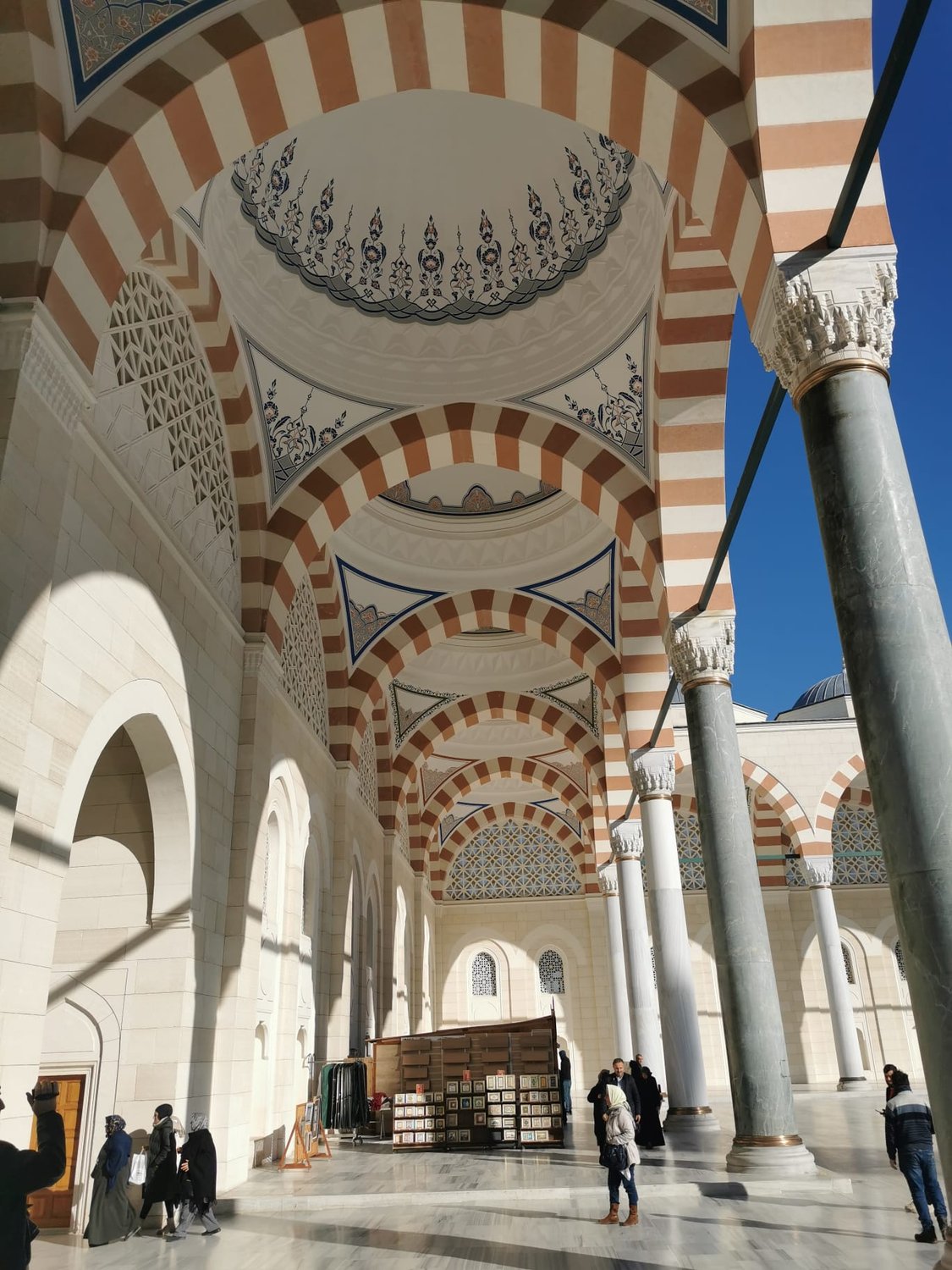
The complex covers far more than the mosque. A library, a museum of Islamic civilisations, an art gallery, conference rooms, workshops, and large park areas turn the complex into a cultural and event centre.
Çamlıca thereby genuinely takes up the historical concept of a külliye: a great mosque isn't meant to stand in isolation, but to attract education, culture, and the public.
Of course, these facilities function differently today than a 16th-century soup kitchen or madrasa would. But the principle of a multifunctional religious centre is comparable.
Calligraphy, Dome, and Interior
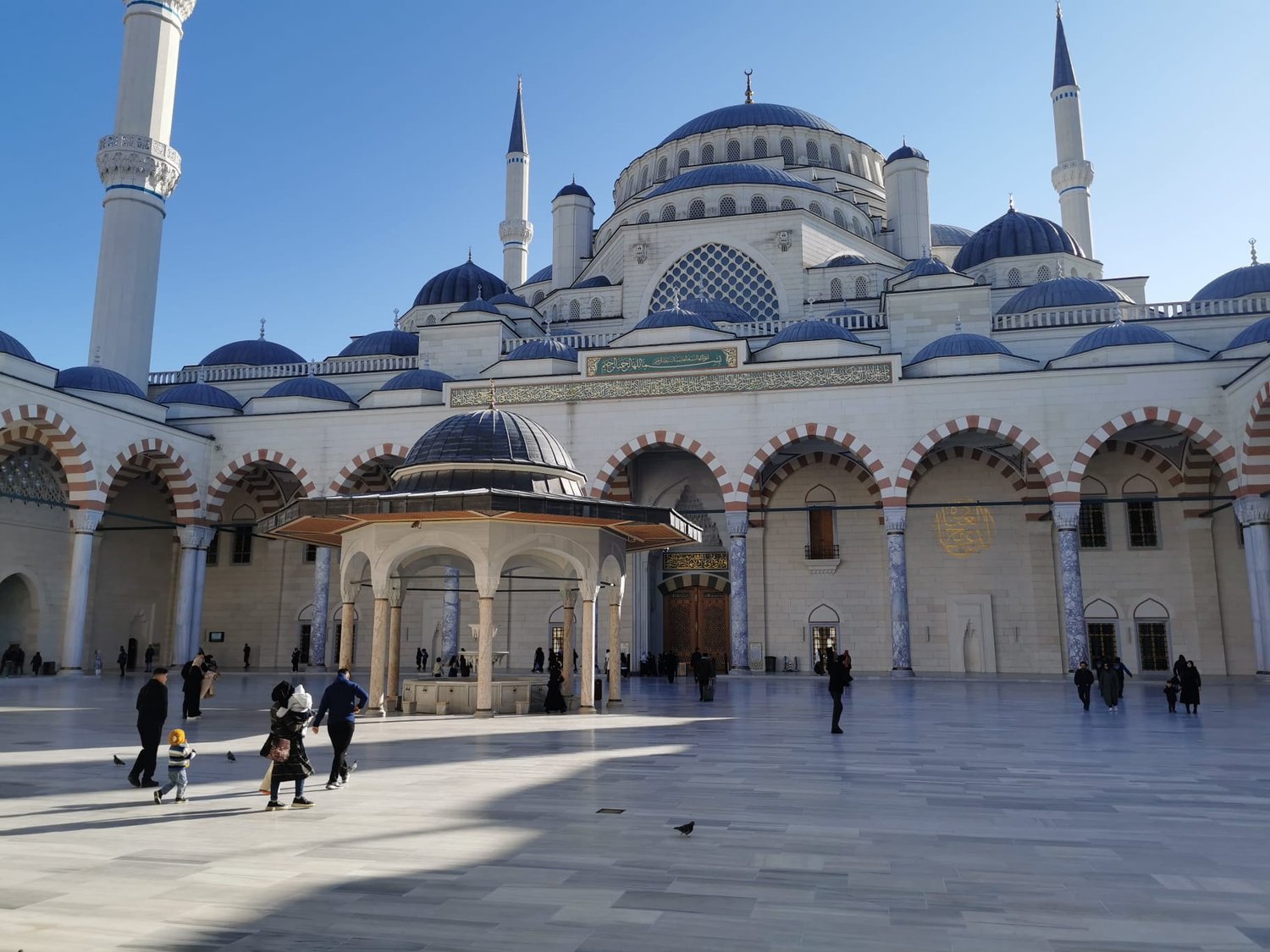
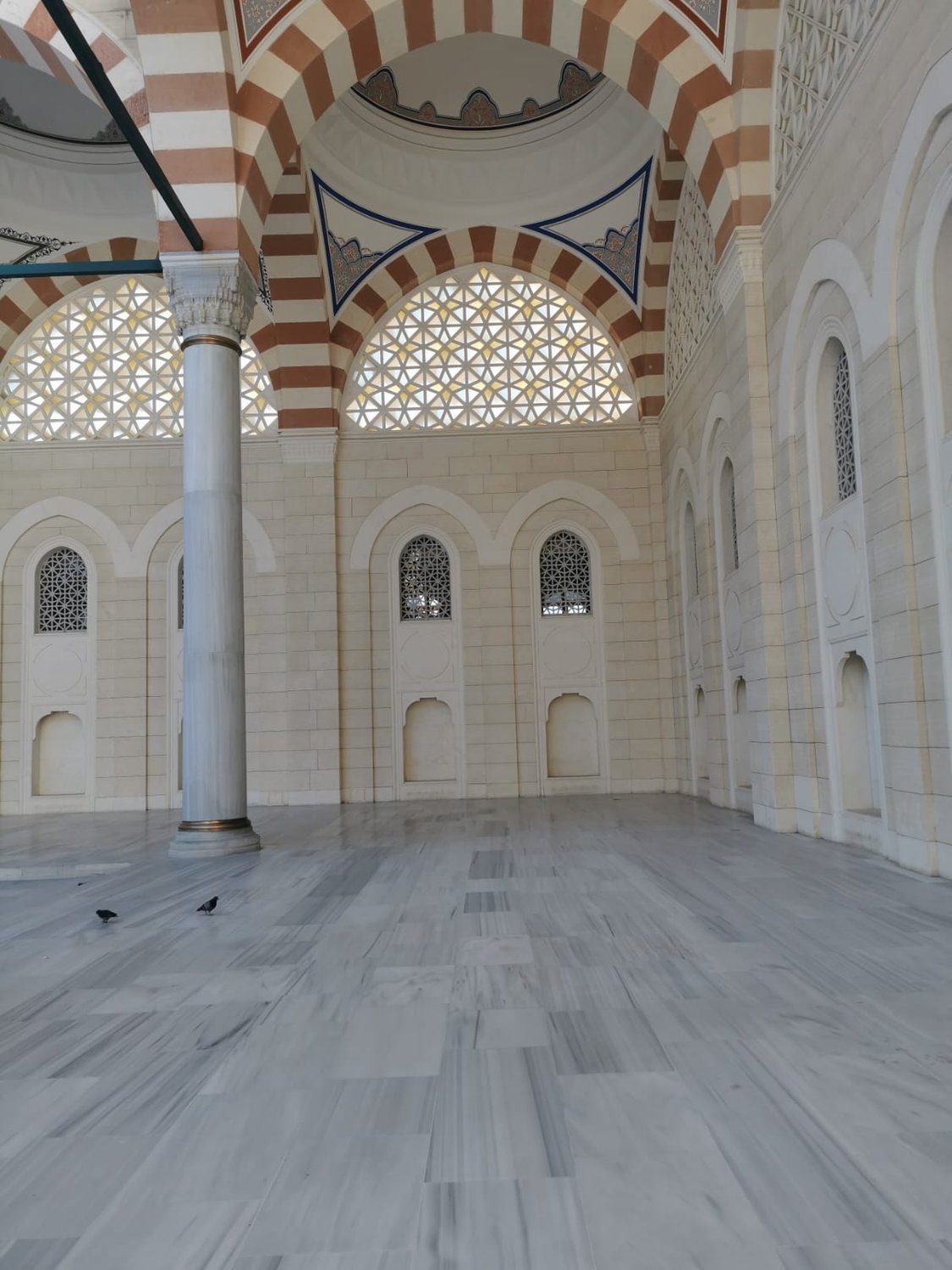
The interior is huge, yet strongly ordered. The central dome dominates the view, while great calligraphic inscriptions emphasise the space's religious significance.
Modern lighting and its bright colour scheme make the space feel lighter than its huge dimensions would suggest. Visitors see traditional ornamentation and completely modern construction precision at the same time.
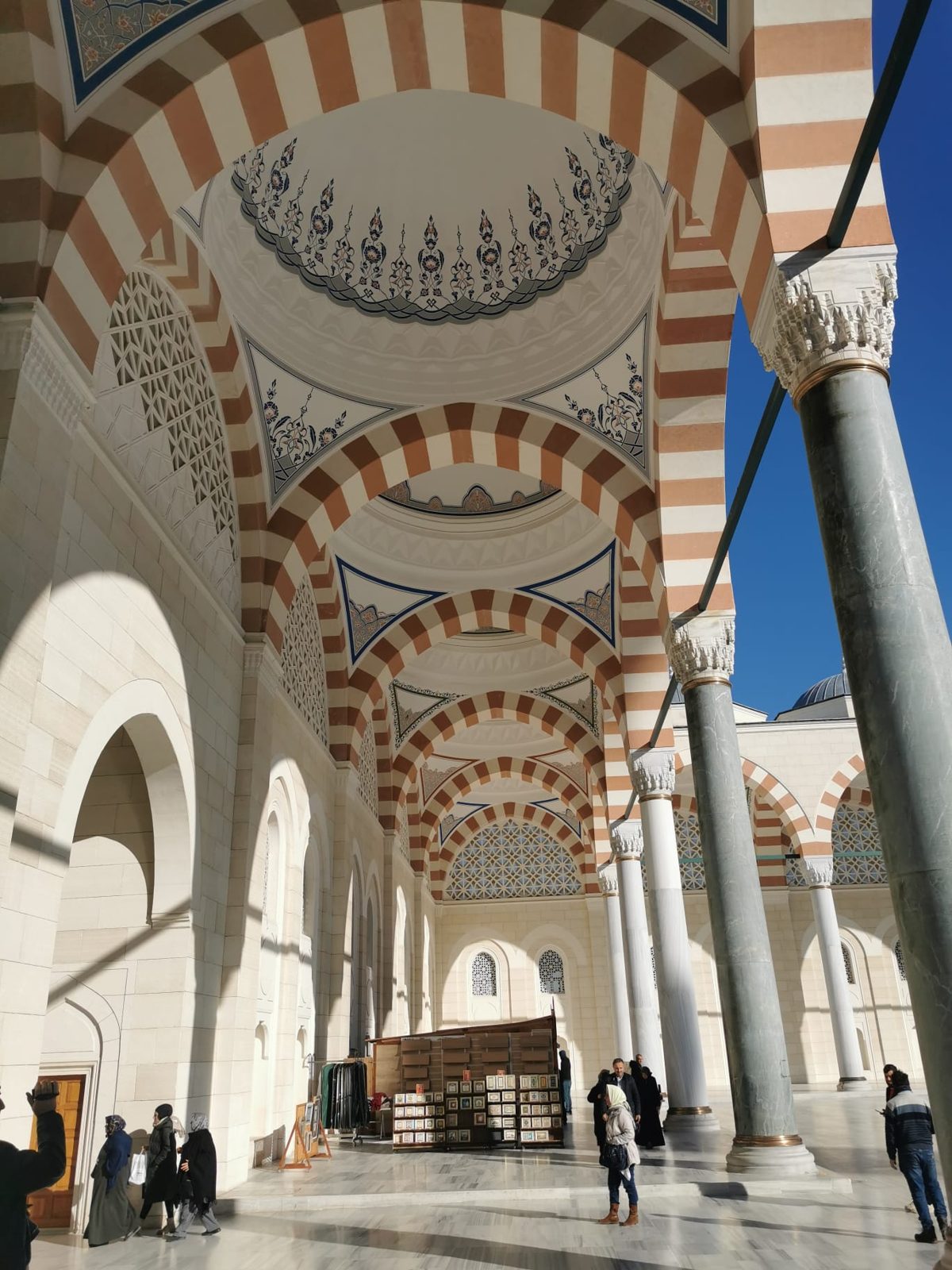
Anyone familiar with historic mosques like the Süleymaniye or the Sultan Ahmed Mosque immediately recognises the quotations. Of course, the patina of centuries is missing. But that's not a flaw — the building is new, and is allowed to look new too.
Political and Social Debates
Hardly any monumental new religious building in a world city is politically neutral. The Çamlıca Mosque was strongly supported by President Recep Tayyip Erdoğan and accompanied as an important prestige project.
For its supporters, it stands for self-confidence, religious identity, and a new representative architecture for Turkey. Critics see in it a political instrumentalisation of religious symbolism, and a break with the historically grown skyline.
A serious article doesn't need to adopt either position. But it should explain why people read the same building so differently.
A Modern Building With a Classical Language
The decision to orient itself strongly toward classical Ottoman mosque architecture was deliberate. A radically modern prayer space without minarets or half-domes could have been designed for Çamlıca too. Instead, a visual language was chosen that reads instantly as "a great Istanbul mosque."
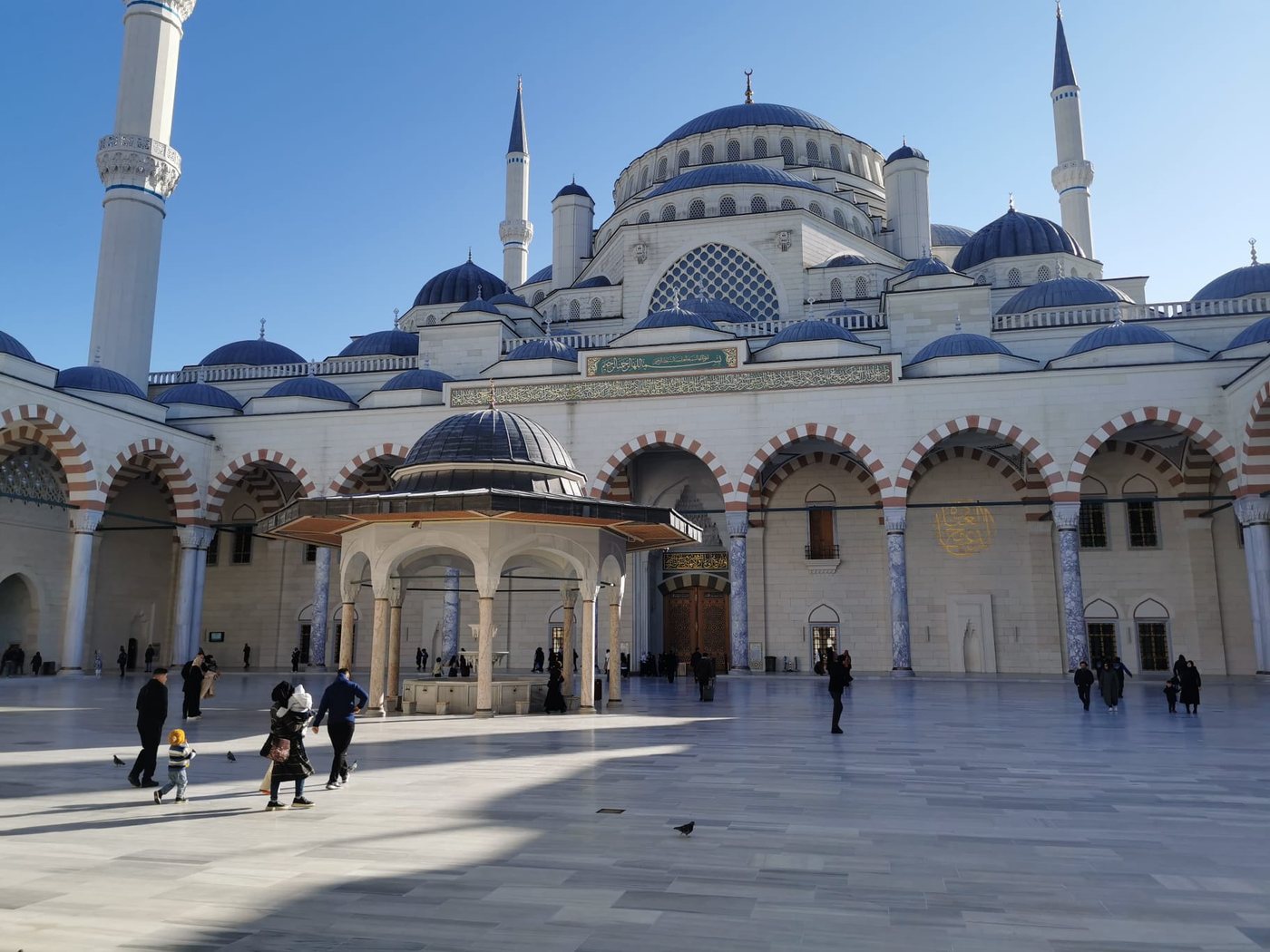
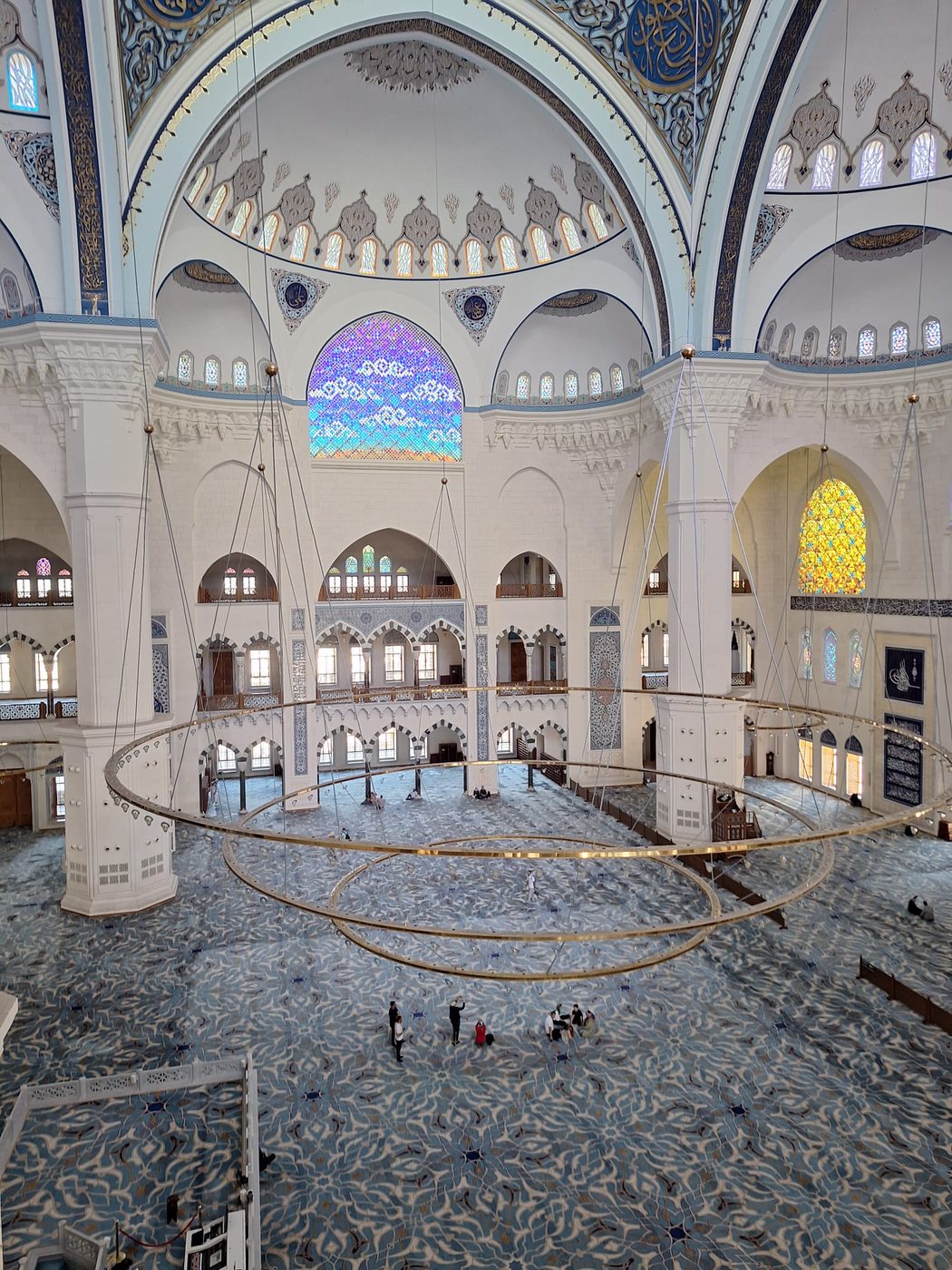
That brings both advantages and criticism. Many visitors find the architecture familiar and dignified. Critics ask whether a 21st-century building should have developed a more distinctly contemporary language of its own. This debate exists worldwide around sacred buildings: should new religious architecture repeat tradition, develop it further, or deliberately break from it?
Çamlıca answers the question fairly clearly in favour of a modern continuation of traditional forms. Its technology is new; its visual grammar deliberately historical.
The Mosque as a National Symbolic Project
The numerous symbolic numbers show the building wasn't meant only for a local district. A 34-metre dome diameter for Istanbul, 107.1-metre-tall minarets referencing 1071, six minarets for the articles of faith — practically every major measurement carries a meaning.
Such symbolism is typical of monuments strongly backed by the state. Architecture is meant not just to function, but to carry a narrative. In Çamlıca's case, this narrative ties together Islamic religion, Turkish history, and the metropolis of Istanbul.
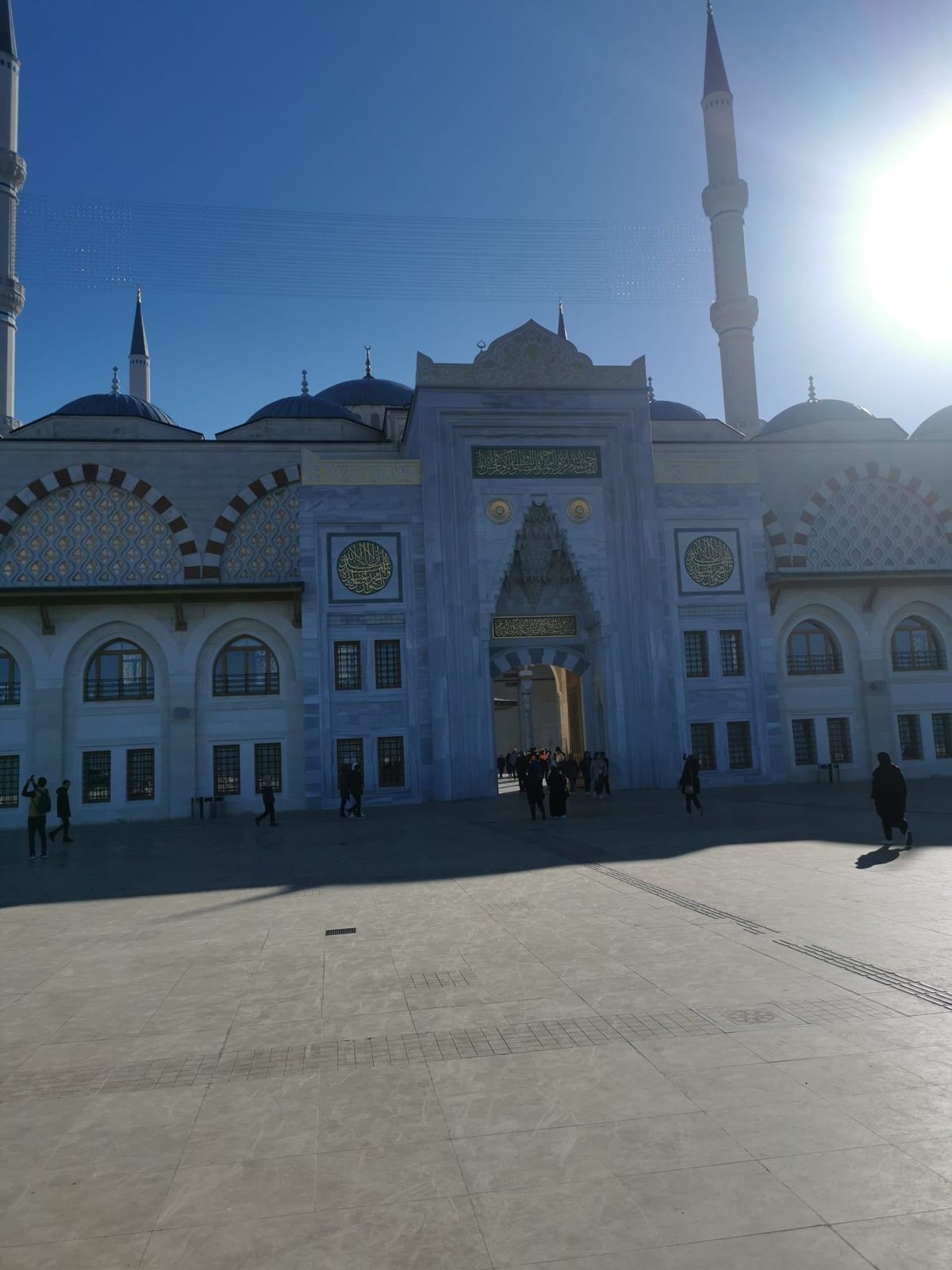
You don't have to share this message politically to read it architecturally. For visitors, in particular, it's fascinating to see how differently a modern religious prestige project works with symbols compared to a 16th-century mosque, whose political messages arose within a very different society.
What the View From Çamlıca Reveals About the City
From the complex, you don't just see the historic peninsula. Large residential areas, high-rises, bridges, motorways, and the sheer extent of the Asian side all become visible. That corrects a common touristic image of Istanbul, which often consists almost entirely of Sultanahmet, Galata, and the Bosphorus.
The real city is far bigger. Millions of people live far from the classic sights. A mosque of this scale on the Asian side thus also signals that today's centre of Istanbul has long since stopped being only the historic peninsula.
Visitors, Prayer, and the Scale of the Complex
The mosque is designed for very large numbers of visitors. On Fridays, holidays, and special religious nights, the complex can accommodate enormous crowds. That includes wide access routes, large ablution areas, lifts, and extensive parking.
Its practical organisation therefore differs considerably from historic mosques, whose access routes have to cope with modern visitor logistics only after the fact. Çamlıca was planned from the outset for today's security, traffic, and accessibility requirements.
This difference is especially noticeable for older visitors or families. Monumentality today no longer automatically has to mean every visitor must manage long staircases and narrow historic paths.
How Çamlıca Holds Its Own Beside Sultanahmet
The historic peninsula remains Istanbul's iconic image of mosques. Still, the metropolis's actual life has, for decades, been shifting far beyond this centre. Millions of people live on the Asian side, in new residential areas, far from the classic tourist routes.
The Great Çamlıca Mosque sets a new religious centre exactly there. It doesn't try to replace Sultanahmet, but creates a monumental counterpart for a modern city whose geographic centre of gravity has long since broadened.
That also explains why the mosque is meant to be visible from so many parts of the city. Its effect isn't merely local. It's deliberately part of the whole city's skyline.
"The Great Çamlıca Mosque is an Ottoman mosque." No. It was built in the 21st century, but deliberately uses forms from classical Ottoman architecture.
"The number 34 on the dome is a coincidence." No. Its 34-metre diameter is officially explained as a symbol for Istanbul.
"It's just one huge prayer hall." False. A museum, library, gallery, and further facilities are part of the overall complex.
My Thought on This Place
My first thought at this mosque was genuinely: where should my eyes go first? You walk in and see calligraphy, arches, the dome, light, and this enormous scale. And yet the space feels not just huge, but astonishingly calm.
You breathe in, look up, and for a few minutes feel as though time keeps moving outside, but a little more slowly in here. I know some people prefer visiting only old mosques, because they hold "more history." But a new building tells you something too — namely, about how a society today wants to look, believe, and present itself.
And this building tells you that pretty clearly.
– Amra