Aşiyan means, roughly, "nest" in Persian, or in literary Turkish. That's exactly what the poet Tevfik Fikret called his house above the Bosphorus. He had it built at the start of the 20th century to his own design and retreated here as his political disillusionment and conflicts with the censorship of the Abdülhamid regime grew.
Aşiyan means "nest." That's what the poet Tevfik Fikret called his house above the Bosphorus, where he retreated as his political disillusionment and conflicts with the censorship of the Abdülhamid regime grew.
Today the house is a literary museum. It preserves rooms, furniture, personal objects, and memories of several significant authors. The place therefore works on two levels: you learn something about modern Turkish literature, and at the same time about an intellectual's deliberate decision to shape his own house as a counter-world to political and social constraint.
- Aşiyan was the residence of the poet Tevfik Fikret.
- He had the house built to his own design in the early 20th century.
- Fikret was one of the most important authors of the Servet-i Fünun generation.
- He grew increasingly critical of the authoritarian rule of Abdülhamid II.
- The house sits deliberately secluded above the Bosphorus.
- After Fikret's death, it was later set up as a literary museum.
- Memories of other significant Turkish poets are also preserved there.
Who Tevfik Fikret was
Tevfik Fikret was born in 1867 and became one of the most influential poets of the late Ottoman Empire. He taught, at times led the literary magazine Servet-i Fünun, and shaped a generation that brought new forms and themes into Turkish literature.
His language can seem demanding to today's readers, since it's strongly shaped by the Ottoman Turkish of his time. In content, he moved between personal melancholy, social criticism, and political themes.
Servet-i Fünun and new literature
The magazine Servet-i Fünun became the center of a literary movement that closely followed French literature and sought new aesthetic forms. Fikret was one of its leading figures.
This generation didn't want to understand literature merely as moral instruction. Language, form, and individual experience gained greater importance. At the same time, political censorship remained a constant problem.
Conflicts with the era of Abdülhamid
Under Abdülhamid II, a pronounced system of press censorship and political surveillance existed. Fikret reacted increasingly critically to this atmosphere. He withdrew at times from public roles and wrote poems directed against oppression and the state of society.
One shouldn't, however, turn this into the simple story of "poet against evil sultan." Fikret's political positions changed too, and the reform hopes after 1908 were later disappointed as well. It's exactly his capacity for disillusionment that makes him a typical figure of a generation that lived constantly between hope and disenchantment.
Why Fikret built Aşiyan
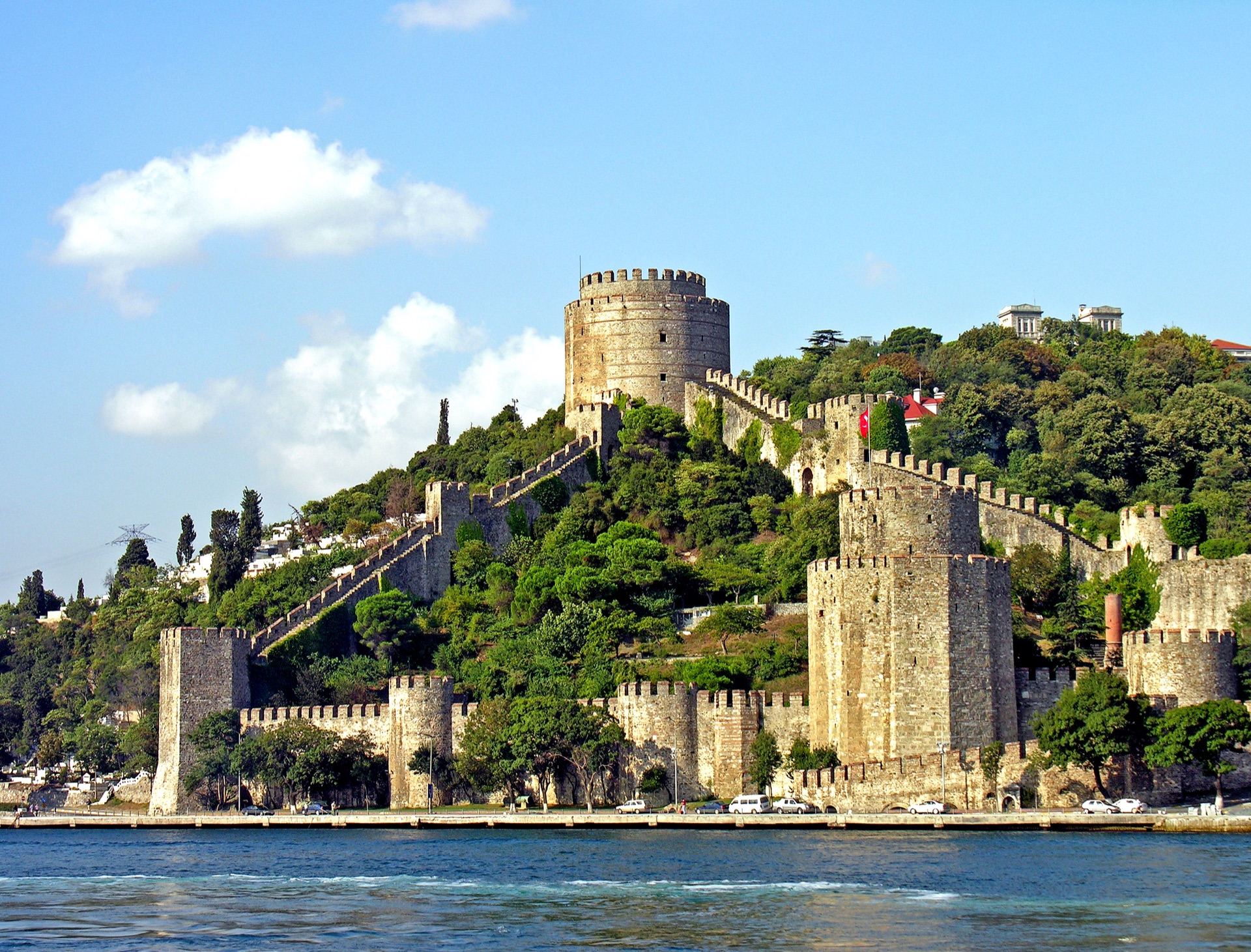
Fikret sought a place outside the dense city center. Above Rumelihisarı, he found a plot with a view of the Bosphorus. He designed the house largely himself and moved in in 1906.
The name Aşiyan — nest — describes the concept well. The house was meant to be a retreat, a workspace, and a family home. Its location feels secluded, even though the city is never really far away.
The house as a self-portrait
Fikret thought carefully about floor plan, windows, and view. The view of the Bosphorus in particular played a role. An artist's house thus becomes almost a three-dimensional self-portrait: what someone arranges, which view they frame, and where they work all say something about their priorities.
Today, surviving furniture, pictures, and personal objects help reconstruct this atmosphere. Of course, a museum is never exactly the same living space as an inhabited house. Even so, the spatial closeness to Fikret's daily life remains unusually strong.
Fikret's political poems
Texts like "Sis" — Fog — are among his best-known politically charged poems. In it, Istanbul appears not as a romantic dream city, but as an oppressive political space. That's a fascinating contrast to today's travel imagery.
A person can love a city, criticize it, and at times barely stand it. Literature, in particular, shows that Istanbul was never simply "beautiful," but always, for its residents, a social and political reality too.
From residence to museum
After Fikret's death in 1915, the house initially remained in family hands. It was later taken over by the city and opened as a literary museum. Today it belongs to the city's museum landscape.
Fikret's grave was later moved into Aşiyan's garden. This turned the house additionally into a memorial site where life, work, and death spatially converge.
Other poets in the museum
The museum doesn't commemorate Fikret exclusively. Rooms and collections also relate to other significant authors, such as Abdülhak Hâmid Tarhan and the poet Nigar Hanım.
This turns an individual residence into a broader literary museum. Visitors gain insight into an era in which Ottoman literature transformed profoundly and modern Turkish literature emerged.
"Fikret was personally exiled from Istanbul by Abdülhamid." No. He withdrew more strongly by his own decision; political censorship and his opposition shaped this choice, but Aşiyan was no official prison of exile.
"The museum shows exclusively Fikret's original condition." Not entirely. It's a museum-reconstructed memorial site that also includes other writers.
Tevfik Fikret and the idea of a house as a personal manifesto
Aşiyan was the residence of the poet Tevfik Fikret. The name means roughly "nest." Fikret planned the house himself and deliberately chose its location above the Bosphorus.
In doing so, architecture became part of his personal world. Rooms, view, and furnishing reflected his ideas of retreat, education, and art.
A writer's house therefore functions differently from a great national museum. You encounter not just works, but the place where someone thought, wrote, and lived.
Tevfik Fikret and late Ottoman literature
Fikret was one of the significant poets of the late Ottoman period. He was connected to the Servet-i Fünun literary movement and engaged intensively with modernization, freedom, education, and social criticism.
His language was demanding and strongly shaped by the Ottoman literary language of his time.
Politically, he was critical of authoritarian rule and developed, at times, decidedly pessimistic views of his era.
Robert College and the Bosphorus
Fikret also worked at Robert College, an important educational institution on the Bosphorus. Aşiyan's proximity to this educational environment was no coincidence.
The area between Rumelihisarı and Bebek was, at the time, considerably greener and less densely built than today.
The view Fikret had from his house was therefore even more strongly shaped by landscape.
Abdülhak Hâmid Tarhan and other memories in the museum
The museum doesn't preserve only Fikret's estate. Other significant writers are also represented.
This turns Aşiyan into a small literary museum of the late Ottoman and early republican period.
Anyone unfamiliar with Turkish literature gets, at least, names and connections rarely found on classic Istanbul routes.
Why Fikret's grave was moved here
Fikret was initially buried elsewhere. His remains were later transferred to Aşiyan's garden.
This finally turned his residence into a memorial site.
The proximity of grave and study creates a very personal kind of museum: life, work, and death sit practically in the same place.
The house and its view today
The city around Aşiyan is louder and denser today. Even so, the location remains extraordinary.
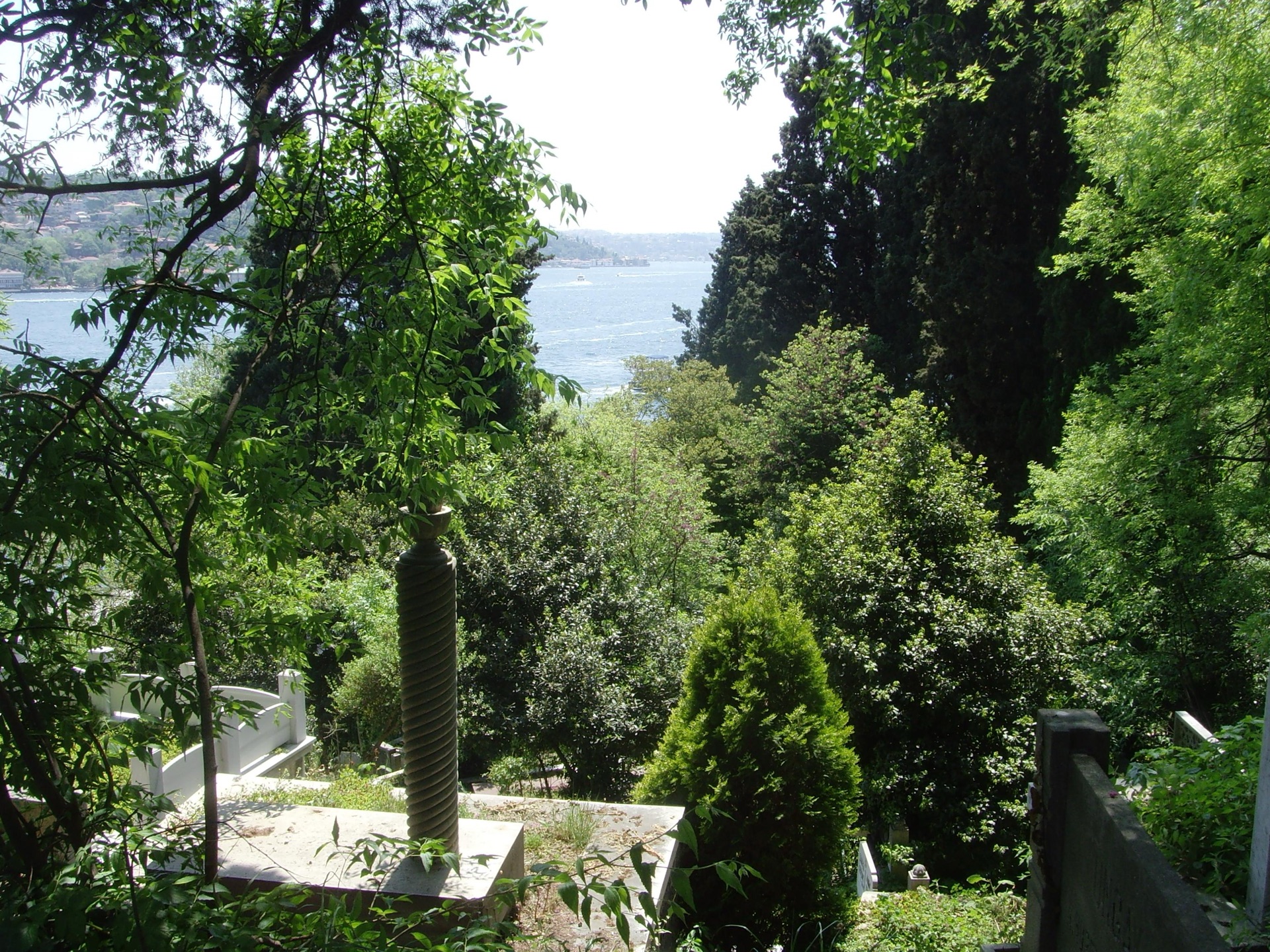
From here you see the Bosphorus and the Asian side. It was exactly this landscape that was part of Fikret's daily experience.
A museum can sometimes therefore tell just as much through a window as through a display case.
Why literary sites matter for Istanbul
Istanbul is told touristically very strongly through sultans, mosques, and Byzantium. That easily creates the impression the city stopped producing culture after its palaces.
Literary museums are a reminder that Istanbul was also an intellectual center in the 19th and 20th centuries.
People wrote about modernization, identity, freedom, love, and the city itself. These voices belong to its history just as much as buildings do.
Aşiyan as a counter-model to monumental Istanbul
After a day full of mosques, palaces, and vast squares, Aşiyan feels almost intimate. The house tells no story of a world empire, but the biography of a single writer.
That's exactly what widens the view of Istanbul. A city doesn't consist only of the people who ruled it, but also of those who wrote about it, criticized it, and turned its atmosphere into literature.
Why writers' houses are especially personal museums
A desk, a window, or a chair may objectively hold little material value. Once you know who sat there, perception changes.
Literary museums live off this closeness. You try to imagine how a thought might have arisen in exactly this room.
Of course, that remains partly projection. Even so, a residence creates a different connection than a neutral display case.
My take on this place
I can very well understand why someone would build a "nest" above the Bosphorus. When a city is loud, political, exhausting, and beautiful all at once, you probably need a place from which to look at it without constantly standing in the middle of it.
And maybe that's also a nice contrast to my own love for Istanbul. I come as a visitor and can barely get enough of the city. People who lived here sometimes needed distance from that very same city. Both can be true at once.
– Amra