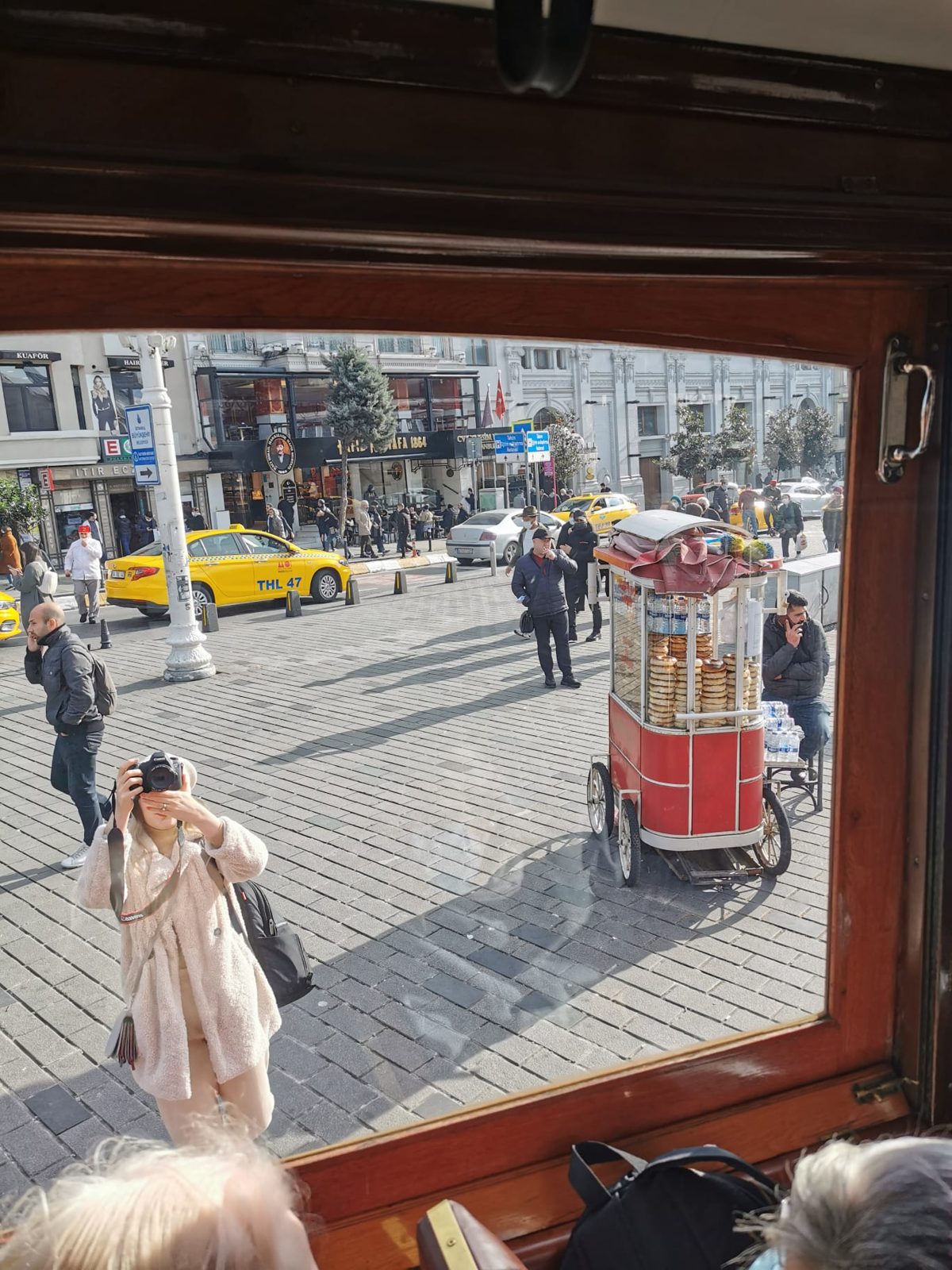
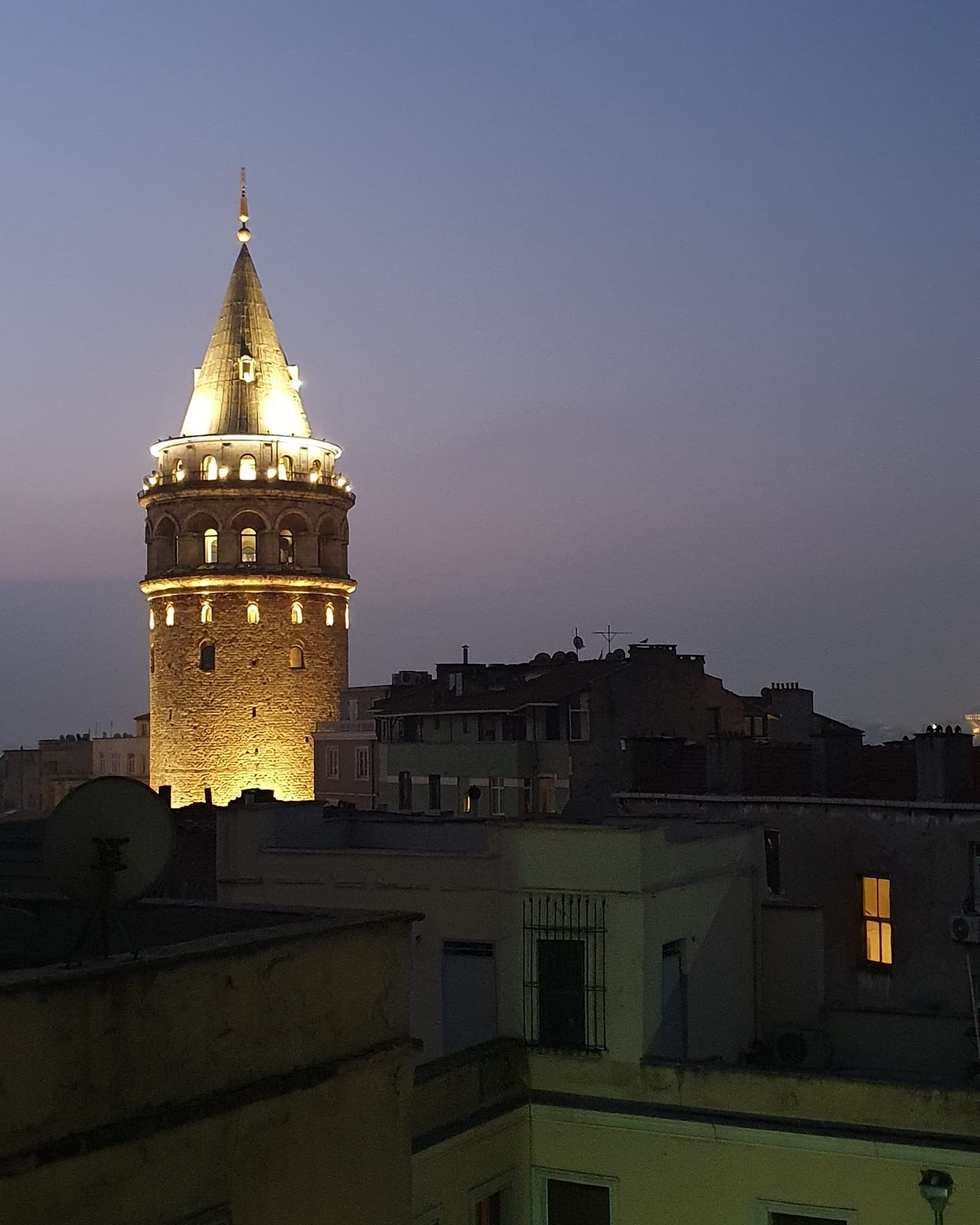
The Tünel is so short that it's easy to underestimate its historical significance. The underground funicular connects Karaköy with higher-lying Beyoğlu. The route measures only a few hundred meters, and the ride lasts barely longer than a couple of minutes. Yet its 1875 opening was a technological leap: the Tünel is one of the oldest underground city railways in the world.
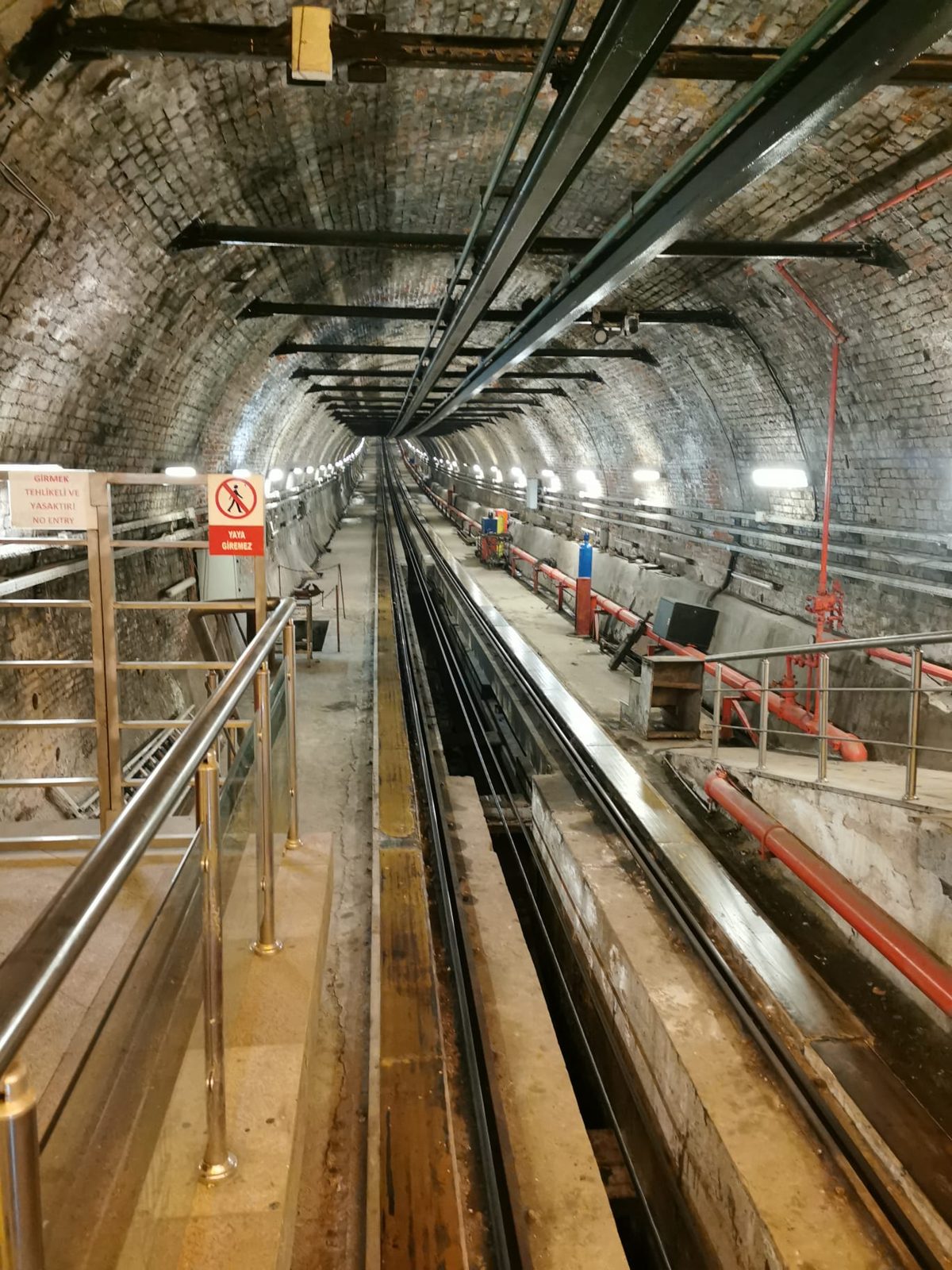
The underground funicular connects Karaköy with higher-lying Beyoğlu over just a few hundred meters. Yet its 1875 opening was a technological leap: the Tünel is one of the oldest underground city railways in the world.
Above all, the railway solved a very Istanbul problem: the hill. Between the harbor and banking district of Galata/Karaköy and higher-lying Pera, people had to tackle steep streets every day. I unfortunately know that incline quite personally too. On our first visit to Istanbul, we didn't know the Tünel existed. Our thighs knew all about it afterward.
- The Tünel has connected Karaköy and Beyoğlu since 1875.
- The idea came from the French engineer Eugène-Henri Gavand.
- He observed the heavy foot traffic and the enormous slope between the harbor and Pera.
- The railway is an underground funicular, not a classic metro in today's sense.
- It's one of the oldest still-operating underground city rail systems in the world.
- Its technology has been modernized several times; today's system is no longer the original 1875 operation.
Why Karaköy and Pera needed a railway
In the 19th century, Galata developed into a significant financial and commercial center. Banks, insurance companies, foreign firms, and harbors concentrated in the lower area. Pera above it became the district of embassies, hotels, shops, and wealthy residents.
Steep streets lay between the two levels. Thousands of people had to cross them on foot every day. Anyone who walks today from Karaköy up toward the Galata Tower and İstiklal understands the problem within five minutes — physically.
Eugène-Henri Gavand and his observation
The French engineer Eugène-Henri Gavand visited Constantinople and observed the traffic between Galata and Pera. He noticed how many people used the same steep connection every day. From this he developed the idea of an underground railway meant to overcome the difference in height directly.
This wasn't just a technical gimmick. A transport solution only worked economically if there were enough passengers. Gavand's observation was therefore both traffic planning and business model at once.
How the project was financed
Construction required concessions from the Ottoman state and international capital. Gavand received a permit, but financing was ultimately organized through a British company. That was typical for large infrastructure projects in the 19th-century Ottoman Empire, where foreign capital and European technology played a major role.
This cooperation brought modernization, but also created economic dependencies. Infrastructure was therefore never purely technical, but always part of international economic relations.
The opening in 1875
The Tünel opened for public transport in January 1875. For the city, that was extraordinary. Underground railways were still a very new idea worldwide. London had opened the Metropolitan Railway in 1863; many other European capitals had no underground railway at all yet.
Constantinople was therefore by no means a technically backward city that only learned about modern transport decades later. Pera and Galata in particular were among the empire's urban experimental grounds.
How the original railway worked
The Tünel is not a classic metro, but a funicular. Two cars move in opposite directions, so that the weight of one supports the system of the other. Originally, operation ran on steam engines and cable technology.
The cars were built differently than today and were altered several times over the decades. Safety and braking systems also kept developing. Anyone boarding today is therefore riding a historic route, but with modern technology.
Rebuilding and electrification
In the 20th century, the Tünel was fundamentally modernized and eventually run electrically. The historic infrastructure had to be adapted to modern safety requirements. Stations and vehicles were also renewed.
That's a good example of how technical heritage can live on. A railway can't function meaningfully as a museum piece if it's supposed to carry real passengers every day. Preservation here means combining historic function with modern technology.
Is the Tünel really the world's second-oldest metro?
You read this claim almost everywhere. It's only correct if you define the categories generously. The Tünel is an underground urban railway and opened in 1875, after London's first Underground line. Technically, though, it's a funicular, not an extensive metro network.
"The Tünel is the world's second-oldest metro." This is often said as a touristic shorthand. More precisely: the Tünel is one of the oldest underground urban railways in the world and is a historic underground funicular.
"Today's cars date from 1875." Of course not. The route and its tradition are historic; the vehicles and technology have been modernized several times.
Why the short route still makes sense today
On flat terrain, a few hundred meters would hardly be worth its own railway system. In Istanbul, though, what counts isn't just distance on the map, but the difference in elevation. That's exactly why the Tünel is still practical today.
Anyone heading from the Galata Bridge or Karaköy to İstiklal saves themselves an exhausting climb. The ride is so short you've barely sat down before you're getting off again. Still, those two minutes can be worth a lot after a long day of sightseeing.
Why the Tünel was so technically special
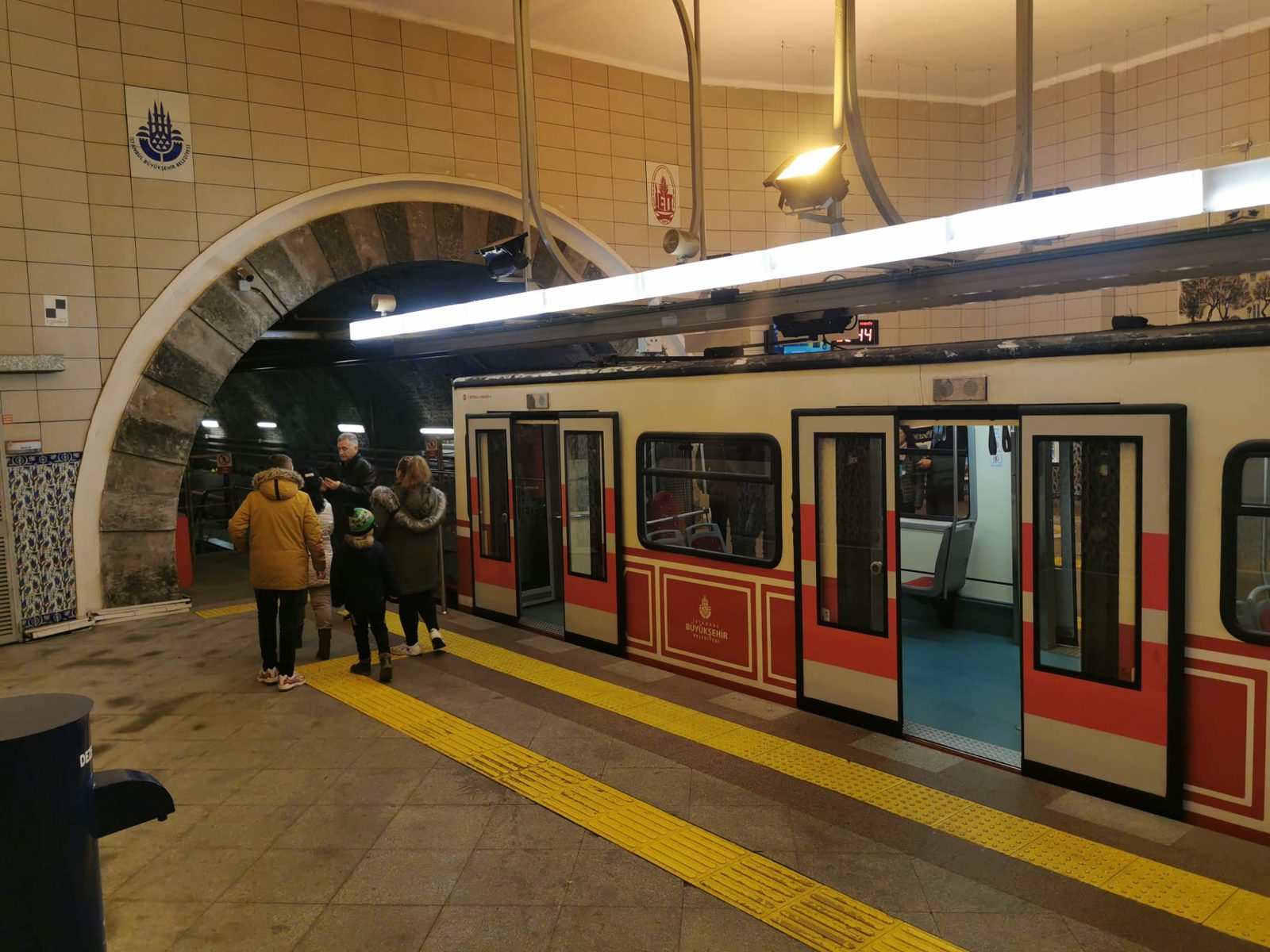
When the Tünel opened in 1875, it was among the earliest underground city railways in the world. Its route is short, but the technical idea was enormously practical for Istanbul. Between the harbor and trading area of Karaköy and higher-lying Pera lay a steep difference in elevation. It was exactly this slope that was exhausting for pedestrians and inefficient for the daily flow of goods and people.
A funicular solved the problem more elegantly than a normal railway. Vehicles are moved via a cable system, allowing them to handle steep gradients. The Tünel is therefore less spectacular for its length than for the very concrete urban task it has fulfilled since the 19th century.
Galata and Pera in the 19th century
The area above Karaköy boomed in the 19th century. Banks, insurance companies, foreign businesses, embassies and hotels concentrated in Pera. Down by the water, goods, businessmen and travelers arrived.
The slope lay between the two worlds. Thousands of people had to cross it daily. The Tünel was therefore part of a wave of modernization that also included tramways, new harbor facilities, and modern utility networks.
Istanbul at the time was by no means a city that merely passively copied European technology. It integrated new systems very quickly into its own topography.
Eugène-Henri Gavand and the idea
The French engineer Eugène-Henri Gavand is associated with the project. He observed the laborious traffic on the slope and developed a plan for an underground funicular.
Financing and approval were complicated, as is typical for large infrastructure projects. Foreign capital, Ottoman concessions, and technical expertise came together.
The Tünel is thus also a product of that internationally interwoven economy that shaped Galata and Pera in the 19th century.
Horse, steam, electricity — how operation changed
The early Tünel was technically operated differently than today. Over the course of its history, its drive system, cars, and safety equipment were modernized several times. Electrification came later.
That the line still exists today doesn't mean the same vehicles have been running back and forth since 1875. What's historic is the route and its function; the technology, naturally, was renewed.
Why such short routes can still matter
Modern transport debates often focus on kilometer counts. The Tünel shows the opposite: an extremely short route can be enormously useful if it overcomes exactly the right obstacle.
A steep slope can separate urban spaces more strongly than several kilometers of flat street. The Tünel therefore doesn't connect distance — it connects elevation.
My very personal proof that this railway makes sense
On our first visit to Istanbul, we didn't know about the Tünel. In hindsight, that sounds harmless. It isn't.
If you walk from Galata toward Karaköy in the morning, everything's wonderful, because you're going downhill. In the evening, the bill comes due. That cute little street suddenly turns into a personal assault on your thighs.
We really fought our way up, and only learned later that you can solve the whole thing far more elegantly in a few minutes. Ever since, the Tünel isn't a historical curiosity to me — it's a friend.
My legs still thank it to this day.
My take on this place
On our first visit to Istanbul, we sadly didn't know the Tünel existed. So we dutifully took the "cute" streets around Galata. Going down, by the way, is wonderful. You think to yourself: oh, how lovely it is here.
In the evening, the bill comes due. The same street looks at you uphill, and suddenly it feels like an 80 percent grade. After that first trip, we had thighs like bodybuilders. Today I know: there's a railway that gets me up there in a few minutes. I really would have loved to have that information back then.
And that's exactly why the Tünel belongs in an Istanbul guide for me. Not just because it's historic, but because 400 meters in Istanbul are sometimes simply not just 400 meters.
– Amra