 Music · Travel · Lifestyle
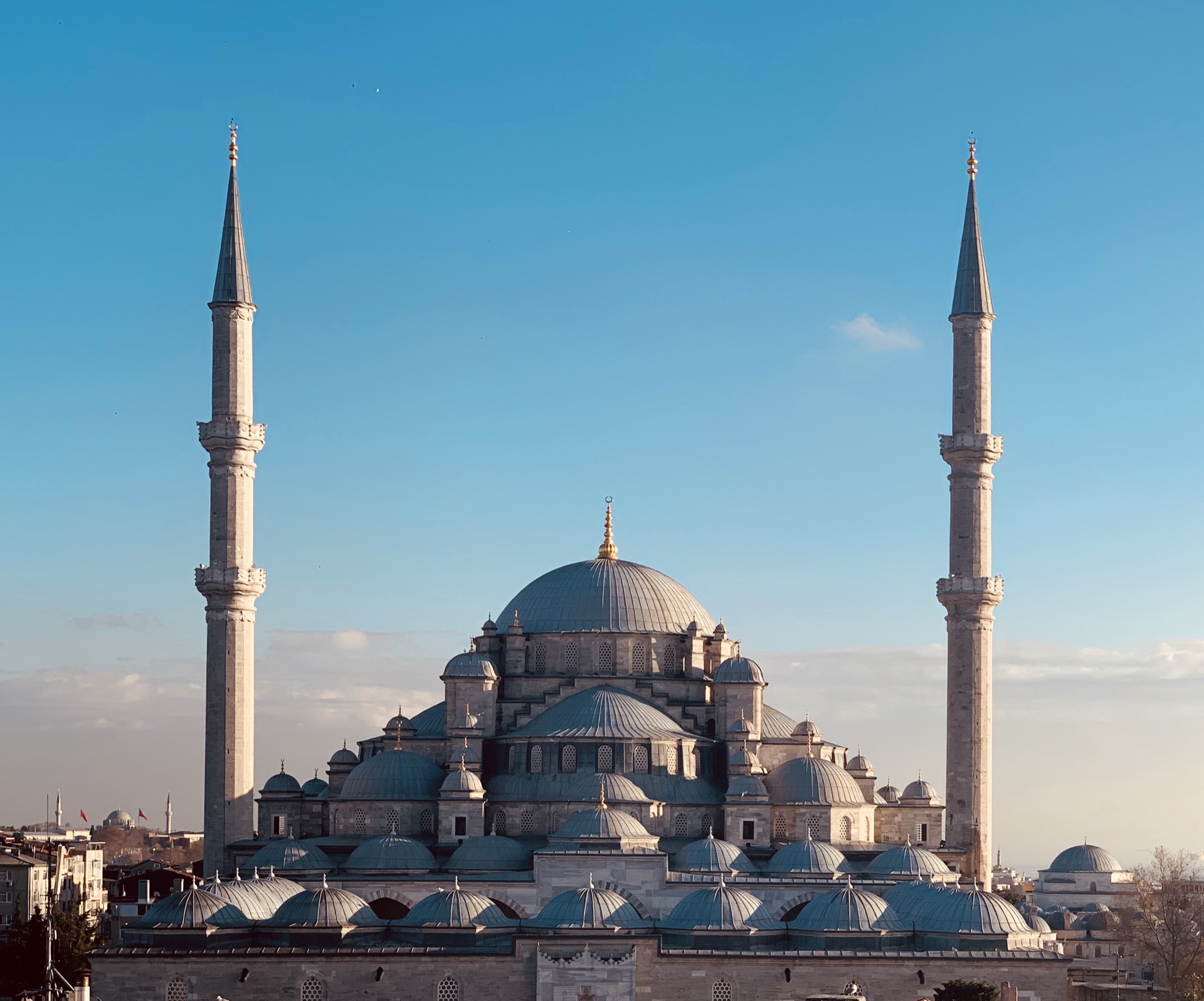
The Süleymaniye isn't significant only for its dome. The real key lies in the whole complex. When Sultan Süleyman I had a great new foundation built in the 16th century, schools, kitchens, medical facilities, lodgings, and further buildings arose around the mosque. It was a religious centre, but just as much a social, economic, and educational system.
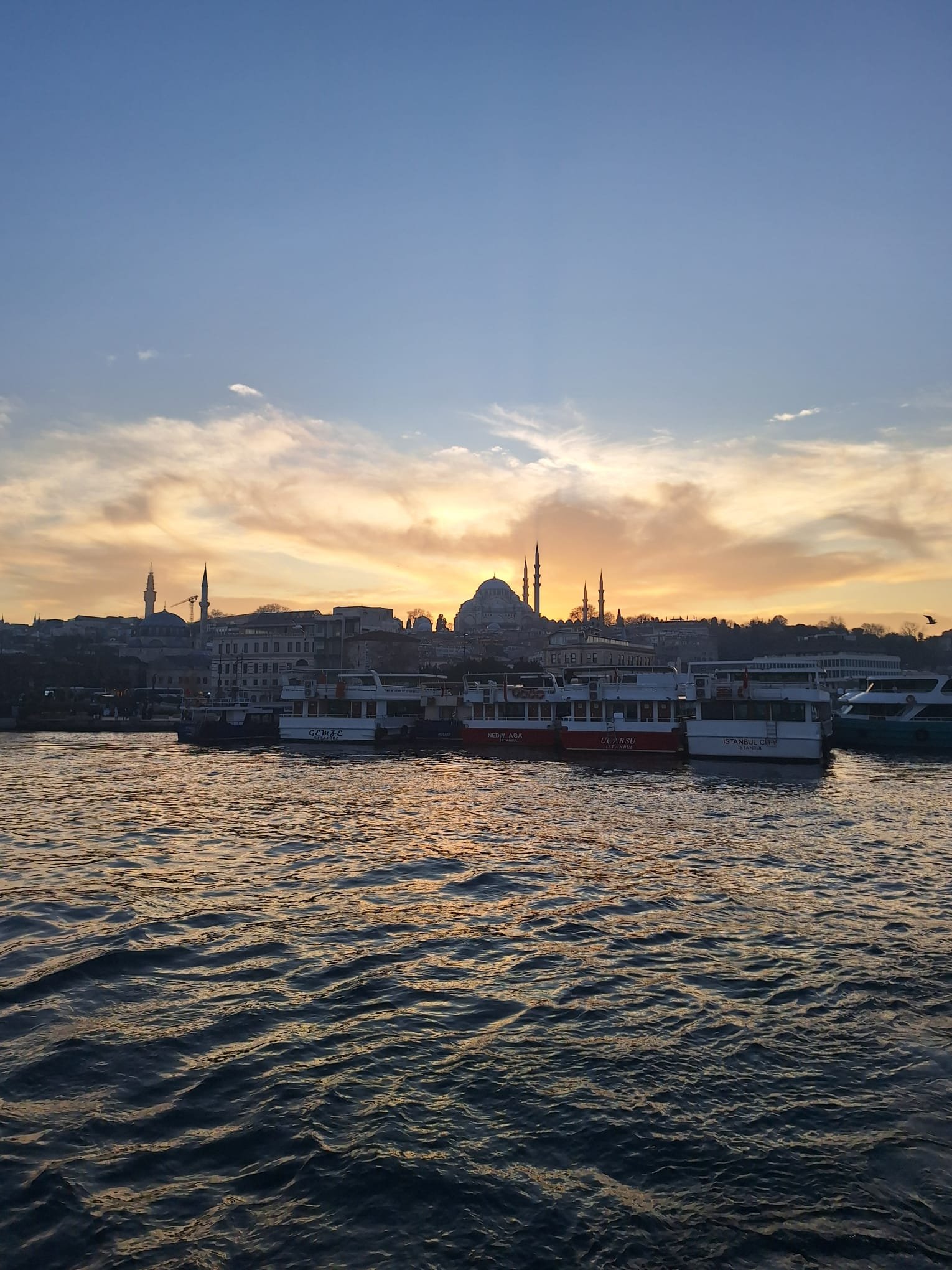
The Süleymaniye isn't significant only for its dome. The real key lies in the whole complex: schools, kitchens, medical facilities, lodgings, and further buildings.
Its site on one of the hills of the historic peninsula was chosen deliberately. The mosque was meant to be seen. From the Golden Horn, from the Bosphorus, and from many parts of the city, its silhouette still appears today as part of the classic Istanbul skyline. Mimar Sinan didn't just have to build beautifully — he had to organise a huge complex on difficult terrain.
- Its patron was Sultan Süleyman I.
- Its architect was Mimar Sinan.
- The complex was built in the 1550s.
- It was part of a huge külliye.
- The foundation included education, welfare, medical, and social institutions.
- Süleyman and Hürrem Sultan are both buried here.
- The mosque was damaged by fire and earthquakes and restored several times.
Süleyman and the Peak of His Reign
By the time construction began, Süleyman had already been ruling for decades. Under him, the Ottoman Empire reached an enormous territorial and political extent. In Europe he's known as "the Magnificent"; in Turkish tradition, as Kanuni, the Lawgiver.
A monumental foundation in the capital was therefore not simply a personal monument. It was meant to express Süleyman's place within a long Islamic and Ottoman tradition of rule, while also fulfilling concrete functions. A ruler presented himself not only through palaces and military victories, but through foundations that funded education, religious life, and social welfare.
The Süleymaniye was therefore both self-presentation and infrastructure.
Mimar Sinan and His Great Istanbul Project
Mimar Sinan was already the empire's chief architect and had designed numerous buildings. The Süleymaniye became one of his central works in Istanbul. He later described it, in his own understanding of his career, as roughly a work of his mastery phase — while rating the Selimiye in Edirne even higher.
Sinan had to work with a difficult plot. The hill slopes downward, and a huge building complex had to be organised stably across different levels. Instead of levelling the slope entirely, he integrated it into the architecture. This created terraces, courtyards, and substructures that served both structural and urban-planning purposes at once.
This is exactly where Sinan's strength shows. He didn't just design a beautiful main building, but an entire complex that tied together terrain, sightlines, use, and structural engineering.
Why the Mosque Stands on This Hill
From here you overlook the Golden Horn and the Bosphorus. The site was part of the deliberate Ottoman staging of the historic peninsula. Great dynastic foundations shaped the skyline and made rule visible in the cityscape.
The Süleymaniye also stands not far from the old centre of Constantinople. Building a great new foundation therefore didn't mean starting on an empty site. Ottoman Istanbul developed on top of, and between, older streets, cisterns, buildings, and foundations.
Anyone who photographs the mosque in isolation therefore misses its real urban significance. It doesn't sit on this hill by chance — it commands it.
How Sinan Solved the Structural and Spatial Problem
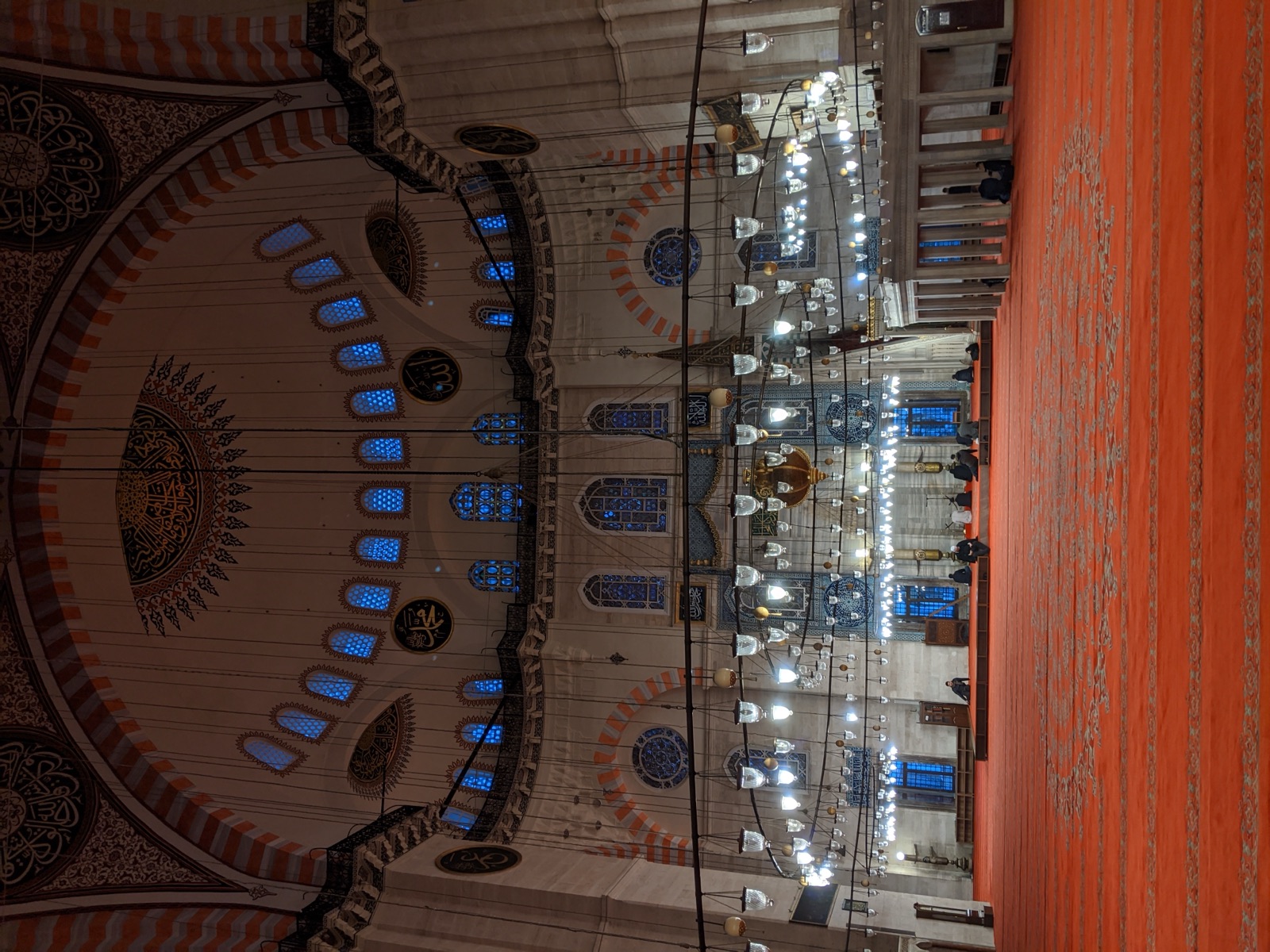
Sinan knew the Hagia Sophia very well and studied both its technical brilliance and its weaknesses. For the Süleymaniye, he developed a controlled dome structure with half-domes, massive piers, and supporting elements integrated as harmoniously as possible into the architecture.
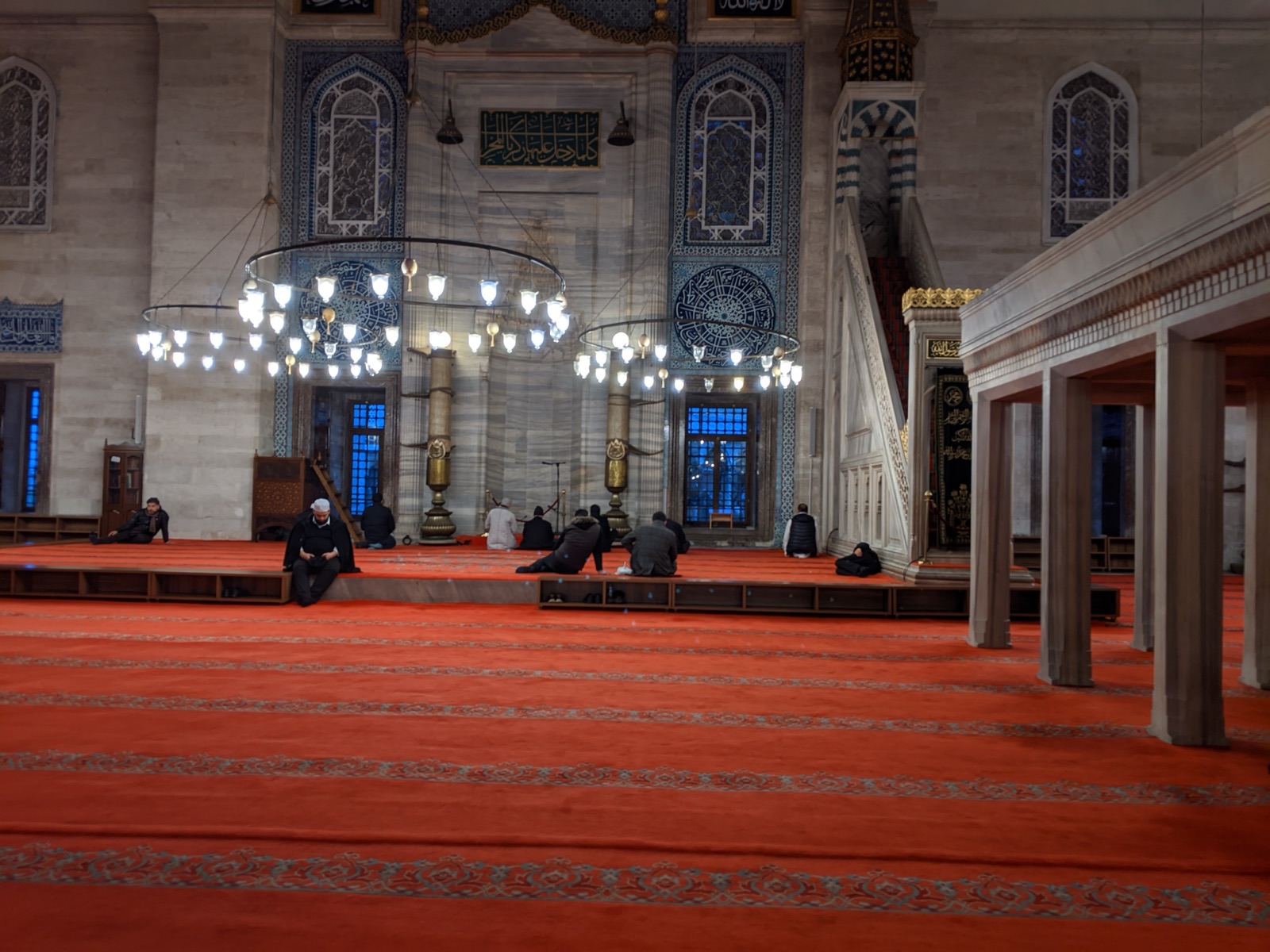
The mosque feels remarkably open inside. Loads still have to go somewhere, of course. Sinan's art didn't lie in making structural engineering disappear, but in organising it so it became part of the spatial impression. Great arches, piers, and half-domes gradually channel the forces away.
The Süleymaniye is therefore no copy of the Hagia Sophia. It belongs to the same centuries-long engagement with the question of how to build a great central domed space safely and convincingly.
Light, Acoustics, and the Famous Soot Story
Before electric lighting, great Ottoman mosques were lit by numerous oil lamps, which produced soot. At the Süleymaniye there's a well-known story that Sinan planned air currents so that this soot collected in a particular chamber and was then used to make especially high-quality ink.
The historical core is plausible. Lamp soot really was used for black ink, and the Süleymaniye is said to have had a so-called soot chamber, or a corresponding ventilation solution. Popular accounts, however, sometimes turn this into an almost magical system in which Sinan controlled every single particle of soot.
Acoustics, too, are linked to cavities or resonance chambers. Such building techniques are known from historical structures. Still, you should avoid tracing every modern sound effect back to one single ingenious trick, since restorations, carpets, and altered surfaces affect acoustics too.
A Külliye as a Social Centre
The Süleymaniye complex included several madrasas, a medical facility, a soup kitchen for the poor, a guesthouse, a hammam, and further buildings. Students lived and studied here. The needy could be provided for. Travellers found lodging. Employees worked for the foundation.
This also explains why such complexes needed enormous economic foundations. A vakıf held land, shops, and other sources of income, from which operations and staff were funded. Charity had to be organised permanently.
The mosque was thus the religious centre, but only one part of a much larger social infrastructure. Anyone who just walks into the prayer hall and back out sees only a fraction of it.
Süleyman and Hürrem, Side by Side
In the garden behind the mosque stand the mausoleums of Süleyman and his wife, Hürrem Sultan. That Hürrem was buried there in immediate proximity to her husband reflects her extraordinary position.
Hürrem wasn't simply a "favourite concubine." She became Süleyman's legally recognised wife, gained considerable political influence, and acted herself as patron of great building projects. Her position permanently changed the dynastic court order.
Süleyman died in 1566 during the campaign at Szigetvár. His death was initially kept secret so the army wouldn't fall into disorder. His body was later brought to Istanbul and buried within his foundation. Various accounts surround the treatment of his internal organs, and the details aren't fully established.
Fires, Earthquakes, and Restorations
The Süleymaniye, too, didn't remain untouched for four hundred years. A fire in the 17th century and the severe earthquake of 1766 caused damage and repairs. Later restorations altered surfaces and details.
So when people speak of "Sinan's mosque" today, they mean the structure Sinan designed, not an object that was never repaired since the 16th century. For historical monuments, restoration is part of their history.
What Still Dates From Sinan's Time
The basic structure, the overall design, large parts of the masonry, and the spatial organisation of course go back to Sinan's planning. At the same time, roofs, decorations, windows, and surfaces have been renewed again and again.
The külliye's surroundings, too, have changed considerably. Roads, modern buildings, and altered uses have partly broken up the historical ensemble. Still, the original relationship between many parts of the foundation can still be recognised.
Sinan's Relationship to the Hagia Sophia
The Süleymaniye is almost automatically compared to the Hagia Sophia, because both shape the skyline with a great central dome. The comparison makes sense as long as you don't turn it into a simple copying story. Sinan knew the Hagia Sophia extremely well, and as an architect was even involved in securing it. So he knew exactly what structural problems a huge dome could cause.
At the Süleymaniye, he responded to this challenge with a clearer distribution of loads and a more tightly controlled outer structure. The supporting systems were meant to be integrated into the overall architecture as much as possible, rather than standing out more and more as additional mass, as happened with the Hagia Sophia over the centuries as it was reinforced.
The comparison therefore shows no "defeat" or "outdoing" of one religion by the other. It shows a centuries-long line of architectural learning within the same city.
Everyday Life at the Foundation
A particularly fascinating question is who actually used the complex. Students lived and studied in the madrasas, the sick were treated in the darüşşifa, meals were handed out at the soup kitchen for the poor, and travellers found lodging in the guest quarters. The hammam could generate income at the same time, which flowed back into the foundation system.
This meant the külliye functioned like a permanently funded social organism. It needed staff, supplies, bookkeeping, and property income. A magnificent mosque alone couldn't have fulfilled these tasks.
Anyone walking through the surroundings today therefore sees the remains of a system that tied together religion, education, health, welfare, and economy.
Earthquake Safety Wasn't Theoretical for Sinan
Istanbul lies in a region where severe earthquakes have repeatedly destroyed buildings. Sinan knew the damage suffered by older monuments and had to plan his domes so that lateral forces could be controlled. The Hagia Sophia, at the same time, showed both the possibilities and the risks of great domed structures.
At the Süleymaniye, loads are channelled away through main piers, half-domes, and buttresses. What's special is that the massive supporting elements don't look like later emergency fixes, but are integrated into the overall architecture. Sinan turned structural engineering into design.
The Interior Relies on Restraint
Anyone arriving from the Sultan Ahmed Mosque might expect tiles everywhere. The Süleymaniye feels different. İznik ceramics are concentrated in specific areas, while large wall surfaces and the dome remain comparatively calm. As a result, proportion, light, and space come through more strongly.
Calligraphy, too, is part of this order. Script serves not merely as decoration, but ties religious content to visual structure. Precisely because not every surface is maximally decorated, the interior feels remarkably clear despite its size.
The Imaret Made Charity Concrete
The foundation's soup kitchen for the poor provided for the needy, students, travellers, and staff. Such a facility needed large quantities of food, fuel, and labour every single day. It could only function because the vakıf had its own sources of income.
This is essential to understanding great Ottoman foundations. A sultan didn't just pay for the construction of a beautiful mosque. Ideally, he created an economic structure meant to fund education, welfare, and building upkeep over a long period. Of course, this didn't run entirely unchanged for centuries, but the ambition was far broader than mere self-presentation.
Hürrem Was a Political Actor With Her Own Profile
That Hürrem Sultan received her own mausoleum right next to Süleyman's reflects her extraordinary position. She arrived at court as an enslaved young woman, became Süleyman's partner and later his legally recognised wife, and developed her own networks of patronage and correspondence.
She didn't become significant merely because a sultan loved her. Hürrem herself acted as a patron and maintained diplomatic relationships. Her burial at one of the city's most important dynastic foundations made that rank permanently visible.
The Süleymaniye and the Question of the Hagia Sophia
Hardly any great Ottoman domed building escapes comparison with the Hagia Sophia. For the Süleymaniye, this comparison makes sense as long as you don't turn it into Sinan simply trying to copy or outdo Justinian. He knew the Hagia Sophia as a technical reference point, but worked with a different religious use, a different building organisation, and several additional centuries of engineering experience.
The Süleymaniye therefore feels less like a direct copy than like an independent answer to the same basic problem: how do you create a large, hierarchically clear interior beneath a dominant dome? Sinan's solution distributes the forces differently, integrates supporting elements more strongly, and creates a sense of space that, despite its monumentality, feels relatively calm.
The Libraries and Madrasas as a Landscape of Knowledge
The foundation included several madrasas at different levels. Students could prepare here for religious and legal careers. Teachers, in turn, were part of a scholarly hierarchy closely tied to the Ottoman state. Education wasn't an extra offering alongside the mosque, but an essential part of the complex.
Concentrating several schools in close proximity created a kind of academic quarter. Anyone visiting only the mosque's courtyard today therefore sees a fraction of its original function. The külliye was, at once, a place of worship, a university, a social centre, and an economic foundation.
Süleyman's Death and the Return to Istanbul
Süleyman died in 1566 during the campaign against Szigetvár in Hungary. His death was initially kept secret, so as not to endanger military order and to secure the succession. His body was brought to Istanbul and buried in his mausoleum. Stories persist to this day about a separate burial of his heart and internal organs at the site of his death.
Archaeological and historical research in Hungary has tried to identify the location of such a memorial site. The details remain complicated. What's certain, though, is that Süleyman died far from Istanbul, while his monumental tomb in the capital became part of the very foundation that permanently tied his name to the city.
"Sinan collected lamp soot with a perfect, invisible ventilation system and turned it into the best ink in the world." The core of the soot use is plausible and documented, but the most spectacular technical details are often told more dramatically than they're supported.
"The Süleymaniye is simply a copy of the Hagia Sophia." No. Sinan knew the Hagia Sophia and engaged closely with its dome problem, but developed his own structural and spatial solution.
My Thought on This Place
At the Süleymaniye, what impresses me almost as much as the mosque itself is imagining how many people spent their everyday lives all around it. Students, teachers, the sick, cooks, travellers, and the needy — this wasn't isolated architecture meant just to be looked at.
And when you walk over to the mausoleums afterward, the name "Süleyman the Magnificent" suddenly becomes a human being again, who eventually ended up in a grave just like everyone else. Maybe it's exactly this contrast between immense power and human mortality that's one of the reasons places like this affect me so strongly.
– Amra