 Music · Travel · Lifestyle
Anyone who looks at the Fatih Mosque only as an Ottoman building misses the more interesting half of its history. Long before Mehmed II built his great foundation here, the Church of the Holy Apostles stood on this site — one of the most important churches of Byzantine Constantinople. It wasn't just religiously significant, but closely tied to the imperial dynasty, since rulers were buried here for centuries. That's exactly why the looting of 1204 hit this place especially hard.
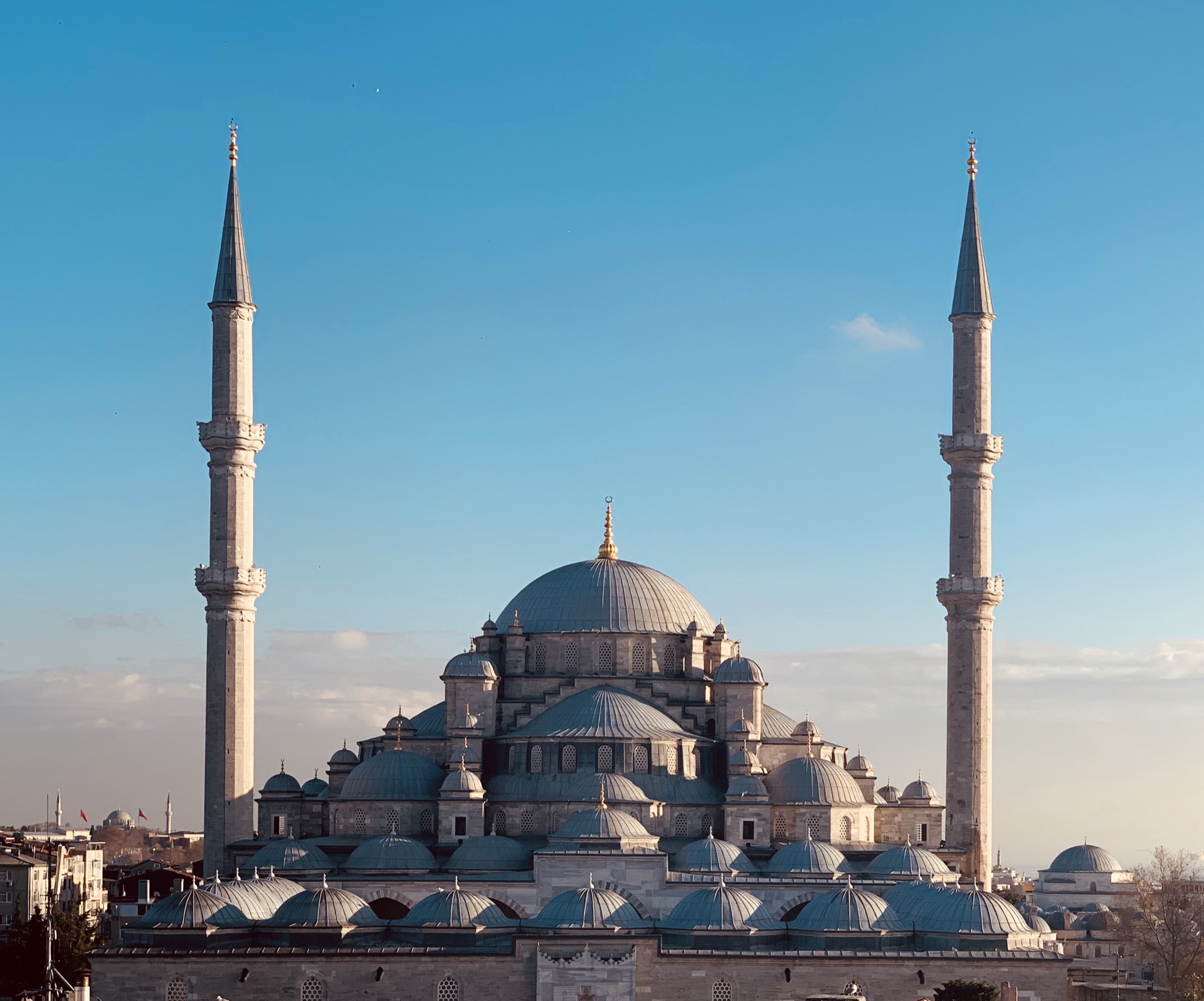
Long before Mehmed II built his great foundation here, the Church of the Holy Apostles stood on this site — one of the most important churches of Byzantine Constantinople and an imperial burial place.
Later, the church disappeared, and Mehmed II chose this very site for his own great religious and social foundation. After his death, he too was buried here. But even the original 15th-century Fatih Mosque isn't the building we see in full today: the severe earthquake of 1766 destroyed large parts of it, and a substantial rebuild followed. This site is therefore a perfect example of why you can never explain Istanbul with a single construction date.
- The Church of the Holy Apostles stood here before the Fatih Mosque.
- It was one of Constantinople's most important churches and an imperial burial site.
- In 1204, crusaders looted the imperial tombs too.
- After 1453, the church initially remained standing and briefly served as the seat of the Orthodox Patriarchate.
- Mehmed II later had his own mosque and foundation complex built on the site.
- The original Fatih Mosque was severely destroyed in the earthquake of 1766.
- Today's main building therefore largely dates from the 18th-century rebuild.
- Mehmed II himself is buried here.
The Church of the Holy Apostles Before the Fatih Mosque
The Church of the Holy Apostles was among the most significant sacred buildings in Constantinople. Its origins reach back to the time of Constantine the Great; under Justinian it was rebuilt in the 6th century. Its location on one of the city's great hills alone made it visible far and wide. Even more important, though, was its function: it was not just a church, but a dynastic site of memory for the Byzantine Empire.
The church was dedicated to the Apostles and had a cross-shaped plan with several domes. In later centuries it was renewed and altered again and again. Its exact form can today only be reconstructed from written sources, archaeological clues, and comparisons, because the building itself has vanished completely.
It's precisely this disappearance that makes the site so interesting. Where the Fatih Mosque stands today, one of the city's most important Christian monumental buildings once stood.
Why Byzantine Emperors Were Buried Here
From Constantine the Great onward, numerous emperors and members of the dynasty were buried in or near the Church of the Holy Apostles. Precious sarcophagi, some made of porphyry, underscored the rank of the dead. The church thus became a dynastic space of memory, in which rule remained visible across generations.
A new emperor didn't simply take over the political succession of his predecessors. He moved through a city where their tombs, statues, and churches constantly recalled the empire's continuity. The Church of the Holy Apostles was therefore no ordinary cemetery, but a place where the Byzantine monarchy staged its own history.
That also explains why looting this site was far more than ordinary theft.
1204: Crusaders Open the Imperial Tombs
When the crusaders of the Fourth Crusade conquered Constantinople in 1204, the looting struck not only palaces and treasuries. Churches, relics, and tombs were plundered too. The Church of the Holy Apostles was among the especially symbolic targets, because emperors had been buried there for centuries.
Medieval accounts describe tombs being opened and searched for gold, jewellery, and precious grave goods. Even the dead, then, offered no protection from the looting. For contemporaries, this was a grave desecration, because it wasn't just property that was stolen — the rest of the deceased rulers was violated too.
The violence of 1204 was therefore not merely material. It destroyed part of Constantinople's cultural and dynastic memory. It's precisely at the Church of the Holy Apostles that you can see how deeply the looting cut into the symbolic order of the city.
What Became of the Church After 1204
After the Byzantine recapture of 1261, the Church of the Holy Apostles remained standing, but the empire was considerably weaker economically and politically. Many monumental buildings could no longer be maintained the way they had been in earlier centuries.
When Mehmed II conquered Constantinople in 1453, the church was still standing. The new sultan initially handed it over to the Orthodox Patriarchate. The Patriarchate, however, moved its seat again relatively soon, because the surroundings were changing and the building was already in poor condition.
Eventually the church was torn down. How much of Justinian's building still survived at that point can no longer be fully reconstructed today.
Mehmed II and the New Foundation
Mehmed chose this historically charged site for his own great foundation. That was no neutral decision. On a site that had been tied to Byzantine emperors for centuries, a religious, social, and educational centre of the Ottoman capital now arose.
The original complex was built in the 1460s and 1470s. Mehmed thereby created a new monumental axis on an ancient imperial hill. After his death in 1481, he too was buried there.
This creates a remarkable historical shift: on the very site where Byzantine emperors had built their dynastic memory, the grave of the sultan who had ended their empire now stood.
The Fatih Külliye as an Educational and Social Centre
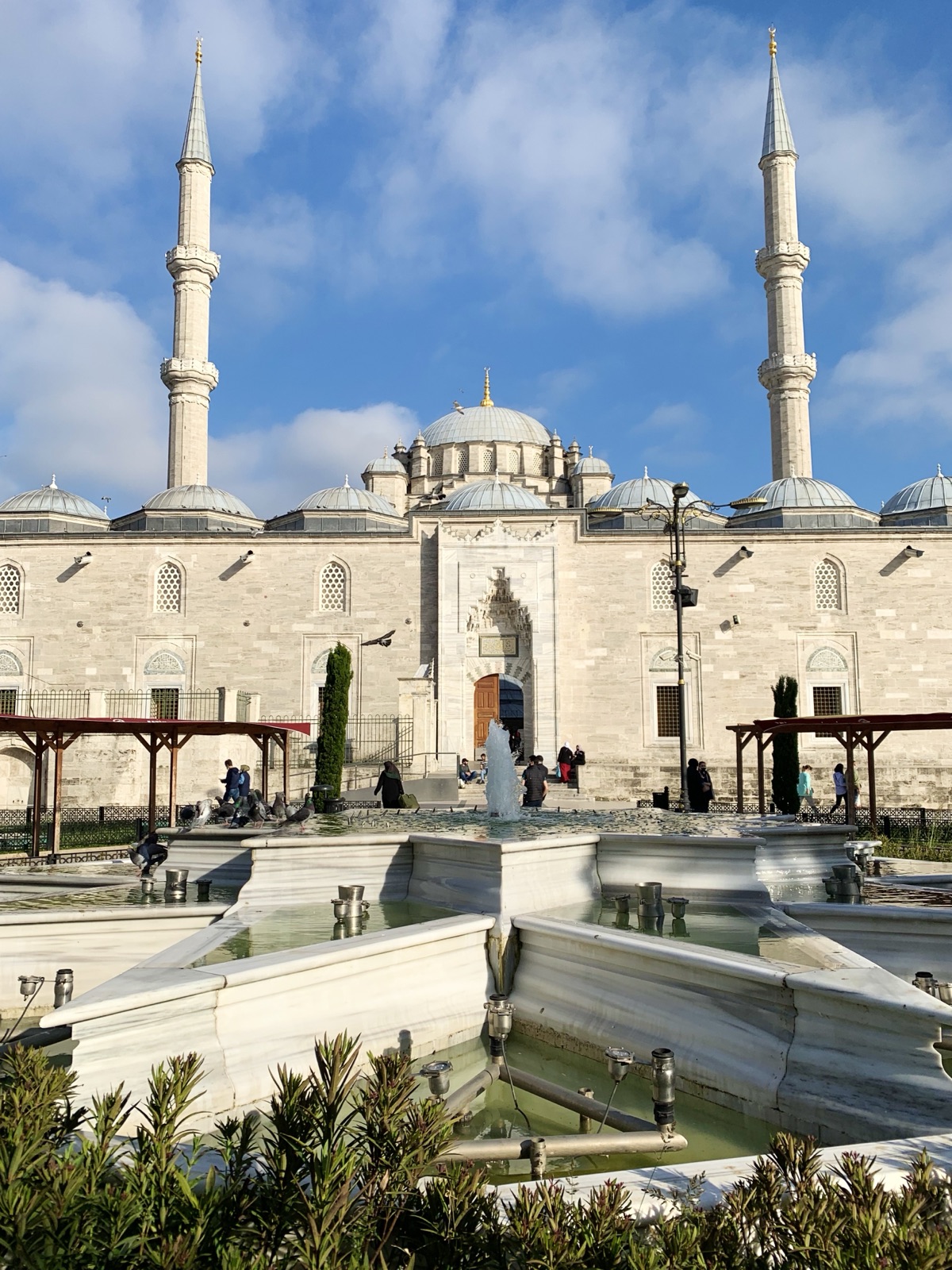
The foundation included madrasas, a library, a soup kitchen for the poor, a hospital, a hostel, and further facilities. The so-called Sahn-ı Seman madrasas in particular developed into important centres of higher education.
Islamic sciences, law, theology, and other subjects were taught here. The foundation was thus not merely Mehmed's religious monument, but part of his project to reorganise Constantinople as the Ottoman capital.
Welfare was part of it too. The needy and travellers could receive food, the sick medical help, and students and scholars could work. This is hard to grasp if you only photograph today's mosque building.
The Earthquake of 1766
On 22 May 1766, a severe earthquake struck Istanbul. The Fatih Mosque was damaged so badly that large parts of the original main building couldn't be saved. Under Sultan Mustafa III, a substantial rebuild followed.
That's why today's mosque isn't, architecturally, simply Mehmed's building of 1470. Parts of the complex and the historical site reach further back, but the central mosque building visitors see today largely dates from the 18th-century rebuilding phase.
Details like this matter. A sign reading "Fatih Mosque, 15th century" wouldn't be entirely wrong, but it would conceal that the visible architecture is, to a considerable degree, much younger.
Mehmed's Tomb and Dynastic Memory
Mehmed's mausoleum stands behind the mosque. This tomb, too, was altered by earthquakes and restorations. Its present state is therefore not preserved unchanged since 1481.
It's precisely at mausoleums like this that power suddenly becomes very human. A sultan can conquer a city, organise an empire, and build a huge foundation — in the end, what remains of him too is a grave and a memory that later generations interpret.
That's one of the reasons these places often occupy me more than pure palace splendour does.
Fratricide: How Long Did This Practice Really Last?
Ottoman succession originally had no fixed primogeniture. Several sons of a sultan could lay claim to the throne. That created a high risk of civil war after a ruler's death. Even before Mehmed II, rival princes had been killed, but Mehmed included a famous provision in his law code, allowing a sultan to have his brothers killed in the interest of state order.
In the 16th century, the practice occurred repeatedly. Especially well known is Mehmed III, who had nineteen brothers killed in 1595. There was no single date on which it was harshly abolished by law afterward. Rather, dynastic practice changed step by step.
Ahmed I, who became sultan in 1603, let his brother Mustafa live. After Ahmed's death in 1617, Mustafa even ascended the throne. Over the course of the 17th century, the principle of seniority increasingly took hold. Instead of killing every possible rival, princes were often kept within the palace's sealed-off area, the Kafes.
Dynastic violence didn't disappear overnight, but the systematic killing of potential heirs lost its earlier significance. The new solution saved lives, though it could still be psychologically devastating for the isolated princes.
The Church of the Holy Apostles as a Lost Key to Constantinople
Because nothing of the Church of the Holy Apostles survives above ground today, it's easy to underestimate its significance. Yet alongside the Hagia Sophia, it was one of Constantinople's most important sacred buildings. Its connection to imperial tombs made it a place where religion and dynasty met directly. Anyone who saw a deceased emperor there saw not just a dead man, but part of the empire's political continuity.
That's exactly why the loss of the church is more than an ordinary architectural loss. With it disappeared a monument that had organised the memory of Byzantine rulers for centuries. That a great Ottoman foundation now stands on the very same site makes the historical layering especially clear.
Why Mehmed Probably Chose This Site Quite Deliberately
Mehmed II understood the symbolism of Constantinople very precisely. He didn't want to merely possess the city militarily, but to redefine it as his capital. That meant incorporating old imperial sites into the new order.
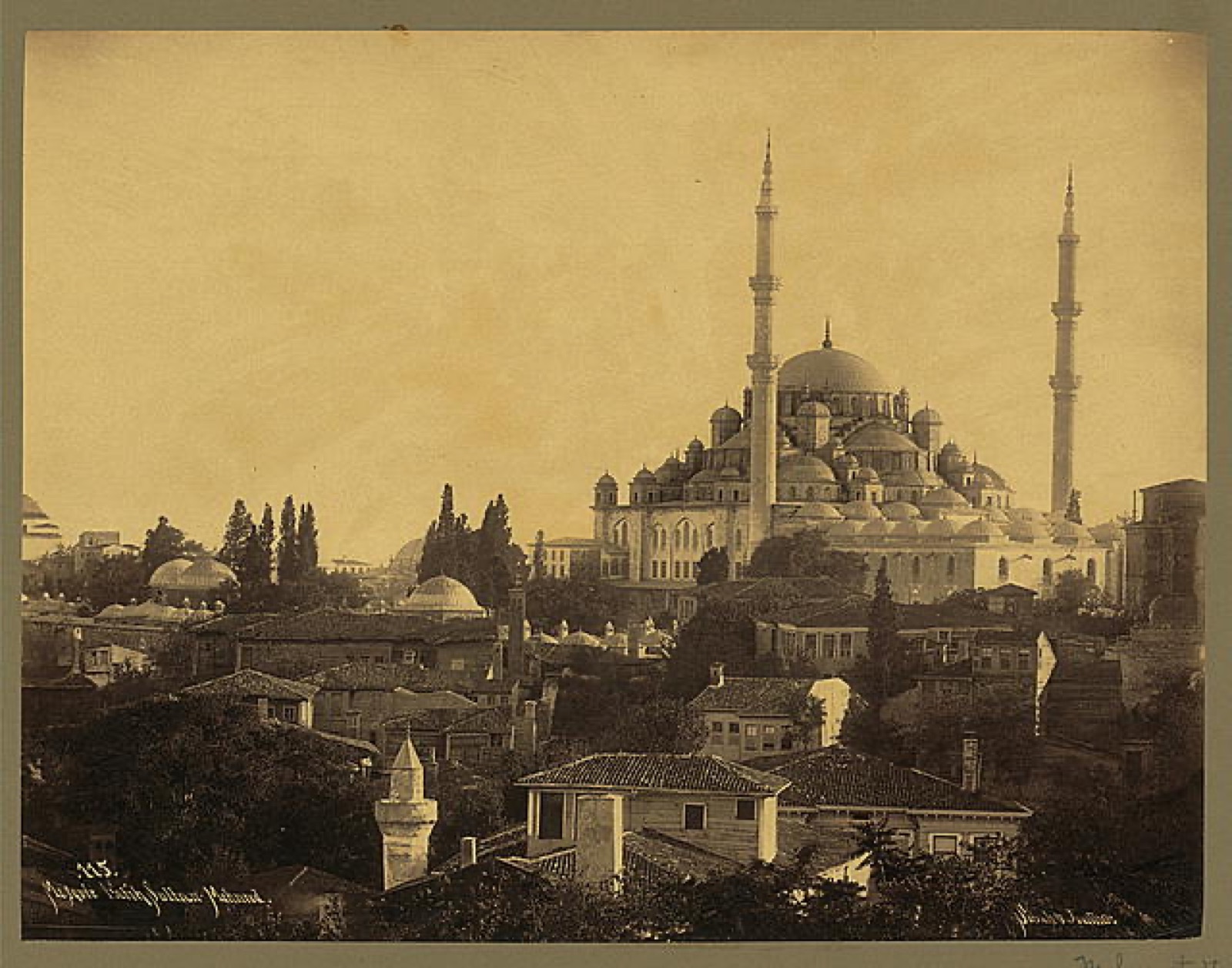
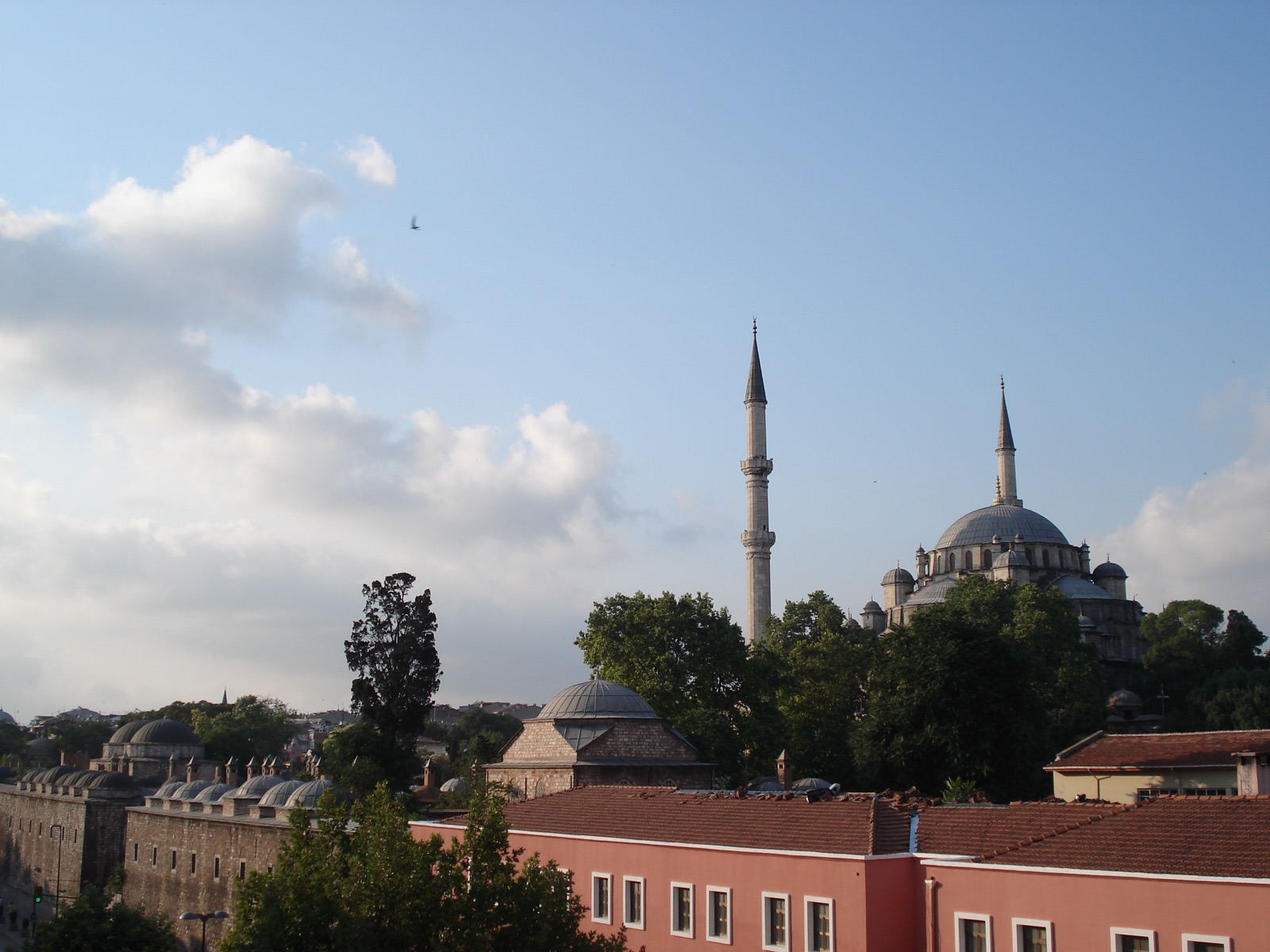
Choosing the site of the Church of the Holy Apostles for his own great foundation was therefore highly significant. The new complex stood on a hill that had already been tied to imperial memory for centuries. Mehmed wrote himself into this tradition, without simply copying it.
That he himself was later buried there reinforced this effect further. The site remained a dynastic space of memory — only the dynasty had changed.
What Became of the Imperial Sarcophagi
Almost nothing survives at the original site from the former imperial tombs of the Church of the Holy Apostles. Some monumental porphyry sarcophagi, traditionally linked to Byzantine rulers, are today found at the Istanbul Archaeological Museums. Their exact attribution to individual emperors isn't always certain, but their material and scale show how much even burial itself was politically staged.
Porphyry was closely tied to imperial power in the Roman Empire. The deep purple stone came from Egypt, was precious, and hard to work. Whoever lay in such a sarcophagus carried their ruler's symbolism, in a sense, all the way into the grave. That crusaders in 1204 opened precisely this site in search of valuables therefore struck the empire's dynastic memory especially hard.
The Transition After 1453 Happened in Stages
After the conquest, Mehmed II initially handed the Church of the Holy Apostles over to the Orthodox Patriarch Gennadios Scholarios. This detail contradicts the simple notion that all the great churches were immediately destroyed or turned into mosques in 1453. The situation developed differently in different places, and the Church of the Holy Apostles initially remained in Christian use.
The Patriarchate left the site fairly soon, though. The old building was in poor condition and its surroundings were changing. Only later was the church torn down, to make way for Mehmed's foundation. The symbolic effect of the site is hard to miss: the new Ottoman ruler placed his own dynastic centre where one of the most important sites of memory for Byzantine emperors had stood.
The Sahn-ı Seman Madrasas Were Part of an Educational Programme
The eight great madrasas around the complex were among the most important institutions of higher Islamic education in early Ottoman Istanbul. Law, theology, and other sciences were taught there, among other subjects. Together with preparatory schools, a structured landscape of education emerged.
Mehmed thereby tied the conquest of the city to institutional development. A capital needs not only palaces and walls, but jurists, teachers, administrators, and religious scholars. The Fatih Külliye was therefore one building block in transforming Constantinople into the Ottoman capital.
The Earthquake of 1766 Changed More Than the Dome
The earthquake struck Istanbul hard, damaging numerous mosques, homes, and public buildings. At the Fatih Mosque, the damage was so great that mere repair wasn't enough. Under Mustafa III, a new main building arose, one that stylistically belongs clearly to the 18th century.
That makes today's mosque especially interesting: the site and the foundation go back to Mehmed II, but the visible main architecture doesn't, not entirely. So when people say "Mehmed's mosque," they mean, historically, the foundation and the site; when they describe today's dome, they're largely talking about a later rebuild.
Mehmed's Mausoleum Was Also Altered
Mehmed's tomb, too, wasn't left untouched. Earthquakes and later restorations changed the structure. Today's mausoleum is therefore not an unaltered object from 1481. Still, the site holds enormous symbolic continuity, because Mehmed continues to be venerated and remembered at the very place he himself created as a dynastic foundation.
This distinction matters especially for tombs. The historical person may indeed be buried there, while the visible building over their grave is considerably younger.
"Mehmed II immediately destroyed the Church of the Holy Apostles in 1453 and built his mosque directly on top of it." False. The church remained standing after the conquest and even briefly served as the seat of the Orthodox Patriarchate.
"Today's Fatih Mosque is Mehmed's original building." False. The earthquake of 1766 largely destroyed the original main building; today's mosque largely dates from the rebuilding that followed.
"With Ahmed I, fratricide was officially and completely abolished." Too simple. Practice changed significantly under Ahmed, but the shift to seniority and the Kafes happened gradually.
My Thought on This Place
At the Fatih Mosque, I find today's building alone less fascinating than the entire history of this site. Long before Mehmed II built his own foundation here, the Church of the Holy Apostles stood on this spot. It wasn't just any church, but a place where the Byzantine Empire buried its rulers for centuries, preserving its own past in the process. When the crusaders broke into these very tombs in 1204 searching for valuables, it wasn't just property that was stolen. A central site of the empire's memory was desecrated.
Later, the church disappeared, and Mehmed had his own great religious and social centre built on exactly this spot. He too was eventually buried here. And even that isn't the end of the story, because the building Mehmed knew was largely lost in the earthquake of 1766 and had to be rebuilt.
Places exactly like this show me why you can never explain Istanbul with one construction date. You stand in front of an 18th-century mosque, on the grounds of a 15th-century foundation, and at the same time at one of the most important burial sites of Byzantine Constantinople.
And at the mausoleums, I always get that same cold shiver. Power, titles, and dynastic rules often sound abstract in history books. The moment you stand in front of the graves, they turn back into people — and, for some of them, sadly, people whose own family's politics never even gave them the chance at a normal life.
– Amra