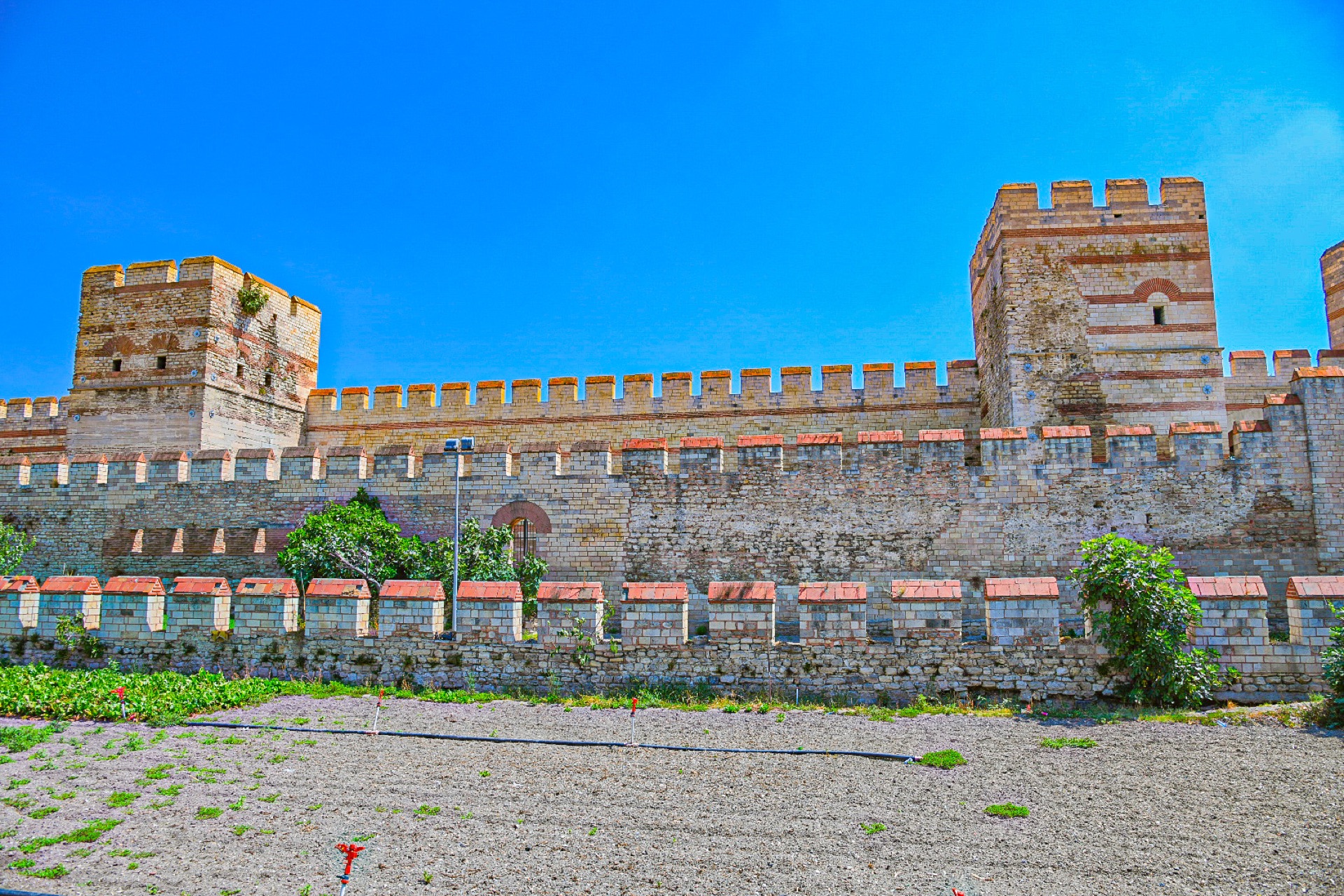
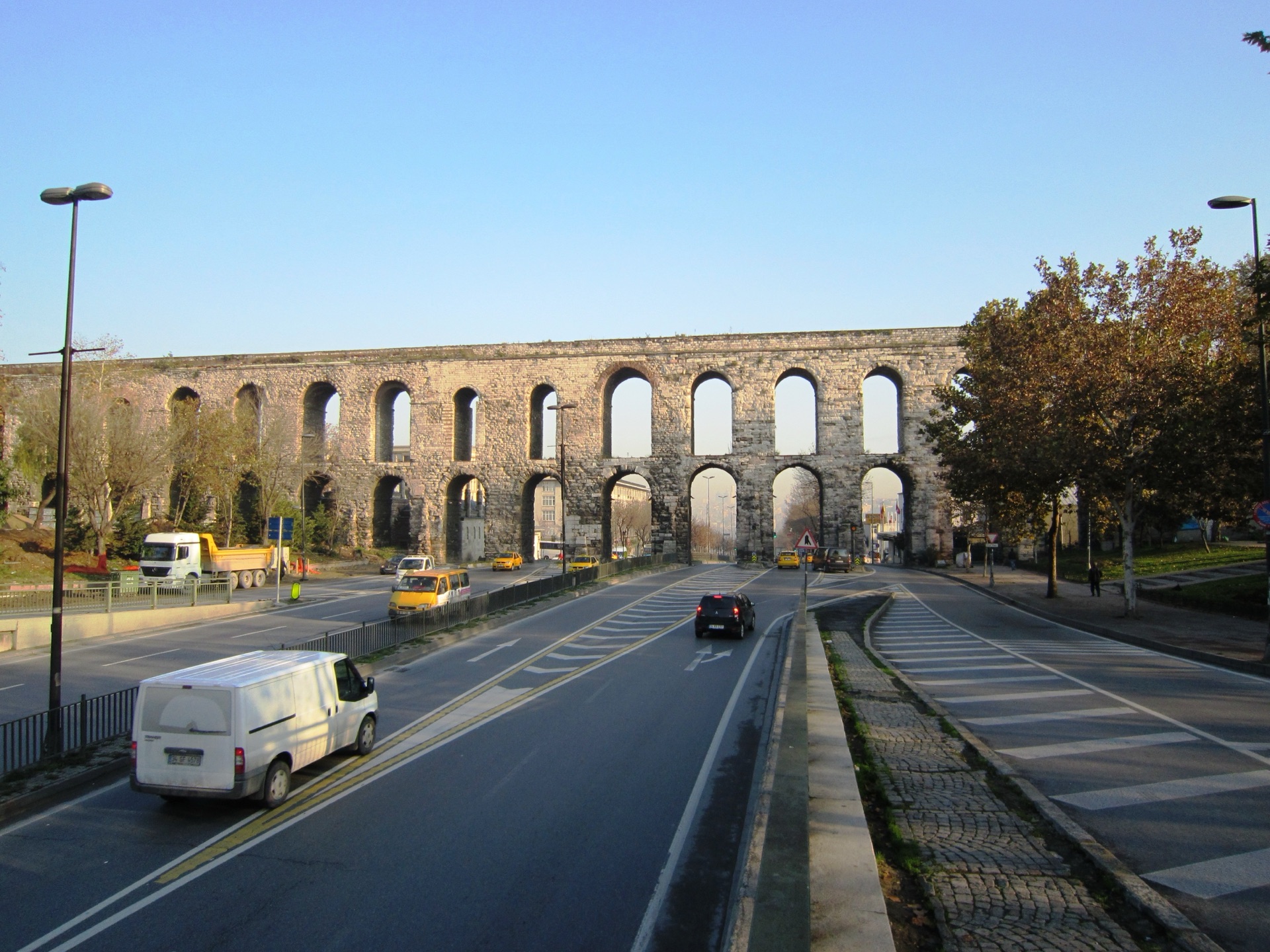
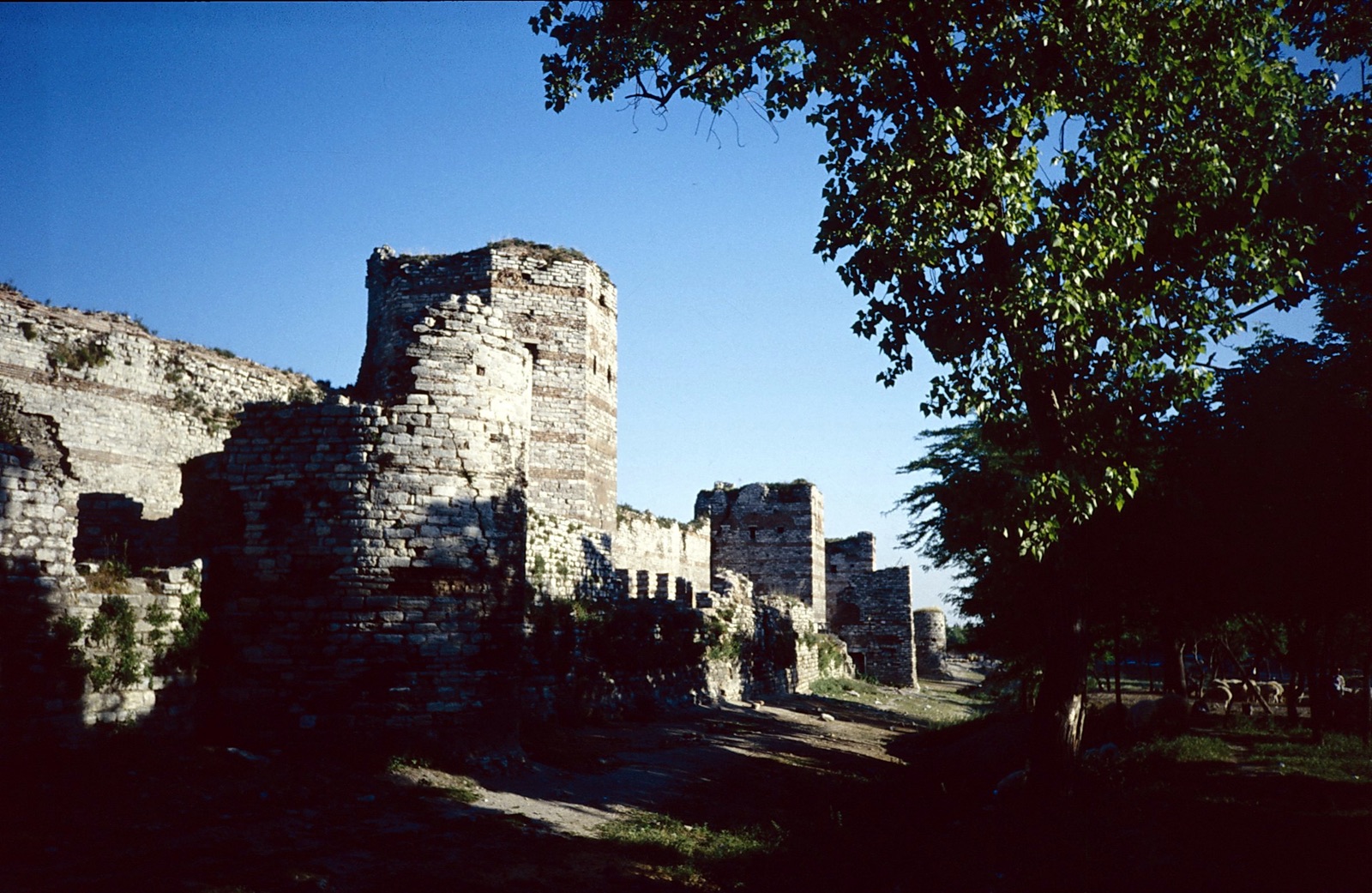
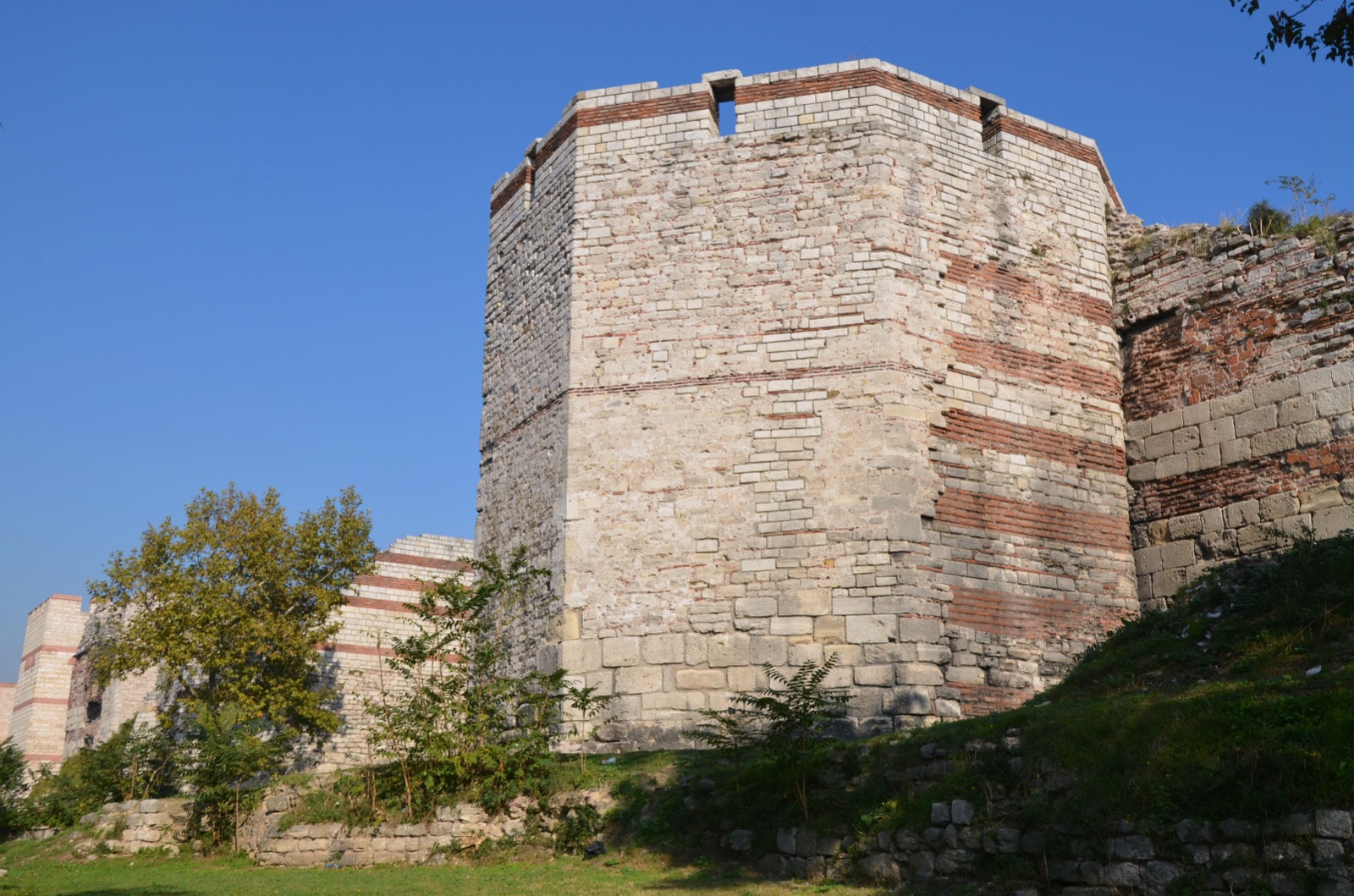
If you want to understand why Constantinople was considered nearly impregnable for so long, you have to see the Theodosian Land Walls. Their strength lay not in a single, especially thick wall, but in a staggered defense system of ditch, outer wall, main wall, and numerous towers. Attackers had to overcome several obstacles in sequence, while defenders could respond from elevated positions.
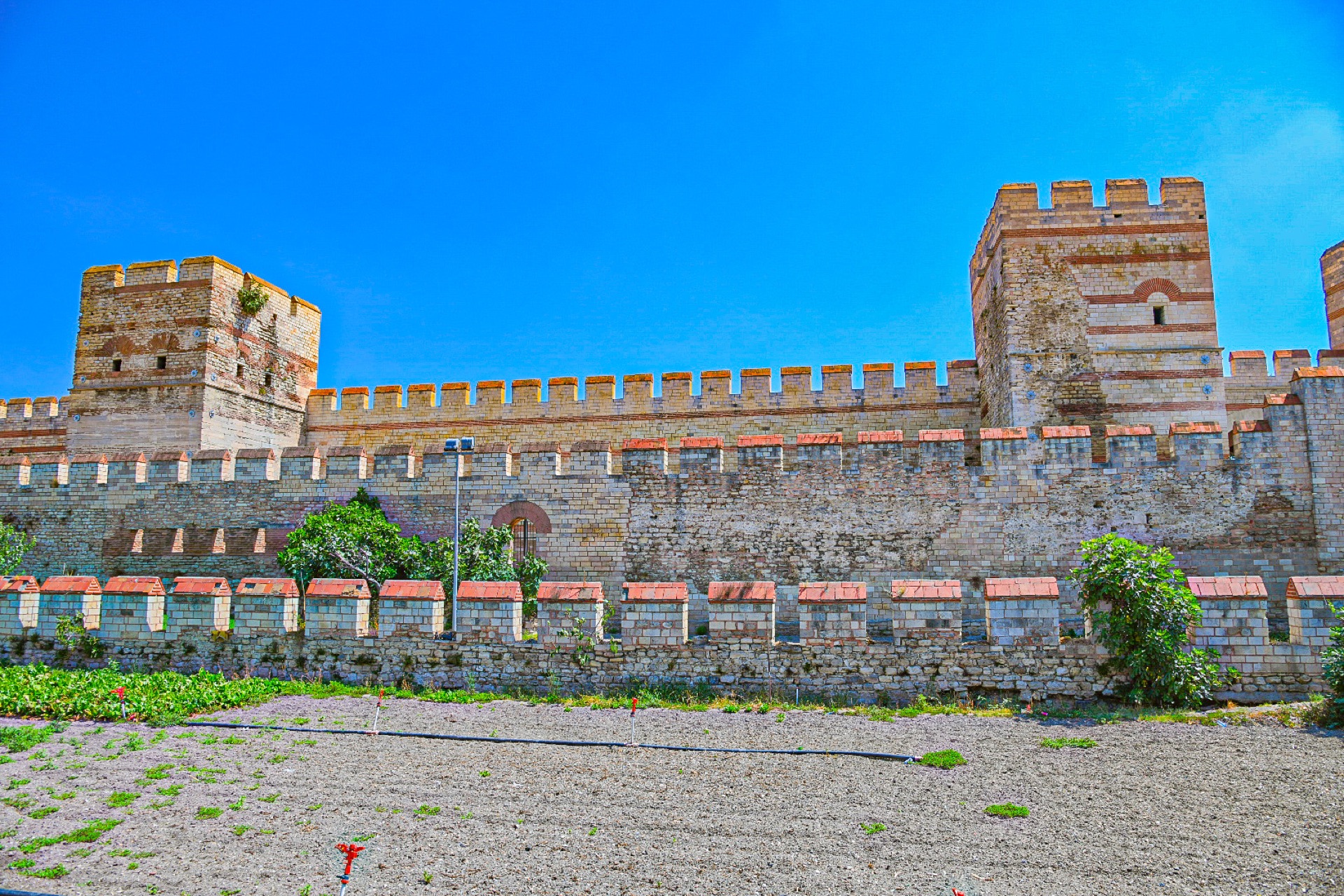
If you want to understand why Constantinople was considered nearly impregnable for so long, you have to see the Theodosian Land Walls. Their strength lay in a staggered defense system of ditch, outer wall, main wall, and numerous towers.
UNESCO explicitly names the roughly 6,650-meter-long land wall of Theodosius II, with its second line of defense, as one of the leading examples of historic military architecture. Yet even these famous walls weren't magically invincible. They were damaged, repaired, breached at times, and finally overcome in 1453 through a combination of artillery, numerical superiority, sustained assault, and political isolation.
- The land walls were built in the early 5th century under Theodosius II.
- A severe earthquake in 447 led to extensive repair and reinforcement shortly before a Hunnic threat.
- The system consisted of a ditch, an outer wall, an inner main wall, and numerous towers.
- The UNESCO World Heritage zone covers roughly 6.65 kilometers of the land walls.
- Thanks to these fortifications, Constantinople withstood many sieges.
- In 1204, crusaders broke in mainly through other sections and from the sea side; the city didn't simply fall through a frontal breach of the entire Theodosian land wall.
- In 1453, large Ottoman cannons especially heavily damaged the Mesoteichion section.
- Many sections visible today are the result of Byzantine, Ottoman, and modern repairs.
Why Constantinople needed new walls
Constantine's 4th-century city wall soon proved insufficient. Constantinople grew westward, and new districts arose outside the older fortification. In the early 5th century, the defense line therefore had to be pushed further outward.
Under Theodosius II, a new land wall was built between the Sea of Marmara and the Golden Horn. The praefectus praetorio Anthemius is associated with the early building program. This gave the capital a ring of defense that reflected its political significance.
Theodosius II and Anthemius
The first major building phase likely began around 413. But in 447, a severe earthquake struck the city and damaged numerous towers. The timing could hardly have been worse, since Attila's troops were threatening the Balkans.
Repairs therefore had to happen with enormous speed. Inscriptions report the restoration being completed in an extremely short time. In this phase, the system was apparently reinforced further and took on its famous multi-tiered form.
How the multi-tiered defense system worked
In front of the city lay first a wide ditch. Behind it followed a lower outer defense system, and finally the mighty inner main wall with its great towers. Attackers thus didn't face a single wall they only had to knock over.
Even if they crossed the ditch, further walls still lay ahead of them. At the same time, defenders could shoot, throw stones, or launch sorties from different levels. Towers enabled flanking fire along the wall front.
The system also made use of the terrain. Some sections were more vulnerable than others, especially the depression of the Lycus Valley, where heavy fighting took place in 1453.
Earthquakes as an almost equally dangerous enemy
Constantinople's walls weren't damaged only by armies. Earthquakes could bring entire towers and sections of wall crashing down. Afterward began a permanent race against time: repairs had to be finished before the next enemy appeared.
Several inscriptions commemorate such restorations. The wall we see today was thus already, in the Middle Ages, made up of different repair phases.
Sieges before 1204
Avars and Persians threatened the city in 626, Arab armies in the 7th and 8th centuries, Bulgars and Rus in later periods. Not every one of these sieges focused exclusively on the land wall, but the fortification system was a decisive reason why Constantinople wasn't taken for centuries.
Defenders also benefited from the sea, the chain barrier across the Golden Horn, and at times the famous "Greek Fire," an incendiary weapon whose exact composition still isn't fully understood today.
1204: why the crusaders got in anyway
During the Fourth Crusade, Constantinople was attacked in 1203 and 1204. Western troops didn't simply have to break the entire Theodosian wall frontally. The Venetians in particular used their fleet and attacked the sea walls along the Golden Horn, after the harbor chain had been overcome.
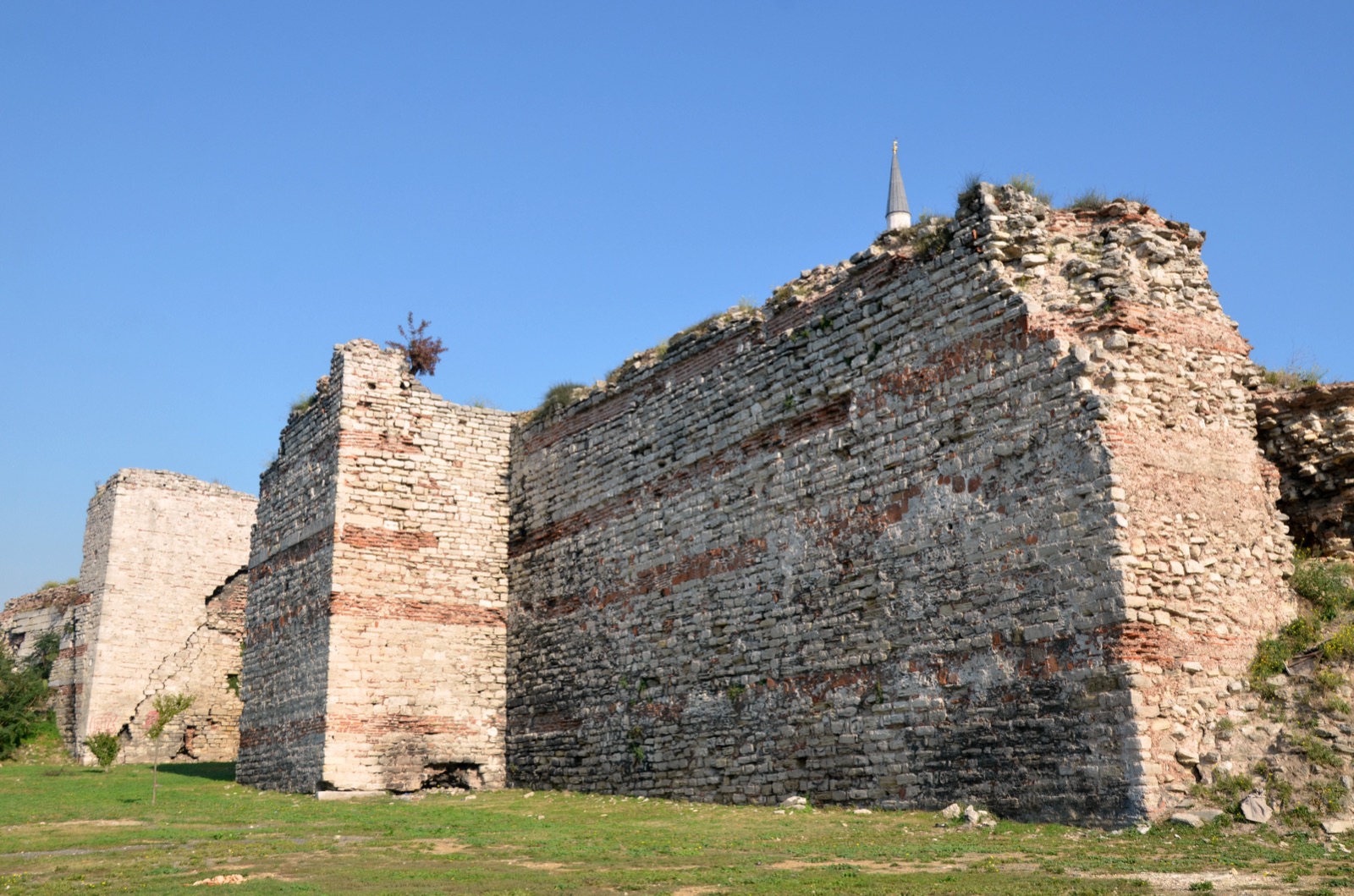
In April 1204, crusaders managed to break into the city. The notorious sacking followed. So the Theodosian walls hadn't "failed" because they were suddenly poorly built. A defense system is only as strong as the overall military situation: personnel, fleet, internal politics, and several kilometers of varying fortifications all belong together.
1453: cannons against medieval walls
In 1453, Mehmed II brought great siege guns before the city. Especially well known is the cannon founder Urban, or Orban, who cast enormous bombards. The largest guns were slow and imprecise, but their heavy stone balls could massively damage masonry.
Over weeks, the Ottomans bombarded various sections. The Byzantines made makeshift repairs at night, filled breaches with earth, wood and rubble, and built inner barriers. The decisive fighting concentrated especially in the area between the Gate of St. Romanus and the Lycus Valley.
On May 29, Mehmed launched the great final assault. Several waves of attack tied down the defenders. Ottoman troops finally achieved the breakthrough. Emperor Constantine XI disappeared in the fighting and later became the symbolic figure of Byzantium's end.
The Kerkoporta, Ulubatlı Hasan, and other stories
Numerous legends grew up around the fall of 1453. One especially well-known Byzantine story tells of the Kerkoporta, a small postern gate said to have been accidentally left open, through which the Ottomans broke in. The evidence is complicated; even the exact identification of this gate is disputed.
In Turkish memory culture, Ulubatlı Hasan is famous, said to be the first Ottoman fighter to raise the flag on the walls, dying in the act. This popular story was embellished especially in later centuries; its exact historical documentation is limited.
Gates as controlled crossings
A city wall wasn't just impenetrable stone. People and goods had to move in and out daily. Gates such as the Golden Gate, today's Yedikule area, the Edirnekapı, or other passages therefore had economic and ceremonial functions. Merchants could be controlled, duties collected, and travelers monitored.
The Golden Gate was especially prestigious. It originally belonged to a triumphal axis and was associated with imperial entries. Later, the area was integrated into the Ottoman fortress of Yedikule. Here too, Byzantine and Ottoman military history lie directly on top of each other.
The walls as a psychological weapon
Siege warfare is not only technical. An army standing before a multiply staggered wall must endure weeks under fire, fill ditches, and attack breaches. Disease, supply, morale and weather become just as important as weapons.
Constantinople's reputation as a hard-to-take city was therefore itself deterring. Attackers knew that earlier armies had failed. Defenders, in turn, could draw on a long tradition of successful resistance.
In 1453, Mehmed II tried to break exactly this psychological balance. Artillery bombarded the walls day after day, while fleet, ditches, mines and storm attacks created pressure at the same time. The famous transport of Ottoman ships into the Golden Horn was meant not only to help tactically, but to show the defenders that even seemingly safe spaces were threatened.
The last defenders
The Byzantine side had comparatively few soldiers in 1453. Emperor Constantine XI received support from Genoese fighters under Giovanni Giustiniani Longo, an experienced defender. Giustiniani played a key role especially in the endangered central section of the wall.
During the final assault, he was severely wounded and taken out of the combat zone. His withdrawal weakened his men's morale. Sources judge this moment differently, but it shows how strongly the defense depended on a few experienced leaders.
The taking of the city was therefore not simply the result of "modern cannons against old walls." The walls held for weeks. It was only the combination of sustained bombardment, exhausted defenders, numerical superiority, and multiple waves of attack that led to the collapse.
Ottoman repairs and Yedikule
After the conquest, Mehmed still needed the walls. He had damaged areas repaired and built the fortress of Yedikule, the Seven Towers, at the Golden Gate. This complex later served, among other things, as a treasury, a prison, and a state-controlled fortress space.
This changed the wall's function. It now protected an Ottoman capital, no longer a Byzantine one. Gates remained important traffic points, and some quarters took their names from these passages.
Modern city versus historic monument
In the 19th and 20th centuries, streets were widened, railway lines laid, and new city districts built. The walls lost their military function and, in places, became obstacles to modern traffic planning. Some sections disappeared, others fell into ruin.
Since their UNESCO inscription in 1985, their preservation has been more strongly in international focus. At the same time, restorations haven't always been uncontroversial. When too much new masonry is added, a section can look "complete" again, but lose its archaeological legibility.
It's often the semi-ruined areas that make especially clear how the system was structured. For visitors, safety of course matters, but heritage preservation has to carefully distinguish between stabilization and reconstruction.
Which sections are especially good for understanding the walls
The walls run several kilometers, and not every section looks the same. In the area of Edirnekapı, you can see especially well the elevation and its relationship to later Ottoman quarters. At Yedikule, it becomes clear how the Byzantine Golden Gate was integrated into an Ottoman fortress. Other sections still show the rhythm of main wall, towers, and forward areas.
You shouldn't, though, climb carelessly onto ruins everywhere. Some parts are unstable, and restoration work can change access points. The best way to understand the walls, in any case, isn't the highest selfie spot, but a view across several lines of defense at once. Then you recognize how attackers would have had to advance, step by step.
Also pay attention to the modern city right beside it. Highways, apartment buildings, cemeteries and green spaces press right up against the fortification. This makes visible that the walls today don't stand at the edge of a medieval city, but in the middle of a grown metropolis. It's exactly this contrast that makes their scale so impressive.
"Constantinople fell in 1453 only because someone left a small gate open." Too simple. Even if such an episode did happen, the city was already under heavy pressure at several points after weeks of siege.
"The cannons blasted a single giant hole and then it was all over." False. The siege lasted weeks; breaches were repeatedly repaired and fought over.
"The walls became useless and were immediately torn down after 1453." No. Ottoman authorities kept repairing parts, since Istanbul remained a fortified capital.
What happened to the walls after 1453
Mehmed had damaged sections repaired. The walls also remained part of the city boundary afterward and had gates where traffic was controlled. Only modern urban expansion finally rendered them militarily meaningless.
In the 20th century, some sections were restored, at times very heavily reconstructed. These measures are themselves controversial, since overly aggressive rebuilding can overwrite historical substance. UNESCO counts the land walls among the four core areas of the "Historic Areas of Istanbul" World Heritage site.
My take on this place
With the city walls, you really only need to imagine standing on the other side in 1453. In front of you stretches this system for kilometers, with a ditch, several walls, and towers. And you're supposed to get in there.
Then you understand better why Constantinople resisted for so long, and why Mehmed spent months preparing, had artillery built, controlled the Bosphorus, and assembled a huge army. Walls like this don't fall because someone knocks on them once.
– Amra