Pierre Loti Hill is one of those viewpoints in Istanbul you could easily reduce to a single photo: a teahouse, graves, a cable car, and the view over the Golden Horn. In fact, the place is far more interesting once you understand that several stories are layered on top of each other here. First, there's Eyüp, one of the most religiously significant areas of Ottoman Istanbul. Then there's the great cemetery climbing up the hillside. And then there's the French naval officer and writer Pierre Loti, whose name is so casually attached to the hill today, even though he obviously neither created this place nor established its significance.
Pierre Loti Hill is one of those viewpoints in Istanbul you could easily reduce to a single photo. In fact, the place is far more interesting once you understand that several stories are layered on top of each other here.
The appeal lies precisely in this juxtaposition: below, the Eyüp Sultan shrine; next to it, densely packed gravestones spanning centuries; and further up, a viewpoint named after a European author who loved Istanbul, idealised it, and described it through a very personal, distinctly Orientalist lens typical of his time. Anyone who drives up just for a photo sees a lovely view. Anyone who stays a little longer sees, at the same time, how Istanbul keeps renaming and repurposing its sites of memory.
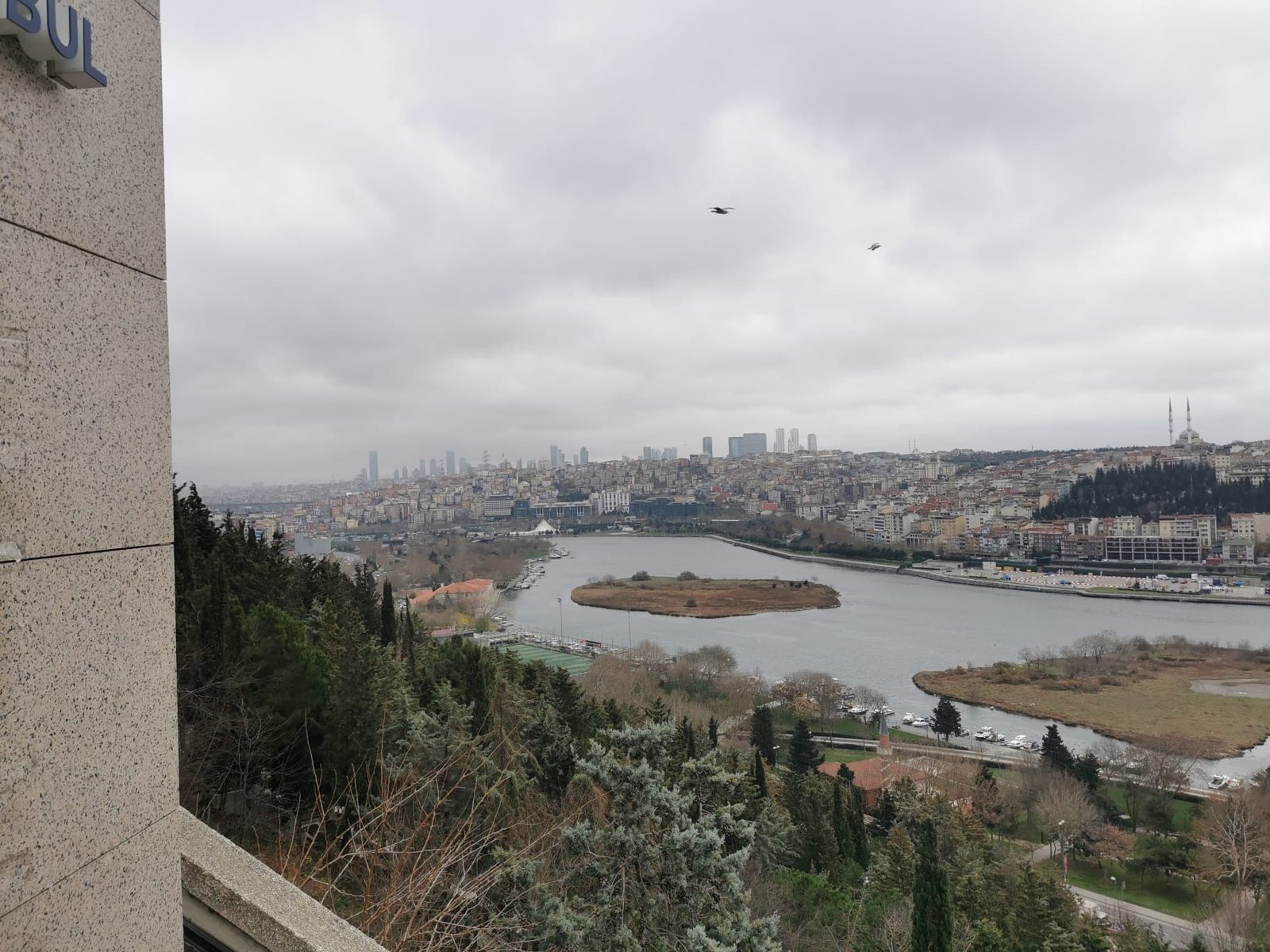
- The hill sits above Eyüp and offers a wide view over the Golden Horn.
- Its historical significance is tied first to Eyüp, the Eyüp Sultan complex, and the great cemetery — not to Pierre Loti.
- Pierre Loti was a French naval officer and writer of the 19th and early 20th centuries who spent time in Istanbul often.
- The viewpoint was later named after him because he became associated with this spot and the café that stood here at the time.
- Today you can reach the hill on foot, through the cemetery, or comfortably by cable car.
- The famous view is real; many romantic stories about Loti and a Turkish lover, however, rest on a blend of biography, literature, and later legend-making.
Why Eyüp Became So Religiously Significant
To understand Pierre Loti Hill, you have to start below. Eyüp gained its special standing after the Ottoman conquest of Constantinople, because the grave of Abu Ayyub al-Ansari is venerated here — a companion of the Prophet Muhammad who, according to Islamic tradition, died during an early Arab campaign against Constantinople. After 1453, Mehmed II had a mosque and mausoleum complex built at the site identified as his grave. This created one of the most important Muslim sites of memory in the new Ottoman capital.
This religious significance radiated across the entire area. Being buried near a highly venerated shrine was considered especially honourable. Extensive cemeteries therefore developed on the slopes above Eyüp, where officials, scholars, military figures, elite women, and countless other people were laid to rest. Anyone walking up today, then, isn't moving through a decorative historical park, but through a burial ground that grew over a very long time.
The Cemetery on the Hillside
Ottoman gravestones reveal astonishingly much about society, once you learn to read them. The shape of a headdress can indicate rank or profession; floral motifs and inscriptions offer clues about gender, piety, origin, and family ties. Of course, not every stone is a clear-cut ID card, and popular interpretations oversimplify some symbols. Still, the cemetery is historically far more than a backdrop for the view.
That makes the walk up interesting too. Between old cypress trees and densely packed gravestones, the view of the Golden Horn changes step by step. This very connection between cityscape and cemetery is typical of Istanbul: life, traffic, and a city of millions sit directly beside places of death, without the two being strictly separated.
Who Was Pierre Loti?
Pierre Loti's real name was Julien Viaud, born in Rochefort in 1850. He was a French naval officer who travelled through numerous regions of the world. His literary works were often based on his travel experiences, personal encounters, and a strongly subjective perception of foreign cultures. Istanbul played an especially important role in his life. He stayed in the city several times, learned Turkish to varying degrees, moved within Ottoman circles, and developed a strong emotional attachment to the city.
His 1879 novel Aziyadé made this connection famous. In it, he tells of a love affair between a European officer and a young woman from an Ottoman harem. To this day, it's debated which elements are autobiographical, which were shaped for literary effect, and to what extent real people stood behind the characters. This is exactly where the line begins between Pierre Loti the historical person and Pierre Loti the self-created myth.
Loti admired the Ottoman Empire and, in the early 20th century, positioned himself politically, at times demonstratively, on the side of the Turks — especially at a time when European powers were putting the empire under heavy pressure. That's why he's remembered more positively in Turkey than many other European authors of his era.
Why Does the Hill Carry His Name?
Loti is said to have often visited a coffeehouse on the hill, from which he looked out over the Golden Horn. The site later became increasingly associated with his name. A viewpoint above Eyüp thereby turned into today's "Pierre Loti Tepesi."
You shouldn't, however, get the order of events wrong. The hill wasn't insignificant until a French writer drank tea there. Eyüp, the cemetery, and the religious topography are older and historically more significant. Loti added another layer of memory to the place — a European, literary, and romanticised one.
It's exactly this mix that explains why his name still works today. It fits the image of the foreign traveller who falls in love with Istanbul, keeps coming back, and tries to put this city into words. At the same time, his texts should be read as products of their era. They contain admiration, but also the exoticising notions of "the Orient" typical of 19th-century European literature.
The View Over the Golden Horn
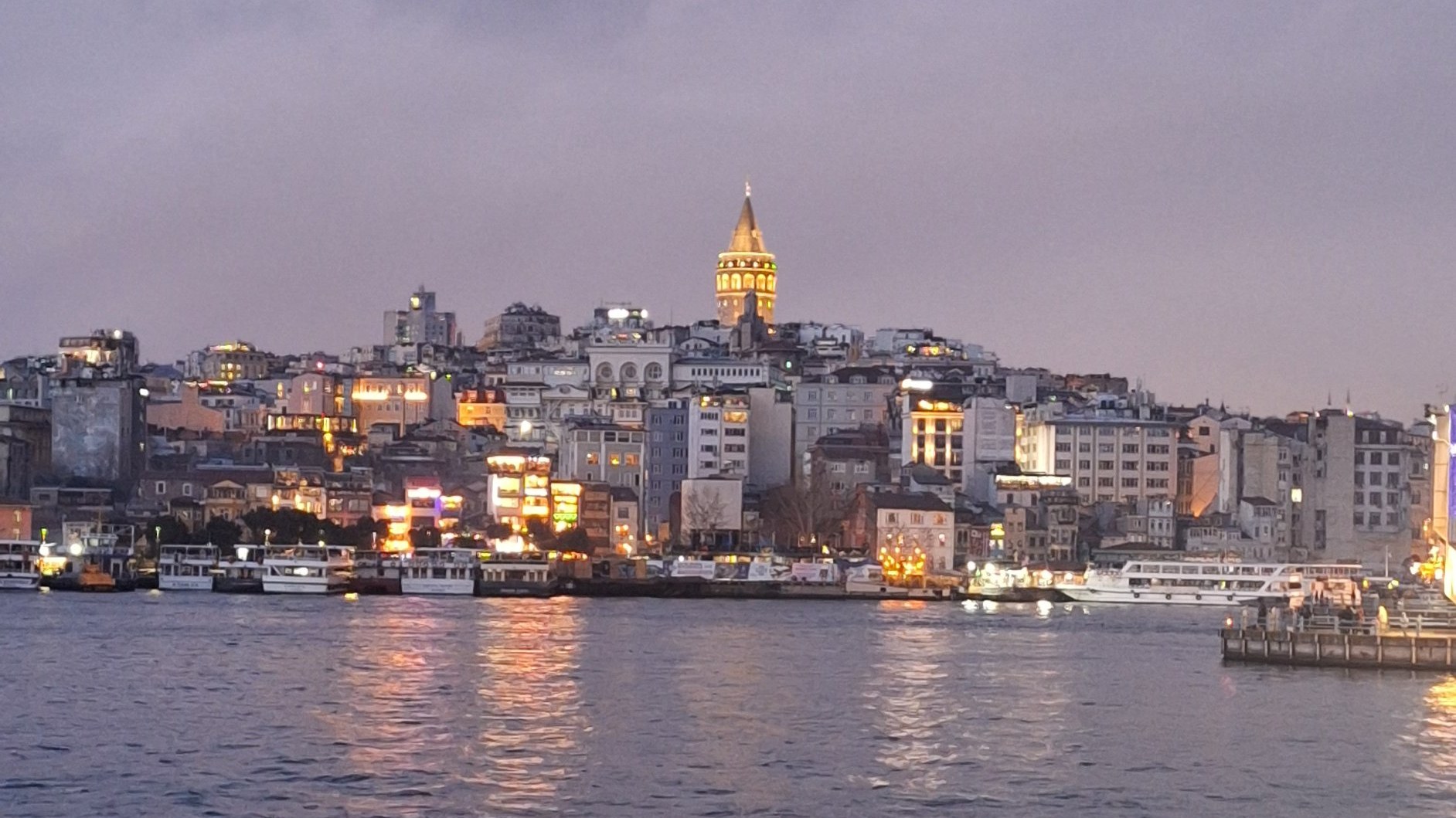
The view alone only explains part of the hill's fame. What mattered was that, in the 19th and early 20th centuries, this place became a point where the image of "old Istanbul" condensed. From up here, you saw the Golden Horn with its cemeteries, mosques, wooden neighbourhoods, shipyards, and boats. European travellers sought out exactly these panoramas, because they believed they recognised in them an Istanbul quite different from the more modern streets of Pera. At the same time, the hill was never of interest only to foreigners. Istanbullus themselves used the height as an excursion spot, for walking, tea, and the cooler air.
With Pierre Loti, the place gained a literary history on top of that. The French naval officer and writer stayed in the Ottoman Empire several times and wrote about Istanbul with a mixture of genuine fascination and the exoticising perspective typical of many European authors of his time. He popularised the image of a melancholic, Oriental Constantinople in France. Precisely because of that, he should neither be romanticised nor treated as though he were responsible for the hill's significance. The place was already long part of Istanbul; his name, rather, tells you how strongly later European travel imagery shaped the international perception of certain places.
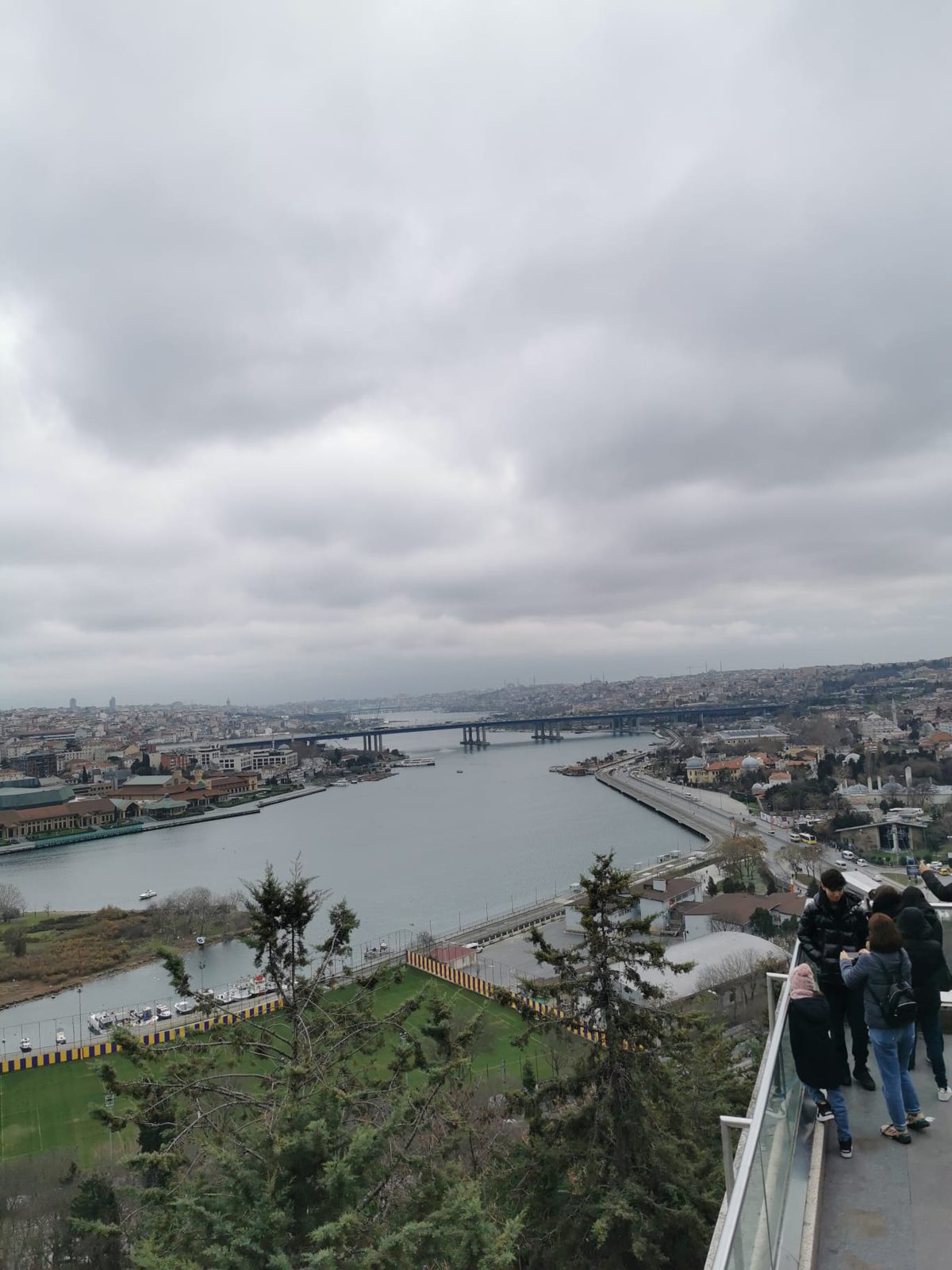
Today, the Pierre Loti terrace feels almost like a counter-model to the hectic city centre. You sit above the Golden Horn while, below, ferries, streets, and districts interlock. It's exactly this distance that changes how you see things: what feels loud, cramped, and chaotic below turns, from above, into a landscape. Anyone who has walked through Eyüp beforehand also understands better that the view shouldn't be considered apart from the district. The hill belongs to a historic surrounding of cemeteries, religious foundations, and paths that existed long before the modern view café.
From above, you can understand the shape of the Golden Horn especially well. You don't simply see water, but a natural harbour reaching deep into the city, one that shaped Constantinople, and later Istanbul, economically and militarily. Historically, shipyards, trading posts, residential quarters, religious centres, and later industrial facilities lined its shores.
The view is therefore almost like a small city map. Anyone already familiar with the Golden Horn, Galata, the historic peninsula, and the more northern shores can piece together spatially, from here, what often feels disconnected down below. That's exactly why the viewpoint is worth the trip even for people who don't come for Pierre Loti.
Cable Car, Teahouse, and Visiting Today
Today, a short cable car runs up from Eyüp. That's convenient and saves a genuinely noticeable climb. Anyone with time and comfortable on their feet can take the path through the cemetery instead, experiencing the changing view far more consciously along the way. The cable car, though, is a sensible alternative, especially for families, older visitors, or a hot summer day.
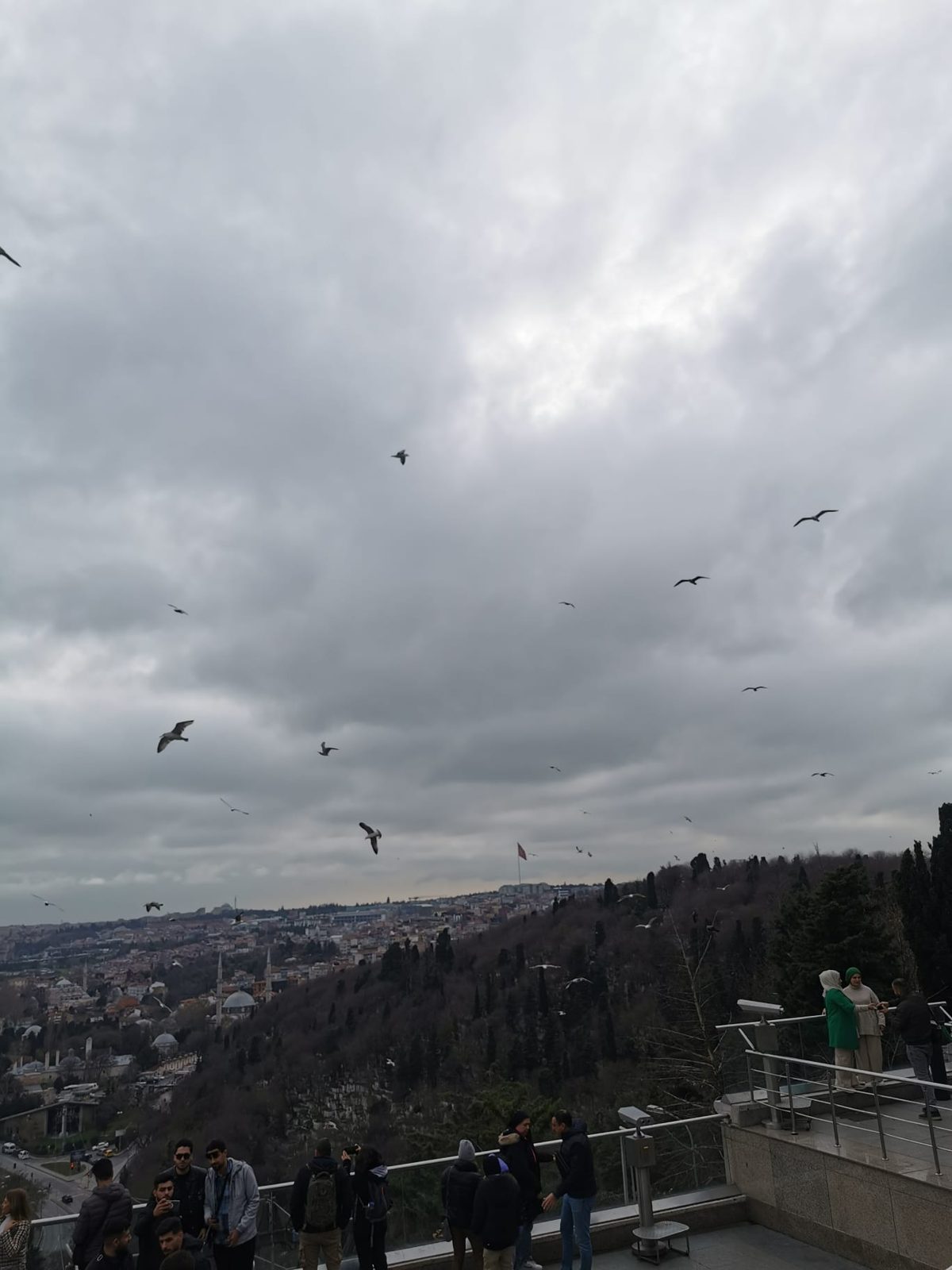
At the top are cafés and viewing terraces. The place can get very crowded at popular times. Anyone expecting only the famous "empty Istanbul panorama" from photos might be surprised how many people had the same idea. Early in the day, or outside the busiest hours, the atmosphere is usually more pleasant.
Eyüp, Death, and a View: Why This Combination Isn't Unusual in Istanbul
From a Central European perspective, it can feel unusual that a popular viewpoint is directly connected to a large cemetery. In Istanbul, this closeness between everyday life, religion, and death is historically far more natural. Cemeteries often lay along important routes, near mosques, on hills, or at city edges that were later long since surrounded by new development. Cypresses, gravestones, and a view therefore belong together in several places in the historic cityscape, without that automatically making it a gloomy place.
In Eyüp, the shrine's religious significance reinforces this effect. People wanted to be buried near Abu Ayyub al-Ansari, hoping for spiritual closeness and blessing. Over the centuries, this created a landscape of memory in which social rank could be read too. Some tombs are elaborate, others plain; some names are well known, most aren't. Together, they make visible that a famous hill of views actually sits atop a much older religious space of memory.
Anyone walking up should therefore not focus exclusively on the panorama at the top. The path itself tells of Ottoman burial culture, changing scripts, and social hierarchies. The shift from Arabic to Latin script under the Republic, in particular, turns cemeteries into historical archives too, since political reforms can even be read on gravestone inscriptions.
Pierre Loti as an Image of Istanbul — and Why You Should Still Read Him Critically
Loti belongs to a long line of European travellers who admired Istanbul while, at the same time, viewing it through their own cultural lens. His texts helped spread a particular image of the city in Europe: mysterious, melancholic, sensual, full of mosques, harems, and old traditions. This image was successful because it matched his readers' expectations. But it was never the whole city.
The Istanbul of his time was, at once, a port metropolis, an administrative centre, a railway city, a banking hub, and a society in rapid change. While Loti romanticised certain old neighbourhoods and ways of life, Istanbullus themselves were already living with electricity, steamships, trams, and a modern press. His enthusiasm may well have been genuine, without every one of his descriptions needing to be taken as an objective portrait.
That's exactly why I find him even more interesting as the hill's namesake. The hill doesn't just tell the story of a man who liked Istanbul, but also of how foreigners wanted to see Istanbul — and how the city later absorbed such outside gazes into its own touristic memory.
"Pierre Loti lived on this hill in a romantic house with his Turkish lover." It's not that simple to confirm. Loti stayed in Istanbul often, visited the area, and drew on love stories for his literature. Later touristy accounts, though, blend novel, personal biography, and local legend together.
"The hill only became important because of Pierre Loti." False. Eyüp and its cemeteries held enormous religious and social significance long before him.
"You can see the Golden Horn especially well from up there." Fact. The elevated position, in particular, makes the harbour's shape and the relationship between the city's districts wonderfully visible.
My Thought on This Place
What I like about this place is that you actually come up for the view, and then notice the path itself tells almost as much of a story. Eyüp below, then the gravestones on the hillside, and suddenly, at the top, this wide view over the Golden Horn. You see Istanbul from a distance great enough to recognise how things connect, but still close enough that the city never turns into an anonymous skyline.
And I find Pierre Loti interesting for exactly this reason: I can somehow understand his love for Istanbul. Of course, he lived in a completely different era, with a different gaze, and sometimes with a very European idea of "the Orient." Still, I know that feeling of wanting to see a city again and again, without ever feeling done with it. Maybe that's the part of his story that still works for me today.
– Amra