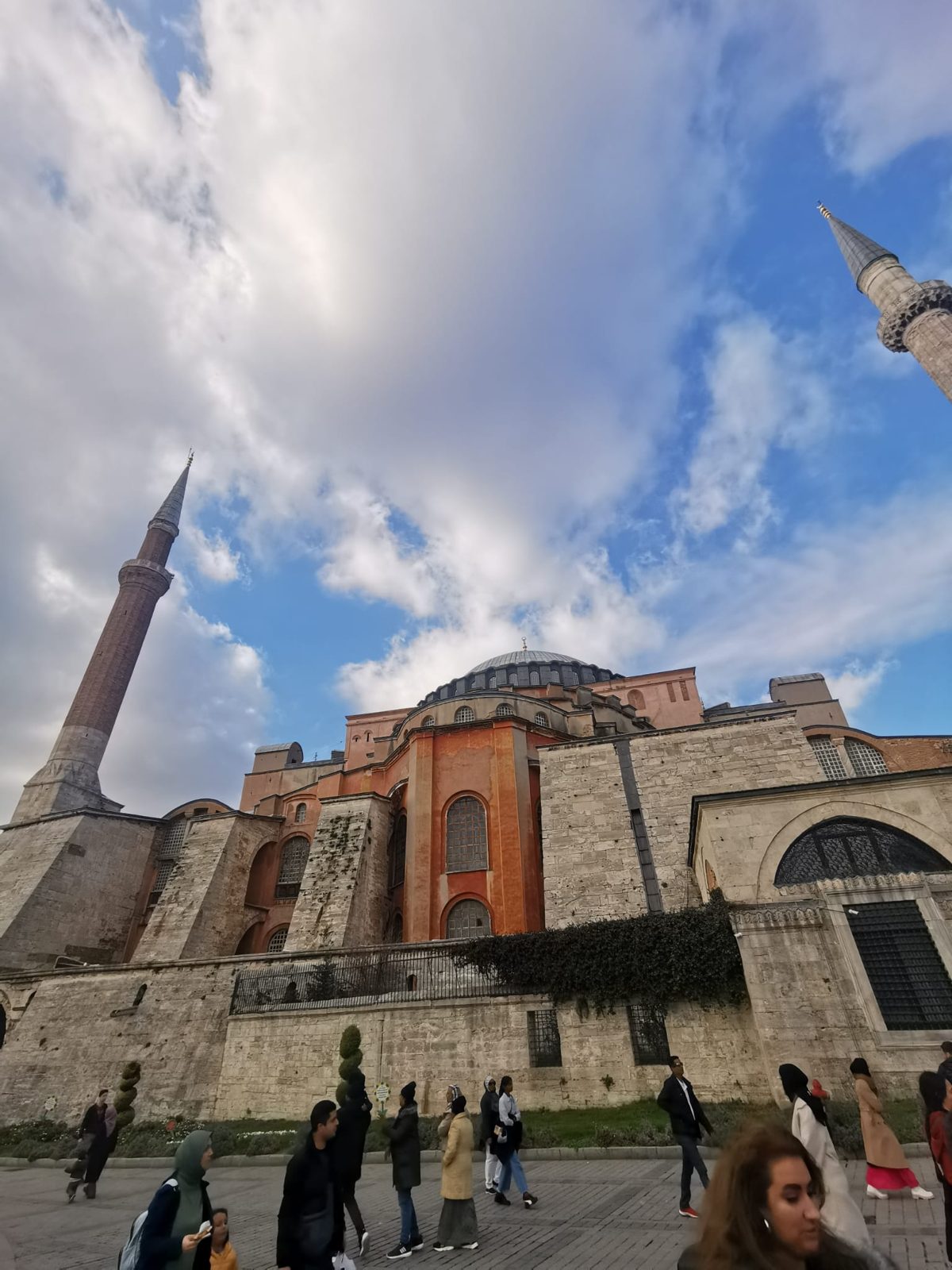
Today's Sultanahmet Square feels open and comparatively calm. People photograph the Hagia Sophia and the Blue Mosque, tour groups walk between obelisks, and children sit on the stone edges. It's hard to imagine that one of the loudest, most political and most dangerous arenas of the late antique world once stood right here. The Hippodrome of Constantinople could hold tens of thousands of spectators and was far more than a sports stadium.
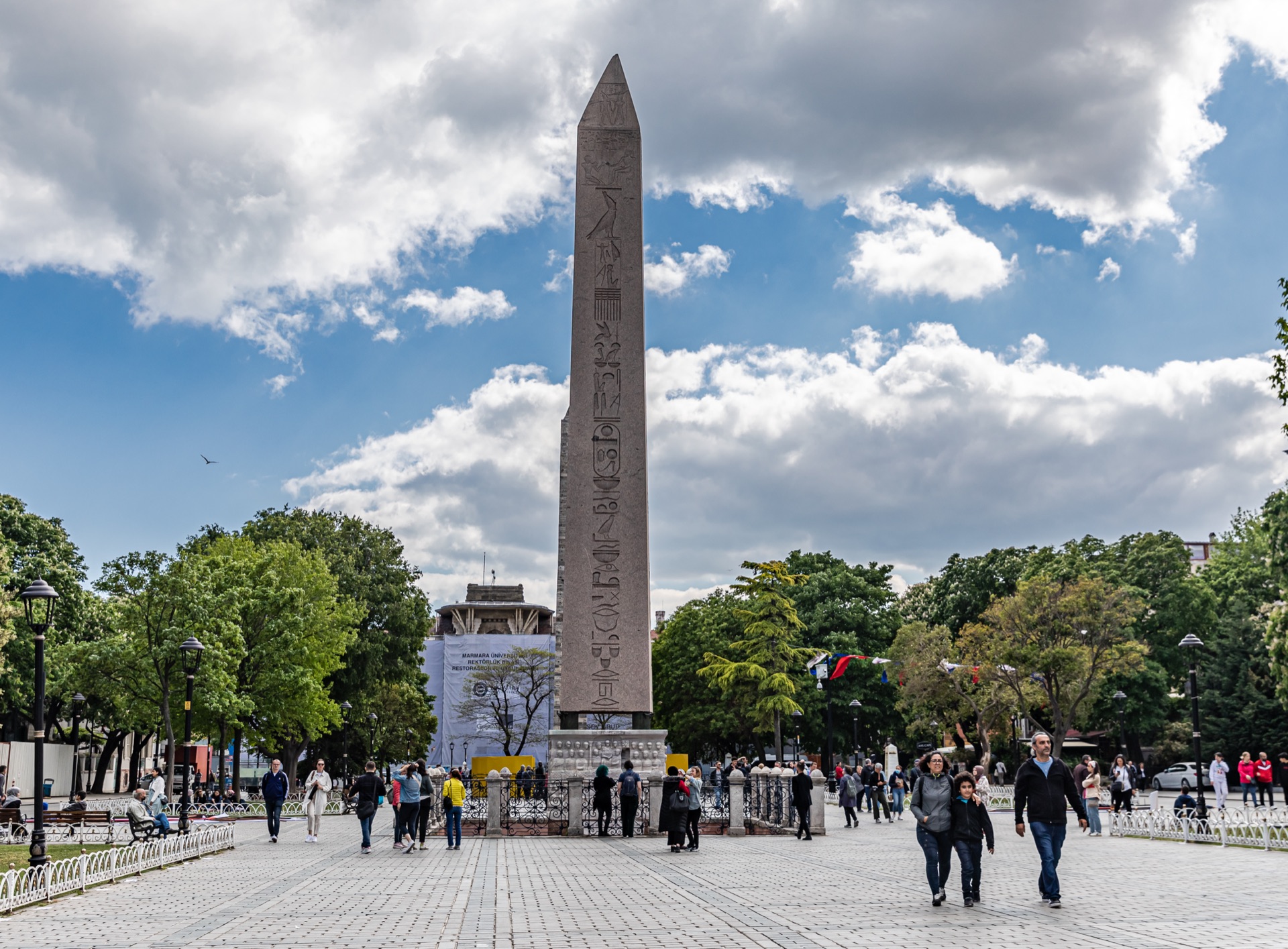
Today's Sultanahmet Square feels open and calm. It's hard to imagine that one of the loudest, most political and most dangerous arenas of the late antique world once stood right here.
You can find tickets, guided tours and activities for the sights in one place on our activities page.
Chariot races took place here, emperors showed themselves to the population, factions organized their supporters, and political tensions could escalate within a matter of hours. The Nika riot of 532, in which large parts of Constantinople burned and, according to ancient reports, tens of thousands of people died, was centered on exactly this spot. Today's square preserves only a few visible monuments from that era — yet the shape of the Hippodrome still defines Sultanahmet today.
- The Hippodrome was the great chariot-racing stadium of Byzantine Constantinople.
- It received its final monumental form especially under Constantine the Great in the 4th century.
- Tens of thousands of spectators could watch races and imperial ceremonies.
- The Blues and Greens were racing factions with far-reaching social and political significance.
- In 532 the Hippodrome became the center of the Nika riot.
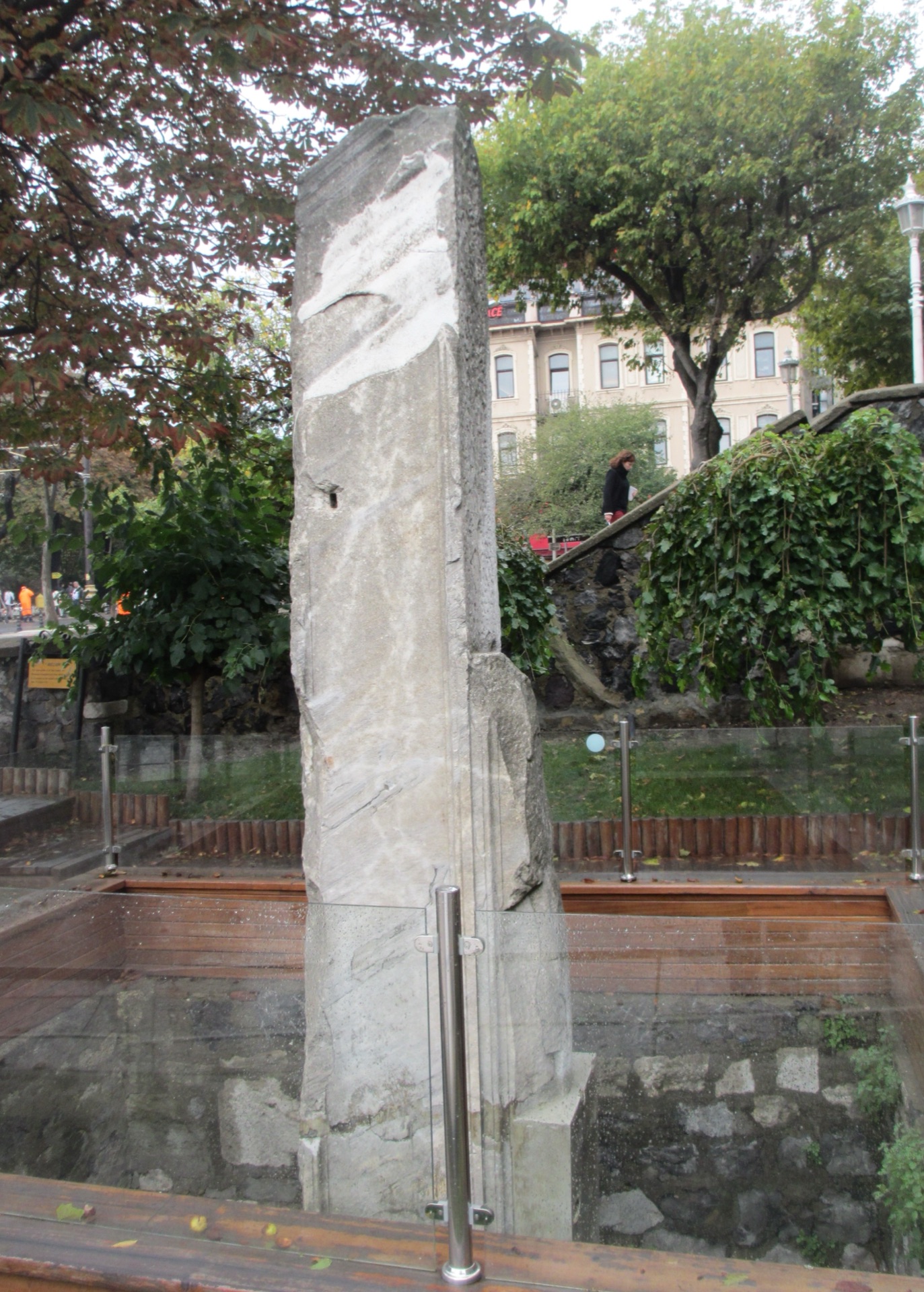
- The Egyptian obelisk, the Serpent Column and the Walled Obelisk still stand today on the former central axis.
- In 1204 crusaders looted numerous artworks and metal statues from the Hippodrome.
- Today's square still roughly follows the outline of the ancient arena.
How big the Hippodrome really was
The Hippodrome was several hundred meters long and had a rounded shape at one end. Its exact spectator capacity is estimated differently, but it likely held several tens of thousands of people.
Down the middle ran the spina, a long barrier around which the racing chariots turned. Columns, obelisks and artworks from various parts of the empire stood on it.
This was no minimalist sports venue. The Hippodrome functioned simultaneously as a museum of imperial plunder and as a stage for Roman world power.
Constantine and the new capital
When Constantine the Great had Byzantium expanded into the new capital and inaugurated it as Constantinople in 330, he massively enlarged the Hippodrome that already existed there.
Its proximity to the Great Palace was crucial. The emperor could walk directly from the palace complex to his box in the Hippodrome. This turned the stadium into a place of direct communication between ruler and population.
Here the emperor could be celebrated — or hear that tens of thousands of people were unhappy with him.
Chariot races and the Blues and Greens
Anyone who hears "Hippodrome" and thinks only of ancient sport completely underestimates the place. Chariot racing was entertainment, but the Hippodrome was at the same time one of the most important public communication spaces in Constantinople. Tens of thousands of people could gather here. The emperor sat in his box, the Kathisma, directly connected to the Great Palace. This put ruler and population face to face in a way that rarely happened elsewhere. Cheers, boos and demands were publicly audible.
The famous circus factions, especially the Blues and Greens, were more than today's fan clubs. They organized stables, followings and social networks. Historians debate exactly how far they should be understood as fixed political parties. What is certain is that they could mobilize masses, and that conflicts in the Hippodrome quickly took on political significance. The Nika riot of 532 is the most extreme example. Out of unrest following chariot races and a dispute over the punishment of faction supporters grew a revolt against Justinian I, during which large parts of the city center burned. The Hagia Sophia of that time was also destroyed. The government eventually crushed the revolt in a bloodbath in the Hippodrome itself. Ancient sources speak of tens of thousands of dead.
The square was also a stage for imperial ideology. Monuments on the spina, the central axis of the racetrack, were no random decoration. The Egyptian obelisk of Thutmose III was brought to Constantinople under Theodosius I in the 4th century and erected on an elaborately designed base. The reliefs beneath show the emperor, his family and his court watching the games. The monument thus combines Egyptian antiquity, Roman rule and Byzantine self-presentation in a single object.
The Serpent Column is even older. It originally belonged to the victory monument the Greek cities erected after the Persian Wars, and stood in Delphi. Constantine the Great had it brought to Constantinople. Today the upper section with the three serpent heads is missing; a surviving fragment of one head is in the Istanbul Archaeological Museum. That a monument from the 5th century BC stands in the middle of today's Sultanahmet is actually astonishing — it's just so unassuming that many people walk right past it.
The so-called Walled Obelisk also belongs to the spina. Its current stone surface looks plain, but it was once clad in precious metal plates. This cladding was lost during the Middle Ages. The Fourth Crusade of 1204 in particular changed the Hippodrome dramatically. The famous bronze quadriga, which likely stood on or near the starting gates or elsewhere in the Hippodrome complex, was carried off by the Venetians after the conquest and ended up at San Marco in Venice. The horses displayed there today are therefore not simply "Venetian horses," but part of the plunder taken from Constantinople.
After 1453 the site remained an open square and became known in the Ottoman Empire as At Meydanı, the Horse Square. Ceremonies, festivals and public events continued to take place there, even as the ancient stands gradually disappeared. The racetrack was not destroyed in a single moment. Building material was reused, the ground was filled in, and new structures rose around it. That's why today's ground level lies higher than parts of the ancient Hippodrome.
So anyone walking today between the German Fountain, the obelisk and the Blue Mosque is not simply standing on a pretty pedestrian square. Beneath the ground lie the structures of an arena where emperors were cheered and cursed, tens of thousands of spectators followed races, and in 532 a riot ended in a massacre. It's exactly this gap between the peaceful square of today and a historically extremely charged space that makes the Hippodrome one of the most important sites in Sultanahmet.
The races were extremely popular. Multi-horse chariots raced repeatedly around the spina, and crashes could be fatal.
The racing factions of the Blues and Greens were especially powerful. They organized fans, drivers and social networks. Their significance went far beyond modern sports clubs.
Older scholarship sometimes portrayed them as fixed political or religious parties. Today the view is more nuanced. They could carry political concerns, but they were not parties in the modern sense.
The emperor in his box
The imperial box, the Kathisma, connected palace and Hippodrome. The ruler appeared there in public without fully mixing with the crowd.
Rituals were precisely regulated. Acclamations, banners and shouts could express loyalty. At the same time, the huge gathering offered a rare opportunity to voice discontent collectively.
That explains why a sports stadium could become politically dangerous.
The Hippodrome combines well with a guided tour of Sultanahmet that ties history and places together. Here is a suitable offer.
The Obelisk of Theodosius
The most striking surviving ancient stone is an Egyptian obelisk from the era of Pharaoh Thutmose III. It was already about 1,800 years old when Emperor Theodosius I had it erected in the Hippodrome in the late 4th century.
The obelisk visible today is only part of its original length. The marble base is especially interesting. Reliefs show Theodosius and his court watching the games, as well as the technical process of erecting the monument.
So here you have not just an Egyptian obelisk, but also Byzantine images of how it was incorporated into the new imperial order.
The Serpent Column from Delphi
Even older in its political history is the bronze Serpent Column. It was originally erected in the 5th century BC in Delphi as a votive offering after the Greek victory over the Persians.
Constantine had it brought to Constantinople. Originally three intertwined serpents supported a golden or metallic tripod. The heads are no longer on the monument today; a fragment of one serpent head is in the Istanbul Archaeological Museum.
The column is therefore an incredible example of how Constantine brought ancient prestige objects from other centers into his new capital.
The Walled Obelisk
At the southern end of the former spina stands another tall pillar, the so-called Walled Obelisk. Its core consists of stone blocks.
In Byzantine times it was clad in precious bronze plates. This cladding was removed and melted down or looted during and after the crusader sack of 1204.
Today's bare masonry is therefore itself a visible result of the loss of medieval decoration.
The Nika riot of 532
During the Nika riot, the Hippodrome's political function turned into a catastrophe within a matter of days. Supporters of the Blues and Greens, who otherwise opposed each other, joined forces against Justinian. The immediate trigger was the punishment of faction supporters, but deeper tensions over taxes, officials and the emperor's rule lay behind it. The Hippodrome provided the space in which this discontent could concentrate.
The rebels even proclaimed a rival emperor. Large parts of the city center burned, including the predecessor building of today's Hagia Sophia. Justinian eventually had troops storm into the Hippodrome. Ancient sources report a massacre of tens of thousands of people. Even if the famous figure of 30,000 cannot be precisely verified, it shows how brutally the crackdown was remembered.
The racetrack thus became the scene of one of the bloodiest domestic political events in Byzantine history. And it was precisely the destruction of the old Hagia Sophia that afterward created the space for Justinian's famous new building. The Hippodrome and the Hagia Sophia are therefore historically far more closely linked than you'd guess walking between the two sites today.
In January 532, tensions between the racing factions, the population and Emperor Justinian escalated. Protests in the Hippodrome grew within a few days into a revolt that engulfed large parts of the capital.
The second Hagia Sophia burned down. Palaces and public buildings were destroyed. Parts of the elite tried to install a rival emperor.
According to later accounts, Justinian at one point considered fleeing. In the end he had troops under Belisarius and Mundus storm into the Hippodrome, where a large part of the rebels had gathered. A massacre followed. Procopius names around 30,000 dead; the exact number cannot be verified, but it makes the scale clear.
The place where chariot races had taken place days earlier became the site of mass killing.
1204 and the looting of the Hippodrome
During the Fourth Crusade, Constantinople was sacked in 1204. The Hippodrome lost numerous bronze artworks that had been collected there over centuries.
Especially famous are the four bronze horses now associated with San Marco in Venice. They were taken from Constantinople to Venice; their exact original position within the Hippodrome complex is debated, but their origin in the plunder of 1204 is central to their history.
Other metal statues were melted down because their material was valuable. This wiped out a large part of the Hippodrome's ancient art collection.
Why the Hippodrome disappeared
After 1204, and especially in the late Byzantine period, the Hippodrome lost its former function. The weakened empire could no longer maintain the enormous complex on the same scale.
After 1453 the Ottomans used the open square as At Meydanı, the Horse Square. Parts of the ancient stands and substructures were built over or used as building material.
Still, the basic shape remained recognizable. Today's Sultanahmet Square still roughly follows the long, drawn-out arena. So you're actually walking on the old Hippodrome — just several meters above parts of the ancient ground level.
Charioteers as superstars of antiquity
The drivers of the racing chariots could become enormously famous figures. Successful charioteers earned money, received honors and were adored by fans. One of the most famous was Porphyrius, who in the 6th century drove for both the Blues and the Greens and was even honored with statues in the Hippodrome.
That's surprising, because we like to think of antiquity as a world of emperors and philosophers. In reality, mass entertainment already ran on stars, rivalries and fan identity back then. People likely argued about drivers, teams and races with a passion that would feel very familiar to modern football fans.
The crucial difference lay in its closeness to politics. Because the emperor himself appeared in the Hippodrome and tens of thousands of people gathered at once, a sports crowd could quickly turn into a political public.
What happened to the bronze artworks in 1204
The Hippodrome was decorated with numerous ancient statues that Constantine and later emperors had brought to Constantinople from various parts of the empire. To medieval residents, some of these works were so old and unusual that legends formed around them.
In 1204, however, the crusaders saw mainly valuable metal in many of the bronzes. Some pieces were shipped west, others melted down to make coins or other objects. As a result, we lost artworks that may have dated from classical Greek and Hellenistic times.
The horses of San Marco are therefore only the most famous survivors of a much greater loss. Walking across the almost empty square today, it's worth imagining that the central axis once stood full of statues and monuments.
Why the obelisks look deeper-set today than before
Today's street level lies higher than parts of the ancient Hippodrome floor. Over the centuries, rubble, new paving and layers of development accumulated. That's why some monuments today stand in recessed areas, or their bases appear partly "sunken."
Archaeologically, this is typical for Istanbul. The city was not completely cleared and rebuilt at exactly the same level after every disaster. Building often continued on top of rubble and older foundations. As a result, a city's ground slowly grows upward while ancient levels disappear beneath it.
You can trace this effect especially well at the Hippodrome, because the surviving monuments have remained as fixed vertical reference points.
"The Serpent Column was made for Constantinople." No. It is almost eight centuries older and was brought here from Delphi.
"The four horses of San Marco come from Venice." No. They were taken from Constantinople to Venice in 1204; their earlier history reaches back even further.
"The entire Hippodrome lies untouched beneath today's square." No. Large parts were destroyed, built over or removed. Underground structures and traces of the terrain do still exist, though.
My take on this place
For me, the Hippodrome is one of those places you see completely differently once you know the history. Without any background, you walk past three old columns and maybe think: nice, photographed, on to the Blue Mosque.
But once you know that tens of thousands of people watched chariot races here, that emperors looked out over the crowd from their box, that people were massacred by the thousands in 532, and that artworks vanished as plunder in 1204, the same open square suddenly feels almost too full of history.
And that's exactly what I always mean about Istanbul: you don't need to stand in front of a column and just say "oh, that's tall." You should know why it's standing there, where it came from, and everything it survived. Then it's no longer just a column.
– Amra