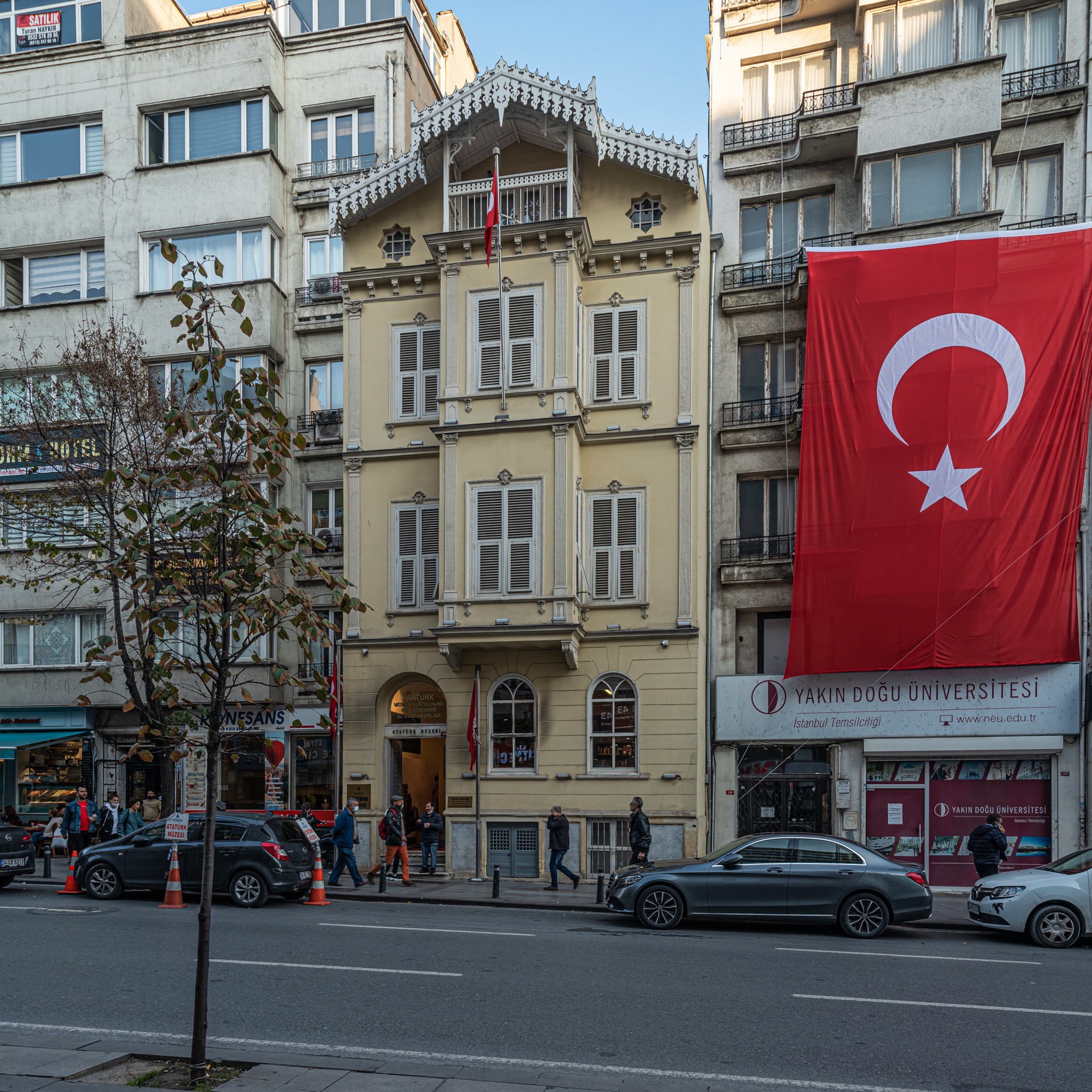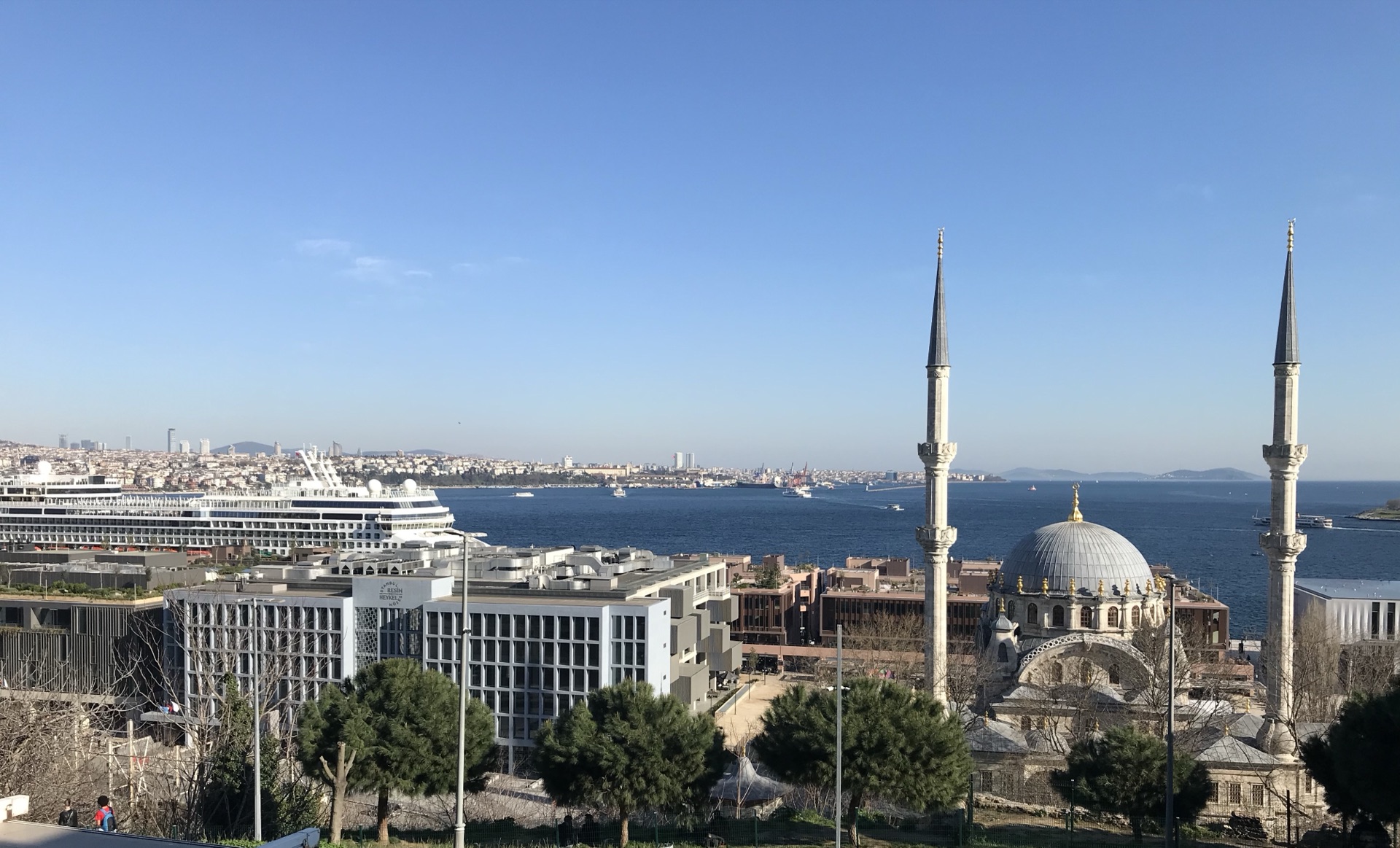

The Museum of Innocence is one of Istanbul's most unusual museums, because it's dedicated neither to a historical figure nor an archaeological era. It grew out of a novel. In 2008, the Turkish Nobel laureate Orhan Pamuk published the novel "Masumiyet Müzesi" — "The Museum of Innocence." In it, the main character, Kemal, obsessively collects objects that remind him of his great love, Füsun. A few years later, Pamuk actually opened a museum in Çukurcuma that translates this fictional collection into real rooms.
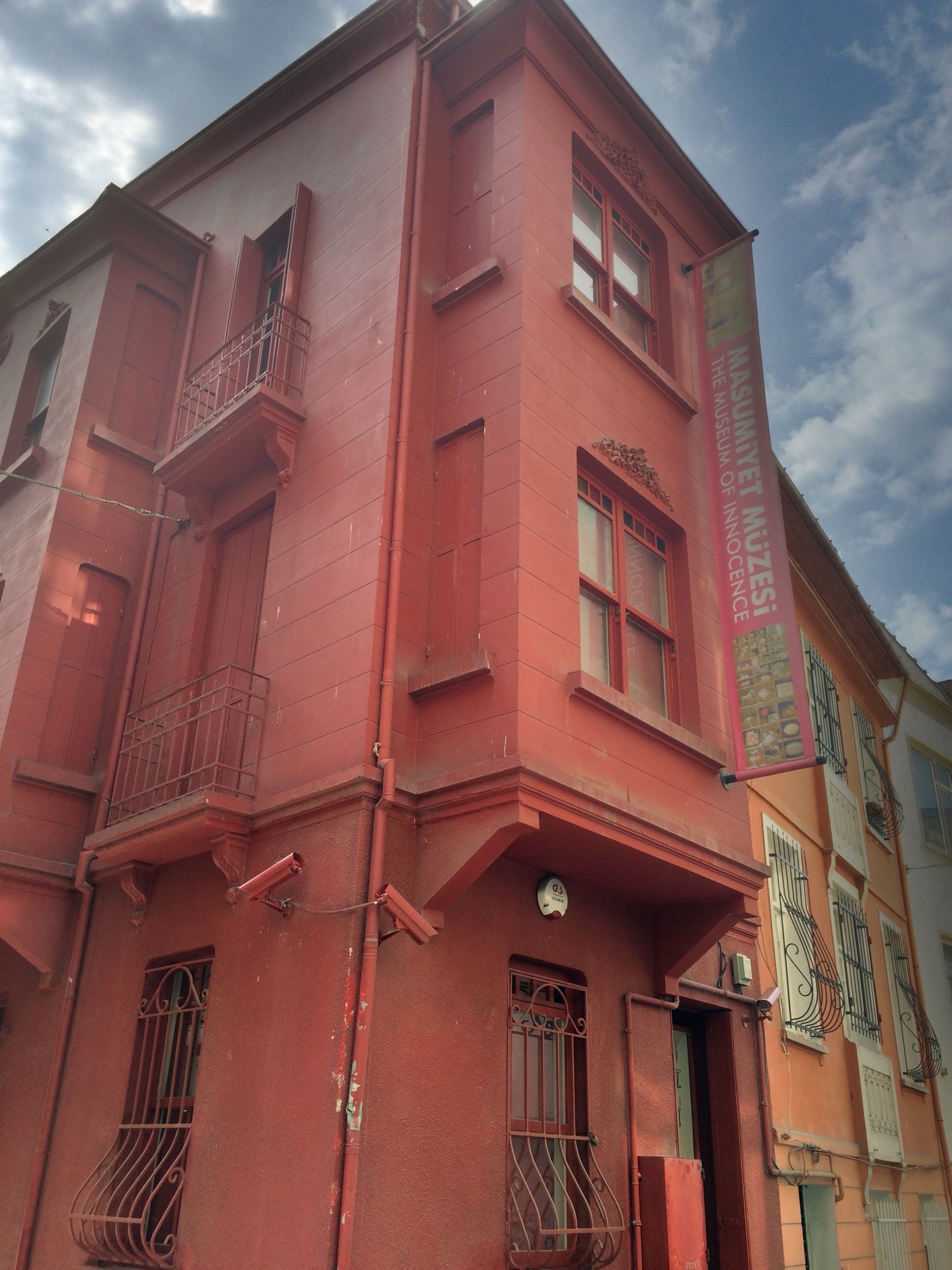
The Museum of Innocence is one of Istanbul's most unusual museums, because it's dedicated neither to a historical figure nor an archaeological era. It grew out of a novel.
Something strange happens as a result: you know Kemal and Füsun are literary characters. And yet cigarette butts, glasses, shoes, photos, and everyday objects suddenly stand before you, as if these people had really existed. The museum deliberately plays with memory, possession, love, and the question of why ordinary objects can become emotionally significant.
- The museum is based on Orhan Pamuk's 2008 novel "The Museum of Innocence."
- The real museum opened in Çukurcuma in 2012.
- The novel and the museum were developed by Pamuk in parallel, tied closely to one another.
- The exhibition is organised into display cases corresponding to the novel's 83 chapters.
- One of its most famous exhibits is a wall of 4,213 cigarette butts, attributed in the novel to Füsun.
- These objects are part of an artistic-literary staging; they aren't evidence that the novel's characters existed.
- At the same time, the museum tells you a great deal about everyday life and consumer culture in Istanbul in the second half of the 20th century.
The Novel Before the Museum
Orhan Pamuk worked for many years on the idea of linking a novel and a collection together. The novel tells of Kemal, a wealthy Istanbul man who falls in love with the younger Füsun. His love increasingly develops into obsession.
Kemal collects objects tied to Füsun: things she touched, used, or that remind him of moments they shared. Over the course of the story, this collection becomes the idea of a museum.
Pamuk didn't want to merely describe this literary idea. He himself collected everyday objects at flea markets and antique shops, turning them into real display cases.
Who Are Kemal and Füsun?
Kemal is engaged and belongs to Istanbul's wealthy society. Füsun comes from a less privileged family. Their relationship plays out against a backdrop of social expectations, sexual morality, class differences, and a modernising city.
The novel is therefore no simple love story. Kemal's obsession is, at once, romantic, problematic, and self-centred. He tries to hold onto a person through objects.
The museum deliberately adopts his perspective, while inviting visitors to judge this obsession for themselves.
Why Pamuk Built an Actual Museum
The Museum of Innocence is unusual because the novel and the museum were conceived closely together from the very start. In 2008, Orhan Pamuk published the novel "The Museum of Innocence," in which Kemal spends years collecting objects that remind him of Füsun and their shared, or unfulfilled, story. Everyday things — cigarette butts, glasses, jewellery, clothing, tickets — thereby become carriers of memory. This exact principle was then implemented spatially.
The real museum opened in Çukurcuma in 2012. In display cases, objects are arranged that refer to chapters of the novel. Some objects genuinely come from everyday Istanbul life in the 1970s and 1980s; others were specifically found or assembled for the project. What matters isn't whether Füsun "really" drank from this particular glass — she's a fictional character. What matters is that real objects suddenly give a fictional biography a physical presence.
In doing so, Pamuk also raises a question that reaches far beyond a love story: what actually deserves to be in a museum? Classic museums display crowns, weapons, paintings by famous artists, and objects from great historical events. The Museum of Innocence, by contrast, displays things that would easily have ended up in the bin in a normal household. A single cigarette butt has no material value. Within a memory, though, it can still matter more than a piece of jewellery.
At the same time, a portrait of Istanbul emerges. Advertising, household objects, fashion, drinks, social rules, and consumer culture tell of a city that changed profoundly in the second half of the 20th century. So even if you haven't read the novel, you can still find the museum fascinating. With the novel, the connection deepens; without it, what remains is a quirky collection of urban memory.
Pamuk was interested in whether a museum has to tell only great national stories. Classic museums present rulers, wars, archaeological treasures, and masterpieces. The Museum of Innocence, by contrast, displays tea glasses, hairpins, advertisements, cigarettes, photographs, and kitchen objects.
That makes everyday life worthy of a museum. A cheap object can matter more to a person than a precious diamond, if a personal memory is attached to it.
Pamuk later formulated his own museum manifesto, setting small, personal museums against exclusively monumental state historical narratives.
83 Chapters — 83 Display Cases
The novel has 83 chapters. The museum follows this structure with display cases, each corresponding to one chapter, or one memory.
The presentations sometimes feel like three-dimensional collages. Everyday objects, photos, drawings, and texts are arranged to create a mood, not just to provide information.
You don't have to have read the novel to understand the exhibition. But anyone who knows it recognises many motifs, and reads the objects differently.
The Famous 4,213 Cigarette Butts
The cigarette butts are probably the museum's best-known object, precisely because they feel so absurdly mundane. Thousands of individual pieces are presented, labelled, and accompanied by small observations. In the novel, Kemal collects things tied to Füsun; the museum translates this obsession into an actual wall made of seemingly worthless material.
In doing so, romance deliberately tips into something uncomfortable. Collecting can preserve memory, but it can also express a claim of ownership and control. That's exactly why the museum is more interesting than a sentimental shrine to love. It forces the visitor to ask when remembering is loving, and when it starts locking another person into objects.
One of its best-known installations consists of 4,213 cigarette butts, said in the novel to have been collected by Kemal from Füsun. Each one is labelled, or dated.
The wall is absurd and touching at once. A single cigarette butt is rubbish. Thousands of them, carefully archived, become a document of obsession.
It's precisely here that the boundary between reality and fiction works especially well. Of course, the fictional Füsun never actually smoked these cigarettes. And yet the objects look completely credible.
Istanbul in the 1970s and 1980s
Alongside the love story, the museum documents a vanished everyday life. Brands, packaging, drinks, clothing, and home furnishings recall Istanbul before globalised shopping malls and smartphones.
For older Istanbullus, such objects can trigger genuine memories. For younger visitors, they show how consumption and lifestyle have changed.
The museum thereby becomes, almost unintentionally, a kind of social-history archive, even though its central story is invented.
Read the Novel First, or Visit the Museum First?
Both work. Anyone who reads the novel beforehand understands the display cases in more detail. Anyone who visits the museum first can have concrete images in mind while reading afterward.
The novel even includes a ticket, traditionally meant as an admission reference to the museum. That's a lovely example of how deliberately Pamuk intertwined the book and the physical place.
Çukurcuma as the Perfect Location
The museum sits in Çukurcuma, a district long known for antique shops, secondhand furniture, and small collections. This setting fits the concept almost too well. Kemal's obsession consists of everyday objects, and outside, dealers sell things whose previous owners you usually don't know.
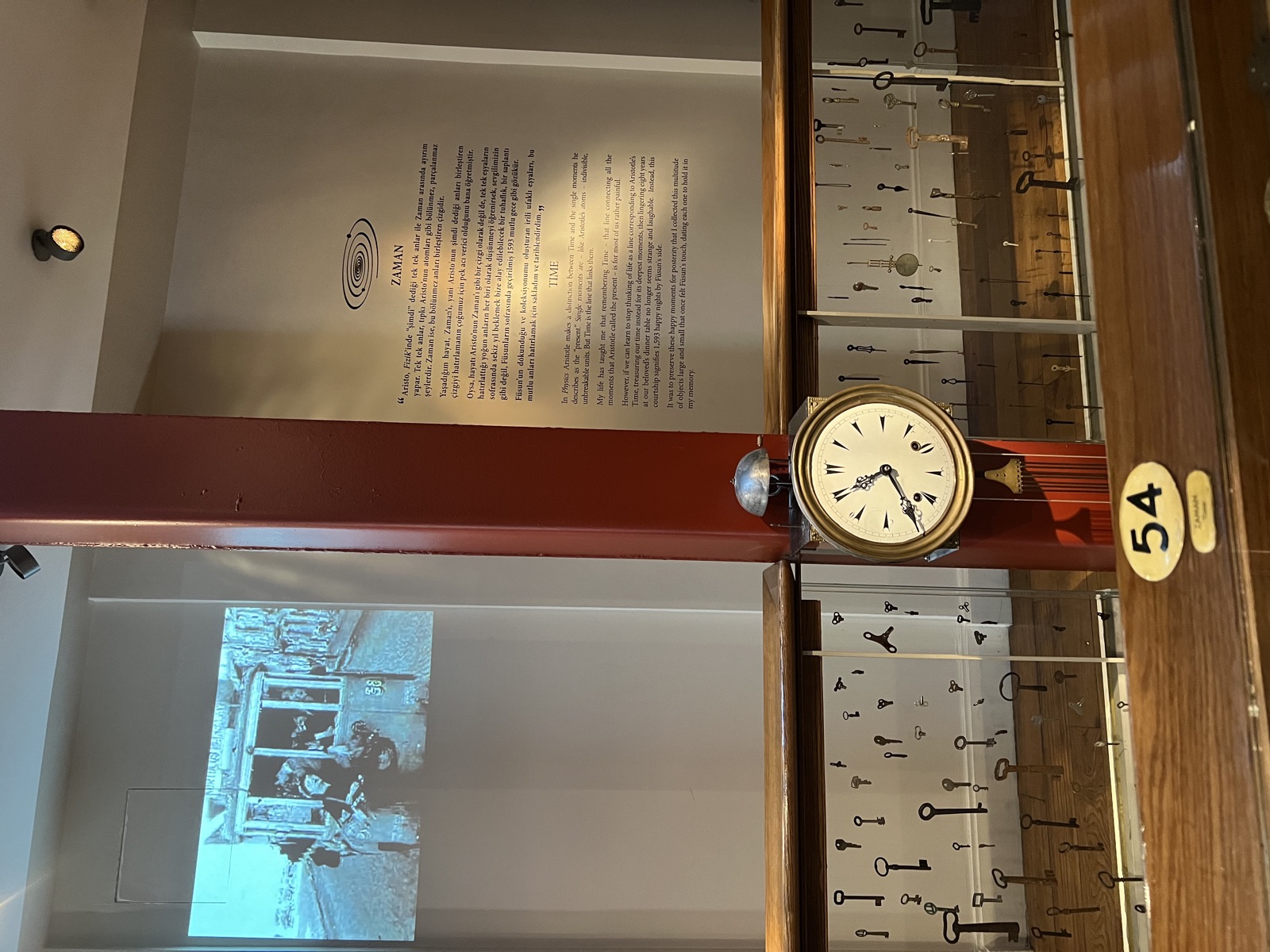
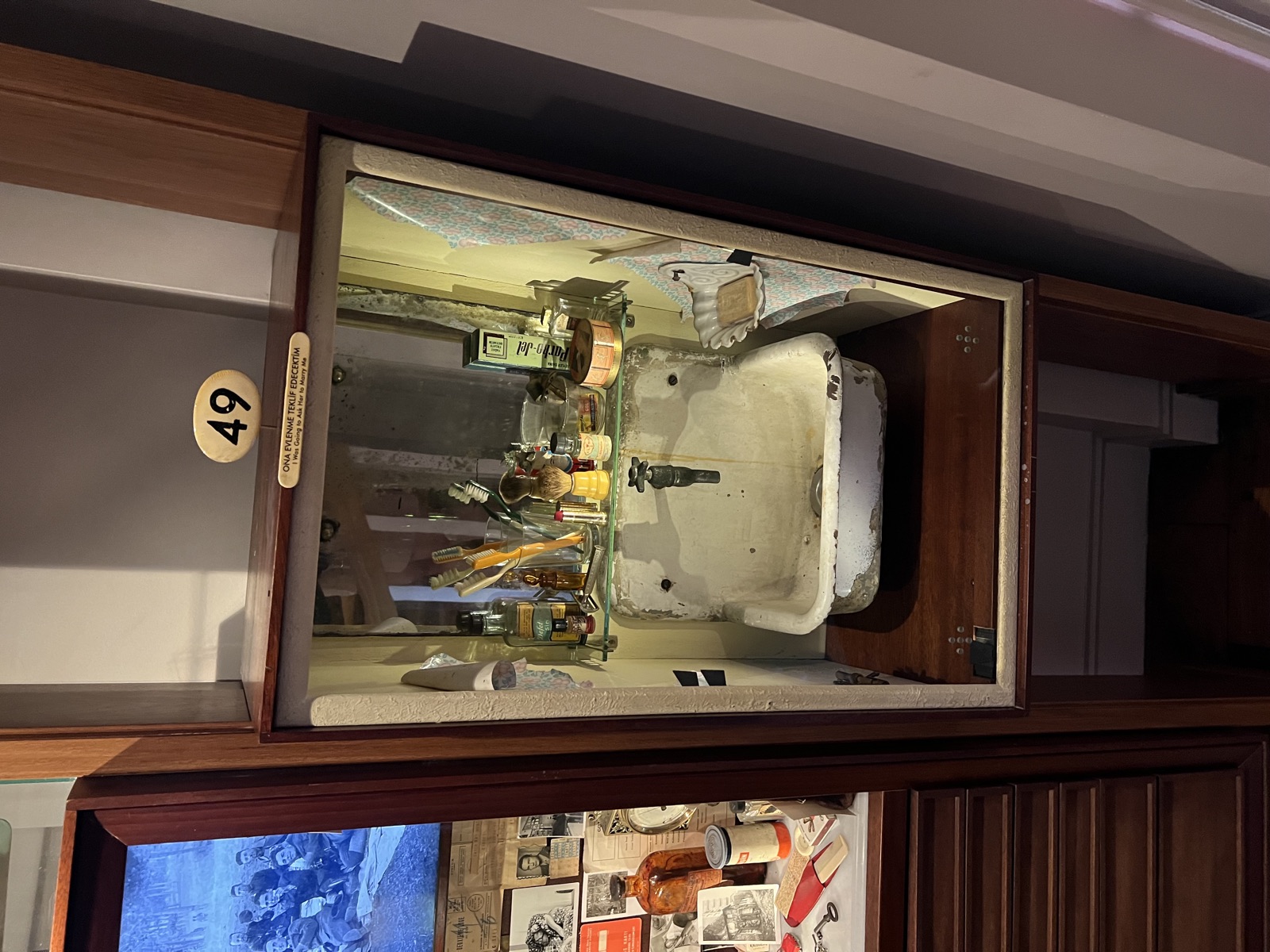
An old key, a glass, or a postcard can look completely worthless, until someone tells a story about it. This is exactly the mechanism the museum plays with. The district thereby becomes almost an extension of the exhibition.
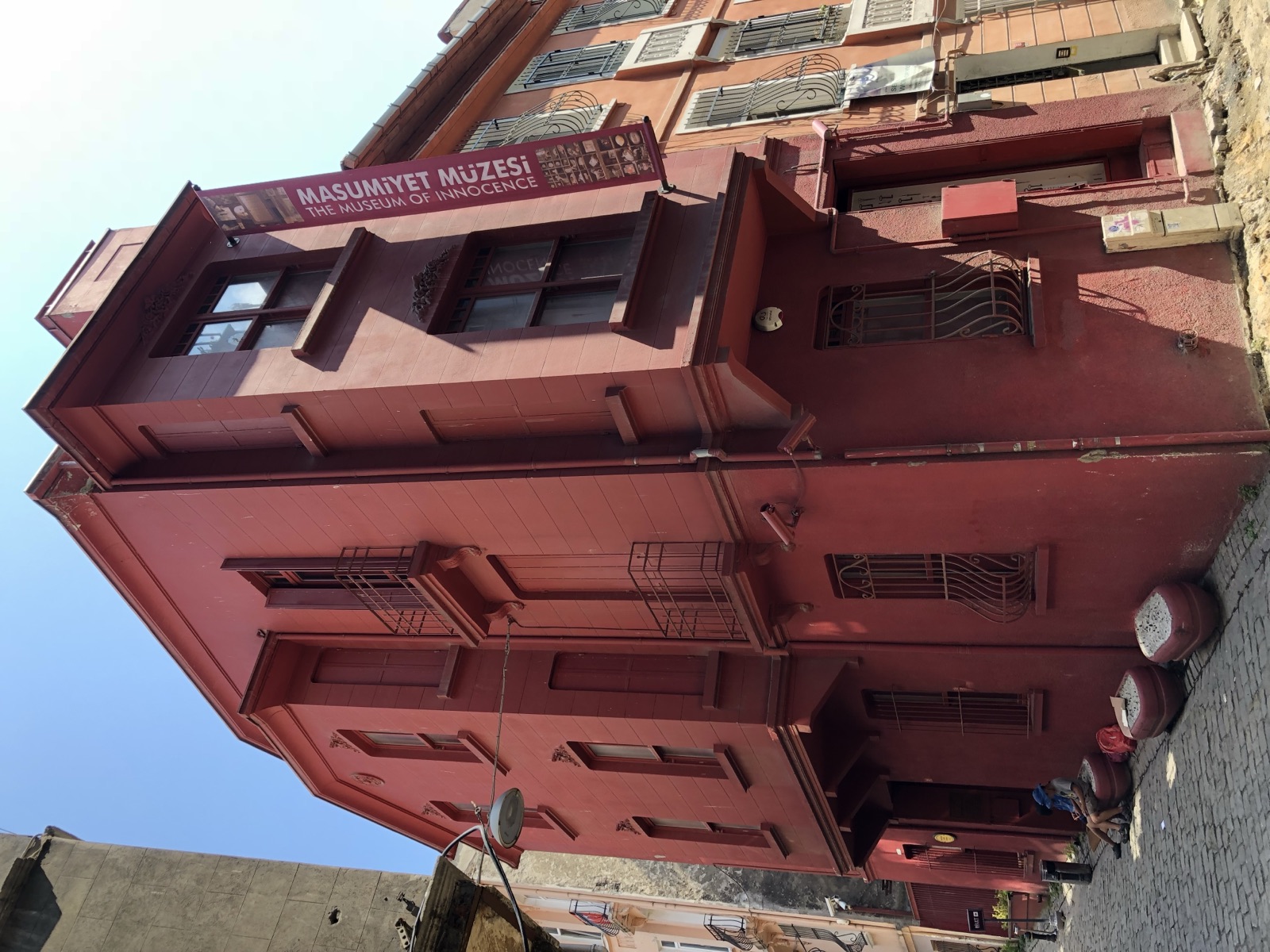
The architectural choice makes sense too. Instead of a large white new museum building, the collection uses a narrow historic house. That keeps the scale private and personal. You feel more like you're stepping into someone's memory than into a state institution.
Collecting Between Love and Control
The novel doesn't fully romanticise Kemal's collecting. His love for Füsun becomes increasingly possessive. He takes things for himself, archives moments, and tries to hold onto the past. That can feel touching and uncomfortable at once.
That's exactly why the exhibition is more interesting than a simple "museum of a great love." It indirectly asks when memory turns into obsession, and whether objects can replace a person. Of course, they can't. They only preserve projections.
Museums, at their core, do something similar on a social level. They collect things, order them, and thereby tell a story. Pamuk transfers this logic onto a single love relationship.
A Counter-Model to the Classic National Museum
In his museum manifesto, Pamuk argued that museums should tell more stories of individual people, instead of exclusively great national narratives. The Museum of Innocence carries out this idea radically. No sultan, no war, no founding of a state stands at its centre — but cigarettes, clothes, dining rooms, and unrequited, or complicated, love.
This is especially fascinating in Istanbul, since the city is full of monumental historical narratives. After the Hagia Sophia, Topkapı, and Dolmabahçe, a museum about everyday objects feels almost like an antidote. It's a reminder that a city doesn't consist only of the decisions of famous rulers, but of millions of private lives, most of which never get a monument.
Why a Museum About Fiction Can Still Show Historical Truth
Kemal and Füsun never really lived, but the world around them is carefully built from genuine everyday culture. Drink labels, household objects, newspapers, and clothing come from a real era. As a result, a fictional museum can sometimes tell you more about everyday life than a classic exhibition full of official state documents.
Literature doesn't work with the same kind of truth as historical scholarship. It's allowed to invent characters in order to make social realities visible. Pamuk uses exactly this freedom. Class differences, shame, sexual morality, modernisation, and Istanbul's changes all become tangible through a love story.
The museum makes this literary truth physical. You see the things only described in the novel, and almost automatically begin to forget the line between memory and invention.
Love, Possession, and the Question of Who a Memory Belongs To
Kemal collects objects because he believes doing so preserves closeness to Füsun. Within that lies an uncomfortable question: do memories belong only to the person who feels them, or also to the person who becomes an object within them?
The novel leaves this tension standing. Visitors can understand Kemal's longing while, at the same time, viewing his behaviour critically. That's exactly why the museum works better than a purely romantic backdrop. It doesn't force you to find the obsession beautiful.
Maybe that's also the difference between collecting and remembering. Things can trigger a moment, but they don't give you a claim over another person. This boundary makes the story far more mature than a simple "great love that was never forgotten."
"Füsun really lived." No. She's a fictional character.
"So all the objects on display are just film props." Also too simple. Many are genuine historical everyday objects from the relevant period, but built into a fictional biography.
"You have to have read the novel, or you won't understand anything at all." No. The museum works on its own, but gains extra layers through the novel.
My Thought on This Place
I find the idea brilliant, because it shows how strangely memory actually works. Of a hundred things in an apartment, maybe one is objectively valuable. But it can be exactly the cheapest object that suddenly brings back a person, a holiday, or an entire chapter of your life.
Maybe I understand that so well partly because, with my Galata Tower photos, I'm clearly not entirely normal myself. Of course, that's something different from 4,213 cigarette butts — but I know the principle: you always think, this one picture has to be included too. And one more. And one more. At some point, the collection itself becomes part of the story.
– Amra