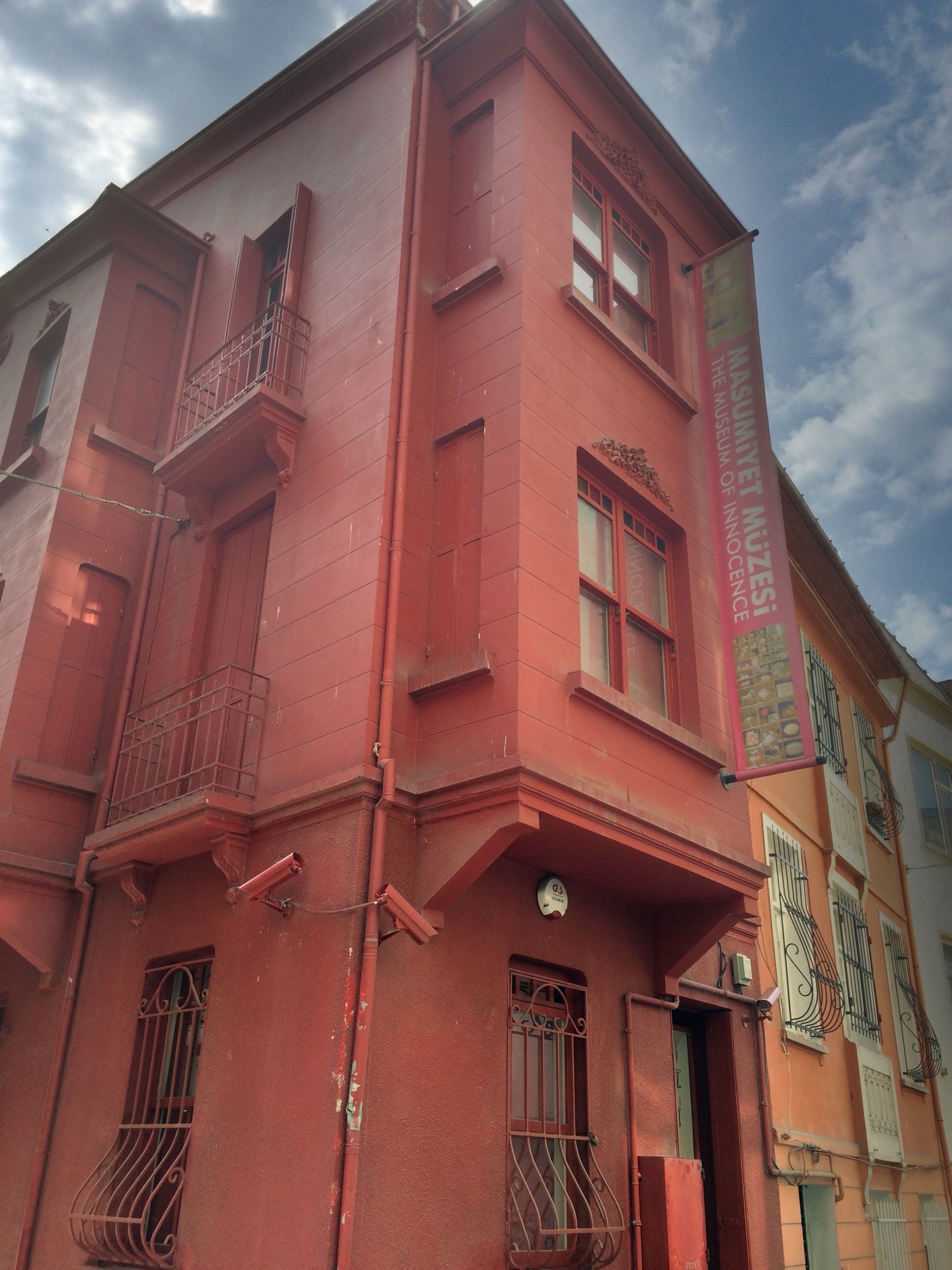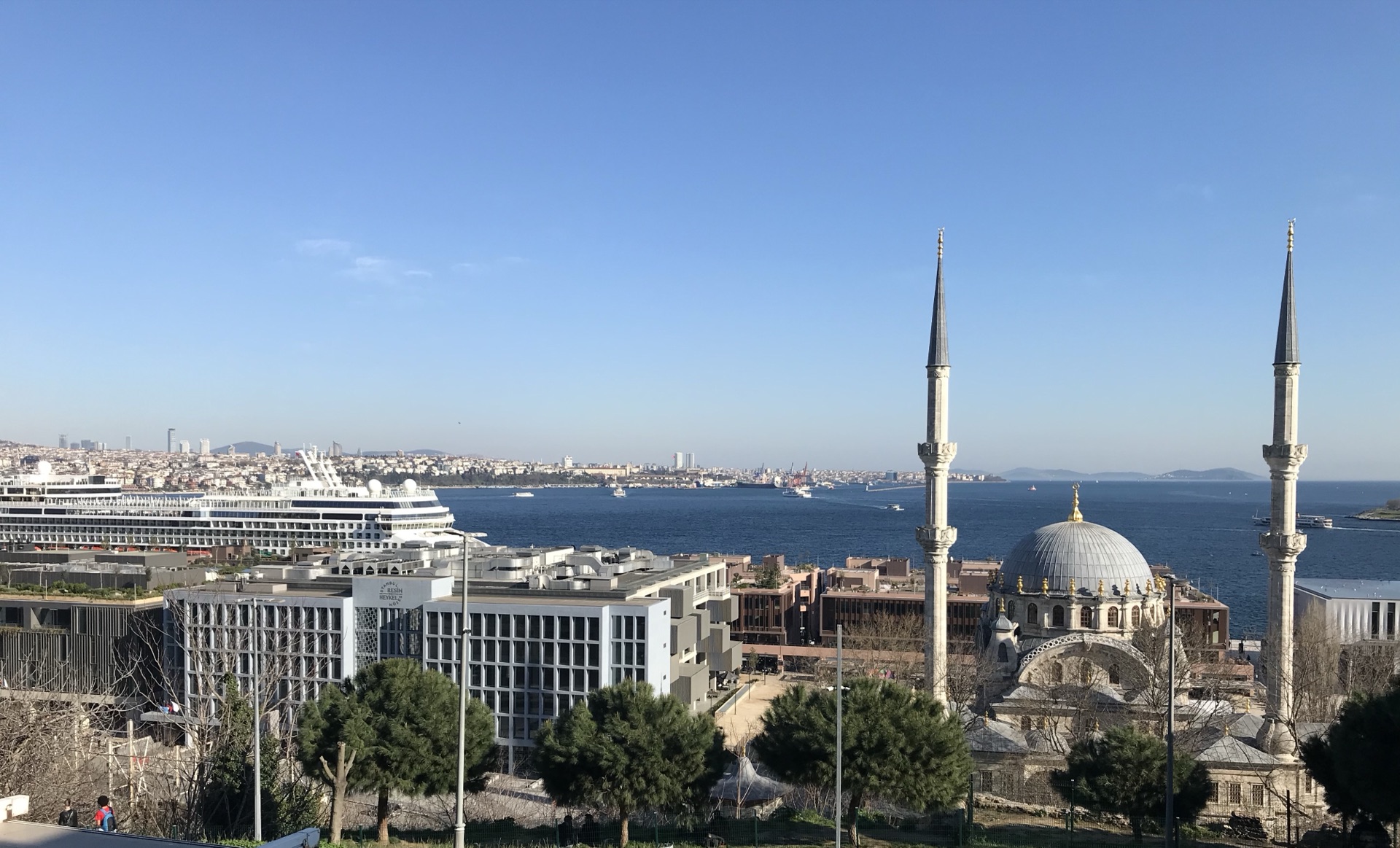

Right in the middle of Şişli stands a rather narrow, multi-storey house that could easily be overlooked next to Istanbul's great monuments. That's exactly where its strength lies. The Atatürk Museum is no palace, no building of state representation. It was a private home, where Mustafa Kemal lived for a time after the First World War and held political conversations, before setting off for Anatolia in 1919.
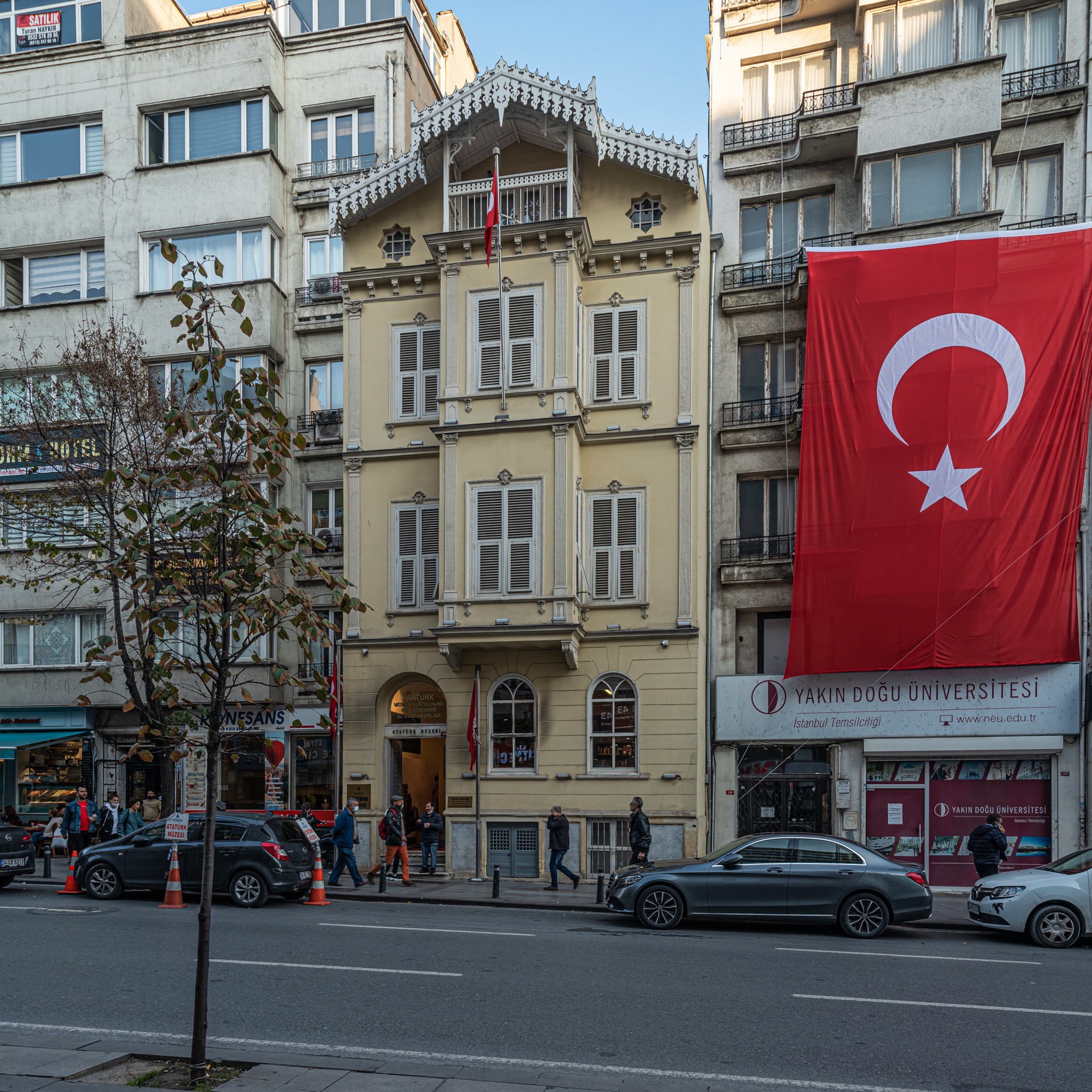
Right in the middle of Şişli stands a rather narrow, multi-storey house that could easily be overlooked next to Istanbul's great monuments. That's exactly where its strength lies.
Today, the museum displays personal belongings, photographs, documents, and keepsakes. The place therefore doesn't tell Atatürk's entire biography, but a very specific transitional phase: the Ottoman Empire had lost the war, Istanbul stood under Allied control, or occupation, and a former Ottoman officer began planning his next steps.
- After the First World War, Mustafa Kemal lived for a time in a house in Şişli.
- There, he met political and military companions and discussed the situation of the defeated Ottoman Empire.
- On 16 May 1919, he left Istanbul aboard the Bandırma; on 19 May, he reached Samsun.
- This journey is regarded, in Turkish memory, as the start of the national resistance under his leadership.
- The house later became a museum, displaying personal objects, documents, and photographs.
- The museum isn't an unaltered, frozen-in-time living space; the exhibition and the building have been restored and redesigned as a museum over the decades.
How Mustafa Kemal Came to Şişli
After the Armistice of Mudros in October 1918, Mustafa Kemal returned to Istanbul. The Ottoman Empire had lost the First World War, and his political future was completely uncertain.
He moved for a time into a house in Şişli with his mother, Zübeyde Hanım, and his sister, Makbule. At the time, the district sat well outside the old Ottoman centre and was developing into a modern residential area.
The house became a meeting place for conversations with officers and political contacts. Names like Ali Fuat Cebesoy, Rauf Orbay, İsmet İnönü, and Kâzım Karabekir belong to the circle around the later national movement, even if not every famous meeting took place in this exact living room.
Istanbul After the First World War
The situation was dramatic. Allied warships sat in the Bosphorus. From November 1918, the effective Allied occupation of Istanbul began, becoming more formal and comprehensive by March 1920. At the same time, the victorious powers were planning the territorial reorganisation of the Ottoman Empire.
For Ottoman officers, a fundamental question arose: accept the terms and try to act within the remaining structures, or organise resistance in Anatolia?
Mustafa Kemal's later role was, at this point, by no means inevitable. Many actors developed different strategies, and the outcome was open.
What Was Planned in This House
The building in Şişli is interesting because it shows Mustafa Kemal not yet as the already-venerated founder of a state, but in a phase where his political future was completely open. After the end of the First World War, he returned to Istanbul. The Ottoman Empire had signed the Armistice of Mudros, Allied troops controlled key points, and Anatolia's future was being negotiated internationally. In this situation, Mustafa Kemal met officers, politicians, and confidants in Istanbul, and developed ideas about how to respond to occupation and the looming territorial partition.
The house was therefore no secret headquarters where a finished war of independence was already being planned on a map. The months in Istanbul were, rather, a phase of searching, networking, and weighing options. Mustafa Kemal still stood within the Ottoman military hierarchy, and at the same time had to consider what scope for action still existed. Only his departure for Samsun in May 1919, and the congresses that followed in Amasya, Erzurum, and Sivas, turned these considerations into an organised national movement.
It's precisely this in-between phase that makes the museum valuable. Later, history often looks inevitable: Atatürk travels to Samsun, organises resistance, wins the war, founds the Republic. For the people of 1918 and early 1919, none of that was certain. Istanbul was occupied, the empire militarily defeated, and different political groups pursued different strategies. The house in Şişli is a reminder that even great historical developments first arise out of conversations, uncertainty, and decisions.
The personal objects, photographs, and documents on display therefore shouldn't be seen only as relics of a national hero. It's more interesting to tie them to this specific phase of life. An officer lived here whose name was already known, but who wasn't yet the president of a republic that didn't exist yet at all.
In the Şişli house, conversations were held about the political and military situation. Later, national memory happily created the image of a secret headquarters where the entire Turkish Republic had already been planned down to the last detail.
It wasn't that simple. Mustafa Kemal initially also tried to gain influence within the existing Ottoman political order. Only gradually did the strategy develop of making Anatolia the centre of organised resistance.
That's exactly what makes the house interesting. It shows no finished revolution, but a phase of searching and planning.
From Şişli to Samsun
His departure for Samsun on 16 May 1919 later became a founding moment of national memory. Mustafa Kemal left Istanbul aboard the steamer Bandırma and reached Samsun on 19 May. In the republican historical narrative, this date marks the start of the organised Turkish struggle for independence. That's why 19 May still carries enormous symbolic weight today.
Historically, though, it's precisely the connection to those months in Şişli that matters. Mustafa Kemal didn't set off as an already all-powerful revolutionary leader. He received an official military assignment, but increasingly used this scope for action for a political project that drifted away from the interests of the Istanbul government. The path from Şişli to Samsun was therefore no simple change of location, but the transition from cautious planning to open political action.
In 1919, Mustafa Kemal received his assignment as inspector of the 9th Army. Officially, he was meant to secure order in Anatolia and oversee, among other things, conflicts and disarmament issues. He used the far-reaching authority of his position, however, to build connections between resistance groups.
On 16 May 1919, he left Istanbul aboard the Bandırma. Three days later, on 19 May, he reached Samsun. This date is today regarded as the symbolic start of the Turkish national struggle for liberation under his leadership.
From there followed Amasya, Erzurum, Sivas, and finally Ankara. Within just a few months, the Ottoman inspector general had become the most important political leader of a movement increasingly slipping out of the Istanbul government's control.
How the Residence Became a Museum
After the founding of the Republic, the house gained historical significance. The city of Istanbul acquired it and opened a museum there in the 1940s.
Later restorations and redesigns adapted the exhibition to modern museum standards. That means visitors see a historic building with an authentic connection to Atatürk, but not a flat sealed unchanged since 1919.
What You See in the Museum Today
On display are photographs, clothing, personal objects, documents, paintings, and keepsakes from different phases of Atatürk's life. Some rooms more strongly reconstruct the living situation; others function as a biographical exhibition.
For me, the small objects are always especially interesting. A monument shows how a state wants to remember someone. A piece of handwriting, an item of clothing, or a used object brings a person closer.
Why Small Personal Places Often Explain More Than Monuments
You encounter Atatürk everywhere in Turkey: on monuments, banknotes, pictures in schools and offices. That can turn him almost into an abstract symbolic figure.
A private home breaks through that a little. Someone had to sleep, eat, hold conversations, and make decisions here, without knowing how history would turn out.
That's exactly why a museum like this is worthwhile even for visitors who don't know the details of Turkish political history.
The Bandırma Between History and National Memory
The journey to Samsun later became one of the Republic's central founding images. As a result, even the ship Bandırma gained an almost mythical status. Today, a reconstruction exists in Samsun as a museum. The original ship was scrapped in the 1920s.
This fact surprises many people, since national memory likes to give the impression that all famous original objects were deliberately preserved. In reality, the symbolic significance of some things was only recognised later. Today's reconstruction therefore fulfils a function within the politics of memory, but isn't the historic original ship from 1919.
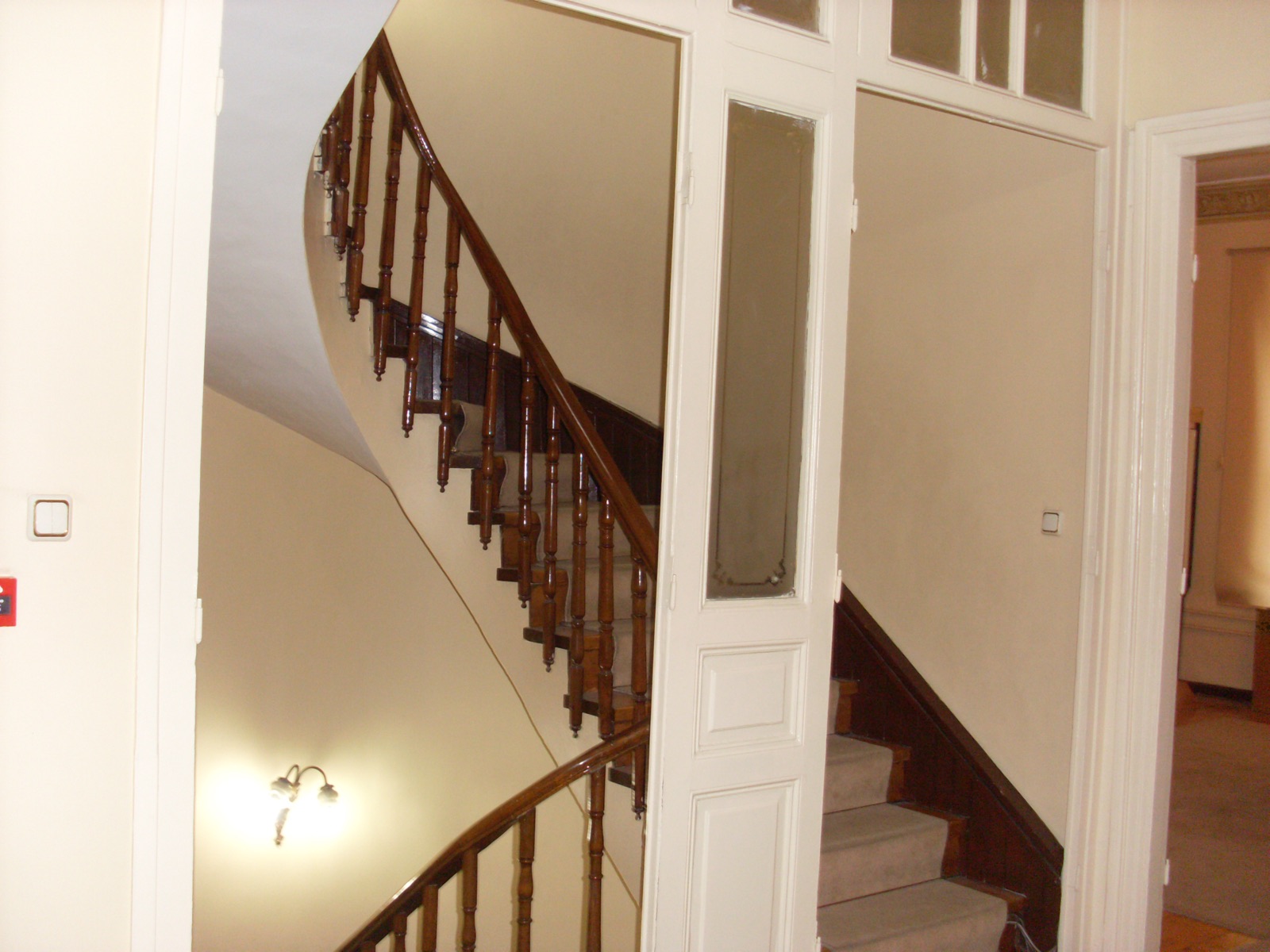
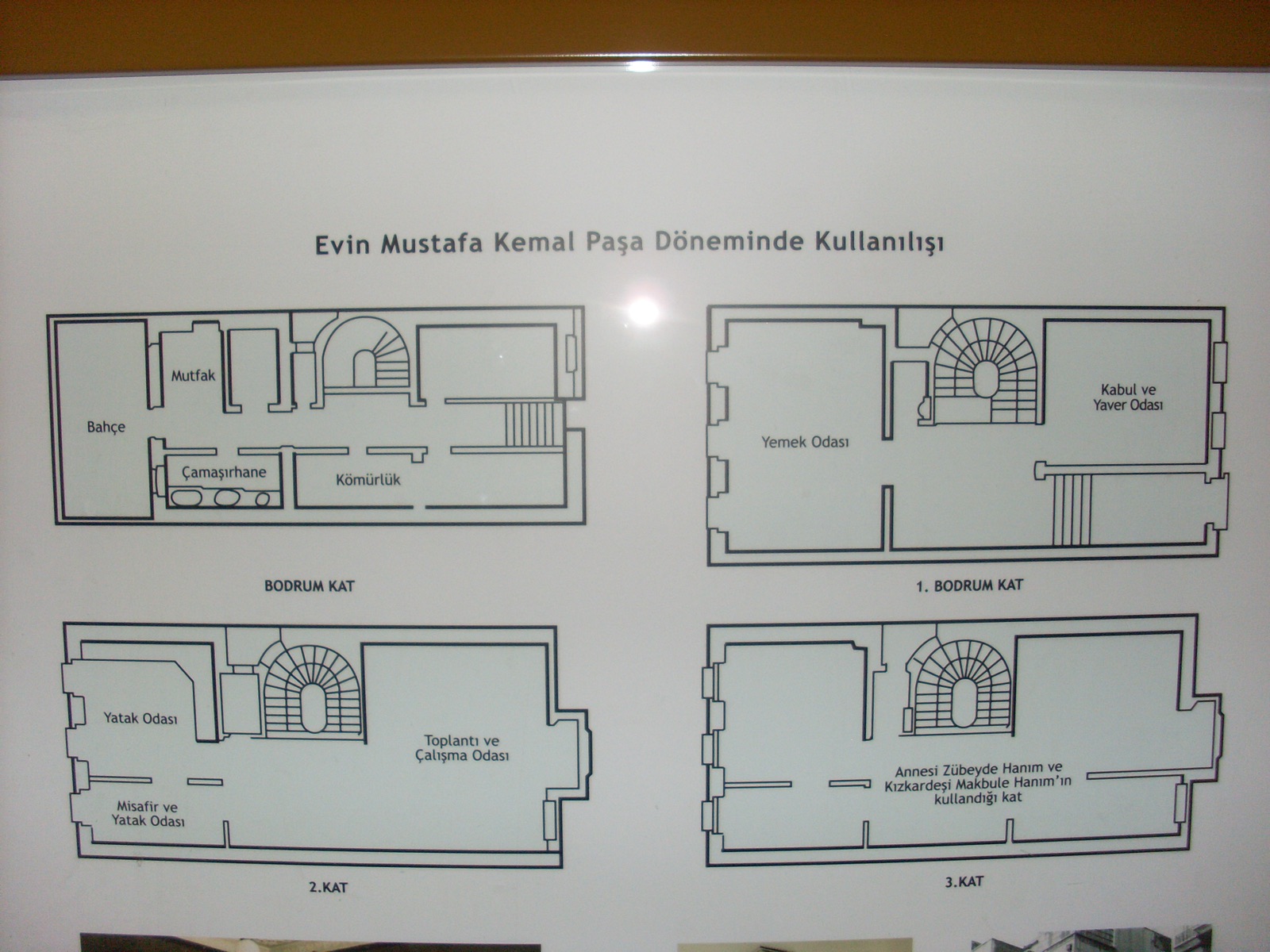
Something similar, if less extreme, applies to the Şişli house: the site is genuine, but its museum staging arose later. Memory always works through selection.
Zübeyde Hanım and Private Life in the House
Mustafa Kemal didn't live there alone as a political strategist. His mother Zübeyde Hanım and his sister Makbule were part of the household. The building was therefore, at once, a family home and a political meeting place.
This dual role makes it more human. While the future of an empire was being negotiated outside, everyday worries, family relationships, and uncertainty existed inside. Zübeyde Hanım had already experienced many personal losses, and now watched her son prepare once again for a risky military-political mission.
Aspects like this easily disappear when history consists only of men in uniform. A private home is a reminder that political actors always had families too, who bore the consequences of their decisions alongside them.
Why 19 May Became So Important
In Turkey today, 19 May is observed as Atatürk'ü Anma, Gençlik ve Spor Bayramı — Commemoration of Atatürk, Youth and Sports Day. The date links Atatürk's arrival in Samsun with youth and sport. Atatürk himself later gave 19 May 1919 symbolically as the start of his public life within the national struggle.
Historically, resistance to the occupation naturally didn't begin only on this one morning, and Mustafa Kemal wasn't the only actor involved. Local defence groups already existed. But his ability to politically bring different forces together made the journey the decisive turning point.
Atatürk Between Ottoman Officer and Republican Founder of the State
The museum is especially interesting because it shows Mustafa Kemal before the role in which most monuments depict him. In 1918, he was no president, and no finished national icon. He was a successful Ottoman general within a defeated empire.
His education, military career, and political networks were entirely products of the late Ottoman state. The Republic, then, didn't arise through someone standing outside this system, but through actors trained within it who later turned against parts of its existing order.
This transitional phase helps avoid simplistic narratives in which "Ottoman Empire" and "Republic" appear as two completely separate worlds. Many people, institutions, and problems carried over from one era into the next.
A Museum About a Transition, Not a Finished Result
The house has its strongest effect once you force yourself to briefly set aside what you know about 1923. Anyone sitting there in 1919 didn't know a republic would be founded four years later. There was no guarantee the national movement would succeed militarily.
This uncertainty makes historical decisions easier to understand. People always act with limited information. Only in hindsight do events look like a logical chain. The museum can therefore help you grasp the time between the war's end and Samsun as an open moment.
This matters especially in national founding narratives, because later successes otherwise make it seem as though they were inevitable from the very start.
"The entire Republic of Turkey was fully planned in this house." No. It was an important meeting place and residence during a decisive transitional phase, but the national movement only developed over the months and years that followed.
"In 1919, Atatürk secretly travelled to Samsun against the will of the Ottoman government." Too simple. He initially travelled with an official inspection assignment and far-reaching authority. Only afterward did his relationship with the government openly break apart.
"The museum is his flat exactly as it was in 1919." No. The building is historic, but today's presentation is the result of later museum design and restoration.
My Thought on This Place
I often find small museums like this more fascinating than huge buildings, because history suddenly shrinks down to the size of a flat. You're not standing in front of a twenty-metre-tall monument, but inside a house, thinking: someone sat here with other people, not yet knowing what would become of all these plans.
In hindsight, history always looks so clean. 1919 → Samsun → War of Liberation → Republic. But for the people back then, there was no arrow in between. There was uncertainty. That's exactly what you should keep in mind in rooms like this.
– Amra