Galataport is one of Istanbul's most recent major urban transformations. Anyone who only knows Karaköy and Tophane from older visits remembers harbour facilities, fences, passenger terminals, and areas barely accessible to the public. Today, a long promenade runs there with restaurants, shops, museums, and cruise ships. The change is so drastic that it's almost easy to forget this shoreline had been one of the city's most important modern harbour spaces since the late 19th and early 20th centuries.
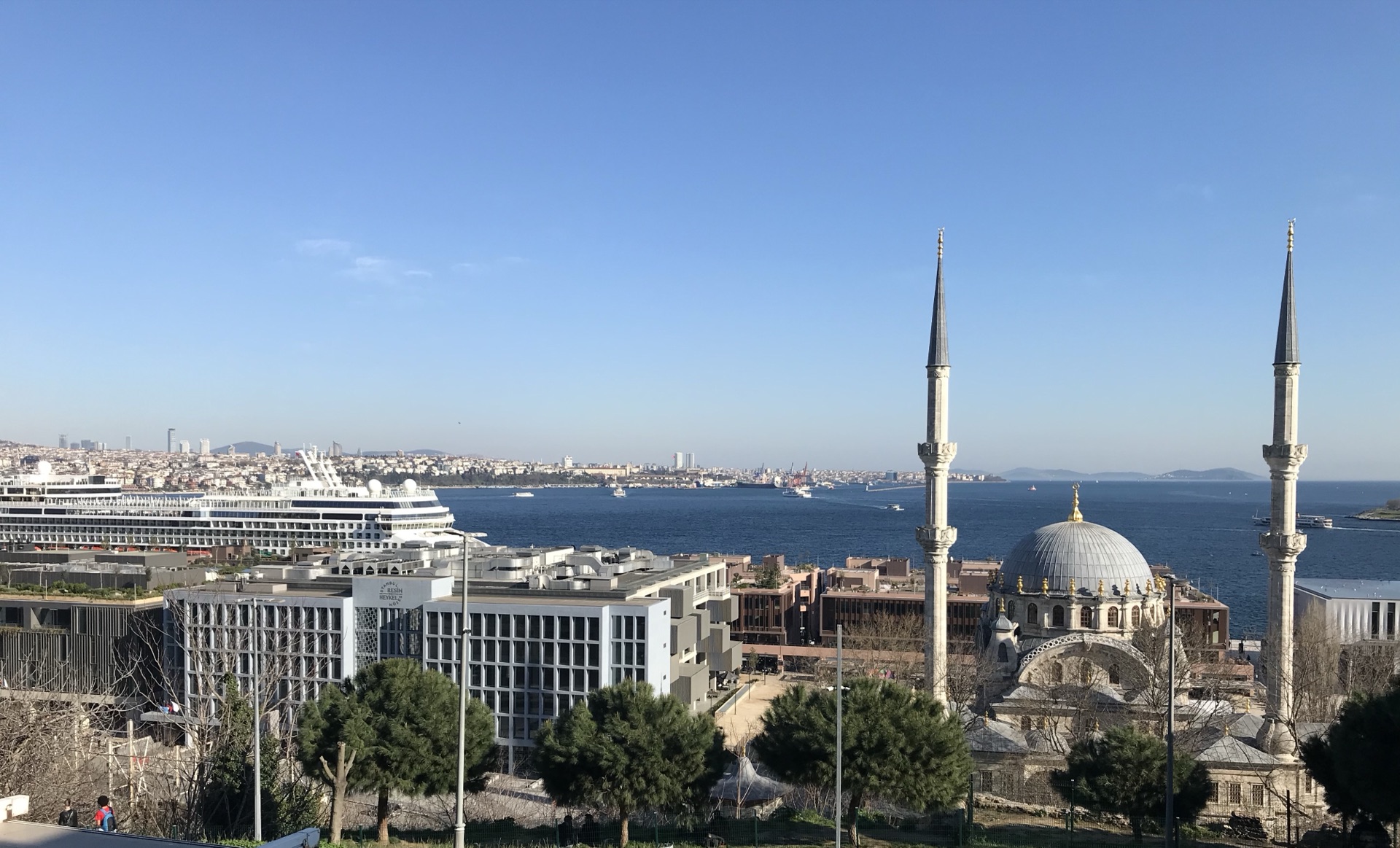
Anyone who only knows Karaköy and Tophane from older visits remembers harbour facilities, fences, and areas barely accessible to the public. Today, a long promenade runs there with restaurants, shops, museums, and cruise ships.
The current project opened in 2021. Especially unusual is its cruise terminal: large parts of passenger processing sit underground. When a ship docks, movable security and customs barriers rise up, creating a controlled harbour zone. After departure, the promenade can open up again. Galataport thereby tries to combine two normally contradictory functions: an international cruise port and a freely accessible city district.
- Galataport stretches across roughly 1.2 kilometres of Bosphorus shoreline.
- Today's project opened in October 2021.
- Its cruise terminal is largely underground.
- A movable security system separates the customs zone from the public promenade whenever ships are docked.
- Historic harbour and post buildings were integrated into the new quarter.
- The project includes dining, retail, museums, and public space.
- Supporters see it as returning a long-sealed shoreline to the city; critics point to heavy commercialisation and private control of public space.
Why Karaköy Became a Modern Harbour
Karaköy and Galata had been important trading zones for centuries. With steamships and growing international trade, though, the older 19th-century forms of docking no longer sufficed. Modern ships needed stable quays, warehouses, customs facilities, and organised passenger processing.
New quay facilities were therefore built along the Bosphorus at the end of the 19th century. The harbour radically changed the shoreline. Where smaller landing stages and an urban structure more tightly bound to the water had once existed, technical harbour areas arose.
From Ottoman Quay to Passenger Terminal
In the early 20th century, new administrative and passenger buildings were erected. Today's Paket Postanesi originally arose as a customs and harbour building; its design dates from 1905, and it was built between 1907 and 1911. The building later served, among other things, as a hospital and a parcel post office.
The historic Karaköy passenger terminal opened in 1940 and, for decades, was an important arrival point for international ships. That gave Istanbul, alongside its stations and, later, airports, yet another great gateway to the world.
Why the Shoreline Was Sealed Off for Decades
An international harbour needs customs and security checks. As a result, large parts of the coast weren't freely accessible to ordinary pedestrians. Anyone walking through Karaköy couldn't simply reach the water at many points.
This was one of the main starting points for the Galataport project: its cruise function was meant to be preserved, or modernised, while the promenade was meant to open up beyond the immediate processing area.
How Galataport Came to Be
Planning dragged on for years and was politically and urbanistically contentious. Tenders, changes of investor, and debates over building density accompanied the project.
Eventually, a mixed-use quarter arose, combining a cruise harbour, dining, shops, offices, hotels, museums, and public open space. The area has been regularly open since 2021.
The project thereby changes not just the harbour, but the entire axis of movement between Karaköy, Tophane, and Beşiktaş.
The Underground Cruise Terminal
Galataport's most unusual idea isn't its shopping and dining offer, but how its harbour operations are organised. Classic cruise harbours need sealed-off security zones right by the ship. That normally means long stretches of shoreline stay inaccessible to the public whenever a ship docks. That's exactly how this part of Istanbul was shaped for many years: the water was visible, but large parts of the quay remained hidden behind fences and harbour use.
At the new terminal, passenger processing, baggage systems, and customs and security areas were largely moved underground. Movable, or retractable, separation systems allow certain quay sections to be sealed off as a controlled harbour zone only when a cruise ship is actually docked there. Afterward, the promenade can be used publicly again. This solution is technically elaborate, because international harbour security rules, passenger flows, and urban pedestrian traffic all have to function at the same time.
Urbanistically, the project is therefore fascinating, but not uncontroversial. Supporters emphasise that Istanbul has thereby regained a long-closed stretch of the Bosphorus while still being able to run a modern cruise harbour. Critics point to the strong commercialisation of the shoreline, high prices, luxury brands, and the question of who newly gained public space actually serves. Both can be true at once: the promenade is more accessible than before, but it's part of a privately developed major project with clear economic interests.
The contrast with its surroundings is especially striking. Just a few minutes away lie Karaköy's older streets, small workshops, historic churches, synagogues, and former bank buildings. Galataport, by contrast, presents a highly controlled, polished image of modern Istanbul. Anyone who sees both in succession understands very well how differently one and the same district can feel within just a few streets.
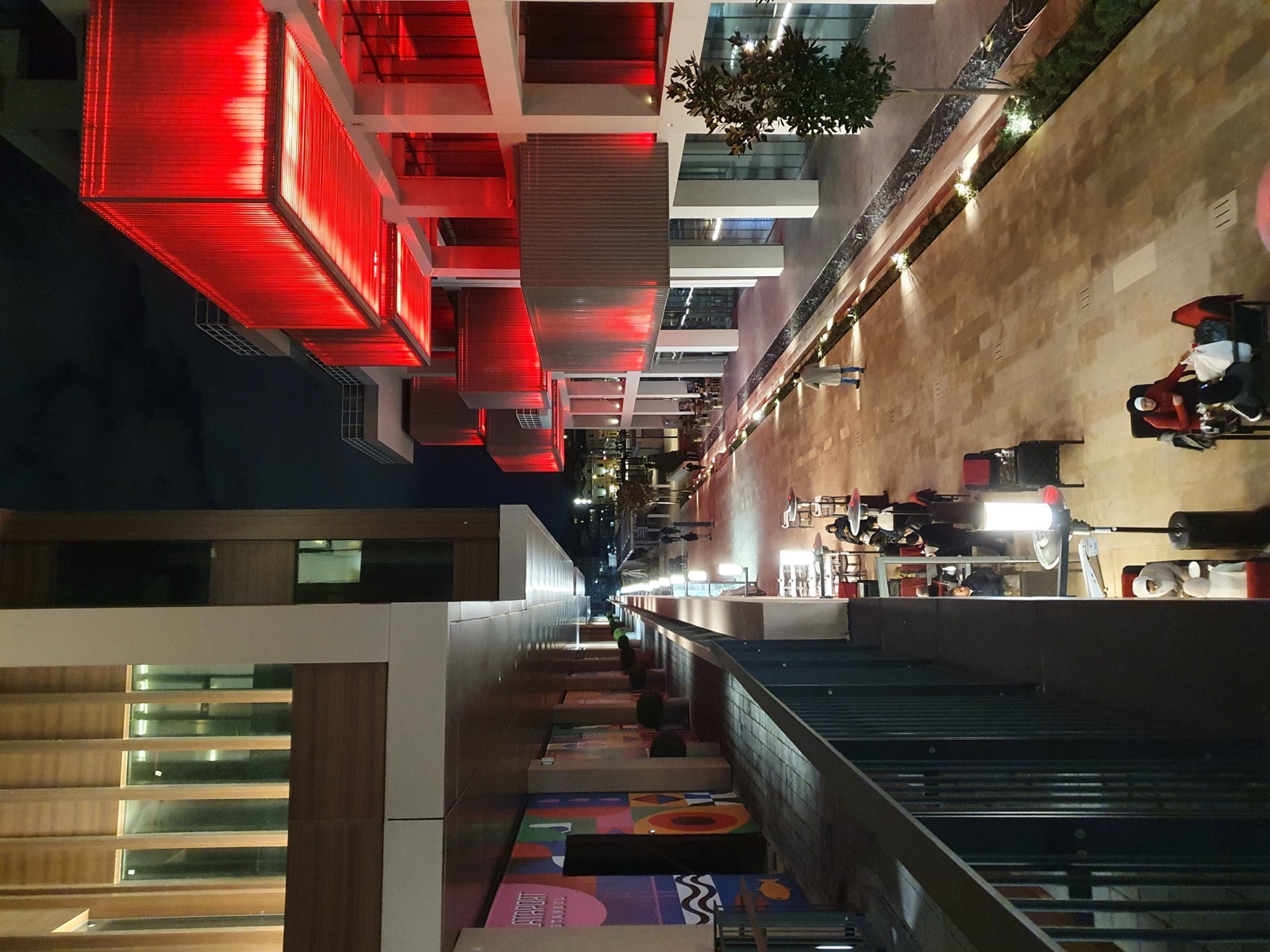
Technically, the terminal is the most interesting part. Galataport describes it as the world's first underground cruise terminal of its kind. Passenger processing, security checks, baggage logistics, and further functions sit across roughly 29,000 square metres beneath the promenade.
When a ship docks, movable barriers create a temporary customs zone above ground. After departure, these dividing elements disappear again, or open up the space. That keeps the water accessible in everyday life.
The idea is elegant, because cruise harbours normally claim huge security areas. In a historic city centre, a permanent barrier would be especially problematic from an urban-planning perspective.
Historic Buildings Within the New Project
Several older harbour buildings were preserved and repurposed. The former parcel post building stands out especially. The Tophane clock tower, too, was restored and re-staged within its surroundings.
Projects like this are always a balancing act. Historic buildings are saved, but partly lose their original function and become part of a commercial quarter. A customs building becomes a place for shopping and dining. That's neither automatically bad nor automatically ideal from a heritage standpoint — it changes what the building means.
Istanbul Modern and Culture at the Harbour
The new Istanbul Modern building was designed by the Italian architect Renzo Piano and opened in 2023. Together with other cultural institutions, it's meant to give Galataport more than just shopping and dining.
Its site is spectacular for that purpose. Modern art, the Bosphorus, and the historic peninsula sit within the same field of view. At the same time, this very combination shows how strongly Istanbul today tries to tie together historic backdrop and the global culture economy.
Criticism: Upgrading or Privatising the Shoreline?
This debate can't be settled with a simple yes or no. A previously heavily sealed-off harbour area is now largely walkable, and that's a real gain for the city. At the same time, high-end dining, international brands, and private security logic shape the experience. A public waterside path can therefore be freely accessible and still feel socially exclusive.
It's exactly this tension that makes Galataport urbanistically interesting. It's not just about whether the architecture is beautiful. It's about how modern metropolises handle valuable waterfront land: harbour, tourism, business, culture, and everyday life all want to use the same space. Galataport is a very visible answer to that — but certainly not the only conceivable one.
Supporters rightly emphasise that a long-sealed-off shoreline is now reachable on foot again. Millions of people use the promenade without needing a cruise ticket.
Critics, though, point out that the space is heavily commercialised and privately run. Public accessibility doesn't automatically mean the same character as a classic municipal park or quay. Security services, consumer offerings, and private event spaces all shape how it's used.
Both observations can be true at once: the shoreline is more accessible than before, and more commercially organised at the same time.
Cruise Tourism and Its Effects
Cruise ships bring thousands of people into a district all at once, within just a few hours. For restaurants, retailers, and museums, that can mean enormous revenue. At the same time, it creates strain through traffic, emissions, and very concentrated visitor flows.
Galataport was also built on this scale because Istanbul wanted to play a strong role again in the international cruise market. Its location is ideal for that: passengers step off practically in the middle of the city and can reach many sights without a long bus ride.
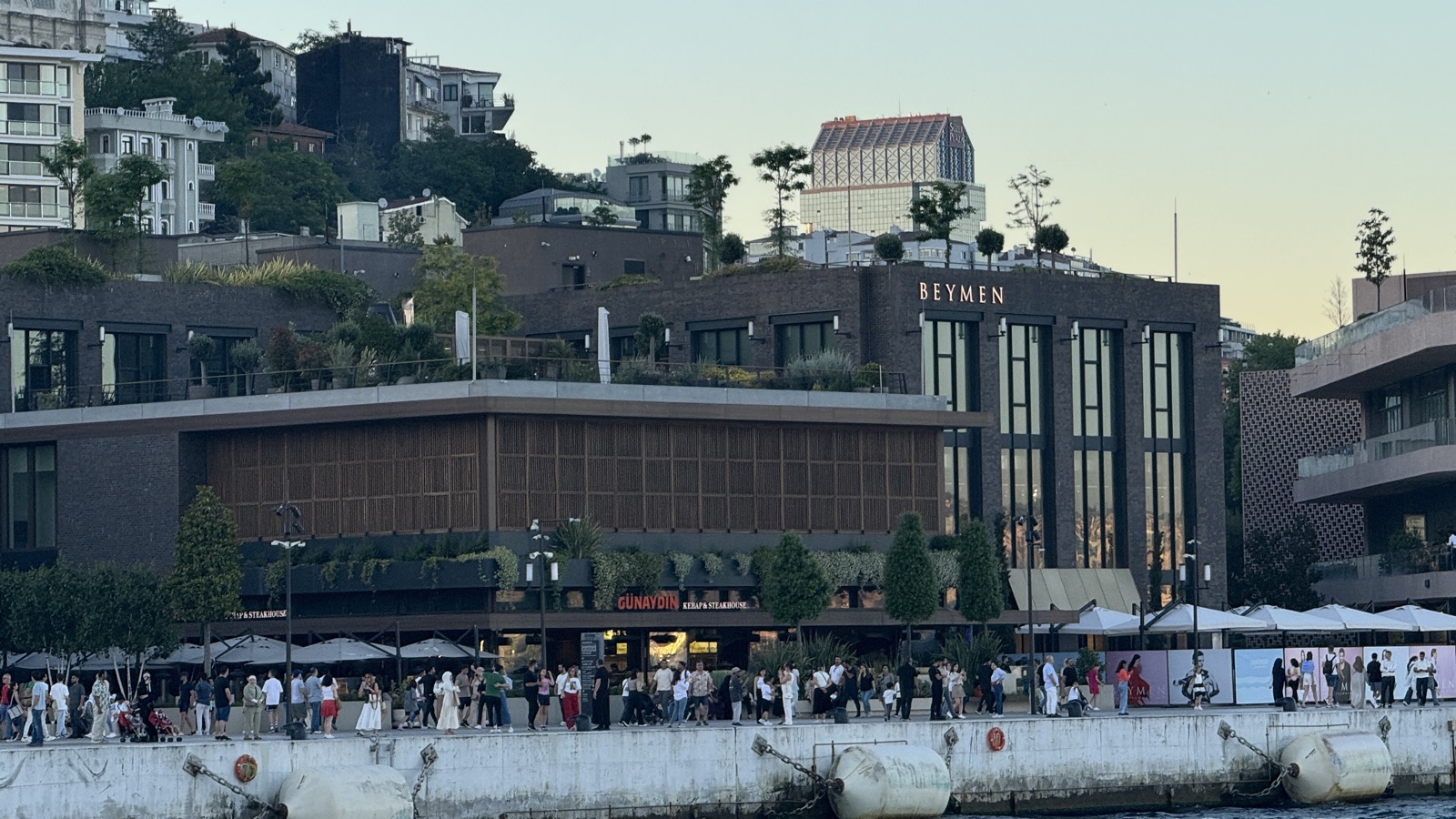
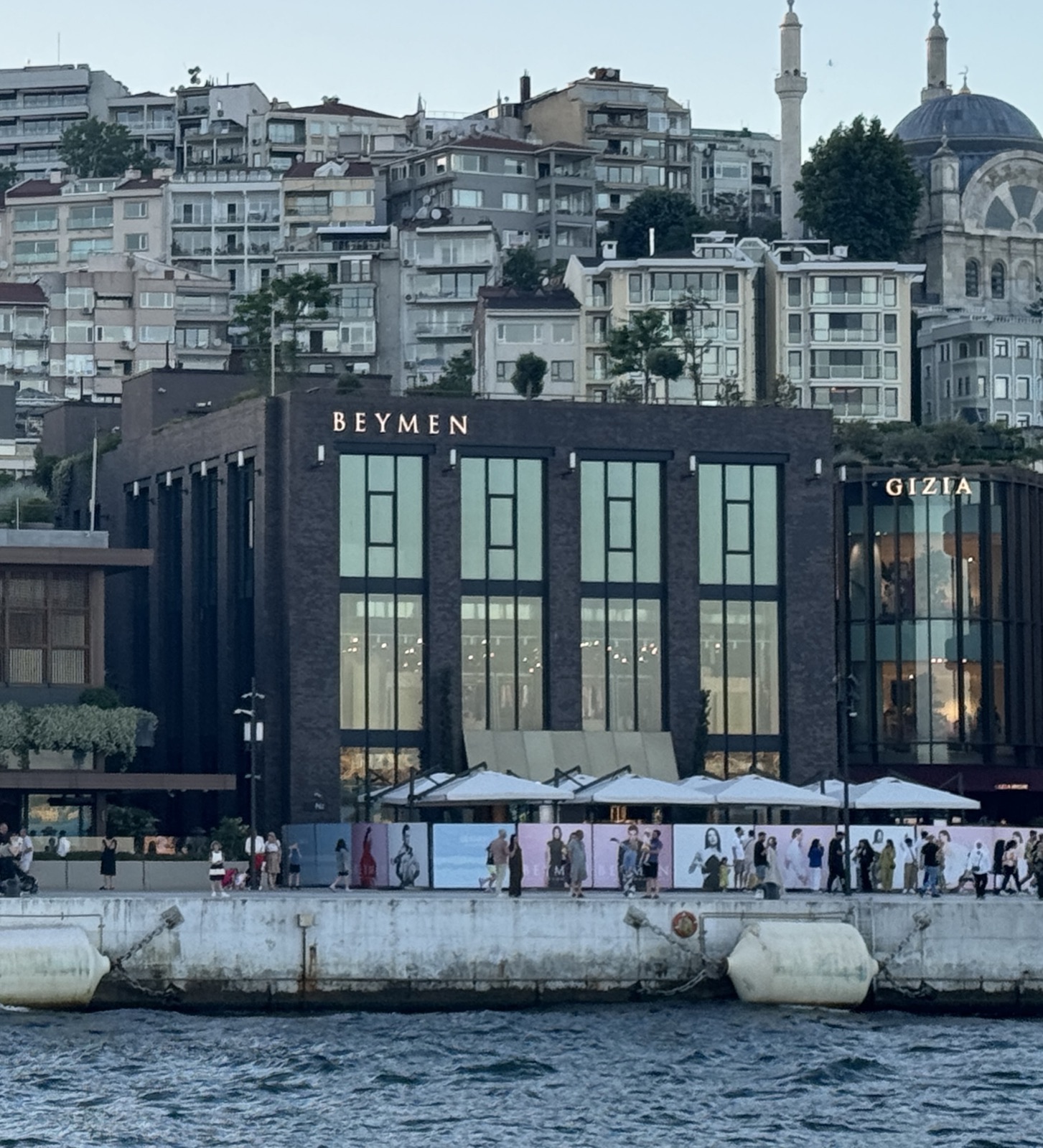
From an urban-policy perspective, that's attractive, but not without conflict. A harbour has to be a logistics machine, a security zone, and a touristic calling card all at once. The underground terminal is precisely the attempt to solve these contradictory demands spatially.
Tophane: What Was Already Here Before Galataport
The name Tophane recalls the Ottoman cannon foundry that served an important military function here from the early modern period on. Nearby stand the Kılıç Ali Pasha Mosque, the Nusretiye Mosque, and historic fountains. The district was therefore a significant state and industrial site long before the modern harbour.
With the 19th-century quay facilities, a new layer was added, followed later by warehouses and passenger terminals. Galataport is therefore not the first major transformation of this shoreline, only the most recent.
Walking through, it's worth repeatedly turning your gaze away from the new glass facades toward these older buildings. Then you see that the quarter wasn't "newly built," but is a historic harbour space put to new use.
What Public Access to the Water Actually Means
At Galataport, it's often said the shoreline has been "given back to the city." That's true in the sense that you can now walk for kilometres along the water where customs and harbour areas once stood. Still, the space remains privately managed, and can be temporarily reorganised for security situations, events, or docking ships.
Public access, then, isn't the same as public ownership. This distinction matters in urban planning. A clean, safe, well-designed quay can be wonderful for visitors, while the question of who sets the rules, and which uses are welcome, remains a legitimate one at the same time.
Cruise Ships as Floating Cities
Modern cruise ships bring a scale to the harbour that historic passenger steamers barely knew. A single large ship can carry several thousand guests and crew members. That means luggage, food, security checks, buses, taxis, and enormous waste and supply logistics all at once.
Galataport therefore has to achieve far more in the background than visitors on the promenade ever see. Underground roads, baggage systems, and control areas keep part of this infrastructure out of the cityscape. The elegant quay only works because a technical machine operates beneath it.
It's exactly this contrast I like about modern urban planning: up top, someone strolls along the Bosphorus with a coffee; down below, international border processing is running.
What Galataport Did to Karaköy
Even before Galataport, Karaköy was one of the districts changing especially fast. Old workshops, banks, small eateries, and historic harbour buildings stood alongside new cafés, galleries, and hotels. The major project accelerated this development even further.
New visitor flows mean higher revenue, but often rising rents too. Small businesses don't automatically benefit when a district is suddenly marketed internationally. Some get pushed out; others adapt their offering to touristic demand.
That's why urban development should never be judged just by freshly paved promenades. The question is also who can afford the new surroundings, and which older uses disappear. Galataport is a fascinating place precisely because you can discuss beauty, access to the water, and gentrification all at once.
"Galataport made the Bosphorus shoreline public for the first time." Too simple. Parts of the shoreline were historically accessible, but were heavily sealed off for a long time through modern harbour use. The project reopened large sections again.
"The entire harbour sits underground." No. What sits underground are mainly processing and terminal functions. The ships themselves, of course, dock above ground at the quay.
"Galataport is purely a private shopping mall." Also too short. It's a privately run, mixed-use quarter with a harbour, museums, dining, retail, and a publicly accessible promenade.
My Thought on This Place
I find Galataport especially fascinating once you know how different this stretch used to feel. Today, you walk along the water, have a drink, look at the historic peninsula, and barely think about how, for decades, harbour infrastructure determined access right here.
Whether you need every shop there is a different question. But the ability to walk along the Bosphorus, connecting Karaköy, Tophane, and the museums along the way, changes this part of the city enormously. And, for me, Istanbul is allowed to have places that are clearly 21st century too.
– Amra