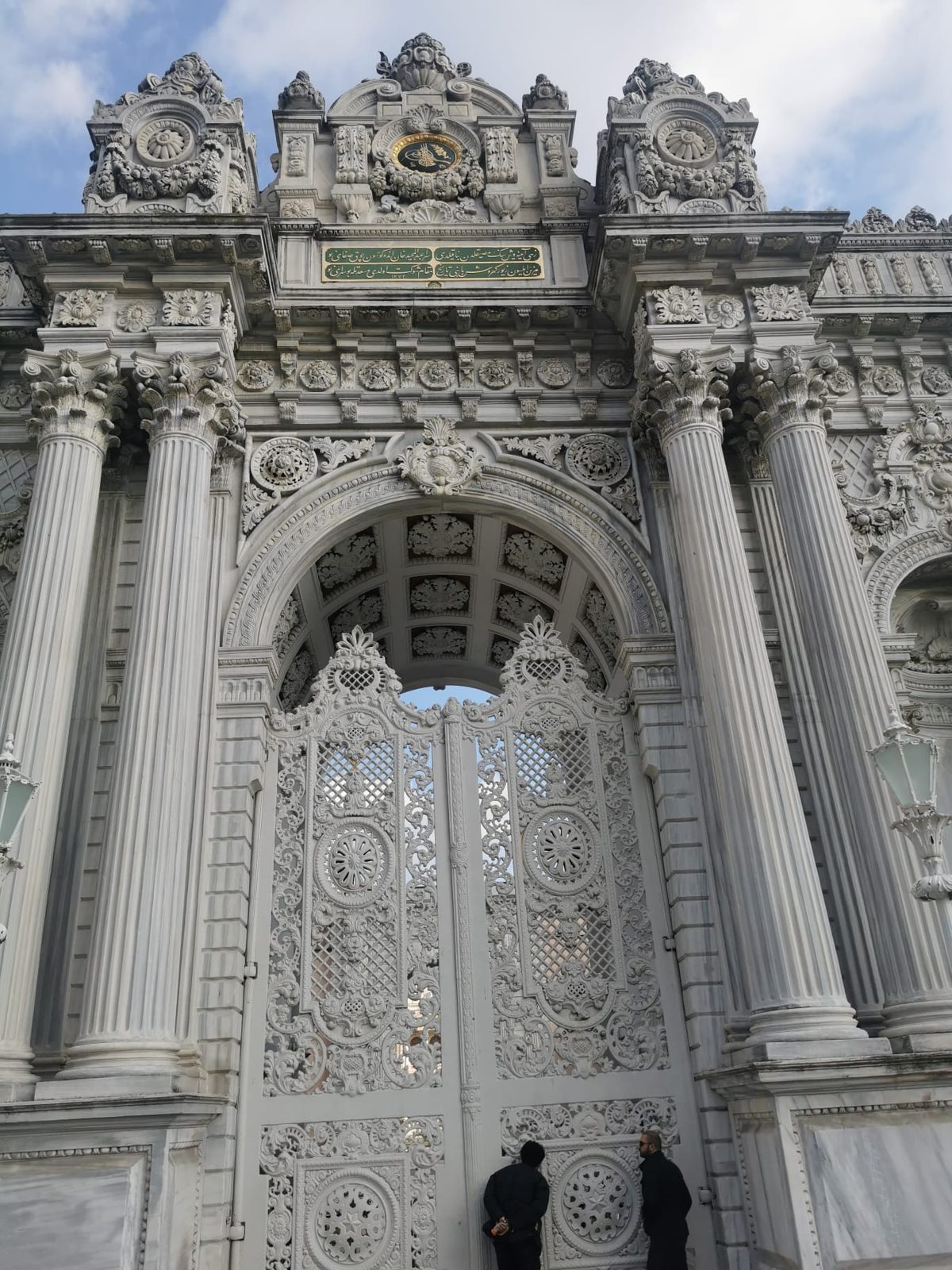

Beylerbeyi sits right on the Asian shore of the Bosphorus and is often described as a smaller, quieter alternative to Dolmabahçe. That's true of its size, but it undersells its function. Today's palace was built between 1863 and 1865 under Sultan Abdülaziz and was meant primarily as a summer residence and a representative guesthouse. European emperors, empresses, and princes were received here, while the palace still preserved the Ottoman separation of state, family, and private areas.
Advertising: If you book through our links, we may receive a commission – at no extra cost to you.
Beylerbeyi sits right on the Asian shore of the Bosphorus and is often described as a smaller, quieter alternative to Dolmabahçe. That's true of its size, but it undersells its function.
Later, Beylerbeyi took on a completely different meaning. Sultan Abdülhamid II, deposed in 1909 after 33 years on the throne, spent his last six years here and died in the palace in 1918. Beylerbeyi thereby links the glamorous diplomacy of the 19th century to the end of one of the most controversial Ottoman rulers' lives.
- Today's Beylerbeyi Palace was built 1863–1865 under Sultan Abdülaziz.
- An older wooden palace from the time of Mahmud II had previously burned down.
- Beylerbeyi served mainly as a summer palace and lodging for high-ranking foreign guests.
- Its famous visitors included Empress Eugénie of France, Emperor Franz Joseph, and Kaiser Wilhelm II.
- The palace has selamlık and harem areas, plus several garden and waterfront pavilions.
- After his deposition, Abdülhamid II spent the last six years of his life here and died in the palace in 1918.
- Today's complex is managed by Milli Saraylar and holds much original, or historically preserved, furnishing.
- Today the complex is administered by Milli Saraylar and contains a lot of original or historically transmitted furnishings.
What Stood Here Before Today's Beylerbeyi Palace
The Bosphorus shore at Beylerbeyi had already been used for imperial gardens and residences long before Abdülaziz. Under Sultan Mahmud II, a larger wooden palace arose there. Such wooden Bosphorus residences were typical in the 18th and early 19th centuries, but fire-prone.
The older palace burned down. Abdülaziz therefore opted for a new, considerably more solid building. Today's complex arose between 1863 and 1865. That also explains why Beylerbeyi is stylistically closely related to Dolmabahçe and other buildings of the same era.
Why Abdülaziz Had a New Summer Palace Built
Dolmabahçe was the great official court palace on the European side. Beylerbeyi served a different purpose. It was meant to serve the sultan as a summer residence, while also offering representative lodging for foreign guests.
In the 19th century, personal diplomacy between monarchs mattered enormously. State visits were political events, and how a guest was housed had to reflect the standing of the Ottoman Empire. A palace right on the Bosphorus offered a spectacular stage for that.
Beylerbeyi is therefore less a "small Dolmabahçe" than a building with a deliberate function. Its rooms are representative, but more compact. Its waterside setting and gardens play a stronger role.
The Balyan Architects and the Style
The building is attributed to Sarkis Balyan and Agop Balyan, members of that Armenian-Ottoman family of architects who substantially shaped the 19th-century Bosphorus. As with Dolmabahçe, European stylistic currents combine with Ottoman court organisation.
Neo-Baroque and Neoclassical elements appear alongside Orientally interpreted decoration. Inside, European furniture, French clocks, Bohemian crystal, and Ottoman carpets were combined. That wasn't a sign the court had suddenly become "European instead of Ottoman." This very mix was the Ottoman language of representation in the 19th century.
Selamlık, Harem, and the Court's Organisation
The main building includes a Mabeyn/Selamlık area for official duties and a harem for the dynastic family. This separation recalls other Ottoman palaces, but here it's built into a more strongly symmetrical, European-influenced architecture.
Especially well known is the great hall with a pool. Water didn't only carry decorative meaning in Ottoman palace-building. It cooled rooms, created sound, and structured the atmosphere. In a summer palace on the Bosphorus, this element fit especially well.
Beylerbeyi Palace is on the Asian side and is easy to visit with a ticket that includes an audio guide. Here is the option.
Empress Eugénie and Other State Guests
The stay of the French Empress Eugénie in 1869 is especially well known, because it fits perfectly with Beylerbeyi's function as a diplomatic stage. Foreign rulers and high-ranking guests weren't meant to simply be housed comfortably on the Bosphorus. The palace was meant to show that the Ottoman court had mastered the language of international representation. Furniture, decoration, reception rooms, and its waterside setting were all part of this message.
Such visits were no private holidays. They were political events, in which ceremony, rank, and visibility were watched closely. A palace like Beylerbeyi was thus a kind of foreign-policy instrument made of stone, marble, and fabric. Even the view of the Bosphorus was part of the staging: guests were meant to experience Istanbul as an imperial capital, not as a fringe of Europe.
In 1869, the French Empress Eugénie, wife of Napoleon III, visited Istanbul on her way to the opening of the Suez Canal. She was housed at Beylerbeyi Palace. Her visit is among the most famous episodes in the palace's history.
Emperor Franz Joseph of Austria-Hungary, the Montenegrin prince Nikola, and later Kaiser Wilhelm II were also among its high-ranking guests. Such stays made the palace a site of international diplomacy.
Numerous anecdotes surround Eugénie, including stories about tensions with Ottoman court etiquette. Some are still gladly told today as established fact, even though their details aren't always clearly documented.
The Famous Waterfront Pavilions
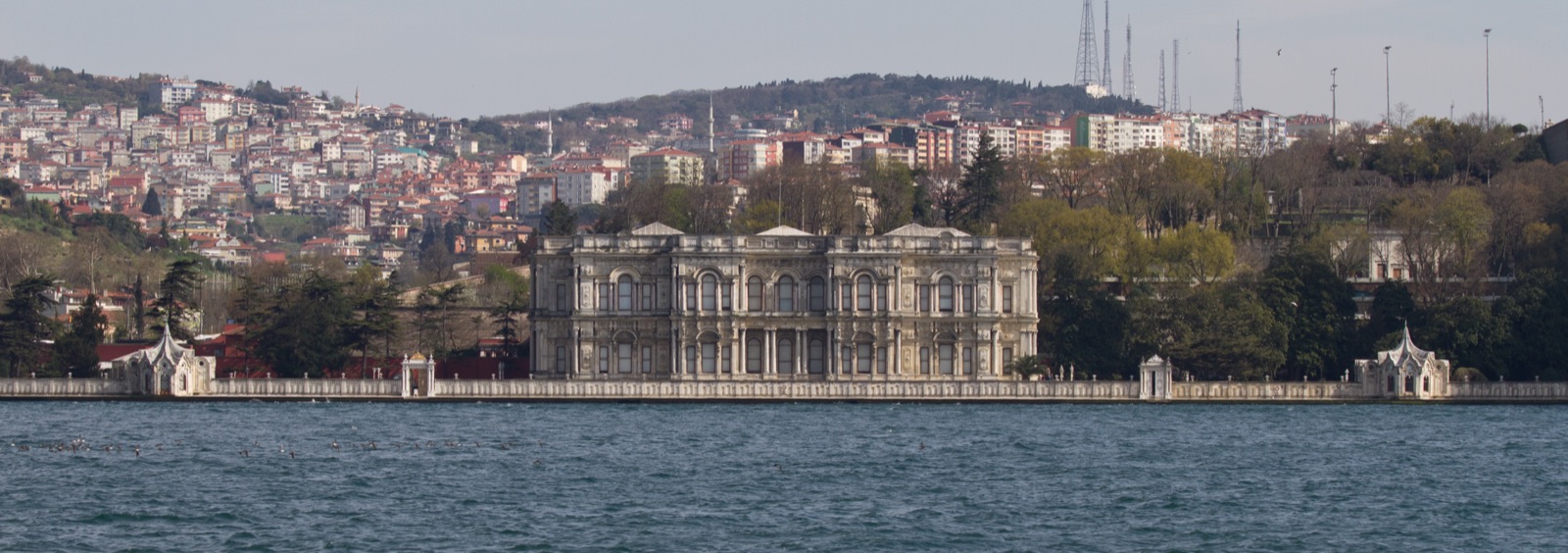
Small pavilions, the so-called Deniz Köşkleri, stand right on the water. They connect palace architecture directly with the Bosphorus. From the water, the palace was, in fact, at least as important as from the road. State guests could arrive by boat, and the sultan often travelled the Bosphorus himself.
The gardens rise up the hillside in terraces. Further pavilions and a large pool area sit there. Despite its relatively compact main facade, Beylerbeyi therefore has a larger landscaped estate than you'd initially assume from the water.
Abdülhamid II After His Deposition
Abdülhamid's last years give the palace a meaning completely different from its original role as a summer residence and guesthouse. After his deposition in 1909, the former sultan was first taken to Thessaloniki. As the political situation in the Balkans grew more uncertain, he returned to Istanbul in 1912 and was housed at Beylerbeyi Palace. He lived there under supervision until his death in 1918. A representative palace, where foreign rulers had once been received, thereby became the residence of a deposed monarch.
This situation was neither an ordinary prison nor a free private life. Abdülhamid had servants, family members, and an appropriate household at his disposal, but could no longer act politically like a reigning sultan. His final years fell in a period when the empire he'd ruled for more than three decades was being shaken by the Balkan Wars and the First World War. From the palace, he witnessed territories being lost and the political order that had produced him dissolving further and further.
That's exactly why it's worth not treating Beylerbeyi merely as "a small Dolmabahçe on the Asian side." Its architecture is indeed shaped by the same 19th-century courtly world, but its biography is different. State guests were housed here, Eugénie of France spent part of her Istanbul stay here, and, finally, the life of one of the most controversial sultans of late Ottoman history ended here. These different uses lie layered within the same building, explaining why rooms that feel calm and decorative today can be so politically charged.
In 1909, Sultan Abdülhamid II was deposed following the political events of the Second Constitutional Era. He was first taken to Thessaloniki. As the Balkan Wars threatened the city, he was brought back to Istanbul in 1912.
He wasn't, however, allowed to return to his former power base at Yıldız. Instead, he lived at Beylerbeyi Palace under supervision. He spent the last six years of his life there and died in 1918.
Knowing this history changes the palace's atmosphere considerably. The very place where international monarchs had been ceremonially received became the final residence of a former sultan who had controlled his empire from Yıldız for decades and now had barely any political freedom left himself.
What's Still Original Today
Milli Saraylar preserves the palace as a museum palace with historical furnishings. Furniture, carpets, clocks, and decorations therefore convey a far stronger sense of the 19th century than in buildings completely refurnished after fire or destruction.
Still, even here, "original" shouldn't be confused with "untouched since 1865." Restorations, conservation measures, repairs to the Bosphorus shoreline, and changes to technical systems were necessary. Buildings right on the water, in particular, are exposed to moisture, salt, and earthquake stress.
A Summer Palace Without a European Summer Fairy Tale
The term "summer palace" sounds like a holiday. For a sultan, though, a seasonal move didn't mean government and court duties suddenly paused. Administration, staff, security apparatus, and communication all had to move along too. A palace like Beylerbeyi therefore needed complete infrastructure, despite its more relaxed waterside setting.
The Bosphorus did offer real climatic advantages in summer. Wind and water made the heat more bearable than in densely built areas. At the same time, boats could connect the court quickly with other residences. Moving by water was often more pleasant and more prestigious than travelling over poor roads.
That explains why an entire chain of palaces, pavilions, and yalıs arose along the Bosphorus in the 19th century. The waterway was no mere backdrop, but the court's transport artery.
Eugénie, Abdülaziz, and the Stage of International Diplomacy
The French Empress Eugénie's visit in 1869 took place at a time when the Ottoman Empire was struggling for recognition as a European great power. The Crimean War lay only a few years behind, the Tanzimat reforms were meant to modernise the state, and the Suez Canal was opening new global trade routes.
Eugénie's stay was therefore more than social glamour. Every reception, every carriage, and every palace room was part of a diplomatic performance. Ottoman hosts wanted to show that Istanbul was neither backward nor isolated. European guests, in turn, often viewed the court through exoticising expectations.
Beylerbeyi was perfect for this encounter. Its architecture felt European enough to be familiar, and Ottoman enough to give guests the sense of a special "Oriental" experience. This very mix was politically useful.
Abdülhamid's Last Years: Loss of Power in Detail
That Abdülhamid II ended up here, of all places, changes the palace more than any description of furniture could. In 1909, he'd still commanded a huge information network and a sealed-off court at Yıldız. Just a few years later, he lived at Beylerbeyi under surveillance, without political decision-making power.
He occupied himself with carpentry, reading, and family life, while outside the palace his empire was being shaken by the Balkan Wars and the First World War. He died in February 1918, only months before the Ottoman Empire itself collapsed militarily.
The palace thereby became, unintentionally, a place where the end of one political life and the end of an entire era almost touch.
Garden Architecture and the View From the Water
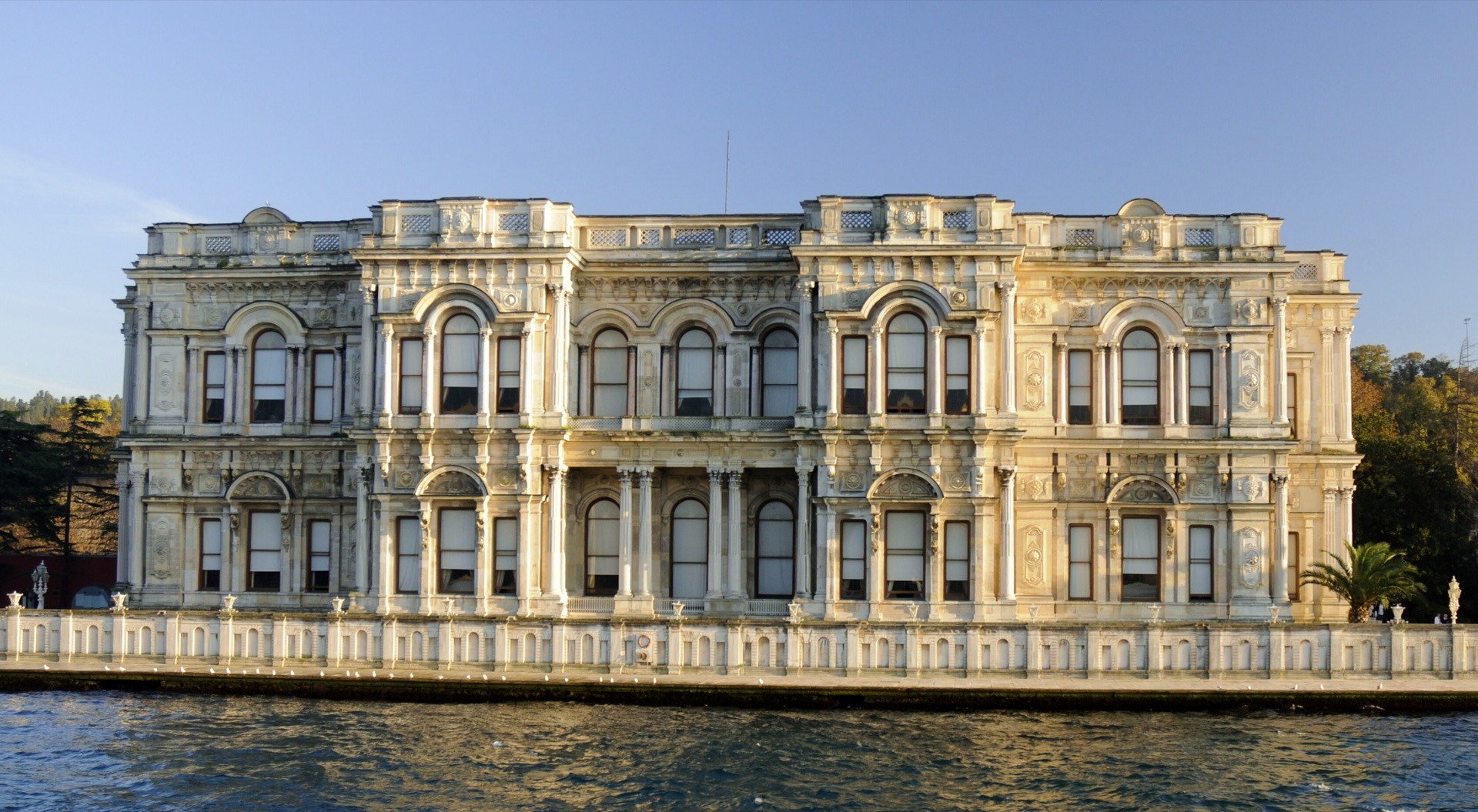
Beylerbeyi wasn't designed to be experienced only from inside. Much of the complex's effect unfolds from the Bosphorus. Its symmetrical facade, small waterfront pavilions, and terraced gardens form a representative front for arriving guests. In an era when high-ranking visitors often arrived by boat, the water side was, in a sense, the real entrance facade.
The higher garden areas, with pavilions and a large pool, show at the same time that the palace was meant to function as a seasonal retreat. You could withdraw from the official rooms without leaving the secured court grounds. This mix of representation and retreat clearly sets Beylerbeyi apart from a purely ceremonial reception palace.
Why Beylerbeyi Is Often Underestimated Today
Compared to Dolmabahçe, Beylerbeyi feels smaller and less overwhelming. That's exactly why many visitors skip the palace. Historically, that's a shame, because its smaller scale actually makes its use easier to read, in some ways. You can more easily picture how state guests were received, how official and private areas were separated, and how the Bosphorus functioned as a transport route.
The palace is also one of the best examples of how strongly the Asian side was woven into the Ottoman court landscape. The political centre often lay on the European side, but residences, gardens, and summer retreats spread across both shores. Beylerbeyi is therefore no minor palace at the edge, but part of an entire system of Bosphorus residences.
"Beylerbeyi was Abdülhamid's main palace during his reign." False. He ruled mainly from Yıldız. Beylerbeyi only became his final residence after his deposition.
"Empress Eugénie really did stay here." Fact. Her 1869 visit is one of the palace's well-documented state visits.
"Beylerbeyi is simply a smaller copy of Dolmabahçe." No. Both belong to the same era, but served different functions and have a different spatial organisation.
- If you want to visit the palace on the Asian side of Istanbul, you can view current tickets and available tours here.
- View tickets & tours for the Beylerbeyi Palace
My Thought on This Place
I find Beylerbeyi fascinating precisely because the palace doesn't need to be as overwhelming as Dolmabahçe to tell great history. Emperors and empresses were received there, diplomacy was conducted, and the empire was represented. Later, of all people, Abdülhamid — who'd been sultan for 33 years before that — lived out his last years there as a deposed ruler.
Sometimes history doesn't need a giant throne room at all. It's enough to know who once walked through a room, and how radically their life had changed by the time they stood there a second time.
– Amra