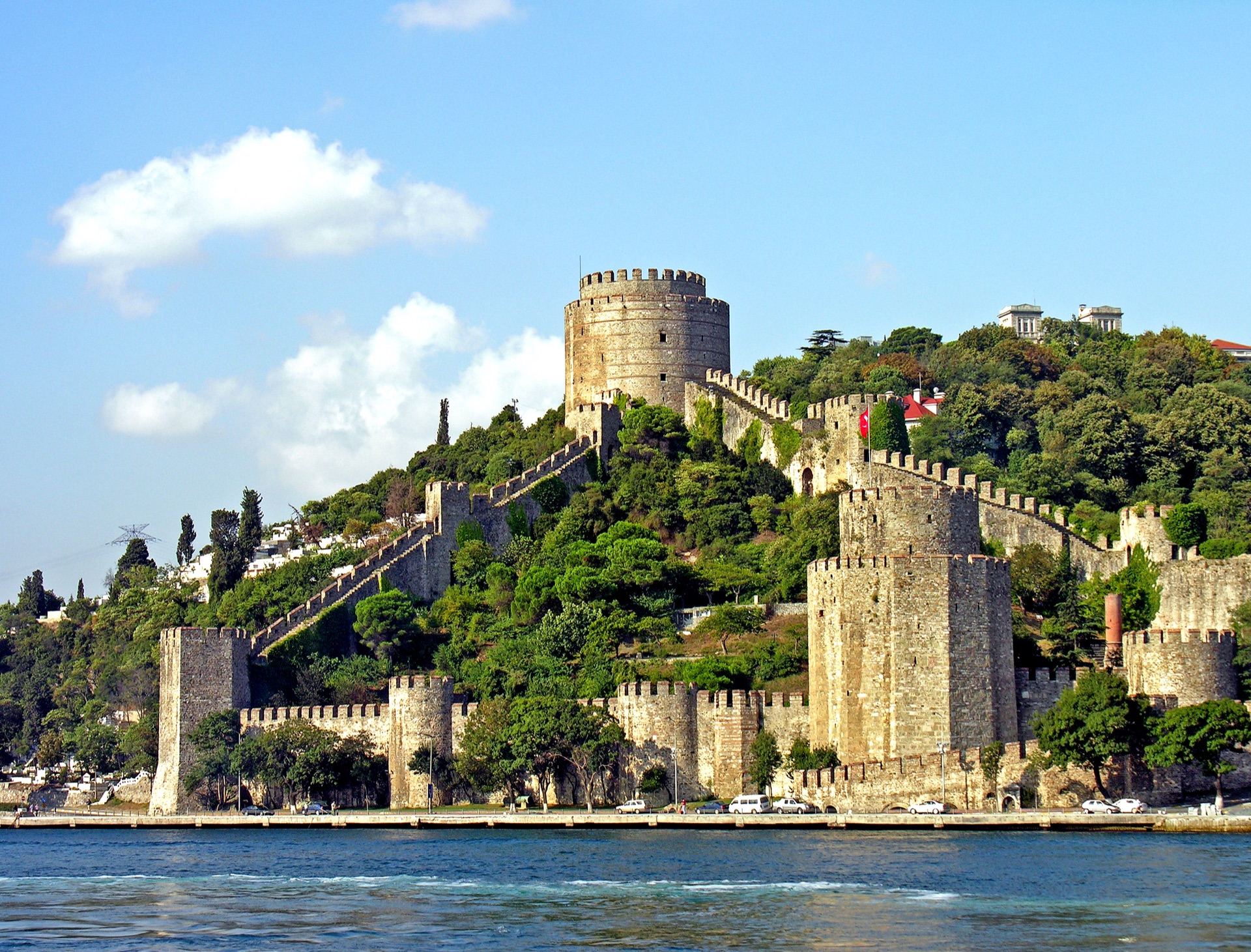

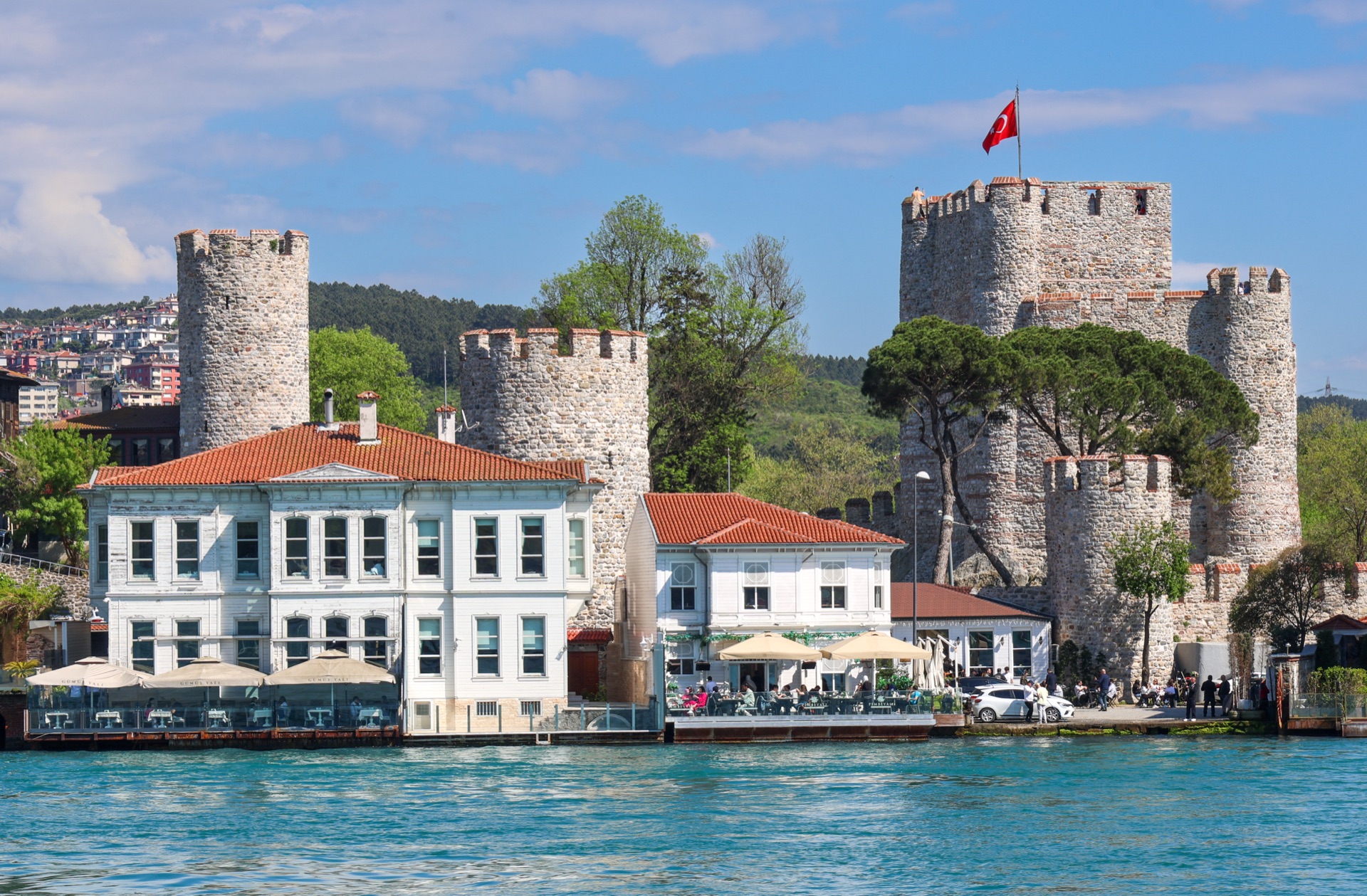
Rumeli Hisarı usually gets all the attention, since Mehmed II had the huge fortress built in 1452, right before his conquest of Constantinople. On the Asian side of the Bosphorus, though, a smaller fortress had already stood for decades by that point: Anadolu Hisarı. It was built under Sultan Bayezid I toward the end of the 14th century and belonged to an earlier Ottoman attempt to gain stronger control over the Byzantine capital.
Advertising: If you book through our links, we may receive a commission – at no extra cost to you.
Rumeli Hisarı usually gets all the attention. On the Asian side of the Bosphorus, though, a smaller fortress had already stood decades earlier: Anadolu Hisarı, built under Sultan Bayezid I.
The location is strategically excellent. The Bosphorus narrows sharply here, and whoever controls both shores can threaten ships or force them to submit to control. Mehmed II understood exactly what his great-grandfather had started: in 1452, he set Rumeli Hisarı directly opposite it, turning the strait into a far denser military control system.
- Anadolu Hisarı was built under Bayezid I toward the end of the 14th century.
- It is considerably older and smaller than Rumeli Hisarı.
- Its construction was meant to strengthen Ottoman control of the Bosphorus and pressure Constantinople.
- Bayezid besieged, or blockaded, Constantinople over an extended period, but couldn't conquer the city.
- In 1402 he was crushingly defeated and captured by Timur at Ankara.
- Mehmed II had the complex reinforced before 1453 and built directly opposite it at Rumeli Hisarı.
- After the conquest, Anadolu Hisarı lost part of its original strategic significance.
Bayezid I and the Ottoman Empire before 1400
Bayezid I, known as Yıldırım — the Thunderbolt — reigned from 1389 to 1402. Under him, the Ottoman Empire expanded rapidly in the Balkans and in Anatolia. The Byzantines by this time controlled only a fraction of their former territory, while Constantinople was increasingly surrounded by Ottoman land.
Bayezid wanted to isolate the city further. A complete conquest, though, was more difficult than a map might suggest. Constantinople had powerful land walls, access to the sea, and diplomatic ties to Western powers. As long as supply ships could still arrive and no sufficiently strong Ottoman fleet controlled all sea traffic, the city remained resilient.
Why Constantinople didn't yet fall at that time
Bayezid pressured Constantinople over several years and set up blockades. Emperor Manuel II Palaiologos sought support in the West. In 1396, a large crusader army under the Hungarian king Sigismund arrived in the region, but was crushingly defeated by Bayezid at Nicopolis.
Despite this victory, Constantinople didn't fall. Ottoman resources were tied up on several fronts, and in the east, Timur was emerging as a far greater danger.
It's exactly here that you see the fall of 1453 wasn't simply "overdue." The Byzantine Empire was weak, but under certain international conditions Constantinople could still survive for decades.
The founding of Anadolu Hisarı
Bayezid had a fortress built on the Asian side of the Bosphorus, initially also called Güzelce Hisar. Its core consisted of a massive main tower and surrounding walls. The complex was much smaller than the later Rumeli fortress.
Its task was above all control. Ships sailing from the Black Sea toward Constantinople had to pass through a narrow point where Ottoman troops were present. The fortress made Bayezid's pressure on the city permanently visible.
Why this exact stretch of the Bosphorus mattered
Anadolu Hisarı sits near the mouth of the Göksu stream, almost directly across from the later Rumeli Hisarı. Here the Bosphorus is only about 700 meters wide. Current and a narrow channel make ship maneuvers even more difficult.
In the 14th century, a single fortress still couldn't hermetically seal the entire Bosphorus. Guns were less powerful, and the European side wasn't fortified in the same way under Ottoman control. Even so, the location's strategic value was obvious.
Timur and the catastrophe of Ankara in 1402
Bayezid's plans against Constantinople weren't ended by Byzantium itself, but by an opponent from Central Asia. Timur, often called Tamerlane in Europe, had built up a huge empire and clashed with Bayezid over Anatolian principalities.
In 1402, the two armies met at Ankara. Bayezid was crushingly defeated and taken captive. He died the following year.
The Ottoman Empire then temporarily fell into a civil war between Bayezid's sons, the so-called Interregnum. Constantinople gained, as a result, a reprieve of several decades.
Bayezid's siege and Constantinople's staying power
Bayezid I repeatedly pressured Constantinople in the 1390s. Instead of a single continuous storm assault, there were phases of blockade, military threat, and negotiation. The Byzantines had to pay tribute and make concessions. At the same time, Emperor Manuel II tried to organize international help.
This shows that a medieval siege didn't consist only of catapults and ladders. Diplomacy, supply, alliances, and patience could matter just as much. Bayezid wanted to isolate the city economically and politically without permanently grinding down his army in front of its walls.
Anadolu Hisarı fit exactly into this strategy. A permanent Ottoman presence on the Bosphorus made the pressure constant. Even if the fortress couldn't stop all shipping traffic, it signaled that the sultan increasingly wanted to control access to the city.
The crusader campaign of Nicopolis
Growing Ottoman power alarmed European rulers. In 1396, a large crusader army with French, Burgundian, Hungarian, and other troops marched against Bayezid. The goal, among others, was to push back Ottoman pressure on the Balkans and Constantinople.
At Nicopolis on the Danube, the campaign ended in a heavy defeat. Disunity among the Christian contingents, tactical mistakes, and Bayezid's strength all contributed. Many high-ranking prisoners were released for ransom, other fighters killed.
For Constantinople, the outcome was ominous. The great Western relief effort had failed. Even so, the city wasn't conquered by Bayezid a few years later, because the threat from the east suddenly became more important.
The Ottoman Interregnum and the city's unexpected reprieve
After Bayezid's defeat by Timur in 1402, his sons fought for years over succession. This Fetret Devri, the Interregnum, lasted until 1413. The Ottoman Empire didn't fully collapse, but was internally so occupied that Constantinople gained considerable room to maneuver.
Byzantine emperors even intervened in the fighting between Ottoman princes, supporting different candidates at various times. An empire that had previously been almost completely enclosed by the Ottomans briefly became a political factor again.
Only Mehmed I restored Ottoman unity. His son Murad II besieged Constantinople again in 1422, but failed. So it took more than half a century after Bayezid's Anadolu Hisarı before the city actually fell.
Mehmed's expansion before 1453
Mehmed II knew that a single small fortress on the Asian side wasn't enough. He had Anadolu Hisarı expanded and fitted with additional walls and gun positions. Even more important was the construction of Rumeli Hisarı directly opposite it.
The difference between the two fortresses is therefore itself historical information. Anadolu Hisarı looks smaller and older; Rumeli Hisarı, monumental and systematically planned. One belongs to a long-term attempt at pressure; the other, to a concretely prepared final offensive.
The Bosphorus as a supply lifeline
Ships from Genoese Black Sea ports and other regions could bring grain, weapons, or soldiers to Constantinople. Whoever controlled the Bosphorus was thus attacking not just trade, but the city's ability to survive.
In 1452, Mehmed showed, by sinking a Venetian ship with Rumeli Hisarı's guns, that this control was meant seriously. Anadolu Hisarı on the opposite side rounded out this show of threat. The strait thus became a kind of military gate.
Today's neighborhood and the vanished military landscape
Today, Anadolu Hisarı sits among houses, streets, cafés, and the Göksu stream. The medieval fortress therefore looks smaller than it was strategically. In the 14th century there was no modern development, no bridges across the Bosphorus, and no dense car traffic. The tower dominated a much more open landscape.
That's exactly why it's worth viewing the site from the water. From a ferry or a Bosphorus cruise, you immediately see how closely the two fortresses face each other, and why Mehmed chose this point for his blockade.
What to pay attention to when comparing it with Rumeli Hisarı
If you can visit both fortresses, or see them from the water, don't just compare their size. Anadolu Hisarı has a more compact core and feels more like a medieval castle. Rumeli Hisarı, by contrast, was built under enormous time pressure as a large-scale artillery and control system. The differing architecture thus directly narrates the development of Ottoman military technology between the late 14th and mid-15th centuries.
The surroundings also help understanding. Imagine the Bosphorus without modern bridges, high-rises, and dense ship traffic. A passing merchant ship had to navigate a narrow current and suddenly found itself between fortified shores. That's exactly where the strategic value lay.
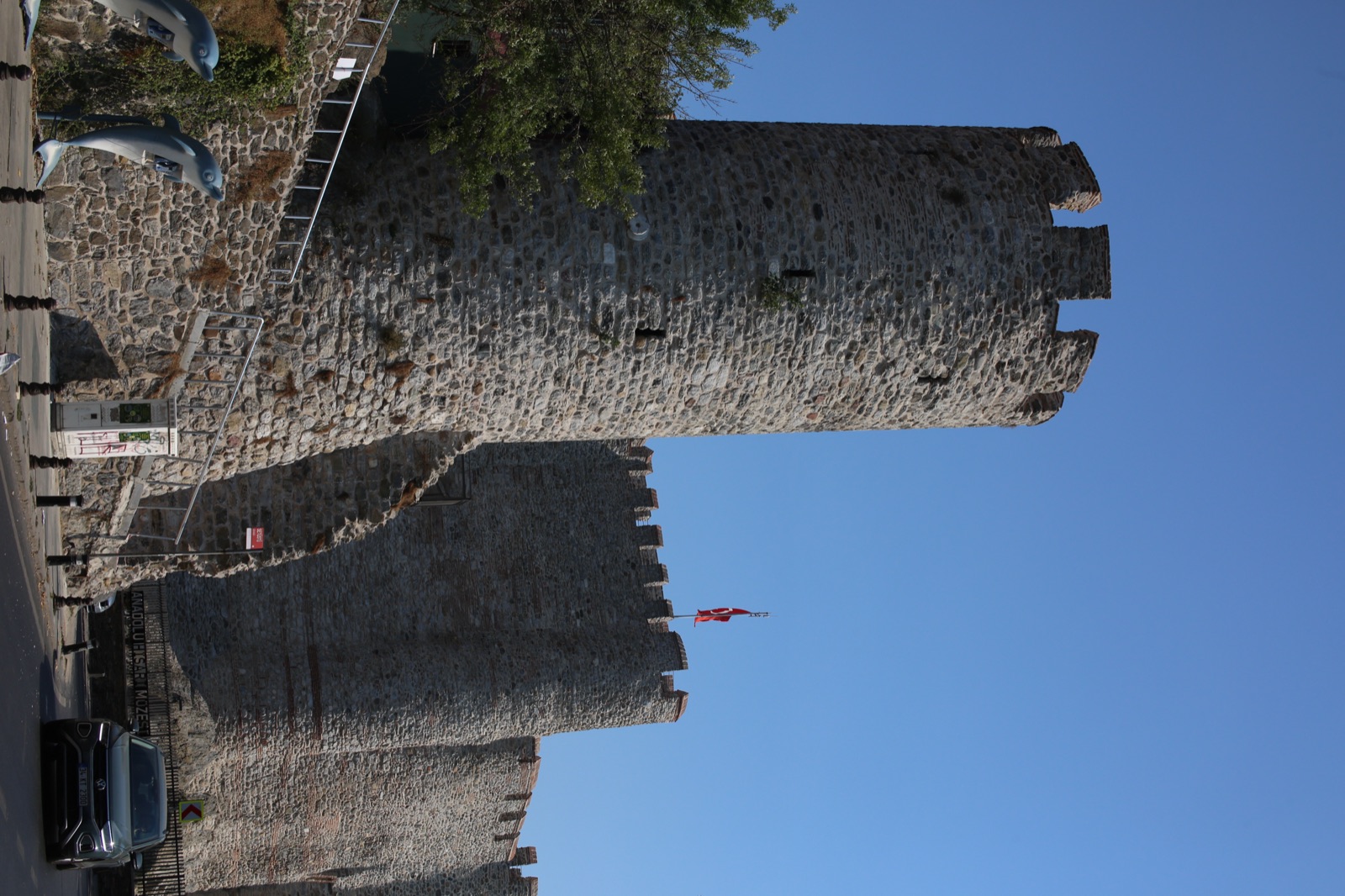
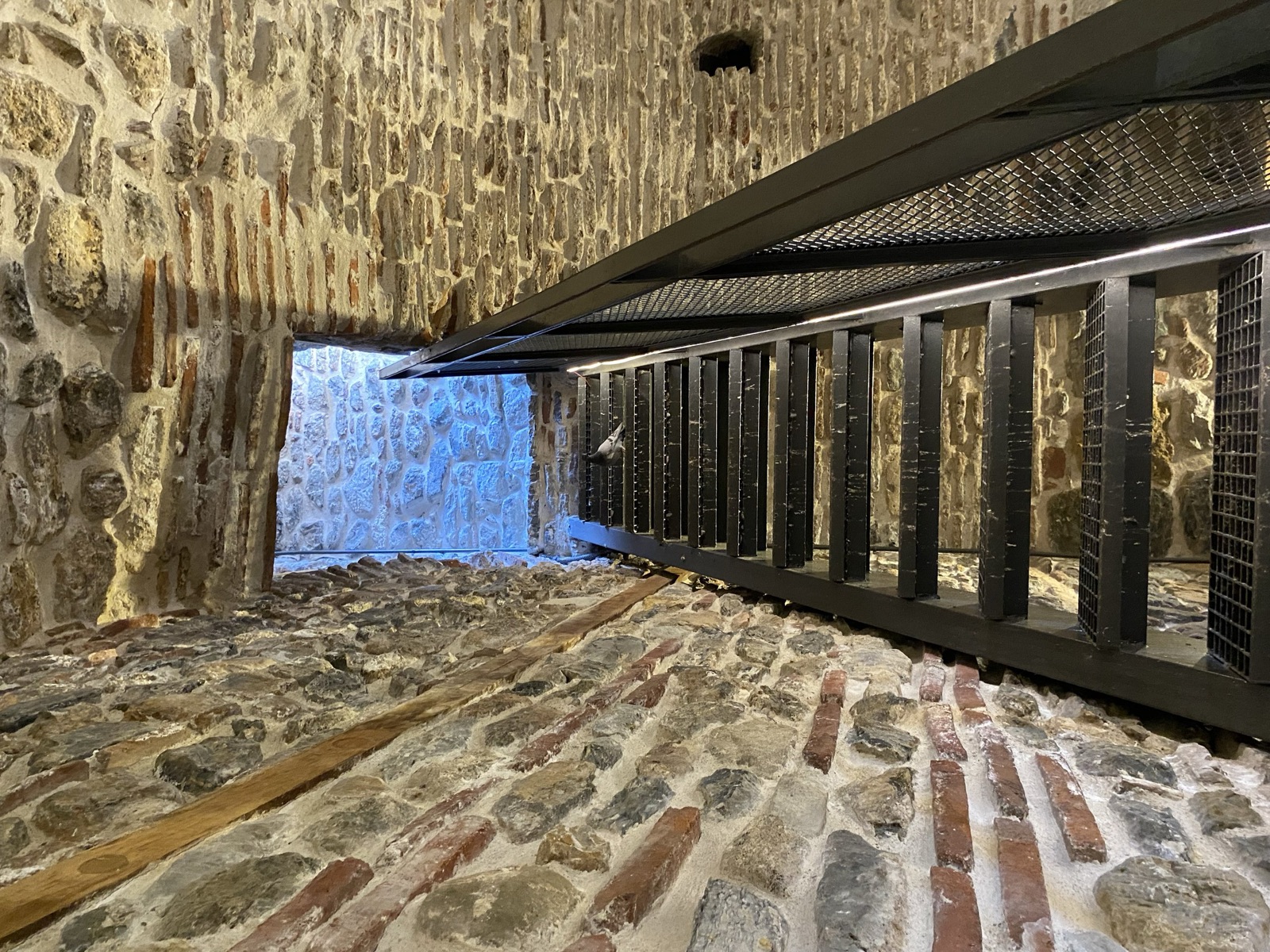
Today, Anadolu Hisarı is strongly integrated into the residential neighborhood. That makes the fortress less monumental, but perhaps even more interesting: you see how a military complex, after losing its function, gets practically grown over by a city.
The fortress after 1453
After the conquest of Constantinople, the Bosphorus remained strategically important, but Anadolu Hisarı lost its role as a direct means of pressure against an enemy capital. The Ottoman city now lay on both sides of its own empire. The fortress continued to be used militarily, but was later increasingly surrounded by civilian development.
With modern artillery and changing warfare, the small medieval core eventually became militarily obsolete. Even so, it survived as a place name and landmark. The neighborhood essentially took on the name of its fortress.
Why Anadolu Hisarı still matters for 1453
In many accounts, Mehmed's preparation only begins in 1452, with Rumeli Hisarı. Anadolu Hisarı shows that the strategic idea was much older. Ottoman rulers had already recognized the Bosphorus, decades earlier, as the key to isolating Constantinople.
In that sense, the fortress connects Bayezid I and Mehmed II across several generations. It is, in a way, the first half of a plan that only fully worked much later.
"Timur kept Bayezid in an iron cage and used him as a footstool." This famous story comes mainly from later hostile, or dramatizing, traditions. Bayezid was Timur's prisoner, but the spectacular cage stories are considered heavily embellished.
Mehmed II completes the old fortress
When Mehmed II wanted to conquer Constantinople decades later, he recognized the location's significance again. Anadolu Hisarı was expanded, or reinforced. Then, in 1452, Mehmed had the far larger Rumeli Hisarı built on the European side.
This created a pair of fortresses. Cannons on both sides could control shipping traffic in the strait far more effectively than Bayezid's older complex alone.
Anadolu and Rumeli Hisarı as a pair
The two fortresses look completely different because they come from different strategic situations. Anadolu Hisarı is the older, more compact attempt of an expanding empire. Rumeli Hisarı is the gigantic preparation of a sultan who genuinely intended to attack within a year.
Together, they tell us that 1453 was no spontaneous decision. The Ottoman encirclement of Constantinople had a backstory spanning generations.
What survives of the medieval complex
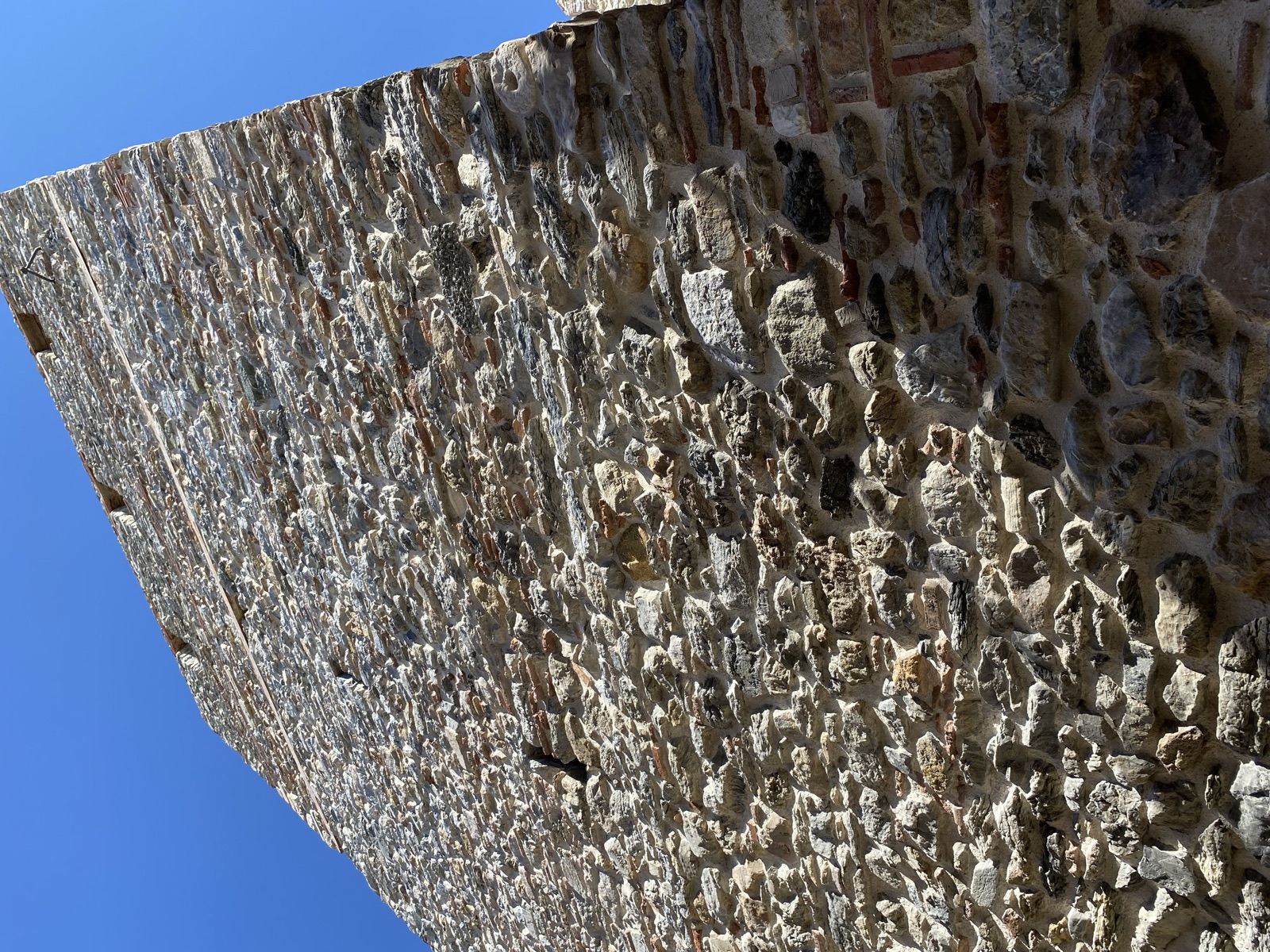
The main tower and remains of walls survive, but were altered and restored over the centuries. Later residential development grew right up against the fortress. This created an unusual picture: medieval military architecture in the middle of Bosphorus houses and the modern city.
Not every wall section visible today is unchanged from Bayezid's time. Mehmed's expansions, Ottoman repairs, and modern restorations are all part of the visible complex.
- Here you'll find current Bosphorus cruises, dinner cruises and guided tours.
- View Bosphorus tours & tickets
My take on this place
I find Anadolu Hisarı especially fascinating because it tells the story before the famous story. We always talk about Mehmed II, 1453, and Rumeli Hisarı. But his great-grandfather already faced practically the same problem: how do I bring Constantinople under control?
And then Timur comes along, defeats Bayezid at Ankara, and shifts history by decades. That's exactly what I love about history: nothing was inevitable. It could have gone differently.
You see the fortress at the narrowest point of the Bosphorus best on a trip on the water. Here are suitable tours.
– Amra