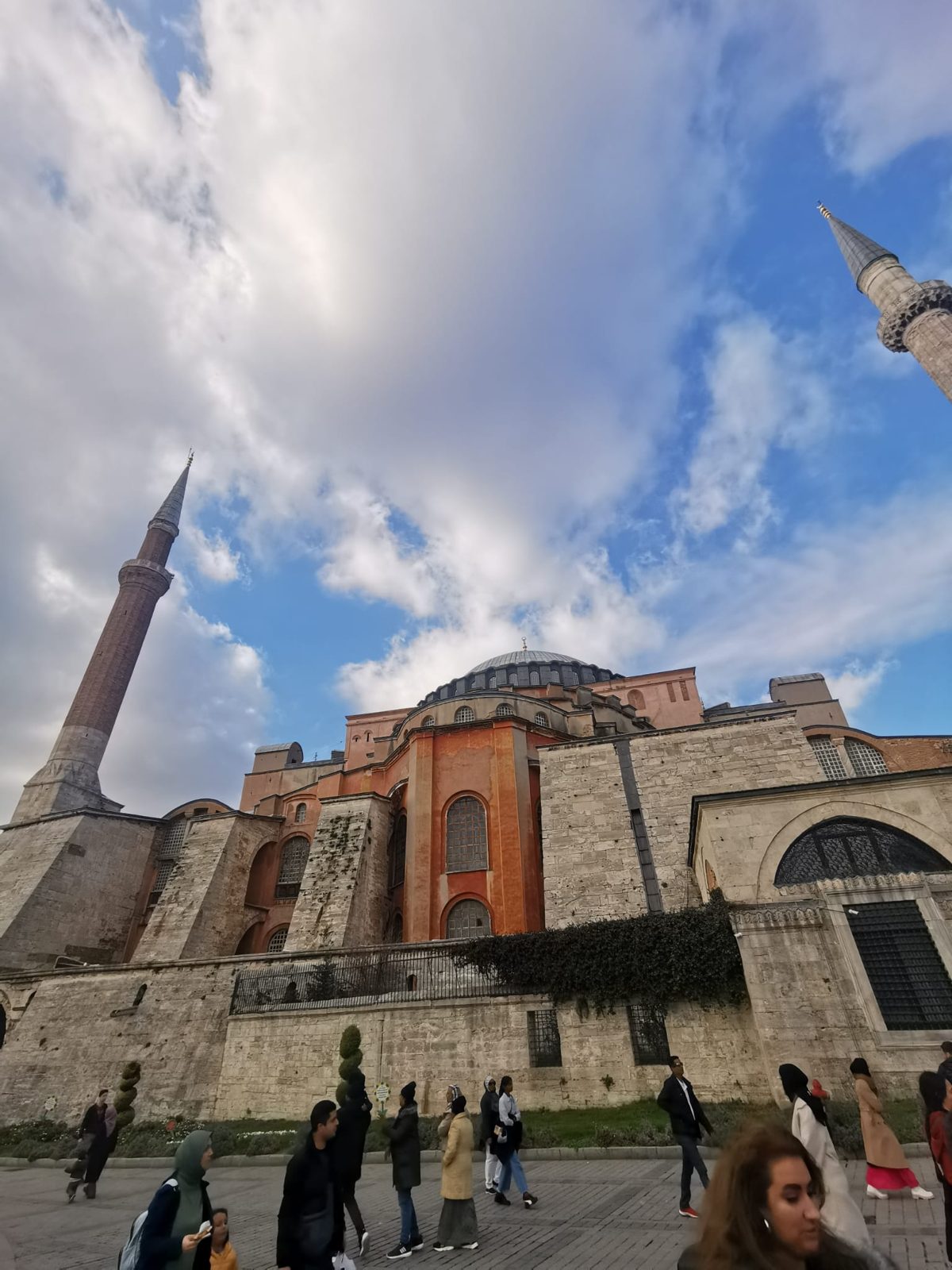

The name "Little Hagia Sophia" is a little misleading. The building wasn't erected as a miniature version of the great Hagia Sophia, and it didn't originally carry this name either. It was the Church of Saints Sergius and Bacchus, built under Emperor Justinian and Theodora in the 6th century. In fact, it was completed a few years before today's great Hagia Sophia.
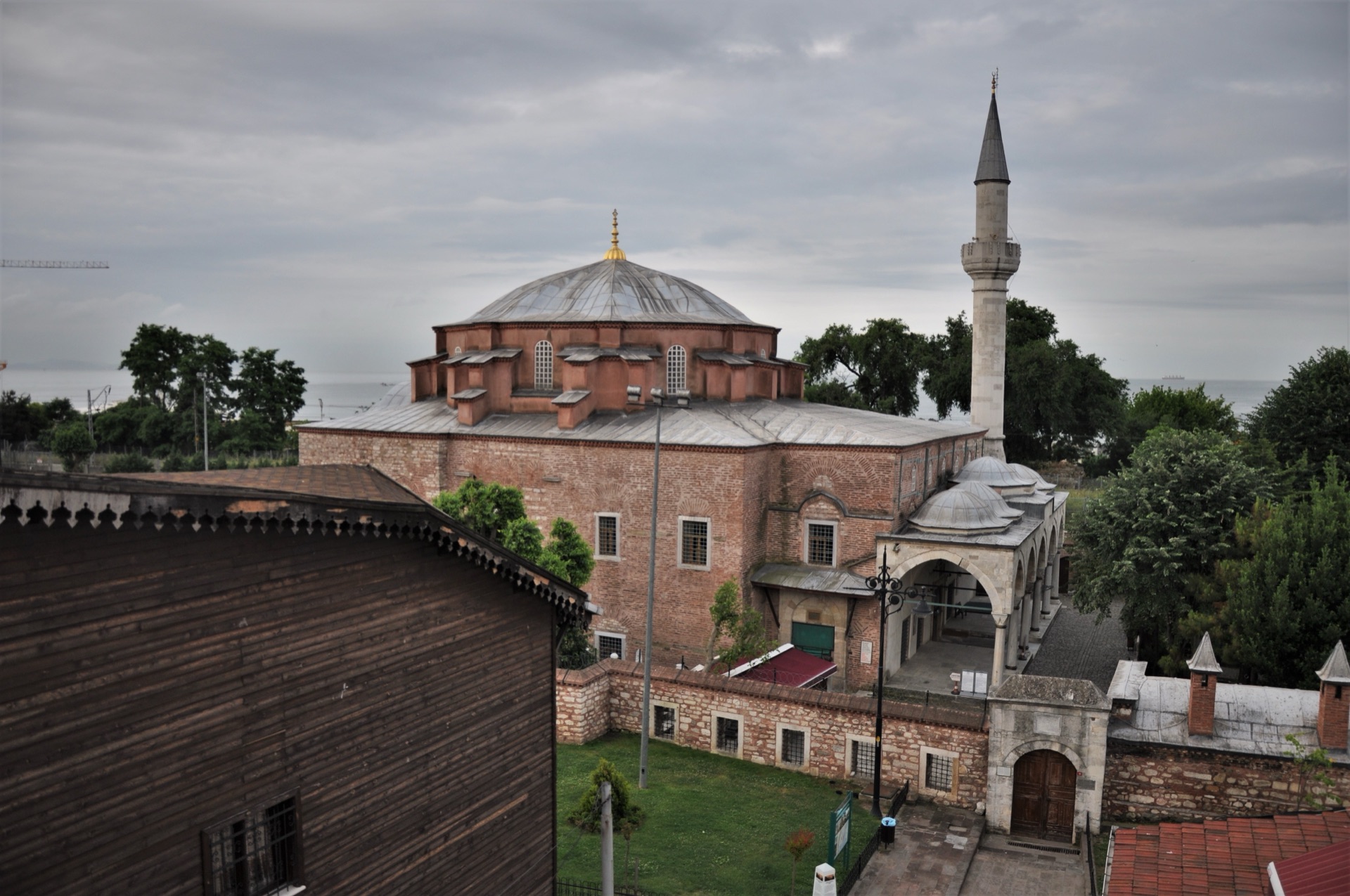
The name is a little misleading. The building was the Church of Saints Sergius and Bacchus, built under Emperor Justinian and Theodora — and completed a few years before the great Hagia Sophia.
It's exactly this closeness in time that makes the building so fascinating architecturally. Its centralized interior, the dome, and the refined geometry belong to that experimental phase of Justinianic architecture in which Constantinople developed entirely new spatial effects. After the Ottoman conquest, the church initially remained Christian and was only converted into a mosque around 1500. Today it carries the name Küçük Ayasofya Camii.
- The Little Hagia Sophia was originally the Church of Saints Sergius and Bacchus.
- It was built under Justinian I and Theodora in the 6th century, even before today's great Hagia Sophia.
- Its central domed space is one of the significant experiments of early Byzantine architecture.
- It is not simply a scale-model preliminary study for the Hagia Sophia.
- After 1453 it initially continued as a church.
- Around 1500 it was converted into a mosque under Hüseyin Ağa.
- The railway line and modern urban development additionally strained the historic structure.
- UNESCO counts Küçük Ayasofya among the important monuments of Istanbul's historic areas.
Who Sergius and Bacchus were
Sergius and Bacchus were Christian military saints whose cult was especially widespread in the eastern Mediterranean in late antiquity. According to tradition, they served as Roman soldiers and were persecuted and killed for their Christian faith.
Their historical biography can't be verified in every detail. What matters is that their cult held enormous significance in the 5th and 6th centuries. Churches were dedicated to them in various regions of the Byzantine Empire.
Justinian, Theodora, and the founding of the church
The church was likely built between roughly 527 and 536, in the area of the Palace of Hormisdas, where Justinian had lived before his accession. So it stood in the immediate vicinity of imperial spaces and was by no means some small suburban church.
Several founding legends are tied to the emperor. One tells that Justinian had been sentenced to death under Emperor Anastasius over an alleged conspiracy. Saints Sergius and Bacchus supposedly appeared to the emperor in a dream and testified to his innocence. Later, out of gratitude, Justinian is said to have had their church built.
This dramatic dream story can't be historically verified. It's a typical saint's legend that ties together patron, divine protection, and endowment.
Why the building is so architecturally unusual
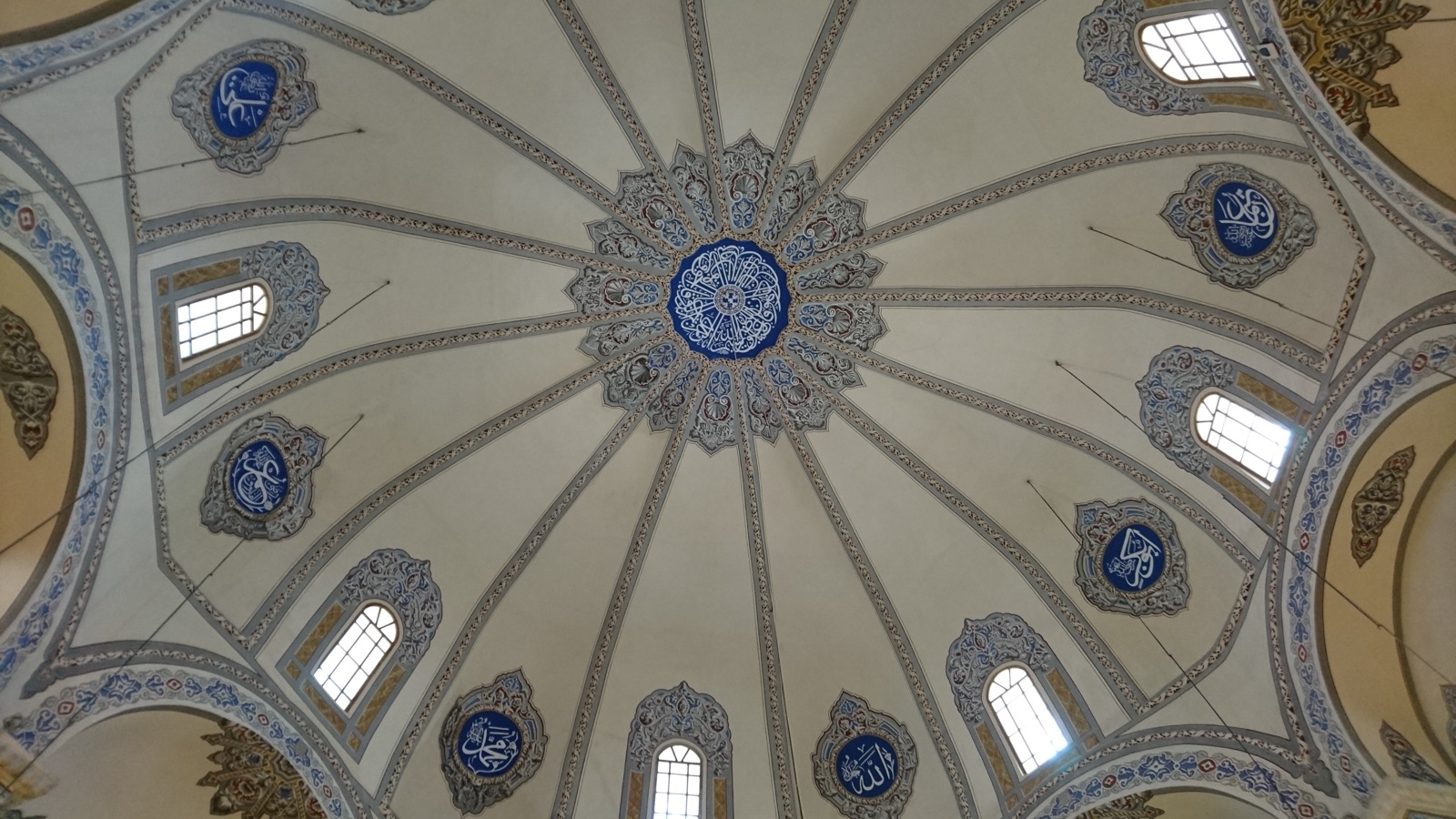
From the outside, the building looks relatively compact. Inside, though, a complex central space opens up. Eight large piers or supports form an octagonal core, over which a dome sits. Between the load-bearing elements, alternating straight and curved sections of space emerge.
A surrounding gallery extends the interior. Especially important is the richly decorated frieze bearing a Greek inscription that praises Justinian and Theodora. This text is valuable because it records the imperial endowment directly within the building itself.
The space differs markedly from a classic elongated basilica. Instead of drawing the eye exclusively eastward, it creates a strong sense of centrality.
Is it really a prototype for the Hagia Sophia?
Because the church was built a few years before the great Hagia Sophia and likewise has a dome over complex geometry, it's often called a "prototype" or test building.
The Little Hagia Sophia in the context of Justinian's building program
Justinian's reign was marked by enormous building activity. Alongside the great Hagia Sophia, his architects built or renewed churches, cisterns, palaces, fortresses and infrastructure in many parts of the empire. Architecture here wasn't merely decoration. It carried a political message: after internal crises and wars, the Roman Empire was to be visibly renewed as a Christian world power.
Sergius and Bacchus belongs in this context. The building shows that the architects of the 520s and 530s were experimenting intensively with centralized domed spaces. The church of San Vitale in Ravenna, built in roughly the same era, likewise shows how popular complex central-plan buildings were within the Justinianic cultural sphere. These buildings shouldn't be read as copies of one another, but as different answers to similar architectural questions.
Especially fascinating is the combination of load-bearing structure and decorative lightness. The lower arcade zone, the gallery, and the curved sections of space make the heavy dome feel less massive. The space keeps changing as you walk through it, because columns and niches open up different sightlines. That very movement is often completely missing from photographs.

The famous donor inscription
The Greek inscription frieze inside is one of the most important surviving elements. It names Justinian and Theodora and links their endowment to Saints Sergius and Bacchus. Such inscriptions were politically significant: they recorded who financed the building and what piety the ruler claimed for himself.
The mention of Theodora is especially interesting. She was not just Justinian's wife, but a politically active empress. Her origins were unusually low for a Byzantine ruler; Procopius painted an extremely hostile picture of her in his "Secret History." Other sources, by contrast, show her strong standing at court and her own religious patronage.
The church is thus also a reminder that imperial architecture was almost always family politics too. Justinian and Theodora wanted to remain visible together in the urban landscape.
Religious conflicts within Christianity
In the 6th century, Christians argued fiercely over the nature of Christ. Questions that sound abstract to outsiders today had enormous political consequences at the time. Chalcedonian and Miaphysite positions stood opposed to each other, bishops were deposed, congregations split, and emperors tried to engineer theological unity politically.
Theodora is said to have given protection to Miaphysite clergy, while Justinian was officially oriented more toward the Chalcedonian imperial church. The exact role of the Church of Sergius and Bacchus within these networks is complex, but its surroundings were part of this religious politics.
This matters, because otherwise we easily view "Byzantine Christian" as one perfectly uniform world. In reality, Christian groups fought each other bitterly — long before 1054 is taken as the symbolic date of the split between Rome and Constantinople.
Ottoman additions you can deliberately spot
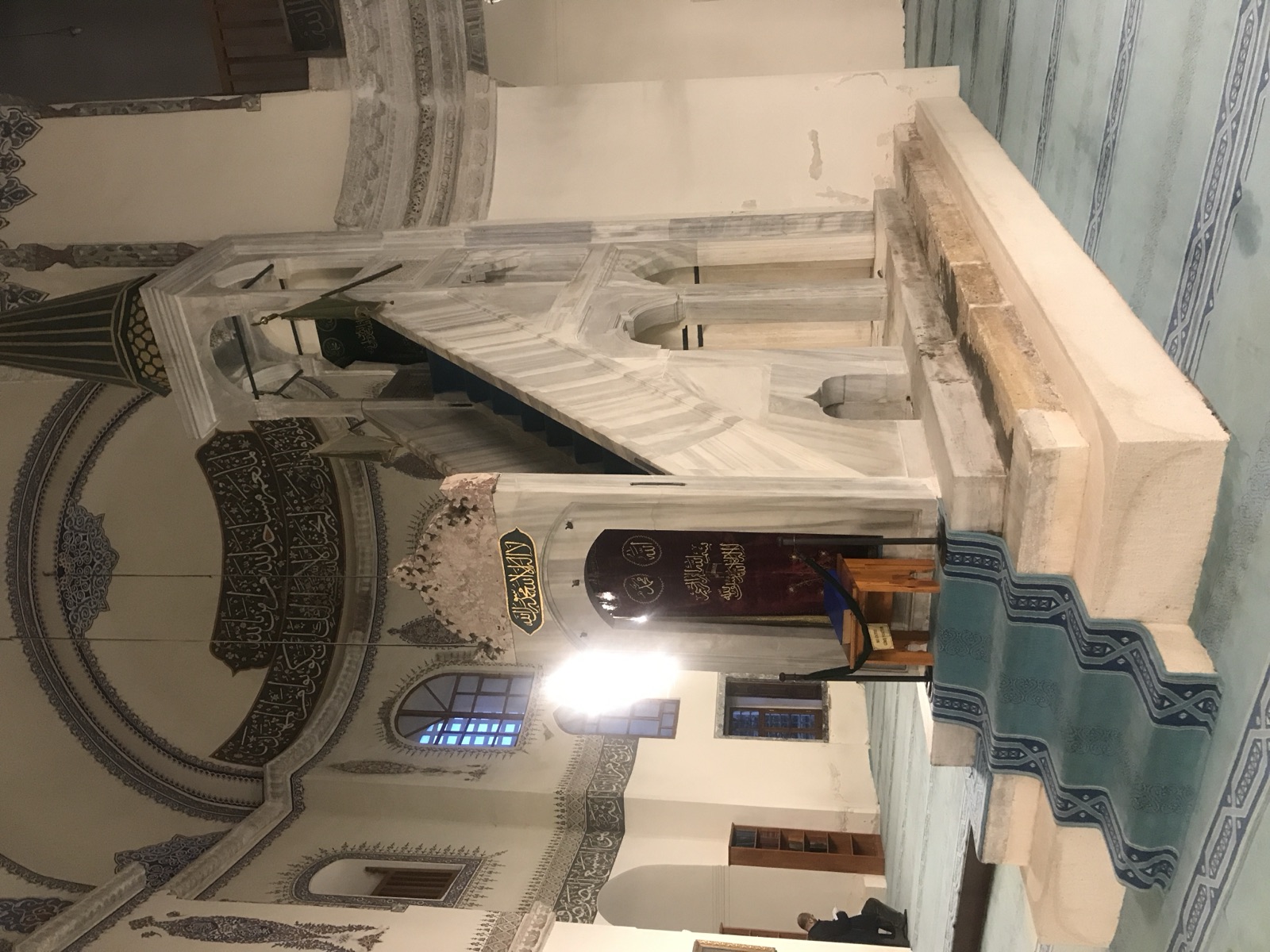
With its conversion into a mosque, a mihrab, minbar and minaret were added. Windows, surfaces and auxiliary buildings were also altered. So anyone who looks deliberately can recognize a Byzantine central-plan building reoriented for Muslim prayer practice.
The mihrab must indicate the qibla toward Mecca, and therefore doesn't exactly follow the original Christian eastward orientation. Such small shifts tell the story of the change in use right within the space itself.
The adjoining madrasa was restored and is used today for various cultural or craft purposes. That keeps the courtyard active. At the same time, every modern use changes the historic ensemble — even heritage preservation has to somehow keep spaces functional.
Why this place is often underestimated
The Little Hagia Sophia has a marketing problem: its famous nickname makes it well known and smaller-seeming at the same time. Anyone expecting a "mini Hagia Sophia" keeps comparing it to the gigantic neighboring building and loses.
It's more interesting as a standalone 6th-century church in its own right. It shows Justinian's world before the great catastrophe and the rebuilding of 532. It survived Byzantine religious conflicts, the Fourth Crusade, the Ottoman conquest, earthquakes and modern transport construction. That alone is enough history for a monument that many visitors check off in under twenty minutes.
What you should look at deliberately in the building
Inside, it's worth first looking at the octagonal core. Don't just look up at the dome — follow how the piers, arches and gallery work together. That's exactly how you understand why the space feels so complex despite its relatively small outer dimensions. After that, look for the Greek inscription frieze, since it directly ties Justinian and Theodora to the building.
Also pay attention to the points where Christian and Islamic use meet spatially. The mihrab and minbar belong to the mosque phase, while the floor plan and large parts of the load-bearing structure are Byzantine. This combination isn't a disruptive mixed state — it's exactly the building's history.
From the outside, the Little Hagia Sophia today feels calmer, in places, than Sultanahmet's great monuments. That's exactly why it's worth taking time to look at the masonry technique, windows and dome proportions. Anyone who then goes on to the great Hagia Sophia can compare the two without mistakenly treating them as original and miniature.
A connection within the same architectural culture of experimentation is obvious. Still, the claim "Anthemius and Isidore simply tested the later Hagia Sophia here in miniature" is not documented. The attribution to the same architects isn't certain either.
The two buildings solve different spatial and structural problems. The Little Hagia Sophia can help us understand the architectural climate under Justinian, but it isn't a scaled-down test build.
What happened here in Byzantine times
The church was connected to a monastery and lay near the imperial palace area. It remained in Christian use for centuries. Its significance was smaller than that of the Hagia Sophia, but it belonged to the sacred landscape around the Great Palace and the Hippodrome.
Several earthquakes damaged the building. Restorations and rebuildings altered parts of the construction. Especially with a 6th-century building, then, any claim that you're seeing it "exactly as Justinian did" is problematic.
1204 and the Latin occupation
When crusaders conquered Constantinople in 1204, the entire area around the Great Palace and the most important churches was taken over by the new Latin rulers. For the Church of Sergius and Bacchus, no spectacular individual looting is documented with the same clarity as for the Hagia Sophia or the Church of the Holy Apostles.
Still, it stood within a city whose churches, monasteries and palaces were massively affected by the conquest. Between 1204 and 1261, Constantinople was under Latin rule; property and church arrangements were altered. That's exactly why 1204 should be mentioned without inventing specific looting stories for this building that aren't reliably documented.
From monastery to mosque
After the Ottoman conquest of 1453, the church initially remained standing. Only around 1500 did Hüseyin Ağa, a high court official under Bayezid II, have it converted into a mosque. A minaret, madrasa areas and other Ottoman facilities were added.
Christian figurative decoration, where it still existed, was covered over during the mosque's use, or was lost over time. Unlike the great Hagia Sophia, the building today has no comparable visible mosaic decoration.
The Ottoman conversion, however, preserved the building as an actively used structure. Use can alter historical substance, but it often also protects a building from complete decay.
Earthquakes, the railway, and restoration
Several severe earthquakes struck Istanbul and also damaged Küçük Ayasofya. In the 19th century, the railway was added on top of that, its route running very close to the building. Vibrations and interventions in the surroundings were long considered a strain on its structural stability.
In the 20th and 21st centuries, extensive restorations were carried out. In the process, cracks, moisture, and earlier improper interventions had to be addressed.
Today the building is an active mosque and, at the same time, a monument reaching far beyond its current religious use.
My take on this place
I like the Little Hagia Sophia especially as a historical thought experiment, because its name almost tricks us. You hear "little Hagia Sophia" and automatically think: ah, built later as a copy.
And then it turns out it's older.
Suddenly the perspective flips. You're standing in a building from the very era in which Justinian and his architects were still figuring out, for the first time, how far you could push spaces, domes and geometry. It's exactly these small surprises that make Istanbul more interesting to me than any "Top 10 sights" list.
– Amra