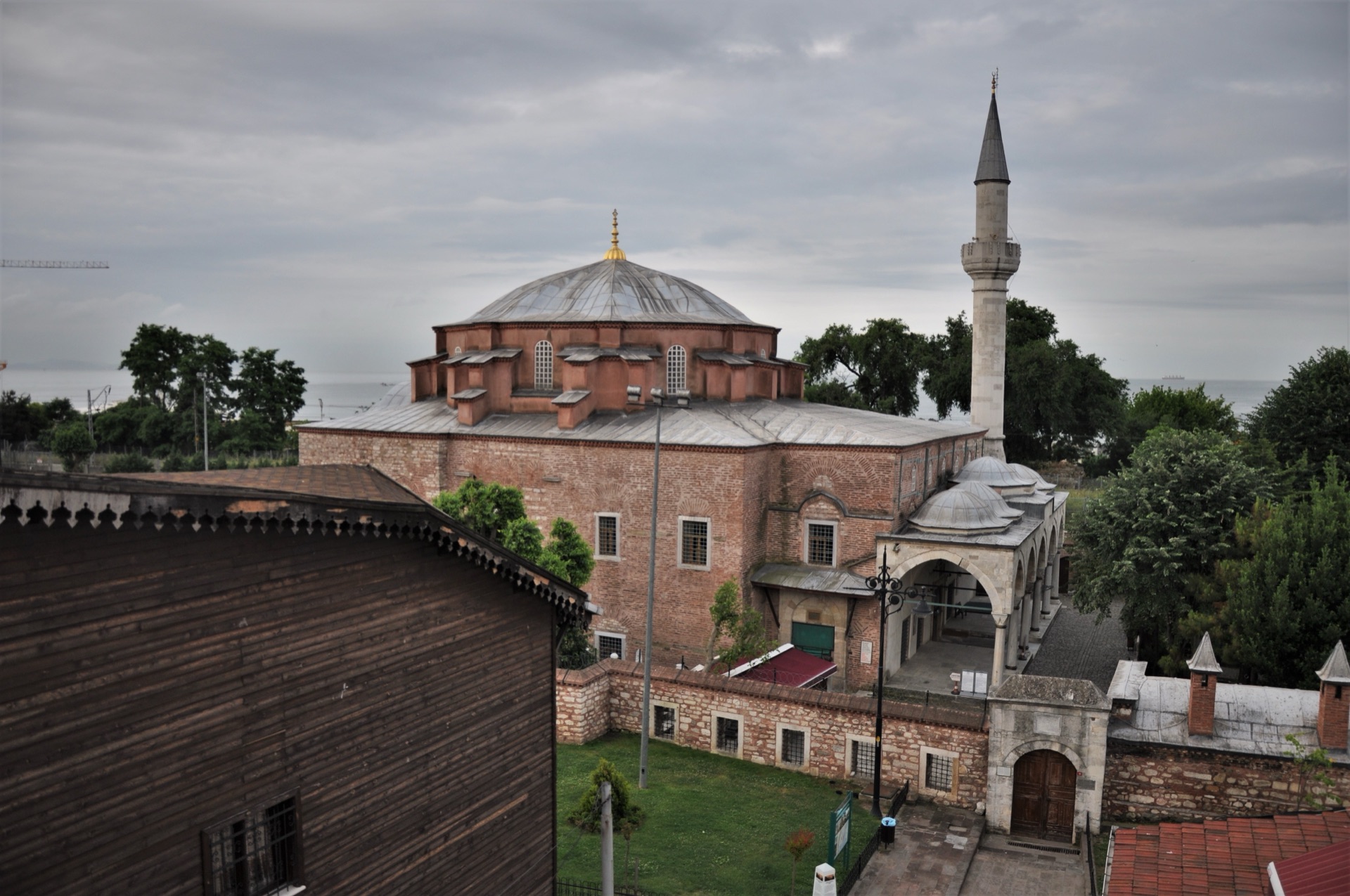
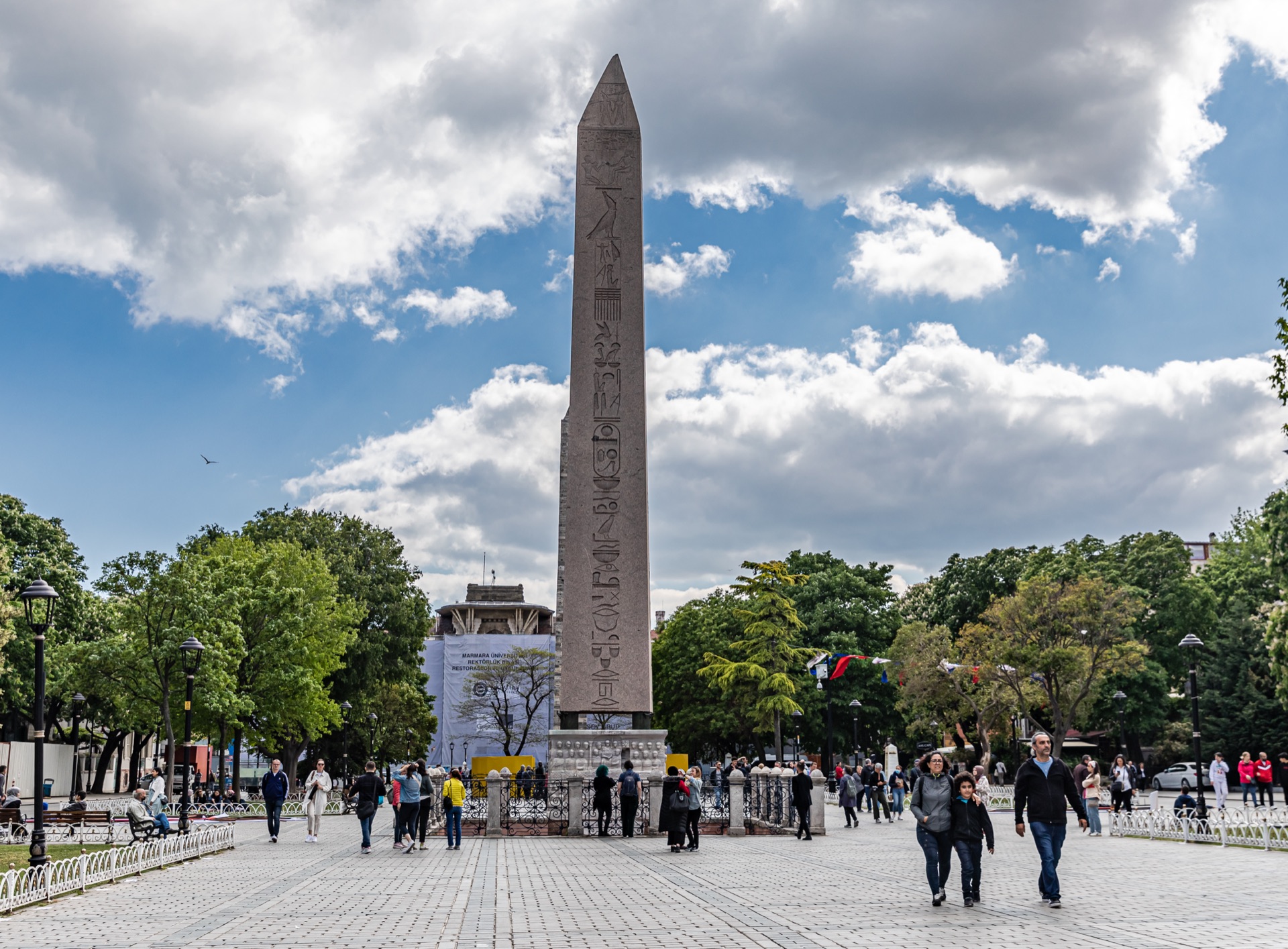
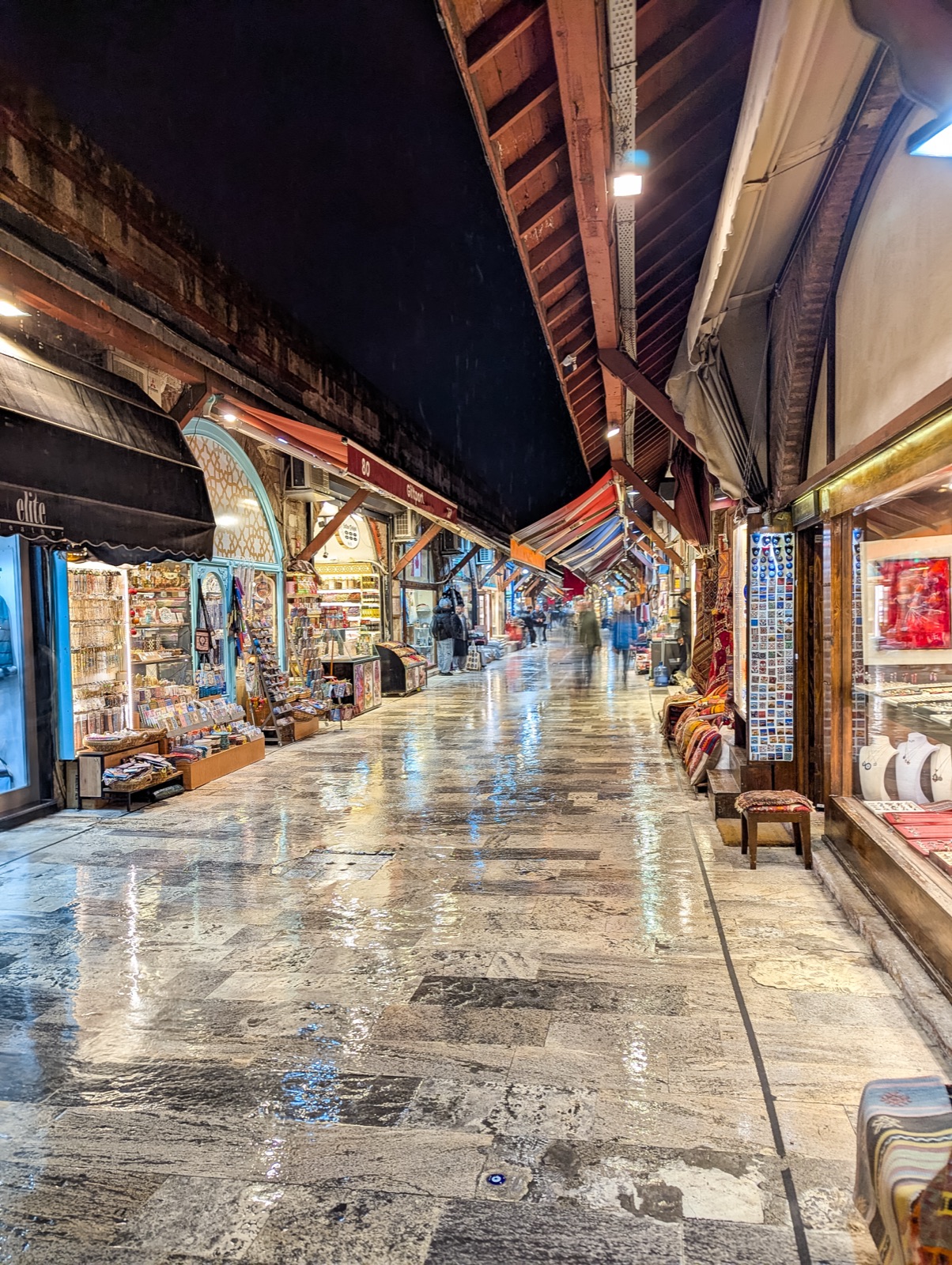
Just a few steps from the Blue Mosque runs a long row of small shops that many visitors discover almost by accident. The Arasta Bazaar is considerably more manageable than the Grand Bazaar and less overwhelming than the Spice Bazaar. Historically, though, it belongs directly to the Sultan Ahmed külliye, and thus to one of the largest religious endowment projects of the early 17th century.
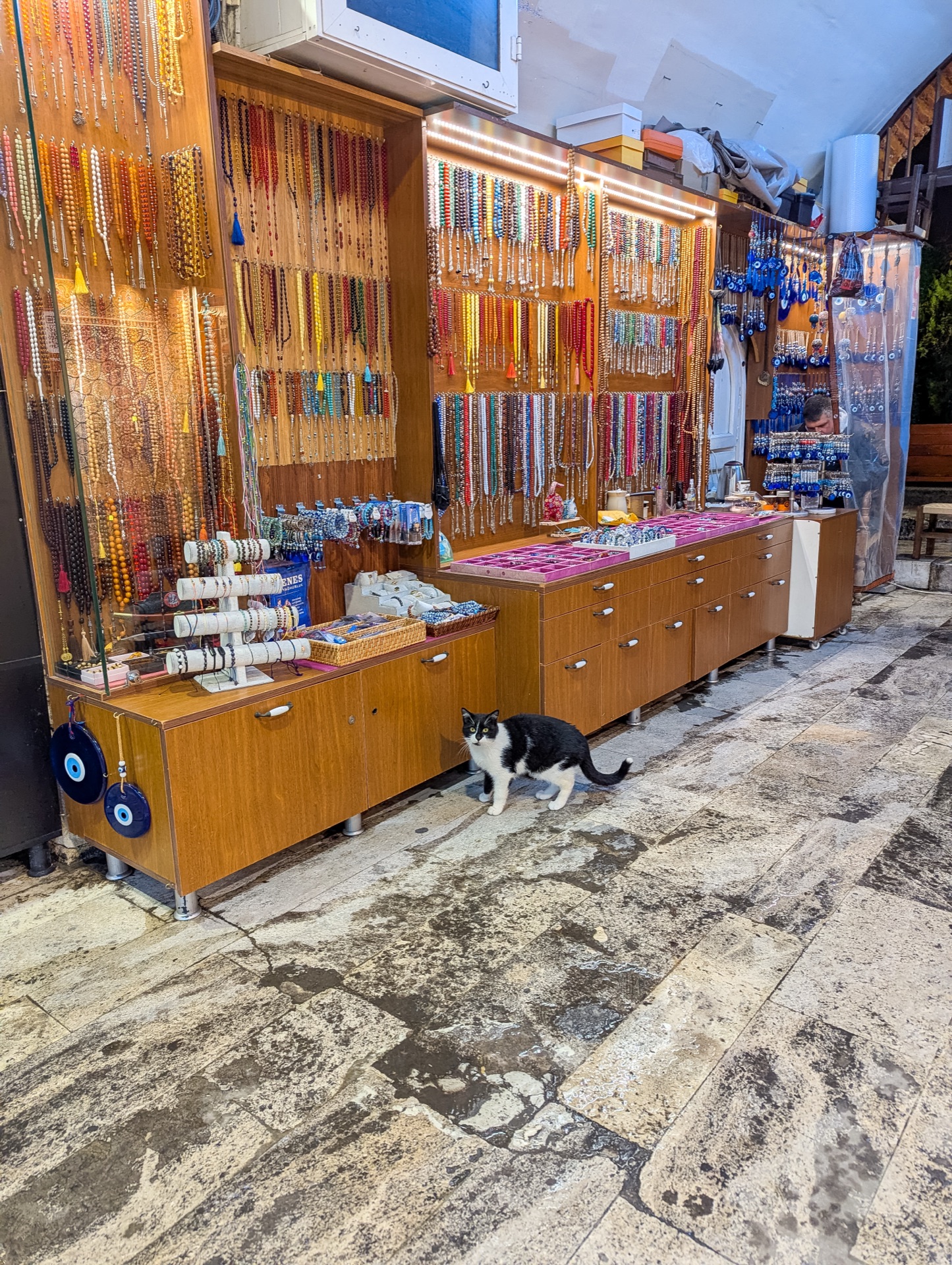
The Arasta Bazaar is considerably more manageable than the Grand Bazaar and less overwhelming than the Spice Bazaar. Historically it belongs directly to the Sultan Ahmed külliye.
The word arasta refers to an ordered row or group of shops, often connected to a particular trade or endowment. These shops weren't just a pretty addition next to the mosque. Their rental income was meant to help finance the entire enormous complex. Anyone browsing a carpet, jewelry or souvenir here today is standing inside an economic system that tied together religion, social welfare and commerce.
- The Arasta Bazaar historically belongs to the Sultan Ahmed külliye.
- The complex was built in the early 17th century together with the Blue Mosque and its auxiliary buildings.
- Income from the shops supported the upkeep of the endowment.
- "Arasta" doesn't simply mean "small bazaar" — it traditionally denotes ordered rows of shops or specialized market areas.
- Today's market was revived and restored in the 20th century.
- Right next door lies the Great Palace Mosaic Museum, with remnants of a Byzantine palace floor.
What an arasta actually is
In modern travel vocabulary, almost every historic market gets called a "bazaar." In the Ottoman Empire, however, there were different kinds of trading spaces. A bedesten was a heavily secured trading building for especially valuable goods. A han combined storage, trade and lodging. An arasta typically consisted of ordered rows of small shops, often along a street or directly beside an endowment.
Such rows of shops could focus on specific products. This spatial order helped guilds control production and sale. At the same time, the shops were valuable real estate whose rental income was reliably calculable over the long term.
Why the Blue Mosque needed shops
A great mosque was expensive to build, but also expensive to operate. Imams, muezzins, teachers, cooks, cleaning staff and other employees had to be paid. Lamps needed oil, roofs needed repair, water systems needed maintenance, and social facilities needed supplies.
That's why sultans founded so-called vakıfs, religious-social endowments. Certain properties, land, baths, markets or shops were assigned to the endowment. Their income was meant to permanently finance operations.
The Arasta Bazaar was part of this system. The official description of the Sultan Ahmed külliye explicitly counts the arasta among its original components, alongside the mosque, madrasa, hospital, imaret, hammam and other facilities.
The Sultan Ahmed külliye as an economic system
Anyone who sees only the Blue Mosque today underestimates the scale of the original project. Sultan Ahmed I didn't have an isolated prayer hall built, but a complex combining education, welfare, lodging, religion and commerce.
The imaret, the soup kitchen for the poor, in particular needed steady funding. Madrasas, too, only functioned with staff and upkeep. So the bazaar wasn't a contradiction to the religious endowment, but a precondition for that endowment being able to function permanently.
This connection generally explains a lot about Ottoman urban planning. Economic activity wasn't kept out of the religious center. On the contrary: shops, hammams and caravanserais could finance a social complex.
What used to be sold and produced here
Which categories of goods dominated exactly, across the entire history and for every single shop, can't be fully reconstructed. But arastas often housed specialized craftsmen and merchants. Textiles and furnishings played an important role in this part of the city.
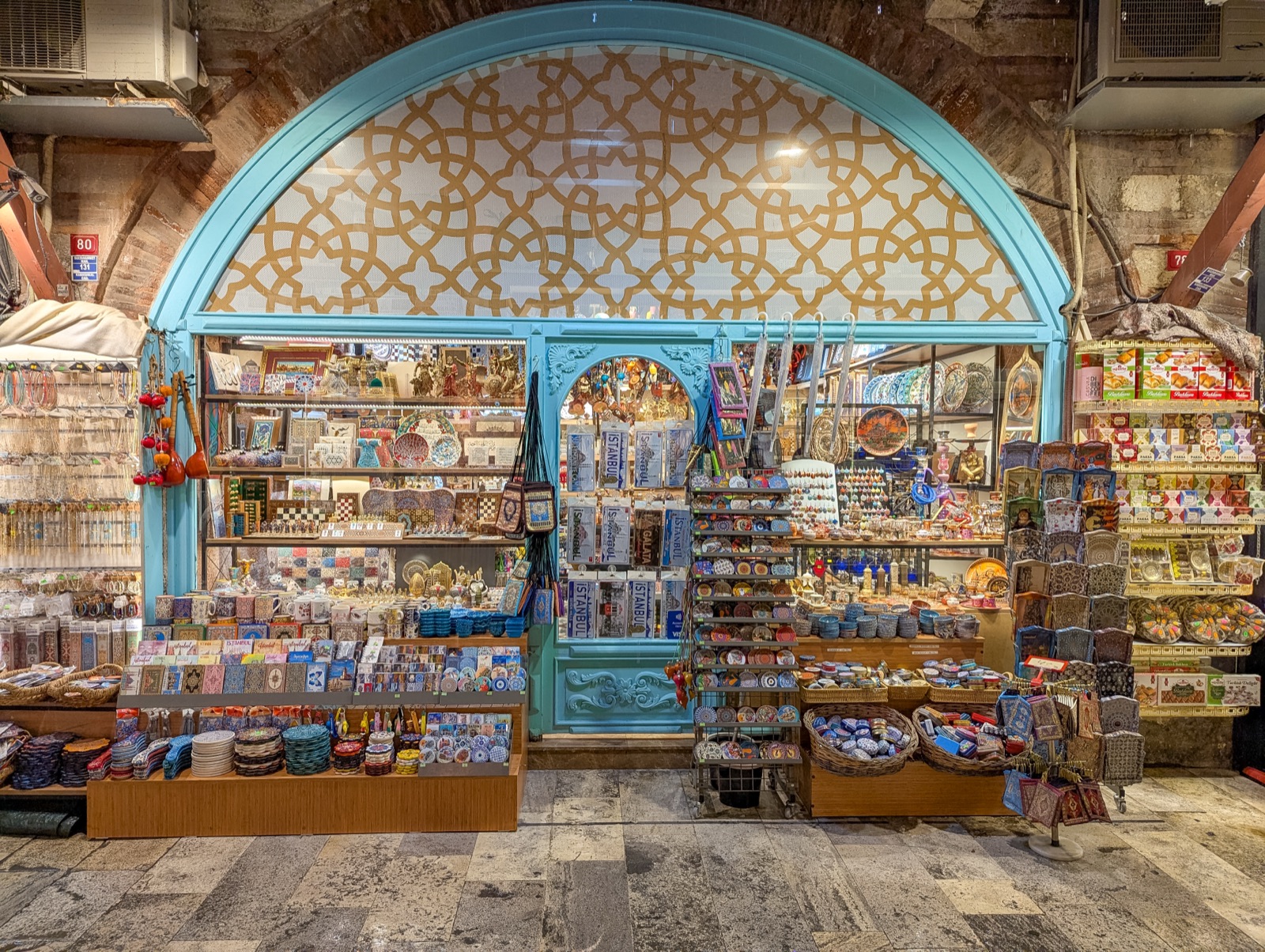
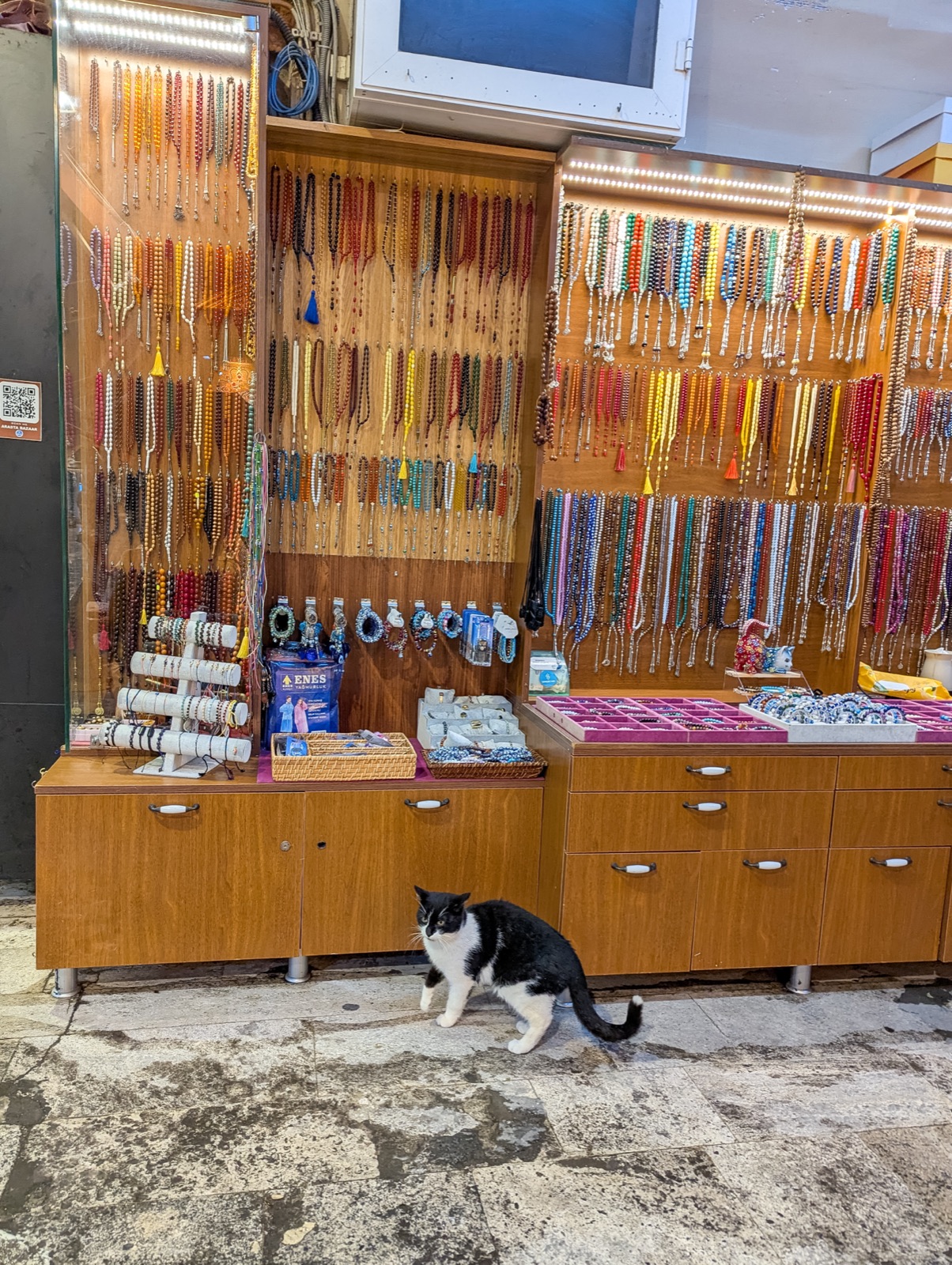
Today's offerings of carpets, textiles, ceramics, jewelry and souvenirs partly connect to traditional product categories, but are of course strongly shaped by international tourism. A shop of the 17th century looked nothing like its present-day successor, neither in how goods were displayed nor in its customers.
Fires, decay and revival
Istanbul's historic market structures repeatedly suffered from fires. Wood, fabrics, open fires and closely packed buildings made trading quarters especially vulnerable. The Arasta area, too, lost significance over the centuries and partly fell into disrepair.
In the 20th century the complex was restored and revived as a market. So you shouldn't assume every shopfront and roof you see today comes unchanged from the time of Sultan Ahmed I. The historic structure is old; its concrete presentation is the result of later restorations.
The mosaic museum right next door
Right within, or beneath, the surroundings of the Arasta Bazaar lie remains of the Great Palace of Constantinople. The Great Palace Mosaic Museum displays impressive floor mosaics, likely dating from late antiquity.
This proximity is typically Istanbul: above, or right next to it, sits a 17th-century Ottoman market, while directly beneath, or immediately adjacent, lie remains of the Byzantine imperial residence. The district can literally be read in layers.
The mosaics show animals, hunting scenes, rural motifs and other subjects. They don't belong to the Blue Mosque, but to a much older world that already existed on this site long before Sultan Ahmed had his complex built.
Arasta today: touristy, but not meaningless
Today Arasta is clearly touristy. There's no point sugarcoating that. Many products cater to foreign visitors, prices can be set accordingly, and no one should believe they're stepping into an unchanged Ottoman craftsmen's market.
Still, the place has advantages. It's smaller, quieter and easier to navigate than the Grand Bazaar. Anyone already at the Blue Mosque can understand here, very clearly, how closely commerce and endowment were intertwined.
The Arasta Bazaar and the logic of Ottoman endowments
The economic connection between market and mosque deserves a closer look, because it applies to many of Istanbul's great building complexes. A vakıf was legally organized so that certain assets were permanently dedicated to a charitable or religious purpose. A sultan could, for example, assign shops, fields, mills, baths or entire villages to an endowment. The proceeds then paid for staff, repairs, teaching, or food distribution.
This was meant to keep an institution functioning even after its founder's death. That mattered, because a mosque could stand for centuries, while a sultan reigned only for a few decades. Without long-term income, every soup kitchen would eventually stand empty and every madrasa without teachers.
The Arasta shows this logic especially well on a small scale. Visitors today see shops right next to the Blue Mosque. Historically, this proximity was economically deliberate. The better the market functioned, the more stably other parts of the endowment could be financed.
What's disappeared from the original complex
The Sultan Ahmed külliye was originally considerably larger than the ensemble visitors consciously perceive today. Alongside the mosque, arasta and mausoleum, it included educational and welfare facilities, a hospital, an imaret, a hammam and other buildings. Street redevelopment, fires and modern urban growth changed the area significantly.
The reshaping of Sultanahmet in particular during the 19th and 20th centuries partly dissolved older urban connections. Today many monuments appear as individual sights within a touristic park-like space. Earlier, they were far more tightly woven into a dense network of houses, workshops, stables and supply facilities.
This applies to the Arasta too. Its clean row of shops today looks orderly and almost museum-like. A market of the 17th or 18th century was louder, more functional, and more closely tied to production. Smells, animals, transport and craftwork were part of everyday life.
The Great Palace beneath Sultanahmet
The area becomes even more fascinating once you go further back in time. The Byzantine Great Palace once spread over an enormous area southeast of the Hippodrome. For centuries, Byzantine emperors lived and ruled in various palaces, courtyards and gardens that stretched toward the Sea of Marmara.
After the 11th century, the imperial center of gravity shifted more toward the Blachernae Palace. The Great Palace partly fell into decay. After 1204, large areas were looted and further destroyed. In the Ottoman era, the city built over many of the remains.
The famous floor mosaics now displayed in the Mosaic Museum next to the Arasta are therefore especially valuable. They offer a rare glimpse of the decorative furnishings of the palace landscape. Hunting scenes, animals, children and rural motifs feel surprisingly worldly and lively. They show that Byzantine art wasn't just golden images of saints.
Shopping without confusing history with "authenticity"
Many travelers want to buy "something real" at a bazaar. But what does that mean? A hand-knotted Anatolian carpet can be authentic craftsmanship even if it's sold to tourists. A machine-made lamp in a supposedly oriental style, on the other hand, may have been made entirely for the export market. Origin and manufacturing method matter more than the shop's backdrop.
Anyone wanting to buy something expensive shouldn't be swayed by a dramatic sales story. Material, age, technique and return policy should be checked independently. Especially with carpets or jewelry, price differences can be considerable.
For a short stroll, though, you don't need to buy anything at all. The Arasta is worthwhile simply as a link between the Blue Mosque, the Little Hagia Sophia and the Mosaic Museum. Its manageable size makes it a good place to see Ottoman commercial architecture without losing all sense of direction after ten minutes, the way you might in the Grand Bazaar.
What you can still recognize on site today
Today's row of shops is neatly restored, but the most important historical clue is its location. Keep turning back toward the Blue Mosque and the former Hippodrome. Then it becomes clear that the market didn't spring up randomly somewhere, but was built directly into a great endowment and ceremonial precinct. That very proximity is the real attraction.
Also pay attention to the transition toward the Mosaic Museum. There, the layers of time genuinely collide: an Ottoman-era market sits next to remains of a Byzantine imperial palace. Anyone who visits both places together understands better how Istanbul was built — not by one era neatly vanishing and the next starting from zero, but by new buildings taking over existing ground, walls and paths.
If you want to shop, don't go in thinking you absolutely have to haggle. Some shops expect negotiation, others have clearer set prices. For high-value carpets, jewelry or antiques, the rule is always the same: check origin and quality beforehand, and don't rely solely on a nice story. The Arasta's historical value doesn't depend on whether you leave with a bag.
Why the Arasta feels calmer than the Grand Bazaar
The difference isn't just size. The Grand Bazaar is a trading labyrinth grown over centuries, with hundreds of paths, hans and passages. The Arasta, by contrast, is more linear and spatially clearer. You barely lose your bearings, and precisely because of that, the architecture stands out more. Anyone who's constantly checking signposts in the Grand Bazaar can actually stop here and look at the relationship between the row of shops and the mosque complex.
This calm is of course relative. In peak season, the Arasta can get crowded too. But its spatial structure stays more manageable, and that makes the market a good counter-program after Sultanahmet. For me, precisely this manageability is an advantage, because here you can actually recognize how an endowment economy works, instead of just being overwhelmed by sheer numbers of shops.
Commerce as part of religious infrastructure
That shops helped finance a mosque may sound surprising to some visitors today. In the Ottoman endowment system, though, it was essentially logical. Religion, education, poor relief and commerce weren't divided into separate zones. A functioning city needed income, and a vakıf had to be economically viable.
That's why the Arasta shouldn't be seen as a secular add-on next to a sacred building. Historically, the market was part of what kept the entire complex functioning. That connection is exactly one of the most interesting lessons you can take away from a few hundred meters of shopfronts.
"The Arasta Bazaar is just a small offshoot of the Grand Bazaar." False. It has its own history and belongs to the Sultan Ahmed endowment.
"The shops served only tourists." Obviously false. International mass tourism emerged centuries later.
"There's a Byzantine palace beneath the bazaar." Simplified, but essentially correct: mosaics and structures of the Great Palace complex were discovered in the immediate vicinity.
My take on this place
I like the Arasta as an idea even more once you stop viewing it just as a shopping street. A sultan builds a huge mosque with schools and a soup kitchen — and right next to it he needs shops, because piety alone doesn't pay the bills.
That sounds very modern, but it's centuries old. Social institutions need an economic foundation. That's exactly why the market and the mosque historically belong together here.
– Amra