Galatasaray's current stadium sits well outside the old city center. Anyone looking only at the address might think the club simply left its historic home behind. In reality, the move from the old Ali Sami Yen Stadium to Seyrantepe tells you a lot about modern professional football in a city of millions: more spectators, better infrastructure, higher revenue and security requirements all demand space that old inner-city locations rarely have.
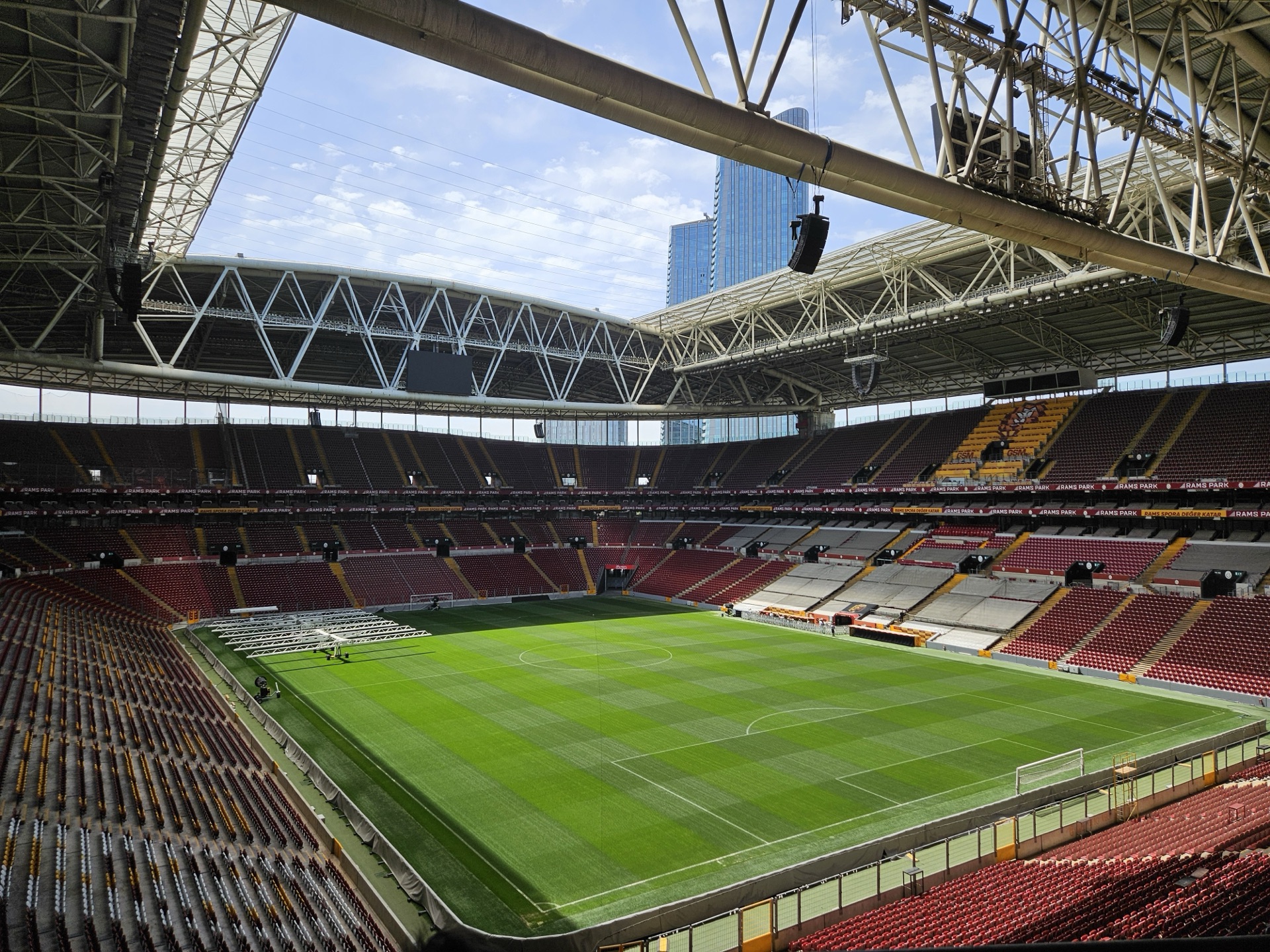
Galatasaray's current stadium sits well outside the old city center. The move tells you a lot about modern professional football in a city of millions.
Today's stadium opened in 2011. Over the years it has carried various sponsor names and is now known as RAMS Park. For many fans, though, the memory of Ali Sami Yen remains central. That was where the myth of the "Hell of Istanbul" was born — a reputation that became especially well known internationally during European matches of the 1990s and 2000s.
- Galatasaray was founded in 1905 by students of Galatasaray High School.
- Ali Sami Yen was one of the founding figures.
- The old Ali Sami Yen Stadium shaped the football club's identity for decades.
- Galatasaray moved to a new stadium in Seyrantepe in 2011.
- The new stadium offers far more modern infrastructure and higher capacity.
- The club won the UEFA Cup in 2000, followed by the UEFA Super Cup.
- The nickname "Welcome to Hell" became famous especially through international European Cup matches.
How Galatasaray came to be
Galatasaray was founded in 1905 by students of the storied Galatasaray Lisesi. The school itself dates back to Ottoman times and played a significant role in educating a modern elite.
Football at that time was still strongly shaped by foreign teams. The young founders wanted to create a Turkish club that could compete against them.
Galatasaray quickly grew into one of Istanbul's — and later all of Turkey's — most important clubs.
Ali Sami Yen and the idea of the club
Ali Sami Yen was one of the most important founders and later a long-serving club president. His goal is often paraphrased as: to play football together, to have their own colors and their own name, and to beat foreign teams.
The exact wording of such founding quotes should always be treated with caution, since club histories often smooth them out afterward. The core, however, is clear: from the very beginning, Galatasaray saw itself as a modern Turkish sports club with an international competitive spirit.
The old Ali Sami Yen Stadium
The old stadium stood in Mecidiyeköy and became the club's emotional home over the decades. It was comparatively cramped, loud, and embedded in dense city traffic.
It was precisely this tightness that made its atmosphere famous. The stands sat close to the pitch, and at important matches the noise could become enormous.
Over time, though, the venue increasingly failed to meet modern standards. Safety requirements, parking, VIP areas, media facilities and greater spectator capacity could only be retrofitted to a limited degree.
The "Hell" of Istanbul
The old Ali Sami Yen was famous for its cramped construction and the close distance between the stands and the pitch. International opponents regularly described the atmosphere as extremely loud and intense. The slogan "Welcome to Hell" became, especially in the 1990s, an image that followed Galatasaray across Europe.
Of course this was also self-staging. Fans deliberately reinforced exactly the image opponents had already read about beforehand. This created a cycle: the more famous the atmosphere became, the harder spectators wanted to outdo it at the next European night. The old stadium was thus not just concrete and seats, but a stage on which the club produced its international identity.
Ali Sami Yen became internationally known through banners and atmosphere at European Cup matches. Above all, the famous "Welcome to Hell" shaped the stadium's reputation.
In the 1990s, big European teams traveled to Istanbul and reported an extremely loud backdrop. Fans experienced the place as home advantage, opponents at times as intimidating.
Of course the stadium was never literally "hell." The term belongs to football's theatrics. It became a problem only where aggressive symbolism tipped over into actual violence.
Why the club had to move
The old Ali Sami Yen Stadium in Mecidiyeköy had objectively long been problematic. It was cramped, hard to modernize, burdened by traffic, and could not compete economically with new European arenas. Emotionally, though, none of that mattered much to many fans. For decades the stadium had been tied to European nights, championships, derbies and an extremely dense atmosphere. Out of that memory grew the famous reputation of "Welcome to Hell," meant above all to convey the stadium's mood to international opponents.
The move to Seyrantepe in 2011 was therefore a classic conflict between modern infrastructure and a home that had grown over time. The new arena offered better boxes, media areas, security, marketing and far more contemporary conditions. At the same time, it was no longer in the place that generations of fans had associated with Galatasaray. A stadium can be technically better and still feel, at first, less like home.
Over time, however, new memories form. Championships, European Cup matches and derbies fill a new arena with stories too. That's exactly why I find the claim interesting that a club "loses its soul" the moment it moves. Part of the atmosphere really is tied to architecture and location. Another part is carried by people: chants, colors, rituals, rivalries and shared memory.
Today's stadium carries changing names due to sponsorship. What matters more for the club's history is that it marks a transition: from a cramped inner-city football temple to a large modern arena in the north of the city. This shift also says something about Istanbul itself, whose sport, traffic and real-estate development keep expanding into new districts.
A full modern rebuild on the old site was difficult. The land was valuable, the surroundings densely built, and the traffic situation tense.
So a new arena was built in Seyrantepe instead. The state and the club developed a model in which the old site was given up and the new stadium project realized.
For fans, the move was emotionally difficult. A stadium can be technically better and still, at first, feel less like "home."
The new stadium in Seyrantepe
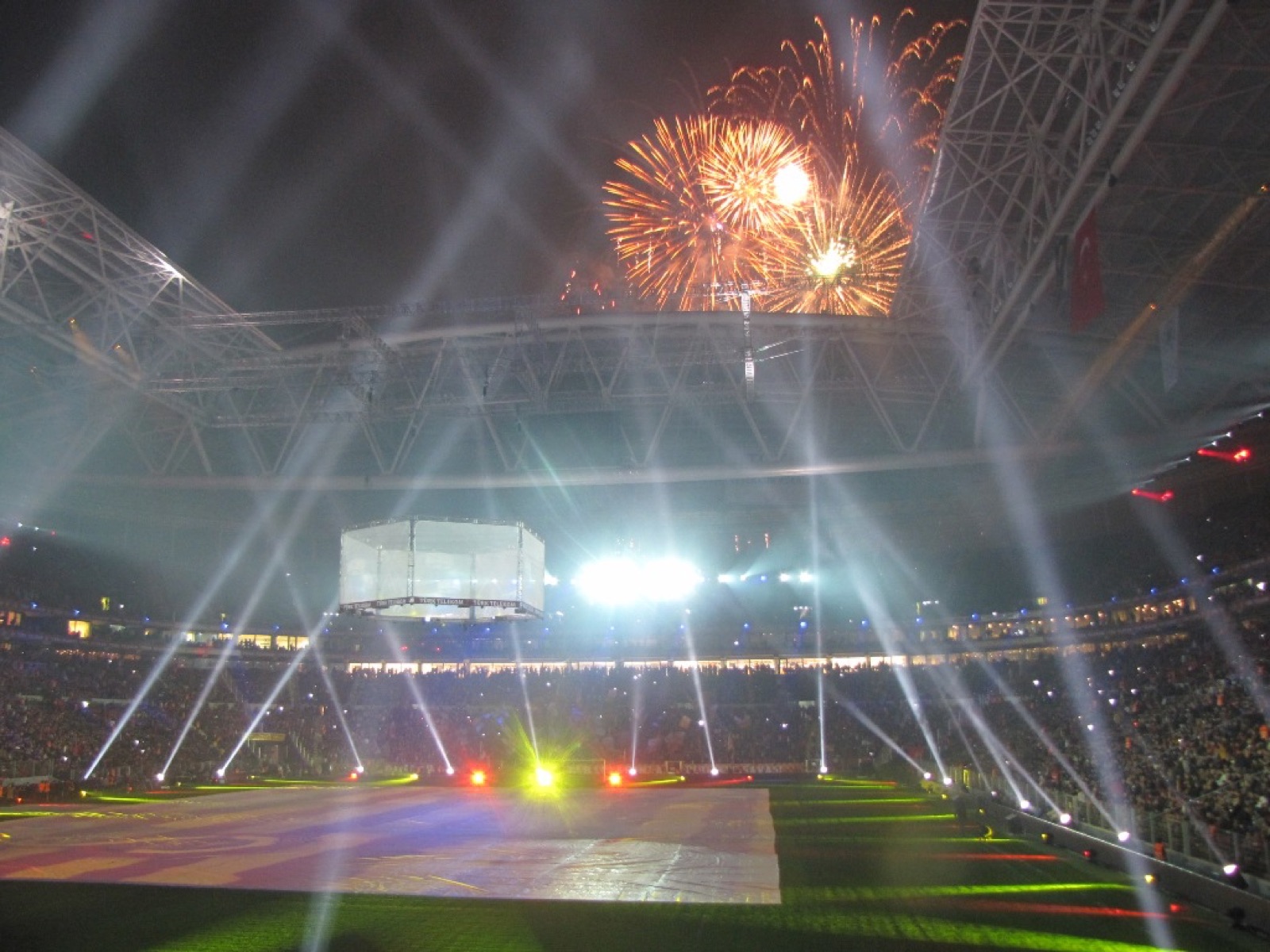
The new arena opened in 2011. It offers over fifty thousand seats, modern boxes, media areas and considerably greater commercial potential.
The metro connection makes the site well accessible despite its distance from the old center. New development has also sprung up around the stadium.
Sponsor names have changed several times, which again shows how strongly modern stadiums are part of economic marketing.
The 2000 UEFA Cup and European identity
Galatasaray's greatest international success still came during the era of the old Ali Sami Yen Stadium. In 2000 the club won the UEFA Cup against Arsenal, followed by the UEFA Super Cup against Real Madrid.
These successes cemented Galatasaray permanently as the most internationally known Turkish club of that era. For fans, they remain among the most important memories in the club's history.
Today's stadium thus inherits a European identity that was actually forged elsewhere.
Galatasaray and the high school as a cultural origin
The connection to Galatasaray Lisesi sets the club apart from many others. The school grew out of an Ottoman educational tradition and became, in the 19th century, an important modern institution with strong French influence. Many graduates later took on roles in diplomacy, administration, culture and business.
The football club was thus born in an environment already familiar with international education and European exchange. That helps explain why Galatasaray placed such early emphasis on international matches. The club's famous ambition to beat non-Turkish teams fit perfectly with this school world.
To this day the club remains culturally closely tied to the institution of Galatasaray, even though millions of fans were of course never students at that high school.

Mecidiyeköy: why the old stadium eventually became too cramped
When the Ali Sami Yen Stadium was built, the surrounding area was far less dense than it would become decades later. Istanbul, however, grew explosively. Mecidiyeköy turned into a central business and transport hub, high-rises and wide roads appeared, and land prices climbed.
What had initially been on the edge of the city suddenly found itself in the middle of an extremely dense metropolis. That is exactly what made the old site emotionally valuable and structurally difficult. Expansion was barely possible, traffic problems were enormous, and modern security requirements demanded more space.
The move to Seyrantepe was therefore not only a decision by the club, but part of a broader shift of major sports infrastructure into newly developed parts of the city.
The new stadium routine and the metro
A stadium holding more than fifty thousand people only works if arrival and departure are properly planned. The metro station right at the complex is therefore central. During big matches, crowd flows are directed, entrances separated and security zones set up.
That sounds dry, but it marks an important difference from the old Ali Sami Yen. Modern arenas are huge logistics machines. Tens of thousands of people must be brought in and out in a controlled way within a short span of time.
At the same time, the club tries, despite all this technology, to create an atmosphere that reminds fans of the old stadium. That is exactly where the difficulty lies: improving comfort without losing emotional density.
Rivalry with Fenerbahçe: more than Europe versus Asia
The derby between Galatasaray and Fenerbahçe is often sold as a clash between the European and Asian sides of the city. That makes for good television, but it is socially too simple. Both clubs have fans in every district of Istanbul and across all of Turkey. Families can even be split internally.
The rivalry developed over more than a century out of sporting competition, social identities and countless individual matches. Precisely because both clubs are so successful and so large, every derby becomes an opportunity to reheat old scores.
Today's stadium in Seyrantepe may sit geographically on the European side, but the real derby line has long run through living rooms, offices and circles of friends across the whole country.
What remains of the old Ali Sami Yen
The former stadium was demolished after the move, and the valuable site in Mecidiyeköy was redeveloped. Physically, therefore, far less remains than at the Beşiktaş stadium, where historic parts were integrated into the new build.
All the more strongly does Ali Sami Yen live on in language and memory. The name of the new sports complex carries it, fans tell stories of old European nights, and videos from the former stadium are still constantly shared. Sometimes a place survives culturally longer than it does physically.
Why sponsor names come and go, but the place remains
Türk Telekom Arena, Nef Stadyumu, RAMS Park — to outsiders it can look as if Galatasaray keeps getting a new stadium. In fact, mainly the marketing names changed. The physical building in Seyrantepe remained the same complex.
Such naming rights are an important revenue source in modern football. Companies buy visibility, and clubs use the money to finance part of their infrastructure. Fans react differently: some adopt the new name, others keep saying Ali Sami Yen, or simply "Seyrantepe."
So several names exist at once — an official one, a commercial one, and an emotional one. For major football venues today, that's more the norm than the exception.
"The new stadium is called Ali Sami Yen." The entire sports complex carries the name Ali Sami Yen, while the stadium itself has had different names due to sponsorship and is now called RAMS Park.
"Welcome to Hell was the club's motto since its founding." No. This staging became well known especially in the modern European Cup era.
"Galatasaray won the Champions League." No. The club's great European title in 2000 was the UEFA Cup, followed by the UEFA Super Cup.
My take on this place
What I find interesting about Galatasaray is how strongly fans can remain attached to an old stadium, even though the new one is objectively more modern, bigger and more comfortable. Apparently you cannot simply rebuild memories out of concrete.
But eventually new stories form in the new place too. Children go there for the first time with their parents, decisive goals are scored, derbies are won or lost. And in twenty years, the next generation will probably say: this exact stadium must never disappear.
– Amra