Hardly any football stadium sits as spectacularly as today's Tüpraş Stadyumu, home of Beşiktaş. On one side, Dolmabahçe Palace and the Bosphorus; on the other, the slopes toward Taksim. Today, the setting feels natural, but it has always been urbanistically sensitive. Right here, since 1947, stood the İnönü Stadium, which over the decades became one of the most important sites in Turkish football.
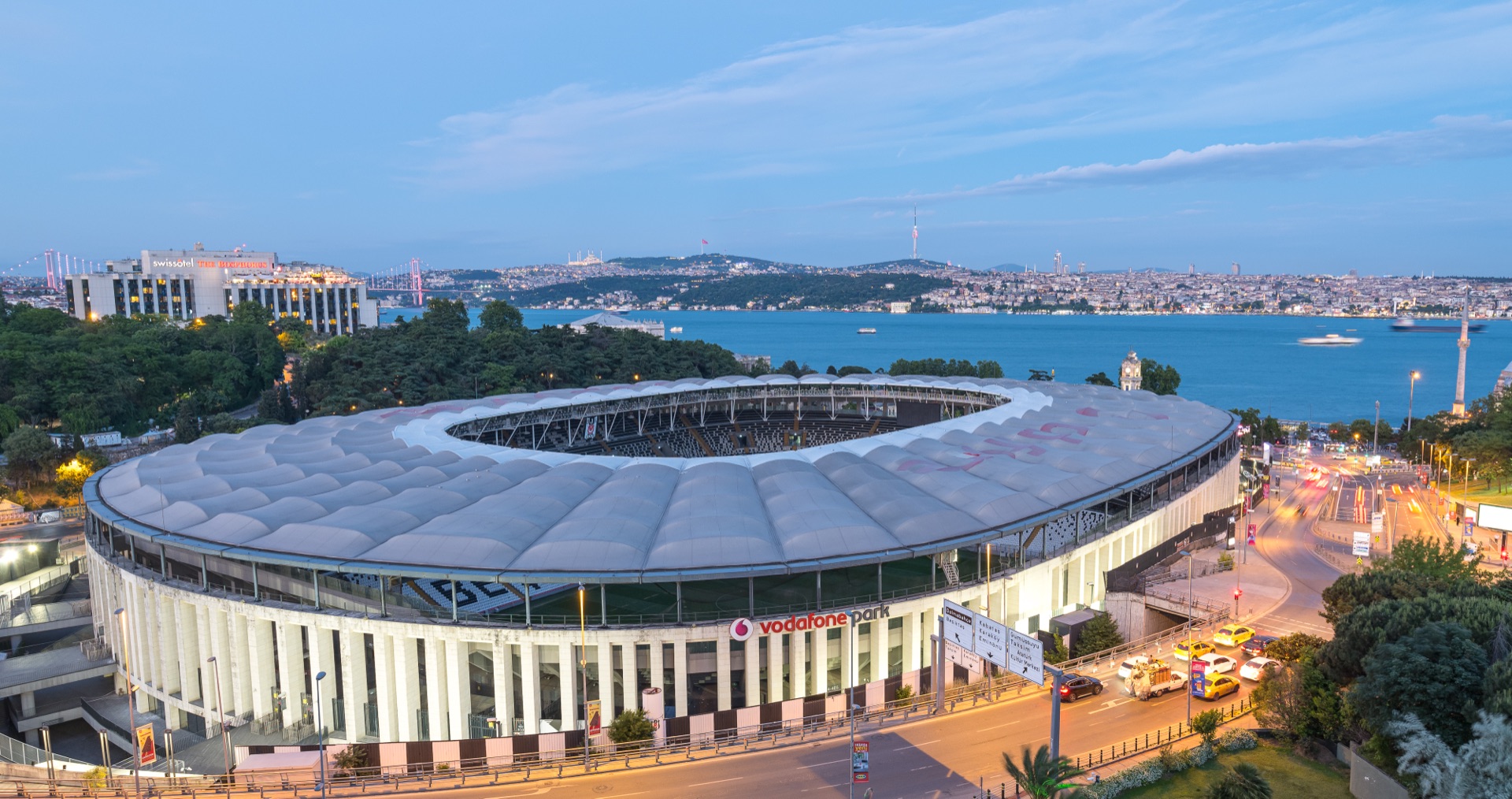
On one side, Dolmabahçe Palace and the Bosphorus; on the other, the slopes toward Taksim. Today, the setting feels natural, but it has always been urbanistically sensitive.
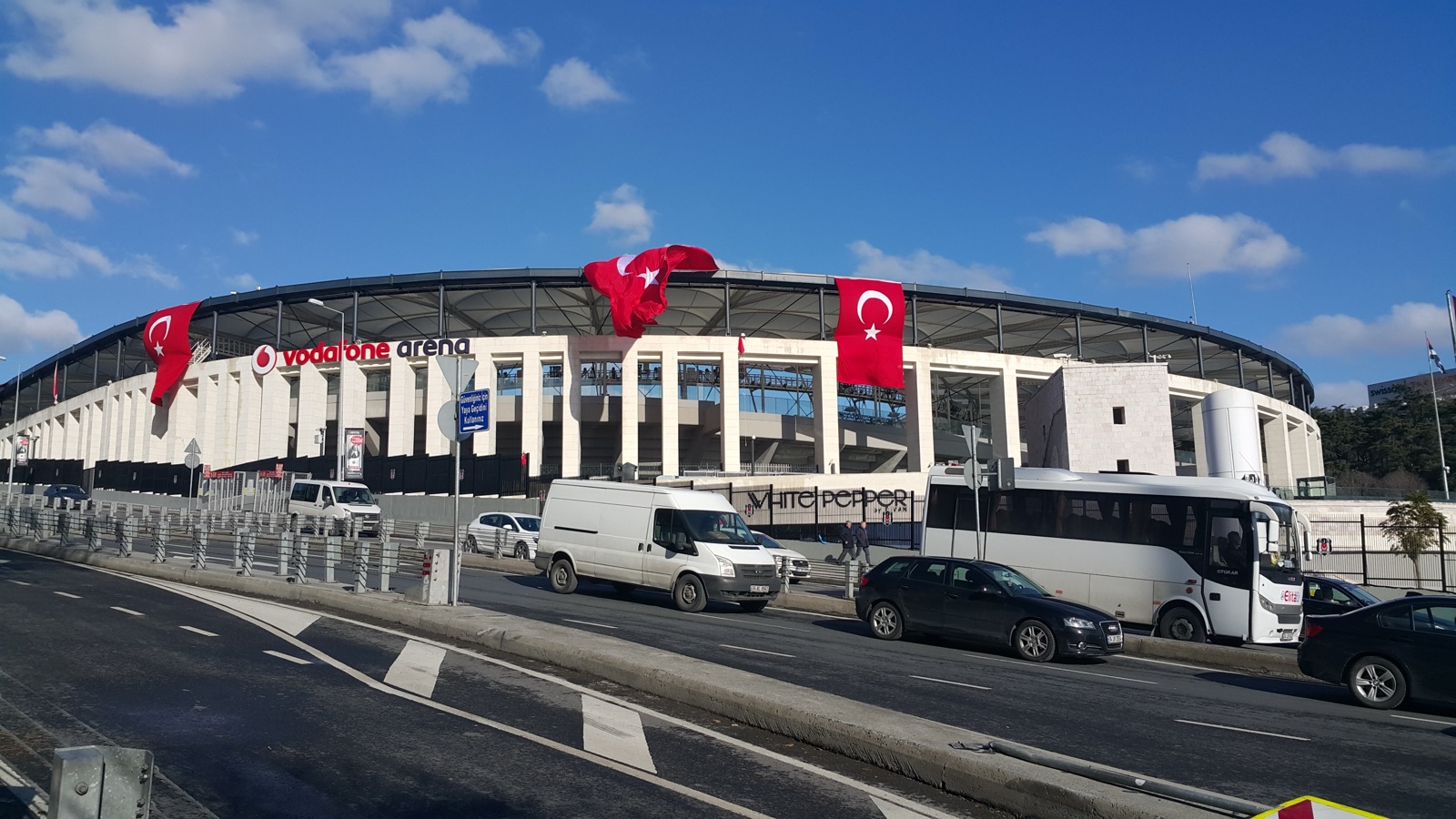
So when Beşiktaş needed a modern stadium in the 21st century, it couldn't simply put a huge new building down just anywhere. The historic site, its protected heritage elements, and its proximity to Dolmabahçe all had to be considered. The new stadium was built within the old complex and opened in 2016. It's thus both a modern football venue and the continuation of a place where generations of Beşiktaş fans have gathered memories.
- The former İnönü Stadium opened in 1947.
- It was designed by Paolo Vietti-Violi, Şinasi Şahingiray, and Fazıl Aysu.
- Beşiktaş's first match there was against AIK Stockholm in 1947.
- According to club history, Süleyman Seba scored the stadium's first goal.
- The old stadium was largely demolished from 2013 on and rebuilt on the same site.
- Today's stadium opened in 2016.
- Historically significant facade, or wall, sections were integrated into the new complex.
- The Beşiktaş fan group Çarşı is one of Turkey's best-known fan cultures.
Why a Stadium Arose Here at All
The site sat right next to Dolmabahçe Palace, and had already been considerably altered in the late Ottoman Empire and the early Republic. Sport gained increasing public importance in the young Republic, and Istanbul needed a great modern stadium.
The Italian architect Paolo Vietti-Violi worked together with Turkish architects on the plans. The complex was set into the landscape so it opened toward the Bosphorus.
The İnönü Stadium of 1947
On 19 May 1947, the stadium was ceremonially opened. Its name recalled İsmet İnönü, the Republic's second president.
Beşiktaş used the stadium as its main home ground. Over the decades, national team matches, concerts, and other major events were also held there.
Its location was an advantage and a problem at once. Fans loved being close to the centre. For modernisation, though, the tight historic surroundings were extremely difficult.
The First Goal and Süleyman Seba
Beşiktaş's first match at the new stadium took place on 27 November 1947, against AIK Stockholm. According to official club history, Süleyman Seba scored the first goal in the stadium's history.
Seba later became far more famous as the club's long-serving president. His connection to that first goal therefore fits the Beşiktaş story almost too perfectly — but it's genuinely part of the official club chronicle.
Why Beşiktaş Fans Love This Place So Much
Hardly any great stadium sits so close to an imperial palace, a significant mosque, and the Bosphorus. That's exactly why the building and rebuilding history of the Beşiktaş stadium has always been an urban-planning question too. The former İnönü Stadium arose in the 1940s in an area that had previously belonged to Dolmabahçe's wider surroundings. Its open setting allowed long views toward the Bosphorus, making the stadium itself part of the city's famous view.
So when the club planned a modern new building, it couldn't simply erect an arena of any height it liked. Heritage protection, sightlines, and its proximity to Dolmabahçe Palace all played an important role in planning. Parts of the old stadium's historic outer walls, or facade elements, were integrated into the new project. The result is a modern football arena that has to duck into its surroundings far more than many stadiums built on the edge of a city.
For Beşiktaş fans, the site carries extra emotional weight too. The club shares its name with the district, and the stadium genuinely sits within this urban core. Many fans walk there from Beşiktaş, passing through streets and squares, experiencing the match not as an isolated event out by some motorway, but as part of a ritual tied to its surroundings. That's exactly why the temporary move during reconstruction was more than a logistical problem. Home matches at other stadiums could work in sporting terms, but they couldn't replace the feeling of playing in your own neighbourhood.
That the stadium today carries different official sponsor names changes little of this. In everyday usage, the place remains tied, for many people, to Dolmabahçe, İnönü, and Beşiktaş. Sponsors change; geographic memory is more stubborn.
A stadium doesn't become significant through concrete, but through repetition. The same paths, the same stands, wins, losses, derbies, and family histories accumulate over decades.
At the İnönü, its special setting added to this. From its upper sections, you could see the Bosphorus and the city. International media often called it one of the most beautifully situated stadiums in the world.
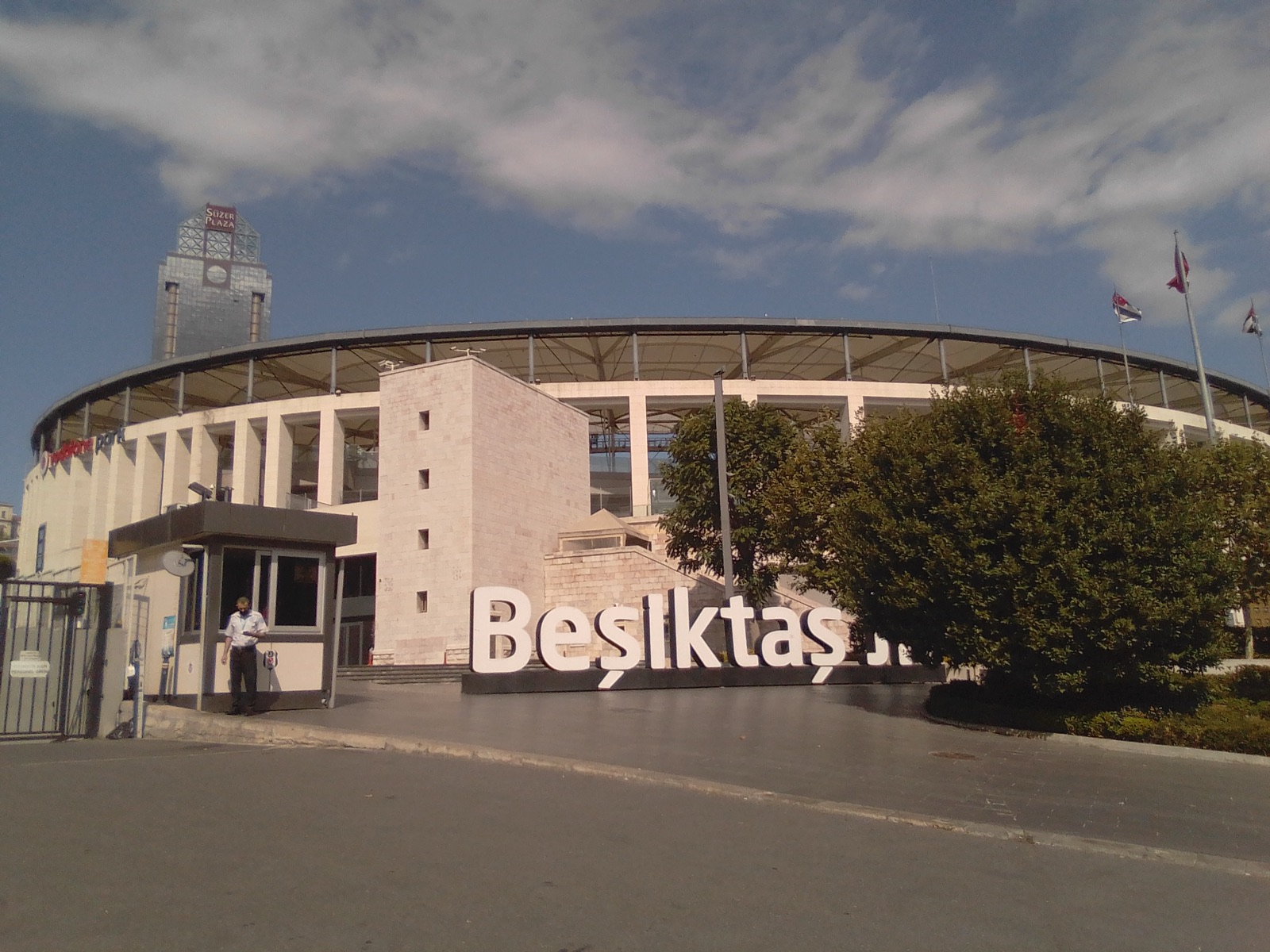
For fans, it was no interchangeable new building on the edge of town. It was Beşiktaş, right in the middle of Beşiktaş.
Demolition and Rebuilding
By the early 2010s, the old stadium no longer met modern requirements for safety, comfort, boxes, media, and marketing. Its largely demolition began in 2013.
The project was sensitive, because parts of its historic structure were protected. The new building therefore had to integrate certain elements and couldn't fully ignore its surroundings.
The new arena opened in 2016. Technically, it has everything a modern European football stadium needs, yet still stands on the same emotionally charged ground.
What Survived From the Old Stadium
Certain historic facade and wall sections were preserved, or incorporated into the new building. That means today's arena isn't a completely detached replacement.
Its orientation and proximity to the Bosphorus remain defining too. From outside, though, you clearly notice how much bigger and more commercially organised a modern stadium is.
Its Name Changed Several Times
Over its history, the stadium carried various names. The old İnönü Stadium was, at times, called the Mithatpaşa Stadium, and later İnönü again. The new building first became known as the Vodafone Arena, or Vodafone Park, after a telecommunications sponsor. Today it carries the name Tüpraş Stadyumu.
Such name changes show how strongly modern professional football depends on sponsorship. For many fans, though, the place remains simply the Beşiktaş stadium.
Çarşı and Fan Culture
The fan group Çarşı became known in the 1980s and developed a strongly visible, often humorous, and at times political identity. Its banners, chants, and choreographed displays are among the most internationally recognised images of Turkish fan culture.
During the 2013 Gezi protests, members, or supporters, from the Çarşı circle visibly took part in demonstrations. Legal proceedings against individuals followed later too. The fan group is therefore more than pure stadium entertainment.
The Stadium and Dolmabahçe: A Sensitive Neighbour
Its proximity to Dolmabahçe Palace means the stadium can't be viewed by sporting criteria alone. Every major redevelopment affects a protected heritage setting, historic sightlines, and a very prominent stretch of the Bosphorus. That's why, during the rebuild, it was crucial to limit the arena's height and external impact so it didn't completely dominate the palace.
It's precisely these constraints that make its architecture unusual. Many modern stadiums try to look like gigantic branded objects from kilometres away. Beşiktaş had to assert itself in a place where considerably older monuments already play the leading role. The stadium is modern, but it can't ignore its surroundings.
Its immediate proximity to Dolmabahçe Palace made every stadium redevelopment tricky from a heritage-preservation standpoint. A modern temple of football, with tall stands, advertising surfaces, and floodlights, sits in an area of extraordinary historical significance. Certain heights, facade elements, and sightlines therefore had to be respected.
That the stadium could nonetheless remain on this site mattered enormously to the club. A new building far outside the city would probably have been simpler to plan, but Beşiktaş would have lost part of its spatial identity.
This compromise shows how difficult heritage protection is within a living metropolis. You can't put every historic setting under a glass dome. At the same time, economic pressure shouldn't be allowed to push out everything old.
Concerts, National Matches, and More Than Club Football
The old İnönü Stadium wasn't exclusively Beşiktaş's home ground. International artists performed concerts there, and the Turkish national team used the venue too. As a result, the place gathered memories reaching far beyond a single club.
Such multiple uses are part of the history of great inner-city stadiums. During the day, someone might walk past the palace; in the evening, a derby takes place; a few weeks later, a concert. The place constantly shifts what it means.
The new stadium continues this event function, though with modern logistics, security checks, and commercial areas that didn't exist in this form at the old İnönü.
Why Stadium Atmosphere Isn't Just About Volume
Beşiktaş fans are known for loud support. Records and spectacular decibel figures are gladly repeated in the media and among fans. Such measurements, though, depend heavily on the measuring point, the device, and the match situation, and are therefore no objective competition between fan groups.
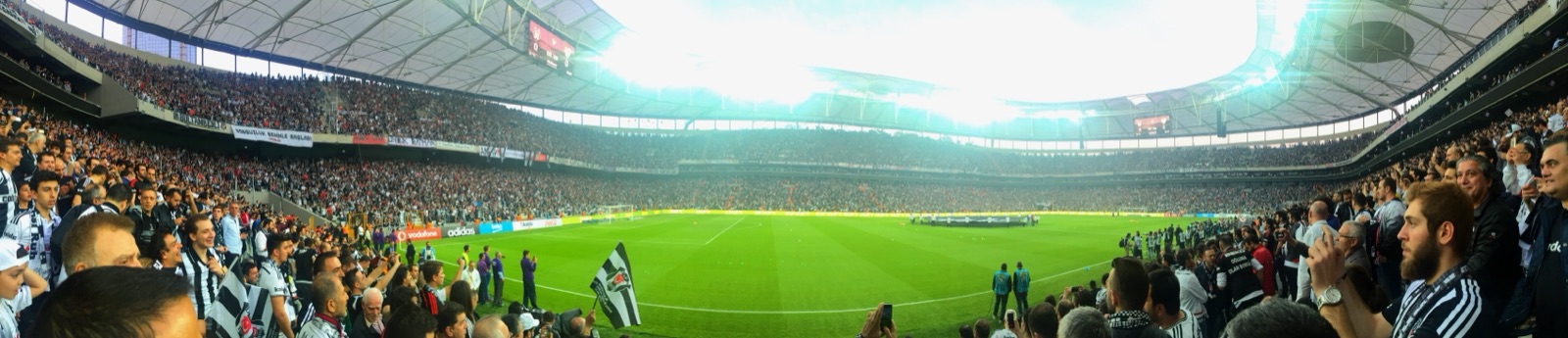
What matters more is the spatial effect. Steep stands, enclosed tiers, and many fans sitting close to the pitch can concentrate noise. Chants also work socially: thousands of people synchronise themselves, creating a shared ritual for a short time. That's exactly why a stadium can feel so emotionally powerful, even if you don't know a single statistical volume record.
Beşiktaş as Club and District
The club shares its name with the district, and this very closeness shapes its identity. Around the Beşiktaş Çarşı, its markets and side streets, you encounter the club crest far beyond match days. Black and white colours hang from shops, cafés, and balconies.
This local rootedness explains why the stadium's site carries so much emotion. A club can have millions of fans nationally and still keep a very concrete geographic core. For Beşiktaş, that core lies not just in a training centre, but right in the middle of the neighbourhood.
The 2016 Attack
Sadly, a tragic event is also part of today's stadium's history. On 10 December 2016, after a match, bombs exploded right near the stadium in a terrorist attack aimed mainly at police forces. Dozens of people were killed, many more injured.
A place like this shouldn't be told only through football romance. For many Istanbullus, the surroundings have since also been tied to that night. In great public spaces especially, joy and painful memory sometimes sit frighteningly close together.
The Stadium as an Acoustic Space
Modern arenas are planned not just structurally, but acoustically too. Roof shape, stand incline, and material affect how much chanting stays inside the space or escapes outward. At the Beşiktaş stadium, its compact form supports a very dense atmosphere.
That's an important difference from the open old İnönü, where the Bosphorus view was part of the experience. The new building has to combine modern roofing and volume with heritage protection and its urban site.
Fans, of course, rarely judge such questions technically. What matters to them is whether a match feels "loud" and close. But architecture plays a decisive role in whether exactly that feeling arises.
"Today's stadium is still the 1947 İnönü Stadium." No. Today's arena is a new building, but integrates certain historic elements and stands on the same site.
"Did Süleyman Seba really score the first goal?" Yes, according to official Beşiktaş club history.
"You can see the Bosphorus directly from the pitch." These spectacular views depend on where you sit in the stadium. Historically, they were especially famous from the upper areas; modern stands and roof structures change the view.
My Thought on This Place
At this stadium, I find the question of whether you're a Beşiktaş fan less interesting. The setting alone is crazy. On one side, an Ottoman palace; a few minutes away, the Bosphorus; and right in between, tens of thousands of people screaming over a football.
That's somehow pretty perfectly Istanbul: history doesn't stand neatly cordoned off in a museum. It has to share the space with traffic, football, concerts, and today's life.
– Amra