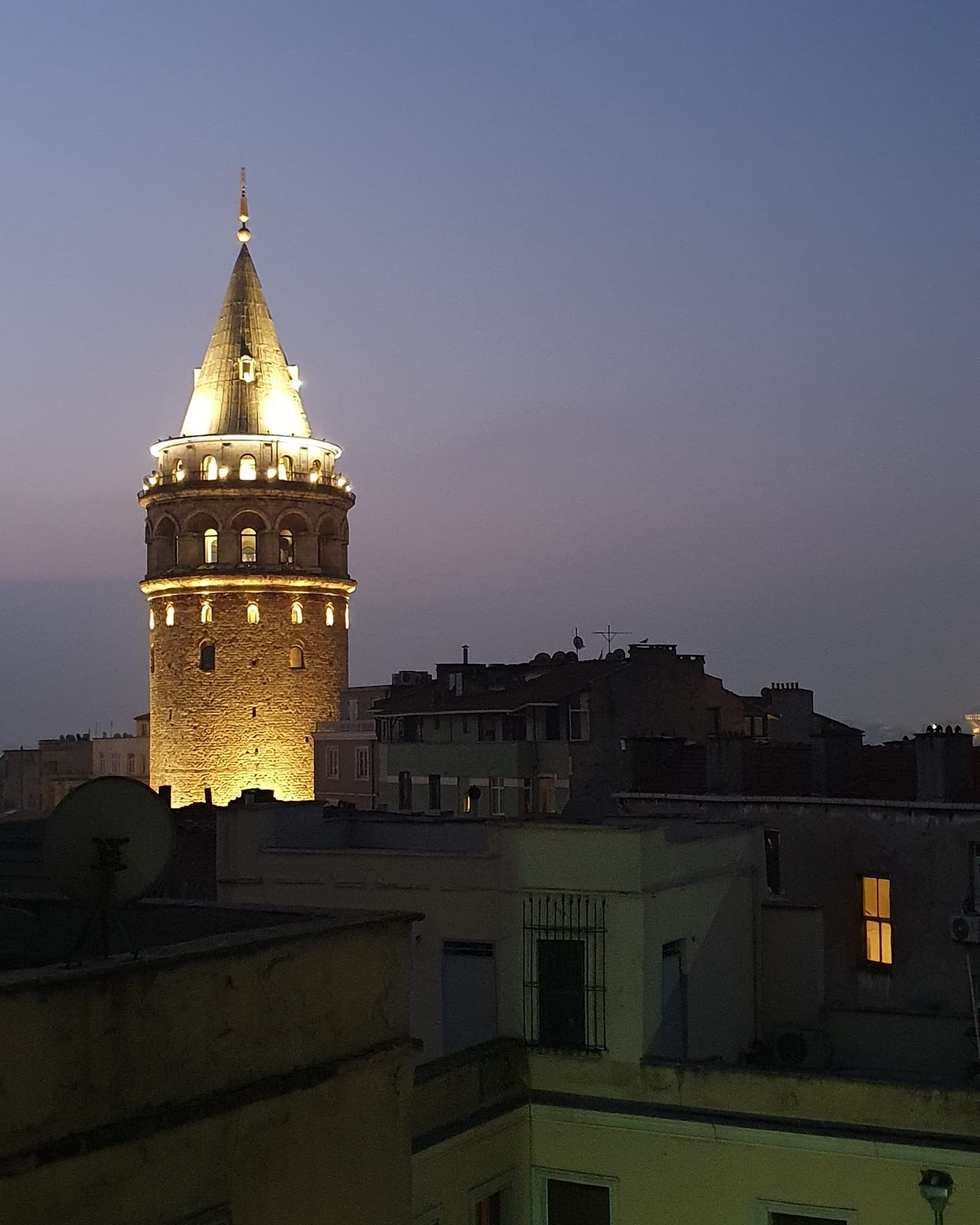
At the top of Galip Dede Street, just a few minutes from the Galata Tower, lies one of the most significant sites of the Mevlevi tradition in Istanbul. The Galata Mevlevihanesi was founded in 1491 and was, for centuries, a religious, musical and literary center. Today it's a museum. Anyone who comes only for the famous whirling dervishes, though, sees only a small part of what this place means.
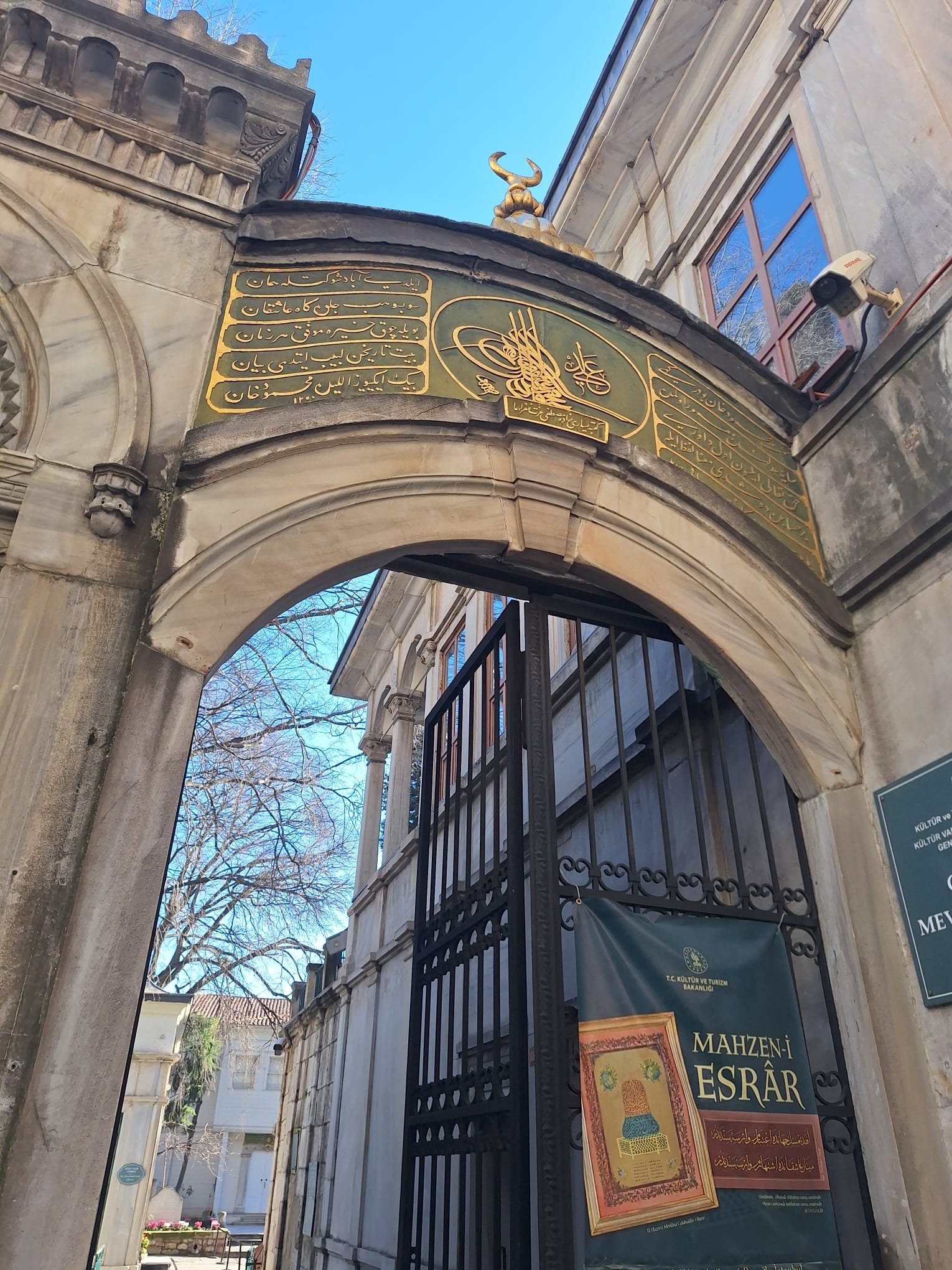
At the top of Galip Dede Street, just a few minutes from the Galata Tower, lies one of the most significant sites of the Mevlevi tradition in Istanbul. Anyone who comes only for the whirling dervishes, though, sees only a small part of what this place means.
The Mevlevi order grew out of the spiritual tradition surrounding Jalal ad-Din Rumi, known in Turkish as Mevlânâ Celâleddîn-i Rûmî. After his death, his followers created an organized Sufi tradition in which music, poetry, discipline, and the symbolic whirling movement of the sema played a central role. The Galata lodge was one of the most important institutions of this tradition in the Ottoman capital. Among its leaders was also Şeyh Galib, one of the most significant poets of classical Ottoman literature.
- The Galata Mevlevihanesi was founded in 1491.
- It was also known as the Kulekapısı Mevlevihanesi and Galip Dede Tekke.
- The Mevlevi order traces back to the spiritual tradition of Mevlânâ Rumi.
- Sema is a religious-spiritual ceremony, not a folkloric dance in the original sense.
- Şeyh Galib led the lodge from 1791 and was connected to Sultan Selim III.
- The building was damaged and renewed several times by earthquakes and fires.
- Its function as a tekke ended after the law of 1925.
- Since 1975 the complex has been used as a museum; since 2011 it exists as the Galata Mevlevihanesi Museum.
- From 1975 the complex was used as a museum; since 2011 it has existed as the Galata Mevlevi Museum.
Who Mevlânâ actually was
Mevlânâ Celâleddîn-i Rûmî was born in 1207 in the region of Balkh and later lived in Konya. He was an Islamic scholar, mystic, and poet. His Persian-language poetry, especially the Masnavi, is among the most important works of Sufi literature.
Rumi himself did not found an order in the form of fixed buildings, uniforms and a detailed ritual system, as later emerged. After his death in 1273, his son Sultan Veled and later followers increasingly institutionalized the community. Out of this grew the Mevlevi order.
How his teaching became an order
The Mevlevi order combined religious education, Quranic recitation, music, poetry, and spiritual discipline. Sheikhs, dervishes, musicians, students, and servants lived or worked in the mevlevihanes. A novice went through a long training; the famous whirling movement was only one element of this system.
Mevlevi institutions developed especially in the urban centers of the Ottoman Empire. They were religious sites, but at the same time centers for music and literature. Many significant composers and poets were connected to Mevlevi circles.
1491: the founding in Galata
The official museum administration dates the founding of the Galata Mevlevihanesi to 1491. It was built on the heights of Galata, in a district still strongly shaped at the time by its Genoese and international past.
This established a new Ottoman-Islamic institution in Beyoğlu. Its location near important trade routes, and later near İstiklal, made the lodge easily accessible for centuries.
How a mevlevihane functioned
A mevlevihane was not a building with just one hall. The complex included living and teaching quarters, a kitchen, prayer and ceremonial areas, graves, a library, and other functional spaces. The kitchen even carried spiritual significance, since training and discipline were partly organized there.
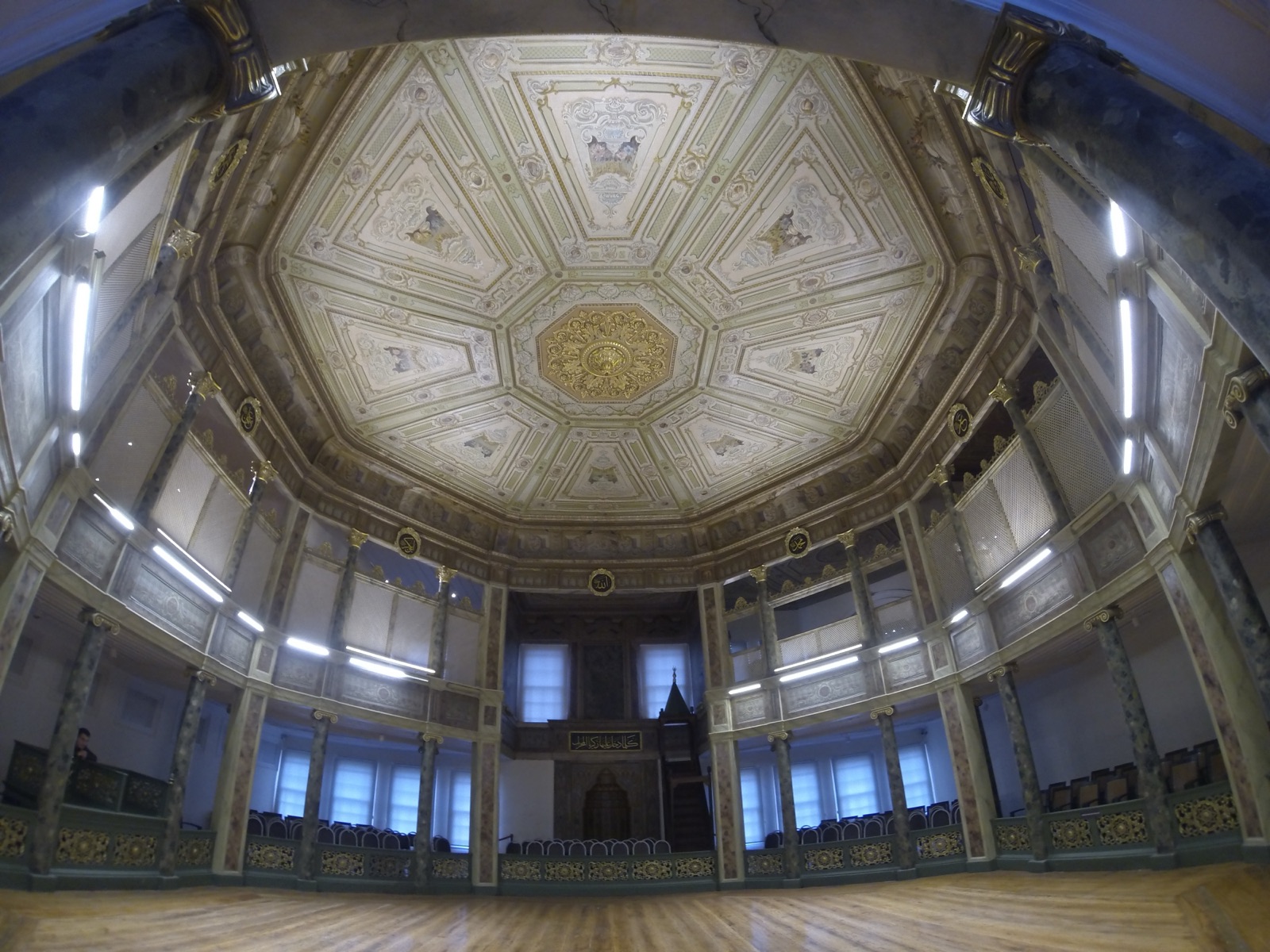
The central semahane was the room for the sema ceremony. Galleries allowed spectators or members to follow the ritual. Music played a central role, especially the ney flute, kudüm drums, and singing.
What actually happens during sema
The image of a dervish spinning with outstretched arms is world-famous. In a touristic context, this easily becomes a show. Originally, though, sema is a structured spiritual ritual with specific sections, prayers, music, and symbolic movements.
The clothing carries meaning. The tall felt hat, the sikke, is often interpreted as a symbol of the tombstone of the ego. The black cloak can stand for the grave, the white robe for the shroud. At the start, the cloak is removed, followed by ordered sequences of turning.
The position of the hands is also interpreted: one hand up, one down — symbolically the dervish receives divine grace and passes it on to the world. Such explanations belong to the Mevlevi tradition, but shouldn't be reduced to a simple "secret code." The meaning of the ritual lies in the whole spiritual process, not just in individual gestures.
If you want to experience the whirling dervish ceremony, you can arrange a place in advance. Here is a suitable offer.
Şeyh Galib and Sultan Selim III
One of the most famous leaders of the Galata lodge was Şeyh Galib, who became postnişin in 1791. He was an outstanding poet of Divan literature. His work "Hüsn ü Aşk" is considered one of the masterpieces of classical Ottoman poetry.
Galib had a close connection to Sultan Selim III, who himself composed, wrote poetry, and had a strong interest in music. Under Selim, the lodge was restored. This shows once again that Mevlevi culture didn't exist at the margins of the Ottoman elite, but had connections all the way to the court.
Fires, earthquakes, and rebuilding
The buildings of 1491 don't stand unchanged today. The severe earthquake of 1509, known in Istanbul as the "Little Apocalypse," likely caused damage. A restoration inscription from 1651 documents later work.
In 1765, the great Tophane fire damaged the complex. Sultan Mustafa III had it repaired. Under Selim III and later Abdülmecid, further rebuilding took place, with the complex largely gaining its present appearance in the 19th century.
This means: the institution dates from the 15th century, but many of its visible building elements are considerably younger.
1925: the end of the tekke function
After the founding of the Republic, tekkes, zaviyes, and traditional order institutions were legally closed in 1925. This also ended the Galata Mevlevihanesi's function as an active order lodge.
The measure was part of republican secularization and modernization policy. Supporters saw in it the separation of state order from religious power structures; for Sufi communities, it meant, at the same time, a deep institutional break.
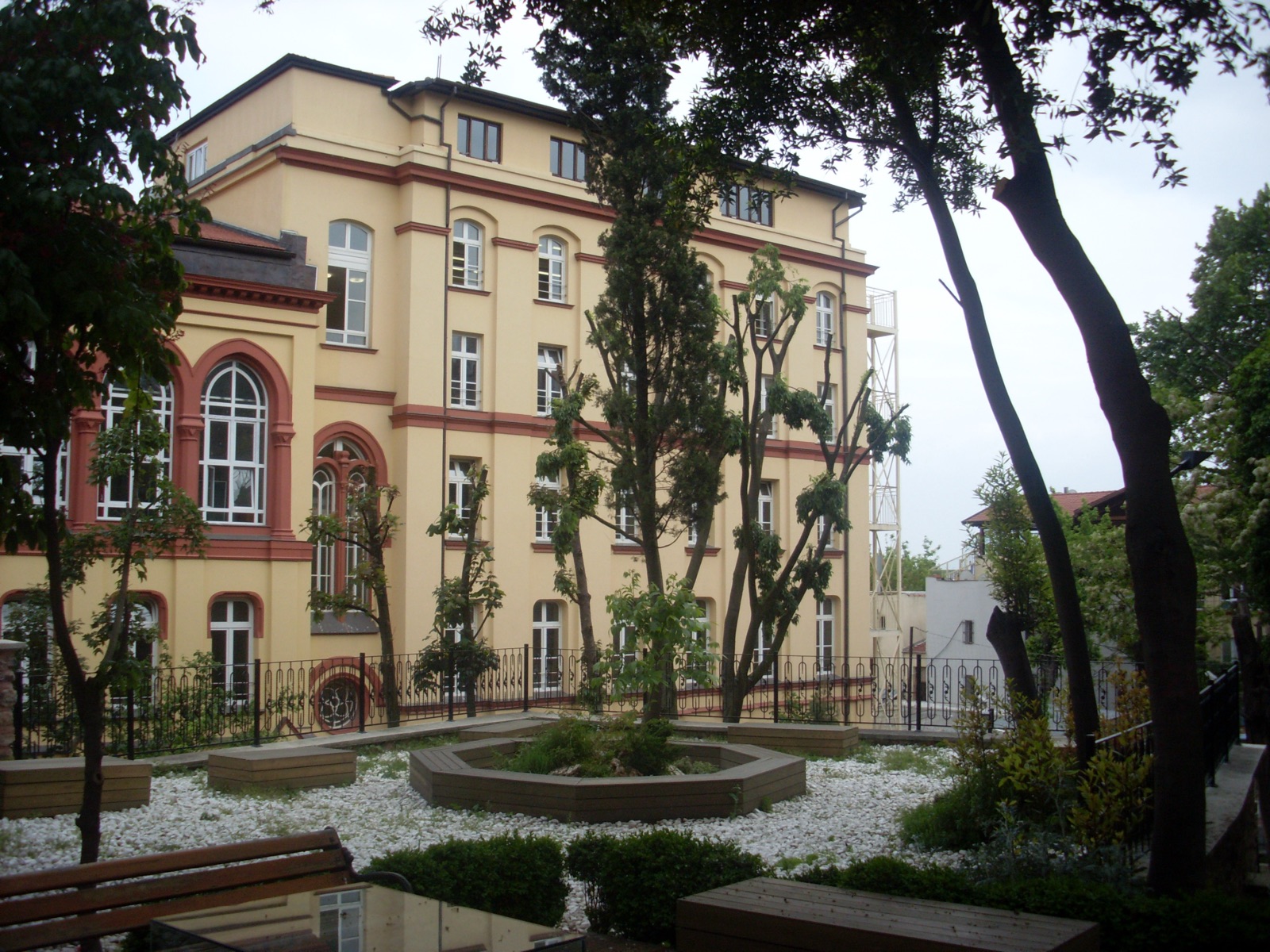
The building complex was later used, among other things, as a school.
Museum instead of monastery
After restorations between 1967 and 1975, the complex opened in 1975 as a museum of Divan literature. Further extensive work took place between 2008 and 2011. Since then it has carried the name Galata Mevlevihanesi Museum.
Today, the semahane displays musical instruments, calligraphic works, and objects related to Mevlevi culture. Graves lie in the garden, including the mausoleum of Şeyh Galib. The so-called Hamuşan, "place of the silent ones," denotes the cemetery area — a poetic notion for the dead.
Music as spiritual discipline
The music of the Mevlevi order is not merely an accompaniment to the whirling movement. It has its own, highly developed form. A classical Mevlevi ayin consists of several parts and follows musical modes, the so-called makams. The ney, a simple reed flute, holds a particularly symbolic position within it. Already the opening of Rumi's Masnavi speaks of the lamenting reed, separated from its origin. In Sufi interpretation, this becomes an image for the human being longing for their divine origin.
Musicians in Mevlevi circles were therefore no arbitrary accompanists. Many received years of training. Composers developed great ayin compositions that are today considered high points of classical Ottoman music. Sultan Selim III himself also composed and moved in musical circles in which Mevlevi musicians played an important role.
This connection between the court and Sufi culture explains why the Galata lodge could become a cultural center. Anyone trained there learned not only religious practice, but often also poetry, music, and calligraphy.
The long training path of a dervish
The romantic idea that someone puts on a white robe and spontaneously begins to spin has little to do with historical reality. Novices could go through a long training path, traditionally often associated with a symbolic duration of 1,001 days. They learned service, discipline, religious texts, music, and practical tasks.
An important part of this training was, precisely, not spectacular. Kitchen work, cleaning, obedience, and everyday service were meant to discipline the ego. Only within this larger process did sema gain its meaning.
The famous whirling technique also has to be trained physically. Balance, foot placement, and gaze control prevent the movement from turning into chaotic stumbling. The spiritual meaning and the physical technique don't contradict each other; they belong together.
Women and the Mevlevi tradition
Another common misconception is that Mevlevi culture consisted exclusively of men. Historically, men dominated the public institutional roles and the well-known sema ceremonies, but women belonged to the spiritual environment, supported endowments, wrote poetry, and took part in religious networks.
In various regions there were female Mevlevi followers and spiritually respected women. The concrete extent of participation in sema differed by era and place. Modern portrayals claiming either a completely gender-equal medieval practice, or conversely complete female absence, both oversimplify the history.
Şeyh Galib's grave and the "place of the silent ones"
Several significant graves lie in the garden of the Galata Mevlevihanesi. Şeyh Galib died very young in 1799 and was buried there. His mausoleum makes visible how closely poetry and religious leadership were intertwined.
The term Hamuşan for the cemetery area is especially poetic. "Hamuş" means silent. The dead are thus "the silent ones." This language fits a tradition in which death was understood not merely as an end, but as a transition and a return to God.
Rumi's death anniversary is still called Şeb-i Arus, "wedding night," to this day — not because death was meant to be romanticized, but because the mystical tradition emphasizes union with the divine. It's exactly such terms that explain why Mevlevi culture can hardly be understood without its spiritual language.
What a museum visit can, and cannot, convey
A museum can show clothing, instruments, manuscripts, and architecture. It can explain how an order functioned. What it can't fully convey is lived religiosity. It's therefore worth distinguishing between the historical institution, today's museum presentation, and modern sema performances.
Some of today's events are meant religiously seriously, others are more strongly cultural presentation or a touristic show. From the outside, the line isn't always easy to see. It's respectful, therefore, not to treat the ceremony merely as an exotic photo opportunity.
What to look at deliberately in the museum today
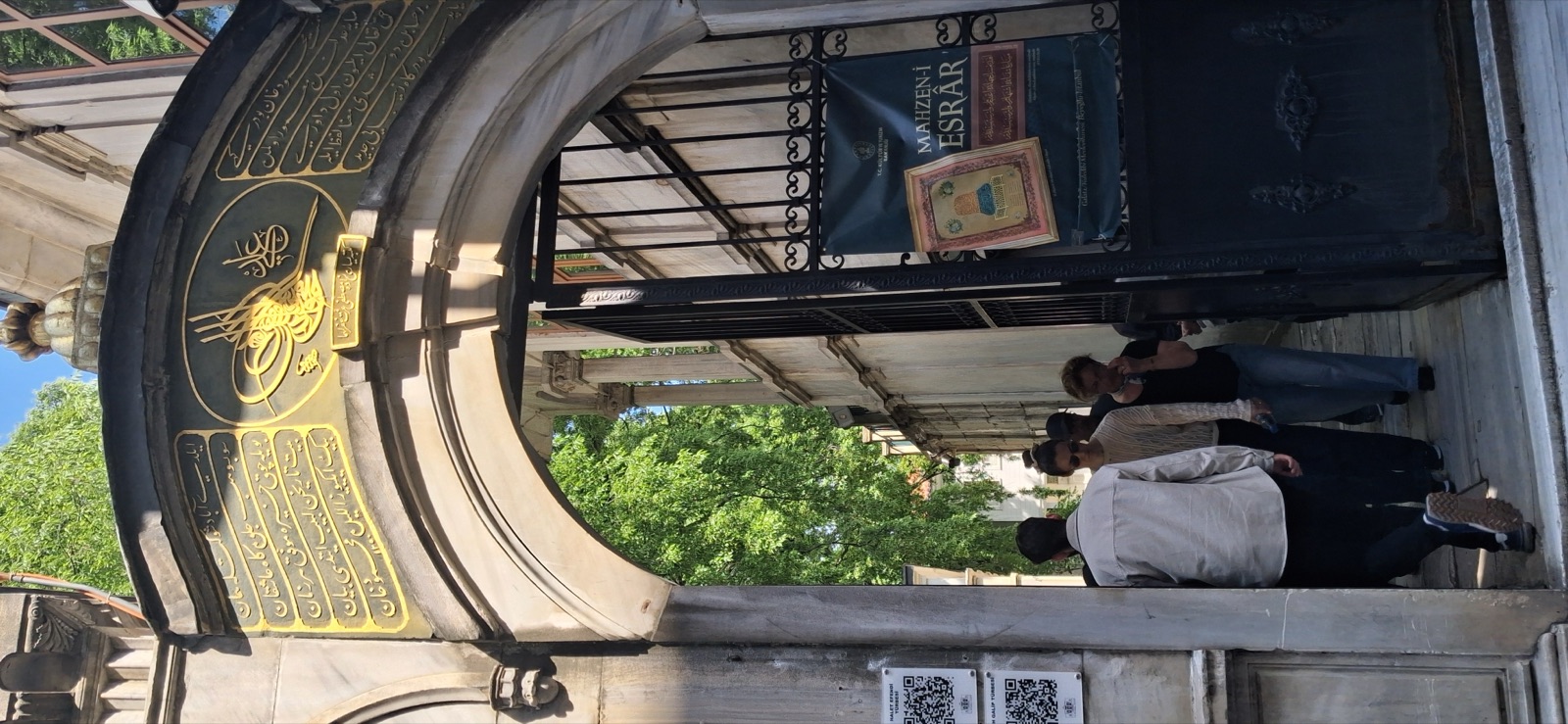
Don't start out immediately trying to find a "dervish hall" as fast as possible. The entrance gate and garden already belong to the lodge's history. The gravestones in the Hamuşan show different headwear and inscriptions, from which rank and affiliation can be read. In the semahane, it's worth paying attention to the circular movement area, the musicians' position, and the galleries. The room wasn't designed for a modern stage show, but for a ritual in which different groups took part with fixed roles.
Among the musical instruments, the ney is especially important, but the kudüm and other instruments also show that Ottoman art music can hardly be understood without religious institutions. Calligraphy and manuscripts, in turn, connect the lodge to the literary world of Şeyh Galib. This makes clear that the mevlevihane was more a cultural academy with a spiritual center than a place where people simply spun once a week.
Anyone who then walks down Galip Dede Street should be aware how closely this spiritual site was connected to one of the busiest parts of Beyoğlu. Mysticism didn't mean seclusion somewhere in the desert; it existed right in the middle of the city.
"Rumi invented the famous dance exactly as it's performed today." Too simple. The ritual form developed over generations after his death.
"Dervishes spin until they lose consciousness in a trance." That doesn't match the ideal of sema. The movement is controlled, trained, and embedded in an ordered ritual.
"Today's lodge is entirely from 1491." False. Institutionally it dates back to 1491, but structurally there have been numerous destructions and rebuildings.
My take on this place
What always bothers me a little about places like this is when an entire religious and cultural tradition gets reduced to a pretty video of spinning white skirts. Sema looks beautiful, but that's exactly why it's worth knowing that behind it stand training, music, poetry, and centuries of discipline.
And then this lodge sits practically right by the Galata Tower too. To me, that's typical Istanbul again: you walk a few minutes and switch from Genoese military history to Ottoman mysticism, without the city feeling obligated to put up a sign first saying "a new chapter begins now."
– Amra