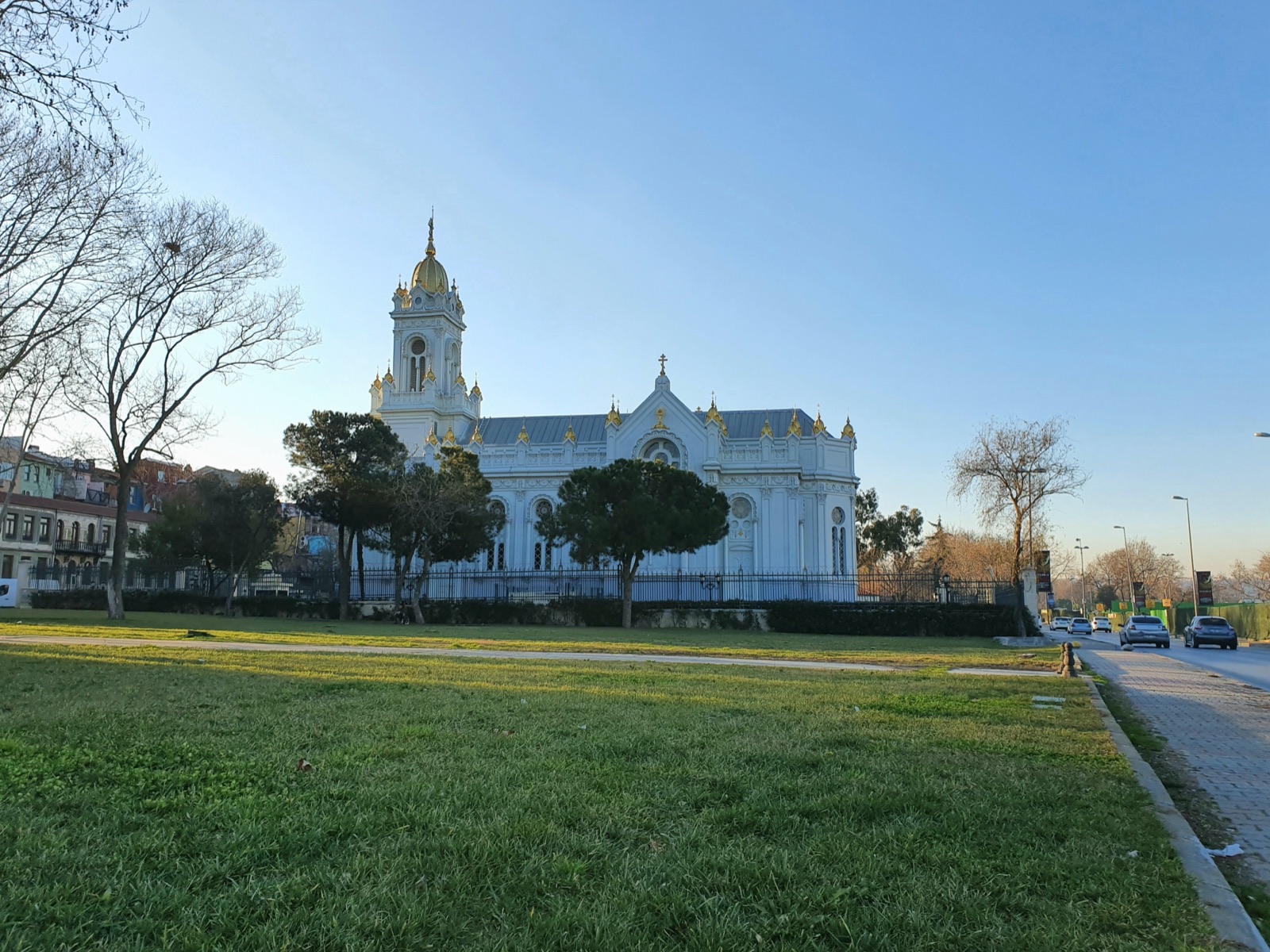
The Bulgarian Orthodox Church of St. Stephen on the Golden Horn looks, at first glance, like a classic historicist church building. Only once you know what it's made of does it become extraordinary: large parts of its structure were manufactured from prefabricated iron elements. These were produced in Vienna, transported to Istanbul via the Danube and the Black Sea, and assembled on site. That's why it still carries the nickname the Iron Church today.
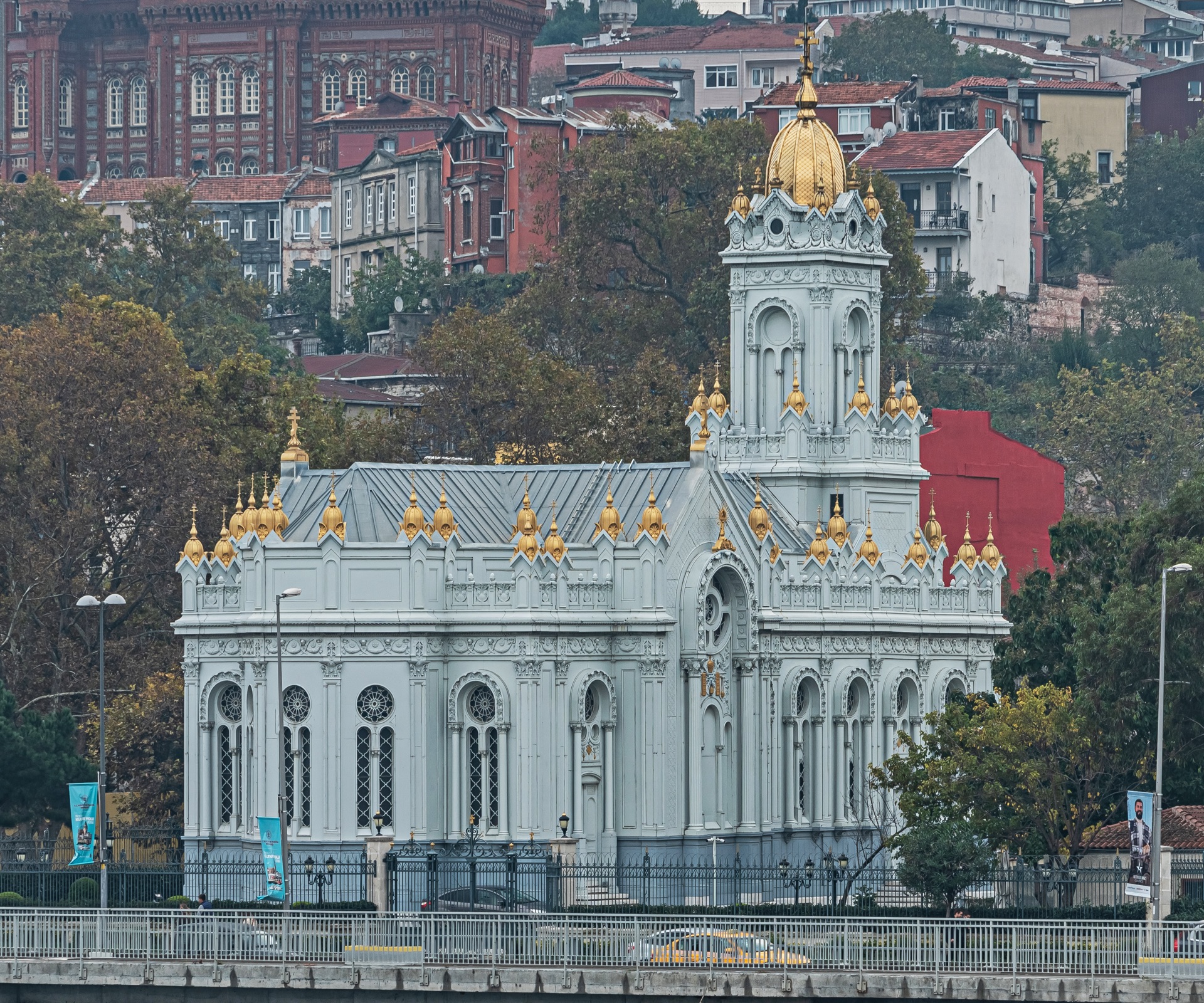
The Bulgarian Orthodox Church of St. Stephen on the Golden Horn was built from prefabricated iron elements, manufactured in Vienna, shipped via the Danube and the Black Sea, and assembled on site — hence its nickname, the Iron Church.
But the technology is only half the story. St. Stephen was built in the 19th century during the Bulgarian struggle for an independent church organization, against the Greek-dominated Ecumenical Patriarchate. The building is thus, at once, industrial architecture, national history, and religious politics. Anyone who just says "a church made of iron" misses the actual conflict that led to its creation.
- St. Stephen is a Bulgarian Orthodox church on the Golden Horn.
- It arose in the context of the Bulgarian church independence movement within the Ottoman Empire.
- An older wooden church had previously stood on the site.
- Today's building was erected at the end of the 19th century from prefabricated iron elements.
- Key components were manufactured in Vienna and transported to Istanbul.
- The church was consecrated in 1898.
- After extensive restoration, it was ceremonially reopened in 2018.
Bulgarians in Ottoman Istanbul
In the 19th century, many Bulgarians lived in Constantinople. Merchants, craftsmen, officials, and students used the capital as an economic and political center. At the same time, Bulgarian-speaking Orthodox Christians belonged, ecclesiastically, to the Ecumenical Patriarchate.
With the rise of nationalist movements, this church affiliation became increasingly political. Language in worship, the appointment of bishops, and control over schools became questions of national self-determination.
Why church politics became national politics
In the Ottoman Empire, religious communities were important organizational structures. Whoever controlled church institutions influenced education, endowments, and local leadership. That's why the demand for a Bulgarian church organization was not merely a theological dispute.
Bulgarian activists wanted to organize worship and schools more strongly in their own language and break free of Greek ecclesiastical influence. The Patriarchate saw this as a threat to its unity.
The Bulgarian Exarchate
In 1870, the Ottoman sultan recognized the Bulgarian Exarchate by decree. This gave the Bulgarian Orthodox community its own church organization. The Ecumenical Patriarchate condemned the development and declared a schism in 1872.
This split lasted until 1945. The history of the Iron Church thus sits right in the middle of a conflict that occupied the Orthodox world of the Balkans for decades.
The first wooden church
Before today's iron building, a wooden church stood on the site, built on land belonging to the Bulgarian community. It became the symbolic center of the movement.
Wood, though, was a fire hazard and problematic for a permanent, representative building. The site's soft riverbank soil along the Golden Horn also made a very heavy traditional stone church difficult.
Why iron was used
Prefabricated iron architecture was technically modern in the 19th century. Factories could produce components serially, number them, transport them, and assemble them at their destination. That was especially attractive in regions with difficult building conditions.
For St. Stephen, the method also suited the ground conditions. A lighter metal construction was advantageous. At the same time, the community demonstrated modernity and international connections.
Manufacture in Vienna
The iron parts were manufactured by a Viennese company. Individual components were produced industrially, tested, and then disassembled, or prepared for transport. Vienna was, at the time, an important center for metal construction and engineering.
That a Bulgarian church in the Ottoman Empire was manufactured in Austria shows very clearly how international the late 19th century was. National identity and global production chains, apparently, aren't mutually exclusive.
Transport and assembly
The components were transported down the Danube to the Black Sea and then brought to Istanbul. On site, they were assembled according to plan. Thousands of parts had to fit; errors in prefabrication would only have shown up after a long journey.
This logistics is almost as impressive as the finished building. Without modern containers, trucks, or digital planning, an internationally coordinated building project came together across several transport routes.
The Iron Church lies in the middle of Balat. If you would like to experience the district with background knowledge, here is a guided tour.
Architecture and interior
The building draws on historicist church forms, combining neo-Gothic and neo-Baroque elements. From outside, you don't immediately recognize that its load-bearing and decorative parts were industrially manufactured from metal.
Inside, the church feels more traditional than its construction would suggest. The iconostasis, icons, and Orthodox liturgy anchor the technical, industrial building within a centuries-old religious tradition.
Restoration in the 21st century
Metal structures have their own preservation problems. Corrosion, moisture, and damage to joints can endanger the construction. Its location right by the water intensifies this strain.
After an extensive restoration, St. Stephen reopened in 2018, in the presence of top Turkish and Bulgarian politicians. The restoration was therefore not just heritage preservation, but also a modern diplomatic symbol.
"The complete church was fully built in Vienna and brought to Istanbul as a whole." No. Prefabricated components were manufactured, transported, and assembled on site.
"It's made one hundred percent of iron." The nickname describes its extraordinary metal construction; the building of course also has other materials and furnishings.
"It's just a technical curiosity." No. Its creation is closely tied to Bulgarian church and national history.
"Iron means the church is indestructible." On the contrary. Corrosion made extensive restorations necessary.
Why a Bulgarian Orthodox church was built in Istanbul
In the 19th century, numerous Bulgarians lived in the Ottoman capital. At the same time, a conflict over church independence developed within the Orthodox world. Bulgarian believers wanted to break more strongly free of the Greek-dominated Ecumenical Patriarchate and create their own church organization.
This conflict was not purely religious. Language, national identity, and political emancipation all played a central role.
The Bulgarian church on the Golden Horn thus became a visible symbol of this movement.
Why iron was chosen as the building material
The ground along the Golden Horn was difficult. A heavy, traditional stone building would have caused technical problems.
So a prefabricated iron construction was chosen instead. Components could be manufactured industrially and assembled on site.
That was modern, fast, and comparatively light.
Manufacture in Vienna and transport to Istanbul
Large parts of the iron structure were manufactured in Vienna and then transported to Istanbul via the Danube and the Black Sea.
This transport route alone tells you a lot about 19th-century industrialization. A house of worship could suddenly consist of components manufactured by machine hundreds of kilometers away.
Pre-industrial architecture worked completely differently.
Saint Stephen and the ceremonial opening
Today's church opened in 1898 and was dedicated to Saint Stephen.
Its white façade and ornamental iron elements make it look, at first glance, almost like a stone building.
Only on closer inspection do you recognize its industrial construction.
Architecture between historicism and technology
Stylistically, the church draws on Orthodox, neo-Gothic, and neo-Baroque elements.
Technically, though, it's a product of modern metal industry.
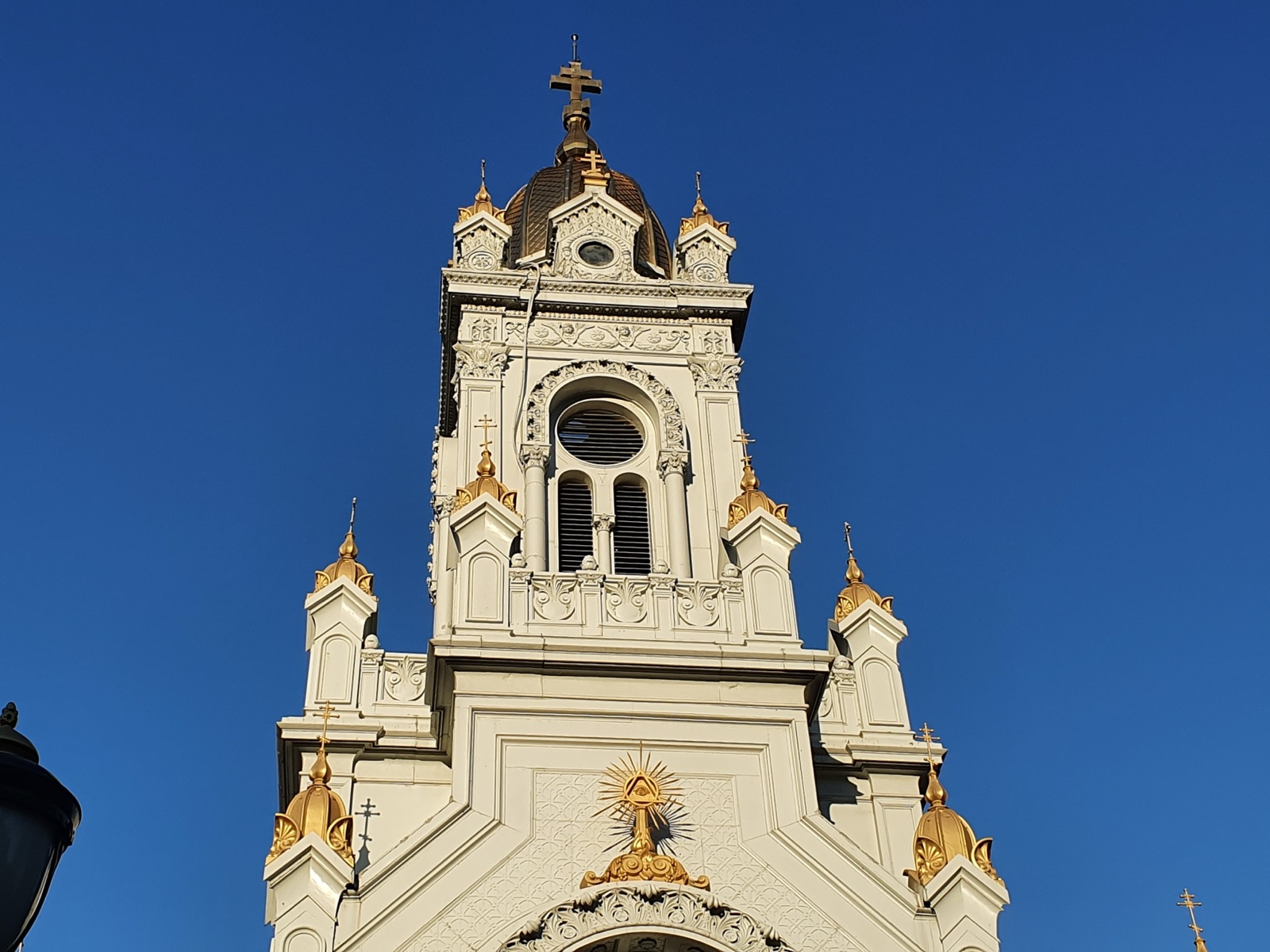
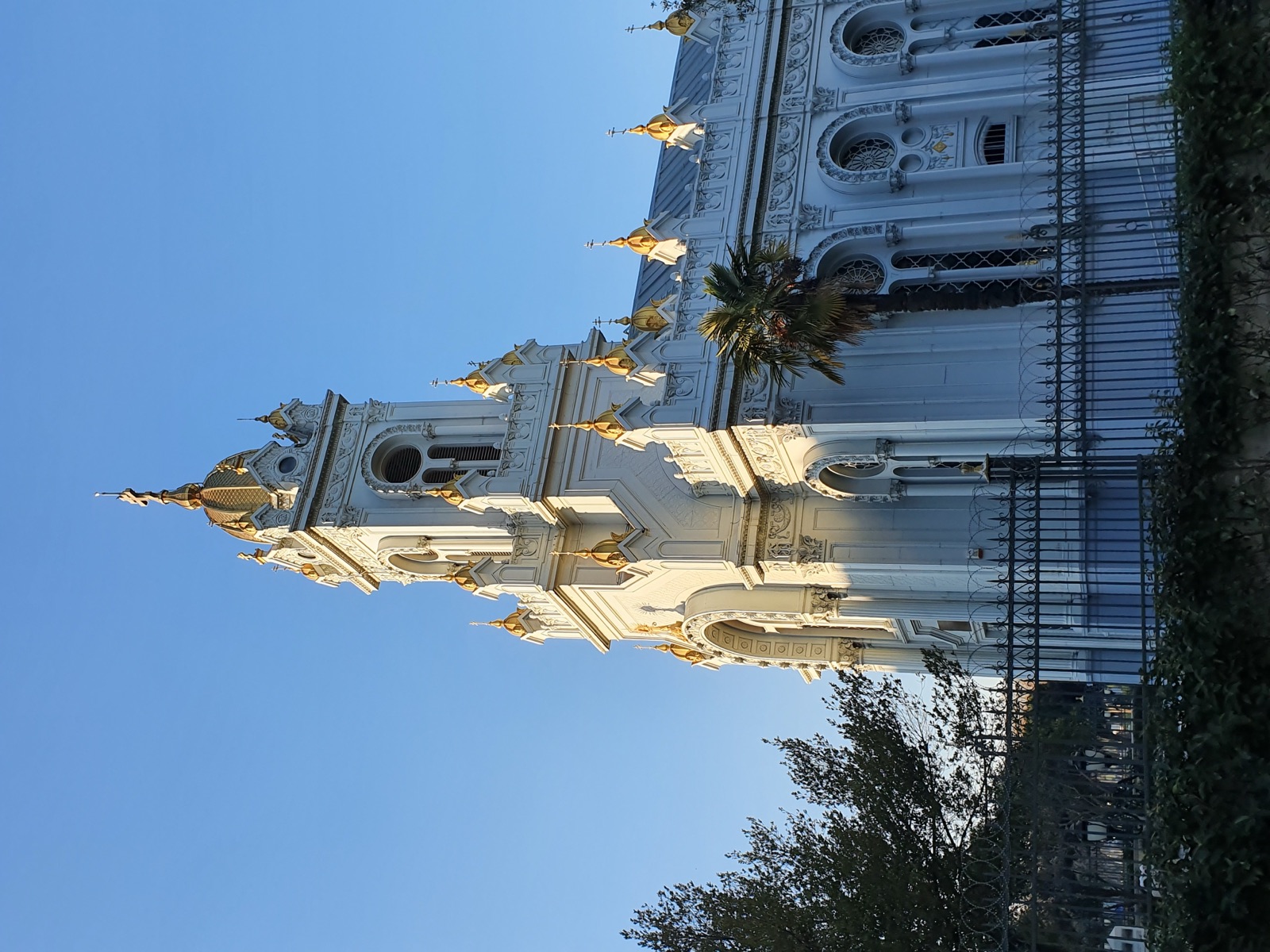
It's exactly this combination that makes it so extraordinary: traditional-looking sacred architecture with an industrially prefabricated skeleton.
Rust — the natural enemy of the Iron Church
Iron in immediate proximity to water and moist air has an obvious problem: corrosion.
Over the decades, the church suffered from rust and structural damage. Extensive restorations had to treat, replace, or stabilize the metal parts.
Without such work, the historic structure would have been endangered in the long term.
Restoration and reopening
In the 21st century, the church was comprehensively restored and ceremonially reopened.
Turkish and Bulgarian authorities worked together in the process. Especially in a building that arose from a historic church-political conflict, this cooperation carries an additional symbolic dimension.
Today the church looks extraordinarily well cared for again.
Fener, Balat, and religious diversity
Just a few kilometers, or streets, away you find the Ecumenical Patriarchate, Orthodox churches, synagogues, and mosques.
The Golden Horn has always been a space of different communities.
The Iron Church is therefore no isolated special case, but part of this religious urban landscape.
What's original today, and what's restored
A considerable part of the historic structure was preserved, but corrosion damage made it necessary to replace and reinforce individual parts.
The building is therefore authentic, but not untouched.
With iron architecture, that matters especially: without active conservation, the material destroys itself.
Why I find it architecturally so fascinating
From a distance it looks almost light and fairy-tale-like. Then you suddenly learn that this entire church was assembled from industrially manufactured metal parts.
That's almost the opposite of a Byzantine wall.
And yet both stand in the same city.
My take on this place
I already find the idea crazy: someone plans a church in Istanbul, has the components manufactured in Vienna, ships them across rivers and sea, and reassembles them on the Golden Horn. Today we'd call that "modular construction" and act as if we'd just invented it.
It gets even more interesting once you understand that behind this technical project stood a political and religious conflict. Then the church suddenly isn't just "the one made of iron" anymore, but a piece of Balkan and Istanbul history in a single building.
– Amra