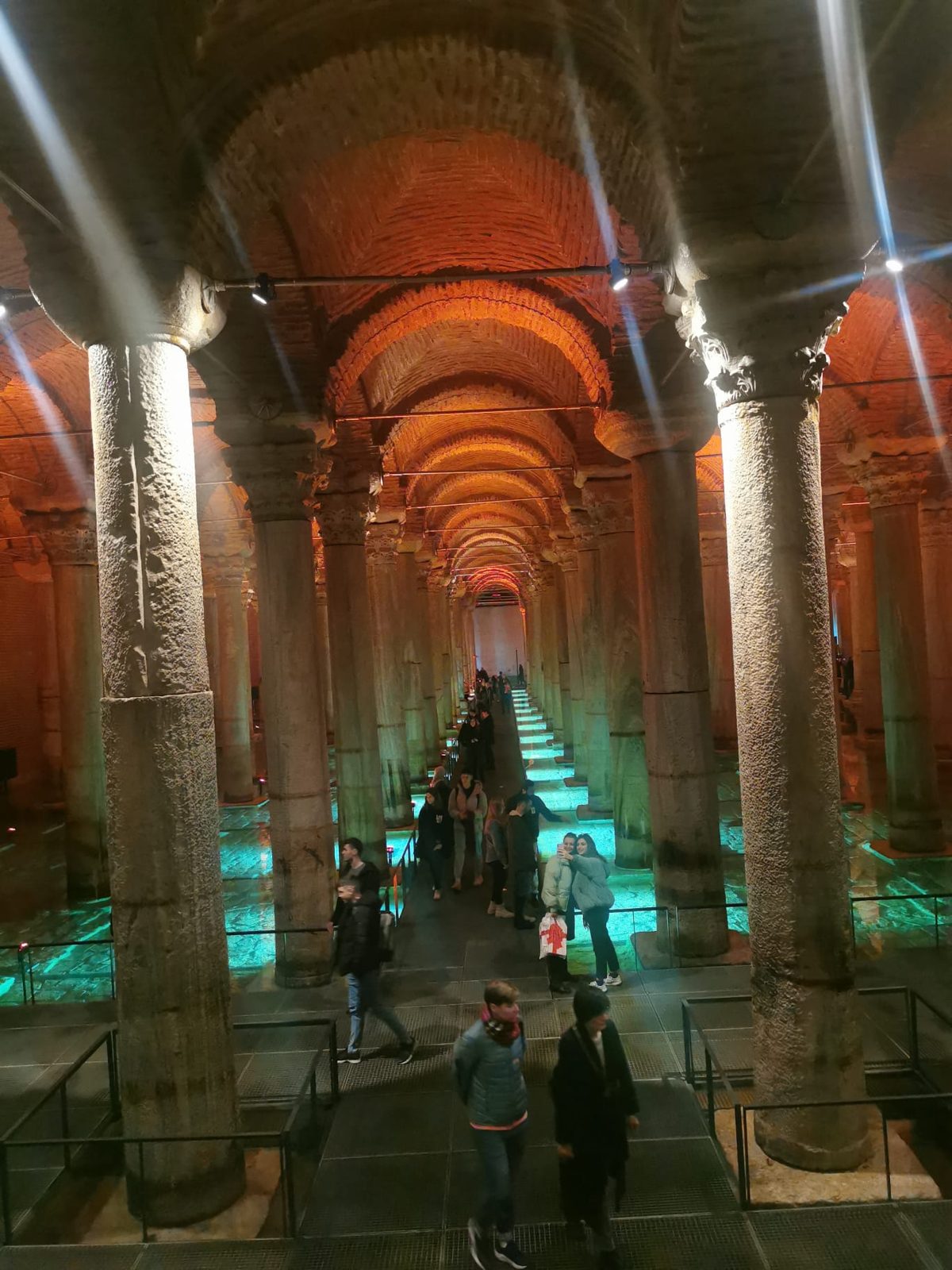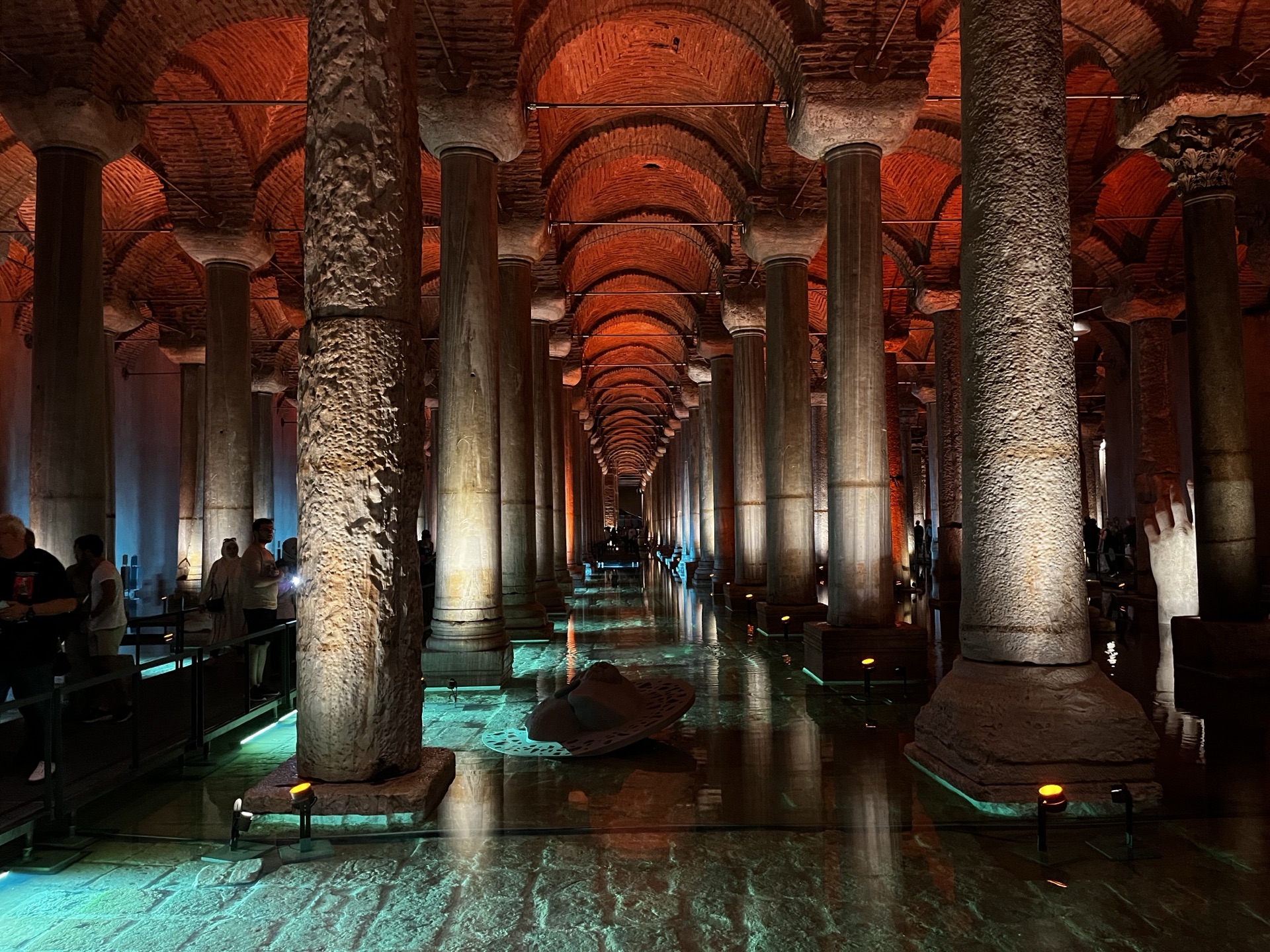

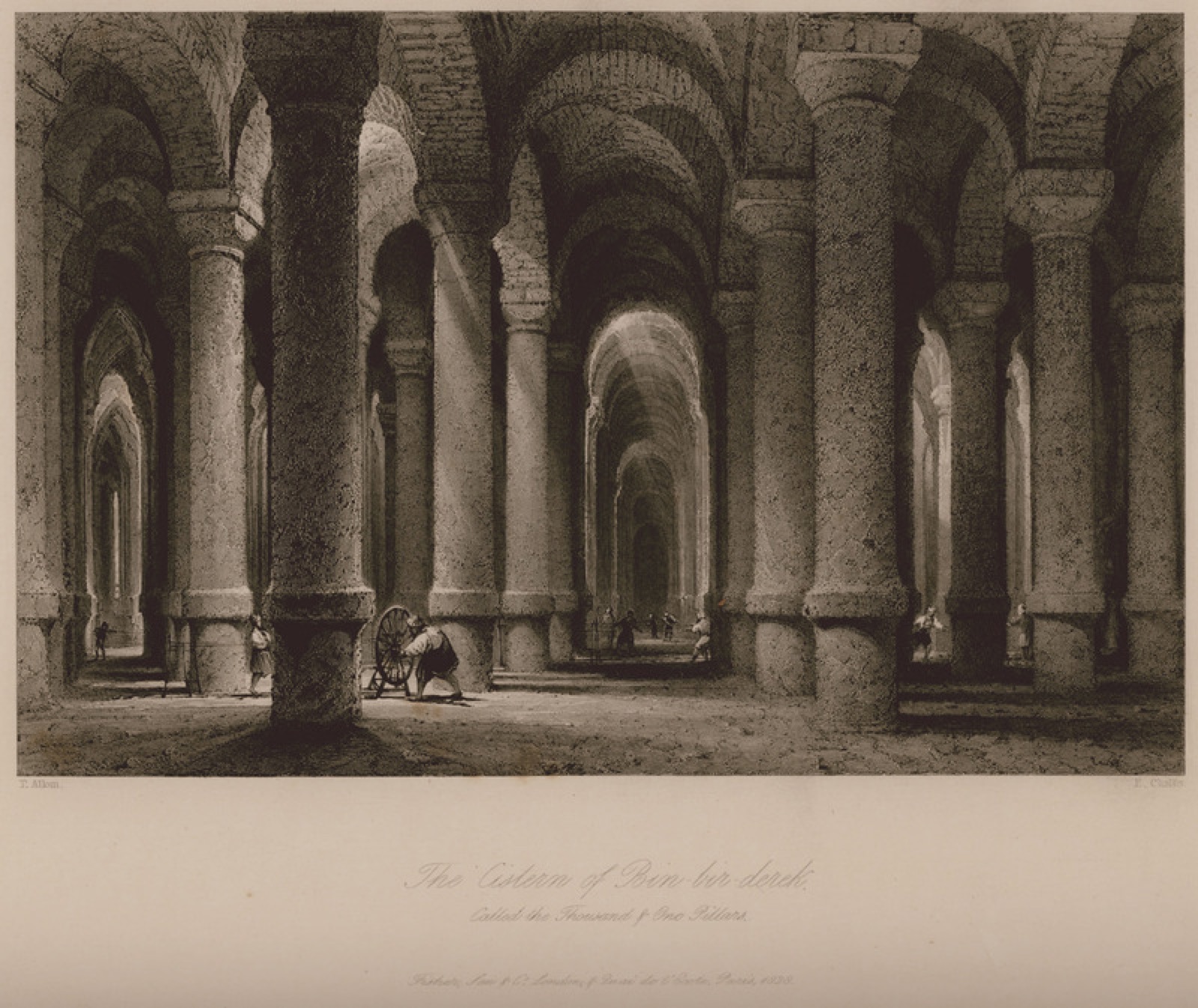
The Binbirdirek Cistern lies just a few minutes' walk from Sultanahmet's most famous sights, yet it's visited far less often than Yerebatan. Its name translates literally, roughly, as "a thousand and one columns" — which is interesting in itself, since the structure doesn't actually have 1,001 columns. Historically, around 224 columns or column positions are known, a large portion of which survive today.
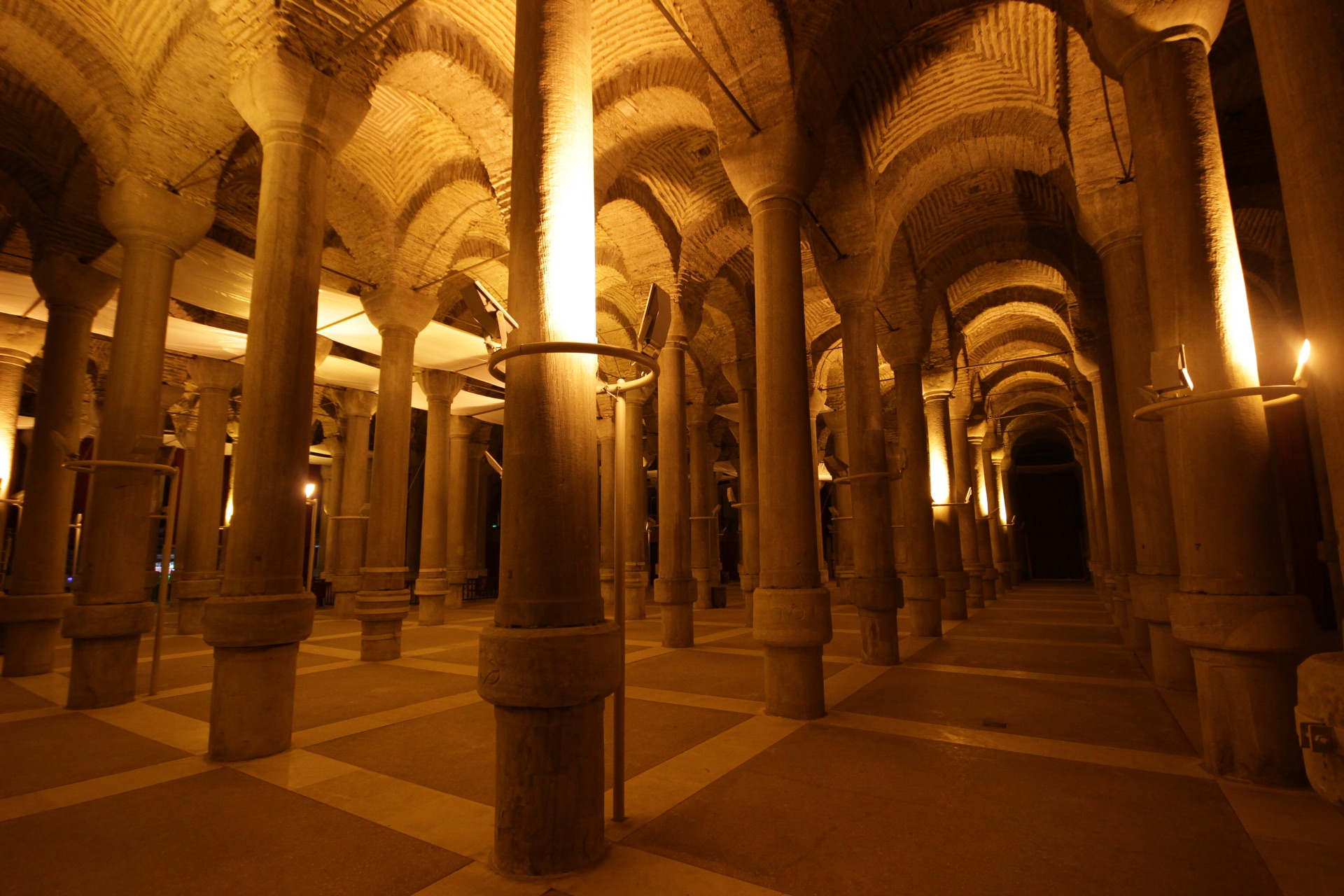
The Binbirdirek Cistern lies just a few minutes' walk from Sultanahmet's most famous sights, yet it's visited far less often than Yerebatan. Its name means "a thousand and one columns" — in reality there are 224.
The structure likely dates from late antiquity and is traditionally linked to the senator Philoxenos. After its original use ended, the underground space took on new functions. Especially well known is the tradition that workshops operated there during the Ottoman period, including silk spinners. That's how a water reservoir became an underground workplace.
- Binbirdirek is a large underground cistern in Sultanahmet.
- It is traditionally dated to late antiquity and linked to Philoxenos.
- The structure had roughly 224 columns, not 1,001.
- Many columns consist of two marble shafts stacked on top of each other.
- The name "Binbirdirek" is a figurative expression for the large number of supports.
- After losing its original water function, the space was put to other uses.
- Ottoman sources and later reports connect it, among other things, to workshops and silk processing.
When Binbirdirek was built
The exact dating is more complicated than for the Basilica Cistern. The structure is often placed in the 4th or 5th century. Traditionally it's associated with a palace belonging to the senator Philoxenos.
The problem is that older text sources and modern popular accounts sometimes simplify the dating more than the archaeological evidence allows. For visitors, what matters most is this: Binbirdirek is one of the great late-antique water reservoirs of Constantinople, built long before the Ottoman conquest.
Philoxenos and the open dating question
The name "Cistern of Philoxenos" is widely used internationally. Whether today's structure is exactly identical to the Philoxenos building mentioned in textual sources is debated in scholarship.
Such problems are typical for Constantinople. Written sources name buildings whose exact location was later lost. Archaeologists find structures whose original name isn't written on a plaque on the wall. A historical identification is therefore sometimes very likely, but not mathematically provable.
Why the columns consist of two parts
Binbirdirek has a particularly distinctive column structure. Many supports were assembled from two marble shafts joined together by stone connecting elements. This let the construction reach the necessary height without needing an enormously long monolith for every single support.
On some columns you can find Greek letters or marks, likely related to stonemasons, workshops, or construction organization. Such markings are small clues to how a huge building project was practically organized.
Why is it called 1,001 columns?
"Binbir" literally means 1,001 in Turkish, but it's also used figuratively to mean "countless" or "very many." So the name shouldn't be read like an exact inventory list.
Anyone who counts will be disappointed. Anyone who understands the language recognizes more of an exaggeration instead. Similar number games exist in many cultures. The name describes the effect of a space where supports seem to repeat endlessly.
How the cistern worked
Like other enclosed cisterns, Binbirdirek stored water beneath the city. Vaults distributed the weight of the buildings above onto the grid of columns. The structure was not a public underground hall. Water level, darkness and technical use made it largely invisible to ordinary residents.
That's exactly what makes the idea so fascinating: city life played out above, while enormous storage spaces lay beneath. The water system was one of the invisible reasons Constantinople could support such a large population at all.
What happened after the Byzantine era
After 1453, the water supply and use of many cisterns changed. Some remained functional, others dried out or were partly filled in. Over the course of the Ottoman period, Binbirdirek became accessible and took on new uses.
An empty underground space in the middle of a densely built city is economically too valuable to simply ignore. That's how ancient infrastructure got integrated into a new urban economy.
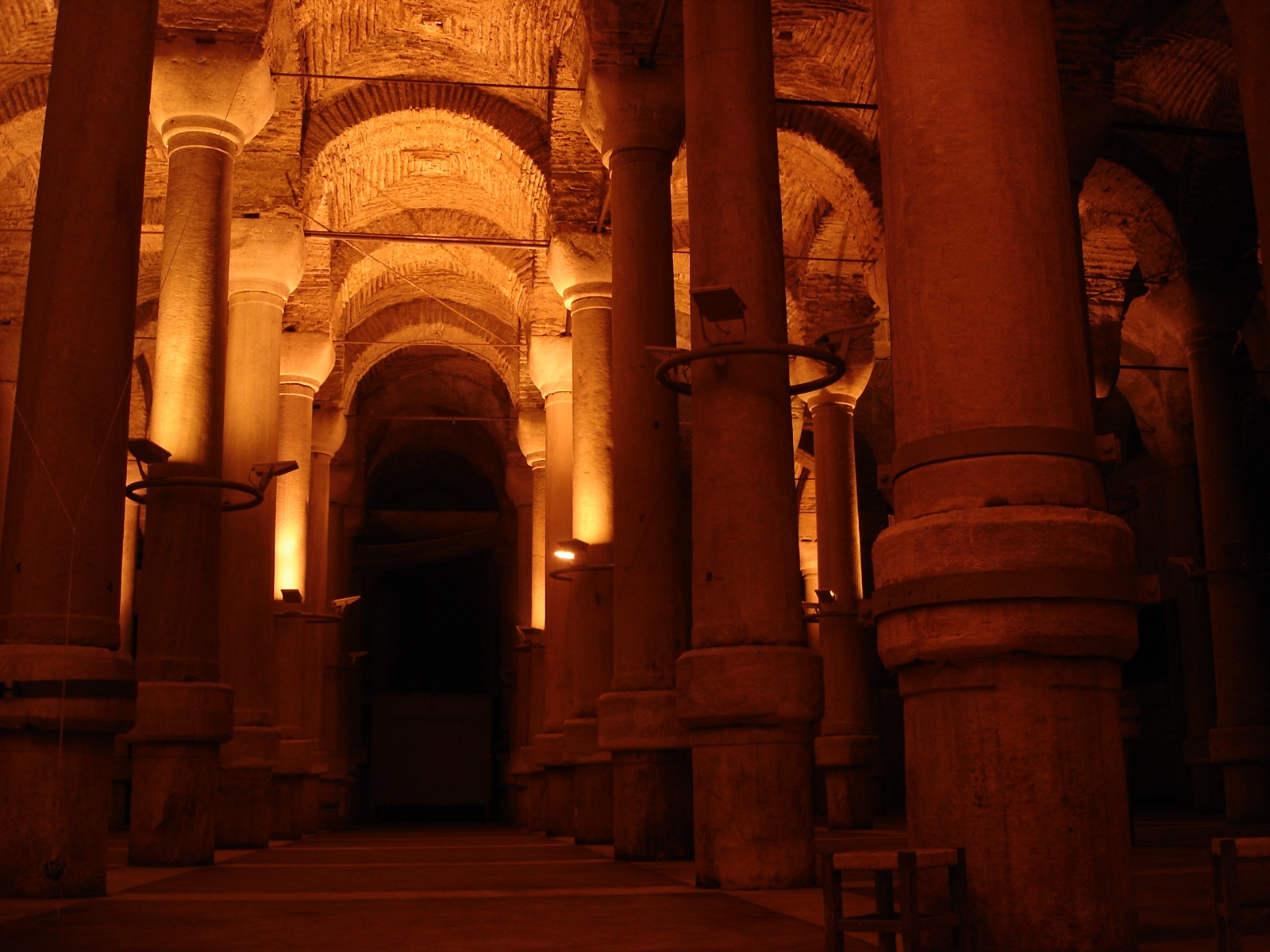
Silk spinners and workshops
Especially well known is its use by craftsmen, including silk spinners. The even temperature and the large, sheltered space could be advantageous for certain work processes. Storage and other craft activities are also documented.
This completely changed the meaning of the structure. What once stored water became a workplace. History is often exactly this pragmatic: no one asks an old space whether it feels emotionally attached to its first function.
Binbirdirek and Yerebatan compared
Yerebatan is larger, more dramatically staged, and has a world-famous photo subject in its Medusa heads. Binbirdirek feels more sober and geometric. Precisely because of that, you can sometimes understand the engineering better. The regular rows of columns show more clearly that this is an engineering achievement.
Anyone who visits both therefore gets two different impressions of the same urban necessity: storing water beneath a giant capital city.
"Binbirdirek has 1,001 columns." No. The name is figurative; the historical structure had roughly 224 supports.
"Water was always stored here." No. After its original function ended, the space served, among other things, as a work and storage area.
"It was built by Justinian together with Yerebatan." The dating isn't that clear-cut. Binbirdirek is usually placed earlier or classified differently.
Why Binbirdirek matters so much for urban history
The cistern lies beneath an area that was densely built up in late antiquity. Large water reservoirs had to be built exactly where the population, public buildings and palaces needed reliable supply. Its location therefore indirectly shows which districts of Constantinople were especially important.
Underground infrastructure is often more valuable for urban history than a single representative building. Palaces can be torn down, streets can change names, but cisterns reveal where water was needed and what technical organization a city possessed.
Columns as an industrially organized construction achievement
The regular structure looks individual at first glance, but it actually shows enormous standardization. Many columns were produced, marked and erected to similar dimensions. Stonemasons' marks can hint at how work crews were organized.
A major project of this kind required quarries, transport, skilled labor and precise planning. The cistern is therefore not just engineering architecture, but evidence of a complex construction economy.
That many columns consist of two parts wasn't a sign of poor quality. It was a practical method of combining height with transportability.
Water quality and maintenance
A cistern didn't function simply by having water channeled into it. Sediment had to be controlled, pipes repaired, and access points secured. Water that sat for a long time could become contaminated. Managing such reservoirs was therefore a continuous technical process.
Constantinople's water system consisted of multiple reservoirs, pipelines and distribution points. Binbirdirek was only one part of this network. That's exactly what makes the achievement even more impressive: the city didn't rely on a single spectacular reservoir, but on an entire underground system.
How the space lived on after its water years
When the reservoir lost its original function, it didn't become meaningless. Workshops and storage made use of the dry areas. Silk processing is mentioned especially often.
Craftsmen thus worked literally among late-antique columns. For them, the space wasn't an archaeological monument, but convenient infrastructure.
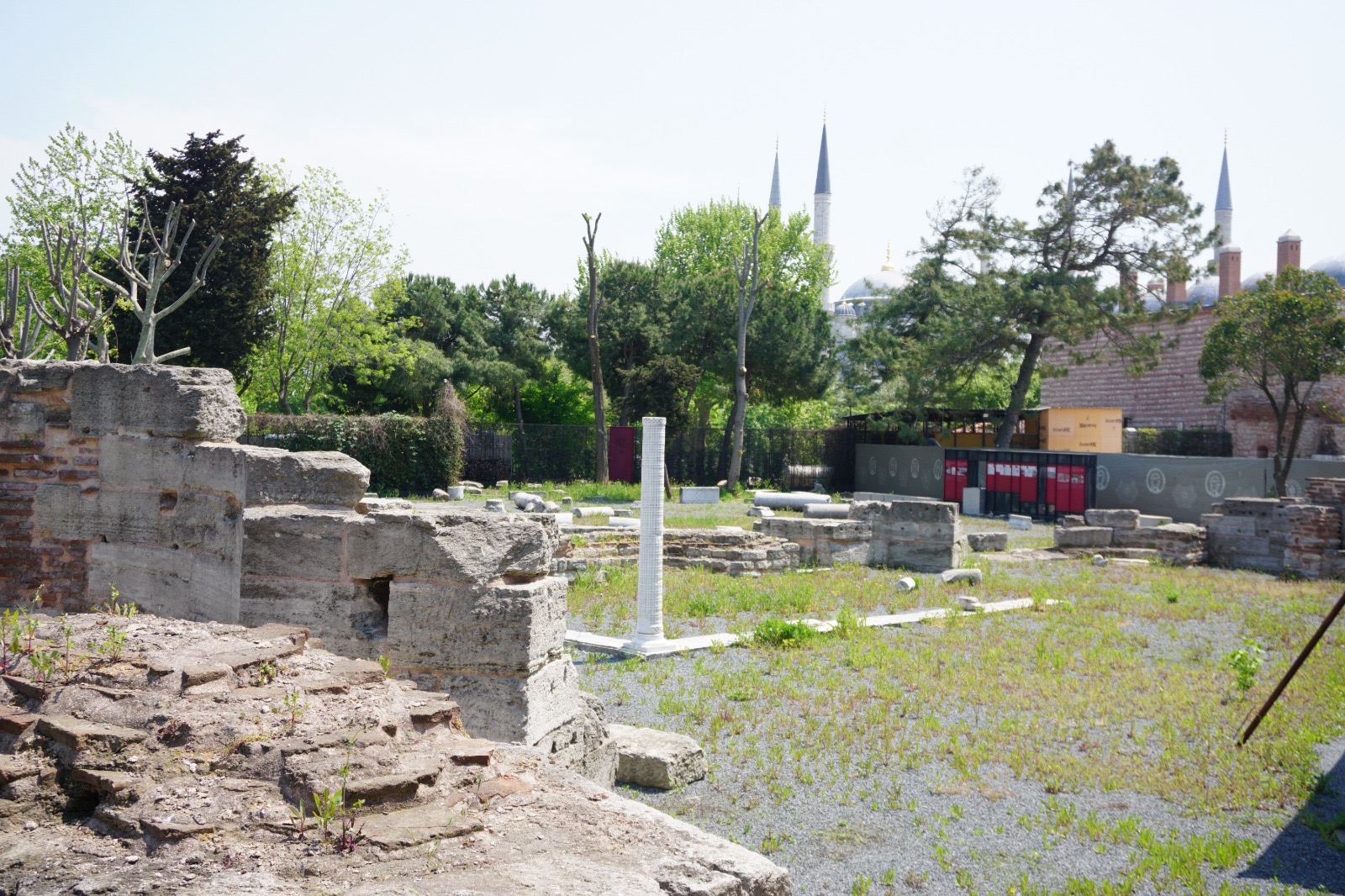
This continued use also explains why historical structures often show alterations that puzzle modern visitors. Openings were adjusted, floors raised, and new access points created, because each generation used the space according to its own needs.
Why the number 1,001 works so well
The Turkish name is a lovely example of how language shapes history. "Binbir" immediately conjures an image of countless columns. No one needs to count exactly to grasp the effect.
When modern guidebooks later translated the name literally, it sometimes turned into the false claim that the cistern actually had 1,001 supports.
That shows how easily poetic language can turn into seemingly factual information once no one questions its origin.
Binbirdirek today: monument or event space?
In modern times, the cistern was restored and used for cultural and commercial events. This isn't uncontroversial. On one hand, new uses enable funding and public visibility. On the other, intensive events can strain historical substance or turn the site's perception more strongly into a mere backdrop.
This tension affects many monuments in Istanbul. A historic city has to live with its buildings, not just freeze them in place. But use needs limits when it endangers the monument itself.
Binbirdirek as a counterpart to the spectacular Yerebatan narrative
Anyone who visits both cisterns back to back quickly notices how differently the same function can be staged. Yerebatan today works with water, light and the famous Medusa heads. Binbirdirek relies more on rhythm, repetition and the almost technical beauty of its supports.
That's what makes the place especially valuable to me historically. Here you understand better that Constantinople's water infrastructure didn't consist of a single "underground palace," but of a whole variety of functional structures.
Why the city really needed such reserves
Constantinople was repeatedly threatened by sieges. External water pipelines could be damaged or cut off. Large reservoirs within the walls were therefore part of the city's security.
Water was infrastructure and defense at the same time.
That people today walk through the cisterns for photos is a completely new use. For the residents of the late-antique city, what mattered was that life above could continue, even when war raged outside the walls.
My take on this place
Yerebatan naturally gets the big stage. Medusa, light, water — perfect for photos. That's exactly why I find Binbirdirek appealing: here you notice more strongly that these cisterns were really engineering structures.
And I like the idea that people later processed silk between these very same columns. Istanbul rarely just throws a space away. Someone, eventually, finds a new use for it.
– Amra