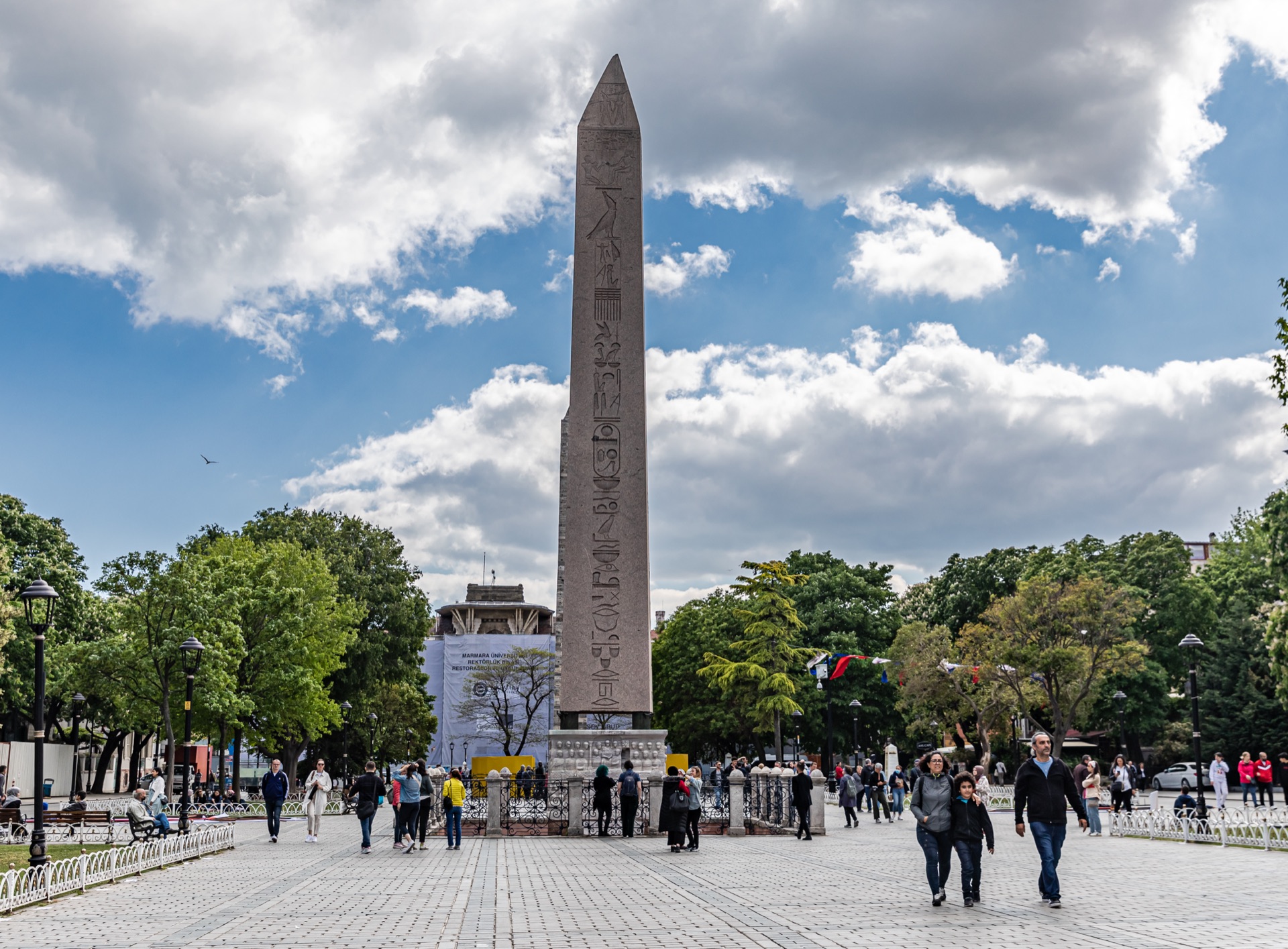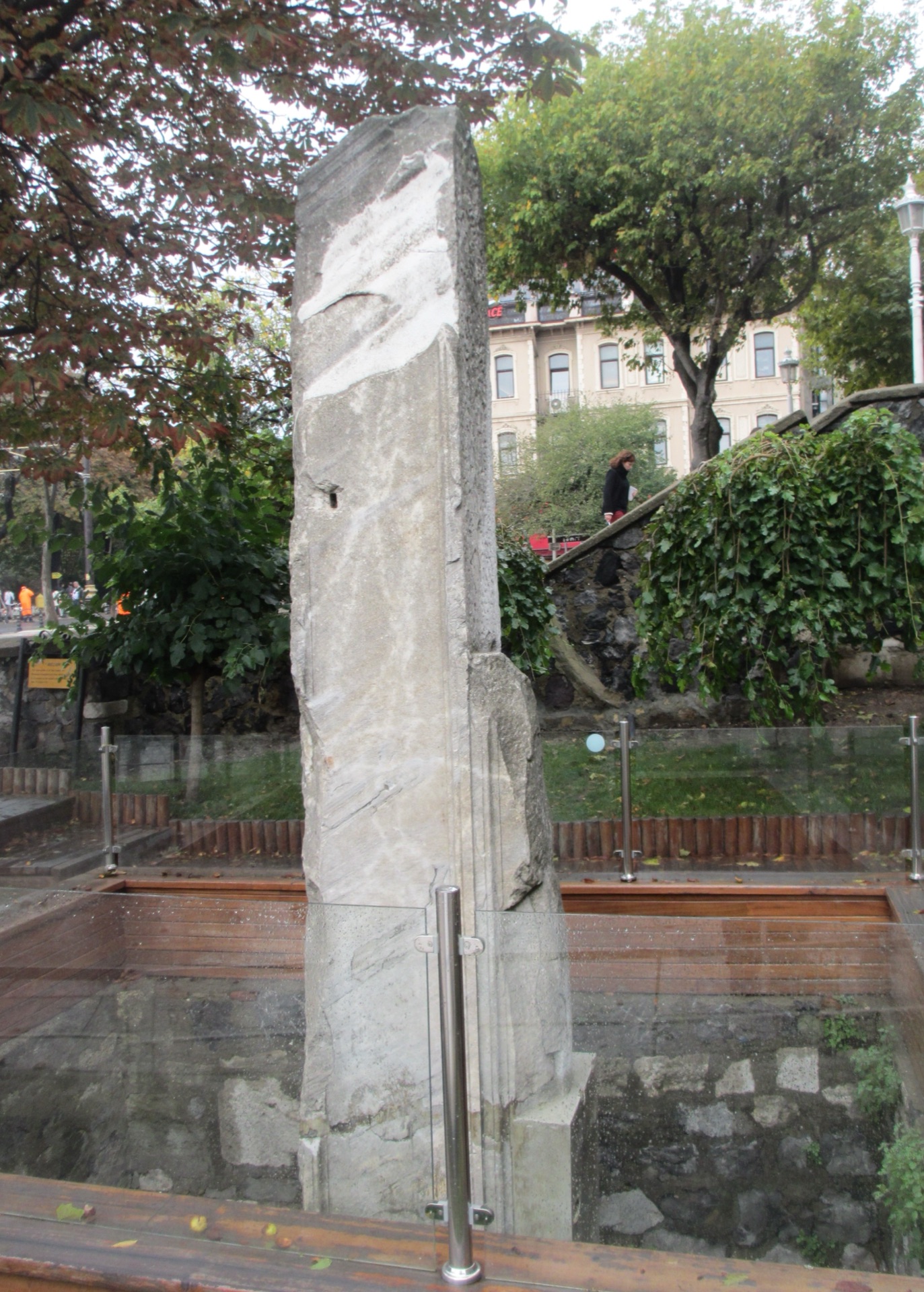

Beyazıt is today one of those squares where Istanbul feels academic, religious, busy and historic all at once. In front of you rises the monumental gate of the university, a few steps further stands the Beyazıt Mosque, the Grand Bazaar begins toward the south, and somewhere beneath the modern traffic lie remains of a Roman forum. That's exactly why you can't explain Beyazıt with a single building. Over the centuries the square kept changing its function, and yet it remained a center.
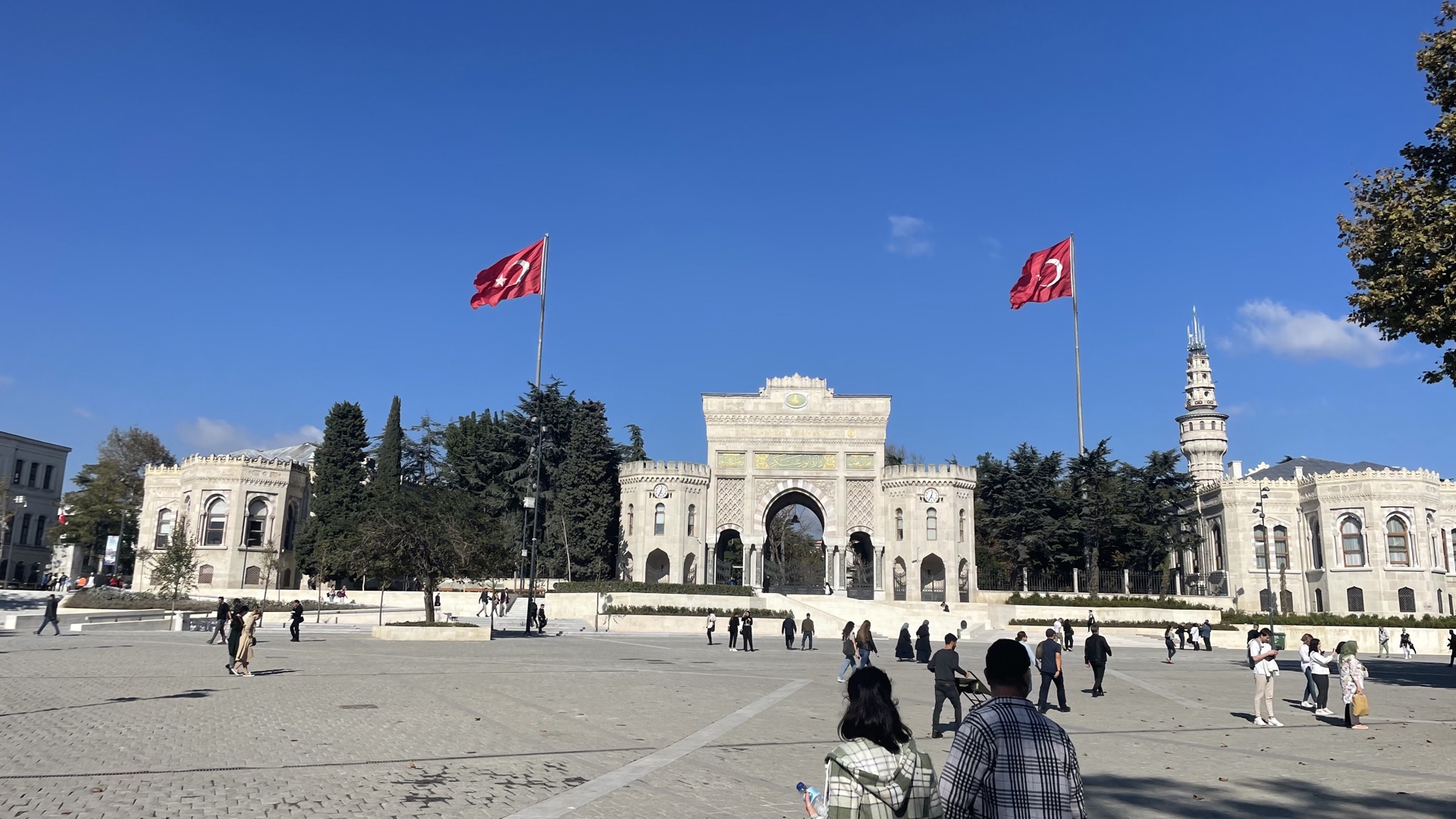
Beyazıt today is a square where Istanbul feels academic, religious, busy, and historic all at once. Beneath it lie remains of the late-antique Forum of Theodosius, Mehmed's first palace, and the military gate that later became the symbol of the university.
In late antiquity, the Forum of Theodosius stood here. After 1453, Mehmed II had his first great palace in the conquered city built in this area, later known as the Eski Saray. In the 19th century, the grounds became the center of Ottoman military administration. After the founding of the Republic, the university moved in. The square thus tells almost 1,600 years of city history, even though its oldest layers aren't visible at first glance.
- In late antiquity, the Forum of Theodosius stood here.
- After 1453, Mehmed's first great palace, the later Eski Saray, was built in the area of today's university campus.
- After Topkapı became the main palace, the old palace lost its central function.
- In the 19th century, the area became the seat of Ottoman military administration.
- Today's monumental university gate was built starting in 1864.
- In 1923, the former military complex was handed over to the university.
- The Beyazıt Fire Tower recalls the enormous fire risk of old Istanbul.
The Forum of Theodosius
In the 4th century, Emperor Theodosius I had a monumental forum built along Constantinople's great main street. The square was decorated with columns, triumphal architecture and statues, and belonged to that chain of representative spaces that structured the Roman city center. A monumental column with a relief band commemorated the emperor's military successes and deliberately drew on famous models from Rome.
Very little of this forum survives above ground. Fragments have turned up during construction work and are partly held in archaeological collections. That doesn't mean the square is historically "gone," though. Beneath today's Beyazıt, archaeological layers still lie, showing that the area was already a political center long before the Ottoman Empire.
What disappeared from the Roman square
Constantinople's forums were no indestructible stone landscapes. Earthquakes, fires, the removal of material, and new construction transformed them over the centuries. Columns were toppled, marble slabs reused, foundations built over. After the Fourth Crusade of 1204, and in the economically weaker centuries that followed, the city could no longer maintain many monumental complexes to the same extent.
So when Mehmed II conquered Constantinople in 1453, he wasn't stepping into a perfectly preserved late-antique capital. Many great spaces had already been altered, partly ruined, or put to other uses. It was exactly this situation that created opportunities for major new Ottoman projects.
Mehmed's first palace
Even before Topkapı took its later form, Mehmed II had a palace built in the area of today's Beyazıt. It later became known as the Eski Saray, the Old Palace. The name is retrospective: when it was built, it was of course the conqueror's new palace.
The choice of location made political sense. Mehmed placed his center of rule right in the middle of the historic peninsula, and thus in a space that had already held significance under Roman and Byzantine emperors. The palace was fortified, or surrounded by walls, but organized spatially differently from the later Topkapı complex.
Why the Eski Saray later became "old"
As the new palace at Sarayburnu was built up, the dynasty's center of gravity shifted. Mehmed's first residence became the "old" palace. It nonetheless remained important, especially as a residence for women of the dynasty who no longer lived at the immediate center of the current court. Even after a change of ruler, members of the previous sultan's household could be moved there.
This shows that palaces weren't just places to live, but political instruments too. Whoever lived at Topkapı was closer to power. Whoever was sent to the Eski Saray was more distant, spatially and politically. Even where you lived could express rank.
The Beyazıt Mosque and the Ottoman center
Under Sultan Bayezid II, the great Beyazıt Mosque was built in the early 16th century. Together with its endowment buildings, it reshaped the square. The area now combined religious, economic and dynastic functions. At the same time, the Grand Bazaar lay right nearby, so trade and religious life reinforced each other.
The mosque is one of the most important early large-scale Ottoman mosque buildings in Istanbul. It was built even before the classical golden age of Mimar Sinan and shows how, after 1453, Ottoman architecture gradually engaged with Constantinople's monumental dome tradition.
From palace to war ministry
In the 19th century, the area transformed once again, fundamentally. The old palace had long since disappeared, or merged into other structures. Under Sultan Abdülaziz, a representative complex for the Ottoman war ministry, the Harbiye Nezareti, or Seraskerlik, was built here.
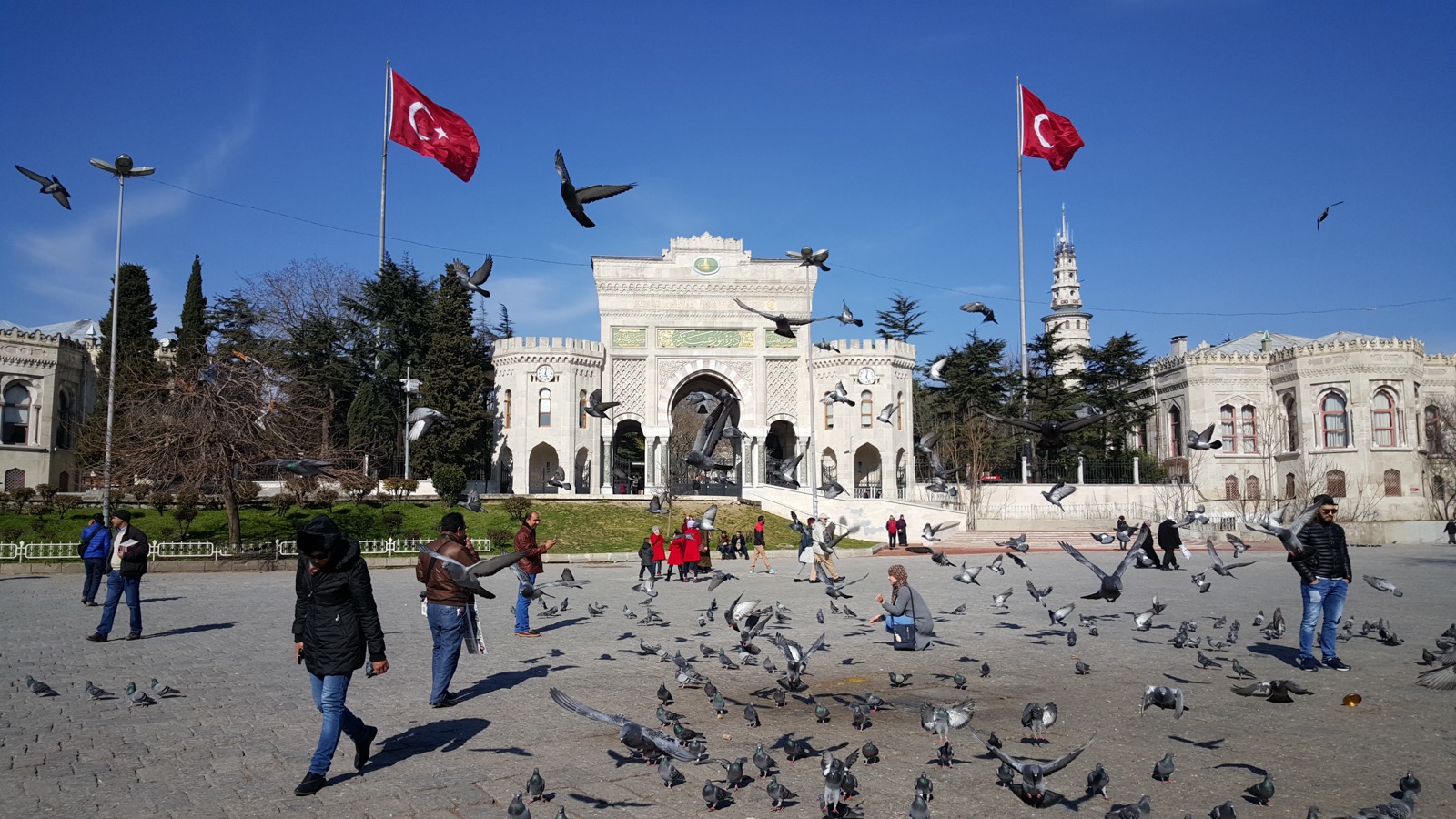
The military administration needed more than offices — it needed a building that made state power visible. That's why its entrance was staged monumentally. The university confirms that today's main building of the Beyazıt campus was formerly used as the war ministry, and that construction of today's main gate began in 1864.
The famous university gate
The gate, with its two striking towers, is so closely tied to İstanbul Üniversitesi today that many people believe it was originally built as a university entrance. In fact it belonged to the military complex. Only after the end of the Ottoman Empire, in 1923, was the site handed over to the university.
Since then, the architecture has taken on new meaning. A gate that once represented military state power became a symbol of education. Between 1971 and 1984 it even appeared on Turkish 500-lira banknotes. For generations of students, it became an emotional symbol of study, exams, and academic belonging.
The Beyazıt Tower and the fear of fire
The Beyazıt Fire Tower stands on the campus. Today's stone structure goes back to Mahmud II, after earlier wooden towers had been destroyed. Its function was practical: from its height, fires in the city could be spotted early and signaled.
That was vital, since large parts of Istanbul were built of wood. A single fire, with wind, could destroy entire neighborhoods. Fire watches at high points therefore belonged to the city's safety infrastructure. The tower tells of a danger that was far more everyday for earlier Istanbulites than for today's visitors.
The university and the political public sphere
In the 20th century, Beyazıt developed into an important student and political space. Universities create a public sphere, and a campus in the middle of the historic center amplifies that effect. Demonstrations, political disputes, and social debates have therefore repeatedly been part of the square's history.
At the same time, Beyazıt remains a transit hub, a market area, and a religious space. That very mix sets it apart from a closed-off campus. Students step through the gate and immediately find themselves in the middle of one of Istanbul's oldest and densest zones.
"The university gate was built for the university." False. It originally belonged to Ottoman military administration and only became a university symbol under the Republic.
"Mehmed's first palace was Topkapı." Not quite. Before, or in parallel with, the early Topkapı, the Eski Saray was built in the area of Beyazıt.
"The square only became important with the Ottomans." False. A monumental Roman forum already stood here in late antiquity.
The square before Beyazıt: from the Forum of Theodosius to the Ottoman city
Today's Beyazıt Square lies in an area that already played an important role in late Roman urban planning. In antiquity, the Forum of Theodosius stood here, a monumental public space with columns, statues and triumphal architecture. The square was part of the imperial axis that structured Constantinople with forums and processional routes. That today only fragments and memories remain above ground doesn't mean the ancient topography has vanished. It continues to act beneath the modern city.
After 1453, the character of the area changed. The Ottomans built new religious and commercial centers, but often used the same central traffic axes. The Beyazıt Mosque, the nearby Grand Bazaar, and later the university turned the square once again into an important hub. That's typical of Istanbul: a space can completely change its political language and still remain central.
Bayezid II and the mosque as a new fixed point
Sultan Bayezid II had the great mosque endowment built in the early 16th century that still gives the square its name today. The complex is one of the most important early large-scale Ottoman buildings after the conquest of Constantinople. Architecturally, it stands between the earlier Fatih tradition and the later classical mosque architecture that reached its peak under Sinan.
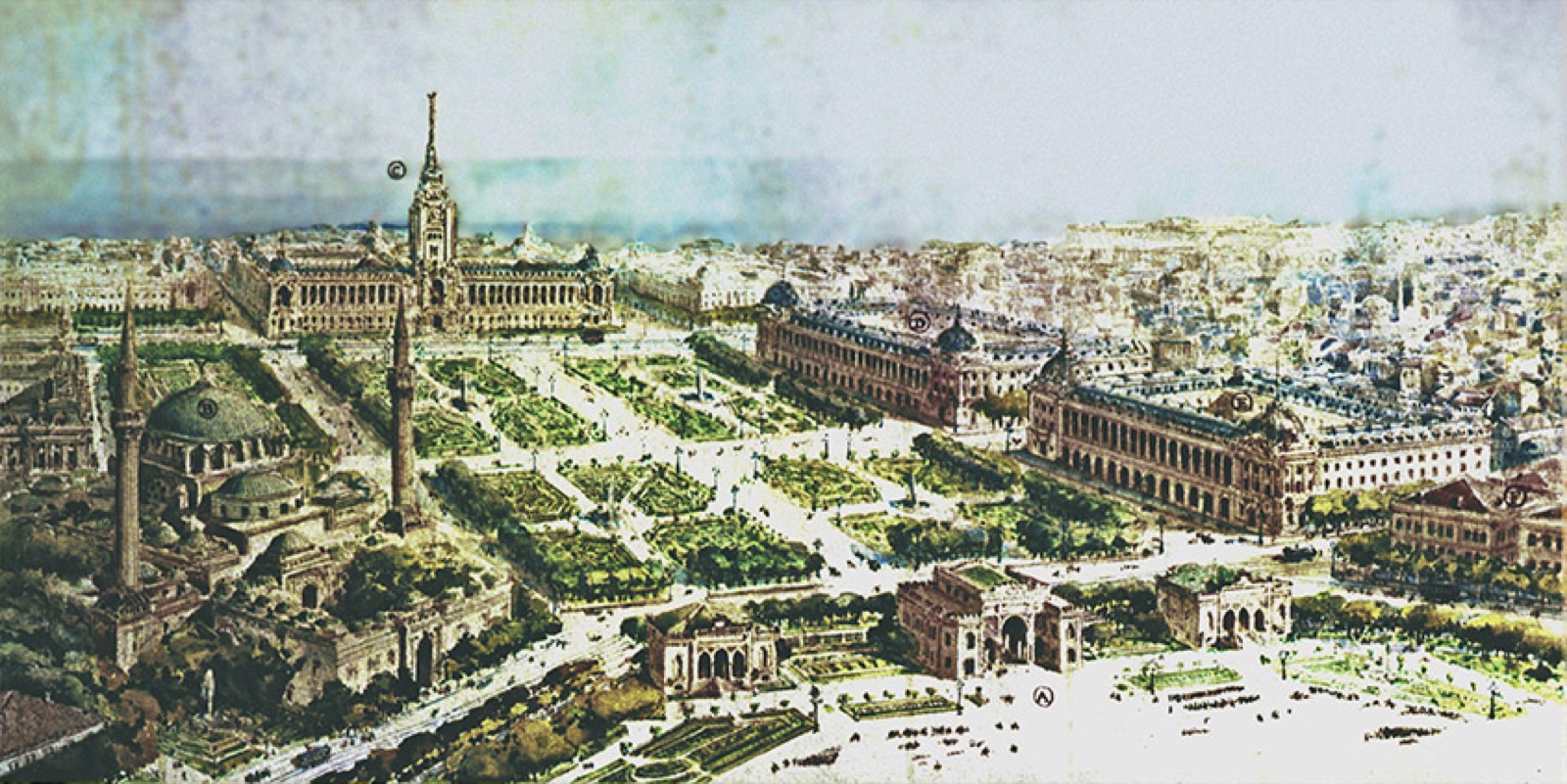
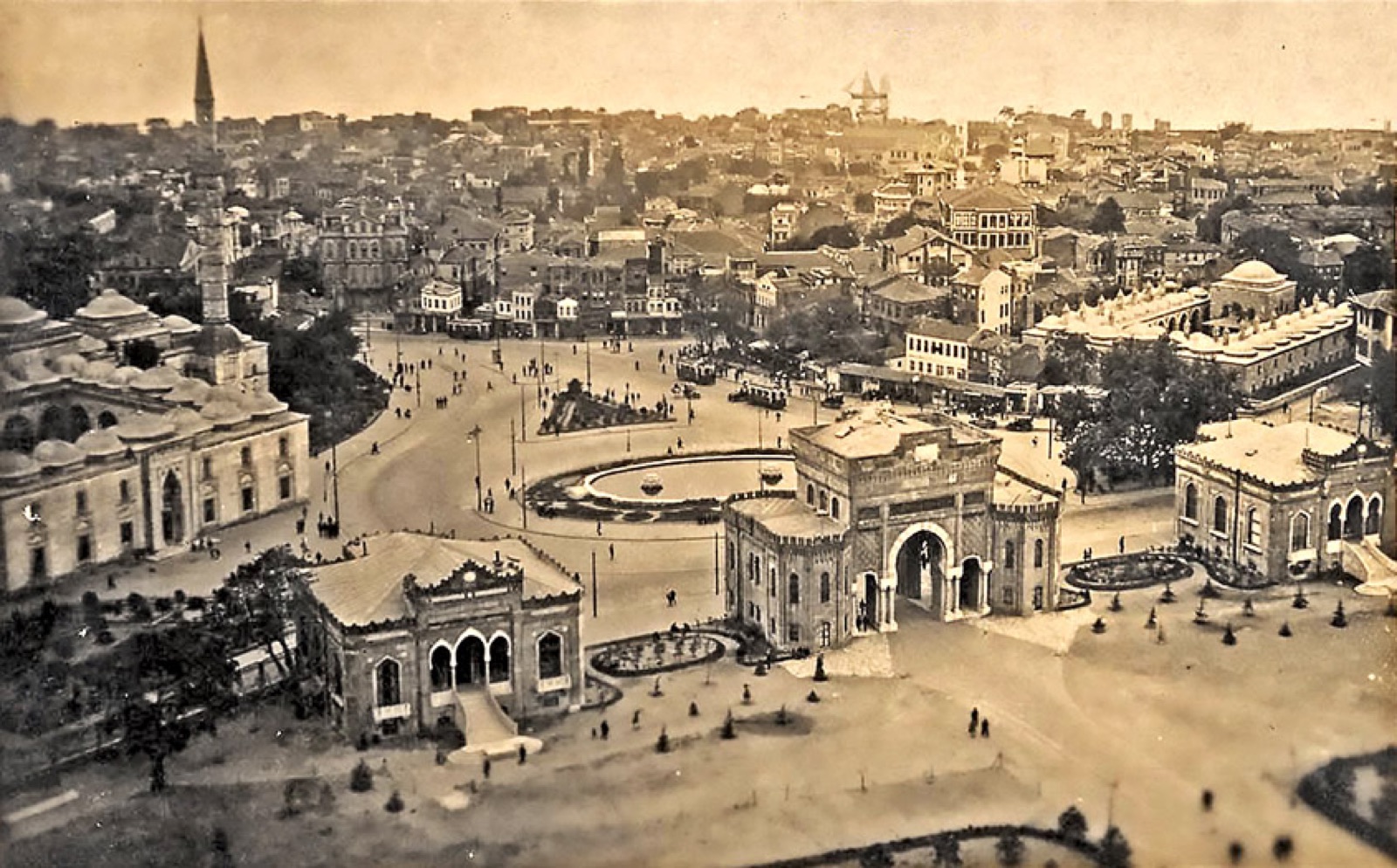
The endowment included more than the mosque. As with great Ottoman külliyes, educational, social and welfare facilities belonged to it too. The square was thus reorganized religiously, economically and socially. Anyone who sees only the traffic and the pigeons today overlooks that an entire infrastructure of daily life was once concentrated here.
The university and modernity
In the 19th and 20th centuries, the square took on new significance as an educational and political space. The monumental entrance complex of Istanbul University now defines one side of the square. The grounds had previously been tied to Ottoman state administration and military facilities, before becoming more strongly part of the higher-education landscape.
Students turned Beyazıt into a site of political debate and protest. Especially in the 20th century, the square was repeatedly the scene of demonstrations, confrontations, and state response. This continues a remarkable through-line: even the ancient forum was a space of public rule and public life; in modern form, Beyazıt remained a place where politics became visible.
The booksellers' tradition
Nearby lies the Sahaflar Çarşısı, the historic booksellers' market. Since Ottoman times, Beyazıt has been an important site for the trade in books and manuscripts. Students, scholars and religious schools created demand for texts.
Today's form of the market is modernly reshaped, but the connection between education and the book trade runs deep in the neighborhood's identity. That's exactly why its closeness to the university fits so well, even though the two institutions come from different eras.
What's still visible today
The square has been redesigned several times. Street layouts, paving, green spaces and traffic organization have all changed. So you shouldn't expect to see a single historical era fully intact.
What's visible instead are fragments: the Beyazıt Mosque, the university gate, remains of ancient monumental architecture in the surrounding area, and the proximity to the bazaar and the booksellers. The square isn't a perfectly preserved historic backdrop, but an urban hub that has been reused again and again for centuries.
Why Beyazıt is often underestimated
Many visitors walk from Sultanahmet to the Grand Bazaar and perceive Beyazıt only as a stop along the way. Yet it's here that you can especially well understand how Istanbul works: one era doesn't fully replace another. The Roman forum, the Ottoman endowment, the university and modern traffic all lie on top of each other.
Anyone looking only for the "most beautiful sight" easily overlooks places like this. Anyone who wants to understand how a city stays central for 1,500 years, even as its rulers, religions and institutions change, finds in Beyazıt an almost textbook example.
My take on this place
I find Beyazıt fascinating precisely because you're actually seeing several squares at once here. For one person, it's the square in front of the university. For the next, this is where the walk to the Grand Bazaar begins. Someone else looks only at the mosque.
Once you add in the history, though, a Roman forum and Mehmed's first palace lie underneath as well. Then you realize again that Istanbul can't be cleanly divided into chapters. The city just keeps writing, and the next era uses the same square for something completely different.
– Amra