
Barış Manço wasn't just a singer. He belonged to that rare category of artists who reach several generations at once. Rock fans know his music, children remember his TV shows, families remember songs passed down for decades. His house in Moda therefore became, after his death, not just a music museum, but a memorial site for an entire era of Turkish pop culture.
Barış Manço wasn't just a singer. Rock fans know his music, children remember his TV shows. His house in Moda became, after his death, a memorial site for an entire era of Turkish pop culture.
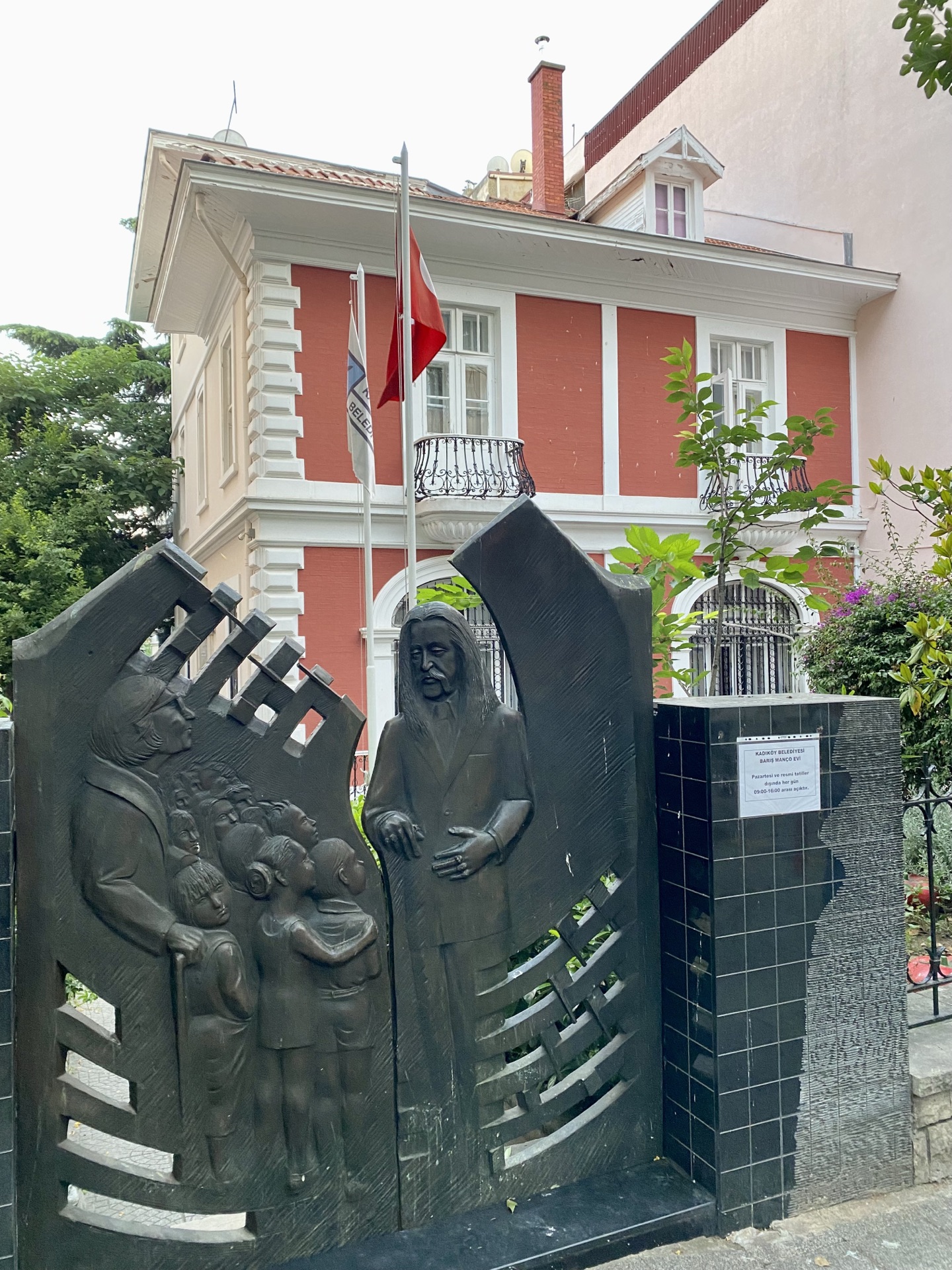
The museum is located in the house where Manço lived and worked. Kadıköy Belediyesi opened it in 2010 together with his family and supporters. Instruments, stage clothing, personal objects, awards, and living spaces give visitors the sense of getting closer to the person behind the public figure. Of course, much here is also museum-arranged. Even so, a former home carries a different closeness than a normal exhibition hall.
- Barış Manço was born in 1943 and died in 1999.
- He was one of the most important figures in Turkish rock and Anadolu pop/rock.
- His career began as early as the 1950s/1960s.
- With the TV show 7'den 77'ye, he also became a nationwide family figure beyond music.
- He lived in Moda, in Kadıköy.
- His former home opened as a museum in 2010.
- The museum displays instruments, clothing, awards, and personal keepsakes.
Who Barış Manço was
Barış Manço was born in Istanbul in 1943. He took an early interest in music and played in various bands. His career developed at a time when Turkish musicians combined Western rock 'n' roll, beat, and psychedelic music with local melodies and instruments.
Manço wasn't alone in this movement, but became one of its best-known faces. His striking appearance — long hair, mustache, jewelry, and extravagant stage costumes — made him instantly recognizable.
From rock 'n' roll to Anadolu pop
In the 1960s and 1970s, a distinctive Turkish rock culture emerged. Artists didn't simply translate Western songs, but combined electric guitars with Anatolian folk melodies, rhythms, and themes.
Barış Manço experimented heavily. Some songs are hard rock pieces, others humorous, folkloric, melancholic, or accessible for children. This stylistic openness helped him reach a very broad audience.
Why his music was so varied
Manço could write a song about social values and, in the next, tell an almost fairy-tale story. His lyrics often worked with proverbs, everyday language, and figures Turkish listeners understood instantly.
That's why many of his songs still feel culturally familiar today. At the same time, arrangements are, in places, decidedly experimental. Anyone who knows him only from children's television might be surprised how psychedelic some early recordings sound.
7'den 77'ye and television
The show 7'den 77'ye, roughly "from 7 to 77," turned Manço into a family figure. He traveled the world, met people, introduced cultures, and spoke with children. The segment "Adam Olacak Çocuk" in particular became legendary.
This created a public image of Barış Abi, the friendly older brother. For many people, he was not just a musician, but someone who came into the living room on Sunday evenings.
Why Moda belongs to him
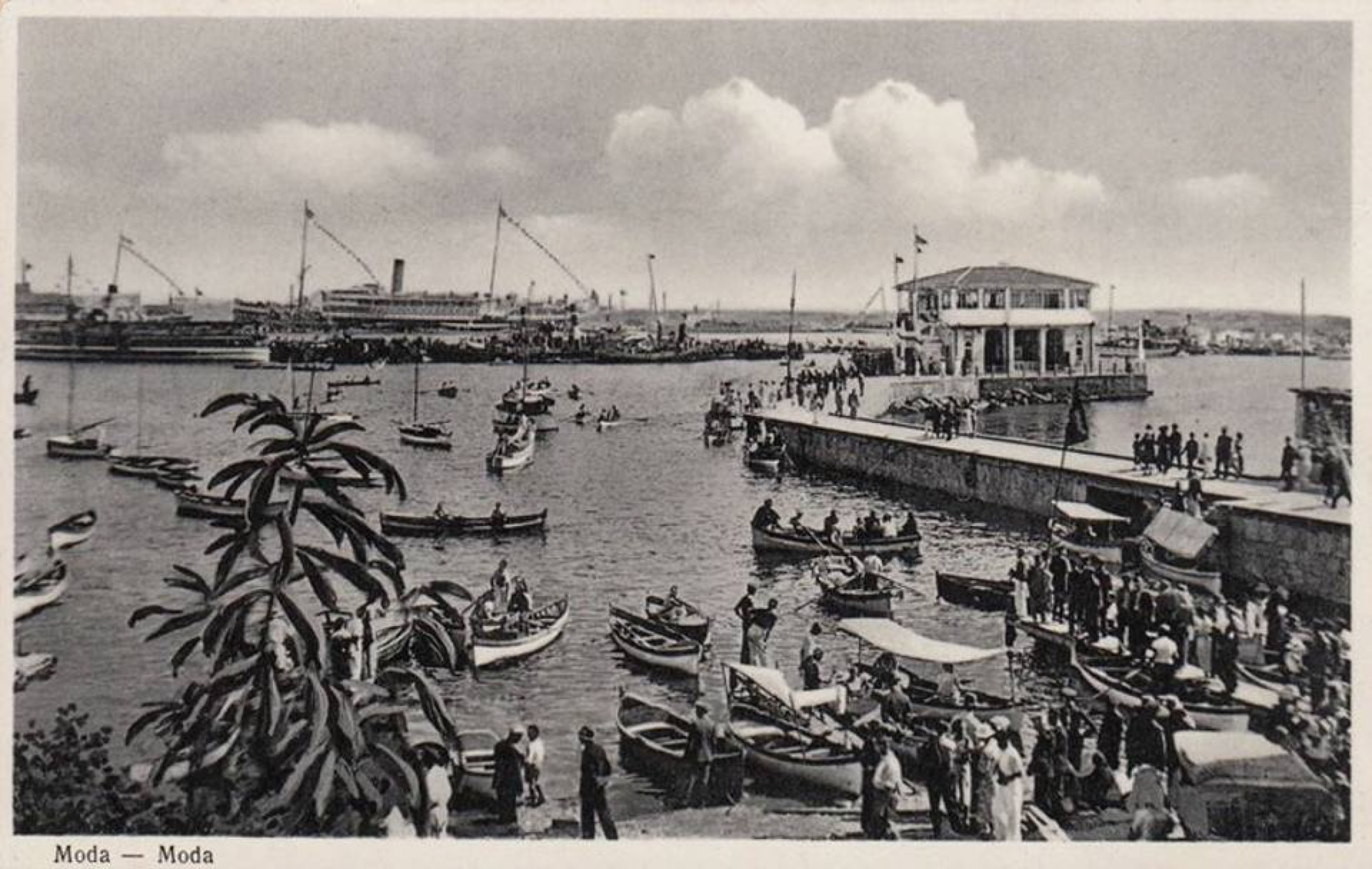
Moda fits Manço astonishingly well. The neighborhood is creative, a little idiosyncratic, and closely tied to the music and culture scene. His address, "Moda 81300," became so well known that it became part of his public identity in its own right.
Fans sent letters there, and after his death, the house naturally became a memorial site. Kadıköy Belediyesi still describes it today with the idea that his name should live on in the house.
The house as a museum
The museum opened on June 9, 2010. The city worked together with the Manço family and other partners. The goal wasn't to create an abstract music museum, but to tell the artist's story through his actual living space.
Living rooms, furniture, and personal objects therefore became part of the exhibition. Visitors see not just his stage career, but also family and working life.
What visitors see there
Guitars, costumes, jewelry, awards, photographs, and documents are among the most striking exhibits. Some rooms are deliberately arranged as if the resident could walk back in at any moment. Such staging is emotionally powerful, but shouldn't be mistaken for an untouched time capsule.
Museums select and arrange. The family helped gather objects and memories. That makes the exhibition personal, but still curated.
His death in 1999
Barış Manço died on February 1, 1999, following a heart attack. Public mourning was enormous. People gathered, media reported intensively, and his music immediately gained a new dimension of memory.
His death at 56 came as a surprise to many. Precisely because he felt so familiar through television and music, he was mourned almost like a family member.
Why he remains popular today
His songs are discovered by new generations, reinterpreted, and used on social media. At the same time, parents and grandparents connect personal memories to the same music.
This cross-generational effect is hard to manufacture artificially. It arises when an artist has been part of everyday life long enough, showing enough different sides in the process.
"Everything in the museum stands exactly untouched since his death." No. The house preserves many original objects, but is curated and furnished as a museum.
"Barış Manço only made folk music." False. His work ranges from rock and psychedelic music to folkloric and family-oriented songs.
"Barış Manço was only a children's TV host." False. He had already been a central figure in Turkish rock and pop for a long time before that.
"The museum is an artificially reconstructed house." No. It's located in his actual home, even though it's been adapted as a museum.
Barış Manço — far more than a pop singer
Barış Manço is one of the best-known figures in Turkish pop and rock history. He combined Anatolian musical traditions, rock, pop, and visual staging into a style that reached several generations.
His distinctive mustache, long hair, jewelry, and extraordinary clothing made him instantly recognizable.
But his popularity didn't rest on looks alone. His songs treated love, everyday life, social values, and Turkish culture in an accessible language.
Anadolu rock and musical experimentation
In the 1960s and 1970s, a musical genre developed in Turkey that combined Western rock instruments with Anatolian melodies and folk music.
Barış Manço was one of the most important representatives of this so-called Anadolu rock.
He worked with bands like Kurtalan Ekspres and experimented with synthesizers, psychedelic sounds, and traditional motifs.
7'den 77'ye — why children loved him too
Manço later became known to an even larger audience through his TV show "7'den 77'ye." The title means roughly "from seven to seventy-seven" and perfectly described his ambition to reach people of every age group.
He traveled, met people, introduced cultures, and spoke directly to children in particular.
As a result, he became not just a musician, but a kind of cultural family figure.
The house in Moda
His house in Moda was set up as a museum after his death. It holds personal objects, clothing, instruments, awards, furniture, and keepsakes.
Such a house museum works especially well, since Manço's public persona was already strongly visual to begin with.
You don't just see a biography on wall panels, but rooms he actually lived in.
Clothing as part of his art
Manço's rings, vests, boots, and stage clothing weren't random excess. They belonged to a carefully constructed artistic persona.
He combined motifs from Ottoman, Anatolian, and international pop culture.
Fashion was thus part of his musical narrative.
International career
Barış Manço didn't work exclusively for the Turkish market. He released music in several languages, or for international audiences, and performed abroad.
His travels and television work reinforced his image as a cultural mediator.
For Turks in Europe especially, his music became a piece of home that also sounded modern.
Death and collective mourning
Manço died unexpectedly of a heart attack in 1999. His death triggered enormous public mourning.
Thousands of people came to pay their respects. That showed how far his significance extended beyond ordinary pop-star popularity.
For many families, he had been part of everyday life for decades.
Moda and his memory
That his museum is located in Moda fits very well. The neighborhood is cultural, relaxed, and closely tied to artists.
Visitors often combine the museum visit with a walk along the coast or to Moda Pier.
This turns a single museum into an entire personal neighborhood tour.
Why a museum like this touches differently
I don't know anyone who personally experienced historic sultans. With Barış Manço, it's different. Many people remember seeing him on television, or listening to his music with parents and grandparents.
That makes the memory much more immediate.
You walk through rooms and songs are already playing in your head.
My take on this place
A house museum works especially well for me whenever, afterward, you feel like you understand the person a little better. With Barış Manço, there's the added fact that his music is tied, for so many people, to childhood, family, and Turkey.
And Moda simply fits. You walk through this lively neighborhood, arrive at his house, and suddenly understand why the address and the artist merged so strongly with one another. Some people live in a city. Some, eventually, become part of a neighborhood.
– Amra