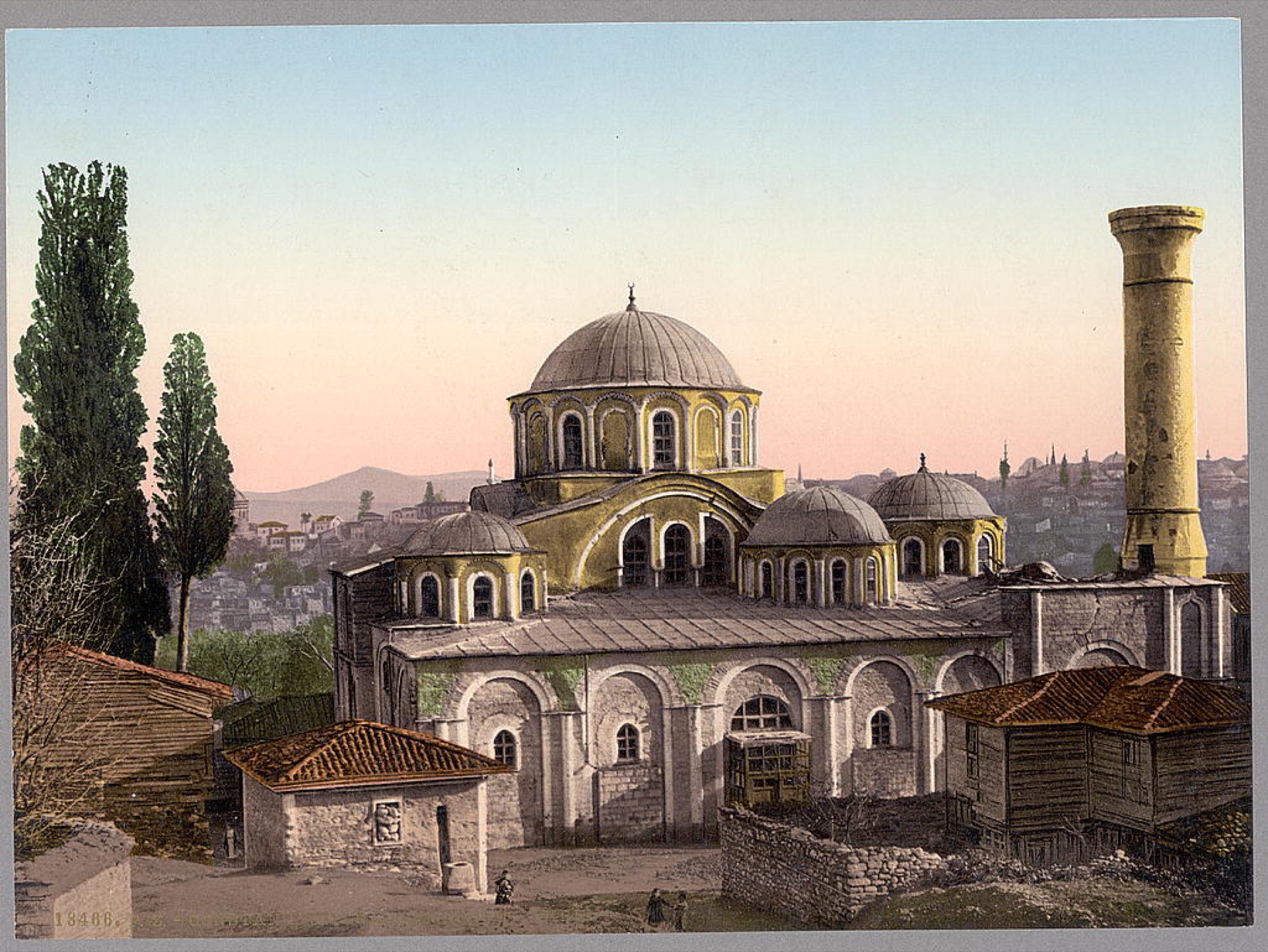

Today's Zeyrek Mosque is one of the most important surviving Byzantine building complexes in Istanbul — and yet it's visited far less often than the Hagia Sophia or Chora. Originally it was part of the Pantokrator Monastery, a great 12th-century endowment consisting of several interconnected churches, monastery buildings, a hospital, and imperial burial chambers.
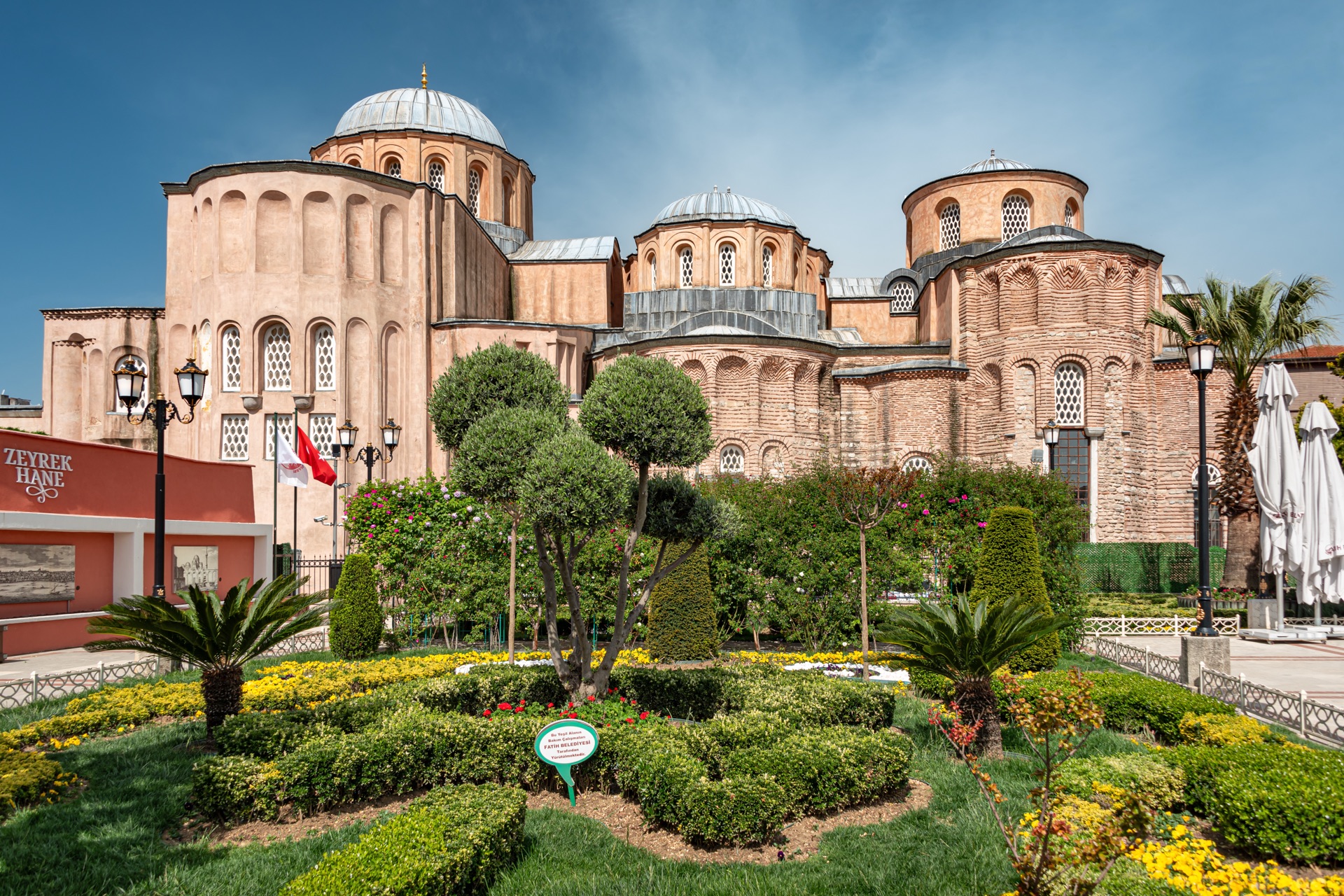
Today's Zeyrek Mosque is one of the most important surviving Byzantine building complexes in Istanbul — and yet it's visited far less often than the Hagia Sophia or Chora.
UNESCO lists Zeyrek, together with its historic surroundings, as its own component of the "Historic Areas of Istanbul" World Heritage site. That's no coincidence. The complex shows the architecture of the Komnenian era, the social function of a Byzantine monastery, and the dynastic self-presentation of an imperial family. After 1453, the complex took on a completely new role: it was used as a mosque, and for a time as a madrasa. The name "Zeyrek" recalls Molla Zeyrek, a scholar from the early Ottoman period.
- Zeyrek was originally the 12th-century Pantokrator Monastery.
- At its core, the complex consists of three interconnected church spaces.
- Emperor John II Komnenos and Empress Irene founded the complex.
- It included an exceptionally well-documented hospital and welfare system.
- Several members of the imperial family were buried here.
- After the conquest of 1204, the complex was used by Latins and lost part of its furnishings.
- After 1453 it became a mosque, and for a time a madrasa.
- UNESCO lists Zeyrek as its own World Heritage subsection.
Who John II and Irene were
John II Komnenos reigned from 1118 to 1143. His wife, Irene of Hungary, originally named Piroska, came from the Hungarian royal house. Both belonged to a dynasty that sought to stabilize the Byzantine Empire politically and militarily after the severe crises of the 11th century.
Irene played a central role in founding the monastery. The first church was dedicated to the Mother of God Eleousa. After her death, John continued the project and had a second, larger church built in honor of Christ Pantokrator.
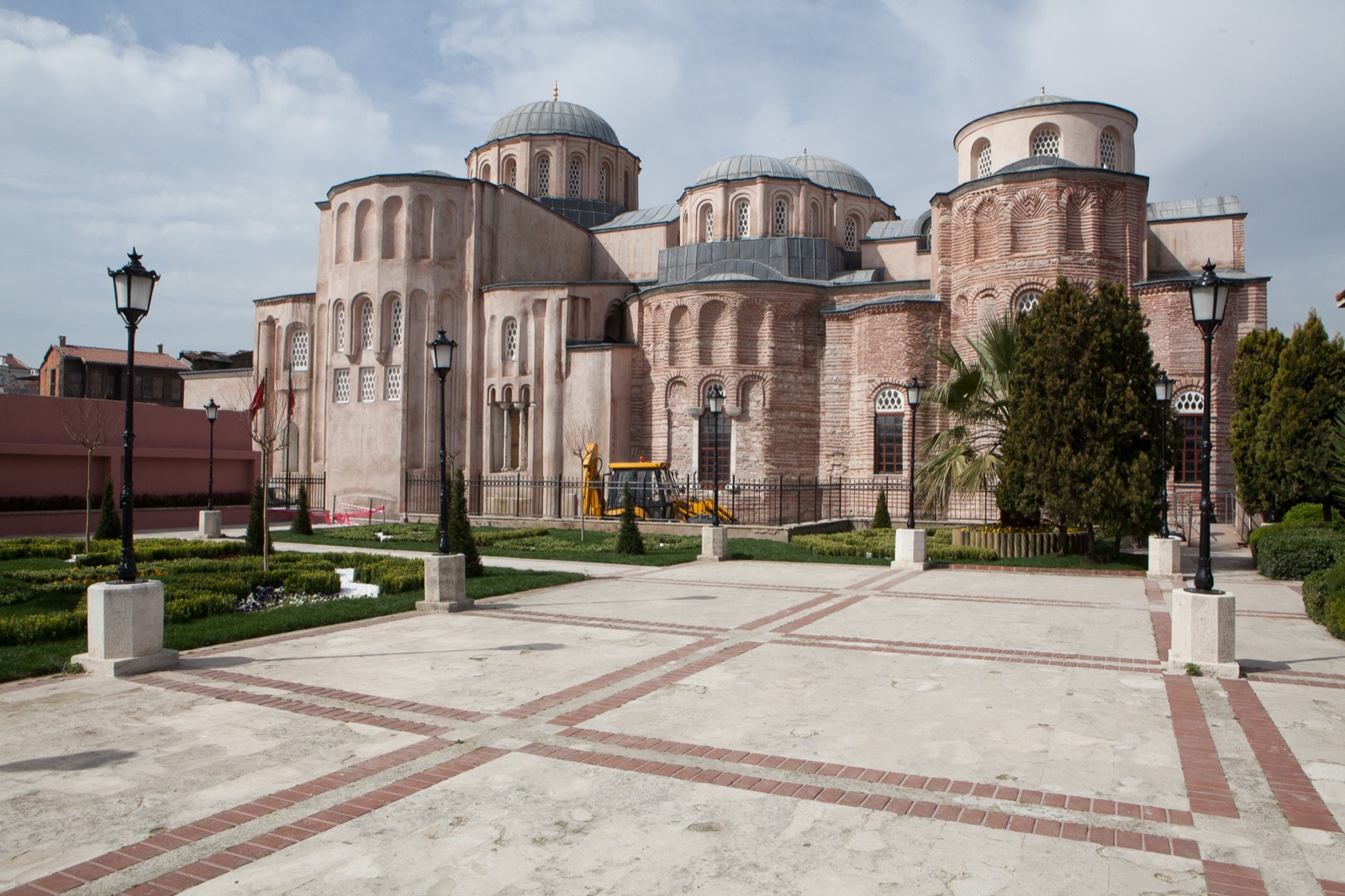
Between the two, a smaller chapel was later built, dedicated to the Archangel Michael, which served as the imperial burial church. This is how three sacred spaces merged into the unusual structure still recognizable today.
How a church became a triple complex
Unlike a uniformly planned great church, Pantokrator grew gradually. That explains why the complex looks complex from both outside and inside. Multiple domes, different sections of wall, and connected spaces show various building phases.
The northern and southern churches each fulfilled their own liturgical functions. The chapel between them not only connected them spatially, but also created a dynastic memorial site.
Especially valuable is the survival of a detailed founding document — the Typikon. It describes staff, liturgy, medical care, and economic foundations. Because of it, historians know more about Pantokrator than about many other medieval institutions.
Monastery, hospital, and poor relief
The complex wasn't just a place for monks. Its endowment program included a hospital with various departments, doctors, nursing staff, and beds for different illnesses. A facility for elderly or needy people is also mentioned.
The hospital shows how organized Byzantine welfare could be. Patients weren't simply placed in one general room. The Typikon describes specializations and staff in astonishing detail.
Of course, this shouldn't be turned into a modern hospital with today's hygiene standards. Medical knowledge, treatment methods, and ideas about illness were medieval. Even so, the institutional organization was remarkable.
Imperial graves in the Pantokrator complex
John II was buried in the Pantokrator complex after his death in 1143. Other members of the Komnenos and later Palaiologos dynasties also found their final resting place here. Manuel I Komnenos is especially well known.
Pantokrator thus became, alongside the Church of the Holy Apostles, a significant dynastic burial site. Graves, precious furnishings, and regular memorial liturgies kept the memory of the ruling family alive.
For an emperor, a monastery was therefore not merely piety. It also organized memory after death.
1204: Latin occupation and losses
After the conquest of Constantinople by the Fourth Crusade in 1204, the Pantokrator complex was taken over by Latin clergy. Venetian interests played an important role in this part of the city.
As with many great Byzantine churches, valuable objects and relics were lost or made their way west. Individual relics that later turned up in European collections are linked to Pantokrator. The exact origin of each piece, though, isn't always reconstructable.
That the complex survived structurally through the Latin period shouldn't obscure the fact that the looting of 1204 profoundly changed Constantinople's religious and material landscape.
The Palaiologan era and decline
After the Byzantine reconquest of 1261, the complex returned to Orthodox use. The empire, however, was considerably poorer than in the Komnenian era. Large endowments couldn't always be maintained at the same level.
Until 1453, Pantokrator remained a significant sacred site, but lost part of its former economic foundation.
1453: mosque and madrasa
After the Ottoman conquest, the complex was converted into a mosque. In its early years it also served as a madrasa. Molla Zeyrek, a significant scholar and teacher, worked there; today's name derives from him.
Later, the madrasa function lost importance once Mehmed II had his great Fatih külliye completed. Its use as a mosque, however, remained.
Christian pictorial decoration was altered or covered over, liturgical furnishings disappeared, and Ottoman elements were added. At the same time, continuous use saved the main buildings from complete abandonment.
What's still Byzantine today
The massive 12th-century brick and stone construction survives to a considerable extent. Domes, masonry, spatial organization, and parts of the floor still allow an impression of Komnenian architecture today.
Restorations in the 20th and 21st centuries were urgently needed, since moisture, earthquakes, neglect, and earlier repairs had caused considerable damage. Some modern additions are deliberately recognizable, others blend in more.
UNESCO protects not just the church itself, but also parts of the historic Zeyrek neighborhood. The traditional residential buildings are part of the ensemble's significance.
Why the Pantokrator Typikon is so valuable to historians
Many medieval buildings survive, but their daily order is barely documented. With the Pantokrator Monastery, it's different. The founding document describes, in astonishing detail, how many monks, clergy, doctors and servants were planned for, which prayers were to be said, and how supply was organized.
This turns architecture into social history. We learn not just that there was a hospital, but that different patient groups were planned for. Doctors and assistants worked in regulated roles, and medication, or nutrition, also played an organizational role.
The document naturally idealizes the intended order. Whether daily work always matched it exactly, we don't know. Even so, it's an extraordinary source for Byzantine institutions.
Medicine in medieval Constantinople
Byzantine medicine combined ancient knowledge from Hippocrates and Galen with Christian care, and later its own medical writings. Doctors worked both privately and in institutions. Medications consisted of plant, mineral, and animal ingredients.
A hospital like Pantokrator was therefore no site of modern scientific medicine, but by no means merely a place to die either. There were trained doctors, ideas of diagnosis, and organized care. The idea that medieval people only prayed when ill is wrong.
Imperial memory as daily liturgy
The founders didn't just want to be buried. The Typikon set out prayers and memorial rituals for deceased members of the dynasty. Monks were to pray regularly for their souls. The monastery thus became a kind of permanent memory machine.
For a medieval ruler, this mattered, because political prestige and religious concern after death belonged together. A splendid grave alone wasn't enough. A functioning community was meant to carry the memory forward liturgically.
What 1204 meant materially
The Latin conquest hit such wealthy monasteries especially hard. Precious reliquaries, metalwork, liturgical vessels, and books were easily transportable and valuable. Western churches collected numerous relics from Constantinople after 1204. Some were given documents emphasizing their origin, since a piece from the famous imperial city carried special prestige.
At the Pantokrator complex, it wasn't just objects that were lost. Institutional continuity was interrupted, property redistributed, and liturgical use altered. After 1261, the restored Byzantine Empire had to reorganize such institutions with considerably fewer resources.
Restoration and the question of visible layers
Zeyrek was severely at risk in the 20th century. Roofs leaked, masonry was damaged, and parts of its surroundings neglected. Restorations had to secure the Byzantine structure while also accounting for its use as a mosque.
This is especially demanding, since the building isn't merely an archaeological object. It has an almost nine-hundred-year Christian history and a more than five-hundred-year Islamic history of use. A restoration that wanted to make only one era visible would artificially erase the other.
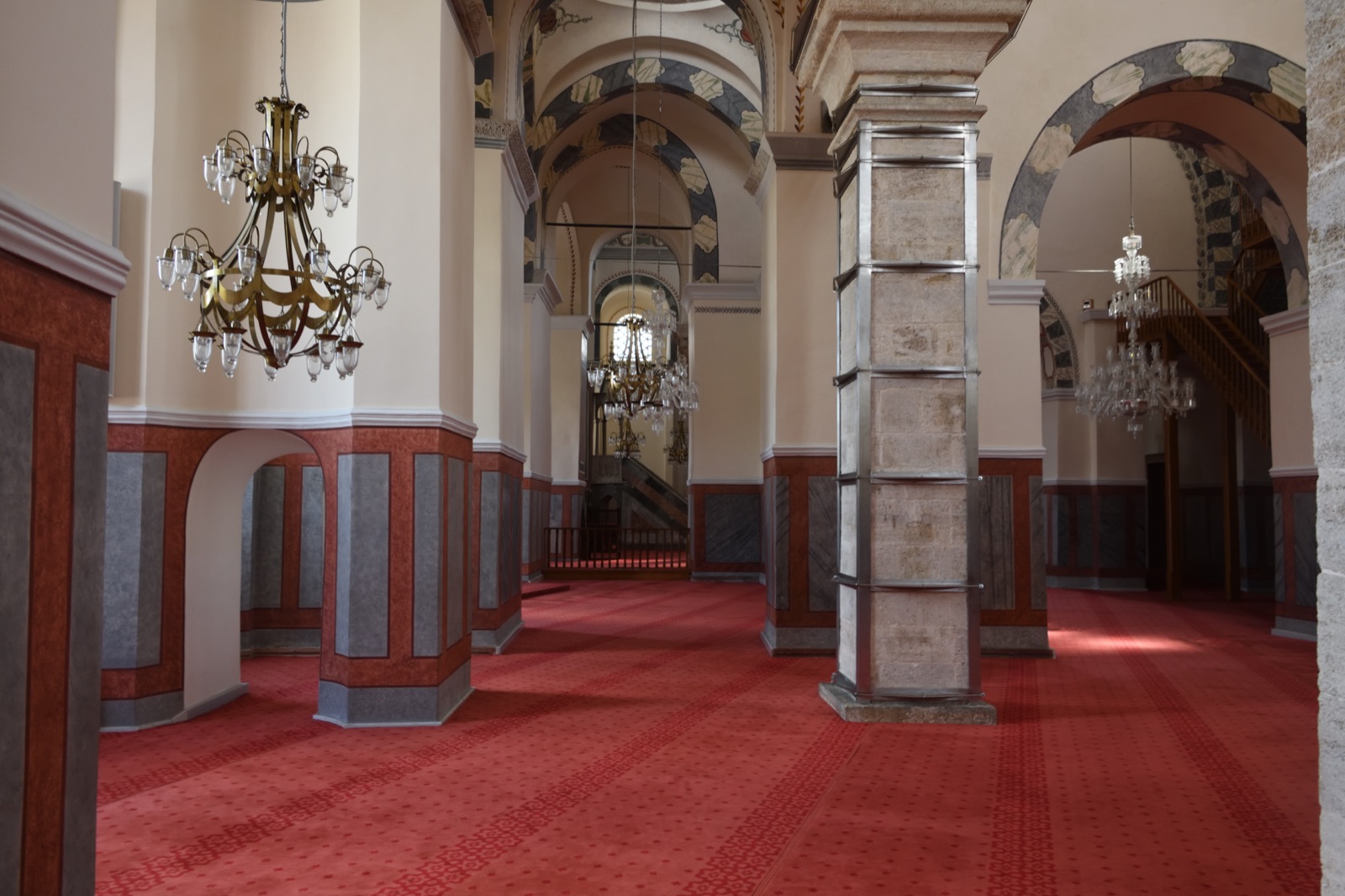
It's exactly this layering that makes Zeyrek so valuable. Byzantine masonry, an Ottoman mihrab, later repairs, and modern reinforcements all stand in the same space. You don't see "the original condition," but the biography of a building.
What to recognize in the complex today
From the outside, Zeyrek doesn't look as smooth and monumental as restored tourist icons. That's exactly why it's worth a closer look. The three interconnected structures can be distinguished by domes, roof lines, and wall joints. Once you know that two churches and a burial chapel between them grew together here originally, the unusual shape immediately makes more sense.
Inside, don't look for a fully preserved Byzantine pictorial world like at Chora. A large part of the furnishings was lost or altered. What matters more is the spatial structure, the masonry, and the surviving floor or marble elements. The mihrab and other Islamic elements show its long history as a mosque.
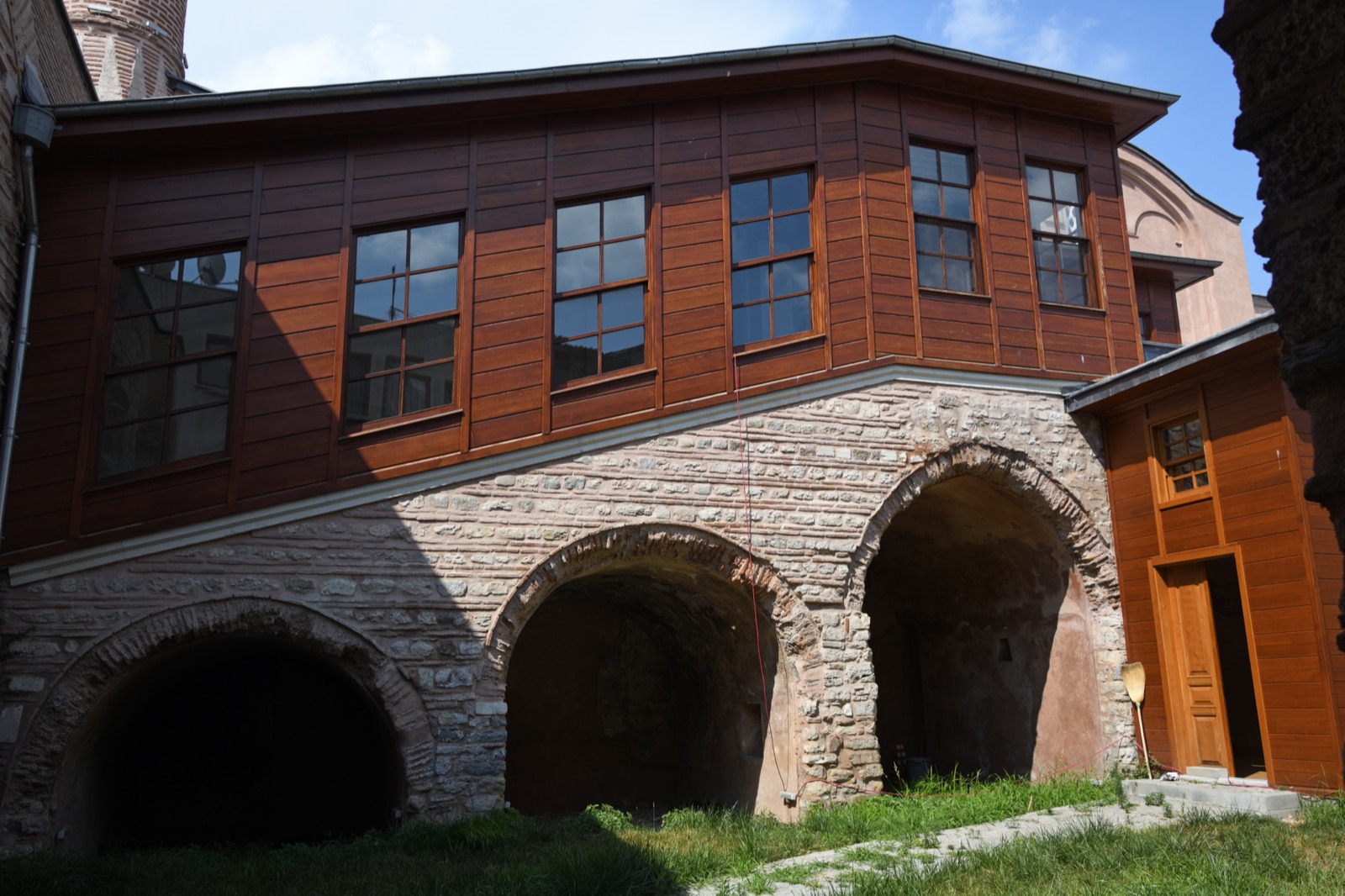
The neighborhood itself is also part of the experience. Narrow streets, traditional houses, and the steep topography make visible why UNESCO protects not just the building, but a larger Zeyrek area. Anyone who arrives only by taxi, photographs the mosque, and drives off again misses an essential part of the historical context.
The Komnenian era as an underestimated golden age
The 12th century is often perceived only as an interlude between Justinian and the fall of 1204. Under the Komnenoi, though, Byzantium experienced a significant cultural and political renewal. Diplomacy, trade and art flourished, and Constantinople remained one of the largest cities in Europe.
Pantokrator belongs exactly to this era. Its architecture is less monumental than the Hagia Sophia, but more complex in combining several functional areas. The complex shows that Byzantine building art in the 12th century was by no means merely repeating old forms.
Zeyrek and the city after 1453
When Mehmed II conquered Constantinople, he quickly needed educational and administrative structures. Using the former monastery as a madrasa was therefore pragmatic. A large existing complex could immediately take on a new function before the Fatih külliye was finished.
This early Ottoman use shows that conquest and urban transformation didn't exclusively mean demolition. Existing buildings were adapted, renamed, and reused. Zeyrek is one of the best examples of this.
Why the surroundings matter for understanding it
Zeyrek's hill offers sightlines across the Golden Horn and the historic peninsula. The topography explains why an imperial monastery felt so present here. Today, residential buildings and streets crowd more closely around the complex, but its elevated position remains noticeable.
A walk through the neighborhood also reveals traditional wooden houses and later Ottoman urban structures. It's exactly this mix of monument and everyday building fabric that led UNESCO not to protect the church in isolation.
"Zeyrek was originally a single large church." False. Today's complex combines three sacred units from different building phases.
"After 1453, the church was immediately completely destroyed and rebuilt." False. The Byzantine fabric remained largely intact and was adapted for use as a mosque and madrasa.
"The Pantokrator hospital was a modern hospital like today." No. Its organization was remarkable for the Middle Ages, but its medical practice and knowledge were, naturally, of their time.
My take on this place
Zeyrek is, for me, one of those places where you notice how unfairly fame is distributed. Everyone knows the Hagia Sophia. Yet here stands an almost nine-hundred-year-old Byzantine complex where emperors were buried, the sick were treated, crusaders and monks left their traces, and later Ottoman students studied.
Once you know places like this, Istanbul automatically grows larger. The city then no longer consists of five famous sights, but of a network of stories lying everywhere between the houses.
– Amra