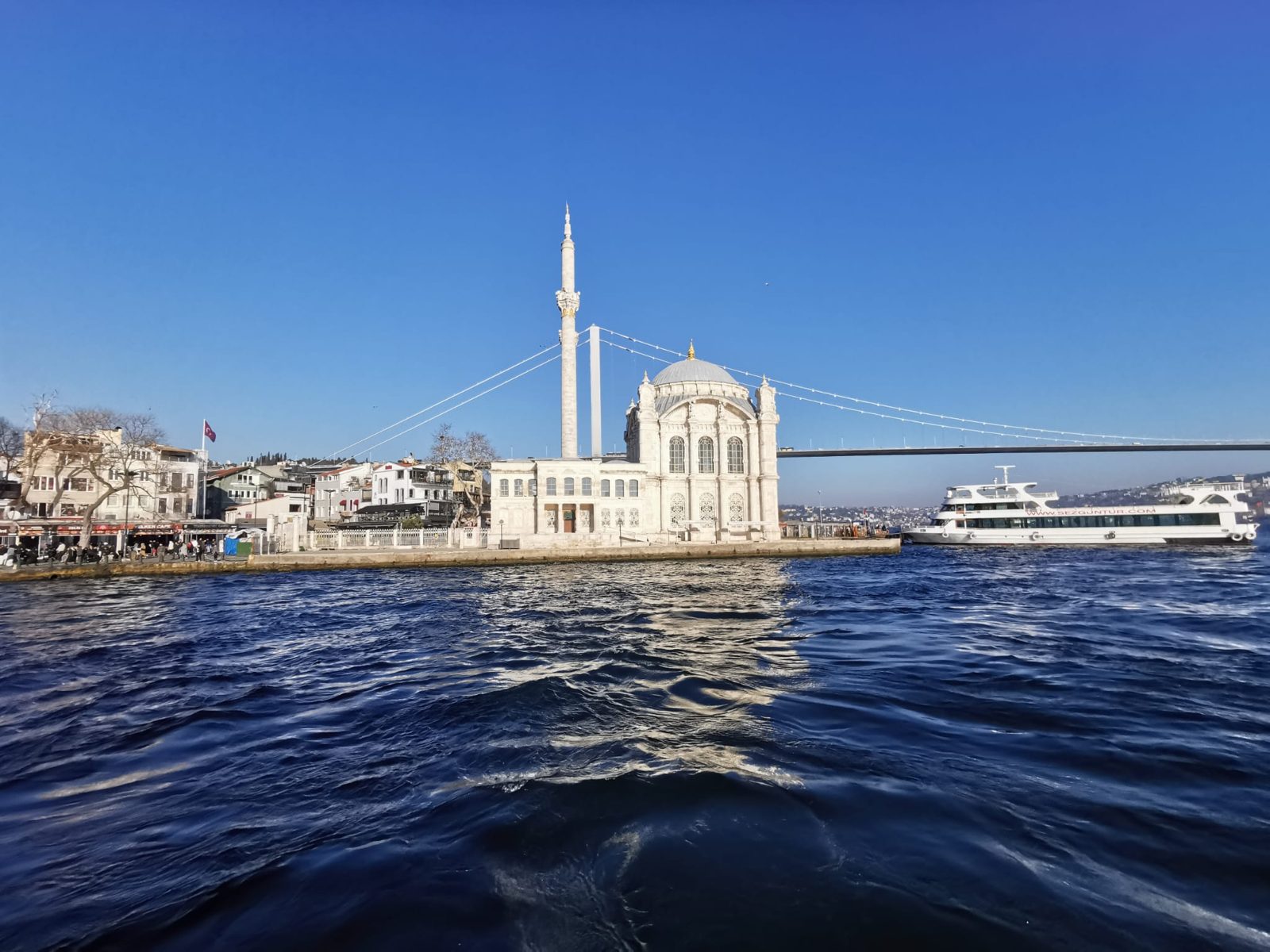
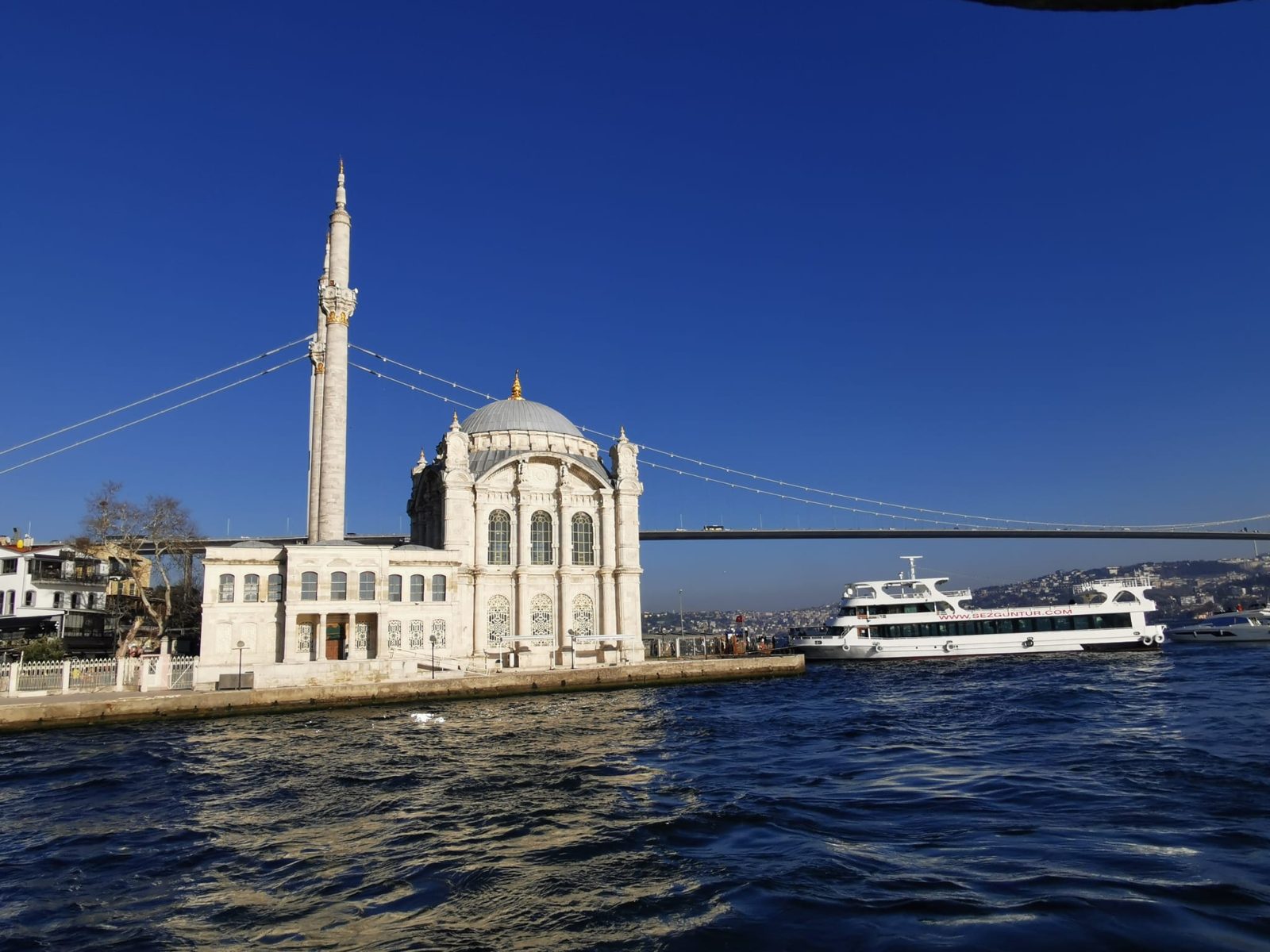
Ortaköy without the mosque would still be beautiful. But it just wouldn't be the same. The small building sits right on the water. Behind it, the Bosphorus. Today, the great bridge too. And from certain angles, the mosque looks far bigger than it actually is.
Advertising: If you book through our links, we may receive a commission – at no extra cost to you.
The Büyük Mecidiye Camii is one of Istanbul's best-known photo subjects. Its style, though, has little to do with Sinan's great mosques. It dates from the 19th century — the same era as Dolmabahçe.
- Its official name is Büyük Mecidiye Camii.
- It arose under Sultan Abdülmecid I.
- Today's building dates from the mid-19th century.
- Its architects are attributed to the Balyan family.
- Its style is strongly shaped by Ottoman Baroque and European architectural currents.
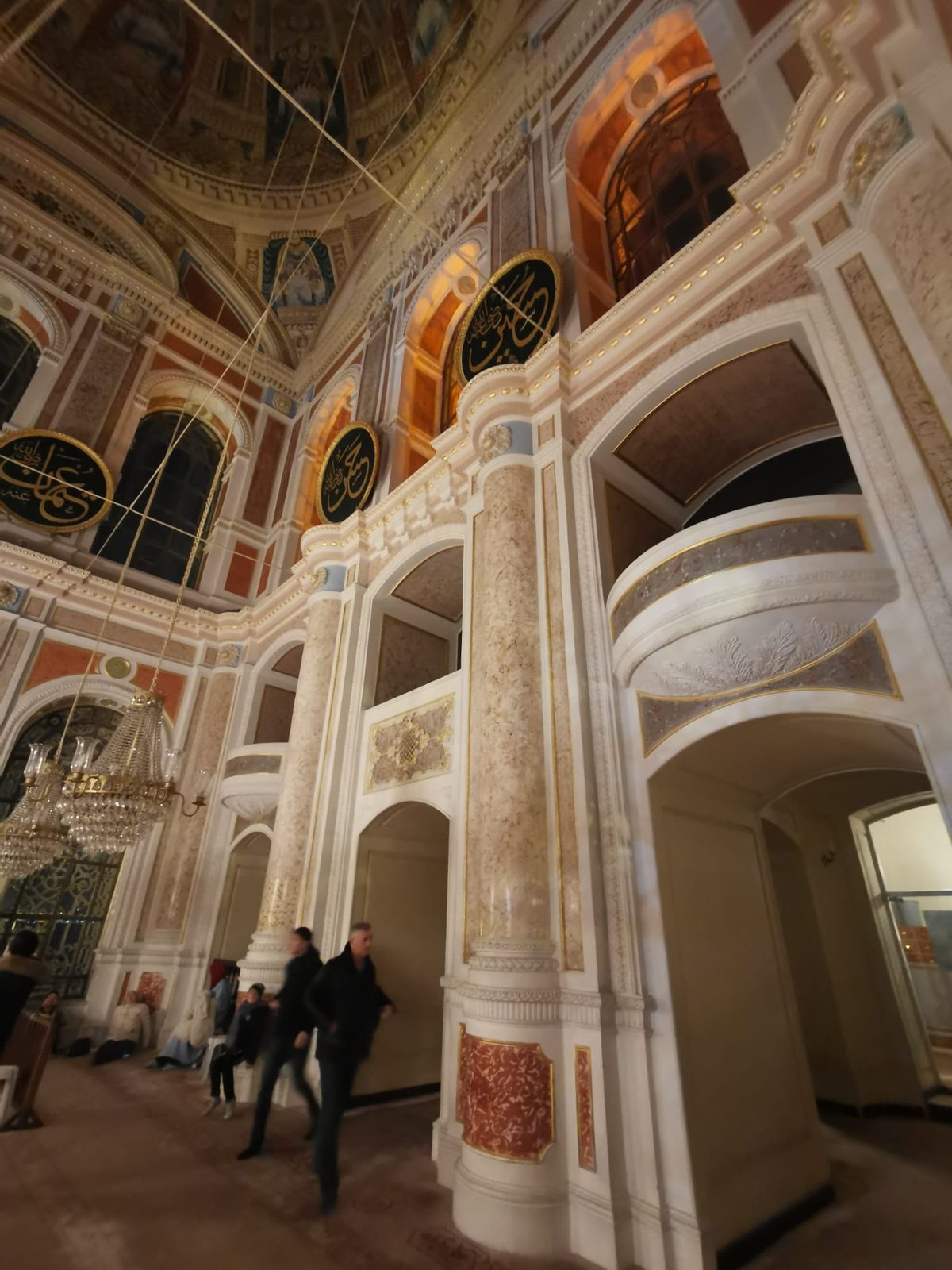
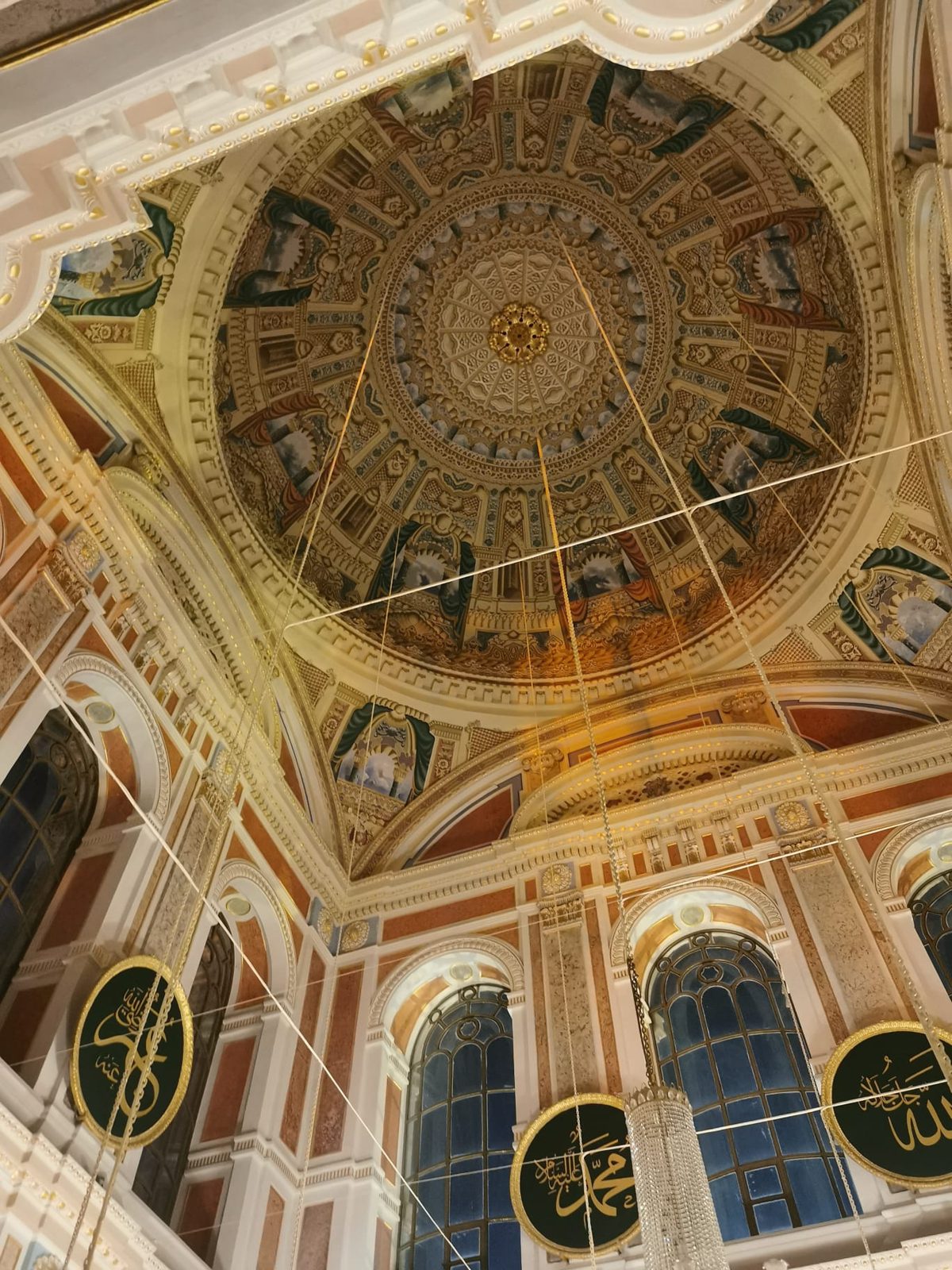
- Large windows create an unusually bright interior.
- The mosque was damaged by earthquakes and restored several times.
- It's a good example of how Ottoman architecture changed in the 19th century.
A Mosque Already Stood Here Before
The site was used religiously even before today's building. An earlier, smaller mosque was built in the 18th century. Today's structure, though, arose later, under Abdülmecid I.
Who Was Abdülmecid?
The same sultan under whom Dolmabahçe was also built. So we're in a completely different architectural world here than at the Süleymaniye. The 19th century. The Tanzimat. European influences. New forms of courtly representation.
Why Does Ortaköy Look So Different?
Compare it to the Süleymaniye. Süleymaniye: a great, clear landscape of domes, classical Ottoman monumentality, a massive overall complex. Ortaköy: a lively facade, large windows, rich decoration, stronger Baroque influences. These aren't simply two different tastes. Almost 300 years of architectural history lie between them.
The Balyans
Here too, the famous Armenian-Ottoman family of architects appears. Members of the Balyan family shaped numerous palaces, mosques, and state buildings of the 19th century. Dolmabahçe and Ortaköy therefore belong to the same architectural era.
The Mosque Feels Almost Like a Pavilion
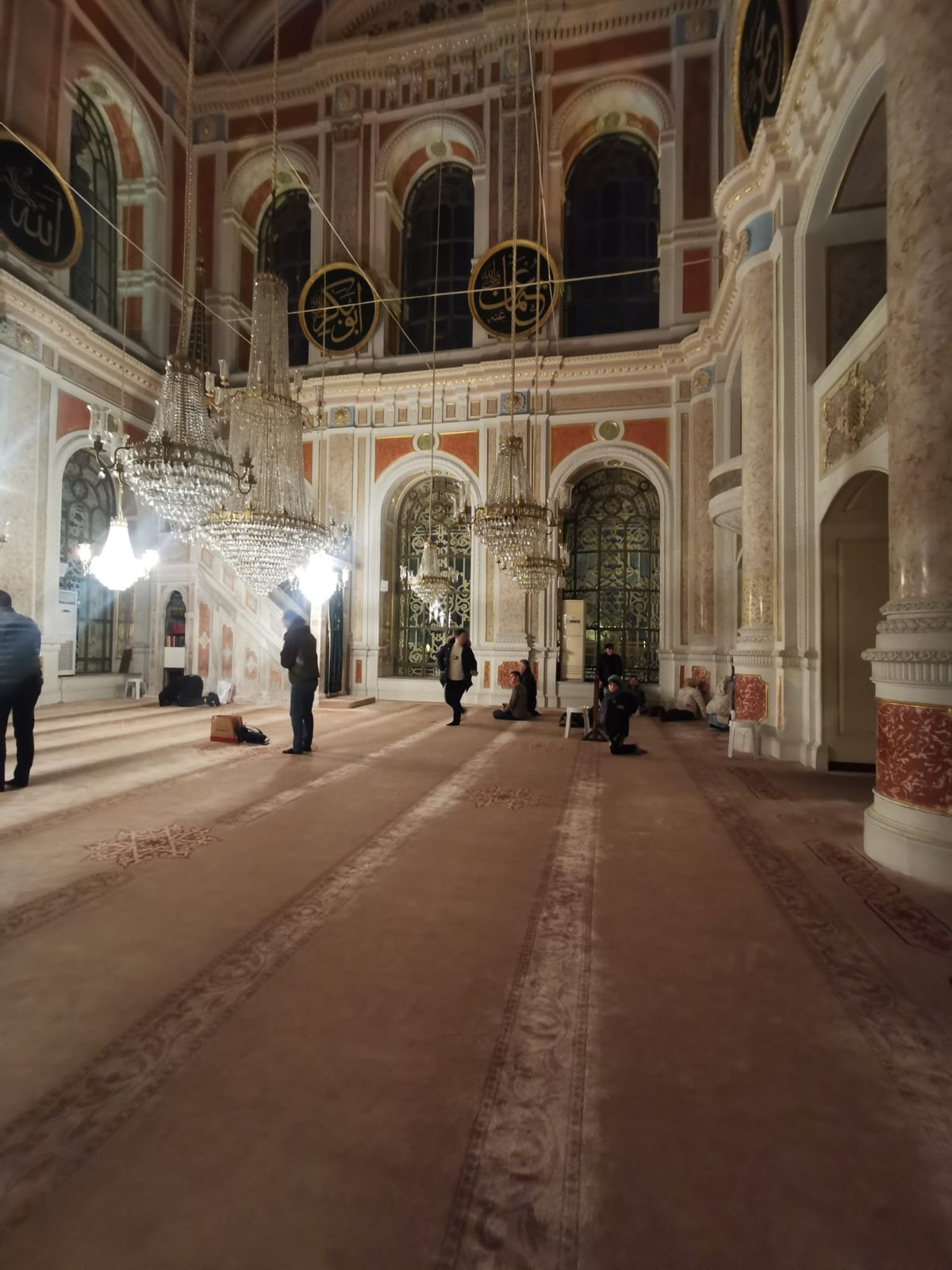
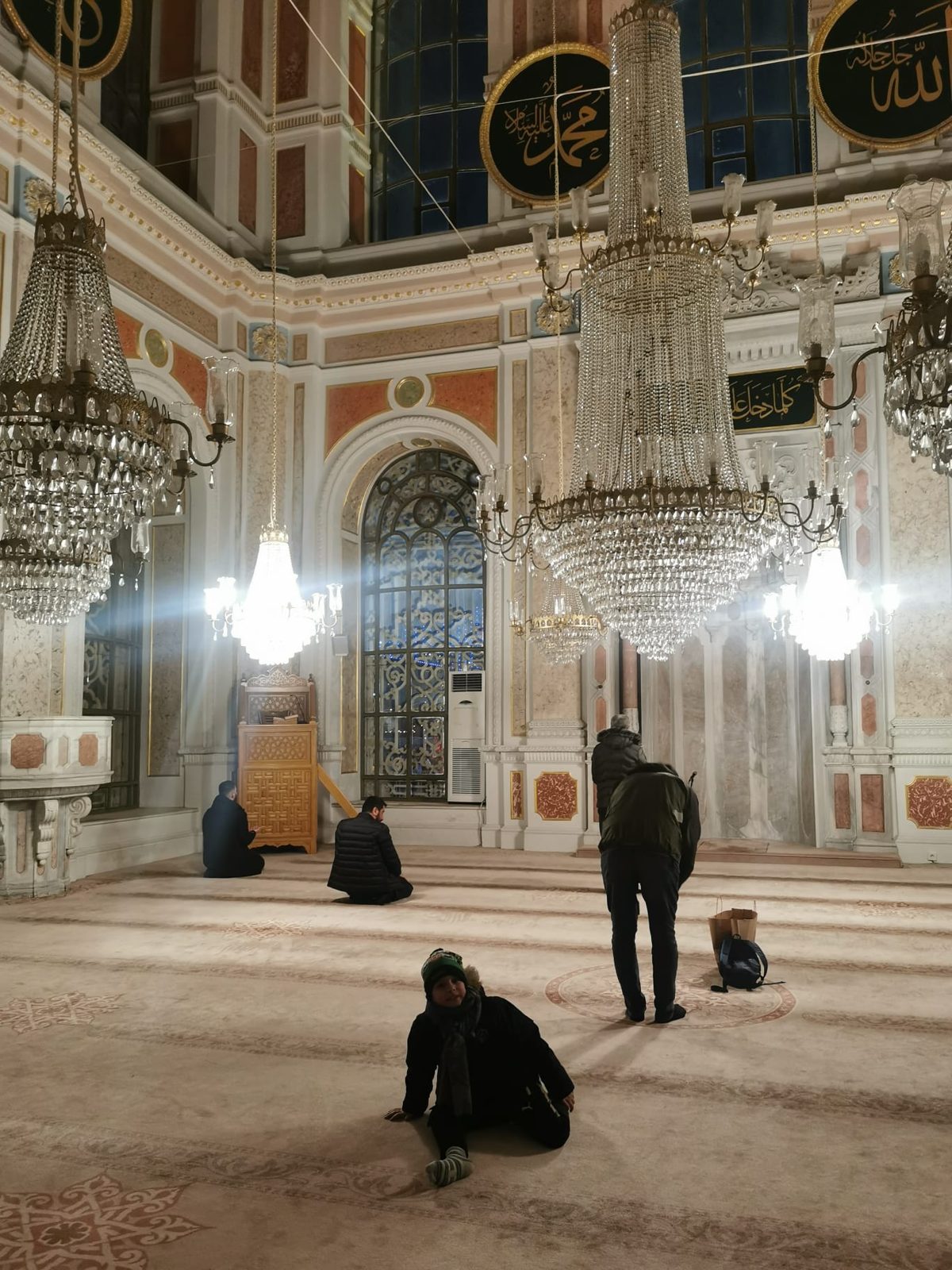
The main prayer hall is relatively compact. But the large windows and its location right on the water create enormous openness. Light comes from several sides. The Bosphorus is constantly present.
The Hünkâr Area
As with mosques used by the dynasty, there was a separate area for the sultan, including rooms and access routes that served him and his retinue. That wasn't simply luxury. Protocol and security played a role too.
Two Minarets
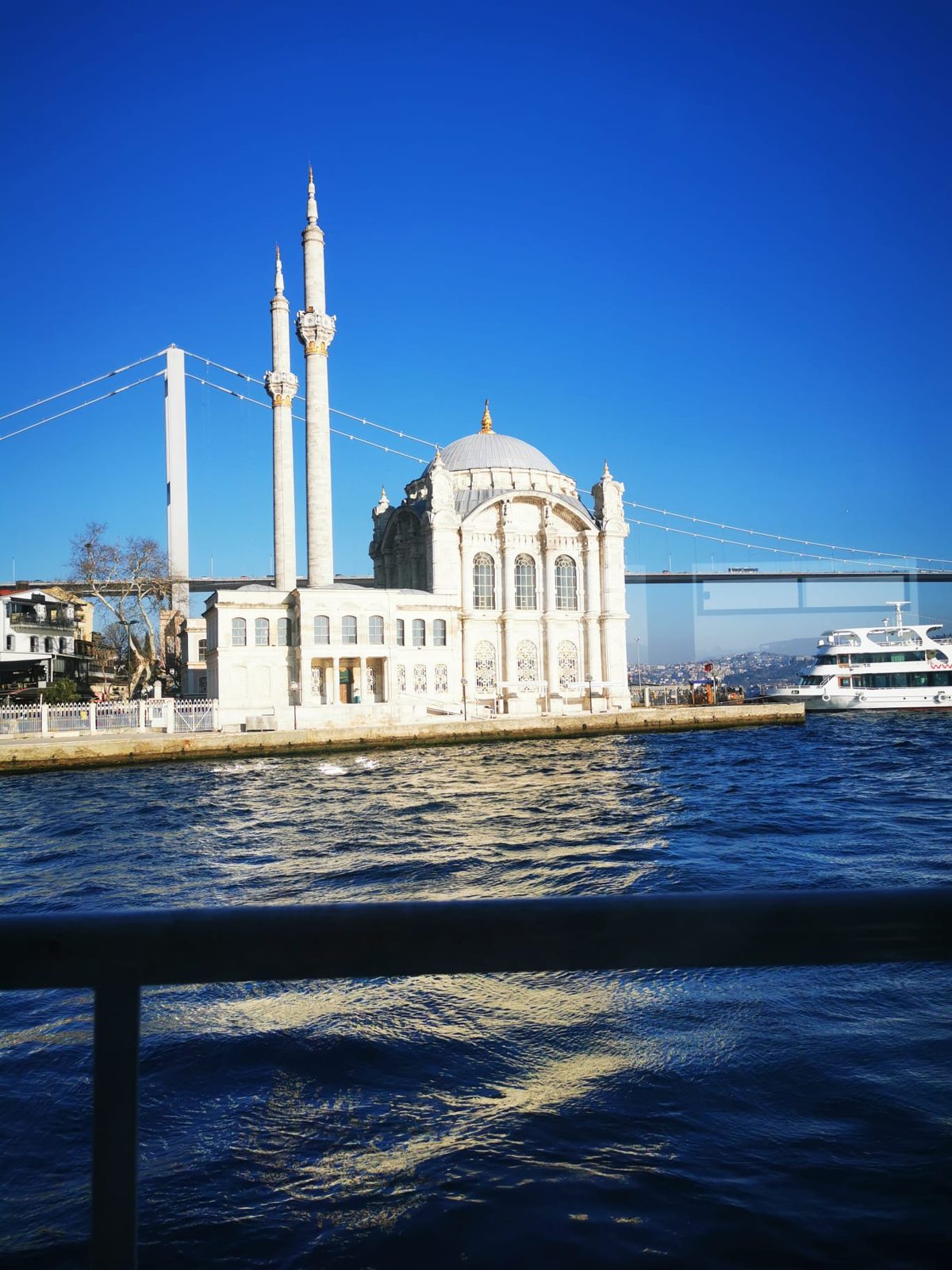
The mosque has two slender minarets. They frame the building and reinforce its vertical effect. In photos with the Bosphorus Bridge behind it, this creates the famous silhouette.
Back Then, of Course, There Was No Bridge Behind It
That sounds obvious, but our perception has become so used to the modern image that it's easy to forget. The first Bosphorus Bridge only opened in 1973. When Abdülmecid knew the mosque, only the Bosphorus and the Asian shore stood behind it.
The Earthquake of 1894
The great Istanbul earthquake of 1894 damaged Ortaköy too. Parts had to be repaired.
Later, the Foundations Caused Problems
Its location right on the water is beautiful. For a historic building, it's not necessarily convenient structurally. In the 20th century, extensive stabilisation measures were needed. Foundations were reinforced. The building was restored several times.
Today's Mosque Is Therefore Not "Untouched Since 1854"
The same rule applies here too: a historic structure doesn't mean no stone was ever moved. Earthquakes and structural problems made restorations necessary.
Ortaköy Itself Was Religiously Diverse
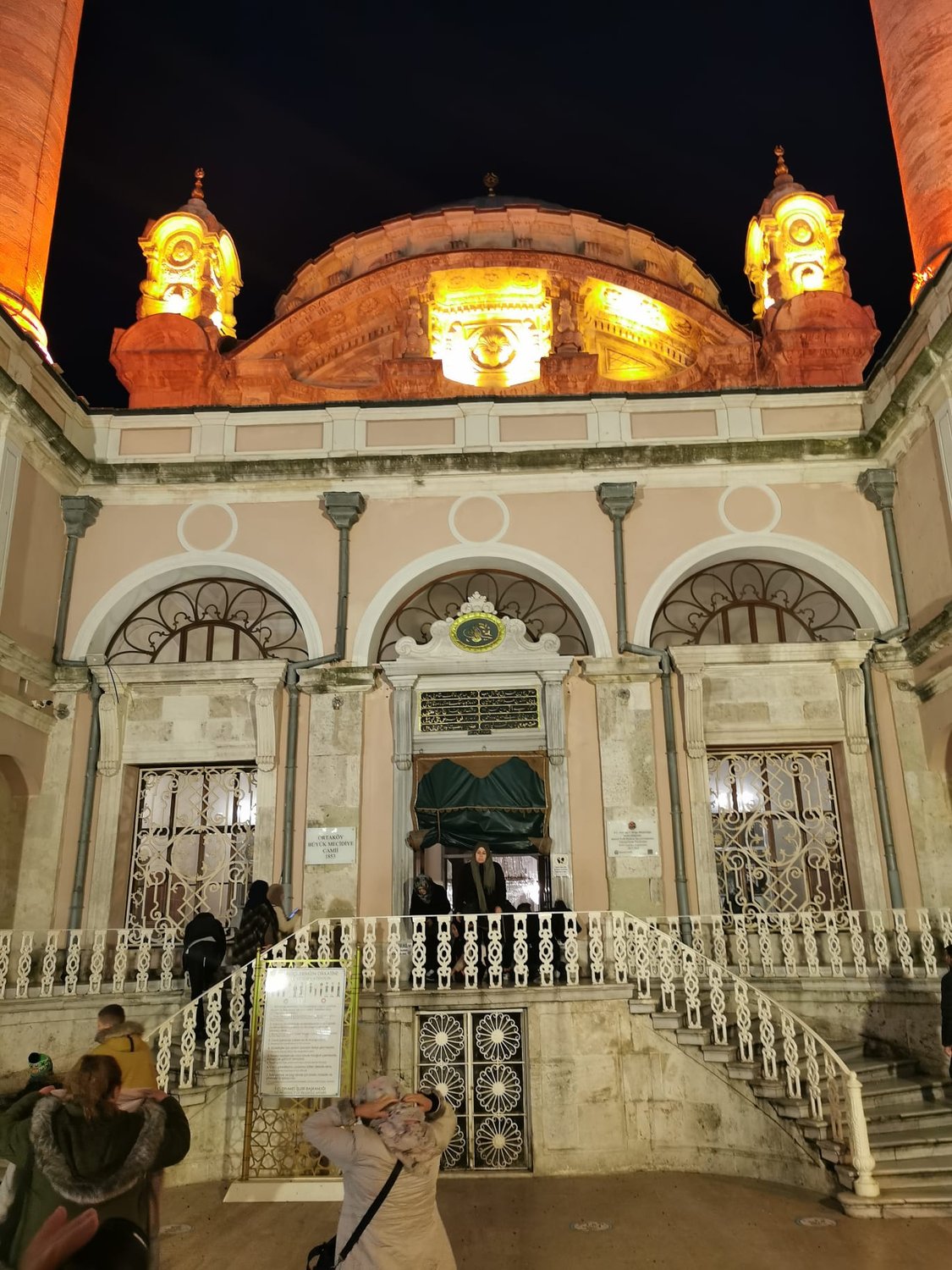
The district was historically shaped by different communities: Muslims, Greeks, Armenians, Jews. Religious buildings of various communities stood relatively close together. The mosque, then, stands within a place with a far broader religious history.
What to Look at Inside
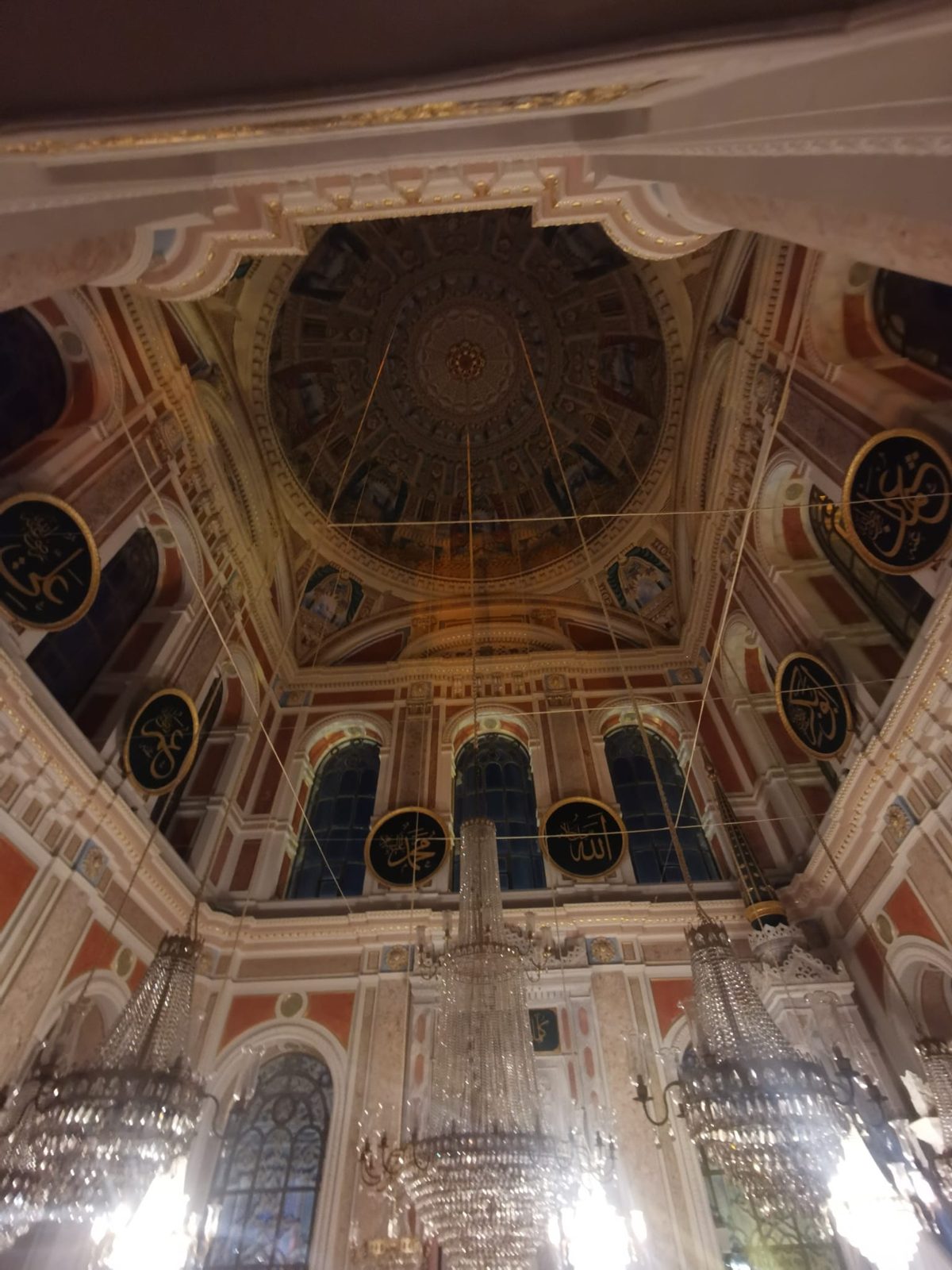
- The windows — they define the space.
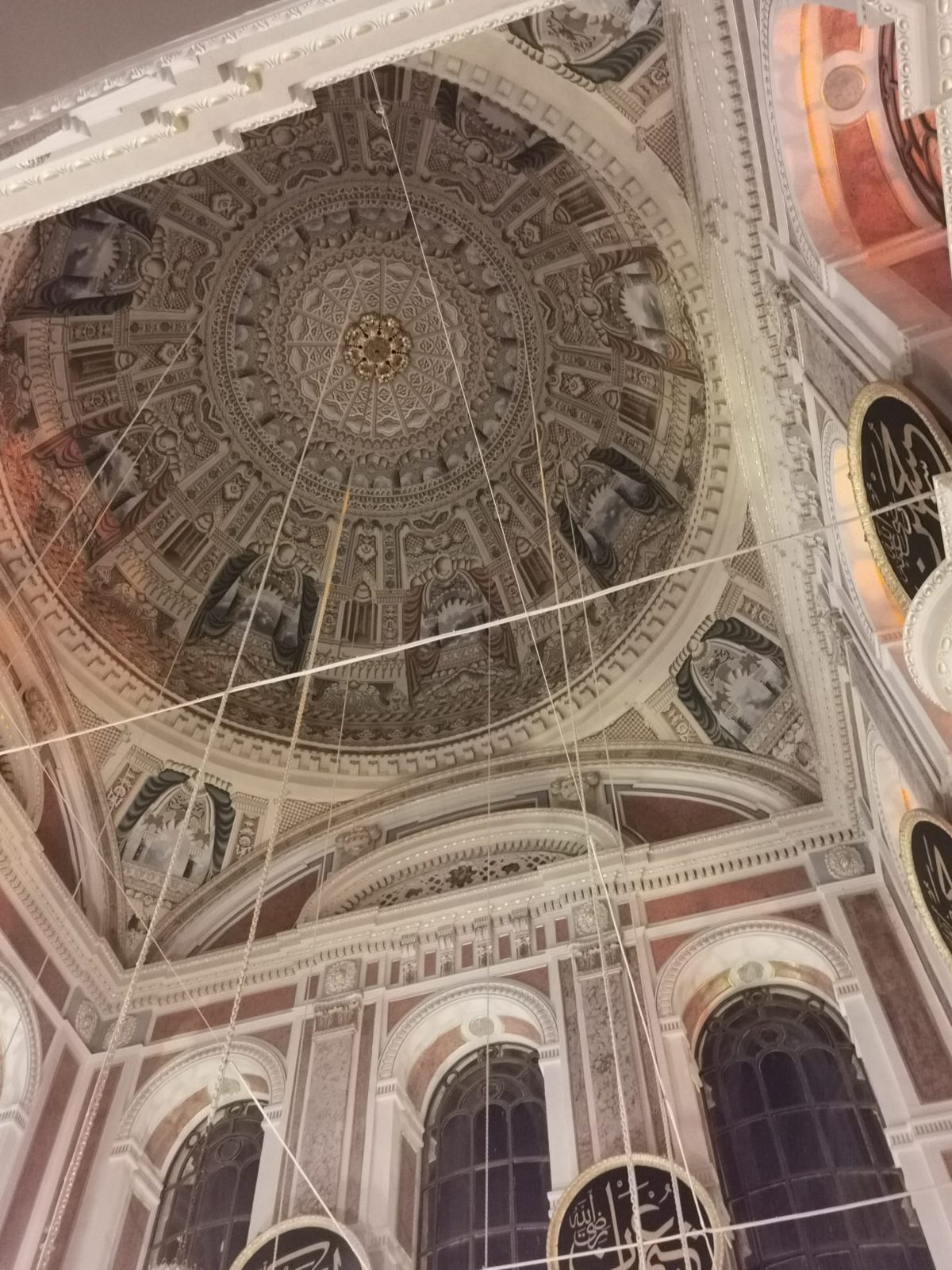
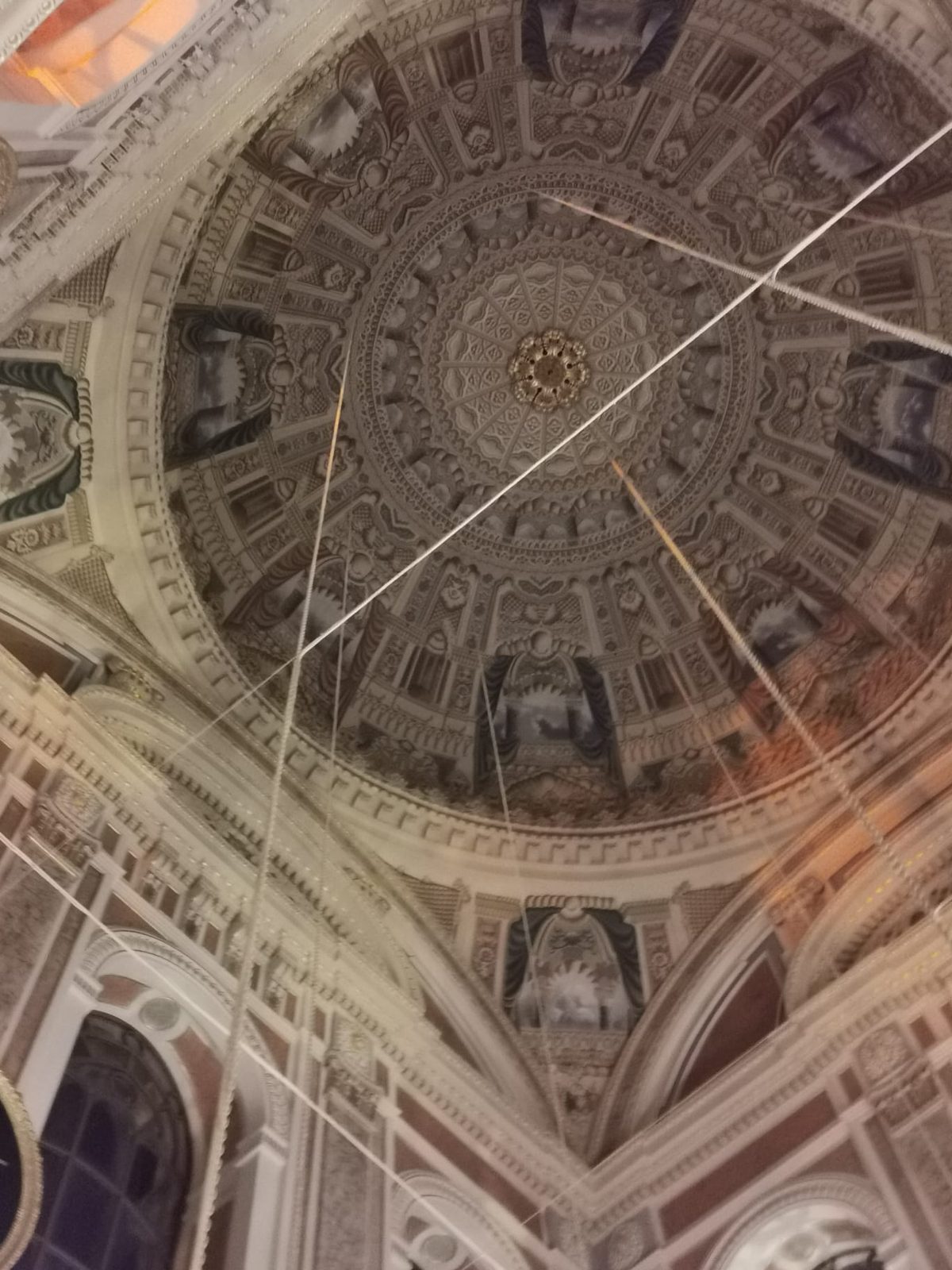
- The dome decoration — a completely different style from classic mosques.
- The sultan's area — a reminder of the mosque's connection to the dynasty.
- Then, outside, to the water — because the building is hard to understand apart from its site.
And Yes: Kumpir
Ortaköy and kumpir belong together today. Historically, the sultan obviously didn't build the mosque so we could stuff a baked potato with 14 different toppings right next to it. But at today's site, this food culture is simply part of the deal.
Ortaköy as a Ferry Stop and Meeting Place
The mosque doesn't stand in isolation, but in the middle of an area that has long lived off traffic on the Bosphorus. Ferries, small boats, and waterside paths made Ortaköy a natural meeting point between water and city. Today, cafés, street stalls, and crowds of tourists have been added, but the relationship to the water remains the most important spatial factor.
Anyone who just hops out, takes a photo, and leaves again therefore misses a lot. The square in front of the mosque functions as a public space where the religious building, food, traffic, and the view all come together directly.
Why the Mosque Is Smaller Than It Looks in Photos
In many pictures, Ortaköy looks monumental, because it's photographed standing free by the water, with the bridge behind it adding extra scale. Inside, though, you quickly notice that the prayer hall is considerably more compact than at the Süleymaniye or Sultanahmet Mosque.
It's precisely this smallness that makes the atmosphere more intimate. You stand closer to the calligraphy, the windows, and the dome decoration, and the Bosphorus seems to lie almost directly in front of the room.
The Mosque as Part of the Tanzimat Era
The Ortaköy Mosque arose during the same era in which Abdülmecid also had Dolmabahçe built and pushed through major state reforms. This connection matters, because 19th-century architecture shouldn't be viewed in isolation from political change.
The Ottoman leadership oriented itself more strongly toward European diplomatic and aesthetic models, without abandoning its religious and dynastic tradition. Ortaköy shows this mix on a smaller scale than Dolmabahçe, but very clearly.
The mosque is therefore an excellent example of how an Islamic house of worship could be deliberately built in a modern, internationally shaped architectural language.
Why Ortaköy Feels So Touristy Today
The square in front of the mosque is now full of cafés, street stalls, and visitors. Kumpir and waffles, in particular, are so strongly associated with Ortaköy that many people now think of the place in terms of food first, and architecture second.
This touristy use is, of course, far younger than the mosque. Still, it has since become part of the district's present-day identity.
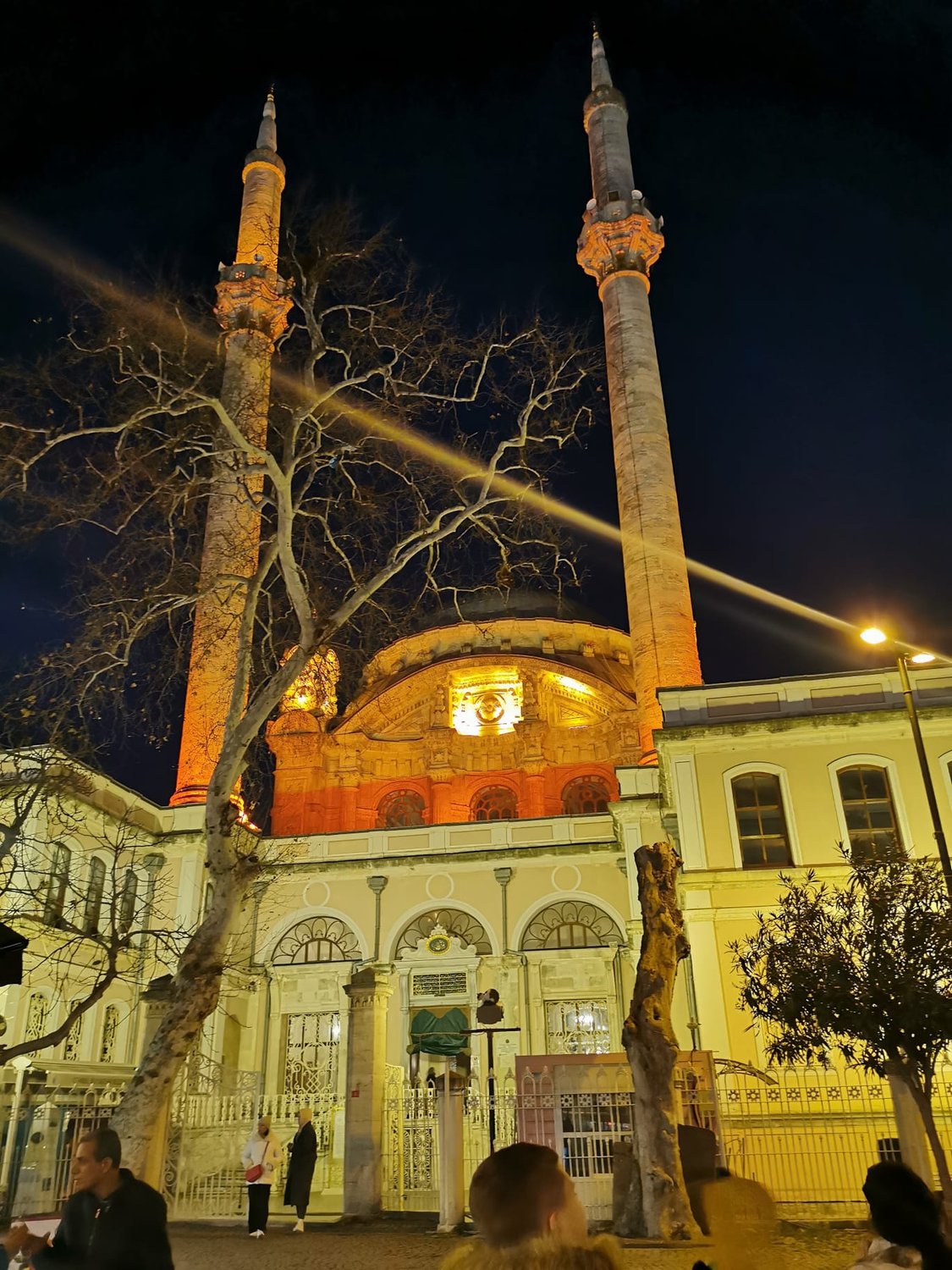
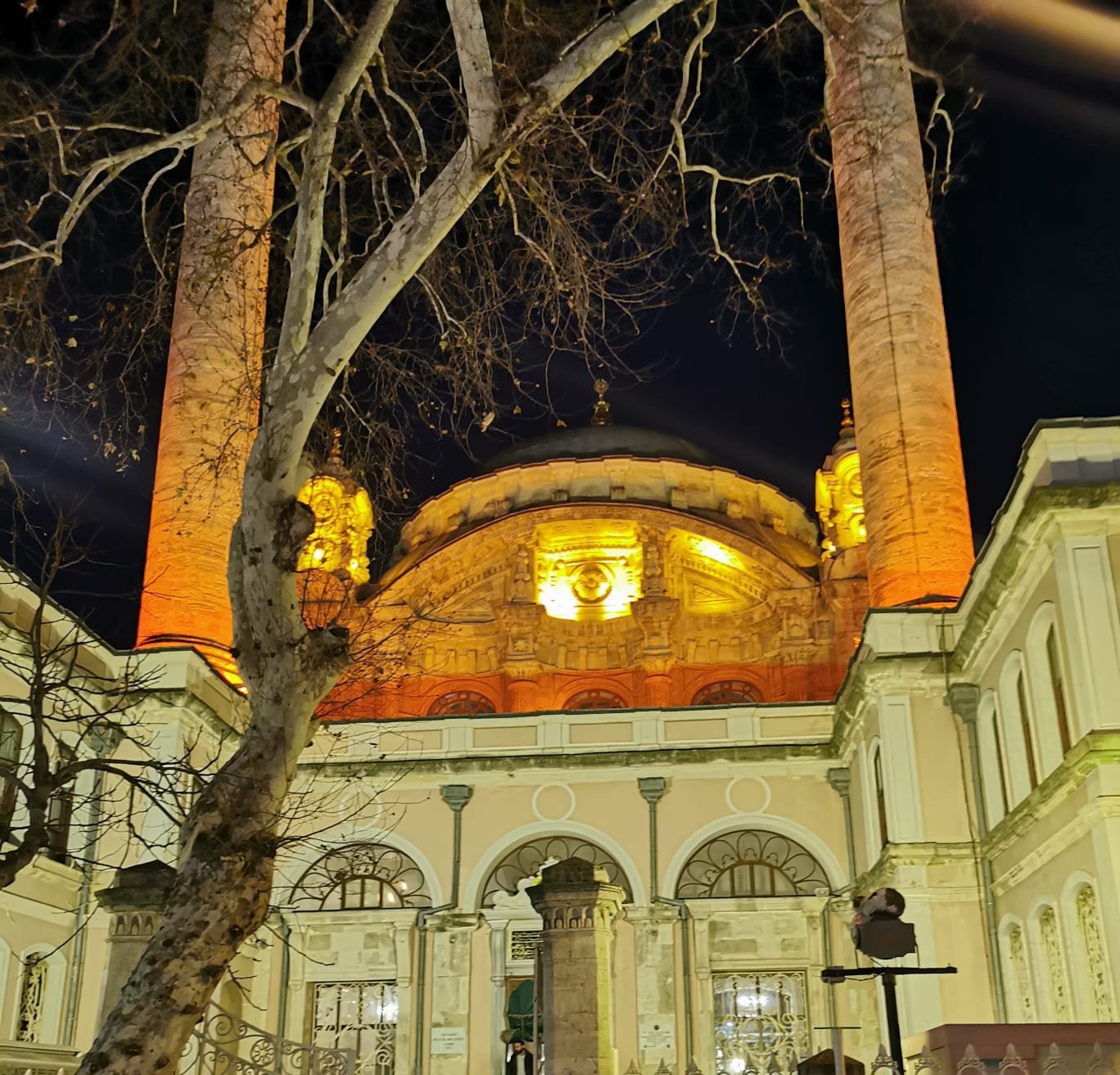
Anyone who comes early in the morning experiences a noticeably calmer place than in the evening or on weekends. That changes how you perceive the mosque remarkably strongly.
The Mosque Belonged to the Bosphorus Landscape Long Before the Bridge Existed
In the 19th century, Ortaköy was a waterside settlement with palaces, summer residences, religious buildings, and landing stages. The Bosphorus was a transport route, not merely a backdrop. The mosque therefore had to look convincing from the water just as much as from land.
That's exactly why it looks so striking from a ferry. Today's bridge reinforces the photo, but the original relationship between the mosque and the water is much older.
The Balyans Interpreted European Styles the Ottoman Way
At Ortaköy, you can see especially clearly how far 19th-century architecture had moved from Sinan's classical language. Curved lines, sculptural decoration, and large windows create a lighter, more animated facade.
This is often simply called "Westernisation." It's more accurate to speak of selecting and reinterpreting international forms. The Ottoman Empire had been in contact with Europe for centuries; in the 19th century, this exchange simply became far more visible.
Monumentality Isn't Just About Size
The prayer hall is considerably smaller than at the Süleymaniye or the Sultan Ahmed Mosque. Still, the building feels large, because it stands freely by the water and is developed strongly upward. Two slender minarets frame the facade, while the dome dominates a large part of the main body.
Inside, tall windows and direct light reinforce this impression. Ortaköy shows very nicely that a building doesn't have to be huge to feel monumental.
"The mosque was planned together with the Bosphorus Bridge." Of course not. The mosque dates from the 19th century, the bridge from the 20th.
"Ortaköy was historically exclusively Muslim." False. The district was long shaped by several religious communities.
"The mosque has been unchanged since 1850." No. Earthquakes and restorations altered the building repeatedly.
- Here you'll find current Bosphorus cruises, dinner cruises and guided tours.
- View Bosphorus tours & tickets
My Thought on This Place
I think, with Ortaköy, the setting makes up at least half the magic. The mosque alone is beautiful. The bridge alone is gigantic. But both together, right on the water, is one of those images where my photo album once again completely unnecessarily gains twenty almost identical photos.
Almost identical.
For me, of course, not identical at all.
And when you then sail underneath that huge bridge by boat, you only really notice just how gigantic this connection between two continents truly is.
Ortaköy and the mosque by the water look different again from the Bosphorus. Here are suitable tours.
– Amra